
When we talk about ads in education, we're really talking about bringing corporate partnerships and sponsorships into our schools—both on campus and online.The goal is usually to generate much-needed revenue for programs that are feeling the pinch or to give students better opportunities through corporate support.
The New Reality of Advertising in K-12 Schools

For a long time, advertising in schools was pretty simple. You’d see a local pizza shop's logo on the scoreboard or maybe a banner at the fall festival. But things have changed. Today, for district leaders staring down persistent budget gaps, it's become a serious strategic conversation. The question isn't if we should allow advertising anymore; it's how we can do it ethically and responsibly.
Think of your school district as a garden. The right partnerships can be like nutrient-rich compost, helping everything from the arts and music programs to the athletics department flourish. A thoughtful sponsor can provide resources that directly help our kids learn and grow.
But the wrong partnership? That can be like an invasive weed, quickly choking out our core mission with a tangle of commercialism. This is the tightrope every K-12 marketing and communications leader has to walk: balancing the very real need for funding with the absolute duty to protect a non-commercial learning space for our students.
For a quick look at the different forms this can take, here's a simple breakdown.
Quick Overview of Advertising in Education
This table summarizes the main types of advertising you'll encounter, what they aim to achieve, and the big-picture questions you should be asking.
| Advertising Type | Primary Purpose | Key Consideration |
|---|---|---|
| On-Campus Ads | Generate revenue from physical assets (scoreboards, posters) | Does it create a commercialized or distracting physical environment? |
| Digital Ads | Monetize district websites, apps, and digital communications | How do we protect student data privacy and prevent digital clutter? |
| Event Sponsorships | Underwrite costs for athletics, arts, or academic events | Is the sponsor's brand appropriate for a school-aged audience? |
| Program Underwriting | Fund specific academic or extracurricular programs | Does the partnership align with our district's core values? |
Each of these avenues presents its own set of opportunities and challenges, making a clear and consistent policy absolutely essential.
Navigating the Complex Balance
Successfully managing ads in schools means putting student well-being first, always. This isn't just about cashing a check; it's about building genuine partnerships that reflect your district’s values. It all comes down to asking the right questions upfront and drawing clear lines in the sand.
Before you even think about signing a contract, your team should be asking:
- Mission Alignment: Do this company's products and mission actually line up with our educational goals?
- Student Impact: Will this truly enhance the student experience, or will it just be another distraction?
- Community Perception: What will our parents, teachers, and taxpayers think when they see this?
Navigating this territory means creating a strong framework that attracts the right kind of partners while politely but firmly turning away those that could compromise the integrity of our schools. It's about being proactive, not just reacting when an offer comes in.
This entire shift is part of a much bigger trend. As school districts get smarter about their own marketing and communications, understanding how modern promotion works is a must. You can learn more about how these strategies are changing everywhere by exploring the digital transformation in marketing.
This guide is built to be your roadmap. It’s here to help you move from feeling uncertain to feeling confident, giving you the tools you need to vet opportunities, write solid policies, and communicate your decisions clearly. Get it right, and these partnerships can truly help your school's ecosystem thrive.
Understanding the Different Types of School Ads
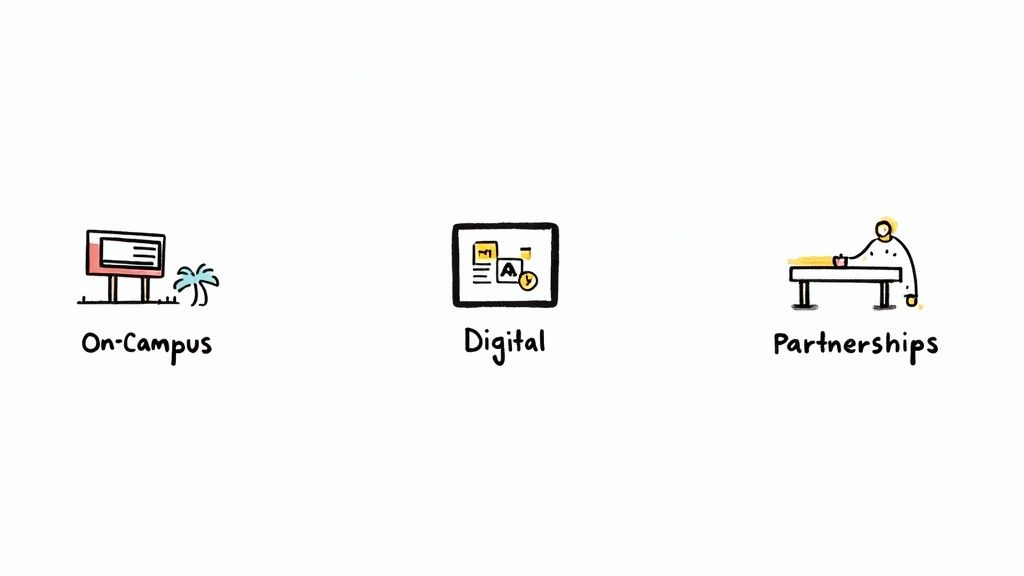
Advertising in schools isn't a one-size-fits-all deal. The term itself can conjure up anything from a simple banner at a football game to a sophisticated digital campaign in a parent newsletter. To make smart decisions for your district, you first have to get a handle on the different channels available and how each one fits into the unique K-12 world.
Think of ads in education like planning a community garden. You have different plots that require entirely different approaches. Some opportunities are physical and tangible, rooted in the daily life of your campuses. Others are digital, designed to reach your community wherever they are online. And some are deep-rooted, strategic partnerships that become a core part of your school's programming.
Let's break down these three main categories to see how they work in the real world.
On-Campus Presence and Physical Ads
This is the classic form of school advertising and often the most straightforward to get started with. It's all about using the physical spaces and high-traffic events within your district to give sponsors visibility. Think of it as the "hometown" approach—it’s usually local businesses looking to support their local schools.
These opportunities are tangible and put a sponsor's brand right in front of students, staff, and the community.
- Athletic Sponsorships: This is a classic for a reason. Businesses can put their name on scoreboards, team uniforms, stadium banners, or even entire athletic complexes.
- Event Banners and Signage: This means placing banners at school plays, science fairs, graduation ceremonies, or parent-teacher nights.
- Printed Materials: Local companies can place ads in things like yearbooks, school newspapers, theater programs, or athletic schedules.
For example, a local car dealership sponsoring the high school football scoreboard gets their brand in front of thousands of community members every Friday night. This kind of visible support usually feels natural and community-focused, but you have to be careful that the school environment doesn't start to feel overly commercialized.
Digital Channels and Online Advertising
As district communications have shifted online, so have the opportunities for advertising. These digital assets are incredibly valuable because they offer a direct line to a highly engaged audience of parents, staff, and community members. And unlike a physical banner, digital ads give you something crucial: measurable data. This allows you to track performance and show sponsors exactly what they're getting for their investment.
The key difference here is data. With digital ads, you can report back to a sponsor with clear metrics like click-through rates and impressions, proving the ROI of their investment in a way a physical banner simply cannot.
Some of the most common digital channels include:
- District and School Websites: Placing banner ads on high-traffic pages, like the main homepage or the athletics section.
- E-Newsletters: Offering sponsored content or banner ads in the weekly or monthly newsletters you send to parents.
- School Apps: Many districts now use mobile apps for communication, which can feature sponsored messages or dedicated sections.
- Social Media: While running direct ads on school social media is tricky, you can certainly highlight sponsors through thank-you posts or event acknowledgments. To get a better grasp of the mechanics, it’s helpful to explore strategies for using targeted social media ads to see how effective online promotion works behind the scenes.
A local credit union, for instance, could sponsor a "Financial Literacy Tip of the Week" in the district's weekly e-newsletter. It's a win-win: families get valuable information, and the credit union promotes its services in a helpful, non-intrusive way.
Strategic Partnerships and Program Underwriting
This is the most integrated—and often the most impactful—way to work with outside organizations. Instead of just placing an ad, a corporate partner invests directly in a specific educational program. These partnerships are less about simple brand awareness and more about aligning a company’s mission with your school's educational goals.
When done right, these collaborations can give students resources and experiences that would otherwise be out of reach.
- Program Funding: A corporation might underwrite the entire robotics club, fund the school orchestra, or pay for a new collection of library books.
- Branded Educational Content: A local tech firm could provide a free, high-quality curriculum module on cybersecurity.
- In-Kind Donations: A software company might provide free licenses for all students in a computer science class, or a hardware store could donate all the materials for a new school garden.
Imagine a regional healthcare provider funding a new, state-of-the-art STEM lab at your middle school. This kind of partnership provides incredible resources for students and cements the provider’s reputation as a community partner truly invested in the next generation’s success.
Weighing the Benefits and Risks for Your District
Bringing advertising into your schools is a classic balancing act. On one side, you have the promise of new revenue and incredible opportunities for students. On the other, you have a non-negotiable duty to protect the learning environment from commercial clutter.
This isn’t a simple “yes” or “no” decision. It’s a strategic choice that requires a clear-eyed look at both sides of the coin.
The most powerful argument for school advertising is, of course, the money. When budgets are stretched to their breaking point, ad revenue can feel like a lifeline. It offers a way to save—or even expand—programs that are often the first on the chopping block.
But it's not just about keeping the lights on. It’s about making the student experience richer and more meaningful.
The Clear Benefits of Strategic Partnerships
For programs running on fumes, a well-chosen sponsor can be the difference between just surviving and truly thriving. Think about the immediate, tangible impact:
- Saving Essential Programs: Revenue from a single scoreboard sponsorship could easily fund the debate team's travel for an entire season or buy brand-new instruments for the middle school band.
- Providing Valuable Resources: A partnership with a local tech company might give students access to industry-standard software or robotics kits—things the district could never afford on its own.
- Creating Career Exposure: When a regional engineering firm sponsors a high school’s STEM lab, students get more than just new equipment. They get a direct line to potential careers, internships, and mentors.
When a partnership truly aligns with your educational mission, it’s no longer just an advertisement. It becomes a bridge between the classroom and the real world, giving students practical experiences that bring their learning to life.
As you weigh the impact of advertising, it's crucial to consider how these initiatives will mesh with your core educational goals. For example, understanding strategies to improve student engagement in the classroom can help you ensure that any new program adds to, rather than subtracts from, student focus. The real goal is to find partners who add genuine value.
The Critical Risks You Cannot Ignore
However, the path to ad revenue is lined with pitfalls. Ignoring these risks would be a massive mistake, with serious consequences for your students and your district’s reputation.
The most immediate concern is the commercialization of learning spaces. Schools need to be safe havens for learning and growth, not marketplaces. When kids are constantly bombarded with brand messaging, it can subtly shift their focus from education to consumerism. That’s a line many parents and educators believe should be held firm.
Beyond the philosophical concerns, there are very real dangers to think about.
- Exposure to Inappropriate Content: Without airtight oversight, students could see ads for products that are unhealthy or simply wrong for their age group—think junk food, violent video games, or other controversial items.
- Data Privacy Vulnerabilities: Digital advertising opens up a whole new can of worms. Collecting student or parent data for ad targeting can create serious privacy holes, potentially violating laws like COPPA and FERPA if not managed with extreme care.
- Equity Gaps Between Schools: An ad program can accidentally make the gap between affluent and less-affluent schools even wider. Schools in wealthier communities naturally attract more lucrative sponsors, creating a cycle where well-funded schools get even more resources while others fall further behind.
This isn't just a hypothetical problem. The global education marketing services market is exploding. By 2025, it's projected to hit $18.2 billion as schools and universities everywhere ramp up ad spending to compete for students. You can read the full research on this competitive educational landscape to see the pressures driving this trend. This fierce competition can lead to aggressive tactics that simply don’t belong in a K-12 environment.
Ultimately, the decision comes down to your district's ability to maximize the good while rigorously controlling the bad. It requires a rock-solid policy, transparent communication, and an unwavering focus on what’s truly best for the students you serve.
Creating a Legally and Ethically Sound Ad Policy
Jumping into the world of school advertising isn't just a business decision—it demands a solid legal and ethical compass. Before you even think about signing a partnership, your district needs a clear, comprehensive policy. This document is your North Star, the guide that protects your students, maintains community trust, and steers every decision you make about bringing brands into your schools.
This isn't just about avoiding a little bad press. Federal laws create strict guardrails around how schools can interact with students, especially when it comes to their data. A poorly vetted digital ad vendor could land your district in serious legal trouble.
Getting a Handle on Key Legal Frameworks
Two laws you absolutely must know inside and out are COPPA and FERPA. They can sound intimidating, but their core purpose is simple and crucial for anyone managing ads in education.
COPPA (Children's Online Privacy Protection Act): Think of this as the law that puts parents in the driver's seat. It applies to websites, apps, and any online service geared toward kids under 13. COPPA requires these services to get parental consent before collecting any personal information. If your district partners with a third-party digital platform that shows ads, you are responsible for ensuring that vendor is 100% COPPA compliant.
FERPA (Family Educational Rights and Privacy Act): This law is all about protecting the privacy of student education records. While it doesn't mention advertising by name, its rules are crystal clear: you cannot share personally identifiable student information with advertisers without explicit, written parental consent. Period.
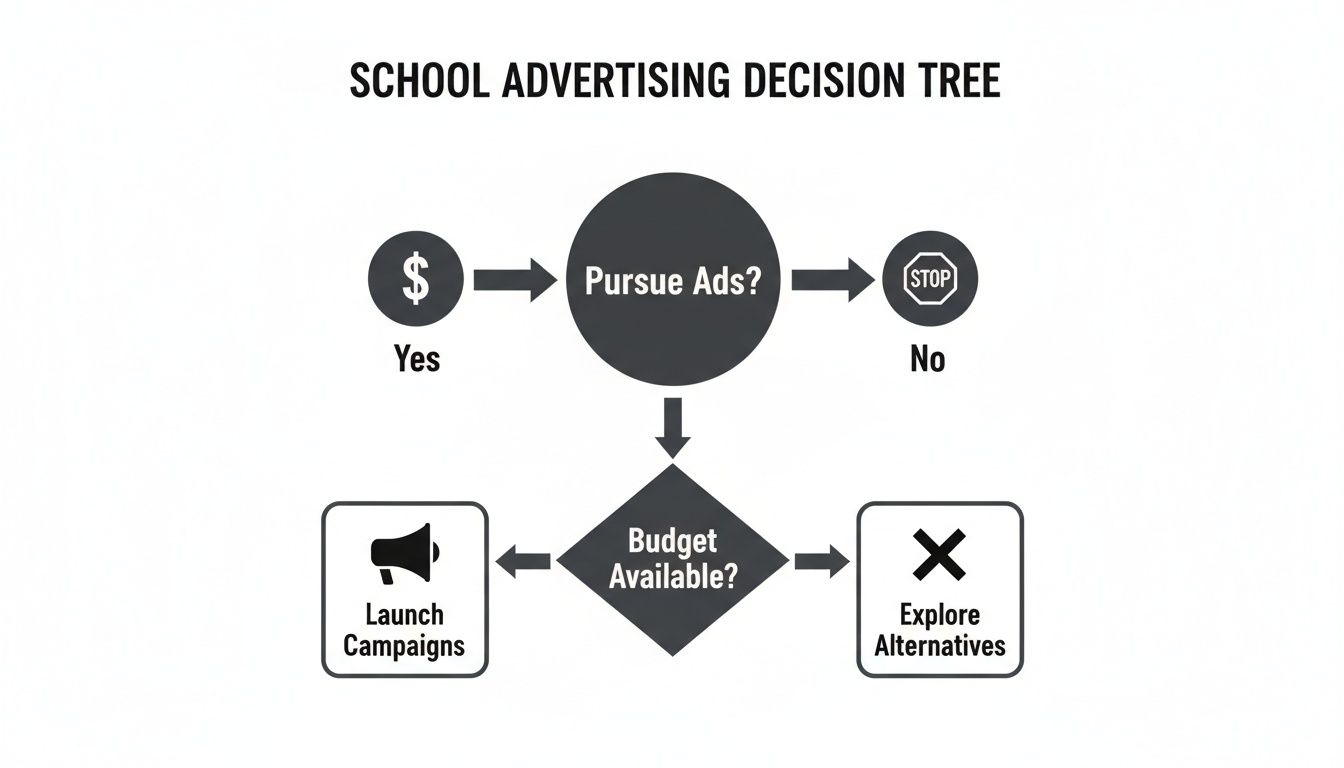
This image helps visualize the structured thought process needed, from initial consideration to final launch.
Here’s a simple way to remember the difference: FERPA locks the filing cabinet that holds student records. COPPA stands guard at the digital front door, making sure no one collects a child’s online data without a parent handing over the key. Breaking either of these laws comes with steep penalties and can shatter the trust you’ve built with your community.
Moving from Compliance to True Ethical Leadership
Following the law is the bare minimum, not the goal. A truly strong advertising policy is built on a foundation of ethics, answering questions that cut to the very heart of your district's mission. These questions ensure that a partnership doesn't just bring in revenue but adds genuine value to the student experience.
Before you sign on the dotted line, your leadership team needs to ask some tough questions:
- Does this partnership genuinely serve our students? Does it fund a critical program, provide new learning resources, or open up unique opportunities? If the only real benefit is a check, you should probably walk away.
- What message does this brand send to our families? When you partner with a brand, you're giving it your stamp of approval. Make absolutely sure its reputation and values align with the standards you uphold in your schools.
- Is the product or service even appropriate for a K-12 environment? This is a non-negotiable filter. Your policy should have a hard-and-fast list of prohibited categories, like junk food, sugary drinks, gambling, or anything else unsuitable for children.
This decision tree cuts through the noise and gets to the core of what matters in every potential advertising partnership.
This visual boils the entire evaluation down to one essential choice: does this opportunity advance our mission, or does it introduce risks we can't accept?
Your Advertiser Vetting Checklist
To turn these principles into action, you need a formal vetting process. This ensures every potential partner is measured against the same high standards, every single time. A strong review process is a cornerstone of smart school administration, a concept you can explore further in these vendor management best practices.
Your checklist should be simple: you need a "yes" on every single point before a conversation can move forward.
- Brand Reputation: The company is well-regarded and has a positive track record in the community.
- Product Appropriateness: The product or service is age-appropriate and supports student well-being.
- Value Alignment: The company's mission doesn't clash with the district's educational goals.
- Legal Compliance: The partner must agree, in writing, to follow all relevant laws, especially COPPA and FERPA.
- Community Impact: The partnership provides a clear, tangible benefit back to the students and the school community.
When you build your policy on a bedrock of legal diligence and ethical clarity, you do more than just protect the district. You empower your schools to build partnerships that work—and that earn the respect of your entire community.
Measuring the True Impact of Your Ad Programs
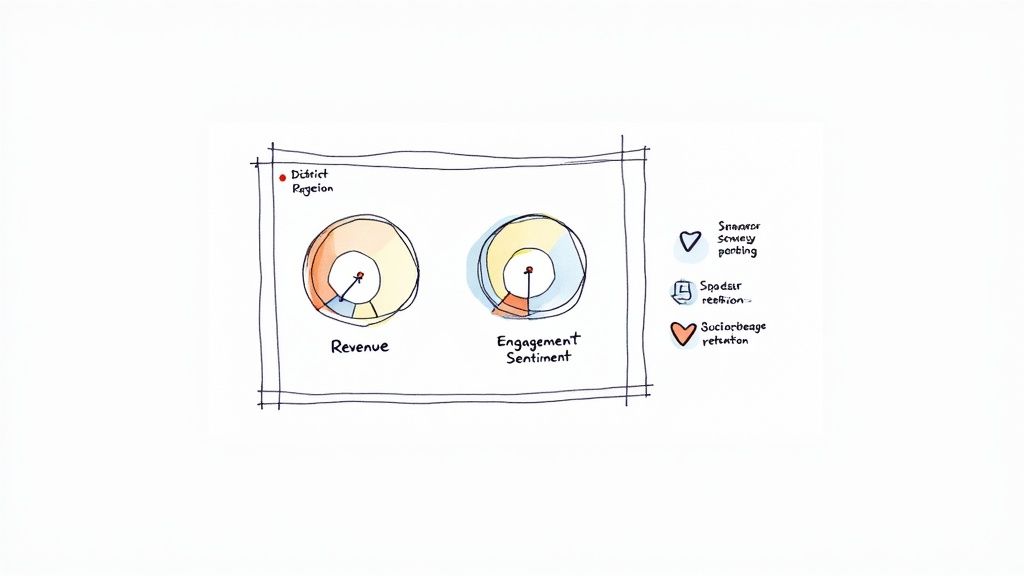
Once your advertising program is live, the real work begins: proving its worth. But measuring success isn't just about counting the dollars coming in. A truly effective program has to deliver value without undercutting your district's core mission, which means you need to look at a much bigger picture.
Think of it like building a "district dashboard" for your ad initiatives. One gauge tracks the financial return, absolutely. But an equally important one monitors how your stakeholders—parents, teachers, and students—are feeling about it all. The goal is to keep both needles in the green, proving your programs are not just profitable but also well-received by the community.
Tracking On-Campus and Sponsorship Success
When it comes to physical ads in education like scoreboard sponsorships or banners at the school play, calculating a direct ROI can be a tough nut to crack. Instead of getting bogged down in revenue alone, we often measure success through the quality of our relationships and the community's perception. These are the qualitative metrics that really tell you if a program has long-term potential.
Here are a few key performance indicators (KPIs) to keep an eye on:
- Sponsor Retention Rate: What percentage of your partners come back year after year? A high retention rate is the clearest sign that sponsors feel they're getting real value.
- Community Feedback: Are you listening for comments from parents, teachers, and students? Positive mentions at board meetings or parent-teacher nights are gold.
- Program Impact: Can you draw a straight line from sponsorship dollars to specific improvements? Being able to say, "The new theater curtains were made possible by our partnership with Main Street Bank," is incredibly powerful.
Success in on-campus advertising is less about impressions and clicks and more about handshakes and thank-you notes. It’s measured by the strength of the partnerships you build and the tangible benefits students receive as a result.
Measuring Digital Advertising Performance
Digital channels, on the other hand, are a data goldmine. They let you measure your advertising efforts with incredible precision. For ads you place in district newsletters, on your website, or inside a school app, you can track exactly how users interact, which helps you demonstrate clear value to your partners.
Some of the most common digital metrics to watch include:
- Click-Through Rate (CTR): This is the percentage of people who saw an ad and actually clicked on it. It’s the first and most basic measure of whether an ad is compelling.
- Engagement Rate: For sponsored social media posts or newsletter content, this tracks likes, shares, and comments. It tells you how well the message is resonating.
- Conversion Rate: If your sponsor has a specific goal, like getting sign-ups for a community event, you can track how many people took that action after clicking the ad.
The higher education world leans heavily on these digital metrics. A staggering 83% of universities use Google Ads, and with the right tracking, Google estimates their average ROI at 200%. Considering Google is projected to capture nearly 72% of U.S. search ad spend by 2025, getting comfortable with these tools is essential.
To get a truly holistic view of your advertising returns and fine-tune your strategies for ads in education, you might even explore advanced tools like Marketing Mix Modeling. By blending the hard financial data with the softer community feedback, you can confidently show that your ad programs are hitting their goals—both on the balance sheet and in the classroom.
Communicating Your Advertising Policy to the Community
Let's be honest: a brilliant, ethically-sound advertising policy can still fall flat if the community isn’t on board. Without getting ahead of the conversation and earning that buy-in, even the most well-intentioned plans can spark a firestorm. The trick is to own the narrative from day one.
You need to frame this entire program not as a quick cash grab, but as a smart, strategic move that directly helps students. Your best friend in this process? Radical transparency. Before a single ad ever sees the light of day, your community needs to understand the what, the why, and the how behind your new policy.
That means you have to start talking—to the school board, your staff, parents, and even local residents—long before you officially flip the switch.
Building a Foundation of Trust
Your first move is to get all your key communicators on the same page with clear, consistent messaging. The goal here is to anticipate the tough questions and anxieties before they even surface. This simple, proactive step can transform a defensive, reactive conversation into a confident explanation of a well-thought-out plan.
Start by putting together a solid communication toolkit for your district leaders, principals, and board members. This isn’t just a memo; it’s their playbook. It should include:
- A Clear Rationale: A simple, one-page document explaining why the district is doing this. Focus on the specific programs or resources the ad revenue will directly support. Is it for the arts? New technology? A robotics club? Be specific.
- Talking Points: A handful of concise, easy-to-remember points they can use in meetings, presentations, or even just casual conversations.
- Frequently Asked Questions (FAQ): A detailed FAQ sheet that tackles the tough stuff head-on. Cover everything from ad appropriateness and student data privacy to how, exactly, you'll be vetting potential partners.
Think of this as building a coalition of informed advocates. When a parent raises a concern at a PTO meeting, you want your principal and teacher leaders equipped to respond with confidence, clarity, and a unified message.
Frame the Conversation Around Student Benefit
When you finally introduce the policy to the wider community, always lead with the "why" from a student's point of view. Resist the urge to start with budget shortfalls or revenue goals. That sounds desperate. Instead, tell a story about what this new funding will make possible.
The entire conversation shifts when you frame it around tangible benefits for kids.
For example, which of these statements lands better?
- "We're launching an ad program to generate $50,000 in new revenue."
- "We're launching an ad program to fully fund our middle school arts and music programs, making sure every single student has access to instruments and creative classes."
The second one connects the dots directly to student success. It has a heart. To back this up, create a dedicated page on your district website where your policy, goals, and approved partners are all easily accessible. This level of openness shows your decision-making was mission-driven and focused on making the educational experience better.
By framing ads in education as a tool to protect and enrich what students get out of school, you can turn potential critics into your most vocal supporters.
Answering Common Questions About School Advertising
Even with a rock-solid policy, you're bound to get questions when you start bringing ads into your schools. That's completely normal. Thinking through these common concerns ahead of time means you can answer with confidence, showing your community that every decision is thoughtful and puts students first.
Here are some of the most common questions that land on a school leader's desk and how you can tackle them.
How Can We Make Sure the Ads Students See Are Appropriate?
Your best tool here is a multi-layered review process, and it needs to be written down in your official district policy. Get specific about what's off-limits—no political ads, no junk food, no products kids can't legally buy.
Then, create a small review committee with administrators, a teacher or two, and maybe a parent representative. This group should vet every single potential advertiser against your guidelines before anyone signs a contract.
When it comes to digital ads, you need to have final say. Make sure your vendor contracts explicitly state that the district must approve all ad content. This keeps random programmatic ads from slipping through the cracks. Posting your advertising policy right on the district website is also a great move for transparency and builds trust.
What's the Best Way to Get an Advertising Program Started?
My advice is always the same: start small and start local. Don't try to land a huge national brand on day one. Instead, look to the community businesses that are already part of your school's ecosystem—the local bank, the family-owned pizza place, or the real estate agent who lives in the neighborhood.
Begin with simple, high-visibility sponsorship options that are easy to manage.
- Athletic scoreboards are a classic for a reason; they get a lot of eyeballs.
- Programs for plays or concerts offer a direct connection to an engaged audience.
- School e-newsletters go straight to the parents you want to reach.
This approach lets you build a portfolio of successful partnerships and work out the kinks in your process. It proves the concept works—to sponsors and to your own community—before you even think about scaling up.
How Should We Handle Pushback From Parents?
When it comes to parental concerns, proactive communication is everything. Before you even launch the program, get out in front of it. Host an info session, put a detailed FAQ page on your website, and use surveys to get a read on the community's feelings.
Always, always frame the program in terms of how it helps kids. Be specific. "This revenue will fund the new STEM lab," or "These sponsorships will pay for new team uniforms so families don't have to."
Inevitably, you'll still get some negative feedback. When you do, respond with empathy and facts. Listen to their concern, point them to your public policy, and gently steer the conversation back to the mission. Explaining that the decision was driven by student needs, not just dollar signs, will defuse most of the tension.
This is especially critical now, as so much of our interaction happens online. More than 70% of prospective students first check out a school online, and 75% use social media to do their homework. That's why having your policies and your "why" clearly communicated online is no longer optional. You can dig deeper into how digital marketing trends are shaping education and see just how vital that transparency has become.
Ready to take your district's marketing and communications to the next level? Join The MarCom Society to connect with a community of K-12 professionals, access expert-led training, and get the tools you need to lead with confidence. Learn more and become a member today at https://marcomsociety.org.









