Why Blogging for Schools Matters

Traditional classrooms often face challenges in fully preparing students with the communication skills needed in our digital world. Blogging for schools offers a solution, transforming from simple online journaling into a valuable educational tool. Progressive schools are now using blogs to help students develop authentic writing skills that go beyond typical academic work.
This allows students to find their unique voice and connect with a larger audience. As a result, writing becomes more engaging and meaningful for them.
Benefits of Blogging in Education
Integrating blogging into education offers a range of advantages for students. Here are some key benefits:
- Improved Writing Proficiency: Consistent blogging practice leads to better grammar, a richer vocabulary, and improved overall writing fluency.
- Enhanced Communication Skills: The interactive format of blogging encourages dialogue and discussion, strengthening communication skills in a practical setting.
- Development of Digital Literacy: Creating and managing a blog helps students build essential digital literacy skills, which are vital for success in our technology-driven world.
- Increased Student Engagement: Blogging gives students a space to explore their passions and share their thoughts, fostering a sense of ownership over their learning journey.
These benefits go beyond individual student growth. Blogging can positively impact the entire learning environment. For example, peer feedback and collaboration through comments sections can create a stronger sense of community. This collaborative learning adds a valuable layer to the educational experience.
The Growing Importance of Blogging
The rise of blogging as a communication tool highlights its value in education. As of 2025, there are over 600 million blogs worldwide, many of which are likely connected to education. Find more detailed statistics here This demonstrates the increasing acceptance of blogging as an effective teaching tool. Schools are incorporating blogs into their curriculum to enhance writing skills, promote critical thinking, and facilitate communication between students. Platforms like WordPress offer user-friendly interfaces for student projects, class discussions, and creative writing. Blogging for schools connects directly to Child Care And Education resources focused on student engagement and development.
Creating Meaningful Learning Experiences
Traditional writing assignments sometimes lack a real audience, which can decrease student motivation. Blogging, however, provides a platform for students to share their work with a wider audience. This gives their writing a sense of purpose and authenticity. This real-world application of writing skills increases student engagement and encourages them to take pride in their work. Furthermore, having a tangible audience motivates students to improve their writing, aiming for clarity and impact. This results in greater effort and a deeper understanding of the importance of effective communication.
Unleashing Student Literacy Through Educational Blogging
Blogging offers a dynamic approach to literacy development, moving beyond traditional assignments and empowering students to become confident communicators. We'll explore how classroom blogging has transformed hesitant writers into enthusiastic content creators, showcasing noticeable improvements in writing proficiency, vocabulary, and overall communication skills. Through real-world examples, we'll see how the blogging process naturally encourages thoughtful revisions, focused editing, and the development of an authentic voice.
How Blogging Transforms Literacy
Educational blogging fosters a collaborative environment where peer feedback and interaction are integral to the learning process. This approach cultivates critical thinking skills and provides students with a genuine purpose for their writing, elements often lacking in conventional literacy instruction. Consider the traditional essay, often written solely for the teacher's evaluation, offering limited opportunities for revision or interaction. In contrast, a blog post, intended for a wider audience, motivates students to refine their writing based on reader comments and feedback. This iterative process significantly strengthens both writing and communication skills.
Blogging also nurtures digital literacy, an essential skill in our technology-driven world. Students learn to navigate blogging platforms like WordPress, effectively format their posts, and incorporate multimedia elements like images and videos – skills that extend beyond the classroom. This digital fluency becomes a valuable asset for future academic and professional pursuits.
To illustrate the differences, let's look at the following comparison:
Literacy Skills Enhanced Through Educational Blogging
This table compares traditional writing assignments with blogging to show how blogging uniquely develops critical literacy skills.
| Literacy Skill | Traditional Assignments | Blogging Enhancement |
|---|---|---|
| Audience | Primarily the teacher | Wider audience, including peers and the public |
| Feedback | Limited teacher feedback | Ongoing feedback from multiple sources |
| Revision | Often limited to initial draft | Encouraged through comments and interaction |
| Purpose | Primarily for a grade | Authentic purpose for communication and sharing |
| Digital Literacy | Minimal | Developing skills in platform navigation, formatting, and multimedia integration |
This table highlights how blogging provides a more engaging and dynamic learning experience compared to traditional writing assignments. The opportunity for a wider audience, continuous feedback, and the integration of digital tools enhances the development of essential literacy skills.
Real-World Impact of Blogging in Schools
Blogging in schools has consistently proven effective in improving literacy and fostering creativity. This is particularly relevant considering the widespread readership of blogs, with approximately 77% of internet users regularly engaging with blog content. Find more detailed statistics here. Schools are leveraging this extensive engagement to connect students with broader audiences and make learning more interactive. For instance, many schools in the U.S. actively encourage students to share their perspectives and ideas through blog posts, fostering a sense of community and promoting authentic communication. This not only strengthens their writing abilities but also equips them with the digital literacy skills essential for navigating today's digital landscape.
Building a Collaborative Learning Environment
The collaborative nature of blogging enriches the learning experience by providing numerous opportunities for peer interaction and constructive feedback. Students learn from each other’s writing styles, offer insightful critiques, and engage in meaningful discussions about the content. This dynamic exchange of ideas creates a supportive and stimulating learning environment, promoting deeper understanding and encouraging a love of writing. The interactive process transforms writing from a solitary exercise into a shared experience, further enhancing the development of essential literacy skills.
Building Your School's Blogging Program From the Ground Up

Successfully launching a school blogging program involves careful planning and collaboration. From selecting the right platform to establishing clear safety guidelines, several key decisions must be made. Gaining buy-in from administrators, teachers, and parents is also essential for a thriving program. This section will guide you through the practical steps of building a successful blogging program for your school.
Selecting the Right Blogging Platform
Choosing the right blogging platform is a crucial first step. The platform should be user-friendly for both students and teachers, offer robust privacy features, and integrate seamlessly with your school's existing systems.
Popular options include WordPress, Edublogs, and Blogger. Each platform has its own advantages. WordPress is known for its flexibility and customization options. Edublogs is specifically designed for education, offering built-in safety features. Blogger is a simple platform that integrates well with Google services.
Consider factors such as cost, technical support, and ease of use when making your decision. The right platform can significantly impact the success of your blogging program.
Establishing Clear Safety and Privacy Protocols
Protecting student privacy is paramount in any online activity. Establishing comprehensive safety protocols is essential for a successful school blogging program.
Create clear guidelines for acceptable online behavior, comment moderation policies, and procedures for handling inappropriate content. Collaborate with your school's IT department to implement safety features, such as content filters and privacy settings. It's also crucial to secure parental consent before students participate in any public-facing blogs.
These measures build trust with parents and ensure a safe online environment for students, allowing everyone to focus on the educational benefits of blogging.
Creating Sustainable Content Workflows
Developing sustainable content workflows is key to avoiding teacher burnout. This involves establishing clear roles and responsibilities, setting realistic content creation schedules, and providing teachers with the training and support they need.
One effective strategy is integrating blogging into existing curriculum standards, making it a natural extension of classroom activities. Developing a content calendar outlining blogging topics and deadlines can also provide a structured framework for teachers.
By streamlining the blogging process, it can become a manageable and enriching part of the curriculum, contributing to the program's long-term sustainability.
Addressing Stakeholder Concerns
Gaining support from stakeholders, including administrators, teachers, and parents, is vital for the success of your blogging program. Address any concerns proactively by highlighting the educational benefits of blogging.
Demonstrate how blogging can improve writing skills, enhance digital literacy, and increase student engagement. Share success stories from other schools and showcase how blogging aligns with curriculum goals. For example, show how regular blogging practice, with a real-world audience, can significantly improve writing proficiency.
Offering training sessions and resources for parents can also alleviate anxieties about online safety and digital citizenship. This proactive approach, combined with open communication and collaboration, is essential for building a successful and sustainable blogging program. By addressing concerns and emphasizing the value of blogging, your school can cultivate a thriving online learning community.
Beyond English Class: Blogging Across Subject Areas
Educational blogging isn't limited to language arts. It’s a powerful tool that can enhance learning across various subjects. From science experiments to social studies discussions, blogs offer dynamic opportunities to deepen understanding and boost student engagement. Let's explore how different subjects utilize blogs to elevate the learning experience.
Science: From Hypotheses to Reflections
Science classes can integrate blogging to document experiments, analyze data, and reflect on the scientific process. Students can blog about their hypotheses before starting an experiment, meticulously record observations during the process, and then analyze their findings. This practice fosters critical thinking skills and reinforces scientific methodology.
For example, in a biology experiment, students can blog about their initial assumptions, document the growth of a plant over a specific period, and analyze any deviations from their predictions. This hands-on approach transforms abstract concepts into tangible experiences, connecting learning to real-world scenarios.
Math: Problem-Solving in the Digital Sphere
Blogging in math empowers students to articulate their problem-solving strategies and enhance their grasp of mathematical concepts. By outlining their reasoning step-by-step in a blog post, students reinforce their understanding and identify areas where they might need additional support. Furthermore, they can explore the practical applications of mathematical principles through real-world examples and case studies, highlighting the relevance of math in everyday situations.
Social Studies: Bridging History and Current Events
Social studies teachers can use blogs to connect historical events with contemporary issues. Students can research influential figures, analyze past societal structures, and explore the links between these historical elements and present-day concerns. This approach nurtures critical thinking and cultivates a more profound understanding of historical context. Blogging also offers a platform to discuss current events from a historical perspective, facilitating informed discussions and promoting civic engagement.
Art: Showcasing Creativity in Digital Portfolios
Art teachers are using blogs to create dynamic digital portfolios, showcasing student artwork and documenting their creative processes. This provides students with a platform to display their talents, receive feedback, and reflect on their artistic development. These digital showcases are invaluable, preparing students for a professional world where online portfolios are increasingly essential for demonstrating skills and accomplishments.
Foreign Language: Cultural Exploration Through Writing
Foreign language classes can leverage blogs to provide students with authentic writing practice. Students can craft blog posts in the target language about cultural experiences, travel adventures, or their daily lives. This immersive approach reinforces vocabulary, grammar, and cultural understanding, making language learning more engaging and relevant.
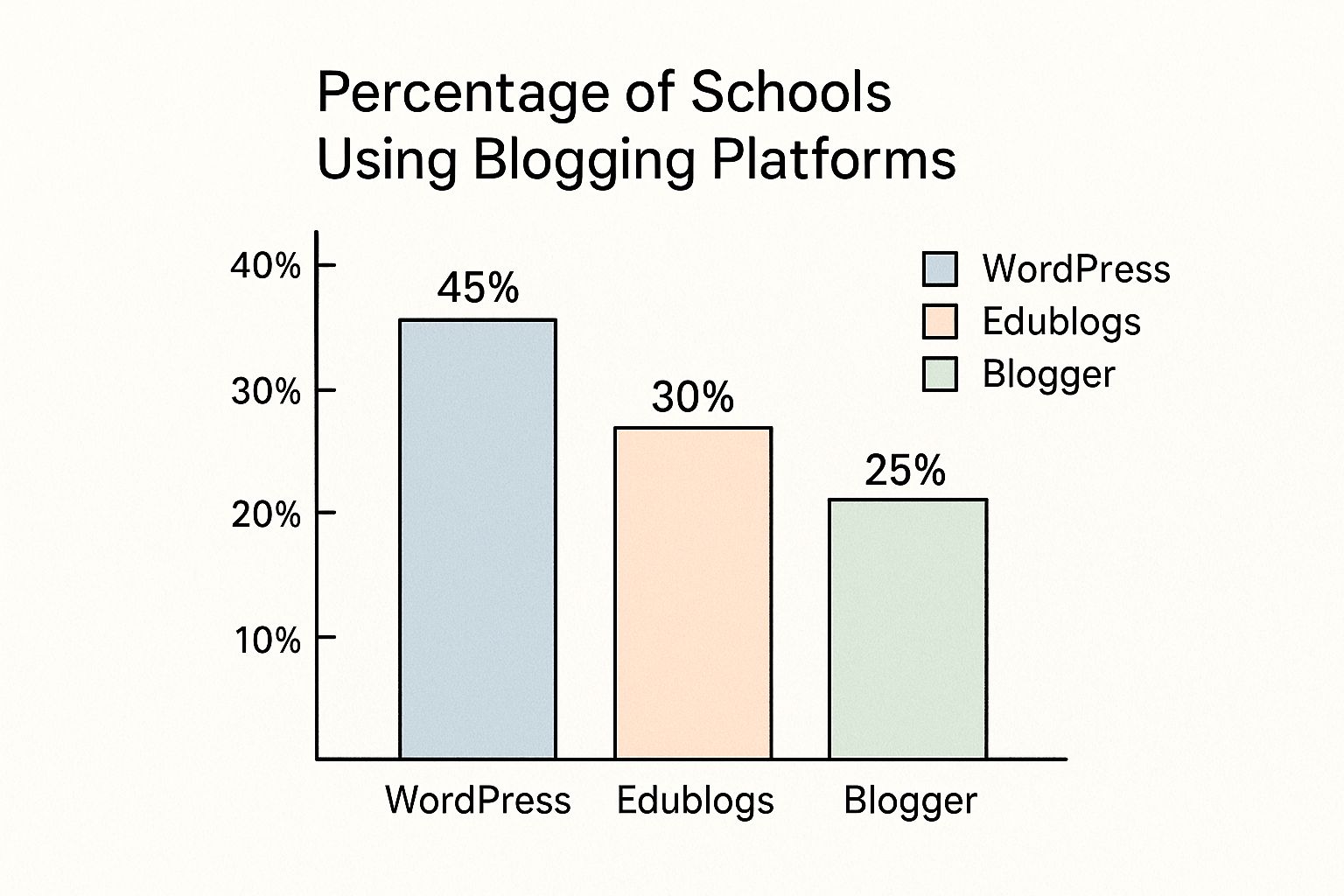
The infographic above illustrates the percentage of schools utilizing various blogging platforms. WordPress leads with 45% adoption, followed by Edublogs at 30% and Blogger at 25%. This data clearly highlights the popularity of WordPress as a blogging platform for schools, likely attributed to its flexibility and diverse features. When establishing a blogging system for your school, consider exploring general resources on blogging programs. Resources like How to Master Social Media for Schools can provide valuable insights for developing effective school blogging initiatives.
To help teachers implement cross-curricular blogging activities, the following table provides specific ideas organized by subject area:
Subject-Specific Blogging Applications: This table provides specific blogging activity ideas organized by subject area to help teachers implement cross-curricular blogging.
| Subject Area | Blogging Activity | Learning Outcomes | Implementation Tips |
|---|---|---|---|
| Science | Documenting a science experiment, including hypothesis, observations, and analysis | Reinforces scientific method, develops critical thinking, and connects learning to real-world applications | Encourage detailed observations, data analysis, and reflection on potential errors or unexpected results. |
| Math | Explaining a problem-solving strategy step-by-step | Improves understanding of mathematical concepts, enhances problem-solving skills, and identifies areas needing further support | Provide clear guidelines for explaining reasoning and encourage the use of visuals or diagrams. |
| Social Studies | Connecting a historical event to a contemporary issue | Develops historical context, promotes critical thinking, and encourages civic engagement | Guide students in researching credible sources and formulating informed opinions. |
| Art | Creating a digital portfolio showcasing artwork and creative processes | Provides a platform for showcasing talent, receiving feedback, and reflecting on artistic growth | Offer guidelines for portfolio organization and encourage reflection on artistic choices. |
| Foreign Language | Writing about cultural experiences or daily life in the target language | Reinforces vocabulary, grammar, and cultural understanding in an authentic context | Provide prompts and feedback on language use and cultural accuracy. |
This table offers a practical framework for incorporating blogging across different subject areas. By adapting these ideas to their specific curriculum, teachers can empower students to engage with their learning in new and dynamic ways.
Building Future-Ready Skills Through School Blogging
Students entering today's workforce need a diverse skillset to thrive. School blogging programs offer a unique way to cultivate these crucial competencies. This section explores how blogging can help students develop valuable, sought-after skills.
Developing Key Professional Competencies
Blogging is more than just writing. It's a dynamic activity that nurtures a wide range of professional skills.
Digital Communication Fluency: Students learn to communicate effectively online, crafting engaging content for a specific audience.
Deadline Management: Regular blogging requires meeting deadlines, which instills valuable time management and organizational skills.
Constructive Feedback Integration: The interactive nature of blogging exposes students to feedback, helping them learn to accept and utilize constructive criticism.
Professional Portfolio Development: A blog becomes a tangible portfolio, showcasing a student's writing and digital expertise.
These skills are transferable and prepare students for the demands of college and the professional world.
Real-World Advantages for Students
The advantages of school blogging are evident in the experiences of former student bloggers. Many have cited how blogging provided a distinct edge in college applications and job interviews. For example, students can discuss how managing a school blog improved their time management – a valuable asset in any setting. Others can highlight how blogging helped build a strong online presence, showcasing their passion for writing and communication.
Blogging also helps students build a positive digital footprint, increasingly important in our interconnected world. This online presence can be beneficial when applying to colleges or looking for employment. A positive online image demonstrates responsibility and professionalism.
Strategies for Empowering Student Bloggers
Schools can implement strategies to maximize the impact of their blogging programs:
Developing a Professional Writing Voice: Guide students in crafting a professional yet authentic writing style, appropriate for varied audiences.
Connecting Blogging to Career Readiness: Explicitly link blogging activities to specific career skills, helping students articulate the value of their experience to potential employers. For instance, they can explain how writing blog posts honed their ability to synthesize complex information and communicate it clearly.
Leveraging Blogging Experience for Future Opportunities: Encourage students to showcase their blogs in college applications, resumes, and interviews.
The influence of blogging extends beyond academics to career development and professional networking. With over 7.5 million blog posts published daily (Optinmonster), schools can help students build a professional online presence early. This is particularly helpful for students interested in journalism, writing, or digital media. A blog effectively becomes a portfolio, showcasing skills to potential employers or university admissions officers.
Frameworks for Articulating Blogging Skills
Equipping students with frameworks to connect blogging to career skills is crucial. These frameworks help students articulate the value of their blogging experience to future employers. They can discuss how blogging enhanced their communication skills, improved their ability to work independently and collaboratively, and fostered their creativity and problem-solving skills. By providing these tools, schools empower students to present their blogging experience as a valuable asset in their professional journey.
Measuring What Matters: Evaluating Your Blogging Initiative

Evaluating the success of a school blogging program involves more than just looking at page views and comments. It requires a comprehensive look at how the program impacts student learning and development. This section explores practical ways to measure the effectiveness of your blogging initiative.
Beyond Page Views: Assessing Real Impact
Page views can give you a general idea of how many people are seeing your blog, but they don't tell the full story. More significant metrics include tracking students' writing development, vocabulary growth, and improvement in communication clarity over time.
For example, teachers can analyze student blog posts from the beginning, middle, and end of the school year to see how writing skills have progressed. This offers a much more complete understanding of student growth than simple page view counts. Observing how students use feedback from peers and teachers also provides valuable insight into their learning process.
You can also learn more about improving your blog's visibility online: How to master SEO for schools.
Gathering Feedback From Your Community
Feedback from students, parents, and community members offers important perspectives on the blog’s influence and where it can be improved. Student surveys can show how blogging has changed their confidence and motivation to write.
Parent feedback can offer insights into how blogging is viewed outside the classroom. Community engagement can show the blog's reach and ability to build connections beyond the school. These varied viewpoints help refine the blogging program and ensure it meets the needs of its audience.
Using Blog Analytics as a Teaching Tool
Many schools are incorporating blog analytics into their curriculum, teaching students about audience engagement and data literacy. By examining their own blog's performance, students get a practical understanding of how to interpret data and use it to make smart choices.
This practical approach brings abstract concepts to life. Students can learn how to track which posts get the most views or comments, then analyze why some posts are more engaging than others. This builds analytical skills and prepares them for data-driven decision-making in the future.
Setting Realistic Goals and Objectives
Setting clear goals and objectives is essential for evaluating any program effectively. These goals should match the educational aims of the blogging initiative and take into account factors like grade level and subject.
For younger students, the focus might be on basic writing skills and digital literacy. For older students, goals might include creating a professional online presence and demonstrating career-ready skills. By setting realistic and measurable goals, schools can track progress and show the value of their blogging program.
Navigating Roadblocks: Overcoming Educational Blogging Challenges
Even with the best planning, school blogging programs can encounter obstacles. However, these challenges are manageable with proactive strategies and open communication. This section addresses common roadblocks and offers practical solutions for a successful blogging initiative.
Addressing Parental Concerns About Online Presence
Parental concerns about student safety and online privacy are understandable. Openly addressing these concerns is vital for building trust and ensuring program success. Schools can organize informational sessions for parents outlining the blogging program’s safety protocols, content moderation policies, and privacy settings.
Emphasizing the educational benefits of blogging, such as improved writing and communication skills, can also alleviate parental anxieties. Explaining how blogging teaches students to communicate effectively in a digital environment and responsibly manage their online presence can ease concerns and highlight the program’s value.
Ensuring Equitable Technology Access For All Students
Not all students have equal access to technology outside of school. This digital divide can hinder participation in blogging programs. Schools can address this by providing access to computers and internet connectivity during school hours.
Offering after-school technology labs or exploring partnerships with local libraries or community centers can expand access points for students without home internet. These solutions ensure equitable participation and allow all students to benefit from the blogging program.
Maintaining Program Momentum and Teacher Workload
Initial enthusiasm for new programs can fade. To maintain momentum, schools can regularly showcase student blog posts, celebrate successes, and highlight the positive impact of blogging to reinforce its value.
Providing ongoing support and professional development for teachers can help them integrate blogging into their curriculum. This includes workshops on blogging tools, sharing best practices for content creation, and creating opportunities for teacher collaboration.
Strategically integrating blogging into existing curriculum can minimize extra teacher workload. Instead of separate blogging tasks, teachers can align blog posts with existing writing assignments, allowing students to fulfill both requirements simultaneously. This streamlines the process and minimizes the burden on teachers.
Navigating District Policies and Digital Content Creation
School districts often have policies regarding digital content creation and online publishing. Understanding these policies and working within their framework is essential. Schools can collaborate with district administrators to ensure the blogging program complies with existing guidelines.
This may involve reviewing content moderation policies, clarifying copyright regulations, and addressing any concerns about internet filtering restrictions. Open communication and collaboration with district officials can ensure smooth implementation and avoid potential conflicts.
Supporting Struggling Writers and Technology-Hesitant Students
Some students may struggle with writing or be uncomfortable with technology. Providing tailored support for these students is crucial. Schools can offer individualized writing assistance through peer mentoring programs, writing workshops, or one-on-one tutoring sessions.
For technology-hesitant students, introductory technology training, pairing them with tech-savvy peers, and offering patient guidance can build necessary skills and confidence. This ensures that all students can participate fully and benefit from the program.
By proactively addressing these challenges, schools can create robust and sustainable blogging programs that enhance student learning and prepare them for future success.
Are you ready to empower your school's communication strategy? Join The MarCom Society and become part of a thriving community of K-12 marketing and communication professionals. Gain access to exclusive resources, expert insights, and collaborative opportunities to elevate your school’s brand and achieve your communication goals.