When a crisis hits your school district, your social media channels aren't just another communication tool—they become the primary source of information for your entire community. It’s all about getting ahead of the story, stamping out misinformation as it appears, and holding onto the trust you’ve built when rumors are flying.
Why Social Media Is Your New Frontline in a School Crisis

Not long ago, a school crisis was mostly contained within its own walls. We managed it with phone trees and maybe a call to the local news station. Today, an incident can explode online in a matter of minutes. All it takes is one unverified post from a worried parent or a speculative tweet from a student to spark widespread panic, completely overwhelming your ability to get the facts out.
This is the reality of school safety now. The conversation about your school during an emergency will happen on social media, whether you participate or not. Staying silent isn't an option; it's a choice to let someone else tell your story for you.
The Unmatched Speed of Misinformation
Think about a minor lockdown caused by a simple misunderstanding. A student texts their parent, who then posts in a local Facebook group: "Something is happening at the high school, kids are hiding." That post gets shared a dozen times in five minutes. Other parents chime in with their own fears, and before you know it, a completely false narrative about a serious threat is running wild.
By the time the school manages to send out an official email, the damage is already done. Panic has taken root, trust is shaken, and your communications team is stuck playing defense against a tidal wave of rumors.
A modern school crisis is a battle for the narrative. Your official channels have to be faster, more trustworthy, and easier to find than the rumor mill. The only way to win is to firmly establish your social media accounts as the single source of truth.
Why a Proactive Plan Is Non-Negotiable
This isn't just a hypothetical problem; it's a fundamental operational challenge. The role of social media in crisis management has become so central that 81% of marketers now see it as the most important channel for handling a crisis in real-time. K-12 might not be corporate marketing, but the core lesson is identical: crises ignite and escalate online in minutes, demanding direct engagement on platforms like Facebook and X (formerly Twitter). You can find more insights about social media's role in crisis management and see how universal this trend has become.
Having a solid social media crisis plan in place flips the script from reactive damage control to proactive leadership. It gives you:
- A Clear Voice: Pre-approved messaging templates stop you from sending out panicked, off-the-cuff statements.
- Defined Roles: Everyone on the team knows exactly what their job is, from who's monitoring the feeds to who has the authority to post updates.
- Community Trust: When your community knows they can count on you for fast, accurate information, you build a foundation of confidence that pays off when you need it most.
Assembling Your Social Media Crisis Response Team
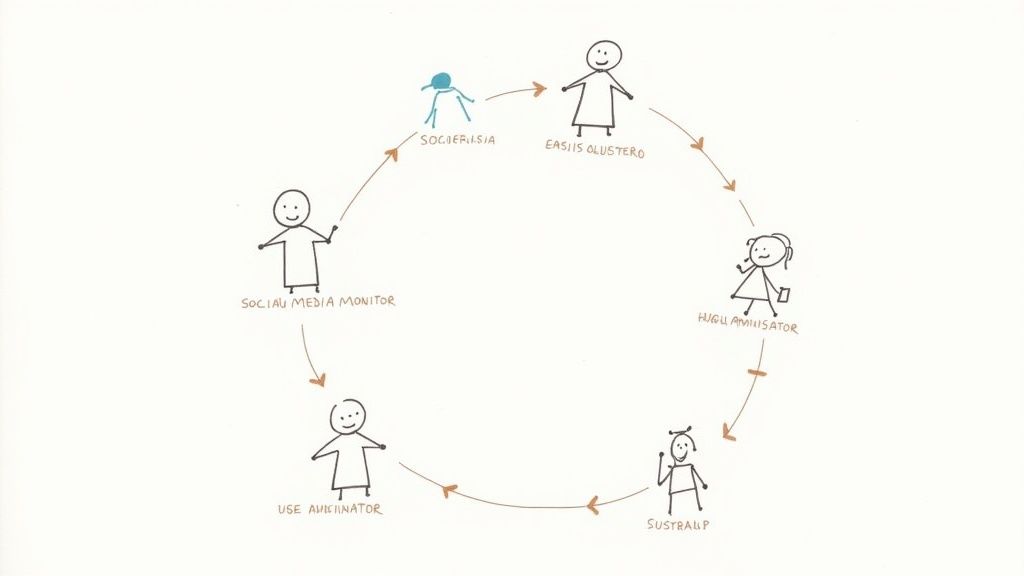
When a crisis hits, you have exactly zero time to figure out who’s supposed to do what. That moment of hesitation—that confusion over who’s in charge—is where things fall apart. Delayed responses and mixed messages can shatter community trust in an instant.
That's why having a pre-established, well-drilled social media crisis response team is non-negotiable. This isn’t just another district committee; it's your command center for navigating the storm. The goal is to move from chaos to a coordinated, calm response in minutes, not hours.
Defining Your Core Crisis Roles
Every effective K-12 crisis team, no matter the district size, relies on a few key players. While your titles might differ, these core responsibilities are universal.
Your essential team should include:
- The Communications Lead: Think of this person as the quarterback. They own the overall strategy, give the final green light on all messages, and make sure everything said online aligns with district policy and leadership’s direction. This is almost always the Director of Communications or a similar high-level role.
- The Social Media Manager: This is your person on the digital front lines. They’re responsible for posting official updates, keeping a constant eye on all channels for mentions and shifts in sentiment, and flagging urgent issues for the lead. They are the team's real-time eyes and ears.
- The Designated Spokesperson: While your Social Media Manager handles the keyboard, the Spokesperson is the public face. This is typically the Superintendent or a building principal—someone who can deliver on-camera statements or official quotes with calm authority and genuine empathy.
- The Fact-Checker/Liaison: Accuracy is everything. This person’s job is to connect with law enforcement, emergency services, or on-site administrators to verify every single piece of information before it goes public. They are the firewall against rumors and unconfirmed details.
From Roles to Readiness
Just handing out titles isn’t enough. Your team needs to be battle-tested and equipped with the right tools before the pressure is on. This is where practical training comes in. A competency-based training approach can be incredibly effective here, as it zeroes in on building the specific skills your team will need when things get intense.
A crisis plan gathering dust on a shelf is worse than useless—it’s a liability. Your plan must be a living document, tested through realistic drills. Run a simulation based on a plausible scenario, like a rumored threat, a sudden weather emergency, or a student conflict going viral. You’ll find the gaps in your process fast.
You also need to arm your team with pre-approved message templates. Build a library of draft posts for common situations like lockdowns, early dismissals, or tech outages. These templates save precious time and ensure your first response is swift, accurate, and professional. Of course, all of this should tie back to a solid district-wide social media policy for schools. Getting that initial message right sets the tone for everything that follows.
Picking the Right Social Media Monitoring Tools
You can't react to conversations you can’t see. The bedrock of any solid crisis plan is listening—really listening—to what’s being said about your school, your staff, and your students online. Without the right monitoring tools, you're flying blind, waiting for an issue to land on your desk instead of spotting it from a mile away.
The good news is you don’t need a massive, enterprise-level budget to get your eyes and ears online. The real goal is to build a toolkit that acts as an early warning system, helping you catch a brewing issue before it spirals out of control. It’s always better to be proactive than to be caught flat-footed.
Free Tools to Get You Started
If you're just dipping your toes in, free tools are a fantastic place to start. They give you a baseline level of awareness and can flag major conversations without costing a dime.
- Google Alerts: This is your first and easiest step. Set up alerts for your school’s name, the superintendent's name, your mascot, and even the names of rival schools. You'll get an email digest of new mentions across the web, from news sites to blogs.
- Built-in Platform Search: Don't overlook the power of the search bar right inside Facebook, X (formerly Twitter), and Instagram. Make it a daily habit to search for school-related hashtags and keywords. You'd be surprised what you can find by pairing your school's name with terms like "fight," "threat," or other sensitive words.
Monitoring isn't just about hunting for negative comments. It's about getting a read on the community's pulse. A sudden jump in mentions—even neutral ones—is often the first sign that a story is about to break, giving you a critical head start.
When to Invest in a Paid Platform
As you get more serious, paid platforms offer much deeper intelligence. These tools can analyze the emotion behind a post (sentiment analysis), track the volume of specific keywords over time, and pinpoint the influential accounts driving the conversation. When you're ready to make that leap, it helps to understand the programmatic side of the best social media management tools.
This isn't just a niche market anymore. The global spend on these services hit USD 1.88 billion in 2023 and is climbing fast, largely because AI is making them smarter than ever. For K-12 schools, that means the tools are getting more powerful and more affordable, giving you a real shot at getting ahead of a crisis before it goes viral. You can read more about this market growth on gminsights.com.
Crisis Monitoring Tool Comparison For K-12 Schools
Choosing the right tool can feel overwhelming, so here’s a breakdown of a few popular options to help you see how they stack up for a typical school district's needs.
| Tool | Key Features | Best For | Cost |
|---|---|---|---|
| Brand24 | Real-time monitoring, sentiment analysis, influence scores, mobile app. | Districts needing comprehensive, real-time alerts without a huge price tag. | Starts around $79/mo |
| Mention | Keyword and social media monitoring, custom reports, competitive analysis. | Schools focused on brand reputation and tracking what's said about competitors. | Starts around $41/mo (Free plan available) |
| Sprout Social | All-in-one publishing, engagement, and listening tool with robust analytics. | Larger districts with a dedicated communications team needing a single platform. | Starts around $249/mo |
| Hootsuite | Social media streams, keyword monitoring, scheduling, and basic analytics. | Small schools or teams managing multiple accounts and needing simple monitoring. | Starts around $99/mo |
Ultimately, whether you're using free alerts or a sophisticated paid service, the goal is the same: clarity. The insights you gather are absolutely vital for protecting your students, your staff, and your school's reputation in the community.
For a deeper dive into this topic, our guide on schools and social media provides more strategies for building a safe and positive online environment for your community.
Executing Your Crisis Communication Plan in Real Time
When a crisis hits, the clock starts ticking. That first hour—what we often call the "golden hour"—is everything. It’s your one real chance to get ahead of the narrative, show you're in control, and stop rumors before they spiral. In a fast-moving social media storm, moving quickly and decisively isn't just a nice-to-have; it's the only way to keep things from getting worse.
Your first move? Get a holding statement out. Immediately. This initial post won't have all the answers, and that's okay. What it must do is acknowledge the situation. If you stay silent, you create a void, and people will fill it with the worst-case scenarios and misinformation.
The Anatomy of an Effective First Post
A solid first post is simple, direct, and full of empathy. This is absolutely not the time for jargon, educational acronyms, or vague statements.
Make sure your initial communication hits these three points:
- Acknowledge what’s happening: Be direct. Something like, "We are aware of the situation developing at Northwood High School and are actively responding."
- Make safety the priority: This is the most crucial message. Reassure everyone that the well-being of students and staff is your top concern.
- Tell people where to go for information: Guide them. "We will be sharing all verified information on this page and our district website. Please refer to these sources for the latest updates."
With that one post, you’ve just established your channels as the official source of truth. It sends a clear message: "We've got this, and we'll keep you in the loop."
Navigating the Digital Chaos
Once that first statement is out, the real work begins. The comment section will likely explode with questions, rumors, and raw emotion. You have to be strategic here. It’s tempting to just shut off the comments, but that should be your absolute last resort. It often looks like you're trying to silence your community, which can push the conversation into private parent groups where you have zero visibility or control.
Instead, lean on those pre-approved responses you prepared. Use them to answer common questions and gently correct misinformation. A simple, firm reply like, "That information is unconfirmed. Please continue to monitor our official channels for accurate updates," works wonders.
The goal isn't to win every argument in the comments. It’s to consistently and calmly redirect the public back to your official information hub, reinforcing your role as the authoritative source.
This infographic breaks down a solid workflow for keeping an eye on the conversation as it unfolds.
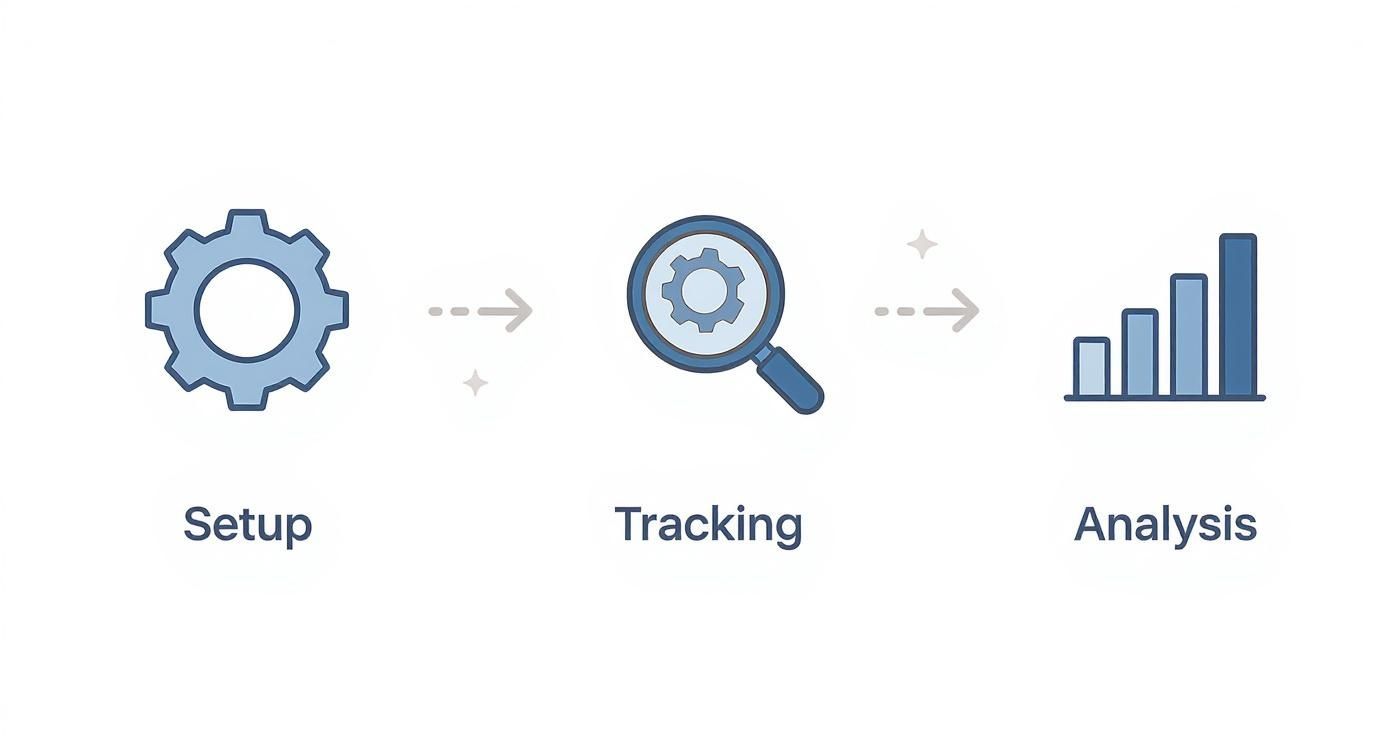
Following a systematic process like this lets you track what people are saying and feeling, so you can adjust your communication strategy on the fly.
Remember, people have almost no patience during a crisis. Research shows that 43% of consumers will walk away from a brand after just one poor crisis response. For schools, the stakes are infinitely higher. Trust is the bedrock of your relationship with the community, and it can vanish in an instant.
Finally, think about the platform. A quick, 140-character update is perfect for X (formerly Twitter). For Facebook, you can write a more detailed post that links back to a full statement on your district’s website. If you're looking for a good framework, this crisis communication plan template can help you organize your approach. This way, everyone gets the right information in the right place.
Keeping Parents and Stakeholders Informed
When a crisis hits, parents and your community are looking for more than just facts—they're desperate for reassurance. Nothing fuels panic faster than a chaotic, multi-channel free-for-all where different staff members are pushing out conflicting information. That's why your entire crisis response hinges on creating a single source of truth.
This is all about controlling the narrative by making your official channels the most reliable place for updates. If parents know exactly where to go for information, they're far less likely to get pulled into the rumor mill on unofficial Facebook groups or neighborhood chats where misinformation can spread like wildfire. Your goal is to make your district’s social media and website the undisputed source for what's really happening.
Establishing a Unified Message
Every single message you send out has to be consistent, no matter the platform. The update sent via email absolutely must match the automated phone call, the website’s alert banner, and the post on your social media accounts. This level of consistency projects competence and control, showing parents you have a steady hand on the wheel.
For this to actually work, your internal communication has to be locked down. Before a single word goes public, your crisis response team must agree on the key talking points and the exact message.
In a K-12 crisis, your community isn’t just an audience; they are your partners in ensuring student safety. Clear, consistent, and empathetic communication is the foundation of that partnership, turning anxious parents into informed allies.
A unified front is what prevents the catastrophic confusion that happens when a principal’s email says one thing and the district’s Facebook page says something else entirely. Those kinds of discrepancies can destroy your credibility in an instant.
Using Templates for Speed and Clarity
Let's be real—when you're in the thick of it, you won't have time to wordsmith the perfect statement. This is where pre-drafted templates become an absolute game-changer for staying consistent under pressure. While you can't predict every crisis, you can certainly anticipate the types of situations you might face. Go ahead and create clear, fill-in-the-blank templates for the most likely scenarios.
Here are a few you should have ready to go:
- Immediate Safety Alerts: Think short, direct, and action-oriented. A lockdown template, for instance, should name the school, confirm students are safe, and tell parents exactly where to look for the next official update.
- Controversial Policy Updates: These require a more detailed and empathetic tone. Your template could include the reasoning behind the change, a quick summary of the new policy, and a clear path for parents to ask questions or give feedback.
- Weather-Related Closures: These are usually straightforward but need to be fast. A solid template will list the effective date, the impact on after-school activities, and a time when families can expect the next update on reopening.
These templates aren’t meant to sound robotic. They’re a pre-approved foundation that your communications lead can quickly customize with the specific details of the event. Taking the time to do this prep work ensures your messaging is calm, clear, and professional, even when the situation is anything but. By standardizing those initial responses, you buy yourself precious time to manage the crisis itself.
After the Storm: Rebuilding Trust and Refining Your Plan
Once the initial social media frenzy dies down, it’s tempting to breathe a sigh of relief and just move on. But the work isn't over. In fact, what you do after the crisis is just as important as how you managed it in the moment. This is your chance to learn, adapt, and begin the vital work of rebuilding trust with your community.
This post-crisis phase can turn a negative incident into a powerful display of your school's integrity and commitment. It’s all about how you handle it. The first order of business is getting your crisis team together for a frank, no-blame debrief. This isn't about finding a scapegoat; it's about finding the cracks in your process so you can fix them.
Running a Post-Crisis Playback
You need to dissect your response from every angle. Gather the team in a room where everyone feels safe to be honest about what worked and, more importantly, what didn't. This is how you turn a painful experience into a stronger defense for the future.
Here are some of the tough questions you should be asking:
- Timing: How long did it take for our first official message to go out? Were we fast enough?
- Accuracy: Was the information we shared 100% correct from the start? Did we have to issue corrections?
- Clarity: Did our posts actually calm people down, or did our language accidentally add to the confusion?
- Tools: Did our social media monitoring tools give us a heads-up, or were we caught flat-footed?
- Community Reaction: Where did misinformation spread the fastest? What were the biggest concerns we heard from parents?
It's crucial to also celebrate the wins. Did someone on the team spot a rumor and shut it down fast? Did a specific message resonate really well? Acknowledging what went right under pressure is a massive morale booster and reinforces smart tactics.
Turning Lessons into Action
Your internal review is just the first step. Now, you have to face your community and start actively repairing the trust that may have been shaken. This isn't about a single "we're sorry" post; it's a sustained effort.
Be transparent. You don't have to share every messy detail, but you can and should share your takeaways. A simple post that says, “We know our communication was slower than we’d like during yesterday’s incident. We’re already implementing a new system to get information to you faster,” goes a long way. It shows you’re listening, you’re accountable, and you’re committed to doing better.
After that, it’s time to consciously shift your content. Get back to telling the positive stories that define your school. Flood your feeds with the good stuff—spotlight a teacher’s incredible new project, celebrate a student’s achievement, or showcase a community partnership. This isn't about pretending the crisis didn't happen. It's about deliberately rebuilding the bank of goodwill and reclaiming the narrative.
Answering the Tough Questions in a School Crisis
When a crisis hits, tough questions come fast, especially on social media. School leaders often find themselves grappling with the same tricky situations. Let’s walk through some of the most common ones I've seen pop up time and time again.
What’s the Best Way to Handle Online Rumors?
Whatever you do, don't ignore them. A rumor left unchecked, especially one from a parent or community member, can catch fire.
You need to tackle misinformation head-on from your official school accounts. The key is to state the facts calmly and directly—don't get pulled into an emotional debate. Your goal is simply to steer everyone back to your official source of information, whether that’s a specific page on the district website or a dedicated updates page. A quick, factual post can snuff out a harmful rumor before it spirals into full-blown panic.
Should We Ever Delete Negative Comments?
This is a big one. My advice? It's almost always a mistake to delete comments. The only exceptions are for credible threats, hate speech, or blatant spam.
Deleting a parent's critical comment, even if it feels unfair, often backfires. It can look like you’re hiding something and will almost certainly make them (and others) angrier.
A much better approach is to respond publicly. Acknowledge their concern and then try to move the conversation offline. A simple, "Thank you for sharing your concern. Please send us a direct message so we can connect you with the right person," shows everyone you're listening without fanning the flames of a public argument.
What Should Our Very First Post Say?
Your initial message needs to be three things: fast, factual, and empathetic. There’s no time to waste.
Acknowledge the situation right away (“We are aware of the incident at Northwood High…”). Immediately reassure everyone that student and staff safety is your top priority. Most importantly, tell people exactly where to go for official updates. This single action positions your social media channel as the definitive source from the get-go.
Navigating crisis communications takes more than just a plan; it takes practice and a strong support system. At The MarCom Society, we're dedicated to giving K-12 communications pros the tools, training, and community they need to lead confidently. Join us to get access to expert-led workshops and connect with peers who get it. You can learn more about our community and how we can help strengthen your crisis response.