When it comes to K-12 fundraising, we often get caught up in the immediate need—the annual fund, the capital campaign, the new science lab. But jumping straight to "the ask" without a plan is like trying to harvest a garden you never planted.
The donor life cycle is the framework that helps you move from one-off, transactional requests to building deep, lasting relationships that can sustain your school for years. It's a structured approach that recognizes fundraising isn't just about money; it's about connecting people to your mission. This journey typically unfolds across four key stages: Identification, Cultivation, Solicitation, and Stewardship.
Understanding the K-12 Fundraising Journey
Think of your school's fundraising efforts like that community garden. You can’t just toss seeds onto the ground and hope for a bumper crop. Real success comes from a thoughtful, cyclical process of planning, nurturing, and caring for your supporters season after season. The donor life cycle brings that same deliberate strategy to fundraising.
It gives you a clear roadmap for turning a potential supporter—a new parent, a local business owner, an alum—into a passionate, lifelong advocate. Instead of focusing solely on the financial transaction, this model prioritizes building a genuine connection first. The gift follows the relationship, not the other way around.
The Four Essential Stages
Each stage of the donor life cycle has a unique role, all designed to bring a person closer to your school's community and its vision. Getting this flow right is the secret to building a fundraising program that feels natural, not forced.
Here’s a quick look at the journey:
- Identification: This is all about finding potential supporters. Think of it as scouting for the most fertile ground in your garden to plant new seeds. Who in your community cares about education?
- Cultivation: Now, you build the relationship without asking for money. This is where you water the seeds—sharing powerful stories about student success, inviting them to school events, and getting them involved.
- Solicitation: Once you've built a real connection and they understand your impact, it's time to make a thoughtful, direct request for support. You're asking your well-nurtured plant to bear fruit.
- Stewardship: This final—and most important—stage is all about showing gratitude and reporting back on their impact. It’s how you tend the garden after the harvest, ensuring it stays healthy and productive for years to come.
This visual helps illustrate how the process starts by identifying a broad group of potential supporters and then narrows the focus.
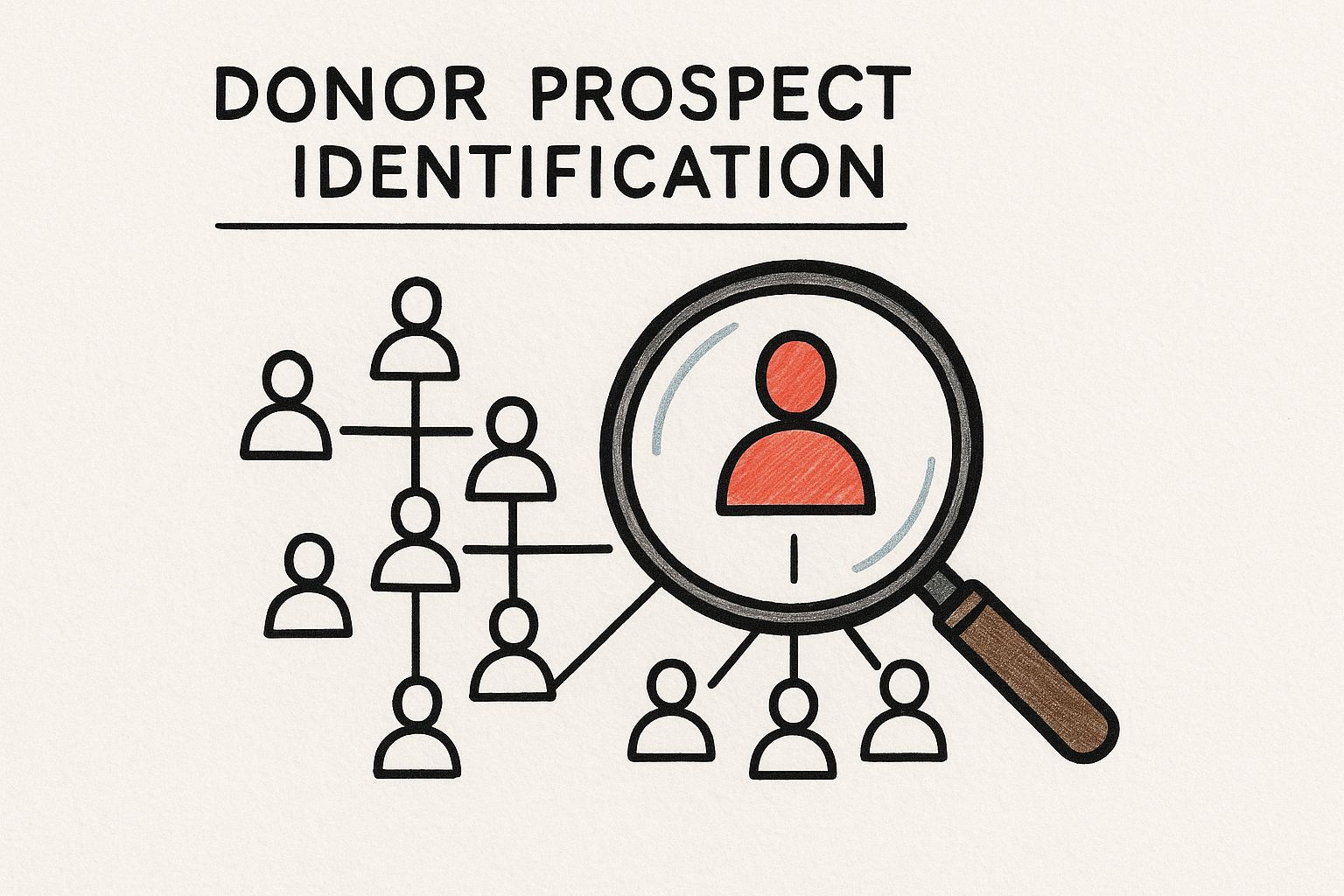
As the graphic shows, everything begins with a focused search for people who are naturally aligned with your school's mission. By intentionally moving supporters through this cycle, your school can create a predictable, relationship-driven fundraising machine.
To make this even clearer, let's break down what each stage looks like in a typical K-12 school.
The Four Stages of the K-12 Donor Life Cycle
| Stage | Primary Goal | Key K-12 Activities |
|---|---|---|
| Identification | To find and qualify prospective donors who have the capacity and inclination to give. | – Running wealth screenings on your parent directory. – Analyzing past giving from alumni and parents of alumni. – Identifying engaged local business owners or grandparents. |
| Cultivation | To build a genuine, meaningful relationship and connect the prospect to the school's mission. | – Inviting them for a personal campus tour with the principal. – Sending a handwritten note from a student. – Sharing impact stories in a personalized email newsletter. |
| Solicitation | To make a specific, well-timed, and personal request for financial support. | – A face-to-face meeting to ask for a major gift. – A targeted email appeal for a specific program. – A phone call from a board member during the annual fund drive. |
| Stewardship | To thank the donor, show the impact of their gift, and strengthen the relationship for future giving. | – Making a thank-you call within 48 hours. – Sending a video from students who benefited from the gift. – Inviting them to an exclusive "insiders" event to see their gift in action. |
This table maps out the journey, but the real magic happens when you bring these activities to life with genuine passion for your school's work. By mastering this cycle, you're not just raising money—you're building a dedicated community of champions.
Finding and Qualifying Potential Donors

The first step in building a strong donor base isn't about casting a wide, impersonal net. It’s about looking for partners who are already part of your school's story. Think of it as a treasure hunt right in your own backyard. You're searching for people who have a natural connection and a real passion for seeing your students succeed.
Honestly, your best prospects are often hiding in plain sight. They’re the parents volunteering at the book fair, the alumni who still show up for homecoming games, and the local business owners who sponsor the robotics team. These are people who have already signaled their interest, making them far more likely to invest financially than a stranger from some generic wealth-screening list.
Who To Look For In Your Community
Start simple. Get a basic spreadsheet going and create a "prospect list" of the people who interact with your school every day. No need to overcomplicate things at this stage.
Your best bets will almost always include:
- Current Parents and Grandparents: Especially those you see at every parent-teacher conference, school play, and sporting event. Their engagement is a clear sign of their investment.
- Alumni and Parents of Alumni: They have a deep, nostalgic connection to the school and a vested interest in seeing its legacy thrive.
- Local Business Owners: Many small business leaders are genuinely eager to support the community that supports them.
- Board Members and Staff: Their commitment is already proven. They can be some of your most passionate advocates and donors.
Understanding Passion and Capacity
Once you have a list, the next step is to qualify your prospects. This really just means figuring out two key things about each person: their passion for your mission and their capacity to give. Passion is their "why"—that emotional connection. Capacity is their financial ability to contribute. A winning fundraising strategy at schools hinges on finding people who have both.
A common mistake is focusing only on wealth. I've learned that a highly passionate person with a modest giving capacity is often a better long-term partner than a wealthy but disengaged prospect. The first one gives from the heart, and that almost always leads to more consistent support over time.
So, how do you spot passion? Look at simple engagement metrics. Did they attend the annual gala? Volunteer for a field trip? Share a school post on social media? Each little action is a clue telling you who is leaning in and might be ready for a deeper relationship.
To grow your circle and find new potential donors, learning the ropes of advertising your mission on social media can be a game-changer. It helps you connect with new community members who share your school's values. In fact, modern philanthropy trends show that over 50% of donors worldwide prefer giving online.
Building Relationships Through Cultivation
Once you've identified potential supporters, the real work begins. This next stage in the donor life cycle is called cultivation, and it’s where a name on a list starts to feel like a friend of the school. Think of it as a friendly conversation, not a sales pitch. It’s all about building authentic, meaningful relationships before you ever ask for a donation.
The goal here is simple: connect people to your school's mission on an emotional level. You want them to see the incredible work happening in your classrooms and feel a genuine sense of partnership. This is done through a series of thoughtful interactions—none of which involve an ask—designed to build trust and show your impact. It’s the difference between sending a generic mailer and getting a personal invitation to the school’s art show.
Making Prospects Part of Your Community
Great cultivation makes potential donors feel like they’re already part of your school community. You’re creating experiences that put the spotlight on your school’s unique value and the amazing achievements of your students and staff.
These interactions don’t need to be expensive or elaborate. In fact, some of the most powerful cultivation moves are simple, personal, and come straight from the heart.
Consider these low-cost, high-impact activities:
- Personalized Updates: Send a short, personal email to a prospect highlighting a student success story you know will resonate with their interests.
- Handwritten Notes: A quick, handwritten thank-you note from a teacher after they attend an event can leave a huge impression.
- Exclusive Invitations: Invite them to a low-key event like a science fair, a school play, or a special "friends of the school" breakfast with the principal.
- Campus Tours: Offer a personal tour to show them firsthand how your programs are shaping students' futures.
The heart of cultivation is storytelling. When you share a story about a student who discovered a passion for robotics because of your new STEM lab, you’re not just sharing information—you’re sharing impact. That connection is what inspires someone to give.
The Critical Role of Cultivation in Donor Retention
Why is building these relationships more important than ever? Because keeping donors is tough, especially new ones. Recent data shows that only 11.1% of first-time donors were retained last year, a sharp 9% drop. To put that in perspective, repeat donors had a retention rate of 35.3%, proving just how vital it is to get that second gift. These fundraising effectiveness trends make it clear: strong cultivation is the key to beating those odds.
When you invest time in building relationships, you dramatically increase the likelihood that a first-time gift becomes a long-term partnership. It’s also a perfect chance to strengthen bonds with past supporters, including connecting with alumni who already have a deep history with your school. By showing people you value their involvement, not just their wallet, you turn prospects into passionate advocates.
Making a Confident and Compelling Ask
After you’ve spent weeks or months getting to know your prospects, the moment finally comes to make the ask. This stage of the donor life cycle, which we call solicitation, can feel like the most intimidating part of the entire process. But it doesn't have to be.
When you've done the work, this isn't some awkward, high-pressure transaction. It’s the logical next step in a relationship you've built with care and intention. You’re simply inviting a passionate supporter to become a partner in a project you already know they care about. It’s an opportunity for them to make a real, tangible difference.
Timing and Personalizing Your Request
A good "ask" is never a surprise. It comes after you’ve engaged a potential donor, shared your vision, and given them a real sense of connection to your school. All the groundwork you laid in the cultivation phase means they already understand your needs and, more importantly, they’re emotionally invested.
Think of it like inviting a good friend to invest in a business idea they've been helping you brainstorm for months. The conversation feels natural.
The key is to make it personal every single time. A generic, mail-merge-style request just won't cut it.
- Connect to Their Passion: Frame your request around their known interests. If a donor loves the arts, don't ask them to give to the general fund. Ask them to help fund the new theater program.
- Be Specific: Vague requests get vague responses. Instead of asking for "a donation," ask for a specific amount tied to a clear outcome. For example, “Would you consider a gift of $5,000 to purchase 10 new microscopes for our science lab?”
- Offer Options: Give people flexibility. Propose a one-time gift, a recurring monthly donation, or a pledge spread out over a few years. This respects their financial planning and shows you're a thoughtful partner.
The most powerful asks happen when a donor's personal passion intersects with a school's strategic need. When you can clearly articulate how their gift will solve a problem or create an opportunity they care about, the decision to give becomes easy and joyful.
Real-World Examples in a K-12 Setting
Let's look at how this plays out in real scenarios you might encounter at your school. The approach might shift slightly, but the core principles—be personal, specific, and confident—always apply.
Scenario 1: The Engaged Alumnus
You have an alum who never misses a reunion and always talks about their fond memories of the debate team. You’ve already invited them back to campus to meet the current team. Now, you schedule a follow-up conversation to specifically ask them to sponsor the team's travel to the state championship.
Scenario 2: The Local Business Owner
A local hardware store owner, whose kids graduated years ago, has faithfully sponsored a banner at the football field for years. You invite them for a personal tour of campus, making sure to show them the outdated playground. Your ask is an invitation for them to be the lead sponsor for a brand new, community-built playground that will be safer for everyone.
By carefully matching the project to the prospect, the ask transforms into a collaborative effort to achieve a shared goal. While the context is different, some of the strategies for securing financial backing are universal; you can see similar principles at work in stories about how No Code helps startups raise funds faster.
Keeping Donors Engaged with Great Stewardship
The moment a donor makes their gift isn't the finish line; it’s actually the starting block for the most important phase of the entire donor life cycle. This final stage, stewardship, is where you show your gratitude, demonstrate the impact of their gift, and build a connection so strong that a one-time supporter becomes a lifelong advocate for your school.
Think of it this way: poor stewardship is like harvesting a beautiful crop and then letting the field go fallow. Great stewardship, on the other hand, enriches the soil, ensuring a healthy relationship that yields support for years to come. It’s an active, year-round commitment to making every donor feel valued, informed, and truly appreciated.
Beyond the Standard Thank-You Note
A quick, personal thank-you letter is non-negotiable—it's the bare minimum. But to really stand out and make a donor feel like a hero, you need a plan that goes much deeper. The goal is to create memorable moments of gratitude that make them feel great about their decision to give.
Here are a few creative, low-cost stewardship ideas that pack a huge punch, especially in a K-12 setting:
- Student Thank-You Videos: There’s nothing more powerful than a short, authentic video message from the students who directly benefit from a donor’s gift.
- Donor Features in Newsletters: Spotlight a donor in your school's weekly newsletter. Share a bit about them and why they chose to support your mission.
- Exclusive Impact Reports: Send a brief, personalized report showing exactly how their gift was put to work, complete with photos of students using new equipment or participating in a new program.
Stewardship is your chance to prove you are a responsible and impactful guardian of a donor's investment. When you show donors the tangible results of their generosity, you're not just thanking them for a past gift—you're building the case for their next one.
Why Consistent Communication Is Crucial
Meaningful communication is the backbone of great stewardship. It’s not just about what you say, but how consistently you stay in touch. This ongoing engagement is absolutely essential for donor retention, which is a major hurdle for countless organizations.
The numbers really highlight this challenge. One recent report found that new donors declined by 11.5% year-over-year, and the number of first-time donors who gave again dropped by 13.2%. Even more telling, repeat-retained donors—the loyal group that makes up over 40% of all donors—decreased by 7.8%. You can explore the complete fundraising report to see more trends.
These stats prove that keeping the donors you have is just as critical as finding new ones. By putting a thoughtful stewardship plan in place, you demonstrate accountability, deepen donor commitment, and build a foundation of trust that paves the way for future support and strengthens every part of the donor life cycle.
Measuring Success at Every Stage
A great strategy looks good on paper, but how do you know it's actually working? The only way to tell if your donor life cycle plan is making a real difference is to connect your efforts to clear, measurable results. This doesn't mean you need a degree in data science. It’s about tracking a handful of key numbers that show you what’s working and where you need to make a few tweaks.
Think of it as the scoreboard for your fundraising game. Each stage has its own stats that tell a story about the health of your program. When you pay attention to these numbers, you stop guessing and start making smart decisions that build a stronger, more reliable fundraising pipeline for years to come.
Key Metrics for Each Stage
You could absolutely track your progress in a simple spreadsheet, but specialized software can give you a much clearer picture. For schools ready to get serious about organizing and tracking this information, a customer relationship management system is the right tool for the job. You can get a great overview of how a CRM in education can become the central hub for all your donor data.
To get started, you need to know which numbers matter most. Here’s a breakdown of the essential metrics to watch at each stage of the donor life cycle.
Introducing a simple framework can make all the difference. The table below outlines the most important metrics to track at each stage, giving you a clear roadmap for measuring what truly matters.
| Stage | Primary KPI | Secondary Metric | Why It Matters |
|---|---|---|---|
| Identification | Number of new, qualified prospects | Source of new prospects (e.g., events, referrals) | Tells you if your pipeline is consistently being filled with potential donors. |
| Cultivation | Number of meaningful interactions per prospect | Engagement rate with communications | Measures how effectively you are building genuine relationships before the ask. |
| Solicitation | Gift conversion rate | Average gift size | This is the bottom line—it shows if your asks are timed well and are compelling enough to inspire action. |
| Stewardship | Donor retention rate | Number of donors who upgrade their giving | Shows the long-term health of your program and the strength of your donor relationships. |
By keeping an eye on these specific numbers, you’re not just tracking donations; you’re monitoring the health of your entire fundraising ecosystem. This allows you to spot trends, fix problems before they grow, and double down on the strategies that are clearly working for your school.
Measuring success isn't just about the final donation amount. It’s about understanding the health of your relationships at every step. A rising donor retention rate is often the truest sign that your entire donor life cycle strategy is working.
Your K-12 Donor Life Cycle Questions, Answered
Jumping into a formal donor life cycle strategy can feel like a huge undertaking, especially if you're running a smaller K-12 fundraising operation. You're probably wondering if it’s just too complex or time-consuming for your school.
Let’s tackle some of the most common questions that pop up. The good news? You don’t need a massive team to pull this off. It's all about starting small and choosing consistency over complexity.
How Can a Small Team Possibly Manage This?
When you're a one-person development office, managing the entire donor life cycle is an exercise in ruthless prioritization. Forget trying to cultivate 100 prospects at once; narrow your focus to your top 10-15. You can easily track your interactions using simple tools like a shared spreadsheet or a basic CRM.
The goal here isn't perfection—it's progress. Taking a few thoughtful, personalized steps with your most promising supporters will always beat sending generic appeals to your entire list.
For a small team, managing the donor life cycle is about depth, not breadth. A handful of strong relationships will always be more valuable than hundreds of weak connections.
When Is a Prospect Actually Ready for an Ask?
Figuring out the right moment to shift from cultivation to solicitation feels more like an art than a science, but there are definitely signals you can watch for. A prospect is usually ready when they start showing consistent engagement with your school.
Keep an eye out for these signs:
- They show up to multiple school events, not just one.
- They respond positively to your email updates and stories.
- They start asking you specific questions about the school's needs.
When a prospect starts doing these things, it’s a pretty strong indicator that they’re emotionally invested and will be open to a real conversation about providing financial support.
What Software Do We Really Need?
While a fancy fundraising platform is nice to have, it’s not a must-have when you're just getting started. A well-organized spreadsheet can do the job of tracking your prospects, logging your outreach, and keeping tabs on key dates.
As your fundraising program grows, you'll likely want to invest in a dedicated CRM to become more efficient, but don't let the lack of software stop you from starting today.
At The MarCom Society, we give K-12 marketing and communications professionals the resources and community they need to master strategies just like this. Join our community to connect with peers and access expert guidance.