Planning a school event calendar that truly engages students, delights families, and strengthens your community can feel like a monumental task. School marketers and administrators are constantly challenged to create fresh, impactful experiences that go beyond the traditional bake sale or field day. The right event can drive enrollment, boost fundraising efforts, and create a vibrant school culture that resonates long after the last guest leaves.
The pressure to innovate is real, especially when familiar fundraising models yield diminishing returns. To move beyond traditional fundraisers, it's often helpful to explore star-powered charity fundraising event ideas to boost engagement and funds for your school. A strategic event does more than just fill a date on the calendar; it communicates your school's values, showcases student achievement, and builds lasting relationships with stakeholders. The goal is to create memories and demonstrate the unique value your institution offers.
This comprehensive guide provides 12 proven event ideas for schools, each broken down with actionable steps for planning, promotion, and execution. We move past generic advice to offer specific strategies for every type of objective, from academic showcases that highlight student learning to community-wide festivals that build a sense of belonging. Whether you're a seasoned event planner or new to the role, you'll find concrete frameworks to make your next school event a resounding success. We will explore how to measure what matters, ensure accessibility and inclusivity, and align each activity with your school's core mission and brand.
1. Academic Science Fair
An Academic Science Fair is a classic competitive exhibition where students present their original scientific research, experiments, and innovations. This event challenges participants to apply the scientific method to a topic of their choosing, fostering critical thinking, problem-solving, and public speaking skills as they explain their findings to judges and the community. It’s a powerful way to make STEM subjects tangible and exciting.
This event is ideal for showcasing academic rigor and student achievement, making it one of the most impactful event ideas for schools aiming to strengthen their STEM reputation. By engaging students in hands-on inquiry, schools can cultivate a deep, lasting interest in science and technology.
Implementation Quick Guide
- Target Audience: Grades 4-12, parents, community members, local STEM professionals.
- Estimated Budget: $200 – $1,500 (covers awards, display boards, judge hospitality).
- Staff/Volunteers: 3-5 staff organizers, 10-20 parent/teacher volunteers, 5-15 judges.
- Timeline: Begin planning 3-4 months in advance.
Actionable Tips for Success
To ensure a smooth and rewarding experience, provide students with clear project guidelines and judging rubrics from the start. Host optional workshops on research methods and presentation skills to build student confidence. Recruit a diverse panel of judges from local universities and STEM industries to offer expert feedback and connect students with real-world professionals. When it's over, be sure to track your event's impact. For a deeper look into event analytics, you can learn how to measure event success on marcomsociety.org.
2. Talent Show and Performing Arts Festival
A Talent Show and Performing Arts Festival is an entertainment-focused event that celebrates the diverse abilities of students in areas like music, dance, comedy, magic, and theater. This event provides a platform for students to showcase their creativity and passion, building confidence and fostering a vibrant school culture. It's a fantastic way to engage the entire school community in a fun, supportive atmosphere.

This event is ideal for boosting school spirit and highlighting the arts, making it one of the most beloved event ideas for schools looking to build a strong, inclusive community. By giving students a stage to express themselves, schools can celebrate non-academic achievements and encourage peer support, creating lasting positive memories for participants and the audience.
Implementation Quick Guide
- Target Audience: K-12 students, parents, faculty, and the local community.
- Estimated Budget: $300 – $2,000 (covers stage rental, sound/lighting, props, awards).
- Staff/Volunteers: 2-4 staff organizers, 8-15 student/parent volunteers, 3-5 judges.
- Timeline: Begin planning 2-3 months in advance.
Actionable Tips for Success
To organize a standout show, hold auditions 4-6 weeks in advance and establish clear guidelines for performance content and length. Recruit a dedicated student tech crew for sound and lighting to provide valuable hands-on experience. Encourage a wide variety of acts to ensure a diverse and engaging program. For more tips on managing performers and creating a seamless event flow, check out this guide to running a talent show from WeAreTeachers.
3. Career Day and Professional Networking Event
A Career Day is an educational event where professionals from various industries visit the school to share insights, educational pathways, and real-world experiences with students. This event moves beyond simple lectures, often featuring panel discussions, individual presentations, and interactive networking booths to expose students to a wide spectrum of career options. It's a crucial tool for helping them make informed decisions about their future education and employment.
This event connects classroom learning to real-world applications, making it one of the most practical event ideas for schools focused on college and career readiness. By bridging the gap between education and the professional world, schools can inspire students and provide them with a tangible vision for their future, demonstrating a commitment to post-graduation success.
Implementation Quick Guide
- Target Audience: Grades 6-12, parents, local business owners, and professionals.
- Estimated Budget: $150 – $1,000 (covers speaker hospitality, printed materials, booth setups).
- Staff/Volunteers: 2-4 staff organizers, 5-15 parent/teacher volunteers, 15-30 professional speakers.
- Timeline: Begin speaker recruitment and planning 3-4 months in advance.
Actionable Tips for Success
To maximize engagement, recruit a diverse panel of speakers from a wide range of industries, backgrounds, and career levels. Provide speakers with clear guidelines on presentation content and time limits to keep sessions focused and impactful. Prepare students beforehand with career exploration activities and questions to ask. Instead of just lectures, design interactive booth areas where students can have one-on-one conversations. For a deeper dive into organizing impactful professional gatherings, check out these tips for hosting a networking event from Indeed.
4. Annual School Carnival or Fall Festival
An Annual School Carnival or Fall Festival is a large-scale, festive community event featuring games, food booths, rides, and entertainment for all ages. Held on school grounds, this event brings together students, families, and staff for a day of fun, creating lasting memories while building a strong sense of school spirit. It serves as an excellent platform for student clubs and parent organizations to collaborate and raise funds.
This event is ideal for community-building and fundraising, making it one of the most popular event ideas for schools looking to engage their entire community. By offering a variety of attractions, from classic ring toss games to elaborate inflatables, schools can create an inclusive and exciting atmosphere that appeals to everyone.
Implementation Quick Guide
- Target Audience: All grade levels (PK-12), families, staff, and the wider local community.
- Estimated Budget: $1,000 – $10,000+ (covers rentals, permits, prizes, food supplies, and security).
- Staff/Volunteers: 5-8 core committee members, 30-60+ parent/student/staff volunteers.
- Timeline: Begin planning 4-6 months in advance.
Actionable Tips for Success
To maximize engagement and revenue, form a dedicated carnival committee with clearly defined roles for logistics, vendors, volunteers, and promotions. Secure necessary permits and insurance early. Offer a diverse range of activities and food options to cater to different tastes and age groups. Recruit plenty of volunteers, aiming for at least two per booth to ensure smooth operation. For comprehensive organization, you can get started with these helpful event planning checklist templates on marcomsociety.org.
5. Environmental or Community Service Day
An Environmental or Community Service Day is a dedicated event where students actively participate in projects that benefit their local community and environment. Activities can range from tree planting and park cleanups to serving at food banks or building community gardens. This event teaches vital lessons in civic responsibility, environmental stewardship, and empathy, allowing students to see their direct, positive impact on the world around them.
This initiative is an excellent way to build character and foster a strong sense of community, making it one of the most meaningful event ideas for schools focused on holistic student development. By connecting classroom learning to real-world action, schools can inspire a lifelong commitment to service and social responsibility in their students.
Implementation Quick Guide
- Target Audience: All grades (K-12), staff, parents, community partners.
- Estimated Budget: $100 – $1,000 (covers supplies like gloves, trash bags, tools, and transportation if needed).
- Staff/Volunteers: 4-6 staff coordinators, 15-30 parent/teacher volunteers, community partner liaisons.
- Timeline: Begin planning 2-3 months in advance to coordinate with community partners.
Actionable Tips for Success
To maximize impact, partner with established local nonprofits or environmental groups like Habitat for Humanity or the United Way. Offer a variety of projects suitable for different age groups and ability levels to ensure everyone can participate meaningfully. Provide all necessary supplies, safety guidelines, and supervision for each project site. Incorporate a reflection component before and after the event, allowing students to discuss their experiences and the importance of their contributions. For more inspiration, explore these community service ideas for schools on marcomsociety.org.
6. Multicultural Festival or International Day
A Multicultural Festival or International Day is a vibrant celebration of cultural diversity, where students and their families share traditions, food, music, and customs from around the world. This event often features interactive booths, live performances, and educational activities representing the diverse cultural backgrounds within the school community. It's an excellent way to foster inclusivity, promote global awareness, and reduce stereotypes.
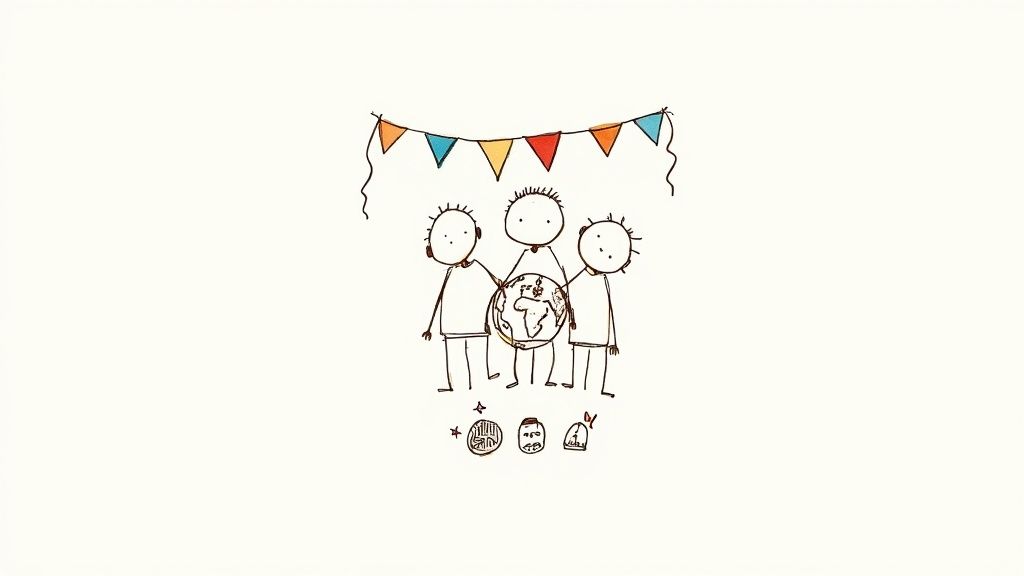
This event is ideal for building a strong, inclusive community and celebrating the unique identities of every student. As one of the most enriching event ideas for schools, it directly supports social-emotional learning and curriculum goals by creating an environment of mutual respect and understanding, making every family feel seen and valued.
Implementation Quick Guide
- Target Audience: All grades (K-12), families, faculty, and the wider community.
- Estimated Budget: $300 – $2,000 (covers decorations, supplies for activities, food permits if needed).
- Staff/Volunteers: 4-6 staff organizers, 15-30 parent/student volunteers.
- Timeline: Begin planning 2-3 months in advance.
Actionable Tips for Success
To ensure an authentic and respectful celebration, form a diverse planning committee that includes students, parents, and staff from various cultural backgrounds. Encourage student-led presentations and booths rather than relying solely on teacher-led activities. Provide clear guidelines to prevent cultural appropriation and stereotyping, consulting with community leaders for accuracy. Connect the event to classroom learning by incorporating lessons on geography, history, and cultural studies before and after the festival. Follow up with classroom discussions to deepen students' understanding and appreciation of global cultures.
7. Academic Decathlon or Quiz Bowl Competition
An Academic Decathlon or Quiz Bowl is an exciting intellectual competition where student teams face off in fast-paced, buzzer-style rounds, answering questions across a wide range of subjects. These events test knowledge in history, science, literature, math, and current events, celebrating academic achievement with the same energy typically reserved for sports. It fosters teamwork, quick thinking, and a deep appreciation for learning.
This event is a fantastic way to showcase your school's academic talent and build a culture that values intellectual prowess. As one of the more engaging event ideas for schools, a Quiz Bowl can energize the student body and create a thrilling spectator experience, highlighting a different kind of "school spirit" centered on knowledge and collaboration.
Implementation Quick Guide
- Target Audience: Grades 6-12, parents, teachers, and community members who enjoy academic challenges.
- Estimated Budget: $300 – $2,000 (covers buzzer systems, question packets, awards, and moderator fees).
- Staff/Volunteers: 2-4 staff advisors, 5-10 parent/teacher volunteers (for scorekeeping, timekeeping, and moderating).
- Timeline: Begin planning and team recruitment 3 months in advance.
Actionable Tips for Success
To maximize engagement, recruit a diverse group of students, not just those with the highest GPAs, as different minds bring unique strengths. Host regular practice sessions and provide official study materials, such as those from National Academic Quiz Tournaments (NAQT), to prepare teams. Establish clear, consistently enforced rules for the competition and consider scrimmage rounds for practice. Most importantly, create a welcoming atmosphere that celebrates participation and effort just as much as winning.
8. Sports Day or Field Day
A Sports Day or Field Day is an energetic, school-wide event dedicated to athletic competition, physical activity, and team spirit. This classic school tradition brings students outdoors for a variety of events, ranging from traditional track and field races to fun-filled obstacle courses, team sports like tug-of-war, and skill-based challenges. It’s designed to promote physical fitness, sportsmanship, and camaraderie among students of all athletic abilities.
This event is one of the most effective event ideas for schools looking to boost morale and encourage a healthy, active lifestyle. By creating an atmosphere of friendly competition and participation, a Sports Day strengthens the school community and creates lasting, positive memories for students, faculty, and families.
Implementation Quick Guide
- Target Audience: K-12 students, teachers, parents, community volunteers.
- Estimated Budget: $300 – $2,000 (covers equipment, ribbons/medals, hydration stations, first aid).
- Staff/Volunteers: 5-8 staff organizers, 15-30 parent/teacher volunteers for stations, 1-2 medical personnel.
- Timeline: Plan 6-8 weeks in advance, especially for equipment rental and volunteer coordination.
Actionable Tips for Success
To maximize engagement, design a wide range of activities that cater to different skill levels, including both competitive and non-competitive stations. Create teams, such as by classroom or a "house" system, to foster teamwork and school spirit. Ensure safety is a top priority by having medical staff on-site, briefing all volunteers on safety protocols, and setting up hydration and shade stations. For a more inclusive event, consider adding adaptive sports activities so every student can participate. Finally, focus on celebrating participation just as much as winning by awarding ribbons or certificates to all students.
9. Academic Awards Assembly or Honors Celebration
An Academic Awards Assembly or Honors Celebration is a formal ceremony designed to recognize and celebrate student achievements across various domains, including academics, arts, athletics, and community service. This event publicly validates student effort and success, reinforcing a school culture that values hard work, character, and excellence. It serves to motivate all students by showcasing the rewards of dedication and perseverance.
This type of ceremony is one of the most direct event ideas for schools looking to bolster student morale and academic motivation. By formally acknowledging accomplishments like honor roll, subject-specific excellence, and scholarship wins, the school sends a powerful message that achievement is seen and valued, encouraging students to strive for their personal best.
Implementation Quick Guide
- Target Audience: Grades K-12, parents, families, faculty, and school board members.
- Estimated Budget: $300 – $2,000 (covers certificates, plaques/medals, venue decor, and AV equipment).
- Staff/Volunteers: 2-4 staff coordinators, 5-10 teacher/parent volunteers.
- Timeline: Begin planning 2-3 months in advance.
Actionable Tips for Success
To make the event truly inclusive, expand award categories beyond top grades to recognize effort, significant improvement, and positive character traits. Involve teachers in the nomination process to identify deserving students who might otherwise be overlooked. Keep the ceremony engaging and well-paced with clear transitions and concise speeches. Consider live-streaming the event for family members who cannot attend in person and hire a photographer to capture the special moments for students and school marketing materials.
10. Student-Led Conferences or Portfolio Showcases
Student-Led Conferences flip the traditional parent-teacher meeting on its head by placing the student at the center of the conversation. In this model, students present a portfolio of their work, discuss their academic progress, and articulate their own learning goals directly to their parents and teachers. This empowers students to take ownership of their education, fostering accountability, self-reflection, and vital communication skills.
This event is a powerful tool for building a stronger home-school partnership and providing authentic assessment. As one of the most transformative event ideas for schools, it shifts the focus from a passive report to an active, student-driven dialogue about growth and achievement, making learning a collaborative process.
Implementation Quick Guide
- Target Audience: Grades 2-12, parents, teachers.
- Estimated Budget: $100 – $500 (covers portfolio materials, printing, and refreshments).
- Staff/Volunteers: 1-3 staff organizers, all teaching staff participation is required.
- Timeline: Begin planning 6-8 weeks in advance to allow for student preparation.
Actionable Tips for Success
To execute this effectively, dedicate class time to explicitly teach students presentation and reflection skills. Provide structured templates or digital tools like Seesaw for portfolio creation and clear prompts to guide their self-assessment. Set clear expectations for the roles of the student, parent, and teacher to ensure the conversation stays focused and productive. Afterward, collect feedback from all participants to refine the process for future conferences. For more insights on engaging families, explore Edutopia's resources on building strong parent-teacher relationships.
11. Arts and Music Festival or Fine Arts Showcase
An Arts and Music Festival or Fine Arts Showcase is a dynamic celebration of student creativity, featuring everything from visual art exhibitions and musical concerts to theater productions and dance recitals. This event provides a platform for students to display their talents across multiple mediums, fostering self-expression, confidence, and a school-wide appreciation for the arts. It’s an excellent way to highlight a well-rounded curriculum and engage the community.
This showcase is perfect for demonstrating the value of arts education and building community spirit, making it one of the most vibrant event ideas for schools. By giving every student artist and performer a moment to shine, schools can cultivate a supportive and creative environment that values diverse forms of intelligence and skill.
Implementation Quick Guide
- Target Audience: All grade levels (K-12), parents, community members, local artists.
- Estimated Budget: $300 – $2,000+ (covers venue rental, technical equipment, programs, art supplies).
- Staff/Volunteers: 4-6 arts faculty organizers, 15-25 parent/student volunteers.
- Timeline: Begin planning 3-4 months in advance.
Actionable Tips for Success
To organize a successful festival, form a planning committee with all arts teachers to ensure every discipline is represented. Create a detailed schedule that staggers performances across different venues to avoid conflicts and allow attendees to experience multiple showcases. Empower student volunteers to act as gallery docents, stagehands, and emcees to build their leadership skills. For more ideas on engaging the community and promoting your event, check out the National Art Education Association's resources.
12. School Prom or Formal Dance
A School Prom or Formal Dance is a quintessential milestone event, especially for high school students, celebrating school spirit and creating lasting memories. This formal social gathering typically features music, dancing, and elegant attire, often built around a creative theme. It serves as a rite of passage, allowing students to socialize outside the classroom and commemorate their shared journey.
This event is ideal for fostering a strong sense of community and tradition among students. As one of the most anticipated event ideas for schools, a prom provides a unique opportunity to celebrate student life, boost morale, and create a positive, memorable capstone experience for upperclassmen before they graduate.
Implementation Quick Guide
- Target Audience: Grades 9-12, faculty chaperones.
- Estimated Budget: $5,000 – $25,000+ (covers venue, catering, DJ, decorations, security).
- Staff/Volunteers: 5-8 staff organizers, a student planning committee, 15-30 parent/teacher chaperones.
- Timeline: Begin planning 6-9 months in advance.
Actionable Tips for Success
To host a successful and inclusive prom, form a diverse student planning committee to ensure the theme, music, and activities appeal to a wide range of students. Address financial barriers by creating accessible ticket pricing, offering "prom-ternships" where students can volunteer for a free ticket, or establishing a confidential scholarship fund. Prioritize safety by arranging professional security, setting clear behavioral expectations, and promoting safe transportation options. For a guide on creating inclusive school environments for all students, you can explore resources from GLSEN.
12-Point Comparison of School Event Ideas
| Event | Implementation complexity | Resource requirements | Expected outcomes | Ideal use cases | Key advantages |
|---|---|---|---|---|---|
| Academic Science Fair | Medium–High: project coordination, judging panels | Lab materials, display space, mentor time, judges, modest budget | Research skills, critical thinking, presentation experience, recognition | STEM enrichment, science curriculum extension, student research showcase | Hands-on learning; showcases student research; pathways to scholarships |
| Talent Show and Performing Arts Festival | Medium: auditions, scheduling, technical setup | Stage, sound/lighting, rehearsal time, tech crew, costumes | Confidence, creative expression, performance experience, community entertainment | Arts showcase, school spirit events, inclusive performance opportunities | Low facility cost; boosts confidence; discovers hidden talent |
| Career Day and Professional Networking Event | High: outreach, scheduling, logistics | Industry speakers, booths, coordination, materials, possible transport | Career awareness, networking, real-world insight, internships | College/career guidance, vocational exploration, network-building | Direct industry connections; actionable career guidance; community partnerships |
| Annual School Carnival or Fall Festival | High: permits, vendor coordination, crowd management | Volunteers, booths, vendors, permits/insurance, setup/breakdown resources | Fundraising, community engagement, school spirit, visibility for clubs | Large community fundraisers, family engagement, club showcases | Significant fundraising potential; broad community appeal; many volunteer roles |
| Environmental or Community Service Day | Medium: partner coordination, logistics | Transportation, tools/supplies, nonprofit partners, supervision | Civic responsibility, tangible community impact, service hours, partnerships | Service learning, environmental curriculum, community partnership building | Low cost with partners; high tangible impact; strengthens community ties |
| Multicultural Festival or International Day | Medium: cultural coordination, advisory input | Cultural booths, food management, volunteers, cultural advisors | Increased cultural awareness, inclusivity, family engagement, curriculum tie-ins | Diversity celebration, world cultures curriculum, community inclusion | Promotes inclusion and respect; family involvement; authentic cultural learning |
| Academic Decathlon or Quiz Bowl Competition | Medium–High: question prep, coaching, tournament logistics | Coaches/advisors, study materials, buzzer systems, venue | Subject mastery, quick thinking, teamwork, public recognition | Academic enrichment programs, competitive academic teams, gifted learners | Promotes academic excellence; team building; low material cost |
| Sports Day or Field Day | Medium: event scheduling, safety planning | Fields/gyms, equipment, medical staff, volunteers, prizes | Physical fitness, teamwork, school spirit, inclusive competition | PE programs, house competitions, spirit-building events | Promotes health and teamwork; engaging for broad student body; traditions |
| Academic Awards Assembly or Honors Celebration | Low–Medium: award logistics and program flow | Certificates/trophies, stage, staff coordination, photographer | Public recognition, motivation, family engagement, culture building | End-of-year recognition, scholarship announcements, milestone events | Publicly validates achievement; relatively low cost; strengthens morale |
| Student-Led Conferences or Portfolio Showcases | Medium: student training, scheduling complexity | Portfolios/digital showcases, preparation time, teacher facilitation | Student ownership, communication skills, authentic assessment, goal-setting | Parent engagement, student reflection, formative assessment periods | Empowers students; fosters meaningful dialogue; individualized goals |
| Arts and Music Festival or Fine Arts Showcase | Medium–High: cross-department coordination, technical needs | Performance spaces, lighting/sound, exhibit area, faculty collaboration | Creative expression, arts appreciation, performance experience, community engagement | Arts program highlights, community arts nights, fundraising through sales | Showcases creativity across disciplines; family engagement; potential revenue |
| School Prom or Formal Dance | High: venue booking, safety, logistics, chaperones | Venue/catering, DJ/band, security, photography, ticketing, decorations | Social milestone, memories, formal social experience, fundraising | Senior celebrations, formal social events, class fundraising | Memorable milestone event; student-led planning; fundraising potential |
Putting Your Plan into Action
Transitioning from a comprehensive list of event ideas for schools to a concrete, successful execution requires a strategic mindset and meticulous planning. We have explored a wide range of possibilities, from the community-building energy of a Fall Festival to the academic rigor of a Science Fair and the celebratory spirit of a Fine Arts Showcase. The common thread weaving through all successful school events is a clear sense of purpose. Before you book a single vendor or print one flyer, your team must be aligned on the primary goal. Is this event designed to boost student morale, drive new family enrollment, engage alumni, or raise critical funds?
Defining this "why" is the foundational step that informs every subsequent decision. It dictates your target audience, shapes your promotional messaging, and determines your metrics for success. A fundraising-focused event will have vastly different key performance indicators than one aimed purely at celebrating student achievement.
Key Takeaways for Successful Event Implementation
As you move forward, keep these core principles at the forefront of your planning process. These takeaways distill the essence of what transforms a good idea into a great event:
- Purpose-Driven Planning: Every event, whether it's a Career Day or a Multicultural Festival, must have a primary, measurable objective. This clarity prevents scope creep and ensures your efforts are concentrated on achieving a specific outcome. Don't try to be everything to everyone; a focused event is an effective event.
- Audience-Centric Experience: The most memorable school events are designed with the attendee's experience in mind. Consider the journey from their first interaction (the invitation) to their final moments at the event. For a Student-Led Conference, this means clear scheduling and a welcoming environment. For a School Carnival, it means manageable lines and activities for various age groups.
- Strategic Resource Allocation: Your budget, staff, and volunteer pool are finite resources. A detailed plan allows you to allocate them effectively. An event like a Talent Show might be low-cost but high in volunteer needs, whereas an Academic Decathlon might require a larger budget for materials and judges but less day-of manpower.
Your Actionable Next Steps
With this wealth of event ideas for schools at your disposal, the next step is to translate inspiration into action. Don't let the possibilities become overwhelming. Instead, follow a structured approach to get started.
- Form a Diverse Planning Committee: Assemble a team that includes administrators, teachers, support staff, parents, and, most importantly, students. This diversity ensures a wide range of perspectives and helps distribute the workload effectively. Student involvement is particularly crucial for events like Prom or Sports Day, as it guarantees the final product resonates with its primary audience.
- Conduct a Resource Audit: Before committing to a large-scale event like an Annual Carnival, take stock of what you have. What are your available venues? What is a realistic budget? How many staff and parent volunteers can you reliably count on? This audit will help you select an event that is both ambitious and achievable.
- Develop a Master Timeline: Work backward from your proposed event date. Create a detailed timeline that includes milestones for key tasks: securing a venue, booking vendors, launching marketing campaigns, recruiting volunteers, and post-event follow-up. Understanding how to effectively organize a community event is a valuable skill, as a structured timeline can prevent last-minute chaos and ensure a smooth, professional execution.
Ultimately, the power of a school event lies in its ability to build connections and create lasting memories. These gatherings are where your school's culture comes to life, transforming a campus from a place of learning into a true community hub. By thoughtfully selecting and meticulously planning your events, you are not just filling the calendar; you are weaving the very fabric of your school's identity. The effort invested will pay dividends in the form of stronger student engagement, increased parent involvement, and a vibrant community spirit that defines your institution.
Ready to elevate your school's event strategy from good to unforgettable? The MarCom Society provides K-12 marketing and communications professionals with the expert resources, peer-to-peer support, and strategic frameworks needed to master event planning and more. Join a community dedicated to advancing your skills and making a lasting impact at your school. The MarCom Society.