
Open houses, science fairs, and graduation ceremonies are staples of the K-12 calendar, but are you maximizing their impact? Grabbing the attention of busy families requires more than just a flyer in a backpack. It's time to move beyond traditional methods and embrace innovative event marketing strategies that create buzz, foster genuine community, and showcase what makes your school truly special.
This guide is specifically designed for K-12 marketing and communications teams looking to transform their events from simple calendar dates into powerful enrollment and retention tools. We will cut through the noise and deliver nine forward-thinking strategies, translating proven marketing concepts into actionable steps you can implement for your next open house, fundraiser, or community festival. These tactics move beyond simple promotion, focusing instead on creating immersive and engaging experiences.
We’ll cover everything from data-driven personalization and hybrid event models to integrating gamification and building a community-centric focus. To amplify the reach and impact of your event and leverage attendee enthusiasm, consider exploring effective user-generated content strategies for events. Get ready to create memorable experiences that resonate long after the last guest has gone home and turn attendees into your school's most vocal advocates.
1. Craft Immersive Experiences, Not Just Tours
Forget the standard, passive school tour. One of the most powerful event marketing strategies for schools is to shift from merely presenting information to creating immersive, hands-on experiences. Experiential marketing lets prospective families feel what it's like to be part of your community, forging an emotional connection that a simple presentation cannot match. It’s the difference between hearing about your school’s values and living them for an afternoon.

This approach turns a visit into a memorable brand experience that families will talk about long after they leave. It’s about showing, not just telling, and giving parents and students a tangible reason to choose your school.
How to Implement Experiential Events
The goal is to translate your school's unique selling propositions into interactive activities. Instead of just talking about your innovative programs, let families participate directly.
- STEM/STEAM Showcase: Host a "Family Innovation Lab" where prospective students and parents can participate in a mini robotics challenge, a simple coding lesson, or a 3D printing demonstration.
- Arts & Culture Day: Instead of a static art show, organize collaborative mural painting, a "one-act play in an hour" workshop led by your drama teacher, or a pottery-making session.
- Athletics and Wellness Clinic: Invite families to a mini-clinic run by your coaching staff. Let young children learn a new skill, like dribbling a basketball or basic soccer footwork.
Key Insight: The most effective experiential events are authentic to your school’s mission. If your school emphasizes project-based learning, your event should be a mini project. If it focuses on community service, the event could be a small, collaborative volunteer activity.
This strategy is especially effective for open houses and enrollment-focused events, as it provides a powerful differentiator in a competitive market. It moves the conversation from facilities and test scores to feelings and belonging.
2. Embrace Hybrid Events to Maximize Reach
In today's connected world, not every interested family can attend an in-person event. One of the most forward-thinking event marketing strategies is adopting a hybrid model, which combines a live, on-campus event with a simultaneous virtual experience. This approach breaks down geographical barriers, allowing you to engage with relocating families, busy parents, or those simply exploring from a distance. It’s about making your school accessible to everyone, everywhere.
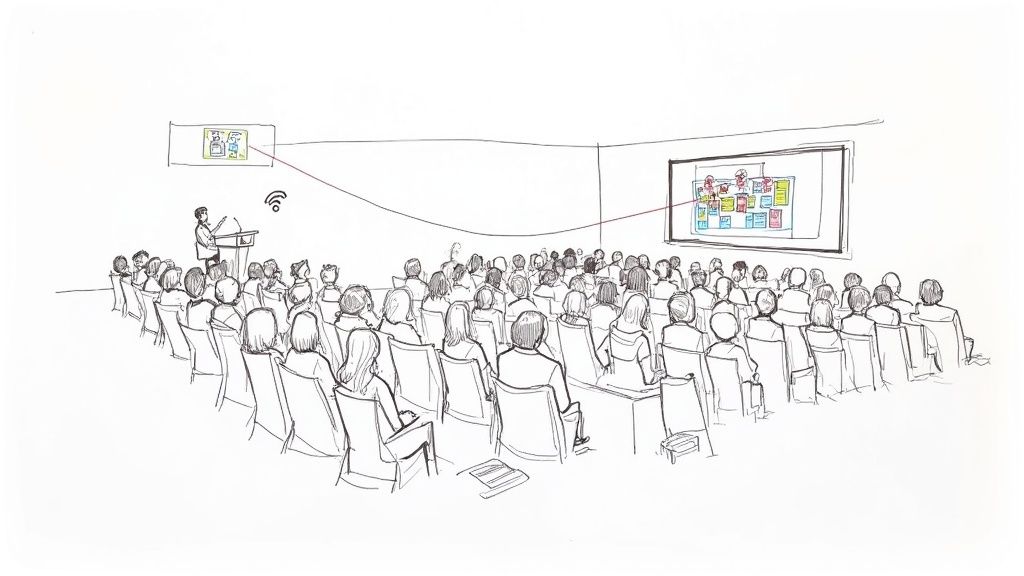
By offering both options, you demonstrate flexibility and a commitment to inclusivity, significantly widening your admissions funnel. This dual-format strategy ensures your key enrollment events, like open houses or information nights, achieve maximum impact and attendance.
How to Implement Hybrid Events
The key is to create an engaging experience for both audiences, not just livestreaming your in-person program. Each group needs to feel seen and involved.
- Invest in Quality Production: Use dedicated cameras, clear audio equipment, and stable streaming software. A poor technical experience will reflect negatively on your school's brand.
- Design for Both Audiences: Plan content specifically for the virtual attendees. This could include pre-recorded virtual tours, a separate Q&A moderator for online questions, or digital-only breakout rooms with department heads.
- Utilize Interactive Tools: Engage the online audience with live polls, interactive Q&A sessions, and chat features. This prevents them from being passive observers and makes them active participants.
Key Insight: A successful hybrid event isn't just about technology; it's about intentional design. Treat the virtual and in-person audiences as two distinct but equally important groups, tailoring specific elements of the experience to each one.
This strategy is perfect for major admissions events where you want to capture the widest possible audience. It allows you to connect with families who might otherwise be unreachable, turning a local open house into a regional or even national recruitment opportunity.
3. Leverage Local Influencers for Authentic Endorsement
Move beyond traditional advertising by partnering with trusted voices in your community. One of the most modern event marketing strategies involves collaborating with local parent bloggers, community leaders, or education-focused influencers to co-host or promote your school’s events. This approach taps into their established credibility and provides an authentic endorsement that resonates deeply with prospective families. It’s the difference between your school saying it’s great and a trusted local parent showing why it is.
This strategy amplifies your reach exponentially, placing your event in front of a highly relevant and engaged audience. When a respected local figure shares their positive experience, it serves as powerful social proof that can significantly boost event attendance and inquiries.
How to Implement Influencer Partnerships
The key is to build genuine relationships with influencers whose followers match your ideal family profile. Your collaboration should feel like an organic partnership, not a paid transaction.
- Host an "Insider's Look" Event: Invite a small group of local parent influencers for an exclusive, behind-the-scenes tour or a Q&A session with your head of school. Provide them with a unique experience they can share authentically with their audience.
- Co-Host a Community Workshop: Partner with an influencer known for expertise in areas like child development, digital literacy, or college prep to co-host a free workshop for the community. This positions your school as a valuable resource and introduces their audience to your campus.
- Create an "Influencer Takeover": Allow a trusted influencer to "take over" your school's Instagram Stories for a day during a major event, like a school fair or arts festival. They can offer a fresh, first-person perspective that feels immediate and engaging.
Key Insight: The most successful influencer collaborations are built on shared values. Look for partners who genuinely align with your school's mission and educational philosophy. Their endorsement will feel more authentic, and the content they create will be more impactful for their audience.
This strategy is particularly effective for reaching new families who may not be familiar with your school. It leverages third-party credibility to cut through the marketing noise and build trust quickly.
4. Harness Data for Deep Personalization
Move beyond one-size-fits-all invitations. A truly sophisticated event marketing strategy involves using data to personalize the entire event journey for each family. This approach leverages information you already have, like inquiry data, interests, and past interactions, to tailor communication and experiences, making prospective families feel seen and understood. It’s the difference between sending a generic open house reminder and an email that highlights the specific arts program a student expressed interest in.
This method transforms your marketing from a broadcast into a conversation. By demonstrating that you are paying attention to a family's unique needs and interests, you build trust and significantly increase the likelihood of them attending your event and, ultimately, enrolling.
How to Implement Data-Driven Personalization
The goal is to use your school’s CRM or admissions software to segment your audience and customize their event experience from the first touchpoint to the follow-up.
- Targeted Invitations: Segment your email lists based on a child’s grade level or expressed interests (e.g., athletics, STEM, arts). Send customized invitations that highlight the event sessions most relevant to them.
- Customized Event Agendas: For larger events like an open house, allow families to pre-register for specific sessions. Use this data to create a personalized agenda for them upon arrival, guiding them directly to the teachers and programs they care about most.
- Personalized Follow-Up: After an event, send follow-up communication that references the specific sessions they attended or the teachers they spoke with. Include links to relevant program pages on your website.
Key Insight: Start small. You don't need complex algorithms to begin. Simply segmenting your audience by grade level and sending slightly different email copy is a powerful first step toward a more personalized and effective event strategy.
This strategy is highly effective for re-engagement campaigns and lead nurturing. It shows families you value their individual journey and aren’t just trying to fill seats, making your school a more compelling choice.
5. Build Events Around Compelling Stories
Move beyond a simple schedule of activities and design events with a narrative. This approach uses storytelling to weave your school's mission, values, and student outcomes into a coherent and memorable experience. One of the most resonant event marketing strategies is to frame your event around a central story, transforming attendees from passive observers into active participants in your school’s journey. It’s about creating an emotional arc that connects with families on a deeper level.
This strategy turns an informational session into an inspiring narrative. By structuring an event with a clear beginning, middle, and end, you guide prospective families through a journey of discovery that highlights your school's unique character and impact, making the experience far more impactful than a list of features.
How to Implement Storytelling-Centered Events
The key is to identify a core theme or story that defines your school and build the event around it. Think about the "hero's journey" of a typical student and use that as your framework.
- "Founder's Vision" Night: Host an event centered on the story of your school's founding. Start with the initial challenge or mission, showcase how students and faculty today are fulfilling that vision, and end with a call for new families to become part of the next chapter.
- Alumni Success Showcase: Instead of just a panel, frame the event around the "journeys" of several graduates. Each station or speaker could represent a different stage of their path, from a project they did at your school to their current career success.
- A "Day in the Life" Narrative: Structure an open house to follow the narrative of a student's typical day. The event could begin in a homeroom setting, move to a collaborative project in a science lab, and conclude with a student-led presentation on extracurricular passions.
Key Insight: The most powerful stories are authentic and human. Center your narrative on real student and teacher experiences. Use testimonials, student-led tours, and faculty anecdotes to bring the story to life, making your school’s values tangible and relatable.
This method is highly effective for recruitment events and fundraisers, as it builds a strong emotional connection that inspires action and investment. For more inspiration, you can explore visual storytelling techniques to enhance your narrative.
6. Gamify the Experience to Boost Engagement
Transform passive attendance into active participation by integrating game mechanics into your school events. This is one of the most dynamic event marketing strategies because it uses competition, rewards, and challenges to make the experience more fun and memorable. Gamification encourages visitors to explore more of your campus, interact with staff, and absorb key information in an engaging way.
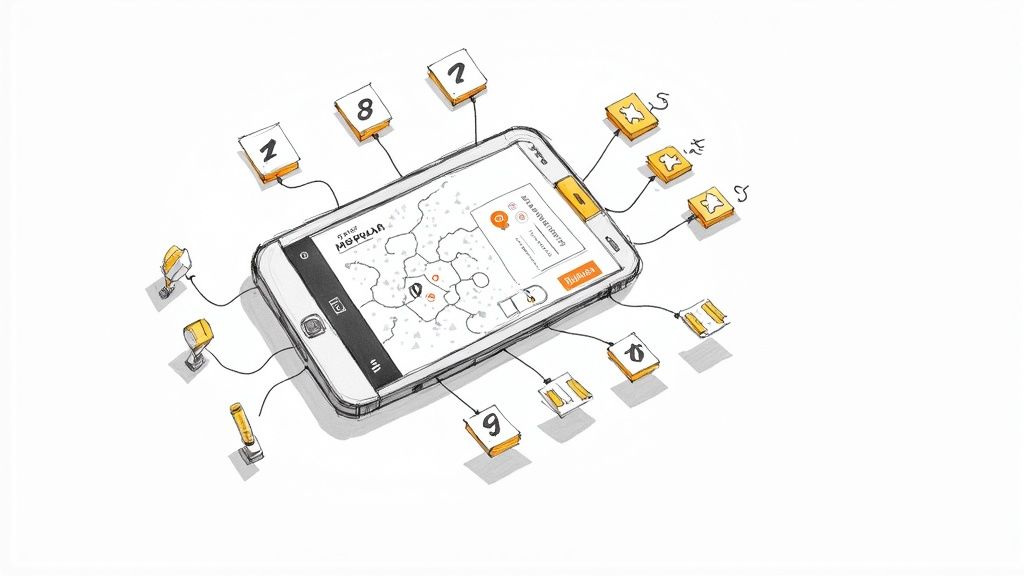
This approach turns your open house or information night from a simple tour into an interactive quest. By encouraging families to complete tasks, you can strategically guide them to your school’s most important features and selling points, ensuring they don’t miss anything.
How to Implement Gamification
The key is to create challenges that align directly with your event goals. You want to reward families for engaging with the very things you want to highlight about your school.
- Digital Scavenger Hunt: Use a simple app or QR codes placed around campus. Each scanned code can reveal a fun fact about the location (e.g., the science lab or art studio) and unlock points.
- Activity Passport: Give each family a physical or digital "passport" at check-in. They receive a stamp for completing specific activities, like asking a teacher a question, visiting the library, or taking a photo with the school mascot.
- Leaderboard Competition: For larger events, display a live leaderboard showing which families have earned the most points. This friendly competition can motivate attendees to visit more stations and interact more deeply.
Key Insight: The rewards don't have to be expensive. Simple prizes like a school spirit t-shirt, a voucher for the bookstore, or even just public recognition on the leaderboard can be highly effective motivators. The goal is engagement, not a high-stakes competition.
Gamification works exceptionally well for events where you want to encourage exploration and interaction. It ensures families leave not only with information but also with a positive, lasting memory of a fun and interactive experience.
7. Prioritize Community Building, Not Just Event Promotion
Shift your mindset from hosting one-off events to cultivating a lasting community. This powerful event marketing strategy treats each event not as a finish line, but as a key touchpoint in an ongoing relationship with your families. The goal is to build a network where parents, students, and staff feel a genuine sense of belonging that extends far beyond the school day.
This approach transforms your audience from passive attendees into active participants and brand advocates. By creating a strong community, you build a loyal base that not only attends events but also champions your school’s mission to others, creating a powerful, organic marketing engine.
How to Implement a Community-First Approach
The key is to create consistent opportunities for connection that are driven by shared interests and values. These events should be less about direct promotion and more about fostering relationships.
- Parent-Led Interest Groups: Facilitate the creation of clubs based on parent hobbies or professions, like a book club, a hiking group, or a networking circle for entrepreneurs. Provide the space and initial support, then empower parents to lead.
- Alumni Mentorship Programs: Connect current students with alumni for career guidance or college prep advice. Host casual meetups or virtual Q&A sessions that strengthen the bond between past and present students.
- Regular, Low-Stakes Gatherings: Organize simple, recurring events like "Coffee with the Principal" or a "Monthly Parent Social." These create predictable touchpoints for families to connect with school leadership and each other without a formal agenda.
Key Insight: A true community empowers its members. Focus on creating structures that facilitate peer-to-peer connections rather than just school-to-parent communication. This level of authentic stakeholder engagement is what builds deep, lasting loyalty.
This strategy is ideal for retention and long-term brand building. It demonstrates that your school is more than an institution; it’s a supportive network invested in the entire family’s journey.
8. Champion Sustainability and Social Responsibility
In an era where families, especially younger parents and students, prioritize environmental and social consciousness, one of the most resonant event marketing strategies is to embed sustainability into your events. This approach goes beyond recycling bins; it showcases your school's commitment to creating responsible global citizens. It demonstrates that your values are not just taught in the classroom but are actively practiced, building deep respect and admiration from your community.
This strategy transforms a standard event into a statement of purpose. It tells prospective families that your institution is forward-thinking and dedicated to making a positive impact, a powerful differentiator that appeals to modern values and builds a strong, purpose-driven brand identity.
How to Implement Sustainability-Focused Events
The key is to make your eco-friendly practices visible and educational, integrating them seamlessly into the event experience itself. This shows authenticity and provides attendees with tangible examples of your school's commitment.
- Go Paperless: Eliminate printed flyers and programs. Instead, use QR codes that link to a digital event schedule, school map, and information packets. This not only reduces waste but also models the modern, tech-savvy approach you use in your classrooms.
- Host a "Green" Fair: Organize a community event focused on sustainability. Partner with local eco-friendly businesses, set up student-led booths demonstrating recycling projects or school garden initiatives, and host workshops on topics like composting or water conservation.
- Source Locally and Responsibly: For any event with catering, partner with local farms or vendors who use sustainable practices. Highlight these partnerships during the event to showcase your support for the local community and economy.
Key Insight: Sustainability isn't just about reducing your carbon footprint; it's a powerful storytelling tool. Use your event to narrate your school’s commitment to the environment and social good, showing families that you are preparing students for a better future.
This approach is highly effective for community-building events and open houses, as it attracts families who share these core values. It moves the enrollment decision beyond academics and facilities into the realm of shared purpose and ethical alignment.
9. Integrate Events into Multi-Touchpoint Campaigns
Isolated events have limited impact. The most effective event marketing strategies position your open houses, information nights, and community gatherings as key touchstones within a larger, integrated marketing campaign. This approach ensures that your event isn't a one-off moment but a powerful amplifier of a consistent message delivered across email, social media, your website, and digital ads. It creates a seamless journey for prospective families, reinforcing your school's value at every interaction.
By weaving your event into a broader narrative, you build anticipation, drive higher attendance, and extend the conversation long after the event concludes. This strategy transforms an event from a simple logistical task into a strategic asset that fuels your entire enrollment funnel.
How to Implement an Integrated Campaign
The key is to create a cohesive experience where each channel supports the others, with the event serving as a high-impact, in-person peak. Your messaging, branding, and call-to-action should be unified everywhere.
- Pre-Event Promotion: Use social media countdowns, email newsletters with "behind-the-scenes" content, and targeted digital ads to build excitement. The goal is to make families feel like they are being invited to an exclusive, can't-miss experience.
- Event Day Amplification: Encourage live-tweeting, create branded photo opportunities for Instagram, and use a unique event hashtag to extend your reach to families who couldn't attend in person.
- Post-Event Nurturing: Follow up with attendees via personalized emails featuring photos from the event. Share a highlight reel on social media and use retargeting ads to remind attendees of their positive experience, encouraging them to take the next step, like submitting an application.
Key Insight: A multi-touchpoint campaign isn't just about promotion; it's about creating a narrative. The story begins with the first ad a parent sees, builds during the immersive event, and continues through follow-up communications that guide them toward enrollment.
This integrated marketing approach ensures that your efforts are coordinated and your budget is maximized, as each channel works to strengthen the others. Learn more about the principles of integrated marketing communications to deepen your strategy.
Event Marketing Strategies Comparison Matrix
| Strategy | Implementation Complexity | Resource Requirements | Expected Outcomes | Ideal Use Cases | Key Advantages |
|---|---|---|---|---|---|
| Experiential Marketing | High – needs detailed planning | High – staff, logistics, venues | Emotional connections, authentic engagement, social buzz | Consumer brands building emotional connections and buzz | Creates memorable experiences, shareable content |
| Hybrid Event Marketing | High – technical integration | High – tech investment, skilled teams | Increased reach, global accessibility, cost-effective scaling | B2B companies, large conferences seeking reach and flexibility | Combines virtual and in-person, scalable audience |
| Influencer Partnership Events | Medium – coordination with influencers | Medium – influencer fees, content | Access to engaged audiences, authentic promotion | Consumer brands targeting younger, lifestyle markets | Leverages influencer credibility, cost-effective promotion |
| Data-Driven Personalization | High – complex data systems | High – tech, data analytics tools | Higher engagement, improved conversion, optimized networking | Tech companies, data-rich organizations with CRM systems | Tailored experiences, increased ROI |
| Storytelling-Centered Events | Medium to high – creative design | Medium – creative talent | Deep emotional connections, memorable branding | Mission-driven brands with strong values and social focus | Builds loyalty, effectively communicates complex messages |
| Gamification Integration | Medium to high – game mechanics setup | Medium – app development, updates | Increased engagement, measurable participation | Tech conferences, trade shows, young and tech-savvy audiences | Boosts interaction, appeals to competitive instincts |
| Community-Building Focus | High – ongoing management required | Medium to high – community managers | Long-term loyalty, organic growth | B2B software companies, lifestyle brands seeking lasting ties | Strong brand advocacy, reduced marketing costs over time |
| Sustainability-Focused Marketing | Medium – sustainable sourcing and practices | Medium to high – sustainable vendors | Positive brand image, environmental impact reduction | Consumer goods, B-corps with environmental missions | Appeals to eco-conscious consumers, aligns with CSR goals |
| Multi-Touchpoint Campaign Integration | High – complex cross-channel coordination | High – multiple teams and budgets | Stronger campaign impact, consistent messaging | Large consumer brands with big marketing budgets | Unified brand experience, efficient budget use |
From Planning to Impact: Making Your Next Event Your Best One Yet
Transforming your school's events from logistical tasks into strategic marketing opportunities is one of the most powerful ways to build your brand and strengthen your community. The nine event marketing strategies we've explored move beyond simple open houses and fundraisers. They offer a roadmap to create memorable, impactful experiences that resonate deeply with current and prospective families.
The common thread weaving through each approach is a shift in focus: from what you want to tell your audience to what you want them to feel and experience. Whether it's through the immersive power of experiential marketing, the inclusive reach of a hybrid model, or the authentic voice of a student influencer, the goal is to forge genuine connections. Events are no longer just dates on a calendar; they are the living, breathing embodiment of your school's unique story and values.
Key Takeaways for Your Team
As you look toward your next event, remember these core principles:
- Experience Over Information: Families can read about your programs online, but an event is your chance to let them feel your school's spirit. Prioritize interactive and engaging elements.
- Connection is the Goal: Every strategy, from community-building initiatives to data-driven personalization, aims to make each attendee feel seen, heard, and valued. This is how you convert interest into enrollment and loyalty.
- Integration is Non-Negotiable: Your event is a major milestone within a much larger marketing narrative. A multi-touchpoint campaign ensures that your message is consistent and effective before, during, and after the event itself.
Your Actionable Next Steps
Feeling inspired but not sure where to begin? Don't feel you need to implement all nine of these strategies at once. The most successful approach is an incremental one.
Start by picking one or two that best align with your school's primary goals for the upcoming year. If enrollment is your top priority, perhaps focusing on data-driven personalization for prospective family tours is the best starting point. If you're looking to boost retention, a storytelling-centered or community-building event for current families might be the perfect fit.
The key is to be intentional, creative, and relentlessly focused on your audience's experience. To truly make your next event your best one yet, consider this comprehensive blueprint on how to plan an event successfully to ensure your logistical foundation is as strong as your marketing strategy.
By applying these advanced event marketing strategies, you'll create events that families are not only eager to attend but also excited to talk about for weeks and months to come. That is the ultimate measure of success: turning attendees into passionate advocates for your school.
Ready to connect with a community of peers who are tackling the same challenges? Join The MarCom Society, a professional network designed exclusively for school marketing and communications leaders. Share your event successes, troubleshoot challenges, and access resources to elevate your school's marketing efforts by visiting The MarCom Society.









