Welcome, school leaders and dedicated PTA members! You understand that a vibrant school experience often requires more than standard budgets can provide. From essential technology upgrades and classroom supplies to enriching arts programs and memorable field trips, successful fundraising is the bridge between a good school year and a great one. But the real challenge lies in finding engaging, profitable, and manageable ideas that resonate with elementary school families and don't over-burden volunteers.
This guide cuts through the noise, offering a detailed look at 10 practical and proven fundraising ideas elementary schools can implement effectively. We move beyond generic suggestions to provide actionable tips, realistic revenue expectations, and the specific planning insights you need to turn these concepts into successful realities. While these events boost your bottom line, it's also worth noting that exploring broader strategies for school budget management, like cost-saving initiatives on school essentials, can further stretch available resources.
Our focus here is to equip you with the tools to not only meet your financial goals but also build a stronger, more connected school community along the way. Let's dive into the strategies that will energize your school's budget and create lasting, positive experiences for students and their families.
1. School Carnival or Fun Fair
A school carnival is a large-scale community event that transforms your campus into a hub of excitement with games, food, and entertainment. This classic fundraiser leverages broad family appeal to generate significant revenue through ticket sales, game wristbands, food booths, and sponsorships. By creating a memorable, fun-filled day, you build a strong sense of community and encourage high participation from students, families, and local residents.
How It Works
The core idea is to offer a variety of attractions that appeal to all ages. Families purchase tickets or all-access wristbands to enjoy classic carnival games, face painting, bounce houses, and raffles. Food stalls selling items like popcorn, cotton candy, and hot dogs add to both the atmosphere and the revenue streams.
This model is highly effective. For example, Lincoln Elementary raised an impressive $18,000 with their annual spring carnival, while Roosevelt Elementary secured $12,000 by partnering with local businesses for game sponsorships.
Keys to Success
Executing a successful carnival requires careful planning and coordination. Here are some actionable tips:
- Plan Ahead: Begin organizing at least 3-4 months in advance to secure vendors, volunteers, and permits.
- Delegate Tasks: Create dedicated volunteer committees for key areas like games, food, prizes, marketing, and setup/cleanup.
- Secure Sponsorships: Partner with local businesses to sponsor booths or donate prizes. This significantly reduces costs and increases your profit margin.
- Presell Tickets: Offer discounted tickets or wristbands before the event to gauge attendance, secure early revenue, and streamline entry on the day of the event.
The following bar chart visualizes the potential revenue in relation to the necessary planning timeline, offering a clear picture of the investment and return.
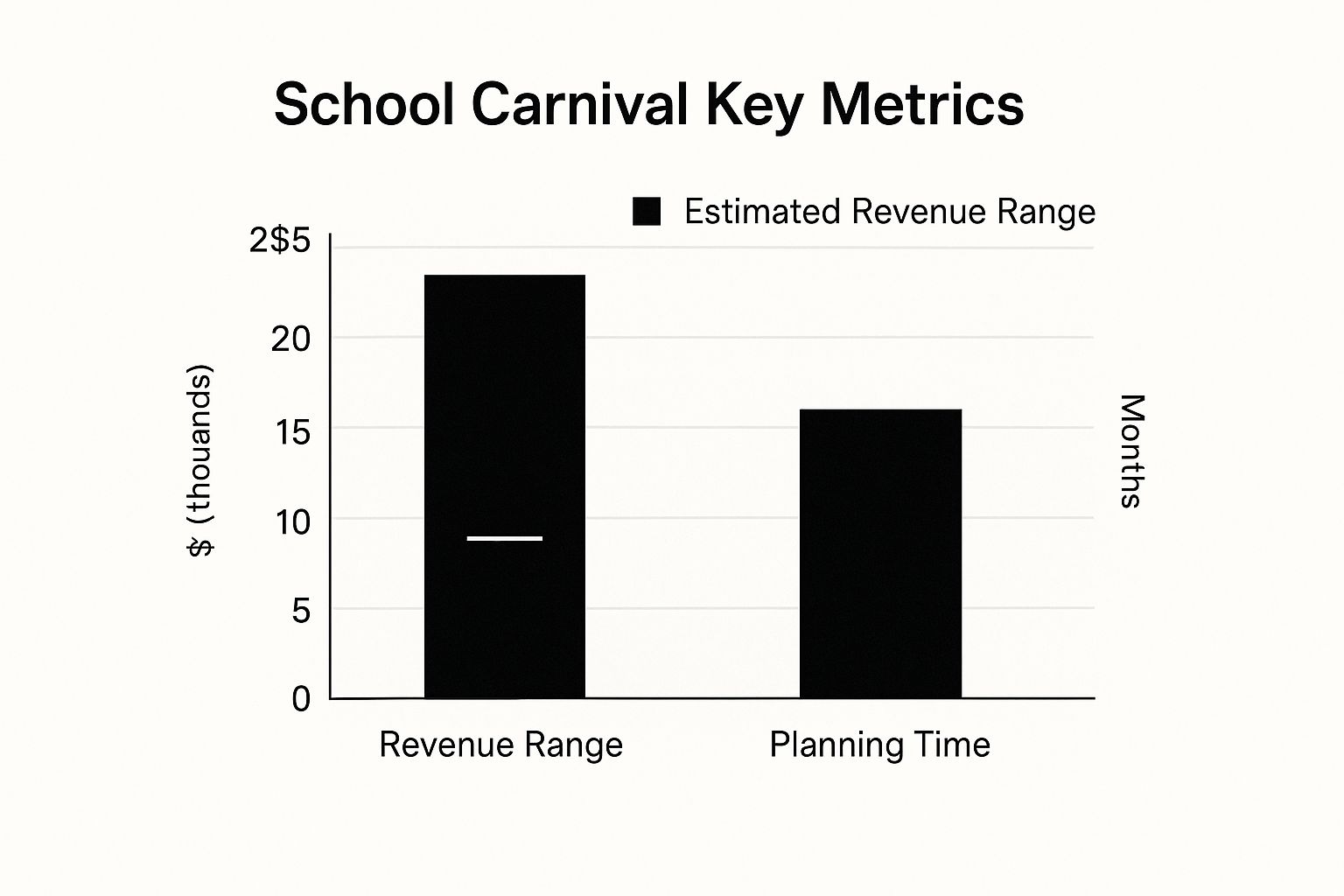
As the chart illustrates, the substantial fundraising potential of a carnival is directly linked to a dedicated planning period of several months. This is one of the most powerful fundraising ideas for elementary schools when you have a strong volunteer base and time to organize. For more inspiration on large-scale events, explore these other great ideas for school events.
2. Walk-a-thon or Fun Run
A walk-a-thon or fun run is a healthy, inclusive event where students gather pledges from family and friends for each lap they complete or simply for participating. This fundraiser promotes physical fitness and school spirit, transforming a simple activity into a powerful revenue generator. It’s an excellent way to involve the entire student body in a positive, goal-oriented event that benefits their school.

How It Works
Students are given pledge forms to collect donations from sponsors, typically on a per-lap or flat-rate basis. On the day of the event, students walk or run a designated course on school grounds or in a nearby park. The collective power of many small pledges adds up to a substantial total, making this one of the most profitable fundraising ideas for elementary schools.
This model has a proven track record. For instance, Sunshine Elementary’s annual walk-a-thon raised an impressive $22,000 with 400 students participating, while Hillside Elementary's indoor "laps for learning" event brought in $8,000 during the winter.
Keys to Success
A successful fun run is built on clear communication and enthusiastic participation. Here are some actionable tips:
- Provide Tools Early: Distribute pledge forms and collection envelopes well in advance to give families ample time to gather sponsors.
- Offer Incentives: Motivate students with prizes for top fundraisers, class participation goals, and milestone achievements.
- Create a Festive Vibe: Use music, banners, and cheering volunteers along the route to keep energy levels high and make the event fun.
- Leverage Technology: Consider using online pledge collection platforms to simplify donations for sponsors and make tracking easier for organizers.
- Prioritize Safety: Ensure you have water stations at regular intervals and a designated first aid area staffed with volunteers.
3. Silent Auction
A silent auction is an engaging event where donated items and experiences are displayed with bid sheets, allowing attendees to place bids privately. This format creates a sense of friendly competition and excitement as guests browse high-value items like vacation packages, local business services, and themed gift baskets. It's a versatile fundraiser that can be a standalone event or part of a larger gathering like a school gala or dinner.

How It Works
The core concept involves soliciting desirable items from the community and local businesses, which are then auctioned off to the highest bidder. Attendees write their name and bid amount on a sheet next to each item, periodically checking back to see if they need to increase their offer.
This model is a powerhouse among fundraising ideas for elementary schools. For instance, Riverside Elementary’s annual silent auction raised an incredible $35,000 from over 150 donated items, while Oakwood Elementary combined theirs with a family dinner night to earn $28,000.
Keys to Success
A well-organized silent auction depends on high-quality donations and a seamless bidding process. Here are some actionable tips:
- Solicit Donations Early: Begin requesting donations from local businesses and families at least 2-3 months before the event to build a strong catalog of items.
- Create Attractive Displays: Present each item with a clear, detailed description and an eye-catching display to generate more interest and higher bids.
- Set Strategic Minimum Bids: Start bidding at 30-50% of the item's retail value to encourage participation while ensuring a healthy profit margin.
- Go Digital: Consider using mobile bidding software to allow guests to bid from their phones, which increases engagement and makes the checkout process much smoother.
- Bundle Items: Group smaller donated items into appealing themed baskets, such as "Family Movie Night" or "Spa Day," to create higher-value packages.
4. Read-a-thon
A read-a-thon is an educational fundraiser that promotes literacy by encouraging students to gather pledges for the number of books or minutes they read over a set period. This academic-focused event not only raises significant funds but also fosters a love of reading, making it one of the most beneficial fundraising ideas for elementary schools. It directly supports the school's core mission while engaging students, parents, and teachers in a positive, shared goal.
How It Works
Students seek pledges from family and friends, either as a flat donation or on a per-book/per-minute basis. The event typically runs for two to four weeks, during which students track their progress using reading logs. The campaign combines individual motivation with a collective school-wide effort to boost both reading skills and financial support for school programs.
This model has proven highly successful. For instance, Meadow Elementary's month-long read-a-thon raised $12,000 with 85% student participation. Similarly, Willow Elementary’s family reading challenge, which included parent participation, brought in an impressive $14,000.
Keys to Success
A successful read-a-thon requires organization and enthusiasm. Here are actionable tips to maximize engagement and revenue:
- Offer Flexible Pledge Options: Provide options for sponsors to pledge per book, per minute, or make a flat donation to accommodate all supporters.
- Create Exciting Incentives: Motivate students with classroom competitions, individual prizes for top readers, and school-wide rewards for meeting goals.
- Utilize Online Platforms: Use digital tools to help students collect pledges online, track reading progress, and allow for easy sharing on social media.
- Celebrate Achievements: Conclude the event with a celebration, such as a visit from a local author or a book-themed party, to recognize everyone's hard work.
5. School Store or Student-Run Business
A school store is an ongoing retail operation run by students and parent volunteers that generates consistent revenue throughout the school year. This entrepreneurial fundraiser sells items like school supplies, spirit wear, and healthy snacks, teaching students valuable business skills while raising funds. By operating during high-traffic times like lunch or before and after school, a student store becomes a reliable and convenient resource for the entire school community.
How It Works
The concept involves setting up a small retail space, either a permanent kiosk or a mobile cart, managed by upper-grade students under adult supervision. The store stocks high-demand, low-cost items that students and families need, creating a steady stream of small-scale sales. This model provides a practical, hands-on learning experience in inventory, customer service, and money management.
This approach is highly effective for long-term fundraising. For example, Mountain View Elementary's student store generates $8,000 annually selling supplies and snacks, while Ocean Elementary's spirit wear shop raises $12,000 each year with custom T-shirts and sweatshirts.
Keys to Success
Launching a successful school store requires careful planning and student involvement. Here are some actionable tips:
- Start Small: Begin with a limited inventory of high-demand items like pencils, notebooks, and school-branded merchandise to minimize initial costs.
- Train Student Volunteers: Empower students by training them in customer service, basic money handling, and inventory tracking with adult oversight.
- Survey Your Customers: Ask students and parents what they would like to buy to ensure your product offerings are relevant and desirable.
- Establish Consistent Hours: Set and communicate regular operating hours, such as during lunch periods or after school, so families know when to shop.
A school store is one of the most practical fundraising ideas for elementary schools because it offers continuous income and teaches real-world skills, making it a win-win for students and the school budget.
6. Family Movie Night
A family movie night is a beloved community-building event that brings students and their families together for a relaxed evening of entertainment. This fundraiser transforms your school’s gymnasium, auditorium, or even an outdoor field into a pop-up movie theater. Revenue comes from ticket sales, a concession stand stocked with classic movie treats, and optional add-ons, making it a simple yet effective way to raise funds while creating lasting memories.
How It Works
The concept involves screening a popular, family-friendly film and charging a modest admission fee. Families gather with blankets and chairs, creating a cozy, shared experience. The real profit driver is often the concession stand, where sales of popcorn, candy, and drinks can significantly boost your total earnings.
This approach is highly adaptable and consistently successful. For example, Sunset Elementary’s quarterly movie nights average $2,500 each, while Hillcrest Elementary's holiday-themed movie night, complete with hot chocolate, raised an impressive $3,200.
Keys to Success
A well-organized movie night can become a much-anticipated school tradition. Here are some actionable tips to ensure a successful screening:
- Secure Proper Licensing: It is essential to obtain the correct public performance rights for the film you choose. Companies like Swank Motion Pictures or Criterion Pictures USA make this process straightforward.
- Price Concessions Strategically: Offer classic movie snacks like popcorn, candy, and drinks. Price them competitively to encourage sales but ensure a healthy profit margin for the school.
- Choose the Right Movie: Select recently popular G or PG-rated films that appeal to a wide elementary audience but are no longer in theaters.
- Offer Comfort Add-ons: Generate extra revenue by offering blanket or chair rentals for families who may have forgotten their own.
A Family Movie Night is one of the most accessible fundraising ideas for elementary schools because it requires minimal volunteer effort compared to larger events. It also provides a fantastic opportunity to foster a stronger school community, which is crucial for long-term engagement. To learn more about building this sense of connection, explore these tips for using social media to build community.
7. Art Show and Sale
An Art Show and Sale is a creative and heartwarming event that celebrates student talent while raising money for your school. This fundraiser transforms a school space, like a gymnasium or library, into an art gallery where families can admire and purchase their child's framed artwork. It connects fundraising directly to the curriculum, fostering pride in students and offering parents a cherished keepsake.
How It Works
The core concept involves each student creating a piece of art that is then professionally matted or framed for display and sale. Parents, relatives, and community members attend a gallery-style event, often with light refreshments, and purchase their child’s masterpiece. The revenue comes from the markup on the framed art pieces, turning a school project into a successful fundraiser.
This approach is highly effective for building community pride. For instance, Creative Arts Elementary raised $7,500 with their annual art sale by using professional matting services. Artisan Elementary's holiday art boutique brought in $9,000 by offering custom frames as an upsell, making it one of the most personal fundraising ideas for elementary schools.
Keys to Success
A successful art show feels more like a celebration than a sale. Here are some actionable tips to ensure a great event:
- Partner with Framing Companies: Work with local frame shops or online services that specialize in school art fundraisers for discounted materials and streamlined logistics.
- Create Different Price Points: Offer various sizes and presentation styles, from simple matted prints to fully framed pieces, to accommodate different budgets.
- Include Artist Statements: Have students write a short description of their work. This adds a personal touch and increases the perceived value of the art.
- Organize by Grade or Medium: Grouping artwork by grade level or artistic medium (e.g., watercolor, collage) makes the gallery easy to navigate for guests.
- Consider Pre-Orders: Allow parents to pre-order their child's framed art before the show to guarantee sales and help you manage inventory more effectively.
8. Restaurant Fundraising Nights
Restaurant fundraising nights are partnership events where local eateries donate a percentage of sales, typically 10-20%, to the school. On a designated evening, families dine at the partner restaurant, and their purchases contribute directly to the school’s fundraising goals. This is one of the most convenient fundraising ideas for elementary schools because it requires minimal organization from the school while offering a simple way for busy families to contribute.
How It Works
The school partners with a local or chain restaurant for a specific date. Families are encouraged to eat there, often using a special flyer or promotional code for dine-in or takeout orders. The restaurant then tracks sales tied to the school and donates a pre-agreed percentage of the revenue.
This model provides consistent, low-effort income. For instance, Parkside Elementary partners with six different restaurants monthly, averaging an impressive $15,000 annually. Similarly, Riverside Elementary's monthly pizza night partnership consistently generates $800, proving the power of regular, smaller events.
Keys to Success
A successful restaurant night hinges on strong partnerships and clear communication. Here are actionable tips to maximize your earnings:
- Schedule Strategically: Plan a rotating monthly schedule with different restaurants to maintain family interest and provide variety.
- Promote Effectively: Use school newsletters, social media, and flyers sent home with students to publicize the event. Make sure to clearly state the date, time, and how to participate.
- Approach Local Eateries: Locally-owned restaurants may be willing to offer a higher percentage donation than larger chains.
- Track Your Success: Monitor participation at each event to identify the most popular and profitable restaurant partnerships for future planning.
This approach builds valuable community relationships and offers a recurring revenue stream. For specific ideas on leveraging popular eateries, you might explore detailed guides on Fundraising with Chick-fil-A.
9. Holiday Gift Wrapping Service
A holiday gift wrapping service is a seasonal fundraiser that capitalizes on the busy holiday period. Volunteers offer gift wrapping services to parents and community members for a fee, providing a convenient solution for those overwhelmed by holiday preparations. This idea is excellent for generating funds in November and December while offering a genuinely helpful service.
How It Works
The concept is simple: set up a wrapping station in a high-traffic area, like the school lobby or a local mall, and charge a per-gift fee. Customers drop off their presents, and your volunteer team wraps them beautifully. This model generates revenue through service fees and potential donations of wrapping supplies from local businesses.
This seasonal approach is highly effective. For example, Holly Elementary's three-week service raised $6,500, while Pine Tree Elementary partnered with a local mall to earn $8,200. Even a smaller-scale effort, like Evergreen Elementary's weekend-only booth, successfully generated $4,800.
Keys to Success
A well-organized gift wrapping service can be a huge success. Here are some actionable tips:
- Secure a High-Traffic Location: Partner with a local mall, bookstore, or community center to maximize visibility and attract customers beyond the school community.
- Price Strategically: Set competitive prices, perhaps tiered by gift size ($3-$8 per gift), and offer bundle deals for multiple items to encourage more business.
- Train Your Wrappers: Host a short training session for volunteers to ensure consistent, high-quality, and efficient wrapping that will impress customers.
- Source Supplies Wisely: Ask for donations of wrapping paper, tape, ribbons, and gift tags from local retailers or families to keep your overhead costs low.
- Organize and Secure Items: Implement a clear ticketing and storage system to keep customers' gifts safe, organized, and prevent any mix-ups.
This fundraiser is an excellent alternative to larger events and can supplement other funding efforts, such as those detailed in this guide to grant writing for schools. Its focused, seasonal nature makes it one of the most practical fundraising ideas for elementary schools with a dedicated group of volunteers.
10. Talent Show with Admission and Concessions
A student talent show is an engaging community event that showcases the diverse skills of your students, from singing and dancing to magic tricks and comedy. This classic fundraiser generates revenue by selling admission tickets to family and friends and by offering concessions during intermission. It's a wonderful way to celebrate student creativity and build school spirit while supporting important programs.
How It Works
The concept involves organizing a performance night where students take the stage. Families and community members purchase tickets to attend, creating a primary revenue stream. Additional funds are raised through the sale of snacks, drinks, and other small items during a break in the show, turning a fun evening into a profitable fundraising event.
This model is both popular and effective. For example, Spotlight Elementary's annual talent show raised an impressive $8,500 from ticket and concession sales, while Harmony Elementary generated $6,200 over two performance nights. This approach consistently proves to be one of the more entertaining fundraising ideas for elementary schools.
Keys to Success
A successful talent show depends on organization and student participation. Here are some actionable tips:
- Hold Auditions: Screen acts in advance to ensure content is appropriate and to manage the show's length effectively.
- Price Tickets Smartly: Set affordable ticket prices to encourage high attendance from families and the wider community.
- Boost Revenue with Concessions: Offer popular snacks like popcorn, candy, and drinks during intermission for a simple way to increase profits.
- Create Keepsakes: Record the performances and sell DVDs or digital downloads to families as an additional fundraising opportunity after the event.
- Involve Student Volunteers: Assign roles like ushers, backstage helpers, and program distributors to students to give them a sense of ownership.
Top 10 Elementary School Fundraising Ideas Comparison
| Fundraiser Type | Implementation Complexity | Resource Requirements | Expected Outcomes | Ideal Use Cases | Key Advantages |
|---|---|---|---|---|---|
| School Carnival or Fun Fair | High (months of planning, many volunteers) | High (equipment, supplies, permits) | High revenue ($5k-$25k), strong community building | Large schools, community-focused events | Multiple revenue streams, community engagement |
| Walk-a-thon or Fun Run | Moderate (6-8 weeks planning) | Low (minimal equipment, volunteers) | Moderate revenue ($3k-$20k), promotes fitness | Schools promoting health, easy-to-organize events | Low overhead, inclusive participation |
| Silent Auction | High (3-4 months, donation solicitation) | Moderate (donation management, volunteers) | High revenue ($10k-$40k), adult engagement | Events aiming for high profits, adult audiences | High profit potential, flexible format |
| Read-a-thon | Low to Moderate (4-6 weeks) | Low (tracking sheets, family involvement) | Moderate revenue ($5k-$15k), educational impact | Literacy-focused, curriculum support | Supports education, low cost |
| School Store or Student-Run Business | Moderate (initial setup 4-6 weeks, ongoing management) | Moderate (inventory, supervision) | Consistent annual revenue ($3k-$12k) | Year-round fundraising, student skill-building | Teaches business skills, steady income |
| Family Movie Night | Low (3-4 weeks) | Low (venue, licensing fees, equipment) | Low to moderate revenue ($1.5k-$4k per event) | Community social event, low-cost entertainment | Easy to organize, high family appeal |
| Art Show and Sale | Moderate (6-8 weeks) | Moderate (artwork prep, framing) | Moderate revenue ($3k-$10k), promotes arts education | Arts programs, family-oriented fundraising | Celebrates creativity, meaningful purchases |
| Restaurant Fundraising Nights | Low (2-3 weeks setup) | Minimal (partnership coordination) | Low revenue ($500-$2k per event) | Ongoing small fundraisers, convenient for families | Zero upfront cost, easy family participation |
| Holiday Gift Wrapping Service | Moderate (4-6 weeks, seasonal) | Low to moderate (volunteers, supplies) | Moderate revenue ($3k-$8k), seasonal boost | Holiday season, convenient community service | High demand, builds goodwill |
| Talent Show with Admission and Concessions | High (8-10 weeks, coordination) | Moderate (venue, equipment, volunteers) | Moderate revenue ($4k-$12k), performance showcase | Arts-focused, community entertainment | Celebrates talents, multiple revenue streams |
Choosing and Executing Your Next Big Fundraiser
Navigating the landscape of fundraising ideas for elementary schools can feel overwhelming, but the journey from a simple concept to a successful event is incredibly rewarding. As we’ve explored, the options range from high-energy, community-wide events like a School Carnival or a Walk-a-Thon to more focused, student-centric activities such as a Read-a-thon or a student-run School Store. The ideal choice isn't about finding a one-size-fits-all solution; it's about identifying the fundraiser that resonates most deeply with your school’s unique culture, resources, and community spirit.
The most successful fundraisers are built on a foundation of strategic planning and passionate execution. A silent auction, for example, thrives on diligent item procurement and promotion, while a family movie night's success hinges on creating a cozy, welcoming atmosphere. The key takeaway is that every idea, from a Talent Show to an Art Sale, requires a dedicated team, clear communication, and a detailed plan of action.
From Idea to Impact: Your Action Plan
To turn inspiration into reality, your next steps should be clear and deliberate. Don't just pick an idea; dissect it and tailor it to your specific needs. Use this checklist to guide your planning process:
- Assess Your Resources: Before committing, take a realistic inventory. Do you have enough parent volunteers for a large-scale carnival? Do you have a staff member passionate about literature to lead a read-a-thon? Matching the idea to your available manpower and budget is the first step toward success.
- Gauge Community Interest: The best fundraiser is one your families are excited about. Consider sending out a simple survey to gauge interest in a few top contenders. An event that aligns with parent and student interests will naturally generate more buzz and participation.
- Develop a Detailed Timeline: Work backward from your event date. Create a timeline that includes key milestones for marketing, volunteer recruitment, supply procurement, and day-of logistics. This roadmap will keep your team on track and prevent last-minute chaos.
- Amplify Your Message: Effective communication is non-negotiable. Utilize every channel available: school newsletters, social media, classroom apps, and even flyers in backpacks. Clearly articulate the "why" behind the fundraiser, explaining exactly how the funds will benefit the students.
Ultimately, a school fundraiser is more than a financial transaction. It is an opportunity to build camaraderie, create cherished memories, and strengthen the very fabric of your school community. By choosing thoughtfully and planning meticulously, you can ensure your next event not only meets its financial goals but also leaves a lasting positive impact. If you're still brainstorming, you might find inspiration in these additional fundraiser ideas to expand your list of possibilities.
Feeling overwhelmed by the marketing and communication demands of your next big event? Join The MarCom Society, a dedicated community for school marketing professionals. Gain access to expert resources, peer support, and strategies to ensure your fundraising message resonates and drives record-breaking participation. The MarCom Society is your partner in turning great ideas into unforgettable successes.