
If you're looking for the single fastest way to bring some order to your school's content marketing, it’s building an editorial calendar. This simple tool puts every blog post, social media update, and parent newsletter on a clear, visible timeline. Honestly, learning how to master an editorial calendar is the one skill that pays off immediately by creating consistent messaging and eliminating those last-minute scrambles for content.
Why a Calendar Is Your Most Powerful Marketing Tool
So many school marketers I know are juggling a dozen different channels without any kind of central plan. Does this sound familiar?
One week, your Facebook page is all about the science fair, your email newsletter is promoting the spring musical, and the blog is highlighting a new teacher. The messages are all good, but they're disconnected, leaving parents with a scattered impression of what's important. Then, an open house pops up, and the frantic scramble to promote it begins, often leading to rushed work and missed opportunities.
An editorial calendar is the secret weapon that turns that content chaos into a structured, strategic command center for every single campaign.
When you're constantly reacting instead of planning, you're not just wasting time; you're weakening the very story you're trying to tell about your school. It leads to common frustrations like:
- Feeling that constant pressure to find something to post just to fill a gap.
- Accidentally covering the same topic three times in one month, leading to content burnout.
- Missing out on golden opportunities to tie a great classroom story into a larger admissions theme.
A documented plan solves all of this by mapping out your topics, formats, and deadlines in advance. It’s not just about organization; it’s about impact. Research from the Content Marketing Institute found that 72% of the most successful B2B marketers directly credit their success to having a documented content plan. While the study focused on B2B, the principle is universal—planning works. You can dig into similar findings over on Sprout Social.
The Core Components of a Great Calendar
Before we dive into building one, let's get a clear picture of what we're aiming for. A solid editorial calendar for a school isn't just a list of dates; it's a strategic document built from several key pieces.
Core Components of a School Editorial Calendar
| Component | Purpose for Your School |
|---|---|
| Goals | Connects every piece of content back to a real school objective, like boosting applications or increasing open house RSVPs. |
| Content Pillars | These are your big-picture themes—like Academics, Community, and Student Life—that ensure your storytelling is balanced and comprehensive. |
| Channels | Maps out where your families are most active, whether it's your blog, Instagram, Facebook, or parent email newsletter. |
| Workflow | Clearly defines who does what and when, from writing the first draft to getting final approval from the Head of School. |
| Tools | The actual software or spreadsheet you'll use to manage everything, chosen specifically to fit how your team works. |
Each of these components plays a crucial role in transforming your calendar from a simple schedule into a powerful engine for your marketing efforts.
How to Actually Build Your Calendar
Alright, let's get practical. Building your calendar isn't about filling in a template; it's a strategic process that flows directly from your school's highest-level goals.
You start by defining what you want to achieve. Are you trying to increase inquiries for middle school? Boost attendance at your fall festival? Your goals dictate your content.
From there, you identify the content pillars that best tell your school’s story and support those goals. Then you can begin mapping those pillars to the specific channels where your prospective and current families spend their time. The final pieces are choosing the right tools your team will actually use and setting up a simple, repeatable workflow with clear roles and deadlines.
To really see how a calendar can transform your content process, check out this great guide to Master Your Content with a Blog Editorial Calendar. And for a deeper dive into applying these concepts specifically to schools, our Content Marketing for Education guide is the perfect next step.
Start by planning out just your first month or quarter. Once you see the clarity it brings, you'll wonder how you ever managed without it.
Building Your Strategic Blueprint
An editorial calendar isn’t just dates on a sheet; it’s your school’s roadmap to lasting connections. Before you sketch out any posts, dive into the reasons behind each message. That’s where real impact starts.
I’ve seen schools transform their outreach by swapping broad goals for precise targets.
Why settle for “boost engagement” when you could aim to increase open house registrations by 15% this fall? Or set your sights on a 10% uptick in applications from a local feeder school ahead of the spring deadline. Specificity gives every story a mission.
Define Your Core Content Pillars
With your aims in place, pick 3–5 themes that capture your school’s identity. These become the story arcs you revisit all year long.
- Academic Innovation: Highlight hands-on projects, unique curricula, and how teachers equip students for what’s next.
- Community and Belonging: Share parent-teacher gatherings, student clubs, and time-honored traditions.
- Beyond the Classroom: Showcase sports achievements, art exhibitions, service trips, and leadership-building moments.
- Faculty Excellence: Put a spotlight on educators who inspire, mentor, and lead by example.
These pillars keep your messaging balanced and authentic. For more on weaving them into your broader strategy, explore our communications strategy template.

This graphic shows how every element—from goals to channels—links back to your main objectives. Think of the calendar as the hub where planning meets performance.
Map Pillars To Audiences And Channels
Your pillars are solid—but they need the right audience. Map each theme to a group: prospective families, current parents, alumni, staff, even the local community.
- Prospective parents of rising fifth graders will lean into Academic Innovation updates.
- Current families often engage most with Community and Belonging content.
- Alumni respond strongly to Faculty Excellence stories and athletic milestones.
Pro Tip: Focus where it counts. If most parents open your weekly email, pour energy there instead of chasing every social platform.
At this point, you’re ready to plot every post. I recommend using a dedicated content calendar to assign tasks, set deadlines, and flag approvals. When each pillar, audience, and channel align, every message carries clear purpose—and drives your school toward its biggest goals.
Choosing the Right Tools and Templates
You’ve got your strategy mapped out. Now, where will this plan actually live? The most important decision you'll make here isn't about picking the fanciest software—it's about choosing a platform your marketing team will actually open and use every single day.
Too many teams I've worked with get bogged down in overly complex systems that are abandoned by February. My advice? Start with what’s practical for your team's workflow. The goal is to create a single source of truth that makes your job easier, not harder.
Simple Spreadsheets Versus Project Management Tools
You really have two paths you can go down: a trusty spreadsheet or a dedicated project management tool. For many smaller school marketing teams, a collaborative Google Sheet or Excel file is the perfect place to start. They’re free, everyone knows how to use them, and you can customize them endlessly.
On the other hand, tools like Asana, Trello, or CoSchedule are built specifically for this kind of work. They offer visual workflows, automated reminders, and clear task assignments, which can be a lifesaver for larger teams or those juggling lots of moving parts and approvals.
- Google Sheets: The go-to for budget-conscious teams who just need a simple, centralized plan. It’s a breeze to set up and share.
- Asana/Trello: Fantastic for teams who think visually. Their card-based systems let you physically move a blog post from "Idea" to "In Progress" to "Approved," which is incredibly satisfying.
- CoSchedule: A true powerhouse for teams that want everything in one place. It integrates deeply with social media and provides analytics, but it's a bigger investment.
Building Your Ideal Calendar Template
No matter which tool you land on, the structure of your calendar is what truly counts. A good template forces you to capture the essential details for every piece of content, ensuring nothing slips through the cracks.
Here’s a quick look at how an editorial calendar might be organized in a tool like Asana. Notice how you can instantly see deadlines, who's responsible, and where things stand.

This kind of visual layout is a game-changer. You can spot content gaps from a mile away and easily drag-and-drop deadlines when, inevitably, priorities shift.
To get started, make sure your template includes these core fields:
Essential Calendar Fields
- Publication Date: The day the content goes live.
- Content Title/Topic: A clear, working headline or concept.
- Status: Where it is in the process (e.g., Idea, Drafting, In Review, Scheduled).
- Content Pillar: The strategic theme it supports (e.g., Academic Innovation).
- Target Audience: Who you're talking to (e.g., Prospective Middle School Parents).
- Primary Channel: Where this will be published (e.g., School Blog, Instagram, Newsletter).
- Owner: The person responsible for getting this across the finish line.
This framework transforms your calendar from a simple schedule into a strategic command center, connecting every piece of content back to its purpose. The payoff is huge. Marketers who use editorial calendars produce three times more content. Even better, 68% say a calendar helps them hit deadlines and avoid that last-minute scramble, which is a direct win for quality. If you want to dive deeper, you can explore more of these marketing statistics to see the full impact.
Generating High-Impact Content Ideas
Your editorial calendar might look neat, but its value depends on the ideas you feed it. Every hallway chat, parent question or classroom win can spark a story worth sharing. The key is knowing where to listen.
Instead of shooting in the dark, tap into the daily pulse of your school. Real questions from real families point you straight to topics that resonate.
Uncover Content Ideas Hiding In Plain Sight
Start by talking with the people who engage families every day. Their insights often reveal hidden gems.
- Admissions Team Debrief: Ask for their top 10 FAQs. Those recurring concerns make ready-made blog posts or video scripts.
- Parent Pulse Check: Drop a quick poll in your newsletter—“What’s one thing you wish you knew before enrolling?”—and watch the answers roll in.
- Analytics Review: Dig into last year’s website and social metrics. Which articles drove the most visits? Which posts sparked conversation? Build on proven winners.
Key Takeaway: Your staff and parent community function as a built-in focus group. Let their feedback guide your content and you’ll move from guessing to knowing what families truly care about.
Align Your Content With The School Year Rhythm
Once you’ve gathered ideas, map them to the academic calendar. Timing is everything: a story about new teachers lands best just before classes begin, while scholarship tips hit home during admissions season.
| Month | Theme | Content Examples |
|---|---|---|
| August/September | Back to School | Meet the New Teacher spotlights, Transition Tips for Students, Welcome Event Recaps |
| October/November | Admissions Push | Deep-Dive on Financial Aid, Behind-the-Scenes Science Lab Tour |
| April/May | Decision & Celebration | Student Testimonials, Graduation Highlights, Showcase of Year-End Projects |
This approach ensures your messages arrive at the moments families are most receptive. As channels evolve, so should your plan—blend social updates, video clips and real-time trends alongside traditional posts.
Create A Balanced Mix Of Content Formats
Variety keeps your audience engaged. Don’t let your calendar become a sea of text posts.
For each idea, sketch out multiple ways to deliver it:
- Blog Post: “How Our Robotics Program Prepares Students for the Future.”
- Instagram Reel: Quick montage of the robotics team in action.
- Parent Testimonial Video: A candid chat with a parent whose child thrived in that program.
By rotating formats—long reads, snappy videos, personal interviews—you’ll meet families wherever they spend time online.
That way, you reinforce your message from every angle.
Build Your Content Machine: A Seamless Editorial Workflow
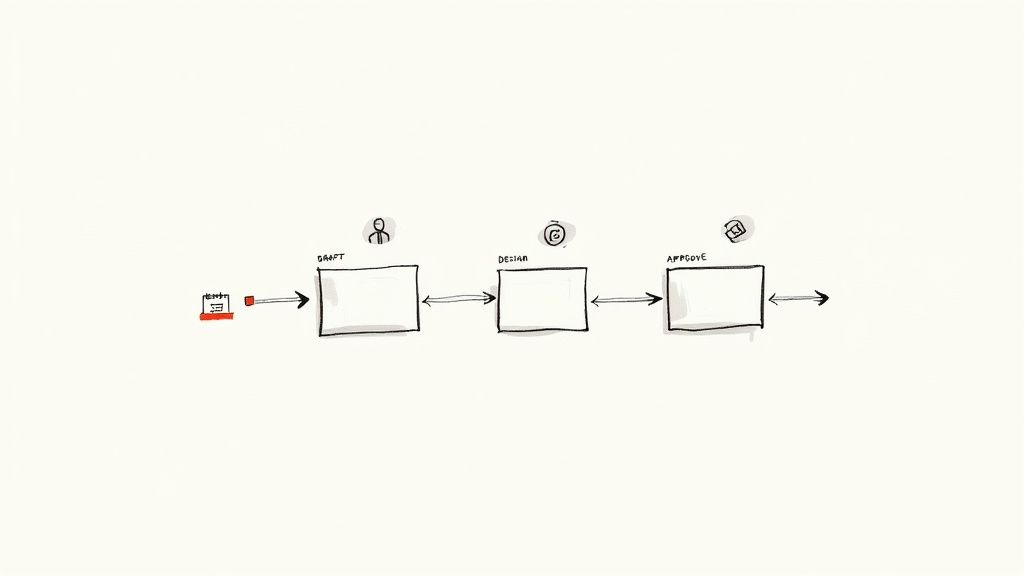
A brilliant calendar is just a document until you build a process to bring it to life. This is where you create the engine for your content machine—a smooth, repeatable workflow that takes an idea from a simple brief to a published post without any drama.
The whole point is to build a system so clear that everyone on your team knows exactly what their role is at every single stage. This clarity is what prevents bottlenecks and last-minute scrambles. When you know precisely who writes the copy, who designs the graphics, and who gives the final green light, things just happen.
Who Does What? Defining Roles and Responsibilities
First things first: you need to map out who owns each step of the content creation journey. For a smaller school marketing team, this might seem obvious, but trust me, writing it down makes all the difference. It eliminates the classic "I thought you were handling that" moments that derail so many great ideas.
To get started, here’s a simple breakdown of the key players you'll need to define in your content process.
Content Creation Workflow Roles
| Role | Primary Responsibility | Key Task Example |
|---|---|---|
| Content Strategist/Manager | Oversees the calendar, assigns tasks, and ensures alignment with school goals. | Planning the next month’s blog topics based on the "Innovation in Education" pillar. |
| Content Creator | The writer, videographer, or photographer who produces the actual content. | Writing a 750-word blog post from an approved content brief. |
| Reviewer/Approver | Gives the final sign-off before content is published. This is often a department head or the Head of School. | Reviewing a draft of the "Welcome New Families" email for tone and accuracy. |
| Publisher | Schedules and publishes the final content on the designated channels (e.g., website, social media). | Uploading the approved blog post to the school website and scheduling social media promotion. |
Having these roles clearly defined creates accountability and keeps the entire process moving forward smoothly.
A great workflow is more than just a checklist; it's a team-wide commitment to a process. It’s what guarantees quality and consistency, turning your content plan into a reliable asset for your school.
The Power of a Good Content Brief
At the heart of any functional workflow is a simple but mighty content brief. Think of this document as the blueprint for each piece of content. It ensures the creator understands the mission from the get-go, saving you endless rounds of revisions.
A solid brief doesn't need to be an epic novel. It just needs to answer a few fundamental questions:
- Working Title: What's the main topic or headline idea?
- Content Pillar: Which of our core themes does this support?
- Audience: Who are we talking to? (e.g., Prospective Parents, Current Students, Alumni)
- Call to Action (CTA): What do we want them to do next? (e.g., "Register for our open house," "Read about our STEM program")
- Key Talking Points: What are the 2-3 must-have messages?
- Target Publication Date: When does this need to go live?
By standardizing this brief, you create a system that practically runs itself. For a deeper look into formalizing these steps, our guide on how to create standard operating procedures provides a fantastic framework for building repeatable success into your marketing.
Keeping the Train on the Tracks
Finally, a successful editorial workflow is a living, breathing system, not a static document you file away.
Hold a quick, weekly check-in meeting. Use that time to review the upcoming week’s content, tackle any roadblocks, and confirm deadlines. The goal should always be to have content planned and in production at least a full month in advance.
This foresight gives you the breathing room to react to those wonderful, unexpected stories—like a surprise student award or a last-minute community event—without throwing your entire schedule into chaos. This balance of planning and adaptability is what separates a good content program from a truly great one.
Common Questions About School Editorial Calendars
Even seasoned school marketers hit snags when mapping out an editorial calendar. Below you’ll find clear solutions to the top hurdles, with practical tips that you can apply right away.
How Far In Advance Should We Plan?
Everyone wonders: how much lead time is enough? Trying to script every post for the whole year quickly becomes unwieldy. But winging it week by week invites chaos.
Most teams find success by plotting quarterly themes and major campaigns at least three months ahead. For daily content—blog titles, email subject lines or social media posts—have everything locked in one month before publish day. I once worked with a rural district that mapped science fair promotions two semesters out, then refined specific posts six weeks prior. That approach created both vision and agility.
What If We Have Unexpected News To Share?
School life is full of curveballs: a student winning a statewide award, a surprise guest speaker or a snow day announcement. Your calendar must bend, not break, when these moments pop up.
Aim for 80% pre-scheduled content and 20% open slots for real-time updates.
When something newsworthy happens, simply swap in the in-the-moment story. This keeps your audience engaged with timely, meaningful updates—without derailing your core strategy.
How Do We Keep Everyone On The Team Using It?
A calendar gathering digital dust doesn’t help anyone. You need genuine buy-in, which starts with weaving it into daily routines.
- Kick off your weekly marketing huddle by reviewing the calendar.
- Assign a single owner to every entry—no task left unclaimed.
- Link your calendar to tools like Trello or Asana so updates happen in real time.
- Celebrate wins loudly. When a scheduled post drives bump in open house RSVPs, share the metrics and kudos.
A well-managed editorial calendar becomes more than a spreadsheet—it turns into your team’s storytelling playbook. When everyone sees how it shapes engagement and drives results, it stops feeling like “another task” and starts feeling like your roadmap to success.
Ready to build a content strategy that drives real results? At The MarCom Society, we provide K-12 marketing professionals with the expert guidance, practical resources, and supportive community you need to excel. Join us today and transform your school's communications.









