
If you want to boost community engagement, you have to stop thinking in terms of one-way announcements. The real magic happens when you build a two-way street—a space where parents, students, and staff feel genuinely heard and valued. It’s about creating real partnerships, not just chasing likes and open rates.
Building a Foundation for Authentic Connection

Does this sound familiar? You meticulously plan an event, but the turnout is low. You send out a critical email, but the read rate is disappointing. It’s a frustrating cycle for so many K-12 communications professionals.
Often, the problem isn’t the message itself but the approach. When communication feels like a series of top-down broadcasts, families tune out. True engagement isn’t a transaction; it’s a relationship built on a solid foundation of trust and mutual respect. This guide is all about moving past those surface-level metrics to create an environment where everyone feels like a partner in the school's mission.
From Announcements to Dialogue
The first, and most important, step is a mindset shift. Stop just pushing information out and start thinking about how you can pull people in. This means creating easy, accessible ways for families to share their thoughts and—critically—seeing that their input is actually being considered.
When your community members feel like their voices matter, their investment in the school grows exponentially. You’re no longer just an information dispatcher; you become a community builder.
This involves a few key practices:
- Active Listening: Get creative with surveys, hold town halls, and create open forums to gather honest feedback. Don’t be afraid of what you might hear.
- Radical Transparency: Don’t just announce decisions. Explain the why behind them, and be sure to show how community input shaped the outcome.
- Reliable Consistency: Keep the lines of communication open and dependable. Families need to know they can always reach out and be heard.
The most successful engagement efforts treat community members as collaborators, not an audience. When you build with them, you create something that truly serves their needs and reflects their values.
For a deeper dive into different approaches, these strategies to improve community engagement offer some great, actionable insights. By focusing on this foundation of trust, you're not just sending messages—you're building a vibrant, connected school ecosystem.
Creating Opportunities for Meaningful Participation

Real community engagement isn't about just keeping families in the loop on decisions that have already been made behind closed doors. It's about pulling up a chair for them at the planning table. Making that shift—from broadcasting announcements to building genuine partnerships—is how you earn lasting trust and get families truly invested in the school's success.
Think about the difference. Instead of a newsletter announcing the new playground, imagine inviting families to help choose the design from the very beginning. That simple change creates a powerful sense of shared ownership and shows you don't just want their kids, you want their perspective, too.
Move Beyond Passive Updates
To get people truly involved, you have to give them clear and accessible ways to contribute. A suggestion box in the front office or a once-a-year survey is a start, but they rarely lead to game-changing ideas. The real magic happens when you create opportunities for deeper involvement that are structured, inclusive, and transparent.
Here are a few initiatives I've seen work wonders:
- Parent Advisory Committees: Create a dedicated group to weigh in on big-ticket items like curriculum changes or new safety protocols. This gives you a formal, reliable channel for getting thoughtful feedback.
- Town Hall Meetings: Hold regular sessions to talk through school policies. Offering both in-person and virtual options is key to making sure busy, working parents can actually show up.
- Participatory Budgeting: This is a fantastic way to build goodwill. For a specific project—say, updating the library or buying new tablets—let the community vote on how a portion of the funds are spent. It gives them direct control over something tangible.
Show Everyone How Their Input Makes a Difference
Asking for feedback is only half the battle. You have to close the loop. When your community sees their ideas being taken seriously and put into action, their desire to stay involved skyrockets.
So, after that town hall, don't just go silent. Send a follow-up email summarizing the key discussion points and outlining what the school plans to do next. If a suggestion from the parent committee leads to a real policy change, shout it from the rooftops! Showing that "before and after" proves their voice has real power.
When you can draw a straight line from community feedback to a tangible outcome, you turn passive observers into active partners. This creates a powerful cycle of trust that keeps people coming back.
The data backs this up. A 2023 study from Stanford University found that engagement initiatives with clear, measurable impacts saw participation jump by up to 35% compared to old-school methods. By involving people early and using tools like participatory budgeting, they didn't just get more people in the room—they also saw community trust levels increase by 27%.
Empower Students as Your Community Connectors
Never forget your most authentic and powerful advocates: your students. Giving them leadership roles is a brilliant way to build bridges with the wider community. Who better to connect with parents and neighbors?
Creating a team of student leaders can amplify your message and bring you insights you'd never get otherwise. For a deep dive, check out our guide on how to launch successful student ambassador programs. And for more actionable strategies on fostering this kind of involvement, these 10 customer engagement best practices are a great resource.
Using Technology to Deepen School Engagement

Technology can be your best friend for boosting community engagement, but there’s a catch. It has to be a bridge for two-way conversation, not just a megaphone for one-way announcements. If you're only using tech to blast out emails and post on social media, you're missing the point. The real magic happens when you choose tools that don't just broadcast information but actively invite people to participate.
Think about how technology can dismantle the common barriers that keep busy parents from getting involved. For example, simply offering hybrid parent-teacher conferences or town halls can be a game-changer. By blending in-person and virtual attendance, you suddenly make it possible for families with tough work schedules or transportation issues to show up. It’s a small change that can dramatically lift participation and help families feel seen and heard.
Interactive Tools for Real-Time Feedback
If you really want to know what your community needs, you have to give them a way to provide specific, actionable feedback. Let's be honest, long, abstract surveys rarely get the response rates we hope for because they feel disconnected from people's daily lives. This is where interactive tech really shines.
Instead of a generic feedback form about school safety, what if you used an interactive mapping tool for a drop-off zone audit? Imagine parents being able to digitally drop a pin on a map to flag a blind corner or a missing crosswalk and leave a quick comment. This approach makes the feedback tangible and gives you precise, location-based data to work with.
This isn't just a theory; it’s a strategy that's working. City governments using geospatial consultation tools have seen a 40% increase in public responses. When people can see and interact with proposals on a map, abstract plans become real-world issues they can engage with. We're also seeing virtual and hybrid meetings boost attendance by up to 22%. You can dig into more of these trends and see how public sector engagement is evolving on the Delib newsroom.
Lowering the Bar for Participation
Not every interaction has to be a huge commitment. Sometimes, the most effective engagement is the quickest. Using simple tech strategically creates low-effort ways for families to share their voice, which helps build a habit of participation over time.
- Quick Polls: Your school app or Instagram stories are perfect for fast polls. Ask about spirit day themes, new cafeteria options, or fundraising ideas. It's fun, easy, and takes seconds.
- Two-Question Surveys: After a school event, send a super-short survey via text message. You'll catch parents while the experience is still fresh in their minds.
- Virtual Suggestion Boxes: Set up a simple, always-on form on your website. This gives parents a place to drop ideas or concerns whenever it's convenient for them, not just when you ask.
Modern tools offer a ton of ways to connect with your community. Here's a look at a few technologies and how you can apply them directly in a K-12 setting.
Engagement Tools and Their K-12 Application
| Technology | K-12 Application Example | Key Benefit |
|---|---|---|
| Live Polling Software | During a virtual town hall about the budget, use a tool like Slido to ask parents to vote on spending priorities in real-time. | Instantly gauges community sentiment and makes large meetings feel more interactive and participatory. |
| Interactive Mapping | When planning a new playground, use a map-based tool for families to pin their favorite equipment ideas or highlight safety concerns. | Turns abstract planning into a visual, collaborative process and provides location-specific feedback. |
| SMS/Texting Platforms | Send a quick text survey with one or two questions after the fall open house to gather immediate impressions. | Achieves high open and response rates for time-sensitive feedback, meeting parents on their phones. |
| Digital Whiteboards | Host a virtual brainstorming session with the PTA using a tool like Miro to gather ideas for the annual school fair. | Allows for creative, non-linear collaboration and ensures all ideas are captured visually. |
Choosing the right tool isn't about chasing the latest trend; it's about finding the best way to open a door for conversation with your community.
The best engagement technologies don't demand more from your community; they meet them where they are. By making it easy and convenient to participate, you show families that their input is valued and respected, which is the foundation of a strong partnership.
At the end of the day, it’s not about having the flashiest app. It’s about being thoughtful in how you use technology to facilitate dialogue, break down barriers, and create a truly inclusive school community.
Turning Your Digital Campus into a Community Hub
Your school's website and social media channels are more than just digital billboards—they're your digital campus. Too often, we treat them as static places to post announcements. But what if we started treating them as vibrant, interactive hubs designed to pull our community together?
The real shift happens when you stop broadcasting and start connecting. It’s about creating online experiences that feel as genuine and valuable as a conversation in the hallway. This is how you move beyond just counting likes and start fostering real, meaningful participation.
Spark More Participation with Gamification
One of the most powerful ways I've seen schools boost interaction is through gamification. This doesn't mean you need to turn your parent portal into an elaborate video game. Far from it. It's about using simple, fun mechanics—like rewards and friendly competition—to encourage the behaviors you want to see.
Think about it in practical terms. You could create digital badges for parent volunteers who help out at multiple events. Or maybe a leaderboard for the elementary school’s annual reading challenge that gets updated weekly. These small touches add a layer of fun and motivation, making people want to get involved.
The data backs this up. A 2025 engagement analysis from Bevy found that while only 12% of online community members are typically active, adding gamification can change the game. Platforms that use these strategies see a 63% increase in repeat participation and a 41% jump in peer-to-peer interactions. You can dig deeper into how to boost community engagement with these metrics on Bevy.com.
Make People Feel Seen with Personalization
In a world overflowing with information, personalization is what makes your message stand out. A high school parent doesn’t need a push notification about the kindergarten field trip, and an elementary family couldn’t care less about prom ticket sales. When your communications feel irrelevant, people quickly learn to tune you out.
Segmenting your audience is the first, and most crucial, step. By creating distinct content streams, you make sure families see only the updates that actually matter to them.
Here are a few ways to put this into action:
- Segment Your Emails: Tag your contacts by grade level (elementary, middle, high school) so you can send truly targeted newsletters.
- Create Niche Social Groups: Start private Facebook groups for specific clubs or parent organizations, like the marching band boosters or the PTO, to create focused mini-communities.
- Customize Your Website: Let parents personalize their dashboard on the school portal, showing them only news and events relevant to their child's grade and activities.
When you deliver the right message to the right person at the right time, you’re doing more than just sharing information. You’re showing that you see them and respect their unique journey within your school community. That simple acknowledgment is the foundation of genuine engagement.
This isn’t just about making things more convenient; it has a direct impact on interaction. A 2024 study of thousands of online communities revealed that those using personalized content recommendations saw a 28% lift in user engagement per post.
For a more detailed look at building these kinds of connections, our guide on leveraging social media to build a strong school community is a fantastic resource. By making your digital campus smarter and more responsive, you transform it from a simple website into a true community hub where every single family feels they belong.
Measuring Engagement Metrics That Actually Matter
So, are your community engagement efforts actually moving the needle? It’s easy to get caught up in vanity metrics like social media likes or website page views, but those numbers don't tell the whole story. To really prove the value of what you do, you have to measure what truly matters.
This means we need to shift our focus from passive consumption to active participation. Instead of just counting eyeballs, let's start tracking how many people are genuinely contributing to the life of the school. This approach gives you a much sharper picture of your success and helps you make smarter calls on where to put your time and budget.
Identifying Meaningful Key Performance Indicators
The right Key Performance Indicators (KPIs) paint a picture of your community’s health. They go beyond simple headcounts to show you the real depth and quality of your relationships. When you bring these numbers to your school’s leadership, you’re not just showing them a flurry of activity—you're demonstrating the real-world return on building a strong, connected community.
Think about tracking metrics like these:
- Active Participation Rate: What percentage of parents are actually active in your main Facebook group or parent portal? I’m talking about commenting or posting, not just lurking in the background.
- Event Attendance Mix: Look at the attendance numbers for your virtual events versus your in-person ones. This can shine a light on accessibility issues or tell you a lot about family preferences.
- Dialogue Sentiment: In your online forums or social media threads, is the conversation generally positive, negative, or neutral? This kind of qualitative data is pure gold.
The most powerful metrics are the ones that reflect a two-way conversation. They prove you're not just broadcasting messages but are actually creating a space where families feel heard, valued, and genuinely want to get involved.
This infographic breaks down just how much of an impact things like gamification and personalization can have on getting people to participate.
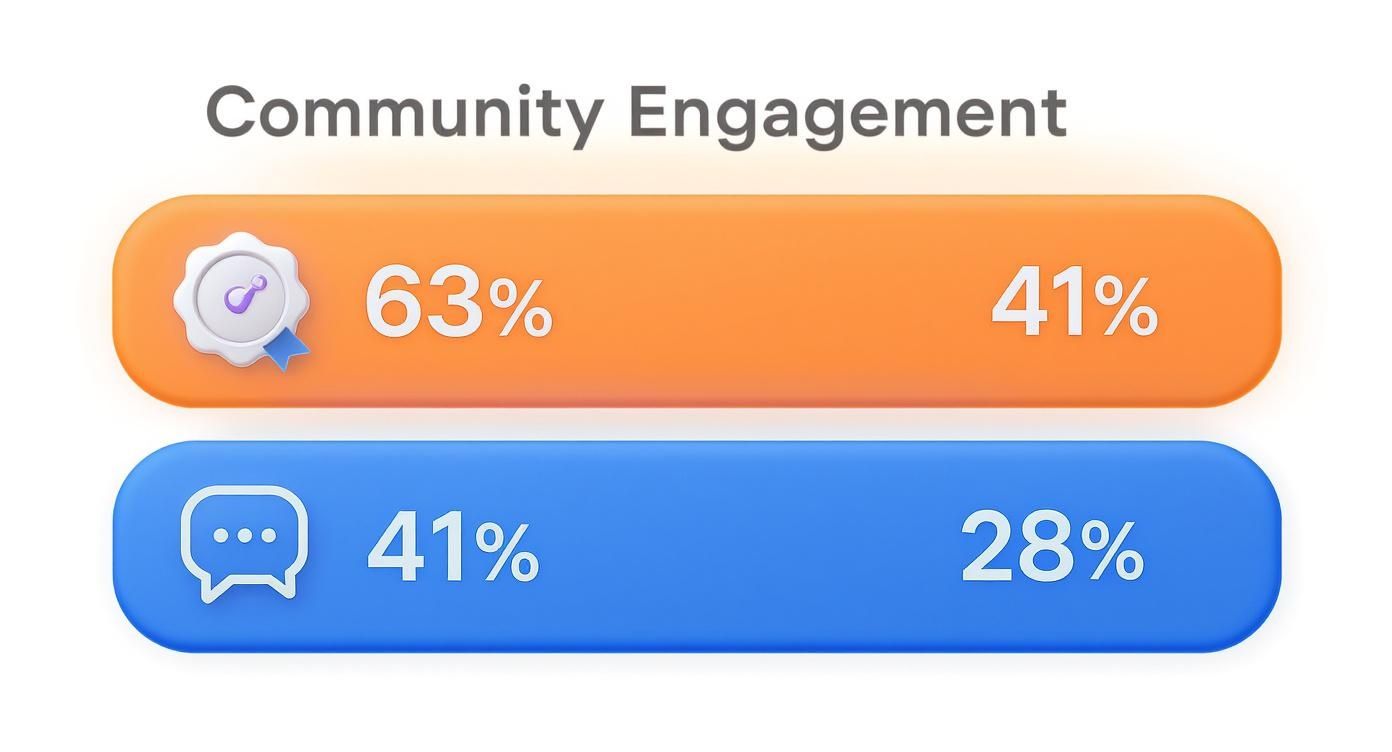
The data here is crystal clear: strategic incentives and relevant content work far better at encouraging interaction than a one-size-fits-all approach. A 28% boost from targeted content alone is a huge win.
Building a Simple Engagement Dashboard
You don’t need a fancy, expensive software suite to keep tabs on your progress. A simple dashboard, even one you build in a spreadsheet, can help you visualize your data and share compelling insights with your leadership team. It’s all about translating your daily work into a clear story of community growth.
For a deeper dive into which metrics to include, this guide on key performance indicators for schools is a fantastic starting point.
Here’s a quick look at what a basic dashboard could track:
| Metric | Last Quarter | This Quarter | Goal |
|---|---|---|---|
| Parent Group Active Members | 18% | 24% | 25% |
| Virtual Town Hall Attendance | 45 families | 62 families | 60 |
| Positive Sentiment Mentions | 32 | 41 | 45 |
By regularly tracking and reporting on these specific, action-oriented metrics, you can fine-tune your strategies on the fly and prove the undeniable value of your work. You’ll be able to show exactly how your efforts are building a more connected and supportive school environment.
Your Top School Community Engagement Questions, Answered
Even with a solid game plan, every school communicator runs into the same roadblocks. You're not alone. Figuring out how to get ahead of these common hurdles is what separates a good engagement strategy from a great one.
Let’s dig into the questions I hear most often from professionals in the trenches. These are the real-world challenges that can kill your momentum, so having a few go-to moves in your back pocket is crucial.
How Can Our School Boost Engagement When We Have No Budget?
This is the big one, isn't it? But a shoestring budget doesn't mean you're stuck with low engagement. It just means you have to be smarter and more intentional. The trick is to lean into high-impact activities that cost little to no money.
Your best bet is to get really good at using the free tools you already have at your disposal. A vibrant, well-run parent Facebook group can outperform a pricey ad campaign any day of the week. Focus on interactive content that gets people talking—think polls, Q&A sessions with the principal, or "day in the life" student spotlights. Authenticity and consistency will always win out over expensive, one-off efforts.
Another killer strategy that doesn't cost a dime is to find and empower your internal champions. You know who they are: the teachers, staff members, and parents who are natural networkers. Give them the information and support they need to act as community ambassadors. They’ll spread the word and gather feedback for you, extending your reach without touching your budget.
What’s The Right Way To Handle Negative Feedback Online?
That sinking feeling when you see a negative comment pop up on your school's social media? We've all been there. But believe it or not, this is a golden opportunity to build trust. My golden rule is simple: address it quickly, publicly, and professionally.
First off, resist the urge to delete it. The only time you should ever hit delete is if the comment violates your written community guidelines (like using hate speech or profanity). Deleting legitimate criticism just makes it look like you have something to hide. Instead, post a public reply acknowledging their concern and thanking them for bringing it to your attention.
The next move is critical: offer to take the conversation offline. A simple "Please send us a DM" or "Let's connect you with the right person via phone" moves the specific resolution to a private channel. This two-step dance shows your entire audience that you listen, you're responsive, and you take concerns seriously. That’s a massive win for community trust.
Responding to criticism with transparency and empathy does more to build community trust than a hundred positive posts. It proves you're committed to the conversation, not just the compliments.
How Can We Do A Better Job Of Including Non-English Speaking Families?
If you want real community engagement, inclusivity isn't optional. Reaching families who don't speak English requires more than just clicking the "translate" button on your website—it demands a thoughtful, multi-pronged approach.
Start by making professional translation a standard part of your workflow for all critical communications, from newsletters to emergency notifications. Your website absolutely needs an easy-to-find language switcher. But don't stop there. Technology isn't a silver bullet, especially since many families face barriers like limited internet access or digital literacy.
That's why old-school methods are still so important. Keep sending home printed flyers in multiple languages. Use automated calling systems for urgent news. The most powerful tool, however, is human connection. Partnering with community liaisons who can build direct relationships with families is incredibly effective. And think about location—holding important meetings in familiar neighborhood spots instead of always at the school can make a world of difference in attendance and participation.
At The MarCom Society, we provide K-12 marketing and communications professionals with the resources, expert insights, and peer support needed to tackle these challenges and more. Join our community to access live workshops, practical courses, and a network of peers dedicated to elevating school communications. Learn more at https://marcomsociety.org.









