
In the competitive landscape of K-12 education, the traditional open house is no longer enough. To truly capture the attention of prospective families, school marketing professionals must innovate, creating memorable experiences that showcase their school's unique culture and value proposition. This isn't just about opening doors; it's about opening minds to what your institution can offer. This roundup provides a comprehensive collection of actionable, creative ideas for open house events designed to move beyond the standard tour and presentation.
From leveraging technology for interactive campus tours to fostering genuine community connections through themed stations, these strategies will help you transform your next event. To truly transform your open house, delve into modern experiential marketing concepts that focus on creating memorable and immersive experiences for prospective families. Each idea is designed to be practical and impactful.
By implementing these fresh approaches, you can turn a simple walkthrough into a cornerstone of your enrollment marketing strategy. The goal is to leave a lasting, positive impression that resonates with modern families and clearly communicates why your school is the right choice for their child’s future. Explore the following sections to find the specific tactics that will elevate your next open house.
1. Interactive 'Day in the Life' Stations
Move beyond the traditional passive tour by transforming your campus into an immersive, hands-on experience. Interactive "Day in the Life" stations allow prospective families to actively engage with your curriculum and culture, making your school’s educational philosophy tangible and memorable. This is one of the most effective ideas for open house because it shifts the focus from telling families about your school to showing them.
Instead of just looking at a science lab, visitors can participate in a quick experiment. Rather than just seeing the art studio, they can contribute to a collaborative mural. This active participation creates a strong emotional connection and helps families envision their child thriving in your environment.
How to Implement This Idea
- 'Solve a Mystery' in the Science Lab: Set up a simple forensic-style challenge where families use microscopes to examine "clues" or test the pH of different solutions to identify an unknown substance.
- 'Code a Robot' in the Tech Hub: Use programmable robots like Ozobots or Spheros for a brief, beginner-friendly coding challenge that demonstrates your commitment to STEM.
- 'Create a Masterpiece' in the Art Studio: Have a station with clay, paint, or other materials where guests can contribute to a large, communal art project that will be displayed in the school.
- 'Debate a Topic' in a Humanities Classroom: Present a thought-provoking, age-appropriate question on a whiteboard and encourage families to add their arguments using sticky notes, simulating a Socratic discussion.
Pro Tip: Involve current student ambassadors as station guides. Their genuine enthusiasm and firsthand knowledge are invaluable, as they can explain the activities from a student's perspective and answer questions authentically.
Why It Works
This approach is highly effective because it caters to kinesthetic learners and provides concrete evidence of your school's unique programs. By keeping each activity short (5-10 minutes) and providing a "passport" for families to get stamped at each station, you can gamify the experience, maintain momentum, and ensure visitors explore the entire campus.
2. Themed Food and Beverage Stations
Go beyond simple cookies and water to create a warm, inviting atmosphere that encourages families to relax, linger, and connect. Strategically placed food and beverage stations do more than just provide refreshments; they reflect your school's hospitality and culture. This is one of the most effective ideas for open house because it creates positive sensory associations and makes your campus feel like a community hub.
Offering thoughtful, themed treats shows you care about the visitor experience. A warm drink on a cold day or a refreshing snack can make a lasting impression, encouraging parents to stay longer, ask more questions, and truly absorb the environment you've created.

How to Implement This Idea
- 'Brain Food' Bar: Set up a station with healthy, energizing snacks like granola bars, fruit skewers, and yogurt parfaits, themed around fueling student minds for learning.
- Hot Chocolate & Coffee Cart: For a morning or winter open house, offer a gourmet hot beverage station with different toppings like whipped cream, cinnamon, and chocolate shavings.
- School Spirit Station: Serve cupcakes or cookies decorated with your school's colors and logo, along with a branded "spirit punch" (a simple, colorful non-alcoholic beverage).
- 'Taste of the Garden' Table: If your school has a garden, feature produce from it. Offer small cups of vegetable soup, herb-infused water, or salads to showcase your farm-to-table initiatives.
Pro Tip: Clearly label all food items, paying close attention to common allergens. Offering designated nut-free, gluten-free, and vegan options demonstrates your school's commitment to inclusivity and care for every family’s needs.
Why It Works
This strategy creates a multi-sensory experience that makes families feel welcomed and valued. It provides natural stopping points during the tour, giving visitors a chance to pause, reflect, and chat with staff or other parents in an informal setting. By aligning the refreshments with your school's brand and the time of day, you reinforce your identity and show a high level of thoughtfulness and organization.
3. Live Demonstration Stations
Go beyond static displays by bringing your school's unique features to life with live demonstrations. Instead of just mentioning your state-of-the-art technology or specialized programs, showcase them in action. This is one of the most powerful ideas for open house because it provides tangible proof of your school’s value and innovation, leaving a lasting impression on prospective families.
Imagine visitors not just hearing about your new robotics lab, but watching a student-led team run a robot through a maze. Rather than reading a brochure about your advanced science curriculum, they can see a real-time experiment in progress. This dynamic approach transforms abstract concepts into compelling, memorable experiences.
How to Implement This Idea
- Smart Classroom in Action: Demonstrate how your interactive whiteboards, collaborative software, and student devices are used in a typical lesson to enhance learning and engagement.
- High-Tech Security Features: Showcase your advanced security systems, such as keycard entry or visitor management software, to reassure parents about campus safety.
- Performance Arts Sneak Peek: Have your drama club or choir perform a short scene or song, giving families a glimpse into the quality and passion of your arts programs.
- Culinary Arts Tasting: If your school offers a culinary program, have students demonstrate a cooking technique and offer small samples of their creations.
Pro Tip: Keep demonstrations short, looping every 5-7 minutes. This allows families to drop in at any point without a long wait and ensures the flow of your open house is never bottlenecked in one area.
Why It Works
This method is highly effective because it directly answers the parent question, "What makes your school different?" Live demonstrations provide concrete evidence of your investment in modern tools and specialized programs. They highlight benefits that aren't obvious on a standard tour, creating “wow” moments that make your school stand out and help families justify their educational investment.
4. Professional Photography and Videography Stations
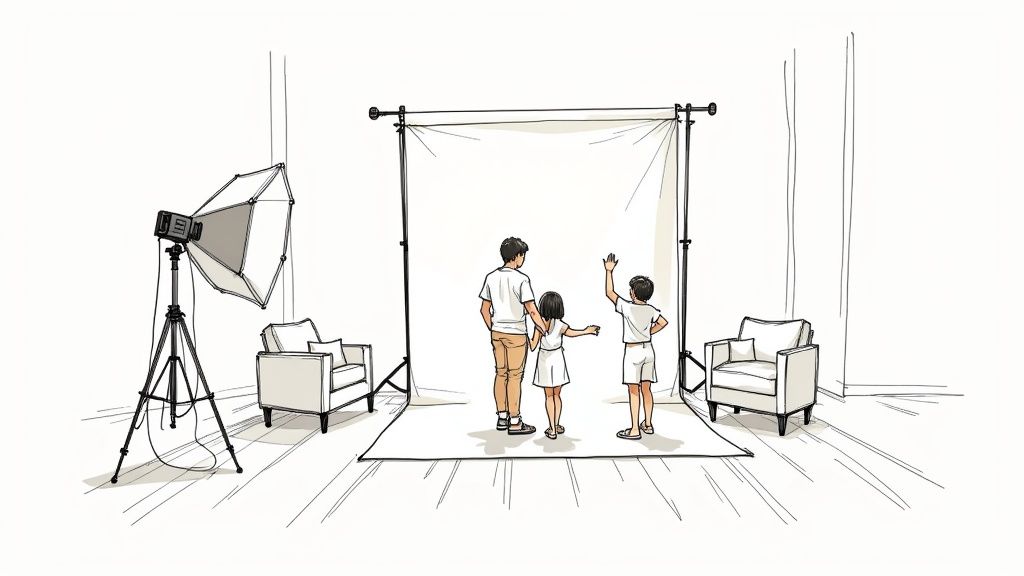
Transform your open house into a memorable event by offering visitors a tangible, high-value takeaway: a professional photograph. Setting up a dedicated photo or video station provides a fun, interactive experience that makes families feel special and appreciated. This is one of the more creative ideas for open house because it generates positive sentiment and creates powerful, user-generated content for your school.
Instead of just leaving with a brochure, families depart with a beautiful, professionally-shot family portrait or a fun headshot of their child, branded with your school’s logo. This personal touch not only delights your guests but also encourages them to share their positive experience on social media, organically extending your event's reach and showcasing your vibrant community.
How to Implement This Idea
- Branded Photo Booth: Create an attractive backdrop featuring your school's logo, colors, or a scenic spot on campus. Provide fun, school-themed props like pennants, mascot hats, or science goggles.
- Professional Headshot Station: Offer complimentary headshots for prospective middle or high school students. This is a valuable perk for families and positions your school as one that invests in its students' futures.
- "Future Graduate" Portraits: Set up a station with a mini cap and gown where younger children can pose for a picture, helping parents visualize their child's long-term journey at your school.
- Short Video Testimonials: Designate a quiet area for a videographer to capture brief, 15-second clips of families sharing what they loved most about the open house. You can explore a guide on how to create video content for more tips.
Pro Tip: Use the photo delivery process for lead generation. Require an email address to send the digital photos, adding prospective families to your communications funnel for follow-up nurturing.
Why It Works
This strategy provides instant gratification and a high-perceived value at a relatively low cost. By creating a specific hashtag for the event (e.g., #Discover[SchoolName]2024) and encouraging families to share their photos, you amplify your marketing efforts through authentic, trusted sources. It’s an engaging activity that captures the joy of the day and keeps your school top-of-mind long after the event has ended.
5. Neighborhood Expert and Local Vendor Fair
Position your school as the heart of the community by transforming your open house into a local resource fair. Inviting neighborhood experts and vendors adds a layer of value for new and prospective families, showing them you are invested in their entire family experience, not just their child's education. This is one of the more community-focused ideas for open house because it demonstrates your school's role as a central hub and a valuable local partner.
Instead of only talking about your curriculum, you provide tangible connections to the neighborhood. This approach shows you understand the needs of relocating families and helps current families discover local resources, building immense goodwill and showcasing the broader benefits of joining your school community.
How to Implement This Idea
- 'Meet the Community' Hub: Invite local realtors, pediatricians, music tutors, and family-friendly restaurant owners to set up informational tables.
- 'Youth Sports & Arts Showcase': Partner with local little leagues, dance studios, and martial arts dojos to offer sign-up information or brief demonstrations.
- 'Parent Resource Corner': Feature local businesses that support parents, such as coffee shops, childcare providers, or family photographers.
- 'Digital Neighborhood Guide': Compile vendor contact information and local highlights into a single, accessible resource. For modern, personalized visitor experiences at your open house, consider the benefits of creating an essential electronic guidebook for attendees.
Pro Tip: Vet vendors carefully to ensure they align with your school's values and mission. A well-curated group of partners enhances your brand, while a random assortment can feel disjointed and commercial.
Why It Works
This strategy turns your event into a one-stop-shop for families exploring the area, making their lives easier and your school more attractive. It provides a unique draw that differentiates you from other schools, attracting families who are not just looking for an education but a community to belong to. Integrating this concept is a powerful part of a broader event strategy. Learn more about effective event marketing strategies.
6. Comparison Market Analysis (CMA) Consultation Stations
Elevate your event from a simple walkthrough to a strategic financial consultation. Dedicated Comparison Market Analysis (CMA) stations transform a portion of your open house into an educational hub, where agents provide data-driven insights into the property's market value. This is one of the most powerful ideas for open house for serious buyers because it directly addresses the crucial question: "Is this a smart investment?"
Instead of just admiring the home, prospective buyers can sit with an agent to review comparable properties, analyze recent market trends, and understand the pricing strategy. This consultative approach builds immense trust and positions you as a knowledgeable market expert, not just a salesperson.
How to Implement This Idea
- Visual Data Displays: Set up a station with a large monitor or tablet showcasing visually compelling charts of local market trends, price-per-square-foot comparisons, and appreciation rates.
- Printable Takeaways: Have professionally branded, one-page CMA summaries ready for visitors to take with them. This tangible report keeps the property and its value top-of-mind.
- Hyperlocal Focus: Tailor the data to the specific neighborhood or even the block, highlighting unique factors like school district ratings or proximity to new developments that justify the valuation.
- Investment Potential Scenario: For properties with rental or flip potential, prepare a simple analysis showing potential ROI, cap rates, or projected after-repair value (ARV).
Pro Tip: Don't wait for visitors to ask. Proactively invite qualified prospects to the station by saying, "We've prepared a detailed market analysis for this home. Would you be interested in a quick 5-minute overview of how it compares to other recent sales?"
Why It Works
This strategy is highly effective for luxury properties, homes in competitive markets, or any listing where the price requires justification. It appeals to analytical, data-driven buyers and filters for serious prospects who are looking beyond aesthetics. By transparently presenting the property’s value proposition, you preemptively handle pricing objections and empower buyers to make a confident, well-informed decision.
7. Interactive Floor Plan and Design Visualizations
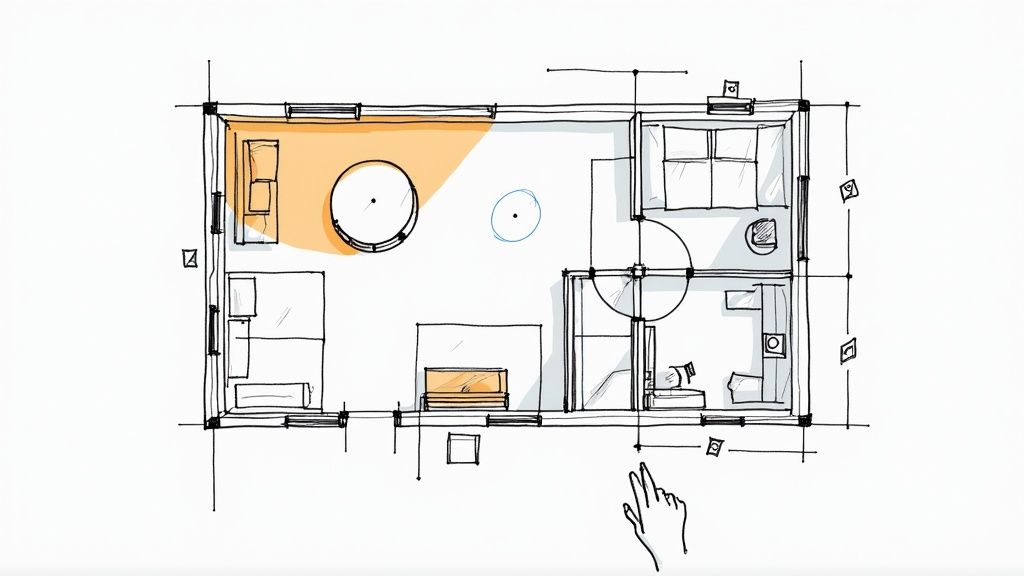
Help families visualize not just the current space, but its future potential. Interactive floor plans and design visualizations allow prospective parents to see how a classroom, library, or new facility will function and adapt. This is one of the most forward-thinking ideas for open house because it makes abstract plans or future developments concrete and exciting for your audience.
Instead of simply describing a planned renovation or the flexibility of a learning space, you can show them. Visitors can use a touchscreen or tablet to explore different room layouts, see how a science lab will be equipped, or view a 3D model of a future gymnasium. This digital engagement helps answer practical questions and builds anticipation for what’s to come.
How to Implement This Idea
- 'Design Your Classroom' Kiosk: Set up a large touchscreen with software that allows visitors to drag and drop furniture to see different collaborative learning configurations.
- Virtual Reality (VR) Future Campus Tour: For major capital campaigns or new constructions, offer a VR headset experience that "walks" families through the planned buildings.
- Tablet-Based Architectural Renderings: Equip tour guides with tablets showcasing high-resolution 3D renderings of renovated spaces, allowing them to swipe between "before" and "after" views.
- Augmented Reality (AR) Overlays: Use an AR app that lets visitors point their phone at a current space (like an empty field) and see a digital model of the future building superimposed on it.
Pro Tip: Position these interactive stations in high-traffic areas where families naturally gather, such as the main lobby or library. Have a staff member or a tech-savvy student ambassador available to guide users and explain the vision behind the designs.
Why It Works
This strategy is exceptionally powerful for schools undergoing expansion, fundraising for a new facility, or showcasing the versatility of multi-use spaces. It demonstrates transparency, innovation, and a clear vision for the future. By allowing parents to interact with and personalize the designs, you make them feel like valued stakeholders in the school’s evolution, fostering a deeper sense of community and investment.
8. Guided Tours with Agent Storytelling and Historical/Architectural Context
Elevate your campus tour from a simple walk-through to a compelling narrative experience. By training your tour guides to be storytellers, you can weave the history, mission, and unique architectural details of your school into an engaging journey. This is one of the more sophisticated ideas for open house because it builds a deep, memorable connection by highlighting the legacy and vision behind the physical campus.
Instead of merely pointing out facilities, guides share anecdotes about a building's origin, the philosophy behind a classroom's design, or how a specific space has evolved to meet modern educational needs. This narrative approach transforms brick and mortar into a living story, helping prospective families appreciate the thoughtful intention behind your school’s environment.
How to Implement This Idea
- Highlight Architectural Significance: If your campus has historic buildings, train guides to point out unique architectural features and share stories about their construction or the notable alumni who walked those halls.
- Connect Spaces to Pedagogy: Explain the "why" behind your learning spaces. Is your library designed for collaborative projects? Was a science wing built to facilitate a specific hands-on curriculum? Share that story.
- Incorporate Founder Stories: Weave in tales about the school's founders, their vision, and how that mission continues to influence the school's culture and physical development.
- Showcase Future Plans: Use a tour stop at an older part of the campus to build excitement by sharing architectural renderings and the story behind an upcoming renovation or a new facility.
Pro Tip: Create a "tour guide toolkit" with key historical facts, architectural notes, and powerful anecdotes for each major stop on campus. This ensures consistency and empowers every guide to be an effective storyteller.
Why It Works
This method builds perceived value and institutional prestige. It shows families that your school is not just a collection of buildings, but a thoughtful, purpose-built community with a rich history and a clear vision for the future. By creating an emotional and intellectual connection to the campus itself, you differentiate your school and leave a powerful, lasting impression long after the open house ends. For more information, you can learn more about storytelling tours on blog.marcomsociety.org.
9. Social Media Live-Streaming and Real-Time Engagement
Extend your open house beyond the physical campus by broadcasting the event live on social media. This digital strategy allows prospective families who cannot attend in person, such as those relocating or with scheduling conflicts, to experience your school’s atmosphere in real-time. This is one of the most powerful ideas for open house in the digital age because it massively expands your reach and creates a sense of urgency.
By streaming key moments like the head of school's welcome address, student performances, or a walk-through of exciting campus spaces, you can engage a much broader audience. This interactive format transforms passive online viewers into active participants, allowing them to ask questions and get immediate answers, fostering a direct connection to your school community.
How to Implement This Idea
- Virtual Campus Tour: Use a smartphone with a gimbal for a smooth, stabilized tour. Have a host (like a student ambassador or admissions officer) guide viewers through key areas, narrating what makes each space special.
- Live Q&A Session: Schedule a specific time during the live stream to feature the head of school, a panel of teachers, or current students answering questions submitted by viewers in the comments.
- Showcase a Signature Program: Go live from an active "Day in the Life" station, like a robotics demonstration or a world language class activity, to showcase a unique academic offering.
- Pre-Promote the Event: Announce your live stream on all social media channels 24-48 hours in advance, encouraging followers to set a reminder to tune in.
Pro Tip: Have a dedicated team member monitor the comments section during the live stream. Their role is to feed questions to the on-camera host and respond to comments in real-time, ensuring viewers feel seen and engaged.
Why It Works
Live-streaming creates FOMO (fear of missing out) and captures the authentic energy of your event in a way that pre-recorded videos cannot. It provides an accessible option for families at any stage of their decision-making process, from initial curiosity to serious consideration. The saved live video also serves as valuable, evergreen content that can be repurposed and shared long after the open house has ended.
10. Measurement and Documentation Tools for Buyers
Empower prospective buyers to make informed decisions by providing them with practical tools and comprehensive documentation. This strategy shifts the open house from a simple viewing to a detailed evaluation session, demonstrating transparency and professionalism. Offering these resources is one of the most effective ideas for open house because it answers buyers' questions before they even ask, building immediate trust and confidence.
Instead of buyers fumbling with their phones for a measuring app or leaving with vague impressions, you equip them to visualize their life in the space. They can measure for their furniture, review utility costs, and understand the property's history on the spot. This proactive approach respects their time and positions you as a detail-oriented, trustworthy agent.
How to Implement This Idea
- Set Up a 'Due Diligence' Station: Designate a table with branded measuring tapes, clipboards, and pens for guests to use as they tour the property.
- Create a QR Code Hub: Display a prominent QR code that links to a digital folder containing floor plans, a virtual tour, detailed property specifications, and recent inspection summaries.
- Compile a 'Take-Home' Property Portfolio: Prepare professional folders with key documents like a room-by-room dimension sheet, a summary of recent upgrades, average utility costs, and a neighborhood highlights page.
- Leverage Dimension Apps: Suggest easy-to-use augmented reality measuring apps that buyers can download to quickly capture dimensions with their smartphones.
Pro Tip: Include a one-page "Property at a Glance" summary at the front of your documentation packet. This should feature high-quality photos, key dimensions, and the top three selling points for quick reference.
Why It Works
This method caters to serious, analytical buyers who appreciate data-driven decision-making. By providing all the necessary information upfront, you streamline their evaluation process and reduce the need for follow-up inquiries. This level of preparation not only showcases the property effectively but also highlights your competence as an agent, leaving a lasting professional impression and helping your open house stand out in a competitive market.
10-Point Comparison of Open House Ideas
| Experience | Implementation complexity | Resource requirements | Expected outcomes | Ideal use cases | Key advantages |
|---|---|---|---|---|---|
| Interactive Property Tours with Virtual Reality (VR) | High — content creation, setup, testing | VR headsets, 3D capture (Matterport), staff, tech support | High engagement; improved visualization; remote access | High-end, new construction, major renovations, tech-forward buyers | Immersive tours; showcases renovations; strong social buzz |
| Themed Food and Beverage Stations | Low — simple planning and logistics | Catering, disposable/bran ded materials, cleanup staff | Longer dwell time; warmer atmosphere; more conversations | Weekend open houses, evening events, higher-end properties | Affordable; easy to execute; encourages lingering and sharing |
| Live Demonstration Stations | Medium–High — trained demonstrators, rehearsals | Demo equipment, trained staff, safety setup | Demonstrates functionality; answers buyer questions; memorable | Smart homes, luxury properties, tech-forward listings | Highlights unique features; builds confidence; real-time Q&A |
| Professional Photography and Videography Stations | Medium — professional setup and consent processes | Photographer/videographer, backdrop, lighting, data delivery | Shareable UGC; increased social reach; lead capture | Competitive markets, social-media-savvy audiences, high-traffic events | Generates branded content; boosts social buzz; captures leads |
| Neighborhood Expert and Local Vendor Fair | Medium — vendor coordination and layout planning | Vendor partners, tables, signage, space management | Increased foot traffic; community context; resource sharing | First-time buyers, relocating families, suburban/community-focused areas | Adds neighborhood credibility; valuable local contacts; educates buyers |
| Comparison Market Analysis (CMA) Consultation Stations | Medium — data prep and skilled agents needed | Market data, tablets/displays, printed reports, trained agents | Builds trust; justifies pricing; engages serious buyers | Investment properties, luxury listings, competitive markets | Data-driven persuasion; differentiates agent expertise; qualifies leads |
| Interactive Floor Plan and Design Visualizations | Medium–High — software and display setup | Touchscreens/tablets, design software, staff assistance | Better space visualization; longer engagement; planning aid | Open plans, urban apartments, homes needing visualization | Visualizes layouts/renovations; interactive design planning; reduces uncertainty |
| Guided Tours with Agent Storytelling and Historical/Architectural Context | Medium — skilled agents and scheduling | Trained agents, scripted narratives, small-group coordination | Emotional connection; controlled flow; higher perceived value | Historic homes, architectural properties, luxury markets | Storytelling builds attachment; highlights unique features; manages crowds |
| Social Media Live-Streaming and Real-Time Engagement | Medium — production and moderation needed | Camera, stable internet, host/moderator, social manager | Expanded audience; remote buyer engagement; viral potential | Competitive markets, remote buyers, social-media-driven listings | Wide reach at low marginal cost; real-time interaction; recordable content |
| Measurement and Documentation Tools for Buyers | Low–Medium — prep and documentation | Measuring tapes/apps, printed packets, QR codes, inspection reports | Increases transparency; empowers buyers; reduces hesitation | Luxury, investment, first-time buyers, data-driven buyers | Practical takeaways; builds trust; professional, thorough information |
Turning Visitors into Enrolled Families
An open house is far more than a simple tour; it is a critical, high-impact moment in a prospective family's decision-making journey. The ideas explored throughout this guide, from immersive VR tours and live demonstration stations to local vendor fairs and interactive design visualizations, share a common goal: to transform a passive visit into an active, memorable experience. Moving beyond the traditional model of pamphlets and presentations allows you to create authentic, lasting connections that showcase the true spirit and value of your school community.
The most successful open house strategies are those that make a family feel seen, heard, and valued. By implementing creative and thoughtful ideas for open house events, you are not just displaying your campus; you are demonstrating your school's culture of innovation, care, and student-centered excellence. You are giving parents a tangible reason to envision their child thriving within your halls, participating in your programs, and becoming part of your story.
Key Takeaways for Your Next Open House
To ensure your event translates into tangible enrollment growth, focus on these core principles:
- Engagement Over Information: Don't just tell families about your STEM lab; let them participate in a live robotics demonstration. Don't just describe your arts program; have a student-led pottery station. Active participation creates far more powerful memories than passive observation.
- Personalization is Paramount: Every family arrives with unique questions and concerns. Equipping your team to offer personalized consultations, whether through on-the-spot market analysis comparisons or one-on-one chats with department heads, shows that you are invested in their individual journey.
- Show, Don't Just Tell: Utilize technology and storytelling to bring your school’s unique value proposition to life. Whether it’s an agent sharing the historical significance of a building or a VR headset transporting a parent into a bustling classroom, these vivid experiences make your school’s benefits feel real and immediate.
Putting These Ideas into Action
Your next step is to move from inspiration to implementation. Begin by auditing your current open house format. Identify one or two key areas for improvement and select a few new ideas from this list that align with your school's brand and budget. Form a small committee, delegate responsibilities, and set clear, measurable goals for your next event. The objective is not to overwhelm families with every possible activity, but to curate a select number of high-quality, engaging experiences that leave a powerful and positive impression. Mastering a few of these creative ideas for open house events will set your school apart and turn curious visitors into committed, enrolled families.
Ready to elevate your school's marketing and connect with a community of forward-thinking K-12 professionals? Join The MarCom Society to access exclusive resources, expert-led workshops, and a collaborative network dedicated to mastering innovative enrollment strategies. Discover how we can help you perfect your open house and achieve your marketing goals at The MarCom Society.









