
In the dynamic world of K-12 education, the strength of your marketing and communications team is directly tied to the quality of its leadership. As student recruitment, community engagement, and brand reputation become increasingly complex, simply managing tasks is no longer enough. We need leaders who can inspire creativity, navigate digital disruption, and build resilient teams prepared for any challenge. But how do you cultivate these essential skills within your school or district? This article cuts through the noise to deliver a curated list of the top leadership development best practices specifically adapted for the unique challenges K-12 MarCom professionals face.
Great leadership requires a deep understanding of the specific domains your team operates in. For leaders in K-12 MarCom, guiding teams effectively means staying updated on critical areas like social media marketing best practices. This foundational knowledge is crucial, but transforming a skilled professional into an impactful leader requires a structured, intentional development approach.
This guide provides that structure. We will explore eight powerful, actionable strategies that move beyond theory to offer practical implementation steps, real-world examples, and expert tips to help you build the next generation of marketing leaders in education. From implementing 360-degree feedback and action learning projects to leveraging formal executive education, you will find a comprehensive toolkit for growth. Whether you are a director aiming to elevate your team or an aspiring leader looking to chart your own development, these insights will provide a clear roadmap to success.
1. 360-Degree Feedback Assessment
A cornerstone of modern leadership development best practices is the 360-degree feedback assessment. This comprehensive evaluation method moves beyond the traditional top-down review by gathering anonymous feedback for a leader from multiple sources. This includes their direct reports, peers, supervisors, and sometimes even external stakeholders like parents or community partners.
The primary goal is to provide a holistic, well-rounded view of a leader’s performance, communication style, and impact. This multi-perspective approach is incredibly effective at uncovering "blind spots" which are behaviors or tendencies a leader is unaware of but that significantly affect their team and the school's brand perception. For K-12 marketing leaders, this could reveal how their strategic vision is perceived by the admissions team versus how it’s understood by the school’s administrative leadership.

Why It's a Best Practice
Pioneered by organizations like the Center for Creative Leadership and executive coach Marshall Goldsmith, 360-degree feedback is powerful because it replaces subjective self-perception with objective, data-driven insights from the people who experience a leader's actions daily. In the fast-paced world of K-12 communications, where a leader must manage crises, promote enrollment, and foster community trust, understanding their real-world impact is non-negotiable.
A 360-degree assessment provides the unvarnished truth necessary for authentic growth. It shifts the focus from "what I think I do" to "how my leadership is actually experienced by others."
How to Implement 360-Degree Feedback Effectively
Merely conducting a survey is not enough; the process must be structured for psychological safety and actionable outcomes. Follow these steps to ensure a successful implementation:
- Communicate the Purpose: Clearly state that the goal is development, not evaluation. Assure all participants that feedback is confidential and will be used to create a personal growth plan, not for performance ratings or salary decisions.
- Use a Validated Tool: Partner with a reputable provider like Korn Ferry or use a validated assessment tool to ensure the questions are well-designed, unbiased, and measure relevant leadership competencies for K-12 environments.
- Facilitate the Debrief: Never just hand over a raw report. A certified coach or experienced HR professional should facilitate a debriefing session to help the leader interpret the feedback, manage emotional reactions, and identify key themes.
- Focus on Actionable Steps: Guide the leader to select just two or three key areas for improvement. Trying to fix everything at once leads to burnout and inaction. The leader should then build a specific, measurable development plan around these focus areas.
2. Mentoring and Coaching Programs
Another vital leadership development best practice is establishing structured mentoring and coaching programs. These initiatives create powerful one-on-one relationships where experienced leaders guide emerging talent. While often used interchangeably, mentoring typically focuses on long-term career guidance and wisdom sharing, whereas coaching is more performance-oriented, concentrating on building specific skills to overcome current challenges.
For K-12 marketing leaders, this could mean a seasoned Director of Communications mentoring a new MarCom manager on navigating board relations, or an external coach helping a leader master public speaking before a major enrollment event. These programs formalize the transfer of institutional knowledge and accelerate skill acquisition in a personalized, supportive environment.

Why It's a Best Practice
Pioneered by visionaries like former GE CEO Jack Welch and performance coaching expert Sir John Whitmore, mentoring and coaching are effective because they provide customized, confidential support that a classroom setting cannot replicate. In the complex world of school marketing, where leaders must be adept at everything from digital analytics to crisis communications, this personalized guidance is invaluable. It provides a safe space to ask questions, practice new skills, and receive direct, constructive feedback.
Mentoring connects a leader's potential to proven experience, while coaching unlocks their ability to perform at their peak. Together, they create a powerful engine for sustainable growth.
How to Implement Mentoring and Coaching Effectively
A successful program requires more than just pairing two people together; it needs structure and clear intent. Follow these steps for an impactful implementation:
- Define Clear Objectives: Start by defining the program's goals. Is it for succession planning, improving team performance, or onboarding new leaders? Clarity of purpose will guide the entire process.
- Thoughtfully Match Participants: Match mentors and mentees based not just on job titles but on professional goals, communication styles, and personality. A good fit is the single most important factor for a successful relationship.
- Provide Training and Resources: Equip your mentors and coaches with the necessary skills. Provide training on active listening, giving effective feedback, and setting boundaries. Offer resources like conversation starters and goal-setting templates. Discover more about how these programs foster professional development for school leaders and their teams.
- Establish a Formal Structure: Create a framework that includes a defined timeline (e.g., a six-month engagement), confidentiality agreements, and a regular meeting cadence. This structure ensures commitment and accountability from both parties.
3. Action Learning Projects
Action learning is a powerful leadership development best practice that bridges the gap between theoretical knowledge and practical application. This dynamic approach involves a small group of leaders working collaboratively to solve a real, complex, and urgent organizational problem. Instead of passively listening to lectures, participants actively learn by doing, questioning, and reflecting on their actions and outcomes.
The core principle is that learning is most effective when it's tied to real-world challenges. For a K-12 marketing director, an action learning project might involve tackling a pressing issue like declining enrollment in the middle school, developing a digital strategy to reach a new demographic, or improving internal communications to boost staff morale and brand ambassadorship. The team works on the problem over several months, applying leadership skills in real time.

Why It's a Best Practice
Pioneered by Professor Reg Revans and famously institutionalized at General Electric's Crotonville leadership center, action learning is effective because it delivers a dual return on investment. It simultaneously develops leadership competencies like strategic thinking, problem-solving, and collaboration while also delivering tangible solutions to critical business challenges. For schools facing constant market pressure, this method creates immediate value beyond the training room.
Action learning transforms leadership development from a theoretical exercise into a real-time strategic contribution. It answers the question, "How can we solve our school's biggest challenges while growing our best people?"
How to Implement Action Learning Projects Effectively
A successful action learning program requires more than just assigning a project; it needs a deliberate structure that fosters both learning and results. Follow these steps for a high-impact implementation:
- Select a Strategic Project: Choose a problem that is significant, complex, and lacks a clear solution. It must be a real business priority that has executive-level sponsorship to ensure the team has access to necessary resources and support.
- Form a Diverse Team: Assemble a group of 4-6 leaders from different departments or roles. This diversity of perspective is crucial for innovative problem-solving and for breaking down organizational silos, a common challenge in K-12 institutions.
- Incorporate a Learning Coach: Assign a coach or facilitator to the group. This person's role is not to solve the problem but to guide the learning process by encouraging critical reflection, asking probing questions, and ensuring the team focuses on how they are working together.
- Establish a Cycle of Action and Reflection: The process should follow a consistent rhythm: act (gather data, test a hypothesis), reflect (what worked, what didn't, what did we learn?), and plan (what will we do next based on our learning?). This cycle is the engine of development.
4. Cross-Functional and International Assignments
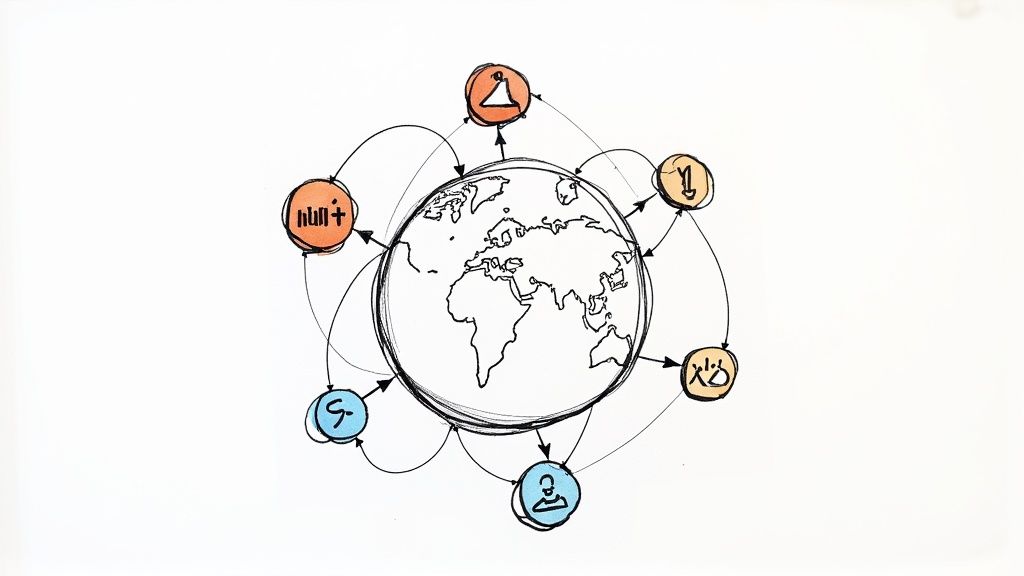
A powerful method among leadership development best practices involves strategic job rotations, or cross-functional assignments, that immerse leaders in entirely new environments. These assignments intentionally place leaders in different departments, business functions, or even international markets to rapidly broaden their perspective and build adaptive leadership skills. The core idea is to remove leaders from their comfort zones and challenge them to succeed in unfamiliar contexts.
For a K-12 marketing director, this could mean a six-month assignment leading a project with the finance department to model new tuition structures or working alongside the curriculum development team to understand academic product innovation. The goal is to cultivate a systems-thinking mindset, enabling them to see how different parts of the school operate and interrelate, moving beyond a purely marketing-centric view.
Why It's a Best Practice
Pioneered and perfected by multinational corporations like Unilever and IBM, strategic assignments accelerate development by forcing leaders to learn quickly, build new networks, and adapt their influencing style. This practice breaks down organizational silos and fosters a more holistic understanding of the institution. A leader who has walked a mile in the admissions or finance teams' shoes is far more effective at creating integrated, institution-wide strategies.
Placing a leader in a new function forces them to rely on influence rather than authority, a critical skill for modern leadership. It's the ultimate test of their ability to build relationships and lead through persuasion.
How to Implement Cross-Functional Assignments Effectively
To ensure these assignments are developmental rather than disruptive, they must be managed with clear intention and robust support. A poorly planned rotation can lead to frustration for both the leader and the host team.
- Set Clear Objectives: Define what success looks like from the start. What specific skills should the leader develop? What project outcome should they achieve? These goals provide focus and a benchmark for measuring the assignment's value.
- Provide Pre-Assignment Preparation: Equip the leader with the necessary context and foundational knowledge about the new department. Arrange introductory meetings with key stakeholders and assign a mentor within the host team to guide them.
- Maintain Consistent Coaching: The leader's direct supervisor and HR partner should maintain regular contact throughout the assignment. These check-ins provide a space to discuss challenges, process learnings, and ensure they stay on track with their development goals.
- Plan the Reintegration: Think about the leader's return from day one. Have a clear plan for how their new skills and broader perspective will be leveraged in their original role or a new one, ensuring the organization benefits from its investment. For a deeper look at fostering teamwork across departments, you can learn more about building a culture of cross-departmental collaboration.
5. Leadership Competency Frameworks
A foundational element of strategic leadership development best practices is the implementation of a Leadership Competency Framework. This systematic model defines the specific behaviors, skills, and attributes required for effective leadership at different levels within the school or district. It provides a common language and a clear roadmap for what "good leadership" looks like in your specific context.
The core purpose of a competency framework is to move beyond vague notions of leadership and create measurable standards. For a K-12 marketing director, this clarifies expectations around competencies like "Strategic Thinking," "Community Engagement," or "Crisis Communication." This ensures that all development efforts are aligned with the school's most critical strategic goals, creating a direct link between individual growth and organizational success.
Why It's a Best Practice
Pioneered by figures like David McClelland and popularized by organizations like Korn Ferry (formerly Lominger), competency models provide the architectural blueprint for talent management. They create consistency in how leaders are selected, developed, and evaluated. For a school's MarCom department, this means a junior team member knows exactly what skills they need to build to become a manager, and the current director has a clear guide for mentoring them.
A well-designed competency framework translates an organization's mission and values into observable, day-to-day leadership behaviors. It makes your strategic vision tangible and actionable.
How to Implement a Competency Framework Effectively
Developing and launching a framework requires a thoughtful, collaborative process to ensure it is relevant and widely adopted. Follow these steps for a successful implementation:
- Involve Key Stakeholders: Don't build the framework in an HR silo. Involve senior administrators, department heads, and high-potential team members to ensure the competencies reflect the on-the-ground realities and future needs of the school.
- Use Behavioral Language: Define each competency with specific, observable behaviors. Instead of "good communicator," use "Clearly articulates the school's value proposition to diverse parent audiences" or "Proactively provides constructive feedback to team members."
- Align with Strategic Goals: Ensure your framework directly supports the school's long-term objectives. If expanding enrollment is a priority, competencies related to market analysis and data-driven decision-making must be included. A clear framework is an essential component of effective strategic planning in schools.
- Integrate and Support: A framework is not just a document; it's a tool. Integrate it into hiring interviews, performance reviews, and succession planning. Crucially, provide accessible development resources like workshops, coaching, and reading materials for each competency area.
6. Executive Education and Formal Learning Programs
Engaging in structured, formal learning is a powerful leadership development best practice that equips leaders with new frameworks, strategic insights, and advanced skills. Executive education programs, offered by universities, specialized institutes, and corporate universities, provide an immersive environment designed to accelerate a leader’s growth beyond their daily operational responsibilities.
These intensive programs combine academic rigor with practical application, covering topics like strategic decision-making, financial acumen, innovation, and global leadership. For a K-12 marketing leader, this could mean attending a workshop at the Disney Institute to learn about customer experience or enrolling in a university certificate program on digital marketing analytics. The goal is to step away from the immediate demands of the school environment to gain a broader, more strategic perspective.
Why It's a Best Practice
Pioneered by institutions like Harvard Business School and corporate training centers such as GE's Crotonville, formal education provides a structured curriculum built on proven theories and extensive research. It exposes leaders to diverse perspectives from other industries and gives them access to world-class faculty and a network of high-achieving peers. This external viewpoint is invaluable for a K-12 leader looking to innovate beyond traditional school marketing tactics.
Formal learning programs are designed to challenge a leader's assumptions and equip them with sophisticated mental models, enabling them to move from tactical management to true strategic leadership.
How to Implement Formal Learning Programs Effectively
Simply enrolling in a course is not a guarantee of development. The value comes from careful selection, intentional preparation, and dedicated application of the new knowledge.
- Align Programs with Strategic Needs: Don't choose a program based on prestige alone. Select courses that directly address a specific competency gap or a strategic challenge the school is facing, such as improving enrollment funnels or navigating a brand merger.
- Establish Clear Learning Objectives: Before attending, the leader and their supervisor should define what they expect to learn and how it will be applied. This creates accountability and ensures the investment of time and money yields tangible results.
- Create an Application Plan: The most critical step is post-program application. The leader should return with a plan to share key insights with their team and implement at least one new strategy or process learned from the program within the first 90 days.
- Leverage Cohort-Based Learning: When possible, send a small group of leaders from the same school or district to a program together. This creates an internal support network and multiplies the impact as they can collaborate on implementing new ideas upon their return.
7. High-Potential Leader Identification and Development
A proactive and strategic leadership development best practice is the formal identification and accelerated development of high-potential (HiPo) employees. This approach moves beyond generic training to create a systematic talent pipeline, ensuring that the next generation of leaders is ready to step up when needed. The process involves identifying individuals who exhibit strong potential and providing them with specialized growth opportunities.
The core goal is to cultivate and retain top talent by investing in their future early. For a K-12 marketing department, this could mean identifying a digital marketing specialist who shows exceptional strategic thinking and cross-functional collaboration skills. This individual would then be placed on a specific track to develop the broader leadership competencies needed to one day lead the entire communications office.
Why It's a Best Practice
Pioneered by Fortune 500 companies like Procter & Gamble with its "Build from Within" philosophy and popularized through research by firms like McKinsey & Company, this practice creates a sustainable leadership engine. It reduces the risk and cost associated with external hiring for senior roles and boosts morale by showing a clear path for advancement. In the competitive K-12 landscape, having homegrown leaders who deeply understand the school’s unique culture and mission is a significant strategic advantage.
Systematically developing high-potential talent isn't just about succession planning; it's about safeguarding the institution's future by investing in the people who will shape it.
How to Implement a High-Potential Program Effectively
Creating a HiPo program requires fairness, transparency, and a genuine commitment to development. A poorly managed program can create resentment and disengagement.
- Define Clear Criteria: Establish and communicate what "potential" looks like in your school's context. This should be a mix of performance (what they achieve) and potential (how they achieve it), including competencies like learning agility, strategic thinking, and emotional intelligence.
- Use Multiple Assessment Methods: Avoid bias by using a combination of tools to identify candidates. This can include manager nominations, performance data, 360-degree feedback, and behavioral assessments to get a well-rounded view.
- Provide Tailored Development: Create unique growth experiences for the HiPo cohort. This could involve mentoring from senior school administrators, leading a critical new project (like a website redesign), cross-functional rotations in admissions or development, and executive coaching.
- Communicate with Transparency: Clearly explain the program's purpose and selection process. It's also crucial to provide meaningful development opportunities for all employees, not just those in the HiPo program, to maintain overall team morale and engagement.
8. Leadership Simulation and Experiential Learning
A powerful yet often underutilized leadership development best practice is the use of simulations and experiential learning. These are structured, interactive experiences designed to replicate real-world leadership challenges in a controlled, low-stakes environment. This methodology allows leaders to practice complex decision-making, crisis communication, and team management without facing real-world consequences for their mistakes.
The core principle is learning by doing. For K-12 marketing leaders, this could mean navigating a simulated enrollment crisis triggered by negative press or managing a complex rebranding project with a divided team. The simulation provides a safe space to experiment with different strategies, experience the outcomes, and build muscle memory for high-pressure situations.
Why It's a Best Practice
Pioneered by institutions like Harvard Business School and military academies, and refined by organizations such as the Center for Creative Leadership through tools like the Looking Glass simulation, this approach accelerates learning. It bridges the gap between theoretical knowledge and practical application. Instead of just reading about crisis management, a K-12 communications leader can actually feel the pressure of a simulated social media firestorm and practice responding in real time.
Experiential learning moves leadership development from a passive activity to an active one. It’s the difference between studying a flight manual and actually logging hours in a flight simulator.
How to Implement Leadership Simulations Effectively
Successful implementation hinges on realism, reflection, and reinforcement. The goal is to create a memorable learning experience that translates directly to on-the-job performance.
- Choose Relevant Scenarios: Select simulations that mirror the specific challenges your K-12 marketing and communications leaders face. A simulation about a factory supply chain won't resonate; one about managing parent backlash to a new school policy will.
- Invest in a Thorough Debrief: The most critical part of the process is the post-simulation debrief. A skilled facilitator should guide participants to reflect on their actions, analyze the outcomes, discuss what they learned about their leadership style, and consider what they would do differently.
- Connect Lessons to Real Work: Actively link the insights from the simulation back to the leader's current projects and team dynamics. Help them create an action plan to apply their new skills and perspectives immediately.
- Use a Variety of Formats: Simulations can range from complex, multi-day computer-based exercises to simpler tabletop role-playing scenarios. Use different formats to build a range of competencies, from strategic planning to interpersonal communication.
8-Key Leadership Development Practices Comparison
| Leadership Development Method | Implementation Complexity | Resource Requirements | Expected Outcomes | Ideal Use Cases | Key Advantages |
|---|---|---|---|---|---|
| 360-Degree Feedback Assessment | High | Time-intensive, multi-rater inputs | Holistic leadership insights, self-awareness | Leaders needing comprehensive behavioral feedback | Multi-source feedback, identifies blind spots |
| Mentoring and Coaching Programs | Medium | Time from skilled mentors/coaches | Personalized growth, accelerated learning | One-on-one development, skill building | Customized development, builds relationships |
| Action Learning Projects | High | Time, team collaboration, facilitation | Real-world problem solving, leadership practice | Complex business challenges requiring teamwork | Immediate application, cross-functional learning |
| Cross-Functional and International Assignments | High | High cost, logistical support | Adaptive leadership, global mindset | Strategic rotations, broadening leadership scope | Builds versatility, cultural intelligence |
| Leadership Competency Frameworks | Medium | Development and maintenance effort | Clear leadership expectations and career paths | Organization-wide leadership standardization | Consistency, objective performance criteria |
| Executive Education and Formal Learning Programs | High | High financial cost, time away | Strategic thinking, peer networking | Intensive leadership skill development | Academic rigor, networking, structured learning |
| High-Potential Leader Identification and Development | Medium | Assessment tools, program management | Strong pipeline, accelerated leader growth | Talent identification and retention | Focused development, engagement, retention |
| Leadership Simulation and Experiential Learning | High | Technology, skilled facilitation | Skill practice, confidence, quick thinking | Safe practice for high-stakes decision-making | Engaging, safe environment, immediate feedback |
Putting It All Together: Your Path to Exceptional K-12 Leadership
Embarking on a journey to cultivate leadership within your K-12 marketing and communications team is not merely a box-ticking exercise; it is the most strategic investment you can make in your school's future. The landscape of educational marketing is in constant flux, demanding leaders who are not just skilled communicators but also agile strategists, empathetic mentors, and visionary innovators. The eight leadership development best practices detailed in this article provide a powerful, multifaceted roadmap to build that exact caliber of leader.
We've moved beyond theoretical concepts to provide a practical toolkit. From the comprehensive, multi-perspective insights gained through 360-Degree Feedback to the real-world problem-solving inherent in Action Learning Projects, each practice offers a unique mechanism for growth. These are not isolated tactics but interconnected components of a holistic leadership ecosystem.
Synthesizing the Practices for Maximum Impact
The true power of these strategies lies not in their individual application, but in their thoughtful integration. Imagine a rising MarCom star in your district. Their journey could begin with a High-Potential Leader Identification process that flags their capabilities. This is followed by a 360-Degree Feedback Assessment to create a clear, personalized development plan.
From there, they could be paired with a seasoned director in a formal Mentoring Program while simultaneously tackling a real district-wide challenge, like a rebranding initiative, as part of an Action Learning Project. This hands-on experience could be supplemented with targeted skills development through Executive Education or immersive Leadership Simulations. This integrated approach transforms development from a passive learning experience into an active, engaging, and deeply impactful journey.
Your Actionable Next Steps
To prevent this wealth of information from becoming overwhelming, start with a focused, manageable approach. Here are your immediate next steps to bring these concepts to life:
- Conduct a Needs Assessment: Before implementing any new program, understand where your team currently stands. Use surveys or informal one-on-one meetings to identify existing leadership skills and pinpoint the most critical gaps. Is the primary need in strategic thinking, team motivation, or crisis communication?
- Start Small and Scale: You don't need to launch all eight initiatives at once. Select one or two practices that directly address your most pressing needs. For instance, launching a pilot peer-mentoring program is a low-cost, high-impact way to begin fostering a culture of shared growth and leadership.
- Champion the "Why": Secure buy-in from both your team and district administration by clearly articulating the value. Frame leadership development not as an expense, but as a critical investment in retaining top talent, enhancing your school's brand reputation, and building a resilient communications function capable of navigating any future challenge.
Ultimately, mastering these leadership development best practices is about more than just professional advancement. It’s about building a MarCom team that operates with strategic precision, creative confidence, and unwavering purpose. By nurturing the leaders within your ranks, you are ensuring that your school's story is told with passion and expertise for years to come, securing its legacy in a competitive educational marketplace.
Ready to move from theory to action with a community of your peers? Join The MarCom Society to access live expert-led workshops, collaborative problem-solving sessions, and a network dedicated to implementing these very leadership development best practices in the real world of K-12 education. Elevate your team and your career with us at The MarCom Society.









