Understanding Your School's Marketing Truth
Let's be honest, figuring out if your school's marketing is actually working can feel overwhelming. It's easy to get lost in the daily grind of newsletters, open houses, and social media. But is any of it making a real difference in enrollment and community engagement? That's the big question – and one that many schools struggle to answer honestly.
Forget the fancy reports and self-congratulatory high-fives. We're going to take a hard look at what's really working – and what's just creating the illusion of progress. From talking with countless school administrators, a common theme emerges: many schools are stuck using outdated marketing strategies that are about as effective as a rotary phone in today's world.
Confronting the Uncomfortable Truths
This is where the real work begins. It's time to be honest with ourselves and confront some potentially uncomfortable truths about your current marketing plan. Are your enrollment numbers flat or even dropping? Is your community’s perception of your school outdated or just plain wrong? Are you losing families to other schools?
Don't shy away from these tough questions. They're the key to real growth. Think of it like an annual check-up. A little discomfort now can prevent major problems down the road. For example, have you taken a look at your school's website lately? A modern, well-designed website is essential. If yours needs a refresh, you might find some helpful tips here: improving your school website design.
Embracing Data-Driven Decisions
The good news is that schools are starting to use data to make smarter marketing decisions. In fact, education marketing is becoming more personalized and targeted, using digital advertising and other tools to reach prospective families. Discover more insights about education marketing trends. This means you have more information than ever to guide your strategy.
To help you analyze your current marketing efforts, I've put together a simple framework. It's a way to compare what you're doing now with what best practices suggest. Think of it as a roadmap for improvement.
Before we dive in, it's important to note that this isn't a one-size-fits-all solution. Every school is different, so you'll need to tailor this framework to your specific needs and goals.
School Marketing Assessment Framework
A comprehensive checklist comparing current marketing activities against best practices
| Marketing Area | Current State | Target State | Priority Level |
|---|---|---|---|
| Website Design | Outdated, not mobile-friendly | Modern, responsive design, easy navigation | High |
| Social Media Engagement | Sporadic posting, low engagement | Consistent posting, active community building, targeted advertising | Medium |
| Content Marketing | Limited blog posts, infrequent newsletters | Regular blog posts, valuable email newsletters, engaging stories | High |
| Community Outreach | Occasional events | Regular events, partnerships with local organizations | Medium |
| Paid Advertising | None | Targeted digital advertising campaigns | Low |
This table gives you a quick snapshot of where your school's marketing stands. Take some time to reflect on these areas and identify the biggest gaps between your current state and the target state. Those high-priority areas are where you'll want to focus your efforts first.
Identifying Your Authentic Story
One of the biggest mistakes I see schools making is trying to be everything to everyone. They create generic marketing messages that are so boring they could apply to any school. The key to standing out is to find your school's authentic story. What makes your school special? What are your core values? What are you passionate about?
Once you’ve found your authentic story, you can start creating targeted messages that speak directly to the families you want to attract. This isn't about creating a slick ad campaign. It's about making genuine connections with families who are looking for exactly what your school offers. Think of it like dating – you wouldn't try to impress someone by listing all your accomplishments. You'd try to connect with them by sharing your passions and values. The same principle applies to school marketing. By being real and genuine, you can attract families who are a true fit for your community. This sets the stage for building strong, long-lasting relationships.
Setting Goals That Actually Drive Enrollment

So, you’ve analyzed your school’s current marketing situation. Great! Now, let’s talk about setting goals that make a real difference. Hoping for something vague like “increased brand awareness” isn't going to cut it. We need concrete, measurable objectives directly linked to enrollment growth and a healthy budget.
Think of it like planning a cross-country road trip. Would you set off without a map or GPS? Probably not. You might have a general idea of your destination, but you'd likely get lost and waste precious time and gas. A school marketing plan is similar. Without well-defined goals, your efforts will be scattered and ineffective.
For example, instead of “boosting social media engagement,” aim for something like “increasing inquiries from social media by 15% next quarter.” This goal is specific, measurable, achievable, relevant, and time-bound – it follows the SMART framework.
From Dreams to Data
Most schools operate on tight budgets. Prioritizing your goals becomes essential when resources are limited and everyone wants to see fast results. This means deciding what truly matters for enrollment growth versus what would be nice to have. Sometimes, concentrating on a few key initiatives with focused intensity yields better results than spreading yourself thin across multiple projects. You might be interested in developing a comprehensive enrollment management strategy.
Plus, the education marketing world is constantly changing, bringing new hurdles. Decreased funding and changing district priorities make strategic planning even more important. This report offers more insight into the evolving education landscape.
Getting Everyone On Board
Even the best marketing plan is worthless if it’s ignored. Getting buy-in from administrators and board members is key to successful execution. They’ve likely seen marketing initiatives fall flat, so they might be skeptical. Present your plan in a way that clearly addresses their priorities and concerns.
Here’s how to get them on board:
Focus on ROI: Show how your marketing goals directly impact the school's financial well-being and enrollment targets.
Let the data speak: Use clear metrics and benchmarks to show the potential impact of your plan.
Be upfront about challenges: Addressing potential roadblocks builds trust and credibility.
Share success stories: Real-world examples, especially ones that resonate with your stakeholders' concerns, can be very persuasive.
By setting SMART goals, prioritizing wisely, and getting key stakeholders on board, you’ll build a foundation for a marketing plan that genuinely fuels enrollment growth and sets your school up for long-term success. This strategic approach ensures your marketing isn’t just busywork, but a focused investment in your school’s future.
Decoding What Families Really Want
Understanding what families really want is the cornerstone of any effective school marketing strategy. Forget relying on outdated assumptions. These days, you need real, data-driven insights into how families make their decisions. This section will show you how to tap into their mindset, even without a huge research budget.
Unveiling Hidden Motivations
Think of families as detectives on the hunt for the perfect school. They're looking for clues everywhere: brochures, online reviews, social media, and chats with other parents. Their decisions aren't just about academics; they're influenced by a complex web of rational and emotional factors. They're considering safety, community, values, and that all-important "gut feeling."
Parent surveys are a fantastic way to get inside their heads. Keep them short and focused on key priorities and concerns. For example, ask about their biggest challenges in finding the right school, the type of information they find most helpful, and their preferred communication channels.

This screenshot shows SurveyMonkey, a popular online survey platform that makes creating and sending questionnaires super easy. These kinds of tools make gathering valuable parent feedback a breeze, giving schools the insights they need.
Beyond Basic Demographics
Many schools fall into the trap of segmenting their audience solely by demographics like income and location. While this information is helpful, it doesn’t tell the whole story. Two families with similar demographics might have vastly different educational priorities. One might be passionate about the arts, while the other wants a strong STEM program.
To grasp these nuances, you need to dig deeper. Look for hidden patterns in your enrollment data. Are certain programs or extracurriculars attracting specific types of families? Focus groups or individual interviews can also uncover valuable information about their decision-making process.
From Generic to Compelling
Once you understand what families truly value, you can craft messaging that truly resonates. Ditch the generic promotional material and create compelling stories that speak to their specific anxieties, hopes, and dreams. If parents are worried about bullying, showcase your school's anti-bullying initiatives and positive school culture. If they value personalized learning, highlight how your teachers adapt their instruction to meet the needs of each student. By directly addressing these concerns, you build trust and position your school as the answer to their prayers.
This is where the real magic happens. By shifting from guesswork to data-driven understanding, you can create a school marketing plan that not only attracts families but also forges genuine connections. These strong relationships benefit everyone: your school, the families, and most importantly, the students.
Finding Marketing Channels That Actually Work
Let's be honest, not every marketing platform is a good use of your school's resources. Time and budget are precious, so let's ditch the hype and focus on what really boosts enrollment. Forget empty promises from marketing consultants; we're talking about what actually delivers.
Choosing the Right Mix
Creating a multi-channel marketing plan for a school is a balancing act. You need a smart blend of digital know-how and good old-fashioned community engagement. Think about everything from navigating digital marketing within COPPA regulations to showcasing parent testimonials. Your strategy should be a reflection of your school's specific strengths and what you have available. For some extra ideas, check out these marketing techniques for schools.
This infographic gives you a visual idea of the potential reach of different marketing channels:
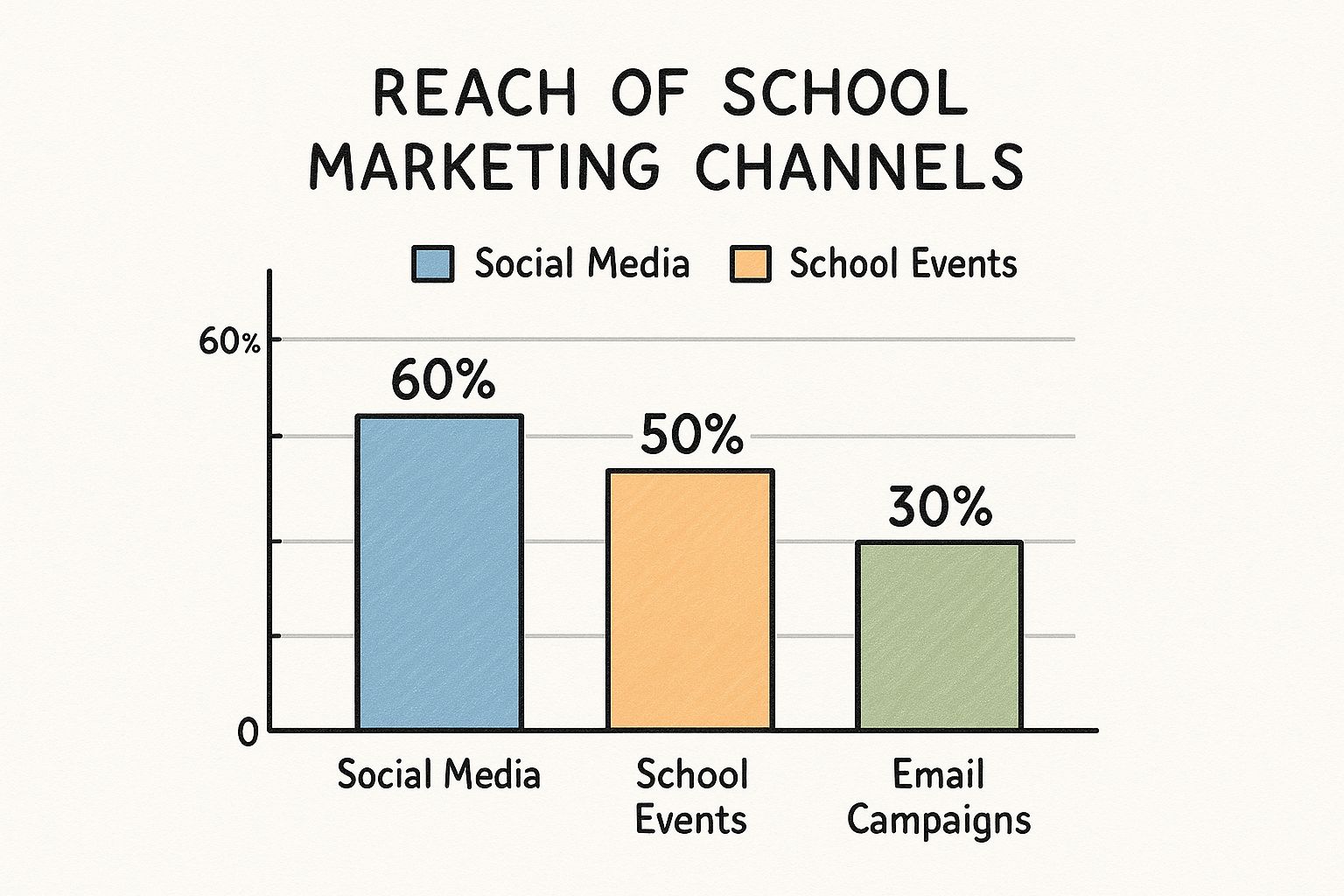
As you can see, social media and school events can reach a lot of people. Email campaigns, while maybe not as broad, are still a vital part of a well-rounded strategy. Remember, these are just potential numbers. Your actual results depend on how well you use each channel.
Social Media Smarts
You don't need a dedicated social media manager to get results. Focus on quality content, not just posting constantly. Share real stories, celebrate student successes, and offer glimpses into your school's culture. Get parents and teachers involved to create a strong online community. Student ambassadors can also be fantastic for creating content that connects with prospective families.
Think about what you would find engaging as a parent. A short video of a classroom activity or student project can be way more effective than a generic promotional post.
The Power of Events
School events – open houses, student performances, etc. – give families a chance to experience your school firsthand. They can meet teachers, talk to current students, and connect with other parents. This builds trust and a sense of community.
Make your events stand out! Go beyond standard presentations and offer interactive activities that showcase your school's programs and learning environment. Maybe a student-led science fair or a mini-concert by the school's music program. The aim is to leave a lasting positive impression.
Traditional Methods Still Matter
Digital marketing is important, but don’t dismiss traditional approaches. Printed newsletters, local newspaper ads, and community partnerships can reach families who aren’t actively online. Teaming up with local businesses for discounts or joint events is a great way to expand your reach.
It’s interesting to note that in higher education, social proof and sustainability are becoming increasingly important, especially for international students who often rely on peer recommendations. You can learn more about these trends here. This emphasizes the power of authentic storytelling and building credibility.
Managing Your Online Reputation
Your online reputation is everything. Keep an eye on online reviews and respond to any negative feedback quickly and professionally. This shows you care and are committed to improvement. Encourage happy families to share their positive experiences – it’s like a powerful word-of-mouth endorsement.
To help you visualize the effectiveness of various channels, take a look at this table:
School Marketing Channel Effectiveness Matrix
Comparison of marketing channels showing cost, effort, and typical ROI for different school types
| Channel | Cost Level | Implementation Difficulty | Average ROI | Best For |
|---|---|---|---|---|
| Social Media | Low | Medium | Medium | Building brand awareness and engaging with the community |
| School Events | Medium | High | High | Directly connecting with prospective families and showcasing school culture |
| Email Campaigns | Low | Low | Medium | Nurturing leads and communicating with current families |
| Print Advertising | Medium | Low | Low | Reaching families who are not actively online |
| Community Partnerships | Low | Medium | High | Expanding reach and building relationships within the community |
This table gives you a general idea of the cost, difficulty, and potential return on investment for each channel. Use it as a starting point to determine which channels are the best fit for your school’s resources and goals.
By using these strategies, you'll create a marketing plan that not only attracts new families but also strengthens your current school community.
Creating a Budget That Delivers Results
Let's talk money. How much will a practical marketing plan for your school actually cost? Budget talks can be tough, I know, especially when funds are limited. But setting a realistic marketing budget isn't about suddenly finding a huge pot of gold. It's about focusing your resources on the stuff that really boosts enrollment.
Prioritizing for Impact
Think of your budget like a pizza. You've got a certain size pizza to share, and each slice represents a different marketing activity. One slice might be social media, another for printed flyers, and another for school events. The trick is to decide which slices get the biggest pieces. Don't be afraid to shrink the slices for things that aren't working. That fancy brochure might look impressive, but is it bringing in new students? If not, that money could be better spent elsewhere.
For example, I worked with a school that was spending a ton on newspaper ads, and seeing very little return. We moved that money to focused Facebook ads and saw a huge jump in inquiries. It was a perfect example of how smart prioritizing makes a real difference.
Simple Tracking, Smart Decisions
You don't need to be an accountant to keep track of your marketing expenses. A simple spreadsheet in Google Sheets will do the job. Just list your planned activities, estimated costs, and what you actually end up spending. This gives you a clear view of where your money is going. Check in on your spending regularly, and don't hesitate to change things up if needed. If something isn't working, try a different approach. Flexibility is your friend.
Here’s a quick example of how a simple spreadsheet can help you stay on top of things:

This shows how easily you can track estimated and actual costs to see if you're on budget. This data-driven approach lets schools make smart adjustments all year round.
Seasonal Spending & Creative Financing
Think about your enrollment cycle. Are there certain times of year when inquiries spike? Match your spending to those peaks. Ramp up your marketing when it matters most, and ease off during quieter periods.
And think outside the box when it comes to funding. Explore teaming up with local businesses, look into grants, or get your parent-teacher association involved. I once saw a school partner with a local bookstore for a family reading night. The bookstore donated some of the profits back to the school, which helped cover the event costs. Check out some marketing ideas for events for inspiration.
By being careful with your spending, tracking your results, and getting creative, you can build a marketing budget that truly benefits your school. This way, your plan becomes a smart investment in your school's future, not just a wish list.
Measuring What Matters Without Data Overload
Running a school is a juggling act, and adding analytics to the mix can feel overwhelming. So let's simplify things by focusing on the metrics that really matter: those that directly impact enrollment and community engagement. I've seen firsthand how schools successfully use data, and I'm here to share some practical tips for getting actionable insights without adding to your already busy schedule.
Ditching the Vanity Metrics
Let's be honest, vanity metrics like website page views and social media likes can be tempting. They look good on a report, but do they actually translate to more students? Probably not. They make you feel popular, but they don't tell the real story of your marketing effectiveness.
Instead, focus on metrics tied to your specific goals. Want more inquiries? Track where they're coming from. Trying to boost open house attendance? Monitor registration numbers and follow up afterward. This focused approach tells you what’s actually working.
Telling Your Marketing Story with Data
Your marketing data needs to tell a clear story to administrators and board members. Ditch the complicated spreadsheets and create simple dashboards that visualize key metrics like enrollment trends, inquiry sources, and conversion rates. Make it easy for them to see the value of your work!
A simple line graph showing increased inquiries after a new social media campaign speaks volumes. It's much more effective than a table full of raw data. Think about how you can visually represent your wins using platforms like Google Analytics.
Here's a quick example of how you might visualize trends in Google Analytics:
This screenshot demonstrates how Google Analytics can help visualize website traffic. The power here lies in seeing trends and patterns, helping you understand which marketing activities are driving results. This data allows schools to make smart decisions about where to focus their marketing efforts.
Connecting Marketing to Enrollment Outcomes
Ultimately, your marketing plan aims to increase enrollment. You need to draw a clear line between your activities and actual enrollment numbers. This means tracking the entire journey of a prospective family, from their first interaction to their final enrollment decision.
A CRM (Customer Relationship Management) system is a game-changer here. A CRM helps track every touchpoint—website visits, email opens, phone calls, school tours. This data helps you understand which activities are most effective at moving families through the enrollment funnel.
Reporting That Demonstrates Value
Monthly reports don’t have to be a dreaded chore. Use templates to streamline the process and focus on the metrics your stakeholders care about most. Highlight key achievements, areas for improvement, and how your marketing contributes to the school's overall strategic goals.
For example, if your report shows a targeted email campaign led to a 10% increase in open house registrations, that's a concrete win. This data-driven approach justifies your budget requests and proves the value of your marketing efforts. By consistently measuring what matters, you'll gain valuable insights that empower your school to make informed decisions and achieve your enrollment goals.
Your Marketing Plan Implementation Roadmap
Okay, so we've got a solid marketing plan in place. Now, how do we actually do this thing? This isn't about turning everything upside down overnight, but about smart, practical steps. This roadmap is designed to help you implement your plan effectively without overwhelming your team or disrupting your school’s day-to-day operations. We're aiming for real, lasting change.
Phasing Your Initiatives for Maximum Impact
Think about trying to build a house all at once—total chaos. Your marketing plan is similar. Launching everything simultaneously can quickly become overwhelming. Instead, break it down into phases. Focus on what’s going to have the biggest impact first, considering your resources.
Maybe your website needs a refresh. Concentrate on that first. Once it's humming along nicely, then maybe you launch a targeted social media campaign. This phased approach helps prevent burnout and gives you room to adjust as needed. Efficiency is key, especially when resources are limited.
Accountability and Flexibility: Keys to Success
Even with the best-laid plans, things happen. That's why accountability is crucial. Make sure someone is clearly responsible for each part of the plan. Set up regular check-ins. A shared online calendar or a project management tool like Asana can help everyone stay organized and informed.
Just as important as accountability is flexibility. Things change—that's just the nature of education. Your marketing needs to be adaptable, too. Keep up with trends, track your results, and be ready to shift gears when necessary. Think of it like sailing – you have a destination, but you also need to adjust to the wind and currents.
Practical Tools for Implementation
The right tools make execution so much easier. A detailed marketing calendar keeps everyone on the same page. Try color-coding by channel or audience—it really helps visualize everything. Create templates for regular communication updates so everyone knows what’s happening and if anything needs to change.
Here's a quick example of a simple progress tracker:
| Activity | Goal | Status | Notes |
|---|---|---|---|
| Website Redesign | Launch by July 1st | In progress | Design phase complete, working on content |
| Social Media Campaign | Increase inquiries by 15% | Launched | Early results are good, keeping a close eye on it |
| Parent Survey | Gather feedback from 100 families | Completed | Gathered valuable insights, analyzing now |
This kind of system lets you quickly see what’s going on and make adjustments. The point is to streamline, not complicate things further.
Maintaining Momentum and Evolving Intelligently
Implementing a marketing plan is a marathon, not a sprint. Celebrate the small victories to keep your team motivated. Regularly review your progress, look at the data, and see where you can improve.
The best marketing plans are dynamic. As your school changes, so should your strategy. Don't be afraid to revisit your goals, reassess your audience, or explore new ways to reach them. This constant evolution is what keeps things fresh and effective.
Join The MarCom Society today! The MarCom Society provides a supportive community, expert advice, and practical tools designed specifically for K-12 school marketing professionals. Boost your school’s communication strategy and connect with a network of your peers.