At its core, public relations for schools is all about managing your school’s story. It's the thoughtful, deliberate process of communicating what makes your school special to build a positive reputation with the public.
This isn't just about sending out newsletters. It’s about shaping your school’s narrative to build genuine trust with families, attract new students who will thrive in your environment, and create a community that people are proud to be a part of. PR has moved far beyond crisis control; it's now a fundamental part of a healthy, growing school.
Why PR in Schools Is No Longer Optional
In today's competitive educational environment, sitting back and hoping people notice you is a surefire way to get lost in the noise. Strategic PR in schools has transformed from a "nice-to-have" task into a primary engine for a school's long-term health and success. It's what drives enrollment, strengthens community bonds, and ultimately, secures your school's future.
Think of it this way: a school without a clear PR strategy is like a brilliant teacher speaking to an empty classroom. The incredible value you offer—your unique programs, dedicated staff, and amazing student achievements—gets lost if no one is there to hear it. Good PR makes sure your story reaches, and resonates with, the people who matter most.
The New Reality of Enrollment and Trust
Let's be honest, the K-12 world is facing some real challenges. Enrollment numbers have been shaky since the pandemic, creating a new urgency for schools everywhere. This has made strategic communication more critical than ever.
To stand out in crowded "school choice" markets, many districts are now launching promotional marketing campaigns. We’re seeing that consistent branding and messaging that showcase real student successes are incredibly effective. In fact, some schools have reported up to a 15-20% boost in family retention after putting targeted PR initiatives in place. You can get a deeper look into this shift by exploring the latest 2025 education trends.
This new reality means schools have to be proactive about managing their reputation and clearly communicating their value. The job of school PR has grown far beyond just making announcements.
Public relations is the art of telling your school's story in a way that builds authentic, lasting relationships. It's about turning passive observers into active supporters and dedicated advocates for your mission.
Key Focus Areas for Modern School PR
To really thrive, schools need to concentrate their communication efforts on specific, high-impact areas. A solid strategy finds the right balance between building unity inside the school and shaping how you're seen on the outside, making sure every single stakeholder feels informed and connected. The ultimate aim is to create one clear, compelling voice that rings true both in your hallways and out in the community.
Before we dive into the specific "how-to's," let's summarize the key areas where a modern school PR program really focuses its energy. This table breaks down the main goals and the results you should be aiming for.
| Focus Area | Primary Goal | Key Outcome |
|---|---|---|
| Internal Communications | To inform and engage all staff, students, and current families. | A unified, motivated community that feels valued and connected. |
| External Communications | To build and maintain a positive public image and brand reputation. | Increased enrollment, strong community support, and positive media coverage. |
| Media & Press Relations | To secure positive, earned media coverage that highlights school successes. | Enhanced credibility and a broader reach for your school's story. |
| Crisis Management | To protect the school's reputation during challenging situations with clear, timely communication. | Maintained trust and confidence from the community, even in a crisis. |
This guide will give you the practical frameworks you need to get this done. We'll start with building your core strategy and move all the way to running campaigns that get real, measurable results. Let's make sure your school doesn't just survive, but truly flourishes.
Building Your School's Strategic PR Foundation
Great public relations doesn't just happen by accident. It’s not about sending out a random newsletter or posting on social media whenever you have a spare moment. A powerful PR strategy is built on a solid, intentional foundation.
Before you write a single press release or plan an open house, you need a clear blueprint. It all starts by answering three critical questions: Who are we actually talking to? What do we want to accomplish? And where are we starting from? This planning is what separates proactive, goal-driven communication from just putting out fires.
Identify and Map Your Key Audiences
The very first step is to get crystal clear on who your audiences are. Saying you want to reach "the community" is just too vague to be useful. To be effective, you have to understand the specific needs, worries, and communication habits of every distinct group connected to your school.
Think of these audiences not just as names on a list, but as genuine partners in your school's success. Break them down so you can speak their language.
- Current Parents and Students: This is your core group. They crave consistent, transparent updates on everything from academics and events to school culture. Keeping them in the loop makes them feel connected and valued.
- Prospective Families: These families are shopping around. They’re looking for compelling proof that your school is the right choice, from student success stories to what makes your educational approach special.
- Faculty and Staff: Your own team should be your biggest and best-informed cheerleaders. Strong internal communication doesn't just boost morale; it turns every employee into a passionate ambassador for the school.
- Alumni and Donors: This group connects through nostalgia, pride in the school's achievements, and the chance to give back. They want to see the long-term, positive impact of their alma mater.
- Local Media and Community Leaders: These are your story amplifiers. They need newsworthy angles and a clear picture of how your school contributes to the wider community.
Once you have your list, think about the best way to reach each group. A weekly email might be perfect for current parents, but a vibrant Instagram feed is probably a better bet for catching the eye of prospective families.
Set Meaningful and Measurable Goals
With your audiences defined, you can start setting goals that actually move the needle. Vague targets like "improve communication" are impossible to track and ultimately meaningless. Instead, your PR goals should connect directly to real-world school outcomes like enrollment, retention, and community support.
A great PR goal is specific, measurable, achievable, relevant, and time-bound (SMART). This framework shifts you from just being busy to being truly effective, making sure every ounce of effort supports the school's biggest priorities.
For instance, don't just say you want a better open house. Aim for something concrete: "Increase registrations for our fall open house by 20% compared to last year by running targeted social media campaigns and pitching stories to local news outlets." Now you have a clear target and a way to know if you hit it.
This hierarchy shows exactly how a solid PR function underpins the results that keep a school thriving—enrollment, trust, and retention.

As you can see, strategic communication isn't just "fluff"—it's the engine that drives the results that matter most for long-term growth and stability.
Conduct a Simple Communications Audit
Finally, it’s time for an honest look in the mirror. A communications audit doesn't need to be some massive, complicated project. At its heart, it’s a simple inventory of what you're currently doing, what’s actually working, and what’s falling completely flat.
Ask yourself a few direct questions: Which of our channels get the most interaction? What kinds of stories and posts really seem to connect with our families? Are we sending mixed messages across different platforms?
Getting this baseline understanding helps you spot the gaps and uncover hidden opportunities before you pour any more time or money into your efforts. A great plan also needs a great message, and you can build one using a helpful messaging framework template that will keep all your communications aligned and on-point.
Turning Your Internal Community Into Advocates

Your most powerful PR assets aren't press releases or slick advertisements. They're the people walking your hallways every single day—your staff, your students, and their parents. If you focus inward first, you can transform this community into your most enthusiastic and authentic ambassadors.
This is the heart of great internal public relations. It's all about building a culture of trust and transparency from the inside out. When your community feels informed, valued, and genuinely connected, their positive experiences naturally ripple outward, adding incredible credibility to all your external marketing.
Think of it as building a strong foundation before putting up the walls. A positive internal culture is that foundation. It ensures the story you tell the public is a true reflection of the vibrant life happening within your school, turning everyday conversations at the grocery store into powerful PR moments.
Fostering a Culture of Transparency
The first step toward activating your internal advocates is a serious commitment to clear, consistent, and honest communication. People can't champion what they don't understand or feel a part of. Creating reliable channels for information is the bedrock of building the trust you need for them to advocate on your behalf.
Take a hard look at your existing internal touchpoints. Are they truly serving your community, or are they just a one-way information dump? The goal is to create a dialogue, not a monologue.
Here are a few proven ways to build a more transparent environment:
- Impactful Weekly Newsletters: Go beyond basic announcements. Craft a compelling weekly digest that celebrates student and staff achievements, shares "behind-the-scenes" stories from the classroom, and gives everyone a clear look at the week ahead.
- A Dynamic Parent Portal: Your parent portal should be more than a place to check grades. Turn it into a central hub for school news, volunteer opportunities, and direct communication with teachers. It should foster a true sense of partnership.
- Regular Town Halls: Host periodic meetings—both in-person and virtual—where leadership can share updates and, more importantly, answer questions directly from parents and staff. This shows you're not just talking, you're listening.
The Power of Internal Storytelling
Once your communication channels are solid, you can lean into internal storytelling. This simply means celebrating your school's wins and sharing authentic stories with your internal community first—before you broadcast them to the world. This small act makes your staff, students, and parents feel like valued insiders.
When your own community becomes the primary audience for good news, they also become its most passionate messengers. They share these stories with pride, becoming a volunteer PR team that money simply can't buy.
Imagine the impact when a teacher posts about an innovative class project on her personal social media because she felt proud and in-the-loop. Or when a parent praises your new reading program to a neighbor because he read about its success in the weekly newsletter. That’s the real-world power of an engaged internal community in action.
Activating Your Student Ambassadors
While staff and parents are critical, don't forget about your most energetic potential advocates: your students. A well-designed student ambassador program can be one of the most effective tools in your PR arsenal. These students offer an authentic voice that resonates deeply with prospective families. For a deeper dive, check out our guide on creating successful student ambassador programs and learn how to empower your students to share their own stories.
By investing in your internal communications, you're doing far more than just keeping people informed. You are systematically building an army of advocates who will share your school’s story with a passion and authenticity that no marketing campaign can ever replicate. This inside-out approach to PR in schools is the key to building a reputation that is both positive and unshakably genuine.
Mastering Media Relations and External Storytelling
Once you’ve built a strong internal community, the next step is to take your school’s story beyond its own walls. This is where media relations comes in—it’s how you earn media coverage that builds widespread credibility and shows the entire community what makes you special.
Think of it as building bridges. You’re not buying ads; you’re creating genuine connections with journalists, bloggers, and local influencers who can share your narrative with a much bigger audience. You’re earning their trust so you become a go-to source for positive, newsworthy stories about education in your area.
Identifying Newsworthy Stories Journalists Actually Want
The secret to great media relations is learning to think like a journalist. A school bake sale, while great for your community, probably isn't going to make the evening news. You have to start seeing your school through a reporter's eyes, looking for stories that have a real public interest angle.
So, what kinds of stories consistently grab a reporter's attention?
- Innovative Programs: Did your new robotics club just win a regional competition? Are your students restoring a local park as part of a unique environmental science project? Stories like these show your school is on the cutting edge.
- Major Student Achievements: A student winning a prestigious national scholarship or a sports team pulling off an undefeated season are classic, feel-good stories that are easy for the media to cover.
- Impactful Community Partnerships: Does your school work with a local business on a mentorship program? Do you partner with a non-profit to serve the wider community? These angles position your school as a civic leader.
The goal is to stop just announcing events and start telling compelling stories about the people and successes that make your school exceptional.
Crafting a Compelling Press Release
When you have a story worth telling, the press release is your main tool for getting it to the media. It’s a formal announcement, written like a news story, that gives a reporter everything they need to understand why your story matters.
A great press release gets straight to the point. It answers the big questions—who, what, when, where, and why—right up front. Journalists are always on a deadline, so a clear, professional release respects their time and boosts your chances of getting coverage.
Your release needs a punchy headline, a quick summary, all the key details, a quote from a school leader, and your contact info. To really broaden your reach, you can also leverage a public relations wire service to get your news in front of a much larger network of media outlets.
Building Your Media List and Relationships
Sending a press release to a generic "news@…" email address is a recipe for being ignored. The most effective pr in schools is built on real relationships. Start by creating a targeted media list of specific reporters and editors who cover education, family, or community news in your city.
Follow them on social media. Share their articles or leave a thoughtful comment. By the time you reach out with a story idea, you’re no longer a stranger—you’re a helpful, familiar source. This simple effort turns a cold pitch into a warm conversation.
To really nail this, it helps to understand the fundamentals. Our detailed guide on what media relations is breaks down how to apply these concepts in a school setting. Getting these skills right will transform your school from just another local institution into a recognized and respected community leader.
Telling Your School's Story on Digital Platforms
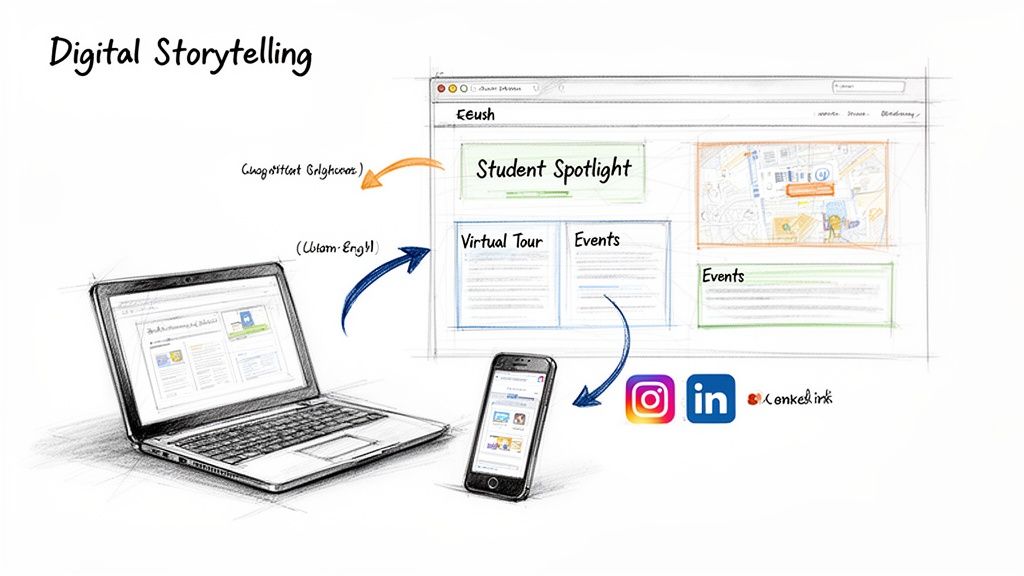
Think of your school's website and social media profiles as its digital front door. For many prospective families, this is the very first impression they'll get of who you are. This is your chance to move beyond just broadcasting announcements and start actively telling your school’s unique story.
Modern pr in schools demands a smart, thoughtful approach to these digital spaces. It’s all about creating a vibrant, engaging online presence that truly captures your school’s culture, highlights your wins, and builds a genuine sense of community. This means getting past a simple feed of event reminders and diving into powerful, narrative-driven content.
Creating a Strategic Content Calendar
A strong digital presence doesn't happen by accident; it's planned. A content calendar is your roadmap, making sure you have a consistent and balanced flow of stories that speak to your different audiences. It helps you shift from just reacting to what's happening today to proactively shaping your narrative.
Your calendar should be packed with a rich mix of content that brings your school to life. Don't just stick to text posts—mix it up with formats that grab attention.
- Student and Staff Spotlights: Share quick interviews or profiles that put a face to the amazing people in your buildings.
- Behind-the-Scenes Video Tours: Give people a peek into a typical day, a cool science experiment, or a unique art studio.
- "Day in the Life" Takeovers: Hand over your Instagram Stories to a student or teacher for a day to give an authentic look inside.
- Celebrating Achievements: Don't just list awards. Showcase academic honors, athletic victories, and artistic accomplishments with compelling photos and videos.
This is the kind of content that builds an emotional connection, helping prospective families truly see their child thriving at your school.
Choosing the Right Platforms for the Right Audience
Not every social media platform is the same, and trying to be everywhere at once is a surefire way to get burned out. The real key is to focus your energy where your specific audiences are already spending their time. A strategic approach means your message isn't just sent out into the void, but is actually received and engaged with.
A school's digital strategy isn't about collecting followers; it's about building relationships. Choosing the right platform is like choosing the right room for a conversation—it sets the tone and determines who shows up.
Use this breakdown as a starting point to focus your efforts:
| Platform | Primary Audience | Content Focus |
|---|---|---|
| Current Parents & Community | News, event updates, photo albums, and live streams of school events. | |
| Prospective Families & Students | Visually rich stories, Reels showcasing campus life, and student takeovers. | |
| Faculty Recruitment & Alumni | Professional achievements, staff spotlights, and articles on educational leadership. | |
| X (Twitter) | Media & Community Leaders | Quick updates, sharing news articles, and engaging in broader educational conversations. |
Fostering a Thriving Online Community
The most critical shift in digital communications is moving from broadcasting to conversing. Your social media channels should be hubs for two-way dialogue, not just a digital megaphone. This means you need to actively engage with comments, ask questions, and create chances for your community to share their own stories.
This community-first approach is more important than ever as schools sharpen their focus on student well-being. Today, with 1 in 5 students in the U.S. facing mental health challenges, schools are using digital platforms to rebuild trust. We've seen that districts using consistent social media messaging to highlight support programs can see community engagement spike by 40%, which directly ties back to higher attendance rates.
To learn more about how to do this effectively, a practical guide to community management on social media can be an invaluable resource. When you turn your digital spaces into bustling community centers, you reflect your school’s vibrant culture and create an authentic connection that attracts new families and strengthens the bonds you already have.
Navigating a Crisis with a Clear Communications Plan
A crisis can materialize out of nowhere. The way your school communicates in those first few hours can define its reputation for years. This isn't about spinning a story; it's about protecting your community and holding onto the trust you’ve worked so hard to build.
Having a clear, proactive plan is the only way to cut through the chaos. Deciding how to respond after a crisis hits is a recipe for disaster. A solid plan becomes your North Star, guiding your team to act with speed, accuracy, and empathy.
Assembling Your Crisis Response Team
The very first step is knowing who's in charge. Your Crisis Response Team should be a small, designated group of leaders empowered to make decisions in the moment. This isn't a committee that meets once a month; it's your rapid-response unit.
This team needs to include a few key people who can get essential information and execute the plan.
- The School Principal or Head of School: The final decision-maker and, in many cases, the primary spokesperson.
- The Communications Director: The expert who will actually craft and distribute every message.
- A Senior Staff Member: Someone with deep operational knowledge, like the head of facilities or student services.
- Legal Counsel (as needed): To give statements a final review and make sure you’re aligned with privacy laws and other legal standards.
When this team is identified and trained before a crisis, you don't waste precious minutes figuring out who does what.
The First 60 Minutes Are Critical
In any crisis, an information vacuum forms almost instantly. That vacuum will be filled—either by you or by someone else. The "First 60 Minutes" rule isn't a suggestion; it's a mandate for a swift, transparent, and empathetic initial response to take control of the narrative.
Your first communication doesn't need to have all the answers. Not even close.
Acknowledging a situation quickly and committing to providing more information is far better than silence. It shows you are aware, in control, and taking the situation seriously, which is fundamental to maintaining community trust.
Have a few pre-approved holding statements ready to go. All you need to do is confirm you're aware of the situation, you're taking action, and you will provide updates as soon as you have verified facts. This simple act stops speculation from running wild on social media and in parent group chats.
Managing Information and Stakeholders
Once that initial statement is out, your job shifts to managing the flow of accurate information to your different audiences. Each group has its own set of worries and needs a slightly different approach.
Let’s use a real-world example: a water pipe bursts, flooding a wing of the school and forcing a campus closure for several days.
- Parents need immediate, clear instructions. They’ll be asking about student safety, pickup procedures, and when school might reopen. They need reassurance more than anything else.
- Staff need operational details. Are they supposed to come to work? Will they be teaching remotely? They need clarity to prepare.
- The Media will want to know about the extent of the damage and how this impacts the school calendar. They just need the facts, not speculation.
By tailoring your messages, you make sure everyone gets the information they need without creating more confusion or alarm. This thoughtful approach to pr in schools is what turns a chaotic event into a well-managed situation, proving you’re a competent and caring institution.
Common Questions About School PR
As you start putting these ideas into action, you're bound to have some questions. It’s completely normal. Here are a few of the most common ones we hear from school leaders, along with some straightforward answers to help you navigate the path forward.
What's Really the Difference Between School Marketing and PR?
It's a great question, and the distinction is crucial. Think of it this way: marketing pays for attention, while public relations earns it.
Marketing is what you pay for directly—things like social media ads, search engine campaigns, or glossy brochures. It's you telling the world, "We're a great school!" It has a clear, direct goal, usually tied to boosting enrollment.
PR, on the other hand, is about building your reputation so that other people start saying you're a great school. It's the art of earning trust and credibility through authentic stories, positive media mentions, and genuine community relationships. PR lays the groundwork of trust that makes all your marketing efforts that much more effective.
We're a Small School with a Tiny Budget. Can We Still Do PR?
Absolutely. In fact, some of the best PR comes from creativity, not cash. It’s not about flashy campaigns; it's about being strategic and resourceful.
A small school can make a surprisingly big splash by focusing on activities that don't cost a dime but deliver huge value:
- Turn Your Team into Storytellers: Your teachers, staff, and even your parents are your best (and free!) advocates. Send a quick weekly email asking for "good news" from the classroom and then encourage them to share those moments on their own social networks.
- Go All-In on Social Media: You don't need to be everywhere. Pick one or two platforms where your families hang out and commit to sharing genuine, behind-the-scenes content. Consistency costs nothing but time and builds an incredible sense of community.
- Pitch People, Not Programs: Local news outlets are always on the hunt for compelling human-interest stories. That science fair project that went viral in the classroom? A teacher’s unique approach to history? Those are the stories that land you free, positive coverage.
You don't need a massive budget to tell a great story. Creativity, consistency, and a genuine passion for your school's mission are your most valuable assets in public relations.
How Do We Know if Our PR Is Actually Working? What Should We Track?
Measuring PR success is about looking past the "vanity metrics" like likes and shares. You have to connect your efforts back to what really matters for your school.
Instead of just counting followers, focus on metrics that demonstrate real impact:
- Website Referral Traffic: Use Google Analytics to see if that article in the local paper is actually sending new visitors to your site.
- Admissions Inquiries: Did you see a bump in phone calls or "request info" form fills after a big PR push?
- Open House Attendance: When people register, ask them how they heard about you. See if "news story" or a specific social campaign pops up.
- Share of Voice: This is a bit more advanced, but it's about tracking how often your school is mentioned positively in the community compared to your competitors.
What's the Best Way to Handle Negative Comments Online?
First, take a breath. It happens to everyone. The golden rule is to respond quickly, professionally, and transparently. Ignoring a negative comment is almost always the worst thing you can do.
We recommend the Acknowledge, Address, and Move Offline method.
Here's how it works: Publicly, you first acknowledge their concern ("Thank you for bringing this to our attention."). Then, you briefly address the issue without getting defensive or emotional. Finally, and most importantly, you move the conversation offline by inviting them to connect via phone or email. This shows everyone watching that you're responsive and dedicated to finding a solution, without getting into a public back-and-forth.
At The MarCom Society, we provide the tools, expert guidance, and peer support network to help you confidently manage all aspects of your school's communications. Join our community to access workshops, resources, and collaborative sessions that turn these PR principles into practice. Learn more and become a member today!