
When people hear "public relations," they often think of damage control or corporate spin. But in a school setting, PR is something far more fundamental and positive. It’s the art of building and nurturing a strong, positive reputation with everyone who matters—students, parents, staff, and the wider community.
This isn't about just reacting to problems. It's about proactively telling your school's story and building genuine relationships through clear, consistent, and honest communication.
Defining the Role of Public Relations in Schools

Think of your school's PR function as its chief storyteller and relationship builder. While marketing might focus on the specific goal of boosting enrollment, PR is the long game. It's the daily work that cultivates the trust and goodwill that makes those marketing efforts even possible.
Ultimately, it’s about making sure the community truly understands and appreciates the amazing things happening inside your classrooms every day. This kind of strategic communication is a core pillar of any successful school, turning PR from a defensive tool into an engine for connection and growth.
This isn't just a niche field, either. The importance of public relations is growing everywhere. The global PR market is expected to hit revenues of around $112.98 billion by 2025, a testament to its value across all sectors, including education. For a deeper dive into this trend, you can explore detailed PR industry growth insights.
Core Functions of Modern School PR
At its heart, public relations in schools is a dynamic role that juggles several critical responsibilities, all aimed at fostering a supportive and engaged environment. It's much more than just sending out newsletters.
To break it down, here’s a look at the primary functions that modern school PR teams handle.
Core Functions of Modern School Public Relations
| Function | Objective | Key Stakeholders |
|---|---|---|
| Reputation Management | Proactively shape and protect the school's public image and brand identity. | Parents, Community, Media, Staff |
| Stakeholder Engagement | Build and maintain strong, two-way relationships based on trust and transparency. | Students, Parents, Staff, Alumni, Community Leaders |
| Content & Storytelling | Create and share compelling narratives that highlight successes and bring the school's mission to life. | Prospective Families, Current Families, Donors |
| Media Relations | Cultivate positive relationships with journalists to earn positive media coverage and serve as a trusted source. | Local & Regional Media Outlets, Education Reporters |
These functions all work together to build a strong foundation of trust and enthusiasm around the school.
A school's reputation is its most valuable, yet fragile, asset. Effective public relations acts as the constant gardener, nurturing trust and goodwill every single day to ensure the entire community thrives.
By weaving these efforts into the fabric of daily operations, a school can build a resilient reputation that doesn't just attract new families. It also creates a deep sense of pride and loyalty among everyone already there.
Why Effective School PR Matters Now More Than Ever
In an age where information—and misinformation—spreads instantly, proactive public relations isn't just a nice-to-have for schools; it's a core function. Let's be honest: if you're not telling your school's story, someone else is. A thoughtful approach to public relations in schools puts you in the driver's seat, allowing you to shape your own narrative and highlight what makes your district special before others define it for you.
This isn't just about putting out fires. It’s about building a reputation that's fireproof. Think of it as creating a deep reservoir of goodwill within your community. When you consistently share positive stories, celebrate student wins, and keep communication lines open, you build a powerful foundation of trust. That trust becomes your most valuable asset when a crisis inevitably hits, earning you the benefit of thedoubt when you need it most.
Driving Enrollment and Retaining Talent
A strong, positive reputation has a real impact on your enrollment numbers. When prospective parents are researching their options, they're digging deeper than test scores. They're looking for a vibrant, supportive community where their child will thrive. Consistent PR that showcases your school’s unique culture, innovative programs, and student triumphs makes a powerful argument for why you're the best choice.
But the benefits don't stop at the front door. They echo through the hallways, boosting staff morale and retention. Great teachers want to work in a place they can be proud of—a school that the community respects and that celebrates its people.
Effective public relations makes your school a place where great teachers want to stay and new talent wants to join. It fosters a culture of recognition and appreciation that is essential for long-term staff loyalty and success.
By showcasing your amazing educators and building a positive public image, you validate their hard work and create an environment where they feel seen and valued.
Building a Resilient School Community
At the end of the day, the goal of school PR is to knit together a resilient, engaged, and supportive community. This goes way beyond just sending out information; it’s about creating a genuine two-way conversation. A sustained PR strategy creates tangible results that ripple across the district:
- Increased Parent Involvement: When parents feel informed and connected to the school's mission, they are far more likely to volunteer, show up for events, and become true partners in their child's education.
- Stronger Community Partnerships: A positive public profile makes your school a magnet for local businesses and organizations, opening doors to new resources, mentorships, and opportunities for students.
- Enhanced Financial Support: Schools with solid reputations often have an easier time passing bonds and levies or launching fundraising campaigns. Why? Because the community already trusts their vision and leadership.
Putting time and resources into a deliberate PR strategy is a direct investment in your school’s future. It builds the kind of social and reputational capital you need to navigate challenges, attract the best students and staff, and create a thriving educational community built on a foundation of trust.
Key Strategies for Digital School Communications

Putting theory into practice with school PR means showing up where your community already is. Let's be honest, the days of relying on a paper newsletter finding its way home from the bottom of a backpack are long gone. Effective public relations in schools today demands a smart, multi-channel strategy that builds real, human connections.
This is less about just broadcasting announcements and more about starting conversations. Your job is to create content that doesn’t just inform families but actually gets them excited and involved. The real win is building a vibrant online community that mirrors the life and energy happening inside your school buildings.
Building Your Digital Toolkit
Think of your school's digital presence as a collection of online spaces that, when used together, tell one consistent, compelling story. Each channel has a specific job to do, helping you reach different parts of your audience in the right way. A solid foundation usually mixes the platforms you own with the ones you borrow on social media.
- A Compelling School Website: This is your digital front door. It has to look great on a phone, be a breeze to navigate, and be meticulously updated with essentials like event calendars, staff directories, and enrollment forms.
- Targeted Email Campaigns: Don't underestimate email. It's still one of the most direct ways to communicate. Use it for weekly principal updates, crucial announcements, and targeted messages to groups like senior parents or families new to the district.
- Strategic Social Media Presence: Pick your platforms wisely. You don’t need to be everywhere. Facebook and Instagram are fantastic for visual storytelling and reaching parents, but another platform might be perfect for a specific club or sports team.
Understanding the broader digital transformation in education helps put this all in perspective. The same tech-driven shifts changing how kids learn are also changing how we connect with their families. By bringing these tools together, you create a communication experience that feels connected and effortless.
The most effective digital communication isn't about being on every platform; it's about being on the right platforms and using them to share authentic stories that resonate deeply with your community.
The way schools talk to their communities has fundamentally changed. By 2025, most schools have ditched traditional flyers for dynamic storytelling on platforms like Instagram and TikTok. This isn't just a trend; it's a reflection of how modern institutions build and maintain relationships.
Creating Authentic and Engaging Content
The true magic of public relations in schools happens when you share authentic content that shows the heart and soul of your district. This is where you graduate from simply posting event reminders to building a genuine community. If you want to dive deeper, you can learn more about what is digital communications and its core concepts.
Your content should make people feel something—whether it's pride, joy, or just a stronger sense of belonging. Here are a few content pillars that always work:
- Student Success Stories: Nothing tells your story better. Spotlight academic awards, incredible artwork, game-winning shots, and simple acts of kindness. Sharing one student's journey is a powerful way to show your school's real impact.
- Teacher and Staff Spotlights: Introduce the people who make your schools tick. A quick video interview or a fun Q&A post can build incredible bridges between your staff and the families they serve.
- Behind-the-Scenes Glimpses: Pull back the curtain and show what an average day really looks like. Photos from a messy science experiment, a band rehearsal, or a classroom project in full swing make the school day tangible and real for parents at home.
When you consistently share stories like these, you start turning passive social media followers into your school's biggest cheerleaders.
Building Strong Community and Media Relationships
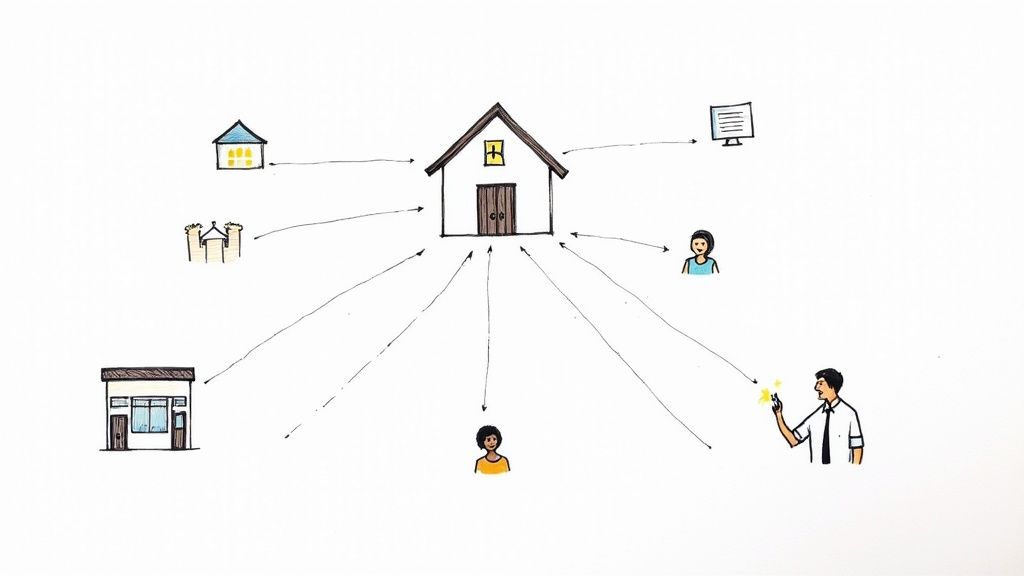
While a solid digital game is a must, the real magic of school public relations happens on the ground, in your local community. It’s about building real, tangible connections that go far beyond a screen. Think of it as transforming your school from just a building on a street corner into the true heart of the neighborhood.
The goal here is to build a network of advocates—from the local news editor to the owner of the corner coffee shop—who feel personally invested in your success. These relationships are your bedrock, creating a level of trust and support that digital channels can amplify but never fully replace.
Becoming a Trusted Media Source
Earning the trust of local media can completely change the game for your school. When reporters see you as a credible, easy-to-reach source, your stories don't just get told—they get told well. This isn't something that happens overnight, and it starts long before you have a big announcement.
First, get to know the key education reporters at your local papers, TV stations, and popular community blogs. Read their articles, watch their segments, and understand what they care about. Introduce yourself without an agenda. The idea is to position your school’s leaders as the go-to experts on education in your area. You can find more practical advice on this in our guide on the fundamentals of media relations.
Once you've laid that groundwork, your next story pitch—whether it's about a student's award-winning science fair project or a new teacher leadership program—lands in a friendly inbox. That personal connection makes all the difference.
The most impactful school PR doesn't just push out stories; it builds relationships that pull journalists in. Become the trusted source, and you'll become the story.
Deepening Community Engagement
Beyond the newsroom, creating genuine partnerships within your community builds a powerful circle of mutual support. This means actively reaching out to local officials, business owners, and non-profits to find where your goals align.
Here are a few proven ways to put down deeper roots in your community:
- Host Impactful Open Houses: Don't just give the standard tour. Personally invite city council members and local business owners to see your robotics lab or student art gallery in action. Let them see firsthand what makes your school special.
- Form Strategic Partnerships: Team up with a local tech company to sponsor a coding club or partner with a community garden to launch a student-run farmer's market. These collaborations bring incredible resources to your students and generate fantastic local press.
- Establish a Speaker's Bureau: Make your superintendent, principals, and lead teachers available to speak at local service clubs like Rotary or Kiwanis. This raises their profiles and reinforces your school’s position as a community pillar.
As school communications evolve, the most effective strategies blend the old with the new. Take a look at how digital and traditional PR can work together.
Digital PR vs Traditional PR in Schools
| Strategy | Digital PR Approach | Traditional PR Approach |
|---|---|---|
| Story Pitching | Emailing personalized pitches to reporters and bloggers with links to online press kits. | Calling reporters on the phone, sending physical press kits, and holding in-person press conferences. |
| Community Events | Promoting an open house via social media ads, live-streaming the event, and sharing video highlights. | Sending printed invitations, distributing flyers in the neighborhood, and relying on word-of-mouth. |
| Partnerships | Co-hosting a webinar with a local business and promoting it through email newsletters. | Sponsoring a local little league team and placing a banner on the field. |
| Crisis Comms | Issuing immediate updates via social media and the school website. | Holding a press conference and distributing a formal press release to news outlets. |
This blend of tactics is the future. In fact, projections show that by 2025, the most successful PR efforts will be those that masterfully combine traditional media outreach with savvy digital campaigns to elevate a school's reputation and drive enrollment.
Navigating Crisis Communication in a School Setting
Let's face it, no school is immune to a crisis. It could be anything from a sudden health scare to a wildfire of a rumor on social media. The unexpected is, well, expected. This is where strong public relations in schools proves its worth—it's not just about sharing the good news, but about being ready to handle the toughest moments with clarity, confidence, and compassion.
The secret? Preparation. A real crisis is the absolute worst time to start figuring out who's supposed to say what. Having a crisis communication plan ready to go before you need it is the difference between chaos and control. Think of it as your school’s emergency guide for protecting its reputation.
The Core Elements of an Effective Response
When things go sideways, your community—parents, students, and staff—is looking for a calm, authoritative voice they can trust. A solid plan ensures you're providing exactly that by creating a clear framework for action. It really boils down to a few non-negotiable pillars.
- A Clear Chain of Command: You need to know, instantly, who’s in charge of communications. This stops mixed messages and confusion right in their tracks when every second counts.
- A Designated Spokesperson: One person should be the public face of the school during the crisis. This single point of contact guarantees consistency and prevents conflicting stories from getting out.
- Pre-Approved Holding Statements: Get some templates drafted for different potential scenarios, like a weather closure or a medical incident. This lets you communicate quickly and accurately while your team gathers the rest of the details.
Getting these first steps right is how you take control of the narrative from the very beginning. For a deeper dive into building this foundation, you can explore these detailed crisis communication best practices to get your team fully prepared.
In a crisis, silence is never golden. Timely, transparent, and empathetic communication is the only way to maintain trust and demonstrate that you are in control of the situation.
Responding with Transparency and Empathy
Once your initial response is out, the work shifts to ongoing communication. The messages you send must be timely, transparent, and, above all, empathetic. You have to acknowledge what the community is worried about and show them you understand where they're coming from.
Scenario Example: A False Social Media Rumor
Picture this: a rumor about a threat to school safety is blowing up on a parent Facebook group. It's spreading fast. Here’s a quick guide on what to do—and what not to do.
Do:
- Act Immediately: Get a clear statement up on your official channels (website, social media) acknowledging the rumor and stating that you're investigating.
- State the Facts: As soon as you can, deliver the facts. "We have investigated the rumor and, in coordination with local law enforcement, have confirmed there is no credible threat."
- Show Empathy: Add a human touch. "We understand that this kind of information is alarming, and we take all safety concerns seriously."
Don't:
- Ignore It: Hoping it just goes away is a recipe for disaster. It only gives misinformation more room to grow.
- Be Vague: Phrases like "we are looking into the situation" without any clear follow-up just fuel more anxiety.
- Engage in Arguments: Don't get pulled into debates in the comments. Keep directing people back to your official statement.
When you handle a crisis well, you do more than just manage a difficult situation—you reinforce your school’s leadership and build even stronger community trust for the long haul.
Your School PR Action Plan
Knowing what school PR is and actually doing it are two different things. Making the jump from theory to action is where the real work—and the real payoff—begins. A powerful PR strategy isn't about splashy, one-time campaigns; it's about the steady drumbeat of consistent, authentic communication.
Let's walk through a practical roadmap. These are manageable steps any school leader can take, no matter the size of your team or budget. The first step? A good, hard look in the mirror to see what your communications look like right now.
Setting Your Foundation for Success
Before you even think about drafting a social media post or writing a press release, you need to know where you're going. Great public relations in schools is always proactive, never reactive. It all starts with defining what "success" actually means for your district.
Identify Key Audiences: Who are you really talking to? "Parents" is too broad. Get specific. Think about prospective kindergarten families, current middle school students, proud high school alumni, local business owners who might partner with you, and even your own district staff. Each audience cares about different things and needs a message that speaks directly to them.
Set SMART Goals: A goal like "improve communication" is a recipe for failure because you can't measure it. Get concrete. Try something like, "Increase parent engagement on our Facebook page by 15% this quarter," or "Earn three positive stories in the local news this semester." Now that's a target you can hit.
If you want to go deeper into building out your framework, this guide on creating an effective communications strategy plan is a fantastic resource for shaping your goals and brand story.
Creating Your Content and Crisis Calendar
Once your goals are locked in, it's time to plan your content. A content calendar will become your most valuable tool, helping you map out monthly themes, schedule posts around key events, and keep a steady flow of positive stories going out.
But while you're planning for the good, you also have to prepare for the bad. A crisis can pop up at any moment.
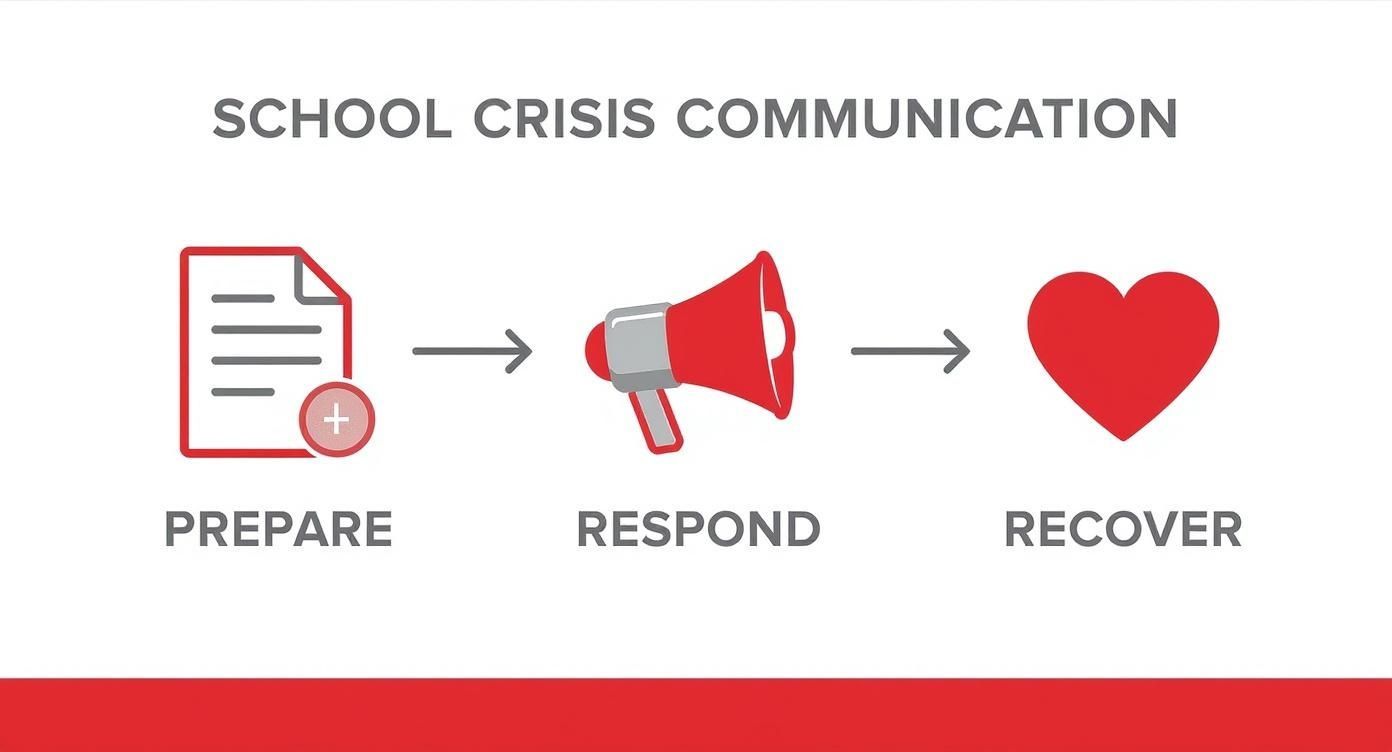
This infographic shows the critical workflow for handling a crisis. As you can see, what you do before an issue arises is just as important as how you respond during and after. Preparation is everything.
Frequently Asked Questions
Got questions about bringing these PR strategies to life in your district? You're not alone. Let's tackle some of the most common questions we hear from school leaders.
How Do We Measure PR Success?
Measuring the success of your school's PR efforts isn't like tracking product sales, but it's absolutely doable. The trick is to focus on metrics that reveal shifts in engagement and how your community perceives you.
- Website Traffic: After a positive news story breaks, are you seeing a spike in visits to your enrollment page? That's a clear win.
- Social Media Engagement: Keep an eye on your likes, shares, and comments. This tells you which stories are truly connecting with your families and staff. A jump in engagement means your message is landing.
- Media Mentions: How often are local news outlets talking about your school? Are those mentions positive? Tracking this shows how well you're shaping the public conversation.
What If We Have a Small Budget?
Don't let a tight budget stop you. Some of the most effective PR strategies cost little to nothing. Your biggest asset is your story, not your wallet.
Focus on authentic storytelling through social media. Empower your teachers and staff to share those genuine "aha!" moments from their classrooms—the stuff that really shows what makes your school special.
Strong public relations in schools is built on creativity and consistency, not just cash. A compelling student success story shared on Facebook can often do more than an expensive ad.
You can also build relationships with local reporters. It costs nothing to send a friendly email or pick up the phone to share a great story idea. It all comes down to consistent, strategic effort.
How Often Should We Communicate?
Think rhythm, not just frequency. You want to establish a steady, predictable pace of communication that your community can count on. It's all about being consistent.
A weekly email newsletter from the principal, daily social media posts that celebrate student life, and a monthly press release to announce a major achievement is a fantastic place to start.
The goal is to stay top-of-mind as a reliable source of information without flooding your audience's inboxes. It’s a balancing act that keeps your community in the loop and genuinely engaged.
Ready to build a thriving community and master your school's narrative? The MarCom Society provides the expert guidance, resources, and peer support you need to succeed. Join our community of K-12 communication leaders today!









