Understanding What Makes School Marketing Different

Let's be honest: marketing a school isn't like selling the latest gadget. It's way more personal. Having worked with over 200 schools, I've seen how easily they can miss the mark by treating education like any other product. You're not just competing on test scores and shiny buildings. You're selling a future, a sense of belonging, and the reassurance parents desperately need. Think about it: families considering your school are having serious conversations around the dinner table, weighing their hopes and worries about their child's future.
That means your marketing has to connect emotionally, not just logically. Forget generic slogans and laundry lists of features. You need to resonate with families on a deeper level, addressing their anxieties and showing them exactly how your school can help their child flourish. For example, instead of simply mentioning your extracurriculars, share stories that highlight the joy and personal growth students experience.
Also, remember that your audience has diverse needs. A military family constantly on the move will have different priorities than a local family exploring private school options for the first time. Understanding these nuances is key to crafting a message that truly connects. This is where deep audience research becomes essential. Over the past few decades, primary school enrollment has grown globally, presenting both exciting prospects and significant challenges for school marketing. In 2018, the global net primary school enrollment rate reached 89.41%, meaning almost 9 out of 10 primary-aged children were enrolled. Find more data on global enrollment trends here. This points to increasing competition in education and the growing need for focused marketing strategies.
Identifying Your Unique Value Proposition
So, how do you find your school's genuine story and build a compelling marketing plan around it? It all begins with identifying your unique value proposition. What makes your school truly special? Is it your innovative teaching approach, a focus on character development, or a thriving arts program? Knowing your strengths lets you tailor your message to families who value those qualities.
Creating a plan helps you track your marketing progress, much like laying a strong foundation with a sample communication strategy plan. Don't just list what you offer. Weave your strengths into a story that shows the real benefits for students and families. This could involve sharing alumni success stories, highlighting unique programs, or showing the strong sense of community within your school. Remember, your marketing is about forging genuine connections, building trust, and showing families how your school can empower their child to thrive.
Reading Your Families' Minds Like a Pro
Most schools think they know their families. But I've surveyed thousands of parents, and let me tell you, there's a Grand Canyon-sized gap between what schools believe matters and what actually drives enrollment. Think about it: a military family moving every two years has completely different needs than a local family checking out private schools for the first time. That’s why truly understanding your audience goes way beyond checking boxes on a demographics sheet.
Beyond the Basics: Understanding Your Families' True Motivations
You need to understand the late-night worries, the dinner-table values, and the precise moments that turn casual website visitors into eager applicants. It's about getting inside their heads. One family, with a math whiz kid, might be looking for a top-notch STEM program. Another, after a bad experience elsewhere, might prioritize small classes and personalized attention. See the difference?
Practical Research Techniques for School Marketing Plan Success
Forget pricey consultants. There are down-to-earth ways to get invaluable information. Start by talking to your current families. Really talking. What were their biggest hesitations before enrolling? What sealed the deal for them? This direct feedback is pure gold for your marketing plan.
Also, check out online reviews for your competitors. What's getting raves? What are the complaints about? This intel can uncover hidden opportunities and areas where your school can truly shine. You might find that location, often assumed to be king, actually matters less than shared values. Parents are looking for a community that mirrors their beliefs and supports their child’s individual needs.
The Digital Landscape of School Marketing Plan Research
The way schools connect with prospective families has completely changed thanks to digital marketing. The huge growth of internet access and social media is a big reason why. In the US, over 80% of parents research schools online before making a decision, with over 50% swayed by social media posts and reviews. Discover more insights on digital trends in education. This tells us how important it is for schools to have a strong online presence and engage with families in the digital world. Understanding those emotional triggers – what truly connects with families – is the key to a marketing plan that actually delivers. This not only attracts new families, it builds stronger relationships with your current community. It's about building connections, growing trust, and highlighting what makes your school special.
Choosing Marketing Channels That Actually Work
It's tempting to try and be everywhere at once, but trust me, spreading your school's marketing efforts too thin across every platform usually backfires. I've seen it happen time and time again. Instead of dominating any one channel, you end up with a mediocre presence on all of them. The key is to be strategic. Focus your energy where it matters most – on the platforms your target families actually use. A visually driven Instagram campaign might be perfect for connecting with parents of elementary school kids, while a STEM-focused high school might find more success showcasing alumni achievements and career pathways on LinkedIn.
Auditing Your Current Marketing Efforts
Before diving into new strategies, take a hard look at what’s already working (and what isn't). What's actually bringing families to your campus tours and driving inquiries? Which efforts are just generating vanity metrics that don't translate into actual enrollment? You might be surprised. Maybe those carefully crafted Facebook posts are falling flat while your parent ambassador program is a referral powerhouse. This honest assessment helps you prioritize and refine your approach. For a deeper dive into school advertising strategies, check out our article about Ads for schools.
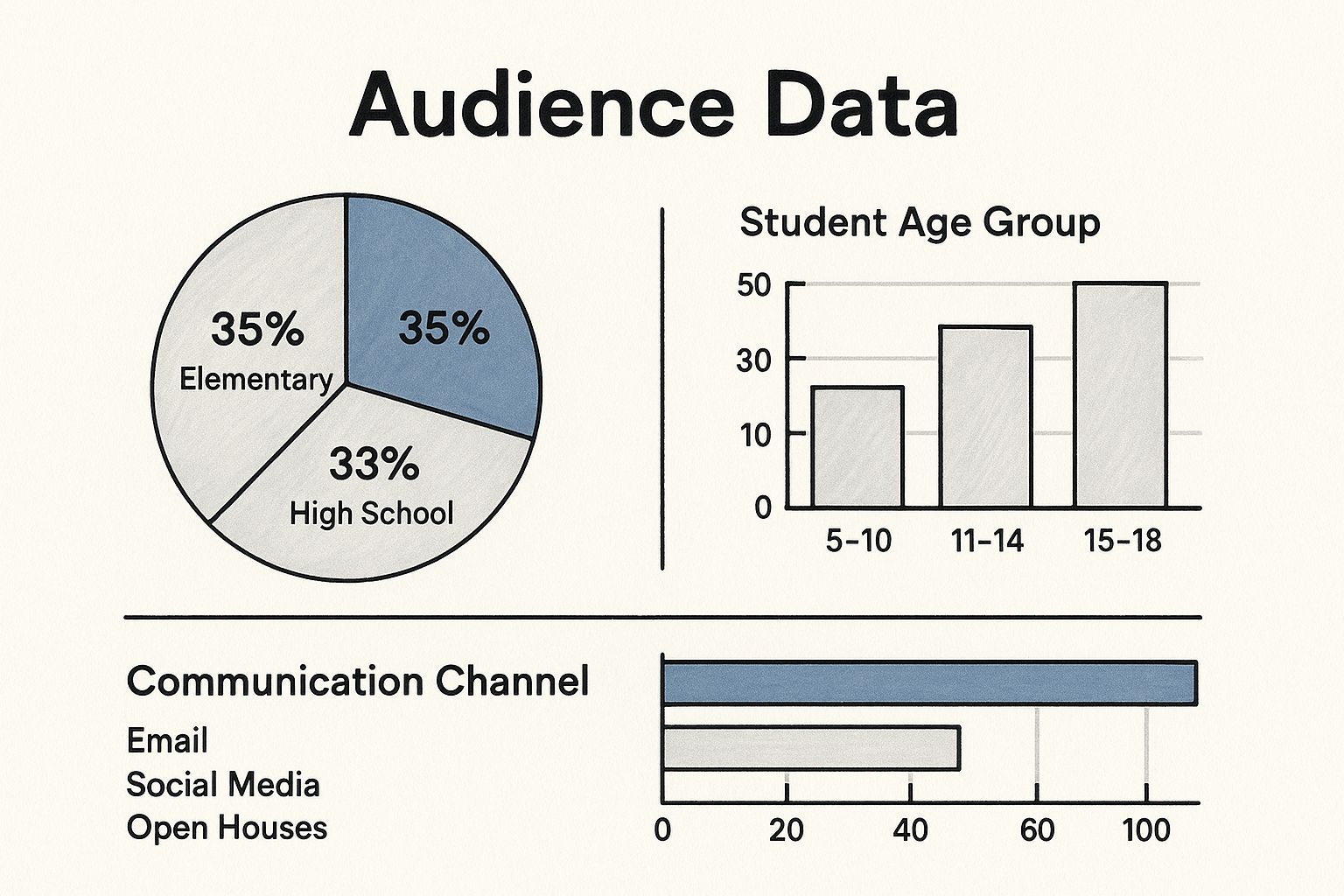
This infographic highlights the communication channel preferences of different student segments (elementary, middle, and high school). Notice how email consistently performs well across all groups, particularly for middle and high school parents, even alongside the widespread use of social media. Combining strong visuals with informative email campaigns is a cornerstone of effective school marketing.
Channel Strategies That Convert
Building relationships takes time, and your marketing strategy should reflect that. Think of a well-crafted email sequence, for example. Over several months, you can nurture prospective families, gently guiding them through the decision-making process. Instead of generic announcements, share valuable content, address their concerns, and highlight what makes your school special.
Don’t underestimate the power of in-person connections either. Community events, like family fun days, STEM fairs, or Q&A sessions with teachers, offer families a chance to experience your school’s community firsthand and build trust in a way that digital channels simply can't replicate.
Finally, explore the less obvious channels your competitors may be overlooking. Local online parenting groups, community newsletters, and neighborhood forums can be goldmines for connecting with your ideal families.
Digital Advertising: A Smart Investment
Done right, digital advertising can be incredibly effective. Platforms like Google Ads and social media advertising allow you to laser-focus on specific demographics, interests, and even behaviors. You can target parents searching for "private schools in [your area]" or "Montessori programs," for instance. But throwing money at generic ads won’t get you anywhere. Your ads need to be visually appealing, engaging, and include clear calls to action. Track your results carefully. What's generating clicks? What's leading to inquiries? This data helps you refine your campaigns and maximize your ROI.
Let's take a closer look at channel effectiveness with a quick comparison table:
To help visualize the effectiveness of various channels, take a look at the table below:
Marketing Channel Effectiveness by School Type
Comparison of different marketing channels and their effectiveness across elementary, middle, and high school segments
| Marketing Channel | Elementary Schools | Middle Schools | High Schools | Cost Effectiveness |
|---|---|---|---|---|
| Social Media (Facebook/Instagram) | High | Medium | Medium | Medium |
| Email Marketing | Medium | High | High | High |
| School Events | High | Medium | Low | Low |
| Community Outreach | Medium | Medium | Medium | Medium |
| Paid Search (Google Ads) | Medium | High | High | Medium |
| Local Partnerships | High | Medium | Low | High |
This table provides a general overview. The ideal mix for your school will depend on your specific target audience and budget.
By understanding your families’ preferred communication styles, online habits, and what motivates them, you can build a marketing plan that creates genuine connections, resonates deeply, and fuels real enrollment growth.
Building A Marketing Budget That Makes Sense
Let’s talk budget—it’s the fuel that powers your school’s marketing engine. Forget those dusty, generic templates. We’re going to explore real-world spending and how to make every dollar work as hard as your star pupils. Whether you're working with $500 a month or $15,000 a year, smart prioritization based on your enrollment goals is absolutely essential.
Creative Budgeting Strategies
Think beyond the usual advertising suspects. Creative partnerships with local businesses can really stretch your budget—and build strong community ties at the same time. Imagine teaming up with a local bookstore for a family reading night, or partnering with a sports store for a discounted equipment sale. It’s a win-win for everyone.
Parent volunteers are another secret weapon. Their skills and enthusiasm can be a game-changer for your marketing efforts. They can lend a hand with event planning, manage your social media presence, or even write engaging content for your school blog. This not only frees up your budget but also boosts parent involvement.
Free marketing tools pack a surprising punch. Canva is great for creating eye-catching graphics, Mailchimp helps with email campaigns, and Google Analytics lets you track website traffic. Used strategically, these tools can rival expensive alternatives. Speaking of strategic, a solid social media marketing plan is just as vital as your overall marketing strategy.
Tracking Your Return on Investment
Measuring your marketing success doesn't have to be complicated. Simple methods can tell you a lot. If a family mentions seeing your Facebook ad during a school tour, make a note of it! A basic spreadsheet to track these mentions can reveal which channels are driving inquiries and enrollments. This data is gold when it’s time to justify next year’s budget. For more in-depth strategies, you might find this guide on school marketing plans helpful.
Presenting Your Budget to Decision Makers
Speaking the language of administrators and board members is key. Present your budget in terms of the impact on enrollment, revenue generation, and how it positions the school against the competition. Demonstrate how your marketing plan contributes to the school's financial health and long-term sustainability. To give you a head start, take a look at this sample budget allocation table:
To help illustrate how funds might be allocated, I’ve put together a sample table. This gives you a basic framework to start with:
Sample Marketing Budget Allocation by School Size
| Budget Category | Small School (Under 200) | Medium School (200-500) | Large School (500+) | Percentage of Total |
|---|---|---|---|---|
| Website & Digital Ads | $2,000 | $5,000 | $10,000 | 30% |
| Print & Design | $1,000 | $2,500 | $5,000 | 20% |
| Events & Outreach | $1,500 | $3,750 | $7,500 | 25% |
| Content Creation | $500 | $1,250 | $2,500 | 10% |
| Other | $1,000 | $2,500 | $5,000 | 15% |
| Total | $6,000 | $15,000 | $30,000 | 100% |
This table shows how budget allocation can change depending on the size and resources of the school. Remember, these are just examples. Your actual spending will reflect your school's specific needs and what you’re aiming to achieve. By crafting a well-structured budget and showing its potential impact clearly, you'll be well-positioned to secure the resources you need for a powerful marketing plan.
Mastering Marketing Timing Like a Chess Player
Let's talk school marketing timing. It's not just about when you market, it's about hitting that sweet spot when families are actually looking. Miss that window, and your efforts might as well vanish into thin air. After analyzing enrollment trends across hundreds of schools, I’ve noticed a pattern – a rhythm to how families make these big decisions. And, honestly, it changes a lot depending on the grade level and the type of school.
For instance, parents eyeing elementary schools usually start their research around January for the following fall. But high school? That search can begin a full two years ahead! This tells us your marketing plan needs to be a marathon, not a sprint, anticipating these timelines and gently guiding prospective families long before they're even close to applying. Thinking about your budget? Reviewing a sample budget narrative can be incredibly helpful.
Seasonal Messaging and Strategic Touchpoints
Imagine your marketing efforts as planting seeds. You have to nurture those relationships way in advance, consistently “watering” them with strategic communication that builds trust and makes your school familiar. Think sharing helpful content for their child’s age, hosting online events, or showcasing student achievements that speak to parents’ hopes for their kids.
Seasonal messaging is a powerful tool, too. Use the back-to-school excitement to plant seeds for next year’s enrollment. Capture that energy and turn it into building interest down the line. Also, don't forget about mid-year opportunities. Families who move during the school year often need to find a school quickly, and that’s a perfect time for some focused outreach.
Understanding the Rhythms of Decision-Making
This isn't about blasting out generic emails. It's about getting into the heads of families. When are parents most receptive to your message? What keeps them up at night? What are their dreams for their kids? If you can tap into those emotional drivers, your marketing will resonate so much more deeply. Consider secondary school enrollment: while lower than primary, it's seen real growth globally, creating interesting marketing opportunities for secondary institutions. Globally, the net enrollment rate in secondary schools hit 66.27% by 2018. That’s two-thirds of eligible students! Learn more about secondary enrollment trends. This shows how crucial tailored marketing is becoming, particularly for this age group.
Practical Calendar Templates and Customization
I've created some handy calendar templates that you can adapt to your school’s unique enrollment cycles to make these insights actionable. These calendars provide a framework to map out your marketing activities, ensuring you’re engaging with families consistently and making the biggest impact during those critical decision-making periods. By getting the timing right, you shift from reacting to being proactive, anticipating what families need and building strong, long-term relationships that fuel enrollment growth. Just like in chess, smart timing can mean the difference between victory and a draw.
Measuring Results That Actually Matter
Let’s be honest, when it comes to school marketing, enrollment is the bottom line. But it’s also the trickiest thing to directly link back to your marketing efforts. I've seen so many schools get caught up in vanity metrics—likes, shares, website visits—and completely miss the mark on what really predicts enrollment growth.
Connecting Marketing to Enrollment
So how do we build a measurement system that connects your marketing activities to actual applications and enrolled students? It’s easier than you think, and you don't need expensive software or a PhD in data science. Think of it like gardening: you wouldn’t just plant seeds and hope for the best. You’d check the soil, water regularly, and look for signs of growth. Marketing is the same. You need to monitor the right indicators to see what’s thriving and what needs attention.
One simple but powerful tool is UTM parameters. These little tags you add to your website links let you track exactly where your traffic is coming from. If you’re promoting a school open house on Facebook, Instagram, and email, UTM parameters show you which platform is driving the most registrations. Then, free tools like Google Analytics help you visualize the data. You’ll quickly discover whether Facebook is a hidden gem or if your email list is your true marketing powerhouse.
Building a Reporting Dashboard That Tells a Story
Data is useless unless it tells you something meaningful. Create a simple dashboard that highlights the metrics that truly matter: inquiries, applications, tours booked, and, of course, enrollments. Don’t get lost in the details. Focus on the big picture. Is your spring open house generating more applications than your fall event? Are inquiries from social media translating into actual enrollments? These are the questions your dashboard should answer. For some helpful insights on boosting enrollment, check out this article on How to Increase School Enrollment.
This kind of focused reporting not only helps you refine your marketing plan, but it also gives you solid data to share with stakeholders. They’ll appreciate seeing how your marketing translates into real results.
Monthly Metrics vs. Annual Review
Some metrics, like website traffic and social media engagement, are good to check monthly. They give you a quick pulse check on your day-to-day activities. Others, like enrollment numbers and long-term student retention, are best reviewed annually. This big-picture view helps you assess the overall health of your marketing and make strategic changes for the following year. It's like your own health—you might check your weight weekly, but you’d get a full physical only once a year. Both are important for different reasons.
Testing and Surveying: Making Data Actionable
Even with limited data, you can still run meaningful tests. Try tweaking your email subject lines or changing the call to action on your website. Track the results. Small tweaks can make a big difference. I once boosted open house registrations by 20% simply by changing the button color on our landing page from blue to orange!
Another great tool? Surveys! Ask new families about their decision-making process. What influenced their choice? Where did they first hear about your school? This direct feedback is gold. It can uncover hidden opportunities and confirm whether your marketing messages are hitting the mark.
The point is to use data to improve your marketing, not to get paralyzed by analysis. Focus on the metrics that matter most, experiment with new approaches, and listen to your families. It’s a process of continuous improvement, not reaching some mythical level of marketing perfection. Remember, enrollment is the ultimate measure of success, and all your data should be working towards that goal.

Your Marketing Plan Implementation Roadmap
So, we've done the brainstorming. Now, how do we actually do this? Let's talk about turning those great ideas into a real, live action plan you can start using today. This isn't about creating a document that’s going to gather dust on a shelf. This is about getting the ball rolling and seeing real results. Think of it like launching a new program at your school. You wouldn’t just announce it and hope for the best, would you? You'd have a rollout plan, timelines, and ways to check if it's working.
Your First 90 Days: Building a Solid Foundation
The beginning of any school marketing plan is super important. Here’s what you should concentrate on in those first three months:
Quick Wins: Find the “low-hanging fruit”—those easy things you can do that will get some early results. Maybe it’s sprucing up your website’s homepage, running a targeted social media campaign, or making sure your Google My Business profile is optimized. These quick wins will boost your confidence and show everyone the value of your marketing work.
Faculty Buy-In: Get your teachers and staff excited about the plan. Explain how it will benefit them, how it will simplify their work (like better communication), and how they can be involved. Teachers are your best marketers! Their enthusiasm is infectious.
Workflow Integration: Make marketing a regular part of your routine. Schedule a specific time each week, even if it’s just 30 minutes. Put it in your calendar, treat it like an important meeting, and don’t skip it. Consistency is essential.
Creating Sustainable Marketing Systems
Marketing shouldn’t feel like you’re constantly pushing a boulder uphill. The goal is to build systems that work smoothly, even when things get hectic during the school year.
Content Creation Calendar: Plan your content ahead of time. A simple spreadsheet or a shared calendar can help you map out blog posts, social media updates, and email newsletters. This keeps you from scrambling at the last minute and ensures consistent messaging.
Workflow Automation: Use tools to automate those repetitive tasks like email follow-ups or scheduling social media posts. Mailchimp and Hootsuite can free up your time so you can focus on the bigger picture and building relationships.
Accountability Measures: Set clear goals and track your progress. Regularly review your metrics and make changes if needed. Just like students get progress reports, your marketing plan needs regular check-ins and feedback to thrive.
Setting Realistic Expectations and Adapting Your Approach
Don’t expect to see amazing results overnight. Building a successful school marketing plan takes time and effort. Set realistic goals, celebrate the small wins, and be ready to adjust your strategy based on what you learn. For example, if a social media campaign isn’t working, look at the data, make some changes, and try again. Marketing is all about trying things out, learning, and improving.
Think of your school marketing plan as something that’s always evolving, not a rigid set of rules. Be flexible, adapt to changes, and always remember that families are at the center of your strategy. By building a strong foundation, creating sustainable systems, and focusing on continuous improvement, you’ll develop a marketing plan that delivers real results and helps your school flourish.
Ready to take your school’s marketing up a notch? Join The MarCom Society and connect with other K-12 marketing professionals. You’ll find expert advice, practical resources, and a supportive community to help you boost your school’s communication and get amazing results.