
The conversation around schools and social media isn't about if anymore—it's about how. For modern K-12 schools, it's no longer an optional add-on. It's become a central pillar for connecting with families, showing off your school's unique personality, and building a community that feels alive and engaged.
Why Social Media in Schools Is Essential Today

Think of your school's social media channels as its digital front porch. It’s the first place prospective families go for a gut check, where current parents look for the latest news, and where students see their hard work celebrated. If you’re not there, or if your presence is collecting dust, you’re missing a massive opportunity to tell your story.
A smart, active strategy turns these platforms from static announcement boards into vibrant hubs of school life. This is your chance to bottle up the energy from your hallways and the passion of your teachers and share it with the world.
Connecting with Your Community
We live in an instant-gratification world, and parents expect quick, easy-to-find information. Social media gives you a direct line to them in a way that weekly newsletters and website updates just can't match. It’s all about real-time interaction that makes parents feel like true partners in their child's education.
Here’s how it strengthens those bonds:
- Current Parents: This is where you keep them in the loop on everything from snow days to picture day. A quick photo album from a field trip or a video of the science fair helps them feel connected to what their child is doing and learning every day.
- Prospective Families: Give them a real peek behind the curtain. A short video of a lively classroom discussion or an Instagram Story "takeover" by a beloved teacher is infinitely more powerful than a glossy brochure.
- Students and Alumni: This is how you build school pride that lasts a lifetime. Celebrating every win—from the debate team's victory to a student's art award—reinforces a positive culture and keeps alumni feeling connected long after they've graduated.
A Platform for Learning and Growth
But it's not just about communication. Social media has woven itself into the fabric of the student experience. In fact, by 2020, its use in education was already widespread, with approximately 93% of American secondary students using these platforms for school-related activities. That’s a huge shift from purely social tools to valuable aids for learning and collaboration. You can find more insights on social media in the classroom over on electroiq.com.
Social media gives a voice to your school’s culture. It’s the difference between telling people what your values are and showing them those values in action, every single day.
At the end of the day, getting social media right isn't about chasing the latest trend. It’s about building real, lasting relationships. When done well, it becomes one of your most powerful assets for boosting enrollment, keeping your community engaged, and creating a sense of belonging that extends far beyond the school walls.
Building a Responsible School Social Media Policy
Before you even think about posting your first photo or sending your first tweet, you need a solid game plan. A well-crafted social media policy isn’t about shutting down conversation; it's about creating a safe, predictable, and positive space for everyone. Think of it as the sturdy fence around the school playground—it sets the boundaries so everyone inside can play freely and confidently.
This policy is your school's constitution for its online life. It protects students, gives staff clear direction, and helps manage your school's reputation by setting clear expectations for how everyone should behave online. Without one, you’re navigating a pretty complex world without a map, leaving your school open to all sorts of missteps and misunderstandings.
Key Pillars of an Effective Policy
A strong social media policy rests on a few non-negotiable pillars. Each one tackles a different area of risk and responsibility, making sure you've got a complete framework to lean on. Getting these right is absolutely essential for protecting your community and encouraging a culture of positive online interaction.
Your policy needs to spell out the rules and expectations in a few key areas:
- Student Privacy: Get specific about how student photos, names, and work can be shared. This means having a rock-solid media consent process for parents and guardians.
- Acceptable Use: Detail what's okay to post on official school channels and what's strictly off-limits, like bullying, harassment, or sharing confidential information.
- Staff Conduct: Give your team clear guidelines for how they should engage on official accounts and how to handle their personal social media to avoid any conflicts of interest.
- Comment Moderation: Create a clear protocol for dealing with comments—the good, the bad, and the spam. This ensures you're managing your online community conversations fairly and consistently.
A great social media policy doesn't just say "don't." It provides a clear "how-to" for positive and safe engagement, empowering your team to act with confidence rather than fear.
Putting these guidelines together isn't just a box-ticking exercise. It's a critical step in building a strong foundation for all your schools and social media efforts. A clear policy is your best defense against potential problems and your best tool for teaching good digital citizenship. For a deeper dive, check out our comprehensive guide on creating a social media policy for schools.
The Core Components of a School Social Media Policy
When you sit down to write or update your policy, it helps to have a checklist. The following table breaks down the essential components that every school's social media policy should include, from establishing clear roles to outlining consequences for violations.
| Policy Component | Key Considerations | Example Guideline |
|---|---|---|
| Purpose & Scope | Why does this policy exist? Who does it apply to (staff, students, parents)? | "This policy applies to all official school social media accounts and the conduct of staff members on both official and personal accounts when discussing school-related matters." |
| Account Management | Who has the authority to create accounts? Who holds the passwords? | "Only designated marketing staff may create official school accounts. A central, secure password manager will be used to store all credentials." |
| Content Guidelines | What type of content aligns with the school's brand and mission? What is prohibited? | "Content must be professional, accurate, and celebrate student achievement. Profanity, personal attacks, and confidential student information are prohibited." |
| Student Privacy & Consent | How will you obtain and track parental consent for using student images/names? | "No identifiable student photo may be published without a signed media release form on file for the current academic year." |
| Engagement & Moderation | How will you respond to comments and messages? What's your process for removing inappropriate content? | "We will strive to respond to legitimate inquiries within 24 business hours. Comments that contain hate speech or bullying will be removed immediately." |
| Staff Guidelines | What are the expectations for staff's personal social media use? | "Staff should not 'friend' or 'follow' current students on personal social media accounts to maintain professional boundaries." |
| Compliance & Consequences | What happens if the policy is violated? How does it align with other school policies? | "Violations of this policy may result in disciplinary action, up to and including termination, in accordance with the staff code of conduct." |
Thinking through each of these areas will give you a robust, comprehensive policy that leaves little room for ambiguity.
Creating a Living Document
Your social media policy shouldn't be something you create once and then file away to gather dust. To be truly effective, it has to be a living, breathing document that evolves over time. The best way to do that is by involving key people in its creation to get their buy-in and make sure the guidelines are actually practical.
Think about pulling together a small committee with people from different groups:
- Administrators: To make sure everything lines up with the school's mission and legal obligations.
- Teachers: They're on the front lines and can offer real-world perspective on classroom dynamics.
- Parents: To voice their concerns and help shape student privacy and safety rules.
- IT Staff: To advise on the technical side of things, like platform security and settings.
When you take this kind of collaborative approach, the policy stops being a top-down rule and becomes a shared agreement on your community's values. It also helps you tackle the very real concerns people have about social media's impact on kids. We all know that social media can contribute to issues like bullying, classroom distractions, and even sleep deprivation, all of which get in the way of learning. By proactively addressing these challenges in your policy, you show everyone you’re serious about student well-being and responsible digital stewardship.
Choosing the Right Platforms for Your School
Diving into social media for your school can feel a lot like walking into a crowded food court. Every vendor is shouting for your attention, and the temptation is to grab a little bit of everything. But that approach usually just leaves you with a mediocre meal. A much better strategy is to pick the one or two spots that have exactly what your audience is hungry for.
Spreading your school's time and energy too thin across every platform out there is a classic misstep. The real goal isn’t to be everywhere; it's to be incredibly effective where it actually counts. That means making smart, deliberate choices based on who you're trying to reach, what you're trying to accomplish, and the unique story your school has to tell.
Aligning Platforms with Your Goals
Before you even think about which platform to use, get laser-focused on your objective. Are you trying to bring in new enrollment inquiries? Or is your main goal to get current families more involved? Your answer will point you in two completely different directions.
Here’s how that plays out:
- Goal: Increase Enrollment. You’ll want to focus on platforms where prospective parents are actively doing their research. This is the place for content that screams "this is why you should choose us"—think virtual tours, glowing parent testimonials, and highlights of your standout programs.
- Goal: Boost Community Engagement. For this, you need to be where your current parents and students already are every day. The content here is all about celebrating the little moments: student achievements, cool classroom projects, and friendly reminders about the upcoming bake sale.
Getting this distinction right is the first, most critical step toward building a social media presence that actually works.
A Breakdown of Key Platforms for Schools
Every social media platform has its own personality, its own crowd, and its own rules of engagement. Think of them as different rooms in your house. You wouldn't host a formal dinner party in the kids' playroom, right?
Let’s walk through the most important options for K-12 schools.
Facebook
This is still the undisputed champ for reaching parents, especially those in the 30-55 age range. It functions as the digital town square or community bulletin board. It's perfect for official announcements, sharing event details, and creating private groups for specific classrooms or your PTA. Plus, its advertising tools are incredibly powerful for zeroing in on prospective families for enrollment campaigns.
Instagram
If a picture is worth a thousand words, Instagram is your school’s visual storyteller. It's huge with a younger crowd, but plenty of parents are scrolling through it, too. This is where you bring your school's culture to life with beautiful photos and snappy short videos (Reels). Think "day-in-the-life" glimpses, student spotlights, and all the vibrant, visual moments that make your campus special.
LinkedIn
It might not be the first platform that comes to mind, but LinkedIn can be a secret weapon for building your school's professional reputation and connecting with your alumni network. It's the ideal spot to share faculty achievements, post articles from your school's leadership, and build a professional community that can help with fundraising and mentorship down the road.
Choosing the right channel isn't about popularity contests. It’s about strategic alignment—matching the platform's audience and content style to your school's specific communication objectives.
This decision-making process is vital, and it also connects directly to your school's policies on privacy, conduct, and moderation, as shown in the decision tree below.
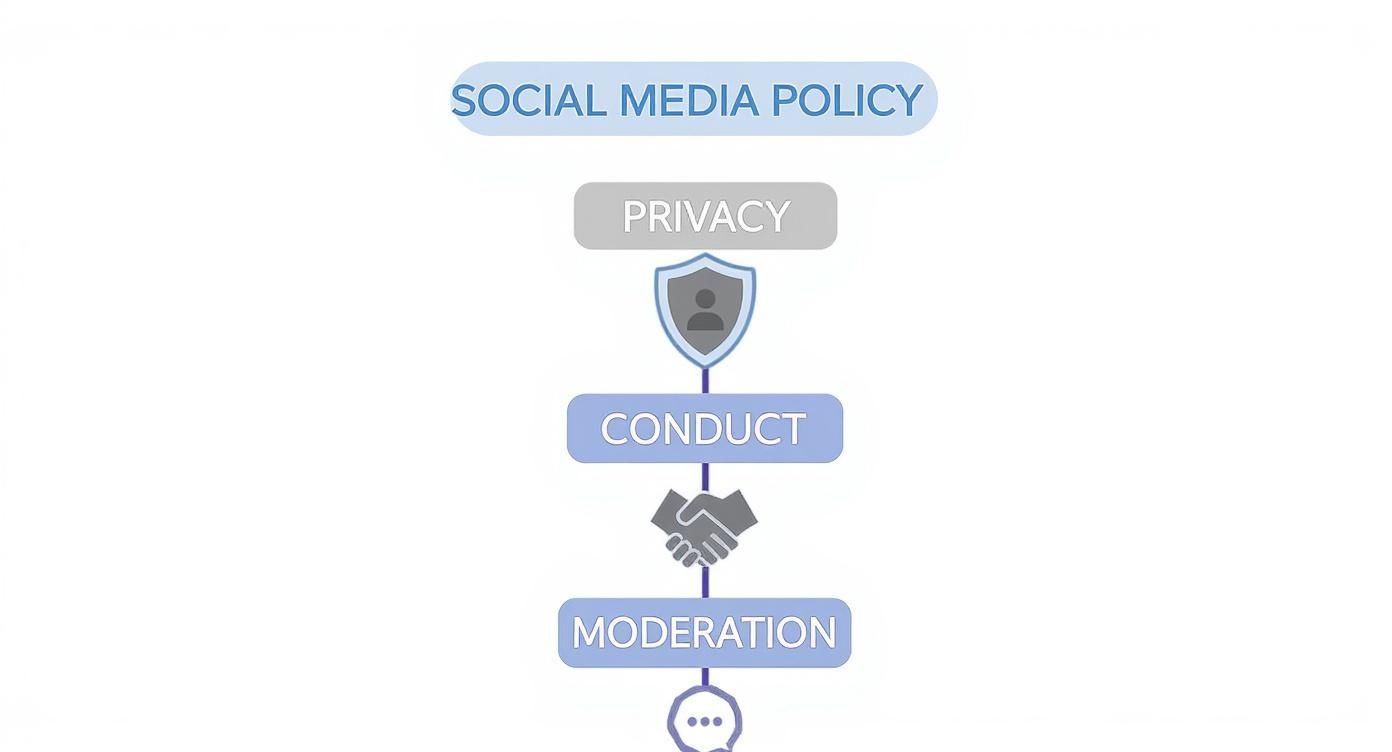
As the graphic shows, a solid policy framework is the foundation that guides how you handle everything from user data to online comments on whatever platform you choose.
Focusing Your Efforts for Maximum Impact
Trying to be a master of all platforms at once is a surefire recipe for burnout and lackluster results. It is so much better to be amazing on one or two channels where your audience lives than to have a weak, scattered presence on five.
The financial side of this is getting serious, too. Globally, the investment in social media for education is booming. Projections show that social media ad spending alone will hit an astonishing $230 billion by 2025. That number tells you just how essential these platforms have become for recruitment and communication, which makes a focused, strategic approach more critical than ever. You can discover more insights about social media trends for schools to get the full picture.
So, start small. Get really good at the platforms you choose, build a dedicated following, and then think about expanding. You’ll be in a much stronger position once you have a sustainable process and a real feel for what resonates with your community.
Creating Content That Tells Your School Story
Let's be honest, truly effective social media for schools isn't about posting lunch menus or event reminders. Anyone can do that. The schools that really nail it don't just broadcast information—they tell a compelling story. They build a narrative that captures the unique energy, values, and personality of their campus, turning passive followers into a proud, engaged community.
This means shifting your mindset. You're not just managing a channel; you're curating an experience. Think of your social media feed as a living, breathing digital yearbook. Every single post is a snapshot that, when pieced together, tells the rich, authentic story of what it’s really like to be part of your school.
Building Your Core Content Pillars
To tell a consistent story without running out of ideas, you need a framework. That's where content pillars come in. These are the main themes you’ll return to again and again, giving your feed variety while keeping it firmly rooted in your school's identity. They act as guideposts, making content planning much more strategic and a whole lot less stressful.
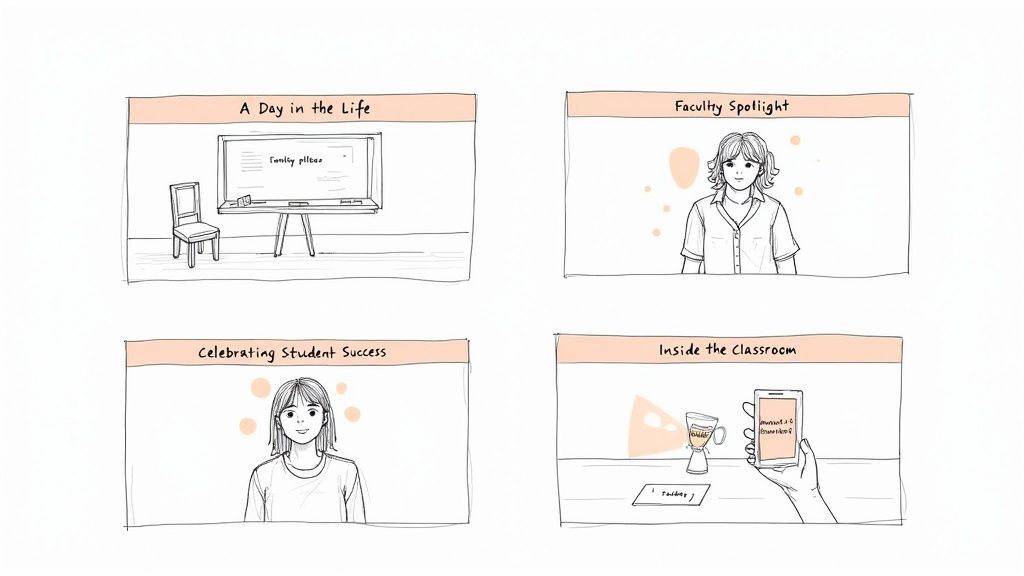
Consider building your strategy around these four powerful pillars:
- Celebrating Student Success: This is your bread and butter. Showcase everything from academic awards and athletic championships to small acts of kindness and incredible artistic achievements.
- Faculty and Staff Spotlights: It's time to humanize your school by introducing the passionate people behind the scenes. A quick Q&A or a short video of a teacher explaining why they love their subject can build surprisingly powerful connections.
- Inside the Classroom: Pull back the curtain and show learning in action! A photo series from a messy science experiment or a short clip of a lively history debate makes education feel tangible and exciting.
- Campus Life and Events: Capture the true spirit of your community. This covers everything from the electric energy of a pep rally to the quiet focus of the annual book fair, making your campus feel vibrant and alive.
These pillars give you a reliable structure. They'll help you avoid that dreaded "what on earth do we post today?" panic and ensure your content is balanced, showcasing all the different facets that make your school a special place.
From Pillars to Practical Posts
Once your pillars are in place, brainstorming specific posts becomes so much easier. The real goal is to create content that feels genuine, not staged. Prospective families, especially, are digging for authenticity to get a real feel for your school's culture.
Here are a few concrete ideas to bring your pillars to life:
- "A Day in the Life" Instagram Story: Hand the account over to a student or teacher for the day to share their unfiltered perspective.
- Video Tour of a Unique Space: Film a quick, energetic Reel or TikTok showing off the art studio, the brand-new science lab, or the theater.
- Interactive Polls and Questions: Use Instagram Stories or a Facebook post to ask your community for their opinion on the next spirit week theme or their favorite book from the library.
The most powerful content captures the small, everyday moments that truly define your school’s culture. It’s the spontaneous laughter in the hallway, the look of intense concentration during a project, and the sheer pride on a student’s face when they finally master a new skill.
A great way to build a rich, authentic narrative is by using effective user-generated content strategies for school events. This encourages your entire community to help tell the school's story. Imagine creating a specific hashtag for your spring carnival and then featuring the best photos from students and parents on your main feed. This not only gives you a treasure trove of content but also deepens that sense of community ownership and pride.
Capturing Authentic Moments
Authenticity is the secret ingredient that makes schools and social media a winning combination. People can spot overly polished, corporate-style content from a mile away. What they crave are real moments that reflect the genuine day-to-day experience at your school.
This means empowering your own staff to become storytellers. A teacher with a smartphone can capture a breakthrough "aha!" moment in their classroom better than any marketing pro ever could. Encourage them to share photos and videos of that everyday magic, creating a pipeline of genuine content that truly represents your school’s heart and soul.
Ultimately, your goal is simple: make your social media channels an authentic window into your world.
Mastering Community Engagement and Moderation
Think of your school's social media as a conversation, not a megaphone. Just posting great content is only half the job. The real magic happens when you engage with the community that shows up—that’s how you turn a simple social media page into a vibrant hub for your school.
Mastering this conversation is all about being present and responsive. It means actively encouraging people to join in, replying to comments in a consistent and welcoming voice, and learning to handle the occasional negative feedback with grace.
Fostering a Positive and Interactive Community
The first step to building an engaged community is to actually ask for interaction. Too many schools just post announcements, which inadvertently trains their audience to be passive. To flip that script, you have to create content that begs for a response and makes people feel like their voice truly matters.
Here are a few proven ways to get the ball rolling:
- Ask Open-Ended Questions: Don't just announce the school play. Ask, "What's your favorite memory from a past school production?" This simple tweak invites personal stories and a touch of nostalgia.
- Run Interactive Polls: Use Instagram Stories or Facebook polls for some lighthearted fun. Let followers vote on the next spirit day theme or their favorite lunch from the cafeteria. It's quick, easy, and engaging.
- Host Q&A Sessions: Set a time for a live Q&A with the principal or a popular teacher. You could cover anything from a new school initiative to upcoming curriculum changes.
Social media is more than just a broadcast channel; it's a powerful way to get people involved. Many of the same ideas found in these tips for student engagement in online learning can be adapted to boost your community interaction, too.
The Art of Comment Moderation
A thriving online community will always have a mix of comments—from glowing praise to pointed criticism. The way you handle this feedback says everything about your school's character online. This is where your social media policy becomes your north star, giving you a clear guide for moderating comments fairly and consistently.
Think of yourself as the host of a party. You want to spark lively discussions, but you also need to make sure everyone feels safe and respected. Your job is to facilitate the conversation, not control it.
Here’s a simple framework for deciding how to respond:
- Acknowledge and Address: When you get legitimate negative feedback, a public, empathetic response shows you’re paying attention. A simple, "Thank you for sharing your concern. We've sent you a direct message to discuss this further," can de-escalate the tension and move the conversation offline.
- Hide or Delete: Comments that clearly violate your policy—things like profanity, personal attacks, or blatant misinformation—should be removed right away. Hiding a comment on platforms like Facebook makes it invisible to the public but not to the commenter, which can be a gentler first step.
- Ignore: Sometimes, the best move is to do nothing at all. Engaging with trolls or people who just want to argue only gives them a bigger platform and clutters your feed.
A consistent moderation strategy reinforces your school's values. It tells your community that you are committed to maintaining a respectful and constructive environment for everyone.
Effectively managing these interactions is at the very heart of using schools and social media to build community. It proves you value open dialogue while still protecting your students and staff from negativity. Building this foundation is critical, and you can dive deeper into creating this kind of atmosphere in our guide to social media and community. When you get this right, you create a digital space where everyone feels heard, valued, and connected.
Measuring Your Social Media Success
You’re creating great content and the conversations are flowing. That’s a huge win. But how do you actually prove that all this work is paying off for your school?
Measuring your success is where the rubber meets the road. It’s how you turn the daily buzz of schools and social media into concrete results that make leadership sit up and take notice. This is what justifies your time, your budget, and your strategy.
The trick is to look beyond the easy numbers. Sure, a big follower count or a flurry of likes feels great, but those "vanity metrics" don't paint the full picture. Real success comes from tracking the data that connects directly to your school's most important goals, whether that's boosting enrollment inquiries or building a more connected parent community.
Key Metrics That Actually Matter
To get a true read on your performance, you need to focus on data that shows how people are truly interacting with your content and what they do next. This gives you a much richer story than any surface-level stat ever could.
Here are a few metrics that should be front and center on your dashboard:
- Engagement Rate: This is the big one. It’s the percentage of your audience that actually likes, comments on, or shares your posts. A high engagement rate is the ultimate proof that your content is hitting the mark.
- Website Clicks: Are people clicking the links in your posts to visit your school's website? This is a direct line from a social media post to a tangible action, like someone checking out your admissions page or event calendar.
- Reach vs. Impressions: It's helpful to know the difference. Reach tells you how many unique individuals saw your post, while impressions count the total number of times it was shown. Watching both helps you understand the true breadth of your message.
Shifting your focus from "how many followers do we have?" to "how engaged are our followers?" is the single most important change you can make. It’s about measuring the quality of your audience, not just the quantity.
If you’re ready to really dig into the numbers, our guide on how to measure social media engagement breaks it all down.
Translating Data into Actionable Insights
Collecting all this data is just step one. The real magic happens when you use it to make smarter decisions. Your analytics should tell you a story about what’s connecting, what's falling flat, and where you should put your energy next.
For instance, maybe you notice that your video tours consistently get 50% more shares than static images. That’s not just a fun fact—it’s a clear signal to double down on video. Or perhaps a post about your robotics club sends a wave of traffic to your STEM curriculum page. Boom. You've just found a powerful angle for your next enrollment campaign.
Set aside time to review your metrics regularly, whether it’s monthly or quarterly, to catch these trends. When you report back to your team or school leadership, present the data in a way that connects the dots. Showing a 15% increase in virtual tour sign-ups that came directly from Facebook is how you demonstrate the powerful, undeniable ROI of your work.
Got Questions About Social Media in Schools? We’ve Got Answers.
Even with the best-laid plans, running your school's social media accounts means you're going to run into some tricky situations. It just comes with the territory. Handling these moments well comes down to having a clear policy, a level head, and a consistent voice.
Let's walk through some of the most common questions and challenges that pop up for school marketers and administrators. Think of this as your field guide for those "What do I do now?" moments.
How Should We Handle Photo and Video Permissions?
This is, without a doubt, one of the most important legal and ethical lines to walk. The absolute best way to handle this is with a rock-solid media release form that every parent signs at the start of the school year.
Your release form should be crystal clear about:
- What you'll capture: Photos, videos, and maybe even snapshots of student projects or artwork.
- Where it might appear: Be specific. Mention your official school social media channels, website, newsletters, and any print materials.
- How long consent lasts: Usually, this is for the current academic year.
You need a bulletproof system for tracking who has given consent and who hasn't. It has to be organized and easy for anyone on your team to check. For big group photos where it’s nearly impossible to single someone out, try to use wider shots where individual faces aren't the main focus.
When in doubt, leave it out. If you have even a sliver of uncertainty about whether you have permission to post a student's photo, just don't do it. Student privacy is non-negotiable.
What Is the Best Way to Deal with Negative Comments?
Sooner or later, a negative comment will appear. It's just a part of being online. The trick is to have a plan ready to go—one that’s based on your school's moderation policy—so you can respond professionally instead of emotionally.
Here’s a simple game plan:
- Acknowledge and Take It Private: If the complaint seems legitimate, a calm, public reply works best. Something like, "Thank you for sharing your concerns with us. Could you please send us a private message so we can learn more?" This shows everyone you're listening while taking the specific details offline.
- Delete What Breaks the Rules: Don't hesitate to remove comments with profanity, hate speech, bullying, or personal attacks. These comments poison the well and go against the safe, positive community you're trying to build.
- Don't Feed the Trolls: Some comments are just meant to stir the pot. Engaging with them is like pouring gasoline on a fire—it only gives them the attention they want. Your best move is to simply ignore them.
How Should We Manage After-Hours Comments and Messages?
The pressure to be "on" 24/7 is real, but it's also completely unsustainable. You have to set boundaries for your community and, just as importantly, for your own team.
A simple automated reply can be a lifesaver. On platforms like Facebook Messenger, you can set up a message that says something like, "Thanks for getting in touch! We check our messages during school hours, 8 a.m. to 4 p.m., Monday through Friday, and will get back to you then." It's professional, it manages expectations, and it helps prevent your team from burning out.
Looking for a place to connect with other school marketers who get it? The MarCom Society is a community where K-12 marketing pros get expert guidance, peer support, and the practical resources they actually need. Join our community today and see what a difference it can make.









