
When it comes to marketing for K-12 schools, we need to rethink the relationship between social media and community. It’s no longer just another channel to post announcements. Instead, it’s become the new campus quad—the digital heart of your school where parents, students, staff, and even alumni gather and connect.
This is your key to turning passive followers into a deeply engaged school family.
Why Social Media Is Your School's New Quad
Remember the old school quad? It was that central green space where everyone congregated. It's where news spread like wildfire, friendships were made, and you could literally feel the school spirit in the air. It was the hub of connection and shared experiences.
Well, that same vibrant, buzzing space now exists online, and it’s your school’s social media presence. This isn't just a small change; it demands a fundamental shift in how we, as K-12 marketers, see our roles. We're not just broadcasters anymore. We're community architects.
The old way of thinking—using social media as a digital billboard for one-way announcements—just doesn't cut it. Real communities aren't built on monologues; they're built on conversations. They thrive on interaction, shared stories, and genuine support. When you start treating your social channels like the school's new quad, you start unlocking their real power.
The Shift from Broadcasting to Nurturing
This guide is your blueprint for making that crucial transition. We'll walk through how to stop just pushing information at people and start pulling your community together. The whole point is to create an online home where every single post, comment, and share strengthens the bonds between your school and the families it serves.
When you get this right, the payoff is huge. Imagine a digital space where:
- Prospective families get a real sense of your school's warmth and spirit before they even step foot on campus.
- Current parents feel looped in, informed, and truly involved in their child’s education.
- Students are so proud they can't help but share their achievements, becoming your best and most believable advocates.
- Alumni feel a lasting connection, offering support and mentorship years after they've graduated.
This digital community becomes a self-sustaining engine for engagement, support, and school pride. And the opportunity here is massive. By 2025, experts predict there will be approximately 5.45 billion people on social media globally. A recent study found that 48.7% of them use these platforms specifically to stay in touch with friends and family.
People are already there, looking for connection. You can learn more about social media's role in community building from these recent statistics.
By tapping into this fundamental human need for connection, you can elevate your social media from a simple marketing task into a thriving, supportive extension of your school.
Identifying Your School's Digital Community

Before you can build a vibrant online community, you have to know who you’re building it for. It’s a classic mistake to get caught up in chasing follower counts, treating every single person who clicks "like" as if they're all the same. That approach completely misses the rich, diverse mix of people connected to your school, all of whom have different reasons for being there.
Your digital school community isn't just a number on a screen. It’s a living, breathing network of individuals connected by a shared identity—your school. They’re the ones who engage with, support, and actively shape your school's culture online.
Think of it less like a faceless crowd and more like the unique neighborhoods that make up a city. Each one has its own vibe and purpose, but they all come together to form the whole. To make your efforts matter, you have to map out these neighborhoods and make every interaction feel like a genuine "digital handshake"—a way of showing you see and value them.
Mapping Your Core Community Segments
At its heart, your school’s digital community is made up of four key groups. Of course, there’s some overlap, but understanding what drives each one is the first step to creating content that actually connects on a human level.
Prospective Families: These are your explorers. They’re searching for the perfect school for their kids and are using social media to get a real feel for your culture. They want to see what life is really like beyond the brochure.
Current Parents and Guardians: This group is the backbone of your community. They’re looking for information, connection, and the reassurance that they made the right choice. They want to feel plugged in and involved.
Students: Let’s be honest, your students are your best storytellers. Social media is their natural habitat for sharing their experiences, celebrating wins, and connecting with friends. Their posts are raw, energetic, and offer a peek behind the curtain that you just can't manufacture.
Alumni and Former Staff: This is your legacy. They want to stay in touch with their past, cheer on the school's current successes, and connect with old friends. They are your most dedicated brand ambassadors, carrying your school's story out into the world.
Understanding What Each Segment Needs
Knowing who these groups are is one thing, but the real work starts when you dig into what they’re actually looking for. A one-size-fits-all content plan is a recipe for being ignored.
A thriving social media community is a safe space where people don’t feel sold to, judged, or ignored. It's an oasis built on genuine connection, shared value, and the feeling of being truly seen.
Let's get specific about what each of these groups needs from you. The table below breaks down the different audiences within your school community, what they care about most, and the kind of content that will actually get their attention.
Key Segments of Your School's Digital Community
| Community Segment | Primary Interests | Effective Content Types |
|---|---|---|
| Prospective Families | School culture, academic results, student life, and teacher quality. | Virtual tours, student testimonials, "day in the life" videos, and Q&A sessions with admissions staff. |
| Current Parents | Event reminders, academic deadlines, school news, and celebrating classroom achievements. | Weekly newsletters, photo galleries from school events, teacher spotlights, and practical tips for supporting learning at home. |
| Students | Peer achievements, sports results, club activities, and school spirit events. | User-generated content features, spirit week photo contests, "takeovers" by student clubs, and celebratory graphics for team wins. |
| Alumni | Networking opportunities, school milestones, nostalgic "throwback" posts, and ways to give back. | Alumni success stories, event invitations for reunions, updates on campus development, and posts that spark shared memories. |
Once you start mapping your content to these specific needs, you'll shift from just broadcasting announcements to hosting meaningful conversations. This is what it means to be audience-first.
For a deeper dive, you might find our guide on best practices for social media in schools helpful. This focus ensures every post has a purpose, strengthening the bonds that turn a school into a family.
Choosing the Right Platforms to Nurture Your Community

Now that you have a crystal-clear picture of who makes up your school community, the next big question is: where do they hang out online? A classic mistake I see schools make is trying to be everywhere at once. They spread their resources so thin that their message gets lost in the noise, and their marketing team gets completely burned out.
The goal isn't to plant a flag on every social media network. It's to find the few places where your community truly lives and build a real presence there. Think of it like planning school events—you wouldn't host a parent-teacher conference in the gym or a pep rally in the library. Each platform, like each room on campus, has a different purpose and attracts a specific crowd.
Picking your channels is a strategic move. When you focus your energy where your parents, students, and alumni are already scrolling, you get a much bigger bang for your buck. This is where the magic between social media and community really happens.
Aligning Platforms with Community Segments
Every social media network has its own vibe, its own language, and its own audience. If you want to connect authentically, you have to understand these nuances. Let’s break down the big players from the perspective of a K-12 marketer.
Facebook: The Community Hub for Parents
Even with all the new apps popping up, Facebook is still the digital town square for parents. It’s the go-to place for detailed announcements, photo albums from the school play, and real conversations in dedicated groups. It’s your community bulletin board, meeting hall, and photo archive all rolled into one.
- Best For: Current parents, prospective families, and alumni.
- Content Focus: School news, photo galleries, live-streamed Q&As with the principal, and private groups for each grade level or club.
- Why It Works: Nothing beats its Groups feature for creating safe, moderated spaces where parents can connect with each other and the school.
The data backs this up. Facebook is still the biggest social network on the planet, with 3.065 billion monthly active users as of early 2024. More importantly for schools, its biggest audience is the 25-34 age group—the sweet spot for parents. For a deeper dive, check out these social media demographics and what they mean for community building.
Instagram: The Visual Storyteller for School Spirit
Instagram is where your school’s personality comes to life. It’s less about text-heavy announcements and all about capturing the energy of your campus through beautiful photos and short, snappy videos (Reels). This is where you show, not just tell, what makes your school special.
A single, powerful photo of a student acing a science fair project or a 15-second Reel of the basketball team’s victory celebration says more about your school's spirit than a five-paragraph email ever could.
- Best For: Prospective families and current students.
- Content Focus: High-quality photos of daily student life, behind-the-scenes Reels, student and teacher "takeovers," and celebrating big wins.
- Why It Works: It’s built for visual storytelling, allowing you to create an emotional connection and convey your school's atmosphere instantly.
Selecting Your Strategic Channels
Beyond these two giants, a few other platforms can play powerful supporting roles, depending on who you’re trying to reach.
| Platform | Primary Audience | Strategic Use for Schools |
|---|---|---|
| X (formerly Twitter) | Media, local leaders, some parents. | Perfect for bite-sized news, sharing articles that mention the school, and real-time updates during events like football games. |
| TikTok | Primarily students (Gen Z). | The place for fun, trend-based videos. Think student-led challenges and lighthearted clips that show off your school’s unique personality. |
| Alumni, staff, professional partners. | Ideal for alumni networking, shouting out staff achievements, and sharing thought leadership articles from your administrators. |
At the end of the day, your platform strategy should be a direct reflection of your community map. Nail one or two channels where your key audiences are most active. Once you’ve built momentum, you can thoughtfully expand. This focused approach ensures you’re building deep connections where it matters most.
The Four Pillars for Building an Engaged School Community
Turning a passive online audience into a vibrant, engaged school community doesn't just happen. It takes a deliberate, heartfelt approach built on genuine connection. Think of it like building a house—you need a solid foundation and strong support beams to make it last. For your school's social media and community strategy, that structure rests on four essential pillars.
These aren't just abstract ideas; they're actionable frameworks. When used together, they transform your social media feeds from a simple broadcast channel into a welcoming digital space where families, students, and staff truly feel they belong.
Pillar 1: Content That Connects
The first pillar is all about what you share. To build a real community, your content has to do more than just inform—it needs to connect on an emotional level. This means moving past generic announcements and digging into the authentic, human stories that make your school's culture so special.
This is your chance to bring your school’s spirit to life. Instead of just posting event dates, share a gallery of photos capturing the pure joy on students' faces during that event. Don't just celebrate the big team wins; highlight the small, individual moments of triumph, too—like a student finally mastering a tough science concept or a teacher finding a brilliant new way to engage their class.
A few content types are absolute gold for sparking this connection:
- Behind-the-scenes moments: Give your followers a peek behind the curtain at play rehearsals, team practices, or a messy, wonderful classroom project in progress.
- User-generated content (UGC): Actively encourage and feature photos and stories shared by parents and students. When someone feels seen and celebrated, they're far more likely to participate again.
- Celebrating individual wins: A quick spotlight on a student's art award or a teacher's professional development achievement makes people feel genuinely valued.
This chart shows exactly what happens when you shift your focus to a community strategy. Over time, you see a clear and undeniable uptick in membership, daily activity, and engagement on your posts.
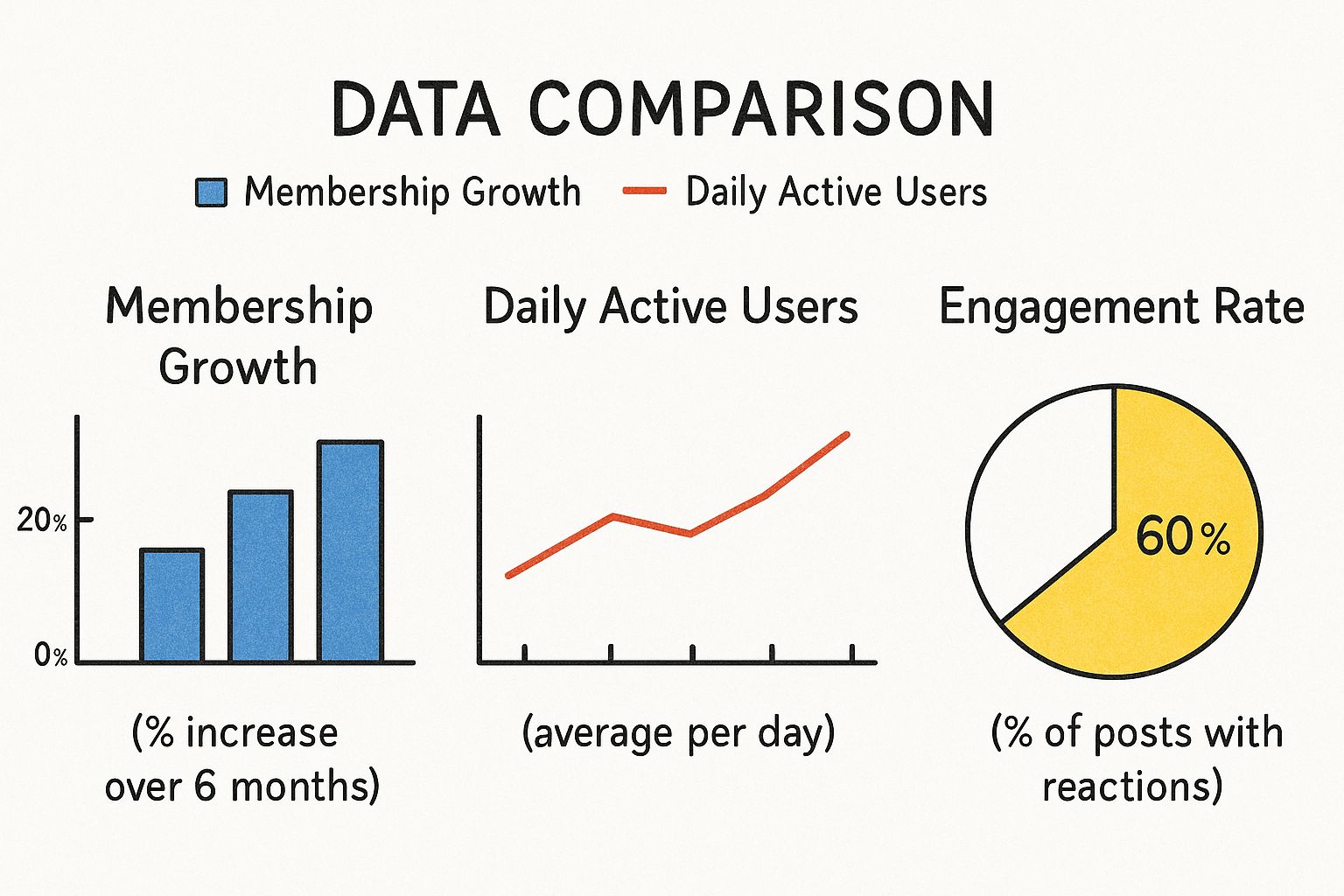
The data doesn't lie. A consistent, community-focused effort translates directly into deeper and more frequent interactions from your audience.
Pillar 2: Conversations That Matter
The second pillar is about shifting from talking at your audience to talking with them. A community simply can't exist without a two-way dialogue. Every comment, question, and direct message is a golden opportunity to strengthen a relationship. Your job isn't just to respond but to actively spark these conversations in the first place.
Start by asking open-ended questions in your posts. For example, instead of a flat statement like, "Our Fall Festival is on Saturday," try asking, "What's your family's favorite tradition at our annual Fall Festival?" That simple tweak turns a boring announcement into an invitation for people to share their own stories.
The goal is to make people feel heard and valued. Every reply, no matter how small, sends a clear message: "We see you, and we're listening."
Responding quickly and personally is non-negotiable. A timely, thoughtful answer to a parent's question builds more trust than any marketing slogan ever could. These small, consistent interactions are the very threads that weave your community together.
Pillar 3: Consistency That Builds Trust
Trust is the bedrock of any strong community, and in the online world, trust is earned through consistency. This third pillar is all about being reliable. Your community needs to know they can count on you to show up with a consistent voice, a predictable schedule, and a steady stream of valuable content.
This doesn't mean you have to post 10 times a day. It means finding a realistic posting rhythm you can actually stick with for the long haul. Maybe it's a "Teacher Tuesday" feature every week or a monthly newsletter recap. These predictable touchpoints create a sense of stability. And your brand voice should always be consistent—warm, supportive, and true to your school's core values.
Pillar 4: Celebration That Fosters Belonging
Finally, the fourth pillar is where you create the shared experiences and traditions that make people feel like they’re part of something special. Celebration is an incredibly powerful tool for fostering a sense of belonging. It’s about more than just holidays; it’s about creating unique online rituals just for your school.
Try establishing a few traditions that your community can look forward to and participate in.
- Weekly Spirit Shout-Outs: Dedicate a post each Friday to celebrate students or staff who showed exceptional school spirit.
- #ThrowbackThursday: Share nostalgic photos from the school archives to engage alumni and long-time families.
- Annual Digital Traditions: Create a unique hashtag campaign for graduation or the first day of school each year.
These shared rituals reinforce your school's identity and create a collective memory bank that strengthens community bonds.
To help bring these concepts together, here is a quick action plan based on the four pillars.
Community Building Pillars Action Plan
| Pillar | Objective | Example Tactic for Schools |
|---|---|---|
| Content | To share authentic stories that resonate emotionally. | Post a "Day in the Life" Instagram Story following a specific student or teacher. |
| Conversation | To encourage two-way dialogue and make followers feel heard. | Run a weekly "Ask the Principal" Q&A session in your Facebook comments section. |
| Consistency | To build trust by being a reliable and predictable presence. | Create a simple content calendar with recurring weekly themes, like "Motivation Monday." |
| Celebration | To foster a sense of belonging through shared rituals and traditions. | Launch an annual first-day-of-school photo contest using a unique school hashtag. |
By weaving these four pillars into your daily work, you’ll create a self-sustaining cycle of engagement where great content sparks meaningful conversations, consistency builds unshakable trust, and shared celebrations foster a deep sense of belonging for everyone.
If you're looking for more ideas on managing your school's online presence, check out this guide on effective school social media strategies.
Measuring Community Health Beyond Follower Counts
So, how can you tell if all your hard work building a community is actually paying off? It’s easy to get fixated on the follower count, but let’s be honest—that number can be a real vanity metric. It shows you how many people might see your posts, but it says absolutely nothing about whether they actually care.
Real community health is all about connection and conversation, not just eyeballs. If you want to prove the value of your school's social media efforts, you need to dig deeper than those surface-level stats. This is how you show the real return on investment that impacts everything from enrollment and retention to overall school spirit.
Moving from Reach to Relationship Metrics
To get a true feel for your community's pulse, you've got to shift your focus to the KPIs that measure actual interaction and feeling. These are the numbers that tell a much more interesting and meaningful story than a simple follower count ever could.
Think of these as the vital signs of a healthy school community:
- Engagement Rate: This is your bread and butter. It's the percentage of your audience that’s actually doing something with your content—liking, commenting, sharing. A high engagement rate is a clear signal that what you're posting is hitting the mark.
- User-Generated Content (UGC) Volume: How often are parents, students, and alumni tagging your school in their own photos and stories? This is the gold standard. It means people are so proud of their connection to your school that they're making it part of their own identity online.
- Community Sentiment: What's the general vibe of the conversations on your pages? Are the comments positive, supportive, and helpful? A quick sentiment check gives you a gut feeling for the emotional health of your community.
These are the indicators that show how connected people feel to your school. It's no secret that people are looking for connection online. With over 5.41 billion social media users globally as of July 2025—that's 65.7% of the world's population—the desire for community is stronger than ever. You can read more about the pervasive role of social media in our world to see just how big the opportunity is.
How to Track What Truly Matters
The good news is you don't need a fancy analytics suite to start measuring what matters. You can get powerful insights into your community's health with some simple, consistent tracking.
A healthy digital community doesn't just listen; it talks back. Measuring the quality and frequency of that conversation is the only way to know if you're building a monologue or a true dialogue.
Let's break down how to track these vital signs. You can start with a basic spreadsheet or just use the built-in analytics tools on platforms like Facebook and Instagram.
Here’s a simple game plan to get you started:
- Calculate Engagement Rate Weekly: For every post, tally up the likes, comments, and shares. Divide that total by your follower count and multiply by 100 to get your rate. Do this every week, and you'll start seeing what works and what doesn't.
- Monitor Your School's Mentions and Tags: Make it a weekly habit to search for your school's name, hashtags, and location tags. Keep a running tally of all the genuine, positive posts you find from your community. It’s a great motivator!
- Conduct a Monthly Sentiment Check: Once a month, take 30 minutes to scroll through the comments on your posts from the past month. Are they mostly positive, neutral, or negative? This qualitative check-in is priceless for understanding how your community is feeling.
By focusing on these relationship-driven metrics, you'll be able to confidently show how your social media work is building a strong, supportive, and truly engaged school family. For a deeper dive, check out our guide to effective community building strategies that really move the needle.
Your Blueprint for a Thriving Digital Campus

So far, we've walked through quite a bit. We've redefined social media and community as your school's new digital front lawn, figured out what your different audiences truly need, and laid out a playbook for picking the right platforms. We even built a solid foundation on the four essential pillars: connection, conversation, consistency, and celebration. Think of all this as your blueprint.
The big idea is simple but powerful: great social media isn't about collecting an audience; it’s about building a community. This means you have to stop just broadcasting announcements and start acting more like a digital community architect. The goal is to create an online space that's just as vibrant and supportive as your physical campus.
From Blueprint to Reality
Stepping into this new role is all about fostering real connections and celebrating shared experiences. It's the difference between having passive followers and cultivating active participants who feel genuinely seen, heard, and valued. When you get this right, the payoff goes way beyond a simple follower count.
You'll start to see it in tangible ways:
- Increased engagement from parents who finally feel plugged into their child's school life.
- A surge in school spirit when students and alumni begin sharing their own stories with pride.
- Stronger enrollment and retention because prospective families can feel your school's welcoming culture before they even step on campus.
This journey turns your social media channels from just another marketing task into the digital heart of your school—a place where relationships are built and a true sense of belonging is created.
This approach definitely takes dedication, but the reward is a thriving digital campus that reflects your school's unique culture and supports its mission. Building this kind of environment often involves looking at engagement from all angles, including learning from experts who understand the role of keynote speakers in educational conferences and other leadership strategies.
You now have the insights and the framework to build a vibrant, supportive community that lasts—one that extends far beyond your school's physical walls.
Frequently Asked Questions
It's natural to have questions when you're diving into social media for community building. Let's tackle some of the most common ones I hear from K-12 marketers, clearing up the confusion so you can focus on what matters: building a connected school family online.
How Much Time Should We Really Dedicate to Community Management?
This is the big one, isn't it? The answer is probably less about a huge time commitment and more about consistency. You're better off spending 30-60 minutes every single day on active management than a few hours just once a week.
That daily time block is purely for engagement—replying to comments, resharing parent posts, and just generally being present in the conversation. It’s separate from the time you'll spend actually creating and scheduling your own content.
Think of it this way: a small, consistent daily effort shows you're listening and that you care. That's how you build trust and strengthen the relationship between your social media and community. As you grow, you might need to scale that time up, but the daily habit is the foundation.
What Are the Biggest Mistakes Schools Make Online?
By far, the single biggest mistake is treating social media like a one-way megaphone. You see it all the time—schools just broadcasting announcements, ignoring the "social" part of social media entirely. They're talking at people, not with them.
The goal is to make people feel heard and valued. Every reply, no matter how small, sends a clear message: "We see you, and we're listening."
Beyond that fundamental error, a few other common pitfalls pop up:
- Ignoring comments and questions: This is the digital equivalent of turning your back on someone. It silently communicates that you don't value their input.
- Missing out on user-generated content: When a parent tags your school in a fantastic photo from the science fair, not acknowledging it is a huge missed opportunity to celebrate your community.
- Posting erratically: A chaotic schedule can make the school seem disorganized and unreliable.
Building a real community starts with a mindset shift. It’s about conversation, authenticity, and being responsive.
How Do We Encourage More User-Generated Content?
Getting your families to share their own photos and stories is the holy grail of an engaged community. The trick is to make it incredibly easy and rewarding for them to jump in.
Start by creating simple, branded hashtags for your big school events. Think #WildcatSpiritWeek or #PantherPride2025. Make them easy to remember and even easier to spell.
Then, you have to ask for it! A direct, friendly post like, "We'd love to see your first-day-of-school photos! Share them using #OurSchoolFirstDay," works wonders. It’s a clear and simple invitation.
But here’s the most important part: when someone shares content and tags your school, you absolutely have to feature it! A quick reshare to your Instagram Story or a shout-out in a weekly roundup post makes that person feel seen and celebrated. That public recognition is the single best motivator for getting others to participate next time, kicking off a fantastic cycle of engagement.
Ready to transform your school's online presence into a thriving digital community? At The MarCom Society, we provide K-12 marketing professionals with the expert guidance, practical resources, and supportive peer network you need to succeed. Join our exclusive community to access live workshops, expert presentations, and proven strategies that will elevate your school's communication and build lasting connections.









