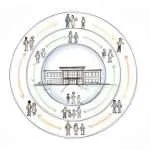
When it comes to social media and crisis communication, the real work happens long before you ever need it. For schools, this means laying a strong foundation—building resilient online channels and clear internal workflows—so that when a crisis hits, you're operating from a position of strength, not scrambling in a panic.
This groundwork ensures your social media accounts are already seen as trusted, reliable sources of information, which is exactly what your community will be looking for when things get chaotic.
Building Your Pre-Crisis Social Media Foundation
The best crisis response plans are the ones you've already practiced. Instead of fumbling to figure out who’s in charge or what to say, having a solid foundation allows your team to execute a plan that’s already been thought through and rehearsed. This proactive approach turns social media from a potential minefield into one of your most valuable communication tools.
A solid pre-crisis strategy really boils down to three things: a designated team, a clear policy, and a go-to library of message templates. Without these pieces in place, even the best intentions can fall apart under pressure, leading to mixed signals, rampant misinformation, and an erosion of the trust you’ve worked so hard to build.
Assembling Your Crisis Communication Team
First things first: you need to officially establish your crisis communication team and spell out exactly who does what. This can't be a one-person show. It requires a small, nimble group from different departments who can move fast. Deciding who posts updates or who has final say during an emergency is a recipe for disaster.
Here are the essential roles you'll want to define:
- Social Media Manager/Lead Communicator: This is your point person for drafting and publishing all social content. They're also on the front lines, monitoring the channels for questions and shutting down misinformation.
- Information Verifier/Fact-Checker: This role is often filled by someone in administration or a department head who can quickly confirm the facts. They are the critical link between the communications team and what's actually happening on the ground.
- Final Approver: Usually the Superintendent or another senior leader, this person gives the final go-ahead on all crisis-related messages. Their sign-off ensures everything is aligned with the district's official stance and any legal guidance.
By assigning these roles ahead of time, you create a clear chain of command. When an incident unfolds, everyone knows their job, which slashes your response time and prevents internal chaos.
Establishing a Clear Social Media Policy
Your social media policy is the bedrock of all your preparation. It creates clear, consistent guidelines for how your district and its employees should conduct themselves online, both on official school channels and their own personal accounts. This document is absolutely vital for managing risk and setting expectations for your entire community.
A well-crafted policy does more than just list rules. It empowers your staff by giving them clarity. It should cover everything from professional conduct and confidentiality to the specific protocol for sharing school news during an emergency.
Think of this policy as your guidepost. For example, it should make it crystal clear that during a crisis, official information will only be released through designated district or school accounts. This simple rule trains your community to look to you as the single source of truth, making it much easier to counter rumors spreading from parent groups or unofficial pages. If you're starting from scratch, you can learn more about crafting an effective social media policy for schools in our detailed guide.
Creating Pre-Approved Message Templates
The final piece of the puzzle is building a library of pre-approved message templates for different scenarios. While you can't predict every possible crisis, you can certainly anticipate the common ones.
Get a head start by developing templates for situations like:
- Weather-related closures or delays
- Power outages and other facility emergencies
- Health alerts, like a flu outbreak
- Unexpected bus delays
- Vague or unconfirmed threats where you need to communicate that you are aware and investigating
These aren't meant to be rigid, copy-and-paste scripts. Think of them as flexible starting points with placeholders for specific details like dates, times, and locations. Getting these drafted and signed off on by your leadership and legal teams ahead of time is a game-changer. It allows you to get a clear, accurate message out in minutes, not hours, which is absolutely crucial for controlling the narrative from the very beginning.
Activating Your Crisis Response in Real Time
When a crisis hits, the clock starts ticking—loudly. Those first few minutes are everything. They're your only chance to get ahead of the story, establish your school as the source of credible information, and cut off the wildfire of misinformation before it even starts.
This isn't about having all the answers right away. It's about acknowledging the situation, activating the plan you already built, and taking control of the narrative.
First things first: get your crisis communication team together. Whether it's a quick video call or an in-person huddle, this is your immediate priority. While one person is on the phone confirming details with administrators or first responders, someone else should already be pulling up your pre-approved message templates and adapting them to the current situation. This kind of swift, coordinated action is what prevents internal chaos and ensures your first public statement is both fast and accurate.
A solid real-time response doesn't just happen; it's the result of diligent preparation.

As you can see, a successful response rests on the foundation you’ve already laid: having the right people on your team, a clear policy to guide them, and templates ready to go.
Mastering Social Listening in the Moment
As your team works to gather the facts internally, you need to turn your attention outward. This is where social listening becomes your eyes and ears on the ground. You need to be actively monitoring your social channels for any mention of your school, specific keywords related to the event, and the general feeling of the community. Think of it as your real-time dashboard for understanding the public conversation as it evolves.
Doing this effectively helps you:
- Stamp Out Misinformation: You can spot and correct rumors before they gain traction. For instance, if a parents' Facebook group starts buzzing with incorrect reports that a lockdown is part of a larger community threat, you can quickly jump in to clarify the incident is isolated.
- Read the Room: Are people scared? Angry? Confused? Understanding the emotional state of your families and staff helps you craft messages that are more empathetic and actually connect with what they're feeling.
- Gauge the Situation's Reach: Is the conversation contained to one platform, or is it spilling over to local news sites and other forums? Knowing this helps you decide where to focus your energy.
In the heat of a crisis, managing the sheer volume of comments and questions can be overwhelming. This is where having strong social media and crisis communication protocols, sometimes supported by professional content moderation services, can be a lifesaver.
Establishing a Single Source of Truth
Controlling the information flow is non-negotiable. Your school's official social media accounts and website need to become the undisputed single source of truth. From your very first post, you must clearly and repeatedly direct everyone to follow your official channels for verified updates.
Why is this so urgent? Because someone else will always be first.
With 68% of American adults now getting news from social media, you can bet that parents will see a post from a neighbor before they see anything from you. That reality makes it absolutely critical to push out your initial, verified message as quickly as humanly possible to anchor the conversation in fact, not fear.
Your first message sets the tone. It needs to be empathetic, transparent, and authoritative. Acknowledge what's happening, state what you know for sure, and promise to share more information as soon as you have it.
This initial message is a critical piece of your overall strategy. By nailing these first steps, you aren’t just reacting—you are leading the conversation and setting the stage for everything that follows. For a deeper dive into what this looks like in practice, you can find more details here on building a comprehensive crisis communication plan.
Tailoring Your Message for Each Social Platform
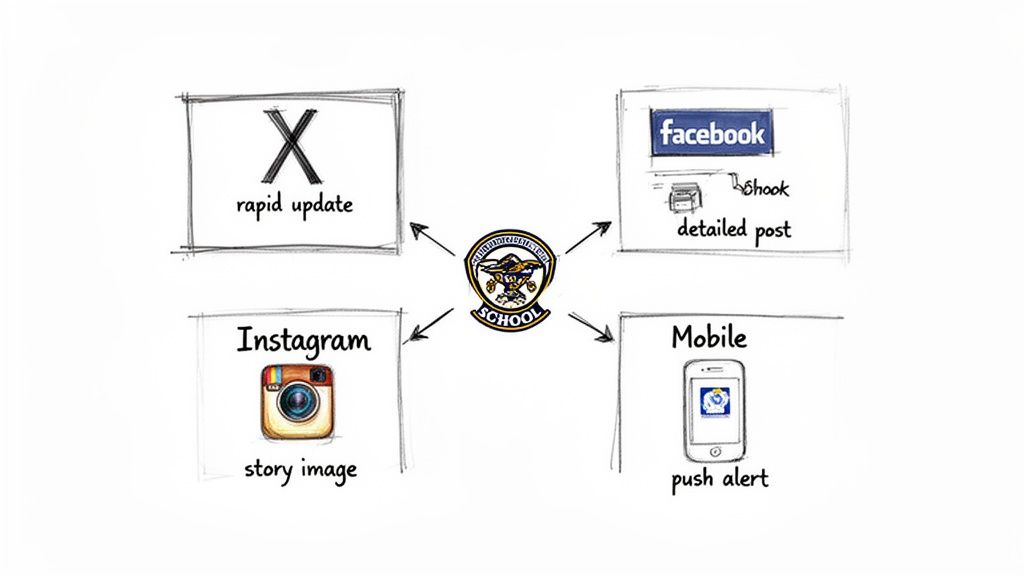
When a crisis hits, your first instinct might be to blast the same message everywhere. It feels fast, it feels efficient. But it’s one of the biggest mistakes a school can make.
Each social media platform is its own little world with a unique audience and its own rules of engagement. A one-size-fits-all message doesn't work. What lands perfectly on Facebook can feel tone-deaf and clunky on X. To get your message not just seen but actually heard and trusted, you have to speak the native language of each platform.
X for Speed and Factual Updates
Think of X (formerly Twitter) as your emergency news ticker. It’s all about speed and precision. This is your go-to for pushing out short, factual, and chronological updates as a situation unfolds. It’s not the place for long-winded explanations; it’s for getting the facts out fast.
For instance, during a school lockdown, your X feed should be a series of rapid, time-stamped updates:
- 9:15 AM: "Northwood High is in a precautionary lockdown due to a situation nearby. All students and staff are safe inside the building. We will update you as we have more information."
- 9:25 AM: "Law enforcement is on site and has secured the area. Please do not come to the campus at this time. We will let you know when it is safe."
- 9:30 AM: "We will provide our next update here in 15 minutes or sooner if new information is confirmed."
Your goal here isn't a deep emotional connection. It’s about being the single source of truth with clarity and authority. Always pin your most critical update to the top of your profile. This saves panicked parents from scrolling through a frantic timeline to find the one piece of information they desperately need.
Facebook for Community Dialogue and Depth
If X is for the quick jab, Facebook is for the deeper conversation. It’s where your community is already gathered. You have more room to provide context, answer nuanced questions, and, most importantly, show you’re listening.
It's tempting to turn off comments on Facebook posts during a crisis to avoid negativity. Resist this urge. Leaving comments on—with active moderation—shows you aren't hiding. It also gives you a critical opportunity to correct misinformation right at the source, before it spirals out of control.
After a water main break closes school, for example, your Facebook post can go far beyond a simple alert. You can share repair timelines, explain what this means for after-school activities, and create a space for parents to ask about busing or rescheduled events. It’s also the perfect platform for a Facebook Live broadcast from the superintendent to add a reassuring human face to your response.
Instagram for Visuals and Reassurance
Instagram, especially Stories, is a powerful tool for visual communication. A polished grid post can feel out of place in an emergency, but the raw, ephemeral nature of Stories feels immediate and authentic.
Here’s how you can use Instagram Stories effectively:
- Quick Check-Ins: A simple text graphic saying, "All students at Elm Street Elementary are safe. Check our website for the latest official update," can be incredibly calming.
- Direct Traffic: The "link sticker" is your best friend. Use it to send people directly to the emergency alert page on your district website.
- Show, Don't Just Tell: Once it’s safe, a quick video clip of the maintenance crew working on a power outage shows you're actively managing the situation.
This visual-first approach cuts through the noise. It gives people a fast, scannable way to understand what's happening and where to find more details. It's less about data and all about reassurance. Understanding these platform nuances is a core crisis management skill, and a big part of choosing the right social media platform is knowing its role when the pressure is on.
Platform-Specific Crisis Communication Tactics
Each channel has a specific job to do when things go wrong. Thinking about them strategically beforehand prevents you from fumbling when every second counts.
| Platform | Primary Use Case in a Crisis | Best Content Format | Pro Tip |
|---|---|---|---|
| X | Immediate, factual, time-stamped updates. The "official record" of events as they happen. | Short text posts, threads for evolving situations, links to official statements. | Use a pinned post to keep the most current, verified information at the top of your feed. |
| In-depth information, community Q&A, and empathetic, two-way communication. | Longer text posts, links to resources, Facebook Live videos from leadership. | Actively monitor and respond to comments to control the narrative and correct rumors. | |
| Visual reassurance and directing traffic to more detailed information sources. | Instagram Stories with text overlays and link stickers, short "behind-the-scenes" video clips (when appropriate). | Focus on authenticity over polish. Stories feel more immediate and genuine during an emergency. |
Ultimately, your strategy must be multi-platform because your community is not in one place. In North America, Facebook is still king with 46.05% of users, but you can’t ignore the significant audiences on X (12%) and Instagram (11.4%). A single-channel approach is a recipe for failure, especially when you consider how fast misinformation can travel.
Recent research has shown that videos with fake news themes can generate massive engagement during a crisis, meaning rumors can easily outrun the truth if you aren't actively communicating on multiple fronts.
Crafting Messages That Build Community Trust
When a crisis hits, the words you choose can either pull your community together or tear it apart. Your families and staff aren't just looking for a data dump; they're looking for leadership. They need reassurance and a steady hand in a chaotic moment. This is where your message isn't just a post—it’s a lifeline.
Every single update you publish has to be intentional. You're constantly walking a tightrope between being transparent and protecting student privacy, between providing facts and preventing panic. Get it right, and your school becomes the calm, credible voice everyone tunes into. Get it wrong, and you’ll quickly find yourself battling rumors and fear.
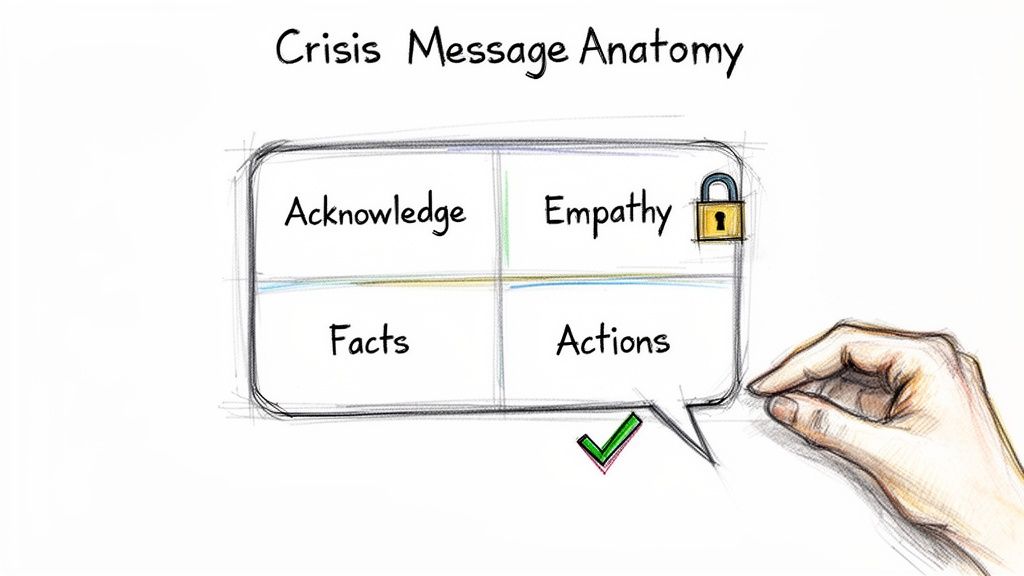
The Four Pillars of an Effective Crisis Message
I've found that every solid crisis message, whether it's for a snow day or something more serious, rests on four key pillars. If you miss one, the whole message feels off—it can come across as cold, confusing, or incomplete. Thinking about these pillars ahead of time is also one of the most powerful community building strategies you can employ, because it trains your community to see you as a reliable source.
Let's break them down:
- Acknowledge: Jump right in and state what you know. No vague intros. "We are aware of a power outage at Northwood Elementary" is much better than "An incident has been reported."
- Empathize: Show you're human. Acknowledge the worry and uncertainty. Simple phrases like, "We know this is unsettling for families," or "The safety of our students is our absolute top priority," go a long way.
- Inform with Facts: This is the golden rule: share only what you can 100% confirm. It is always better to say, "We are still gathering details," than to share something you might have to retract later. Corrections erode trust.
- Outline Actions: Tell people what's happening next and what they need to do (or not do). This gives them a sense of control. "Buses will be delayed by 30 minutes," or "Please do not come to the campus at this time."
When you consistently structure your messages this way, you create a familiar, calming rhythm that your community learns to trust.
Sample Posts for Different Scenarios
Seeing is believing. Here’s how these four pillars come together in common situations you might face.
Scenario 1: Low-Severity Bus Delay
We are aware of a significant traffic delay affecting the Route 7 bus this afternoon. We understand this is an inconvenience for families waiting at the bus stop. All students on board are safe. The bus is expected to be approximately 20 minutes behind schedule. We will post another update here if the situation changes.
Scenario 2: Mid-Severity Weather Closure
Due to forecasted icy conditions, all schools in the district will be closed tomorrow, January 15. We know that sudden closures create challenges for families, and we appreciate your understanding as we prioritize student and staff safety. All after-school activities for today are also canceled. Please stay safe and warm.
Scenario 3: High-Severity Safety Incident
Northwood High School is currently in a precautionary lockdown due to a police matter in the nearby community. All students and staff are safe inside the building. We understand this news is alarming. Law enforcement is on site and has confirmed the situation is contained. We will provide our next update in 20 minutes. Please do not call or come to the school.
Navigating Privacy and Legal Boundaries
Here’s where things get tricky. Balancing the public's desire for information with your legal and ethical duties to protect student privacy is one of the toughest parts of the job. The Family Educational Rights and Privacy Act (FERPA) isn't just a suggestion; it’s the law.
Key Takeaway: You can almost never share personally identifiable information about a student involved in a crisis—even if their name is already all over social media. This includes their name, grade, health status, or any disciplinary action.
So, how do you communicate what happened without violating privacy? Focus on the operational response, not the personal details.
- Don't say: "A student had a medical emergency in the gym."
- Do say: "Emergency medical services responded to an incident at our school. The situation is resolved, and the school day is continuing normally."
This approach reassures the community that an event was handled properly without ever crossing a line. When in doubt, always run it by your district’s legal counsel. This is exactly why having pre-vetted message templates is a non-negotiable part of your playbook.
Navigating the Post-Crisis Recovery Phase
Once the immediate threat is gone and the constant stream of real-time updates slows to a trickle, it's tempting to just breathe a sigh of relief and get back to business as usual. But the truth is, what you do after the crisis is just as important—if not more so—than what you did during it.
This post-crisis period is your chance to learn, rebuild, and strengthen the trust you have with your community. The work isn't over just because the emergency is. This is where you demonstrate long-term accountability and show you’re committed to recovery, turning a tough situation into an opportunity to prove your school's resilience.
Time for an After-Action Review
Before you can truly move on, you have to look back with a critical eye. An after-action review, or AAR, isn't about pointing fingers. It's a frank, honest conversation about what went right, what went wrong, and why. This needs to happen while the details are still fresh for everyone involved.
Get your crisis communication team in a room and start dissecting your social media performance. You need to ask some tough but practical questions to figure out how to do better next time.
Here are a few areas to dig into:
- Message Impact: Which posts really resonated with your audience (think shares, supportive comments)? Which ones fell flat? Try to figure out why. Was it the tone? The timing? The information itself?
- Platform Performance: Did your community flock to Facebook for updates, or was X (formerly Twitter) the go-to? Maybe Instagram Stories were the most effective way to point people to your official website. You need to know which channels worked best for which messages.
- Fighting Misinformation: Where did rumors pop up? How fast were you at spotting and correcting them? This will show you where the gaps are in your social media monitoring.
- Internal Workflow: Did your approval process cause delays? Were there bottlenecks getting information from the source to the social media manager? A smooth internal process is the secret to a fast external response.
A huge mistake I see schools make is getting hung up on vanity metrics. Follower counts don't tell the whole story. The real gold is in the quality of the engagement. A post with only a few dozen likes but tons of supportive comments from parents is infinitely more valuable than a viral post that just created more confusion.
Getting into these details gives you actionable intelligence. You might learn, for instance, that your families respond best to short video updates from the principal, or that a specific parents' group on Facebook needs a more direct line of communication during an emergency.
Analyzing the Right Social Media Metrics
Your social media analytics are a treasure trove of information, but only if you know what to look for. Think about the August 2023 Maui wildfire crisis. The data showed that videos addressing the impact on tourism and relief efforts got massive engagement because people were desperate for useful information and signs of an organized response.
Metrics like likes, shares, comments, and click-through rates tell you exactly which messages are hitting the mark and on which platforms. For school communicators, this means the same message posted to X and Facebook can have wildly different results. You can dig deeper into these crisis communication findings on PMC to see how the data breaks down.
Keeping the Conversation Going
Don't let your social media go dark once the crisis is "over." The follow-up is absolutely essential for showing your community that you're still there for them. This is how you close the loop and prove you’re transparent and committed to recovery.
Your post-crisis content plan should absolutely include:
- Saying Thank You: It’s simple, but a heartfelt post thanking first responders, staff, and your community for their cooperation goes a long way. It builds incredible goodwill.
- Sharing Support Resources: Make it easy for people to find help. Post clear, accessible links to school counseling services, mental health hotlines, or other community support organizations.
- Posting Recovery Updates: If the crisis caused physical damage or changed how the school operates, use your channels to share progress on repairs, new safety protocols, or timelines for getting back to normal. This demonstrates accountability and keeps everyone in the loop.
Continuing this dialogue cements your role as a trusted source of information. It helps shift the narrative from crisis to recovery, rebuilding the community trust that is the bedrock of any successful school.
Common Questions About School Crisis Communication
Even the most buttoned-up crisis playbook has its limits. When a real crisis hits your school, it’s the tough, in-the-moment questions that trip you up. There's often no simple black-and-white answer, just a lot of gray.
Let's walk through some of the most common and challenging questions that communicators like you face in the heat of the moment, from navigating a firestorm of angry comments to deciding whether "going live" is a good idea.
How Should We Handle Negative or Hostile Comments?
When the comments section gets ugly, the instinct is to either shut them down or delete everything. It feels like the quickest way to regain control. But that move almost always backfires. It can look like you’re hiding something, which only pours fuel on the fire of mistrust and speculation.
The better approach is to moderate, not censor. You want to show you're listening without getting dragged into a shouting match.
- For genuine questions: Answer them publicly with facts. Point people back to your official sources. For example: "We understand your concern. For the most current information on reunification, please check the alert on our district website."
- For false or hostile claims: Don’t ignore them. Correct the record calmly and without emotion. Something like: "The information in this comment is inaccurate. All students are safe inside the building, and the lockdown is precautionary."
- For threats or truly inappropriate content: These are the exceptions. Hide or delete them immediately. They violate the platform's rules and do nothing but derail the conversation.
Your goal isn't to win an argument online. It's to own the narrative by being the most credible, responsive, and reliable voice out there. Keeping comments on—and actively managing them—demonstrates transparency and shows you're confident in your response.
When Is It Appropriate to Use Facebook or Instagram Live?
Live video is a powerful tool. It can cut through the noise and show real leadership and humanity in a way a written statement can't. But it's also high-risk. There are no do-overs.
Think of live video as a tool to be used sparingly and with a ton of strategic thought. It’s most effective when:
- You need to convey deep empathy and reassurance. After a traumatic event, a superintendent speaking directly to the community can be incredibly calming. A pre-recorded video just doesn't have the same impact.
- You are in the recovery phase, not the active crisis. A live Q&A or press conference after the situation is stable and you have confirmed facts can be a great way to rebuild trust.
Whatever you do, avoid going live during the chaotic, initial hours of a crisis. The risk of sharing bad information or getting stumped by a question you can't answer is just too high. When things are moving fast, a carefully crafted and approved post is always the safer, smarter play.
How Do We Keep Staff from Sharing Unofficial Information?
This is one of the toughest parts of managing social media and crisis communication. You have dozens, maybe hundreds, of well-meaning staff members who want to help or share what they know. The problem is, their unofficial updates can spread misinformation like wildfire, creating chaos and confusion.
Your pre-crisis work is what saves you here. Your social media policy needs to be crystal clear: during an emergency, all official communication comes only from designated district or school accounts. No exceptions.
This isn't a "set it and forget it" policy. It needs to be reinforced with regular training. The moment a crisis begins, your first internal action should be an all-staff email. Remind everyone of the policy and ask them to help by sharing only the official posts from the district's channels.
At The MarCom Society, we help K-12 communication professionals tackle challenges just like these. We provide the resources, expert guidance, and peer support you need to build and stress-test a crisis communication plan that actually works when it matters most. Join our community of school marketing leaders today.