
Level Up Your School's Social Media Game
Want to boost your school's online presence and build a stronger community? This list provides eight actionable social media ideas to engage students, parents, and alumni. Learn how to showcase classroom successes, empower student voices, connect with parents, and strengthen alumni ties through initiatives like student takeovers, community hashtags, and principal features. These strategies will enhance communication and foster a thriving online community. Consider joining The MarCom Society for more K-12 communication strategies.
1. Student Takeover Days
Student Takeover Days offer a dynamic approach to school social media management by placing the reins in the hands of students. This strategy involves giving students controlled access to the school's official social media accounts for designated days or events. Students are empowered to create content, share their unique perspectives on school life, and develop crucial digital citizenship skills, all while infusing school communications with an authentic student voice. This approach transforms social media from a platform managed by the school to a platform managed for students, by students.

This method fosters a sense of ownership and responsibility among students, providing them with practical experience in content creation, social media management, and online communication. Student Takeover Days are implemented through a structured approach featuring supervised student management of official accounts, a scheduled rotation among different student groups or classes (e.g., student council, journalism club, photography club), and clear guidelines and oversight from staff members. This initiative can also be integrated into the curriculum, connecting with media studies, journalism, or communication classes.
Several schools have successfully implemented Student Takeover Days. Minnetonka Public Schools in Minnesota utilizes a rotating student social media team that covers sporting events and other school activities. The American School in London has a digital ambassador program where students create Instagram stories for special events. Similarly, the Eanes Independent School District leverages student journalists to report on district events and activities. You can Learn more about Student Takeover Days and find other examples of implementation.
Why use this approach? Student Takeover Days breathe fresh air into school communications, offering an authentic glimpse into student life. This strategy increases student engagement with school activities and strengthens their connection to the school community. Furthermore, it provides valuable opportunities for students to develop essential 21st-century skills.
Features and Benefits:
- Supervised student management: Ensures responsible use of school accounts.
- Rotating schedules: Provides opportunities for diverse student voices.
- Cross-curricular integration: Enhances learning in relevant subjects.
- Authentic content: Resonates with the student body and parent community.
- Skill development: Builds digital literacy, communication, and teamwork skills.
- Showcases school culture: Offers a genuine perspective on school life.
Pros:
- Builds student digital literacy and communication skills.
- Creates authentic content that resonates with peers.
- Increases student engagement with school activities.
- Showcases school culture from a student perspective.
- Teaches responsible social media usage.
Cons:
- Requires careful supervision and planning.
- Potential for mistakes or inappropriate content.
- May require parent permission forms.
- Needs clear guidelines and training for students.
Tips for Implementation:
- Create a thorough application process: Select responsible and enthusiastic students.
- Develop a content calendar and approval workflow: Maintain organization and control.
- Hold training sessions on social media best practices: Equip students with the necessary skills.
- Consider having students work in teams with different roles: Foster collaboration and specialized skill development (e.g., photographer, writer, editor).
- Review content before it goes live but preserve student voice: Maintain quality control while ensuring authenticity.
Student Takeover Days deserve a prominent place on this list due to their multifaceted benefits for both students and schools. This innovative approach empowers students, strengthens school communities, and provides valuable learning experiences, all while enhancing the authenticity and reach of school communications. This strategy is particularly valuable for schools with strong journalism programs, districts with digital citizenship initiatives, and any institution looking to empower their student body through meaningful digital engagement. Educational technology pioneer Eric Sheninger has also been a proponent of this type of student empowerment.
2. Classroom Showcase Series
A Classroom Showcase Series is a structured approach to social media content that offers a window into the daily learning experiences within a school. It highlights innovative teaching practices, special projects, and engaging classroom activities happening across different grade levels and departments. This series fosters transparency about educational methods, celebrates the creativity of teachers, and showcases student achievements in core academic areas. By sharing authentic glimpses of classroom life, schools can effectively communicate their educational values and build stronger connections with their community.

This approach deserves a place on this list because it's a powerful way to demonstrate educational excellence and build trust with the community. It moves beyond general announcements and offers tangible evidence of student learning and teacher effectiveness. The series features a mix of photos, videos, and text-based content, often including perspectives from both students and teachers. By focusing on curriculum connections and learning outcomes, the series demonstrates the value and impact of the school's educational programs.
Examples of Successful Implementation:
- Singapore American School's 'Learning Journey' series on Facebook: This series showcases student learning experiences across different subjects and grade levels, highlighting the school's inquiry-based approach to education.
- Avon Grove School District's #AGInnovates hashtag campaign: This campaign encourages teachers and students to share examples of innovative teaching and learning using a dedicated hashtag, creating a vibrant online community around educational excellence.
- Kent School District's 'Classroom Spotlight' series on multiple platforms: This series features regular spotlights on different classrooms and departments, sharing in-depth stories about specific projects, teaching methods, and student achievements.
Actionable Tips for Implementation:
- Create a simple submission form: Make it easy for teachers to request coverage for their classroom activities.
- Develop a balanced schedule: Ensure representation across different grade levels and subject areas.
- Train a designated photographer/videographer: Maintain consistent quality in visual content.
- Connect content to school-wide learning goals and mission: Reinforce key educational values and priorities.
- Consider creating templates for consistent presentation: Streamline the content creation process.
When and Why to Use This Approach:
This approach is particularly effective for:
- Demonstrating educational excellence: Showcase innovative teaching practices and student achievements to the wider community.
- Building transparency and trust: Offer parents and community members insights into what happens in classrooms.
- Celebrating teacher creativity and innovation: Recognize and appreciate the efforts of dedicated educators.
- Boosting school pride: Foster a sense of community around academic achievements.
Pros:
- Showcases educational excellence to the community
- Provides transparency into classroom practices
- Helps parents understand teaching methods
- Celebrates teacher creativity and innovation
- Builds school pride around academic achievements
Cons:
- Requires coordination across multiple classrooms
- Some teachers may be reluctant to participate
- Needs consistent quality and commitment
- Requires photo/video permissions for students
Popularized By:
- Education influencer and author George Couros
- International Schools Social Media Conference
- National School Public Relations Association
3. Parent Education Campaign
A Parent Education Campaign is a strategic social media initiative designed to empower parents with the knowledge and resources they need to support their children's learning journey effectively. It positions the school as a collaborative partner invested in the holistic development of each student, extending beyond the classroom walls and into the home environment. This approach builds stronger school-home connections and fosters a sense of shared responsibility for student success. It works by delivering valuable, relevant, and timely information to parents through a variety of engaging formats.
A Parent Education Campaign typically features a series of regular tips, articles, and downloadable resources curated specifically for parents. It often includes expert insights from school counselors, teachers, and administrators, lending credibility and authority to the content. Critically, a successful campaign is responsive to parent questions and concerns, fostering a two-way dialogue and ensuring the content resonates with the target audience. To maximize engagement, campaigns utilize a diverse mix of formats, including live Q&A sessions, visually appealing infographics, and short, informative videos.
Several schools have successfully implemented parent education campaigns. Highline Public Schools' 'Parent University' offers a robust example, while Bellevue School District's 'Learning at Home' series provided crucial support during remote instruction. Austin ISD demonstrates best practices with its bilingual parent support content delivered across multiple platforms. These examples illustrate the diverse ways schools can tailor their campaigns to meet the unique needs of their communities. Learn more about Parent Education Campaign to explore further examples and best practices.
Actionable Tips for Implementing a Successful Campaign:
- Survey Parents: Begin by understanding parent needs. Conduct surveys to identify the topics they are most interested in learning about.
- Content Calendar: Develop a content calendar aligned with the school year, incorporating relevant milestones and events.
- Involve Specialists: Engage school counselors, learning specialists, and other relevant professionals in content creation.
- Keep it Concise: Deliver information in short, specific, and actionable segments.
- Downloadable Resources: Provide downloadable resources, such as checklists, tip sheets, and activity guides, whenever appropriate.
When and Why to Use This Approach:
A Parent Education Campaign is particularly valuable for:
- Strengthening School-Home Partnerships: Facilitates open communication and shared understanding between parents and educators.
- Providing Valuable Service to Parents: Equips parents with the tools and information they need to support their children effectively.
- Positioning School as a Thought Leader: Showcases the school's expertise and commitment to educational excellence.
- Addressing Misconceptions: Provides a platform to clarify school policies, procedures, and educational approaches.
- Building Community: Fosters a sense of shared values and goals among parents and educators.
Pros:
- Strengthens school-home partnership
- Provides valuable service to parents
- Positions school as a thought leader in education
- Can address common misconceptions or concerns
- Builds community around shared educational values
Cons:
- Requires significant content creation resources
- Must be carefully reviewed for accuracy
- May face criticism if advice conflicts with home practices
- Needs consistent quality and commitment
This item deserves a place on the list because it represents a proactive and impactful approach to school communication. By investing in parent education, schools can cultivate stronger relationships with families, enhance student learning outcomes, and build a more supportive and engaged school community.
4. Community Hashtag Campaigns
Community hashtag campaigns offer a powerful way to connect your school community, amplify school spirit, and build a stronger brand presence online. These campaigns leverage the viral nature of social media by creating a central hub, a specific hashtag, around which students, staff, parents, and even alumni can share their experiences and perspectives. This generates user-created content, showcasing the vibrancy and diversity of your school in an authentic way that official channels often can't replicate. By encouraging everyone to participate using a common hashtag, you can weave together individual stories into a coherent narrative around school activities, achievements, or core values.
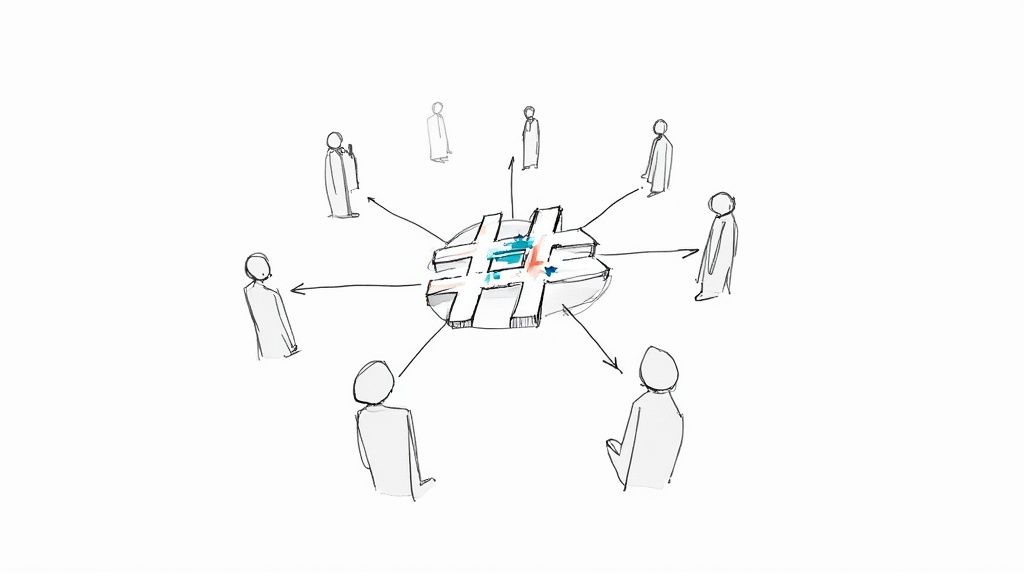
Campaigns can be designed around a variety of themes, from celebrating the first day of school (like Lake Washington School District's #LWSD1stDay) to highlighting student success stories (like Fairfax County Public Schools' #FCPSSuccess) or simply showcasing school pride (like Blue Valley Schools' #BVPride). These hashtags serve as digital gathering places, allowing you to aggregate content across various platforms like Twitter, Instagram, and Facebook. Learn more about Community Hashtag Campaigns and explore how other institutions have implemented them. Features of a successful campaign include custom school-specific hashtags, community-wide participation, content aggregation, regular highlighting of submissions, and connection to school values, mascots, or traditions.
This approach is particularly effective for boosting community engagement and building a sense of shared identity. It extends your reach far beyond your official social media accounts, as each community member becomes a brand ambassador, sharing their unique perspective with their own networks. The organic reach offered by user-generated content is invaluable for increasing visibility and building genuine connections.
Pros:
- Creates user-generated content at scale
- Builds community engagement and identity
- Extends reach beyond official accounts
- Provides authentic perspective diversity
- Easy for community members to participate
Cons:
- Difficult to moderate all content under the chosen hashtags
- May require significant promotion to gain traction
- Can lose momentum without regular reinforcement
- Potential for hashtag hijacking or misuse
Tips for Success:
- Keep hashtags short, memorable, and specific to your school: This ensures easy recall and reduces the chance of confusion with other campaigns.
- Launch campaigns with a clear purpose and timeframe: Define the goals and duration of the campaign to maintain focus and measure effectiveness.
- Feature community submissions regularly on official accounts: This encourages further participation and demonstrates appreciation for contributions.
- Create digital and physical reminders about current hashtags: Utilize website banners, email newsletters, posters, and announcements to keep the campaign top-of-mind.
- Prepare contingency plans for inappropriate content: Establish clear guidelines and moderation protocols to address potentially harmful or offensive posts.
Community hashtag campaigns deserve a place on this list because they provide a cost-effective and engaging way to harness the collective power of your school community. By fostering a sense of belonging and shared purpose, these campaigns can significantly strengthen your school's online presence and enhance its brand reputation. This strategy is particularly beneficial for district communications professionals, school spirit and athletics programs, and student leadership organizations looking to amplify their message and connect with a broader audience.
5. Alumni Spotlight Series
An Alumni Spotlight Series is a powerful content strategy that showcases the long-term impact of a school's education by highlighting the achievements and journeys of its graduates. This series not only inspires current students by providing real-world role models but also strengthens connections with past graduates, fostering a vibrant intergenerational community and showcasing the school's legacy. By featuring diverse alumni stories, schools can demonstrate the breadth of opportunities available to their students and reinforce the value of their educational experience.
How it Works:
The core of this strategy involves regularly profiling alumni across different graduating classes and career paths. These profiles can take various forms, including written interviews, blog posts, social media features, and video testimonials. The focus should be on narrating the individual's journey after leaving school, connecting their successes to the foundation they received during their time as a student. Highlighting both professional accomplishments and personal growth adds depth and relatability to the stories.
Examples of Successful Implementation:
- Phillips Exeter Academy's #ExeterAlumni series: This ongoing campaign features graduates from various decades, highlighting their diverse achievements and contributions to society. It offers a glimpse into the long-term impact of an Exeter education.
- Houston ISD's 'Where Are They Now?' alumni videos: These engaging videos catch up with former students, showcasing their current careers and how their time at Houston ISD shaped their paths. The video format adds a personal touch, making the stories more compelling.
- Shaker Heights Schools' Alumni Hall of Fame social media campaign: This campaign recognizes outstanding alumni achievements, celebrating their contributions and inspiring current students to strive for excellence. It leverages social media to reach a wider audience and build community pride.
Actionable Tips for Implementation:
- Create simple submission forms for alumni stories: Streamline the process for alumni to share their experiences by providing easy-to-use submission forms.
- Balance representation across different eras and fields: Ensure diverse representation by featuring graduates from various graduating years and showcasing a variety of career paths and life choices.
- Connect alumni profiles to current school initiatives when possible: Link alumni stories to current school programs or values to demonstrate the ongoing relevance of the education provided.
- Include alumni contact information or ways to connect (with permission): Facilitate networking and mentorship opportunities by providing ways for current students or other alumni to connect with those featured (always with the alumnus's consent).
- Consider video interviews for compelling personal stories: Video interviews add a dynamic and engaging element to alumni spotlights, allowing viewers to connect with the individuals on a deeper level.
Why This Strategy Deserves Its Place in the List:
The Alumni Spotlight Series is a valuable addition to any school's social media strategy due to its multifaceted benefits. It demonstrates the long-term value of the education provided, inspires current students with real-world success stories, and strengthens the alumni network, fostering valuable connections and potential opportunities for fundraising and volunteer recruitment.
Pros and Cons:
Pros:
- Demonstrates long-term value of school education
- Creates role models for current students
- Strengthens alumni network and engagement
- Showcases diversity of successful pathways
- Potential fundraising and volunteer recruitment tool
Cons:
- Requires maintaining an alumni database and active connections
- Takes effort to ensure diverse representation
- May be challenging for newer schools with a smaller alumni base
- Needs a consistent content pipeline for regular updates
When and Why to Use This Approach:
This approach is ideal for schools looking to build stronger community ties, showcase the impact of their educational programs, and inspire current students. It's particularly effective for schools with established alumni networks and a history of successful graduates. Even newer schools can benefit by beginning to cultivate their alumni network early and highlighting the achievements of their first graduating classes. This builds a foundation for future growth and strengthens the sense of community from the outset.
6. Principal/Administrator Social Media Presence
A strong social media presence from school principals and administrators can be a powerful tool for building community, fostering trust, and showcasing the positive aspects of school life. This strategy involves school leaders maintaining active and professional social media accounts specifically tied to their educational roles. Through these platforms, they can share insights into education, celebrate student and staff accomplishments, and communicate transparently about school matters. This humanizes leadership, making them more approachable and accessible to students, parents, and the wider community.
How it Works:
The core of this approach is regular, authentic content coming directly from school leaders. This might include behind-the-scenes glimpses of school operations, photos and videos of student projects, announcements of school events, or thoughtful commentary on educational topics. The communication style should be professional yet personable, fostering a sense of connection with the audience. Timely updates during important situations, such as school closures or significant achievements, also become readily shareable, ensuring quick and efficient communication.
Examples of Successful Implementation:
- Principal Gerry Brooks: Known for his humorous and relatable commentary on Facebook, Principal Brooks connects with educators and parents nationwide, offering a lighthearted take on the everyday realities of school life.
- Superintendent Dr. Joe Sanfelippo: His #GoCrickets campaign for Fall Creek School District fostered community engagement and school spirit through a simple, unifying hashtag.
- Principal Salome Thomas-EL: His Twitter account shines a spotlight on urban education success stories, inspiring educators and advocating for positive change.
Tips for Effective Implementation:
- Establish Clear Boundaries: Maintain separate personal and professional social media accounts to avoid blurring the lines between private life and public role.
- Create a Content Calendar: Plan posts in advance with a manageable frequency to avoid feeling overwhelmed. A content calendar helps maintain consistency and ensures a variety of topics.
- Authenticity and Privacy: Share genuine moments that reflect the school's culture and values, while being mindful of student and staff privacy.
- Focus on Celebrating Others: Highlight student and staff achievements, showcasing their talents and contributions to the school community. Avoid self-promotion.
- Address Concerns Promptly and Thoughtfully: Be prepared to respond to questions and address concerns in a timely and professional manner.
When and Why to Use This Approach:
This strategy is particularly valuable in today's digital age, where information spreads rapidly and community engagement is crucial. It's especially beneficial for:
- Building trust and transparency: Direct communication from leadership fosters open dialogue and demonstrates accountability.
- Sharing time-sensitive information: Social media allows for rapid dissemination of important updates, reaching a wide audience instantly.
- Humanizing school leadership: By sharing their perspectives and experiences, administrators become relatable figures, fostering stronger connections with the community.
- Modeling digital citizenship: School leaders can demonstrate responsible and ethical social media use for students.
Pros:
- Puts a human face on school leadership
- Creates a direct, unfiltered communication channel
- Builds trust through transparency and accessibility
- Allows quick sharing of time-sensitive information
- Models digital citizenship for students
Cons:
- Requires a significant time commitment from busy administrators
- Blurs personal/professional boundaries
- Risk of misstatements or controversies
- Potential for uneven quality across the leadership team
- May create an expectation of 24/7 availability
Popularized By:
- Principal and author Jimmy Casas
- Educational leadership expert Eric Sheninger
- Connected Principals blog network
This strategy deserves a place on this list because it offers a direct and powerful way for school leaders to connect with their communities in the digital age. By using social media effectively, administrators can build trust, celebrate successes, and foster a stronger sense of belonging within the school environment.
7. Cross-Platform Content Strategy
A cross-platform content strategy is a comprehensive approach to social media that acknowledges different stakeholders engage with varying platforms and prefer different content formats. Instead of a one-size-fits-all approach, it involves tailoring content to the unique strengths and audiences of each social media platform while maintaining a consistent overall message. This allows schools to maximize their reach and engage their entire community more effectively.

Creating a cohesive online presence involves strategic planning across various platforms. For schools, this means aligning messaging and content across platforms like Instagram, Facebook, and Twitter. To effectively grow your school's social media presence, consider developing a comprehensive strategy that encompasses all your chosen platforms. More information on developing a comprehensive strategy can be found in this guide on social media growth strategies. This approach goes beyond simply replicating the same post across all channels; it involves thoughtful repurposing and adaptation. For example, a long-form blog post about a new school initiative could be condensed into a series of tweets, turned into an infographic for Instagram, and become the basis for a discussion thread on Facebook.
This strategy deserves a spot on this list due to its effectiveness in reaching diverse stakeholder groups where they are most active. By leveraging the unique features of each platform – like Instagram's visual storytelling capabilities, Twitter's real-time updates, and Facebook's community-building tools – schools can connect with students, parents, staff, alumni, and the wider community in more meaningful ways.
Features of a Cross-Platform Content Strategy:
- Platform-Specific Content: Content is tailored to the demographics and preferences of each platform's audience.
- Coordinated Messaging: Core messages remain consistent across all platforms, even if the delivery format varies.
- Strategic Posting Schedules: Posting times are optimized based on peak usage times for each platform.
- Content Repurposing: Existing content is modified and adapted to suit different platforms.
- Integrated Measurement: Performance is tracked across all platforms to assess overall impact and refine the strategy.
Pros:
- Reaches diverse stakeholder groups where they are most active online.
- Leverages the unique features and strengths of each platform.
- Allows for more efficient use of content creation resources.
- Increases total community engagement and strengthens relationships.
- Provides backup communication channels in case of emergencies.
Cons:
- Requires a thorough understanding of multiple platform algorithms and best practices.
- More complex to manage and measure compared to a single-platform approach.
- May require multiple staff members with different expertise.
- Carries a risk of messaging inconsistency if not carefully managed.
Examples of Successful Implementation:
- Denver Public Schools: Uses a coordinated approach across Twitter (quick updates and announcements), Facebook (community engagement and discussions), and Instagram (visual storytelling and student spotlights).
- Tacoma Public Schools: Leverages a platform-specific strategy using LinkedIn for recruitment and networking, and YouTube for long-form video content like lectures and school events.
- Northwest ISD: Demonstrated effective synchronized multi-platform crisis communication during weather events, ensuring consistent and timely updates across all channels.
Tips for Implementing a Cross-Platform Content Strategy:
- Conduct an audience analysis: Understand which stakeholders use which platforms and what type of content they prefer.
- Create a central content calendar: Map out content across platforms to ensure coordinated messaging and consistent posting schedules.
- Develop platform-specific templates and content formats: Streamline content creation and ensure visual consistency.
- Use social media management tools: Tools like Hootsuite or Buffer can help coordinate posting and track performance across multiple platforms.
- Analyze engagement metrics: Regularly review data to refine your platform strategy and improve your reach and engagement over time.
This approach, popularized by organizations like the School Public Relations Association and experts like Neil Patel and Andrea Gribble, is essential for schools aiming to build a strong online presence and effectively communicate with their entire community. It requires planning and dedicated effort, but the payoff in terms of increased reach, engagement, and community building makes it a valuable investment.
8. Interactive Content and Social Polls
Interactive content and social polls transform your school's social media presence from a one-way broadcast into a dynamic conversation with your community. This strategy focuses on creating two-way engagement through questions, polls, challenges, and other interactive content that invites participation rather than passive consumption. This approach not only increases engagement metrics but also gathers valuable feedback and fosters a stronger sense of community dialogue.
How it Works:
The core of this strategy lies in regularly prompting your audience with engaging questions, polls, contests, and challenges. Utilize the native polling features of each platform (like Instagram Story polls, Facebook polls, or Twitter polls) to make participation as seamless as possible. Ask questions about school initiatives, student preferences, or even fun, lighthearted topics. Host contests and challenges that encourage creativity and friendly competition. Crucially, remember to share and highlight community responses and explain how feedback is being used to demonstrate that their voices are heard and valued.
Examples of Successful Implementation:
- West Ada School District: Implements a "Question of the Week" series on Facebook, gathering parent input on various school-related topics. This provides valuable insights directly from the parent community.
- Fulton County Schools: Utilizes Instagram polls to gauge student preferences on extracurricular activities, school events, and even lunch menu options, demonstrating a student-centric approach.
- Virginia Beach City Public Schools: Hosts "Mascot Monday" voting challenges where students and community members can vote for their favorite mascot image, generating excitement and friendly competition.
Actionable Tips for Implementation:
- Keep it Simple: Use clear, concise questions and minimize participation barriers. The easier it is to engage, the higher the participation rate will be.
- Plan Your Response: Have a strategy for collecting, analyzing, and responding to the feedback received. Transparency about how feedback is used is crucial.
- Mix it Up: Create a balance of fun, lighthearted interactions and more substantive questions related to school initiatives or important topics.
- Share the Results: Follow up by sharing the poll results and any actions taken based on the feedback received. This closes the loop and demonstrates that participation matters.
- Experiment: Try posting interactive content at different times of day and experiment with different question types to see what resonates best with your audience.
When and Why to Use This Approach:
This approach is particularly effective when you want to:
- Increase Engagement: Interactive content naturally boosts engagement metrics by prompting direct interaction.
- Gather Feedback: Polls and questions offer a quick and easy way to gather opinions and insights from your community.
- Build Community: Two-way communication strengthens the sense of community and fosters a dialogue between the school and its stakeholders.
- Boost Visibility: Social media algorithms tend to favor content with high engagement, increasing the visibility of your posts.
Pros and Cons:
Pros:
- Significantly increases engagement metrics
- Provides actionable feedback and insights
- Creates a sense of community voice and participation
- Boosts content visibility in platform algorithms
- Makes community members feel heard and valued
Cons:
- Requires active monitoring and response
- May attract negative feedback that needs to be managed appropriately
- Interactive features vary across platforms, requiring adaptation
- Potential for low participation without consistent promotion
Why This Item Deserves Its Place on the List:
In today's digital age, fostering two-way communication is paramount. Interactive content and social polls provide a powerful mechanism for schools to actively engage their communities, gather valuable feedback, and create a more participatory environment. This strategy moves beyond simple broadcasting and empowers stakeholders to become active participants in the school's online narrative. By implementing these techniques, schools can build stronger relationships, increase transparency, and foster a more vibrant online community. This makes it a crucial element of any successful social media strategy for schools.
Social Media Strategies for Schools: 8-Point Comparison Guide
| Strategy | 🔄 Complexity | ⚡ Resources | 📊 Outcomes | 💡 Use Cases | ⭐ Advantages |
|---|---|---|---|---|---|
| Student Takeover Days | Moderate – Requires supervision & clear guidelines | Low-Moderate – Utilizes existing school accounts | Authentic student voice, increased engagement | Empowering student-led content during events | Enhances digital literacy & authenticity |
| Classroom Showcase Series | Moderate – Coordination across classrooms | Moderate – Needs consistent photo/video contributions | Transparent teaching practices and celebration of innovation | Highlighting innovative teaching and projects | Boosts school pride & academic excellence |
| Parent Education Campaign | High – Demands consistent, quality content creation | High – Involves expert input and resource development | Strengthens the home-school partnership and trust | Engaging parents with educational insights | Positions school as a thought leader |
| Community Hashtag Campaigns | Moderate – Requires planning & moderation | Low – Primarily platform-based participation | Increased community participation & coherent narratives | Uniting community content around school events | Generates diverse, user-generated content |
| Alumni Spotlight Series | Moderate – Needs ongoing alumni engagement | Moderate – Maintains alumni database & coordinated efforts | Inspires current students and strengthens alumni network | Showcasing long-term impact and school legacy | Enhances role modeling & potential fundraising |
| Principal/Administrator Social Media Presence | High – Demands significant time & careful messaging | Moderate – Focuses on leadership-driven communication | Builds trust and transparency with timely updates | Humanizing leadership and crisis communication | Provides direct, authentic communication |
| Cross-Platform Content Strategy | High – Complex coordination across channels | High – Requires expert staff & management tools | Consistent messaging with diverse audience engagement | Tailoring content to multiple social media platforms | Maximizes reach and content efficiency |
| Interactive Content and Social Polls | Moderate – Involves active engagement and monitoring | Low – Utilizes platform-native interactive features | Boosts audience participation and provides actionable feedback | Engaging community through polls, contests, and challenges | Increases engagement and responsiveness |
Ready to Amplify Your School's Story?
From student takeovers to interactive polls and strategic cross-platform content, this article has explored a variety of social media strategies to boost your school's online presence. Remember, the most effective approaches focus on authenticity, community engagement, and showcasing the unique value your school offers. By implementing these ideas, you can foster stronger relationships with parents, students, alumni, and the wider community, ultimately strengthening your school's brand and reputation. Mastering these concepts will not only enhance your communication efforts but also contribute to a more vibrant and connected school environment.
By strategically leveraging social media, your school can transform its online presence from a simple bulletin board to a dynamic hub of engagement, fostering deeper connections and showcasing the vibrancy of your learning community. Start small, experiment, and watch your school's story unfold online. Ready to delve deeper and connect with fellow education marketing and communications professionals? Join The MarCom Society (https://marcomsociety.org) for exclusive resources, best practices, and community support to elevate your school's social media strategy and overall communication efforts.









