Not too long ago, crisis management was something that happened behind closed doors. Now, social media has dragged it out into the open for a real-time, public conversation. Today, a school district's reputation can be made or broken on platforms like X and Facebook, where news—and rumors—spread far faster than any official press release. Getting a handle on social media in crisis management isn’t just a nice-to-have skill anymore; it's absolutely essential for survival.
Why Social Media Is the New Crisis Command Center
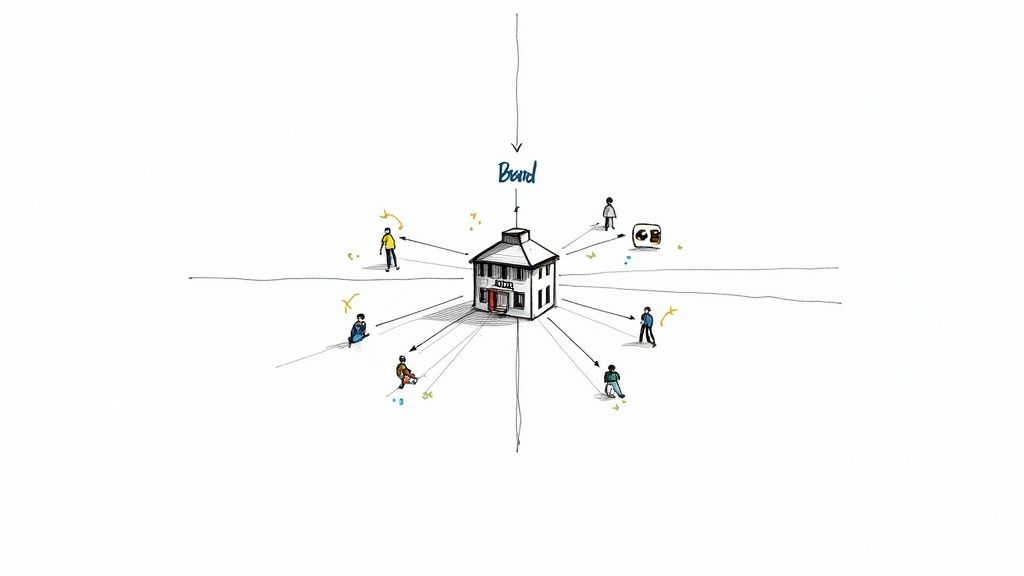
It helps to think of social media less like a megaphone for your announcements and more like a digital town square. It’s a chaotic, lively space where official updates, wild speculation, and raw community emotion all crash into each other at once. This shift has completely upended the old rules of crisis response, putting a massive amount of power directly into the hands of the public.
A single angry comment, a misleading video clip, or an inaccurate post can spark a reputational firestorm before your team has even had a chance to huddle. The sheer speed and reach of social media mean that sitting back and waiting is a surefire way to lose control. You have to get out in front of it, actively monitoring, engaging, and steering the conversations that will define the crisis.
The Power Shift from Institutions to Individuals
In the old days, schools and districts controlled the narrative. You’d draft a press release, send it to the local news outlets, and that was that. Social media blew that model to bits. Now, every parent, student, or community member with a smartphone is a broadcaster, capable of sending information around the globe in an instant.
This democratization of information is both a huge challenge and a significant opportunity. The game has changed in a few key ways:
- Unfiltered Speed: Information, both factual and false, travels at a dizzying pace. There's simply no time for the old, slow-moving approval processes.
- Direct Audience Access: You can speak directly to your families and staff without a filter. But remember, they can speak—and challenge—you just as directly.
- Heightened Transparency: People expect you to be upfront and honest, immediately. They have a knack for sniffing out spin or evasion, and they will call you on it.
A crisis is no longer a private matter to be managed; it’s a public event to be navigated. The conversation will happen with or without you, making your participation essential to shaping the narrative.
Why Proactive Management Is Non-Negotiable
Waiting for a crisis to hit before you figure out your social media plan is like waiting for a snow day announcement before deciding how to get the kids to school. It’s just too late. The truth is, these situations are practically inevitable. In fact, one study found that 69% of businesses face a social media crisis at least once every five years, which makes being prepared a fundamental responsibility. You can read more about the frequency of social media crises and their impact.
Without a well-rehearsed plan, you’re left scrambling and making mistakes under immense pressure. This is why we need to firmly establish social media as our new command center before we dive into the practical steps and frameworks for managing it when things go wrong.
The Real Cost of a Digital Misstep
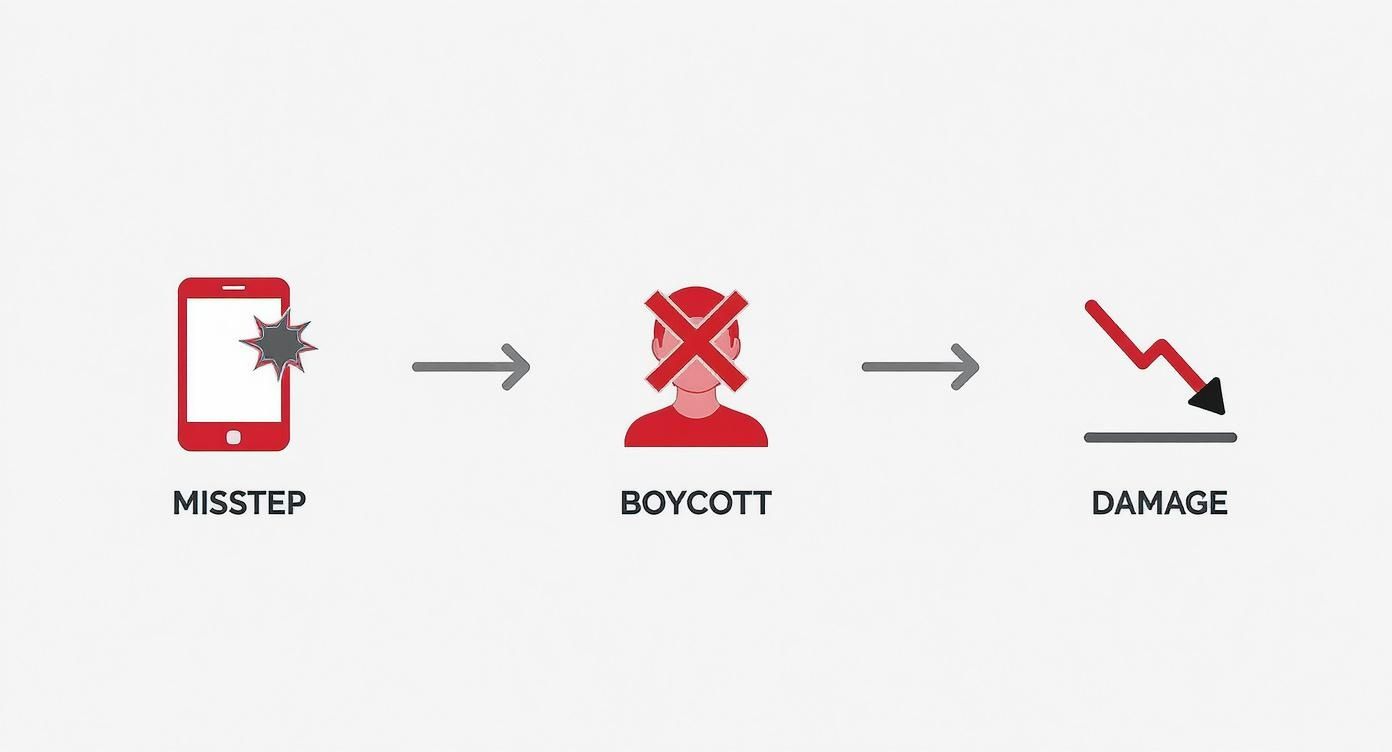
Let’s move past the theory. A misstep on social media isn't just an abstract problem; it carries tangible consequences that can ripple through your school district for years. A single, poorly handled incident can spiral from a few negative comments into a full-blown crisis, sparking parent boycotts, tanking staff morale, and shattering hard-won community trust.
This isn’t just a PR headache. It’s a direct threat to your school's reputation and its ability to operate effectively.
The sheer speed of platforms like Facebook and X means you don’t get a grace period. A minor issue that pops up at 9 a.m. can become a viral firestorm by noon, attracting local news crews and forcing your leadership team into a defensive crouch. The longer you wait to respond, the more control you lose over the story, creating a vacuum that misinformation and speculation rush to fill. This is precisely why a proactive investment in planning isn't just another expense—it's essential insurance for your school's survival.
From Reputational Harm to Financial Impact
The damage from a social media crisis goes far beyond hurt feelings. It can lead to measurable financial and operational hits that are incredibly difficult to bounce back from. The core purpose of solid online reputation management strategies is to shield your most valuable asset: your good name.
Think about the real-world fallout:
- Declining Enrollment: Today’s parents are researchers. Before they even consider a tour, they’re Googling your school and scanning social media. A reputation scarred by a public crisis can directly sway their decision, leading to fewer applications and a dip in enrollment numbers.
- Loss of Staff: A school’s reputation is a huge draw for talented educators. A mishandled crisis can poison the well, causing great teachers to leave and making it nearly impossible to recruit high-quality replacements.
- Spiking Legal and PR Costs: Scrambling to respond to a crisis without a plan often means expensive, last-minute calls to lawyers and PR firms. These reactive costs almost always dwarf the initial investment in proactive training and preparation.
- Erosion of Community Support: Public trust is the bedrock of any strong school community. Once it’s broken, it can take years of painstaking work to rebuild, impacting everything from parent volunteering to bond issue support.
The growing price tag of crisis management services tells the whole story. In 2023, the global market for these services blew past $1.88 billion. It's projected to grow by a staggering 21% annually through 2032. This isn’t just a trend; it's a clear signal that organizations now see social media as both a powerful tool and a major risk.
Proactive Investment vs. Reactive Damage Control
Thinking about crisis management as an investment rather than a cost completely changes the game. A well-rehearsed plan isn't just a document in a binder; it's one of the most valuable assets your district can have. It turns your team from panicked firefighters into a coordinated, strategic unit ready to navigate turbulence with confidence.
The table below breaks down the two starkly different paths you can take.
| Aspect | Proactive Strategy (Investment) | Reactive Response (Damage) |
|---|---|---|
| Cost | Controlled, upfront costs for planning, training, and tools. | Unpredictable and high costs for emergency PR, legal fees, and reputation repair. |
| Control | You own the narrative, communicating with clarity and authority. | The narrative is controlled by critics, media, and public speculation. |
| Timeline | Swift, decisive action based on a pre-approved workflow. | Delayed, chaotic responses made under intense pressure. |
| Team Morale | The team feels prepared, confident, and empowered to act. | Staff feels overwhelmed, unsupported, and anxious. |
| Community Trust | Trust is preserved, and often strengthened, through transparency. | Trust is shattered, requiring years of difficult work to rebuild. |
| Outcome | The crisis is contained, and lessons are learned for the future. | The school's reputation suffers long-term damage, impacting enrollment and funding. |
In the end, the choice is simple. You either invest a little now or risk paying a fortune later—not just in dollars, but in trust and credibility.
Investing in a crisis plan is like buying insurance. You hope you never have to use it, but when a storm hits, it’s the only thing that will keep your foundation intact.
Without a plan, your team is forced to make high-stakes decisions under extreme pressure, a recipe for mistakes. With a plan, you have pre-approved messages, clear roles, and established workflows that let you act decisively and professionally, protecting your reputation when it matters most.
Your Actionable Crisis Response Framework
Trying to handle a crisis without a plan is like trying to put out a fire with a squirt gun. It's frantic, ineffective, and you're guaranteed to get burned. A well-defined response framework is your fire hose—it gives your team a clear, step-by-step playbook to follow from the first spark of trouble to the final "all clear." It turns panic into a professional, structured response.
This framework breaks down the entire process of social media in crisis management into four distinct, manageable phases. Each one builds on the last, creating a solid strategy to protect your school's reputation and, most importantly, rebuild community trust.
Phase 1: Prepare Before the Crisis Hits
The best time to handle a crisis is long before it ever happens. This is the "get your house in order" phase. It's all about building a strong foundation so that when an issue explodes online, your team isn't scrambling to figure out who’s supposed to do what. Solid preparation is what separates a controlled response from a complete catastrophe.
The goal here is to create documented processes that everyone on your team understands and can execute under pressure. A huge part of this is managing what people are saying about you online, both proactively and reactively. You can learn more in this comprehensive guide to online reputation management.
Here’s what you need to get done in the preparation phase:
- Assemble Your Crisis Team: You need to know who's on first. Identify a core group of people (like your communications lead, principal, and a district administrator) and give them crystal-clear roles. Who monitors social media? Who drafts the messages? Who has the final say to hit "post"?
- Set Up Social Listening: You can't respond to a conversation you don't even know is happening. Use free tools like Google Alerts or more sophisticated platforms to keep an eye on mentions of your school, key staff, and important keywords. Think of it as your digital smoke detector.
- Draft "Holding" Statements: When a crisis hits, silence is deafening. Prepare pre-approved message templates for different scenarios you might face, like a safety incident, a controversial policy decision, or staff misconduct. These initial statements buy you precious time to get the facts straight.
Getting these pieces in place now means your team can act with speed and confidence when every second counts.
Phase 2: Respond in the First Crucial Hours
Those first few hours of a social media crisis are absolutely critical. Your initial actions set the tone for everything that follows and can either pour water on the fire or douse it in gasoline. Your guiding principles here should be speed, transparency, and empathy.
A slow or defensive response creates a vacuum, and that void will be filled instantly with rumors, speculation, and misinformation.
"We're looking into this and will share an update as soon as we have verified information." This simple, honest message is far more powerful than silence. It shows you're aware, you're taking it seriously, and you're in control.
During this phase, your only job is to stabilize the situation. Acknowledge the issue on the platform where it’s gaining the most steam, express empathy for anyone affected, and promise to provide more information when you have it. The key is to avoid making promises you can't keep or speculating on details you haven't confirmed.
Phase 3: Manage the Ongoing Conversation
After you've made your initial statement, the crisis shifts into the management phase. This isn't a one-and-done post; it's an ongoing effort to monitor the conversation, correct misinformation, and provide regular, factual updates. Your goal is to become the single source of truth for your community.
This is where having standard operating procedures becomes a lifesaver. If you need help building those out, our article on how to create standard operating procedures offers a great roadmap.
As you manage the conversation, be sure to:
- Centralize Your Communication: Funnel all questions and direct all eyes to one place, whether it's a specific social media account or a dedicated page on your school's website. This stops conflicting messages from getting out.
- Correct Misinformation Firmly but Politely: When you see false rumors spreading, tackle them head-on with the facts. Don't get dragged into an emotional back-and-forth. Just state the truth and move on.
- Provide Consistent Updates: Even if there’s nothing new to report, say that. A quick post saying, "We are still gathering information and will provide another update by 3 PM," prevents people from thinking you've gone silent.
This infographic shows just how a brand’s planned response can de-escalate a potential crisis before it spirals.
The flowchart maps out a decision-making process, showing why a clear plan is so vital for assessing and responding to negative comments online.
Phase 4: Recover and Rebuild Trust
Once the storm has passed and the immediate crisis is over, the work isn't finished. The recovery phase is your chance to learn from what happened and begin the important work of rebuilding trust with your students, parents, and staff. This step is easy to skip, but it’s essential for your school's long-term reputation.
Get your crisis team together for a post-mortem. Talk honestly about what went well and where you dropped the ball. Use those lessons to update your crisis plan. Finally, communicate the changes you're making to your community. This shows you're accountable and serious about preventing the same thing from happening again.
What Your Audience Needs to Hear in a Crisis
When a crisis hits, your response is about more than just managing a technical problem—it's about managing human emotion. People aren't just looking for dry facts; they’re searching for reassurance, accountability, and a sense of empathy. A response that’s too slow, defensive, or packed with corporate-speak feels cold and dismissive, and it can instantly shatter the trust you’ve spent years building.
In those first critical moments, a quick acknowledgment and genuine compassion are your most valuable assets. The first few hours are a make-or-break window where public perception solidifies. If you wait to have every single detail before saying anything, you leave a vacuum that will inevitably be filled with rumors, speculation, and anger. Your community needs to know you're aware of the problem, you care about how it affects them, and you're already working on it.
The Non-Negotiable Need for Speed and Empathy
Speed isn't just a "best practice" in a crisis; it's everything. Think of your initial statement as emotional first aid. It doesn't need to have all the answers, but it must be applied immediately to stop the bleeding of public trust. Holding back to craft the "perfect" message often means you deliver it to an audience that has already decided you're the villain.
This is where empathy has to be your north star. Your community doesn't want to hear from your legal team. They want to hear a human voice that understands their fear, frustration, or disappointment. A simple, honest message can immediately lower the temperature and buy you the breathing room you need to figure out the next steps.
The consequences of getting this wrong are severe. Recent data shows that 43% of consumers will straight-up boycott a brand that fumbles its crisis response. That’s how fast loyalty can evaporate. But here's the flip side: brands that acknowledge concerns within the first two hours can slash that boycott rate by as much as 61%. The data makes a clear case for moving fast with an empathetic tone. You can find more details on how crisis response impacts consumer behavior.
Tailoring Your Message for Maximum Impact
While your tone should always be authentic and consistent, your message needs to be adapted for each platform. Every social media channel has its own unwritten rules and audience expectations. Blasting the exact same corporate statement everywhere will feel robotic and out of touch.
- X (formerly Twitter): This is your rapid-response hub. Use it for immediate acknowledgments, correcting misinformation on the fly, and pointing everyone to a single source of truth for more details.
- Facebook: Here, you have room to show more heart and focus on community. It’s the right place for longer, more detailed updates, a video message from leadership, and for carefully engaging in dialogue in the comments section.
- Instagram: As a visual platform, your response needs to be visual. Use Instagram Stories for quick, behind-the-scenes updates or a thoughtfully designed post that communicates sincerity and a commitment to making things right.
In a crisis, your first message should accomplish three things: Acknowledge the situation, express genuine empathy for those affected, and commit to providing more information as soon as it becomes available.
At the end of the day, accountability is what rebuilds trust. That means owning the mistake, clearly explaining the steps you’re taking to fix it, and showing that you’re committed to making sure it never happens again. Every tweet, post, and update should reinforce one simple fact: you're listening, and you're taking responsibility.
Lessons Learned from Real-World Crisis Responses
Frameworks and theories are great on paper, but the real test comes when a crisis actually hits. It’s in those chaotic moments that you see just how quickly a reputation can be shattered or strengthened. By looking at real-world examples—both the wins and the epic fails—we can pull out some practical lessons on what happens when social media crisis management is done right, and when it goes horribly wrong.
These case studies take us beyond abstract ideas and give us a clear look at what to do and, just as importantly, what to avoid at all costs.
The Success Story: A Masterclass in Listening
A few years back, a major fast-food chain found itself in hot water with its fan base. They'd discontinued a popular menu item, and almost overnight, a hashtag demanding its return went viral, quickly hitting 73% negative sentiment. It would have been easy to brush this off as a minor social media flare-up, but they didn't. They recognized it for what it was: passionate feedback from their most loyal customers.
Their response was a perfect example of how to handle a crisis:
- They actually listened. Using social listening tools, they didn't just count the negative mentions; they dug into the emotion behind them. They saw that people were genuinely disappointed.
- They engaged like humans. Instead of a stuffy corporate press release, their social media team jumped into the conversation, personally acknowledging the frustration with empathy and a bit of humor.
- They turned it into a win. Armed with all that data, they brought the item back with a massive relaunch campaign, even sending special kits to some of the most vocal fans who started the whole thing.
The results were incredible. On relaunch day, mentions shot up by a factor of 188 times, and sentiment flipped to 92% positive. They didn't just solve a problem; they turned a potential boycott into a huge marketing victory simply by listening and treating their customers with respect.
The lesson here is powerful: a social media crisis isn't always an attack you need to defend against. Sometimes, it's an opportunity to hear what your community really cares about and build a stronger connection with them.
The Cautionary Tale: The High Cost of Silence
In stark contrast, another global brand faced a PR nightmare when misinformation about one of its campaigns started spreading like wildfire. It started with a single influential post and quickly snowballed into a flood of negative comments and a trending boycott hashtag. To make matters worse, fake accounts—making up nearly 20% of the engagement—amplified the chaos by sharing old, unrelated articles to make the crisis seem bigger than it was.
The company’s response, however, was a masterclass in what not to do:
- They waited too long. The brand stayed silent for days, creating a vacuum that was immediately filled with more anger, rumors, and speculation.
- They sent in the robots. When they finally did respond, they used generic, automated replies that came across as cold and dismissive. This only made people angrier. One influencer's tweet mocking their robotic response racked up 3.4 million views.
- They never set the record straight. They failed to clearly and directly correct the original misinformation, which allowed the false narrative to become the accepted truth in the public’s mind.
The long-term damage was huge, and it took a massive, expensive campaign to even begin repairing their reputation. This is a perfect example of how staying silent or responding poorly means you lose control of the story, fast. You can explore more of these essential strategies in our guide to crisis communication best practices.
Key Takeaways for Your School District
These stories offer some incredibly valuable lessons for any K-12 communications pro. The core principles hold true whether you’re dealing with a discontinued tater tot or a controversial new district policy.
- Speed and Acknowledgment are Non-Negotiable. Your very first move has to be acknowledging that you hear the conversation. In a crisis, silence is almost always seen as guilt or incompetence.
- Empathy Beats Corporate Speak Every Time. Use a human voice. Your community wants to know you're listening to their concerns, not reading a pre-approved statement from the legal department.
- Become the Source of Truth. Get out ahead of misinformation with clear, simple facts. If you don't define the reality of the situation, you can be sure that someone else will.
At the end of the day, these real-world events show that a prepared team with a solid plan can do more than just survive a crisis. You can come out the other side with the community's trust not just intact, but stronger than before.
Building Your Crisis Management Toolkit

When it comes to handling a crisis on social media, what you do before the storm hits is what really counts. A firefighter never runs into a burning building without their gear, and your communications team shouldn't face a digital firestorm without a well-stocked toolkit. This preparation is what separates a panicked, chaotic reaction from a calm, professional response.
Having these resources ready to go means your team isn't making high-stakes decisions from scratch while the clock is ticking. It gives them a solid foundation to act with speed and confidence when every second matters.
Essential Tools for Your Arsenal
A solid crisis toolkit needs a mix of tools for listening to the conversation and managing your response. The good news is you don't need to break the bank. Many great options are free or low-cost, while more sophisticated platforms can offer deeper insights for larger districts.
Think of it as building your toolkit from the ground up—start with the basics and add more powerful tools as your needs and budget allow.
- Basic Monitoring (Free): Google Alerts is the perfect starting point. Set it up to watch for your school's name, key personnel, and specific phrases. It’s a simple, free way to keep an eye on news and blog mentions.
- Social Listening (Freemium/Paid): This is your digital command center. Tools like Hootsuite or Sprout Social let you track social media mentions and hashtags from a single dashboard, making it much easier to manage the flow of information.
- Deep Sentiment Analysis (Advanced): For a deeper dive, platforms like Brandwatch or Sprinklr can analyze the emotion behind online conversations. This helps you understand not just what people are saying, but how they feel.
The goal isn't just to hear the noise; it's to find the signal. Your tools should help you quickly identify the most urgent conversations so you can prioritize your response and allocate resources effectively.
Social Media Crisis Management Tool Comparison
Choosing the right tool depends entirely on your district's specific needs—from budget constraints to the complexity of the conversations you need to track. This table breaks down a few options to help you decide.
| Tool Name | Primary Function | Best For |
|---|---|---|
| Google Alerts | Basic Web Monitoring | Small districts or teams just starting out with media monitoring. |
| Hootsuite | Social Media Management & Listening | Schools needing an all-in-one dashboard for publishing and tracking mentions. |
| Sprout Social | Advanced Social Listening & Analytics | Larger districts that need detailed reporting and team collaboration features. |
| Brandwatch | In-depth Consumer Intelligence & Sentiment Analysis | Organizations requiring a deep understanding of public perception and emotion. |
No single tool is a magic bullet, but combining the right ones creates a powerful system for staying ahead of the conversation.
Ready-To-Use Communication Templates
When a crisis erupts, there’s no time to workshop the perfect statement. This is where pre-drafted, pre-approved templates become a lifesaver. They aren't meant to be rigid, copy-and-paste scripts, but rather flexible starting points that ensure you hit all the crucial elements of effective crisis communication.
These templates provide a clear structure, making sure your initial messages convey empathy and accountability. Of course, they are just one piece of a larger strategy. For a more robust framework, this crisis communication plan template is an excellent resource to build from.
Here are three essential templates every school district should have ready to go:
- Initial Holding Statement: This is your first move, ideally within the first hour. It acknowledges the situation, shows you care, and promises more information is coming.
- Formal Apology: If your school is at fault, a direct and sincere apology is non-negotiable. This template should focus on taking full responsibility without making excuses.
- Corrective Action Update: After an apology, this statement shows you're taking action. It details the concrete steps you're implementing to fix the problem and prevent it from happening again.
With these tools and templates in place, you’re not just preparing for a crisis—you're empowering your team to manage it effectively and protect your school's reputation.
Frequently Asked Questions
When you're in the thick of a crisis, it’s easy to feel overwhelmed. Let's walk through some of the most common questions that come up when managing a crisis on social media, so you can act with clarity and confidence.
What Is the First Thing I Should Do in a Social Media Crisis?
Your very first move should be to post a quick, empathetic holding statement. Don’t wait until you have all the answers. Get a simple acknowledgment out on the platform where the conversation is loudest.
A good holding statement confirms you’re aware of the situation, shows you care about those involved, and promises more information is on the way. This single action stops rumors from filling the void and shows your community that you're on top of it.
How Do I Decide Which Negative Comments to Respond To?
You can't—and shouldn't—reply to every negative comment. It's a surefire way to burn out and get dragged into arguments you can't win. Instead, think like an emergency room doctor and triage the comments.
- Respond to these: Genuine questions from concerned parents, incorrect information that needs a factual correction, or a recurring concern you see popping up in multiple comments.
- Monitor but don’t engage with these: People who are clearly just trying to get a rise out of you (trolls), comments that aren't looking for a real answer, or one-off emotional rants.
- Delete and block these: Anything that breaks your community rules, like hate speech, spam, or direct threats. No hesitation needed here.
The point isn't to win every argument; it's to guide the overall conversation. Focus your limited time and energy on the comments where you can actually make a positive difference.
Should Our School Turn Off Comments During a Crisis?
This is a tempting move, but it almost always backfires. Turning off comments is rarely a good idea. It looks like you're hiding something and often just pushes the angry conversation onto other pages or groups where you have zero control.
A much better strategy is to actively manage the comments. Pin your official statement to the top of the post so it's the first thing people see. You should only consider turning comments off as a last resort in extreme situations, like a flood of coordinated harassment or a serious safety threat that makes moderation impossible.
Ready to build a crisis-proof communications strategy? Join The MarCom Society for exclusive access to expert-led workshops, practical templates, and a supportive community of K-12 professionals just like you. Elevate your skills at https://marcomsociety.org.