
Strategic planning in a school setting is all about creating a clear, actionable roadmap for the future. It's the process of defining your school's vision, setting goals you can actually measure, and then figuring out the steps to get there. Done right, it gets everyone—from teachers and administrators to parents and board members—on the same page, all working toward a common purpose.
Why Your School Needs a Strategic Plan Now

In the dynamic world of K-12 education, a strategic plan isn't just another document to file away. It’s your compass. Without one, it's easy to fall into a reactive trap, constantly putting out fires and responding to the crisis of the day without any real forward momentum. That path often leads to scattered efforts, frustrated staff, and an inconsistent experience for students.
A thoughtful plan flips that script, moving your school from a reactive footing to a proactive one. It creates a solid framework for making intentional decisions about everything from new technology and curriculum changes to shifting student demographics.
From Vision to Reality
This is where the magic happens. Strategic planning connects your school's big-picture aspirations with the day-to-day work in the classrooms and hallways. It’s what makes your mission statement more than just words on a plaque. Even in smaller-scale efforts, strategic planning principles are the bedrock of success, and for an entire school, they are absolutely essential.
When your whole community understands the "why" behind their work, something powerful clicks into place. Every decision, from how the budget is allocated to which professional development programs are offered, moves the school forward in a cohesive direction.
The results speak for themselves:
- A Unified Team: Everyone is pulling in the same direction—teachers, administrators, parents, and board members.
- Better Student Outcomes: Focused, intentional efforts directly contribute to student achievement and a more positive school culture.
- Smarter Resource Use: You can be confident that your limited time, budget, and talent are being used for maximum impact.
- Built-in Resilience: A clear plan helps you see challenges coming and adapt to change without missing a beat.
A strategic plan is the single most effective tool for moving a school from being managed by crisis to being guided by a shared vision. It’s about building a future by design, not by default.
This isn't just theory; it's a proven approach. Research shows that schools with well-implemented strategic plans see a 25% higher rate of improvement in student outcomes. With over 70% of schools in OECD countries now using formal plans, it's clear this has become a standard for effective leadership.
The process of creating the plan is often just as valuable as the final document. It forces important conversations, builds consensus, and gives your entire community a sense of ownership over the school's future. For a deeper dive, explore our complete guide on https://blog.marcomsociety.org/strategic-planning-in-schools/.
Building Your Dream Team and Data Foundation
A strategic plan cooked up in an office and handed down from on high is dead on arrival. I've seen it happen time and time again. The real power of a plan comes from the shared ownership you build along the way, and that starts with who you invite to the table.
Your first move is to assemble a planning committee that's a true reflection of your school community, not just the usual suspects.

Sure, you need administrators and board members, but their view is from the balcony. To create something that works in the real world, you need the people on the ground floor. Genuine buy-in only happens when everyone sees a piece of themselves in the process.
Assembling Your Strategic Planning Committee
You're looking for a mix of personalities, experiences, and, yes, even some healthy disagreement. A plan that's been pressure-tested by different viewpoints is always stronger and more relevant.
Think about pulling together people from these circles:
- School Leadership: Principals and department heads who live and breathe the daily operations.
- Faculty Members: Get a mix—veteran teachers who have seen it all, and newer hires with fresh eyes. Make sure different grades and subjects are represented.
- Support Staff: Your counselors, librarians, and administrative staff have a unique vantage point on student and family needs. They see things others miss.
- Parents and Guardians: Find parents who are engaged and represent the diverse backgrounds of your student body.
- Students: If you're a middle or high school, don't skip this. Student leaders can give you unfiltered, essential feedback on what it's really like to be a student in your school.
Those first few meetings are crucial for setting the right tone. Your job is to create a space where a quiet teacher feels just as empowered to speak up as a seasoned administrator. Kick things off with icebreakers, set some ground rules for respectful debate, and make it crystal clear that every single voice is vital.
Gathering the Right Data
With your team in place, it's time to get grounded in reality. Gut feelings and hallway chatter aren't a solid foundation for a five-year plan. You need to build a comprehensive, data-informed picture of where your school stands right now.
And I'm not just talking about standardized test scores. A really solid data dive examines the complete health of your school, blending the hard numbers with the human stories.
"A strategic plan without data is just a wish list. A plan built on a solid data foundation becomes a powerful tool for making intentional, high-impact decisions that truly serve students."
Don't just collect data for the sake of it. Be purposeful. Think about what information will help you answer the big, tough questions. It can be helpful to get familiar with the principles of data-driven decision making to make sure your efforts are focused where they matter most.
Here’s a good starting list of what to pull together:
- Academic Performance: Look at trends over the last three to five years. Are there achievement gaps? Where are you seeing growth, and where have things stalled?
- Stakeholder Feedback: Use anonymous surveys to get the unvarnished truth from students, staff, and parents on everything from school culture to safety.
- Enrollment and Demographics: Dig into your enrollment trends, student demographics, and attendance records. What story are they telling?
- Budget and Resources: Get a clear, honest look at your financial situation—revenue, expenses, and facility needs.
Uncovering the Truth with a SWOT Analysis
Once you've got all that data, a SWOT analysis is the perfect way to make sense of it all. It’s a simple but incredibly effective exercise for helping your team digest the information and pinpoint what truly matters for your school's future.
Get your committee together in a workshop and start filling out this matrix.
| Analysis Quadrant | Guiding Questions for Your Team |
|---|---|
| Strengths | What do we do exceptionally well? What are our biggest assets (people, programs, reputation)? |
| Weaknesses | Where are we falling short? What internal roadblocks are holding us back? |
| Opportunities | What’s happening outside our walls (new tech, community partnerships) that we can tap into? |
| Threats | What external challenges (enrollment shifts, policy changes) could derail us? |
This isn't an exercise in finger-pointing. It's about getting everyone on the same page with a clear-eyed view of reality. This shared understanding is the absolute bedrock of a successful strategic planning for schools process, giving you the solid launchpad you need to build a vision that is both ambitious and achievable.
From Data to a Dream: Defining Your Vision
You've done the hard work of gathering data and completing your SWOT analysis. The guesswork is over. Now you have a clear, unvarnished look at where your school stands today. It’s time to pivot from analysis to aspiration—to paint a picture of the future so compelling that your entire community is clamoring to help you build it.
This next phase is all about crafting the heart and soul of your strategic plan: the vision, mission, and core values. These aren't just feel-good phrases destined for a poster in the main office. They are your North Star, the principles that will guide every single decision, from curriculum changes to budget allocations, for years to come.
Think of your vision statement as the ultimate destination. What does your school look, feel, and sound like in five years if you knock it out of the park? It should be ambitious enough to feel exciting and clear enough for everyone to see themselves in it.
The mission statement, on the other hand, is your purpose in the present tense. It defines who you serve, what you do, and why it matters, day in and day out. If you're looking for inspiration, our guide on how to write a great school mission statement has some excellent examples to get your committee’s wheels turning.
Moving From Big Ideas to SMART Goals
A compelling vision gets people excited, but it's the specific, measurable goals that actually get things done. I’ve seen countless schools stumble by setting vague objectives like "improve student engagement." It sounds great on paper, but what does it really mean? How will you ever know if you’ve actually succeeded?
This is precisely why the SMART goals framework is a strategic planner's best friend. It forces you to translate those fuzzy intentions into crystal-clear targets.
A goal is SMART if it is:
- Specific: States exactly what needs to be done.
- Measurable: Includes concrete numbers or metrics for tracking.
- Achievable: Is realistic, not a pipe dream.
- Relevant: Clearly supports the school's overall mission.
- Time-bound: Has a firm deadline.
Let's put this into practice. That vague "improve student engagement" goal gets a serious upgrade when run through the SMART filter.
Before (Vague): "Improve student engagement."
After (SMART): "Increase participation in extracurricular activities by 15% among 9th and 10th graders by the end of the 2025-2026 school year, as measured by club and team rosters."
See the difference? Now your team has a clear finish line. You know exactly who to focus on, what success looks like, and the deadline you're working toward. It’s no longer a wish; it's a project with built-in accountability.
Prioritizing for the Biggest Impact
Your planning committee is going to come up with dozens of great ideas and potential goals. That energy is fantastic, but trying to chase every shiny object is the fastest way to burn out your team and achieve very little.
The final, and perhaps most critical, step in this phase is to prioritize. Ruthlessly.
Gather your team, look at your list of potential SMART goals, and ask one tough question: "If we could only achieve three of these over the next three years, which ones would create the most profound and positive impact on our students?"
This isn't just an academic exercise. It’s about finding leverage—those few key initiatives that will set off a cascade of positive change across the school. It’s especially important when you consider the external forces at play. For instance, demographic shifts mean the number of U.S. high school graduates is projected to hit a peak of 3.56 million in 2025 and then drop by 8% over the next decade. Schools that aren't proactively planning for these kinds of trends risk being left behind.
By zeroing in on your core priorities, you create a plan that’s both inspiring and, most importantly, achievable. This is how you ensure your strategic plan becomes a living, breathing guide for progress—not just another document collecting dust on a shelf.
Turning Your Strategy Into an Actionable Blueprint
A powerful vision and a list of SMART goals give your plan its heart, but the action plan is its muscle. This is where your strategy moves from a document into the daily, tangible work of your school. Without this step, even the most inspiring vision remains just a nice idea sitting on a shelf.
This is the phase where we translate those high-level priorities into a detailed operational guide. We're breaking down big ambitions into manageable tasks, assigning clear ownership, and making sure the necessary resources are actually in place. Think of it as the construction blueprint that shows everyone on the team exactly what to build, where, and when.
This is how we turn abstract data and a compelling vision into concrete, achievable results.
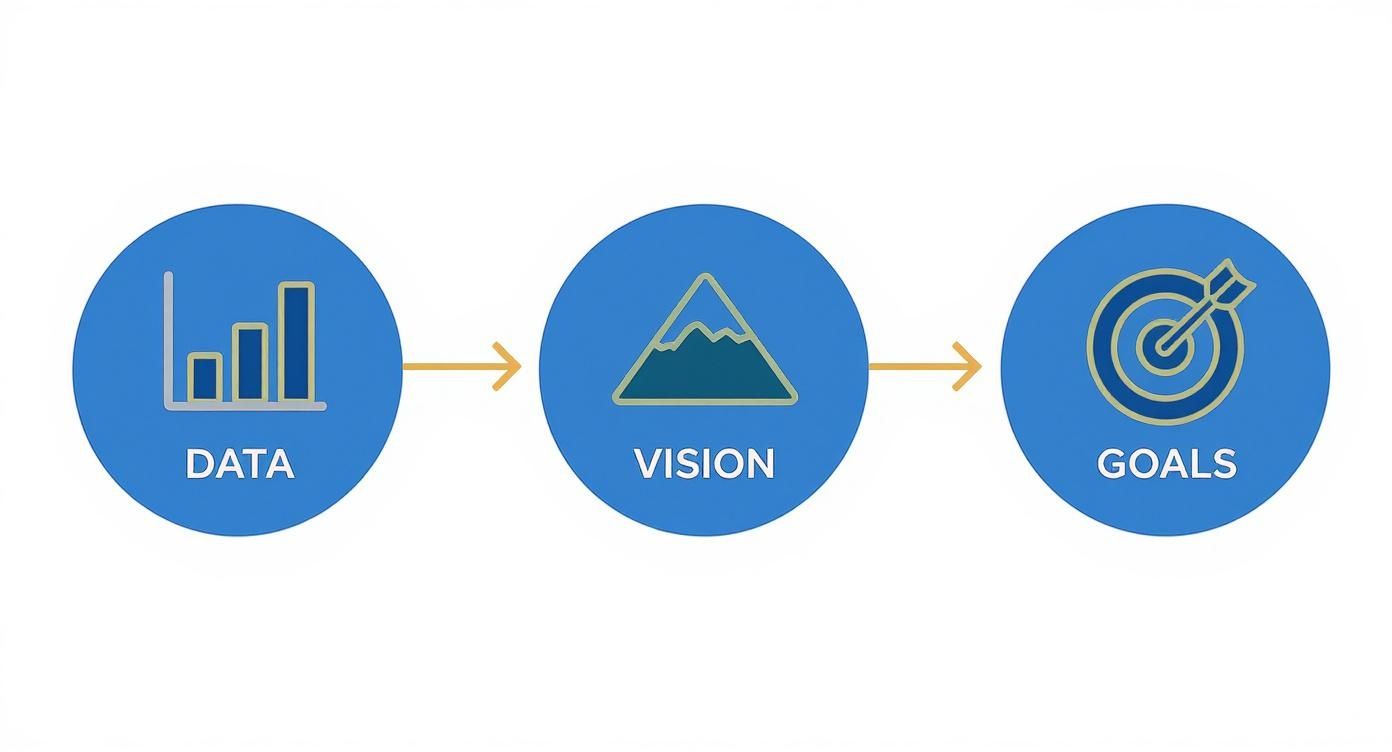
As you can see, raw data fuels the vision, which is then broken down into specific, targeted goals. It's a logical flow from information to action.
From Goals to Concrete Actions
For each of your big strategic priorities, the real work is creating a mini-project plan. A classic mistake I see schools make is stopping at the goal level. They leave teams to figure out the "how" on their own, which almost always leads to inconsistency and stalled progress.
To sidestep that trap, gather the right people for each priority and start mapping out the specifics. Don't try to do this in isolation; the people who will be doing the work must be part of the planning. It builds ownership from day one.
A solid action plan for each goal should include:
- Specific Tasks: Break the goal into smaller, concrete steps. What needs to happen first, second, and third? Be granular.
- Clear Ownership: Assign a name to every single task. Accountability is everything. When everyone is responsible, no one is.
- Realistic Timelines: Set start and end dates for each task. This creates momentum and gives you a simple way to track progress.
- Resource Allocation: What budget, technology, or staff time is needed? Be brutally honest about what it will take to get this done.
An action plan without clear owners and deadlines is just a wish list. It’s the difference between saying "someone should improve our website" and "Sarah will launch the new homepage by October 15th."
Aligning Your Budget with Your Priorities
Here’s the ultimate reality check for your strategic plan. A school’s budget is a moral document—it shows what you truly value. If your top priority is improving early literacy but your budget doesn't reflect that, the initiative is already set up to fail.
Go through your strategic action plans line by line and match them to your budget. This process forces you to make tough but essential choices. You’ll likely find that you need to shift funds from lower-priority areas to support your core goals. For example, funding a new STEM lab might mean deferring an administrative software upgrade for a year. That's a strategic choice.
This alignment ensures your financial decisions are actively fueling your vision, not accidentally working against it. A well-aligned budget is one of the strongest signals you can send that you're serious about where the school is headed.
The Action Plan Checklist
Before you move on, run each action plan through a quick quality check. Does it have what it needs to be truly actionable?
| Component | Why It Matters |
|---|---|
| Action Steps | The specific "what" that needs to be done. |
| Person Responsible | The "who" for crystal-clear accountability. |
| Deadline | The "when" to ensure timely progress and create urgency. |
| Resources Needed | The "how" in terms of budget, people, and tools. |
| Success Metric | How you'll know, without a doubt, that it’s done. |
Communicating the Blueprint
With your action plans built, the final piece of this puzzle is communication. Everyone in your school community—from the front office to the classroom—should understand the big-picture vision and the practical steps being taken to get there.
Share the plans with department heads, faculty, and staff. More importantly, show them how their individual work connects directly to the school's larger priorities. When a teacher understands that the new reading program they're implementing is a key part of the school's Goal #1 for literacy, their work takes on more meaning and their buy-in deepens.
This is how you build unstoppable momentum and turn a great strategy into a lived reality.
Bringing Your Plan to Life and Tracking Progress
https://www.youtube.com/embed/jmG1EfMlFsg
You've done the hard work and now have a clear, ambitious blueprint for your school's future. But let's be honest—a plan is just a document until you start building. This is where the real work begins, turning those well-crafted words into the daily rhythm of your school and creating real progress for your students and staff.
A strategic plan collecting dust on a shelf is a story we've all heard before. The most common reason these plans fail isn't a lack of great ideas; it's the gap between planning and doing. To make your plan stick, it needs to be visible, talked about, and woven directly into your school’s operations.
Communicating for Momentum
You built this plan with your community, so the first step is sharing the final vision and celebrating the journey you're about to take together. This isn't just a one-and-done announcement. Think of it as an ongoing campaign to keep your priorities front and center for everyone.
A single staff-wide email just won't cut it. You need to reach people where they are.
- For Your Staff: Kick things off with a meeting that clearly connects the dots. Show teachers and support staff exactly how their day-to-day work directly fuels the school's big-picture goals.
- For Parents & the Community: Nobody wants to read a 50-page document. Create a simple one-page summary or a dedicated, easy-to-navigate section on your website. Use visuals and plain language to make the priorities crystal clear.
- For the School Board: Set up a regular reporting schedule. Focus on the metrics that matter—the progress you're making against your strategic goals, not just routine operational updates.
The real win is when the plan becomes part of your school’s shared language. When a teacher says, "This new reading initiative is a key part of our Literacy for All goal," you know you're building a culture of strategy.
Building Your Progress Dashboard
You can't manage what you don't measure. Gut feelings and anecdotes are great, but they won't tell you if your strategy is actually working. The key is to build a simple, powerful way to track progress without creating a bureaucratic monster. This is where Key Performance Indicators (KPIs) are essential.
A KPI is just a specific, measurable value that shows how effectively you're hitting an objective. Every SMART goal you set should have one or two KPIs tied to it.
For instance, if you have a goal to improve student well-being:
- Goal: Decrease student disciplinary referrals by 20% over two years.
- KPI #1: Quarterly percentage change in total disciplinary referrals.
- KPI #2: Student responses to annual climate survey questions about school safety.
The best KPIs are leading indicators. They give you an early warning if things are veering off track, so you can make adjustments before it's too late.
The most effective strategic plans are not static documents but living guides. By embedding a rhythm of regular progress reviews and transparent data tracking, you transform your plan from a vision statement into a dynamic tool for continuous improvement.
Visual dashboards are a fantastic tool for this. A simple dashboard, maybe in a shared spreadsheet or a dedicated software platform, gives everyone real-time visibility. This transparency keeps the goals in focus and helps you make smart, timely decisions based on what the data is actually telling you.
Establishing a Rhythm for Review and Adaptation
Collecting data is pointless if you don't use it. Successful implementation depends on a consistent rhythm of review meetings. This isn't about adding more meetings to an already packed calendar; it's about making your existing meetings more strategic and purposeful.
- Monthly Team Check-ins: The people who own the action plans should meet briefly to talk about what's working, what's not, and what's next.
- Quarterly Leadership Reviews: Your strategic planning committee or leadership team should dive into the KPI dashboard, celebrate wins, and brainstorm solutions for any challenges.
- Annual Plan Refresh: Once a year, it's time to zoom out. Is the overall strategy still the right one? Do goals need to be tweaked based on new data or changing circumstances?
This agile approach is what separates plans that succeed from those that fail. It builds in the space to learn and adapt as you go. As the plan unfolds, it's essential to continually evaluate its impact and track progress, a core principle detailed in guides on mastering performance measurement.
This proactive mindset is also vital for schools looking to expand or compete in new areas. The global market for international schools, for instance, has grown dramatically, generating $69.4 billion in fee income in 2025. With over 50% of new projects in emerging markets, strategic agility is non-negotiable for navigating these complex opportunities. To dive deeper into these trends, you can explore the latest research about global school markets.
Strategic planning is a dynamic process, and even the most experienced leaders can run into trouble. Here are some of the most common pitfalls I've seen and how to sidestep them.
Common Strategic Planning Pitfalls and How to Avoid Them
| Common Pitfall | Why It Happens | Solution |
|---|---|---|
| "Set It and Forget It" Mentality | The team is exhausted after the planning phase and moves on to the next "urgent" issue, letting the plan gather dust. | Build a regular review cadence from day one. Schedule quarterly KPI reviews and an annual plan refresh on the calendar before you even finalize the plan. |
| Lack of Clear Ownership | Goals are written for the school as a whole, but no single person is responsible for driving the action steps forward. | Assign a clear "owner" for every strategic goal and action plan. This person is responsible for reporting progress, not doing all the work themselves. |
| Analysis Paralysis | The desire for perfect data and absolute certainty prevents the team from ever moving to action. | Focus on "good enough" data to start. Use leading indicators to get an early read and embrace an agile mindset of testing, learning, and adjusting. |
| Poor Communication | The plan is shared once and then never mentioned again, leaving staff and the community disconnected from the goals. | Develop a multi-channel communication plan. Share progress, celebrate wins, and transparently discuss challenges on a regular basis in newsletters, meetings, and on your website. |
Avoiding these traps isn't about having a perfect plan; it's about building a resilient process. By anticipating these challenges, you can create a system that fosters accountability, encourages adaptation, and keeps your school moving forward.
Common Questions About School Strategic Planning
Even with the best intentions, the strategic planning process can bring up some tough questions. It’s completely normal. Let’s tackle some of the most common ones I hear from school leaders.
Think of this as your go-to FAQ for those practical "what if" moments that inevitably pop up when you start to put your plan into action.
How Long Should a School Strategic Plan Cover?
In my experience, the sweet spot is three to five years. Anything shorter, and you're just being tactical—putting out fires rather than building for the future.
A one-year plan, for example, rarely allows for real, meaningful change. On the flip side, trying to map out the next ten years is a fool's errand. Think about how much technology, student needs, and even community demographics can shift in a decade. You'll end up with an irrelevant document.
The point isn’t to create an exhaustive encyclopedia that predicts the future. It’s to build a focused, actionable guide. A solid three-to-five-year plan gives you that perfect blend of ambitious vision and the agility to adapt.
What Is the Biggest Reason School Strategic Plans Fail?
It’s almost never the plan itself. The most common reason a strategic plan fails is the gap between the beautiful document and the day-to-day reality of running a school. A brilliant strategy that isn't woven into the fabric of your school's culture is destined to collect dust.
This breakdown usually happens because of a few predictable culprits:
- No Real Buy-In: If your faculty and staff see the plan as just another mandate from the top, they'll never truly own it.
- Fuzzy Accountability: When it's not crystal clear who is responsible for what, initiatives lose steam and eventually stall out.
- Resources Don't Match Rhetoric: A plan without a budget or dedicated staff time isn't a plan. It's a wish list.
To make it work, leadership has to be relentless in communicating the plan's importance and visibly tracking its progress.
How Do We Keep Our Plan from Just Sitting on a Shelf?
You have to make it a living document. This isn't just a buzzword; it means integrating the plan into the rhythm of your school.
Start by linking individual and department goals directly back to the plan's core priorities. Talk about it all the time—in staff meetings, leadership huddles, and board presentations. A simple, visual dashboard showing your key metrics can work wonders here, making progress feel real and tangible for everyone.
When people can see how their daily efforts contribute to the bigger picture, and when you take the time to celebrate the small wins, the plan comes alive. It stops being a static report and becomes the dynamic guide that shapes decisions every single day.
Who Should Be on the Strategic Planning Committee?
When putting together your planning committee, think "more is more." A diverse committee isn't just a nice-to-have; it's essential for a plan that truly reflects your community. You want a microcosm of your entire school ecosystem in that room.
Your team absolutely must include people from every key group. That means administrators, board members, teachers from different grade levels and subjects, support staff, and parents. And if you're a middle or high school, don't forget the students! Their perspective is often the most honest and insightful.
Bringing all these voices to the table does more than just make the plan better. It builds an army of champions who will advocate for the plan long after the committee disbands, creating the groundswell of support you need for a successful rollout.
At The MarCom Society, we provide K-12 marketing and communications professionals with the expert community, tools, and training needed to lead these crucial conversations and drive their school's vision forward. Join our community to connect with peers and access resources that will elevate your strategic impact. Learn more at https://marcomsociety.org.









