
A student ambassador program is more than just a volunteer club. It’s a powerful marketing tool that taps into your most authentic resource: your students. These students become the storytellers, sharing genuine experiences with prospective families, new students, and the community at large through everything from campus tours to social media takeovers.
Laying the Groundwork for Your Program
Before you even think about recruitment, a successful program needs a solid blueprint. This is the strategic part—moving beyond the idea of "student helpers" and getting crystal clear on what you want this program to achieve for your school. Without this foundation, even the most passionate students will struggle to make a real impact.
Start by tying the program's purpose directly to a high-level school goal. Are you looking to boost enrollment inquiries from a specific feeder school? Do you want to create a more welcoming online space for new families? Maybe your focus is on improving the onboarding experience to increase first-year retention. Nailing down this "why" is the most important first step.
Defining Your Core Mission and Goals
Your program's mission should be a short, memorable statement that acts as its North Star, guiding every decision you make from recruitment to training. This mission needs to slot perfectly into your school's overall communications strategy. If you're struggling to connect the dots, using a communications strategy template can be a great way to ensure everything is aligned.
With a mission in place, it's time to set SMART goals—Specific, Measurable, Achievable, Relevant, and Time-bound. Vague ideas like "boost school spirit" are impossible to track. Instead, you need concrete targets that prove the program is working.
Here are a few examples of what strong, measurable goals look like:
- Increase tour sign-ups from families who met an ambassador by 20% over the school year.
- Drive up engagement on student-created social media posts by 30% in the first semester.
- Collect 15 positive testimonials from new families who name an ambassador as a key part of their positive admissions experience.
By setting clear, data-driven goals from the outset, you not only provide your ambassadors with a clear purpose but also build a compelling case for the program's continued investment and support from school leadership.
Before moving on, it's helpful to organize your thinking. This table breaks down the core components you need to define.
| Component | Key Questions to Answer | Example Goal |
|---|---|---|
| Mission | What is the ultimate purpose of this program? How does it support the school's vision? | To showcase our unique school culture through authentic student voices, making prospective families feel instantly connected. |
| Goals | What specific, measurable outcomes do we want to achieve in the next 6-12 months? | Increase social media engagement on student-led content by 30%. |
| Target Audience | Who are we trying to reach? (e.g., prospective middle school students, new parents, local community) | Prospective families with students entering grades 6-8. |
| Key Responsibilities | What core tasks will ambassadors perform to help us meet our goals? | Leading campus tours, creating "day-in-the-life" video content, and serving as a buddy for new students. |
| Success Metrics | How will we know if we're successful? What data will we track? | Track tour conversion rates, social media analytics, and new family survey feedback. |
Thinking through these questions gives you a robust framework to build upon, ensuring every part of your program is intentional and results-oriented.
Crafting Ambassador Roles and Responsibilities
Now that you know what you want to achieve, you can define what your ambassadors will actually do. These roles shouldn't be generic; they should be specifically designed to hit the goals you just set. I’ve found that creating distinct roles helps give students clarity and ensures all your strategic bases are covered.
Think about creating a few different types of ambassador roles for your K-12 program:
- The Tour Guide & Greeter: This is the classic role—the friendly face of your school during open houses and private tours. These students are natural storytellers who excel at making families feel comfortable and welcome from the moment they step on campus.
- The Digital Content Creator: This is your social media guru. They live and breathe platforms like Instagram and TikTok, creating authentic "day-in-the-life" videos, managing student takeovers, and writing blog posts that resonate with their peers.
- The Community Liaison: This student is all about building connections. They act as a peer mentor for new students, answer questions from incoming families in a dedicated online group, and help run orientation events to ease the transition.
As you design these roles, think about how they can feed into your larger strategies for building an online community. Your ambassadors' authentic voices and peer-to-peer interactions are incredibly valuable for making new families feel like they belong before they even enroll. A solid strategic foundation like this is what turns a student ambassador program from a "nice-to-have" into a powerful, results-driven engine for your school.
Finding the Right Student Ambassadors
The success of your entire student ambassador program really comes down to the students you choose. It's tempting to pick the usual suspects—the valedictorian or the student council president—but the best ambassadors often aren't the ones with the longest résumés. You're looking for students with a genuine passion for the school and the people skills to connect with prospective families. The goal is to build a diverse team that actually looks and feels like your school's multifaceted community.
Finding these students requires a proactive approach. You can't just post a flyer and hope for the best. You need to spread the word through multiple channels to encourage applications from every corner of your student body. This is how you find not only the students who are always the first to raise their hands but also the hidden gems who have incredible potential.
This infographic shows a typical funnel from applications to final selection in a student ambassador program.
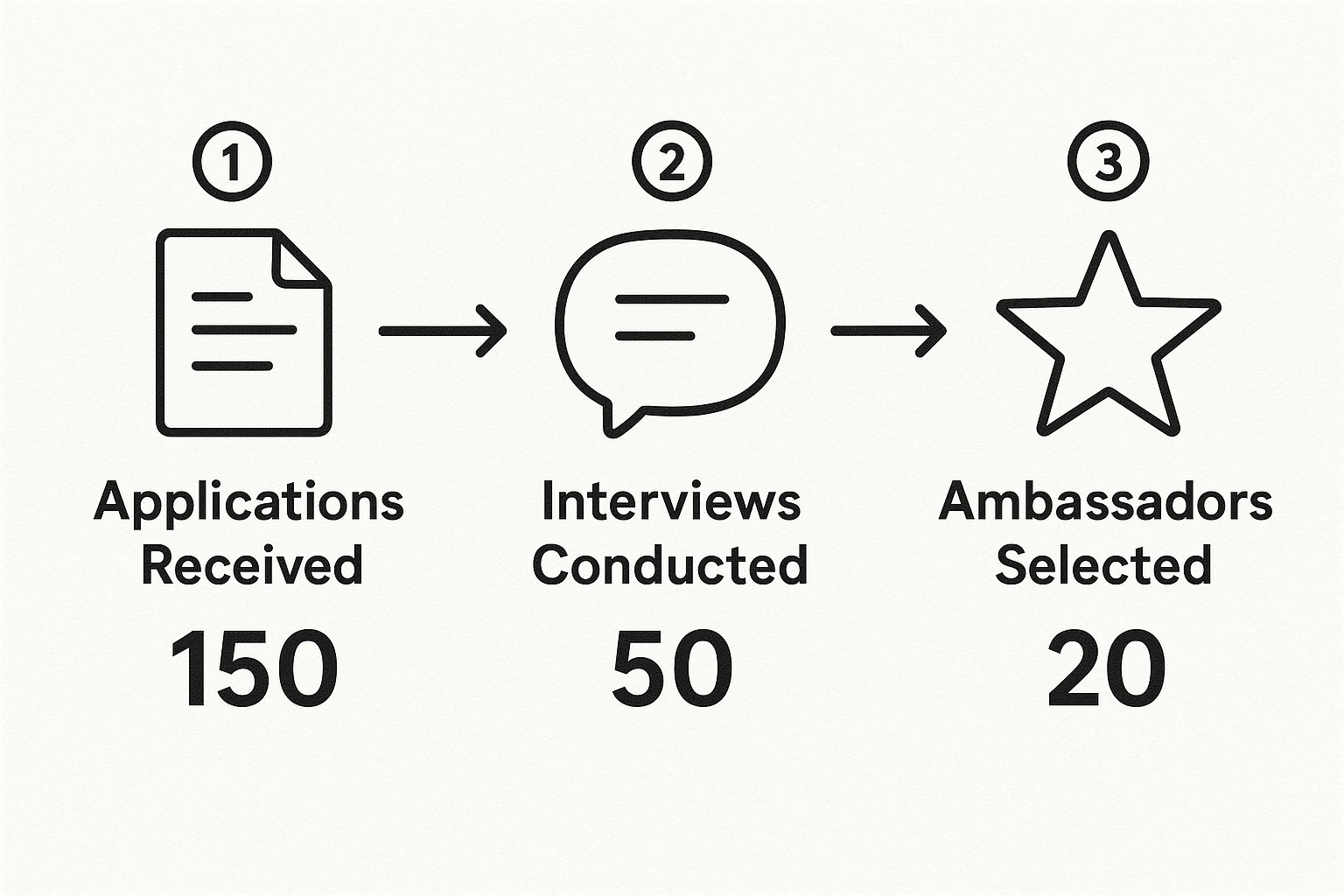
As you can see, the process is highly selective. It really drives home the point that you need a strong, deep applicant pool to end up with a high-quality team.
Designing an Application That Reveals Character
Think of your application as your first filter. A generic form asking for grades and a list of extracurriculars won't tell you much. Instead, you need to craft questions that dig a little deeper to reveal personality, motivation, and communication style.
Go beyond the standard "Why do you want to be an ambassador?" Try using prompts that encourage storytelling or require some critical thinking.
- Scenario-Based Questions: "A prospective parent asks what you like least about our school. How would you answer honestly while still keeping it positive?"
- Creative Prompts: "If you had to describe our school in just three words, what would they be and why?"
- Video Submissions: Ask for a short, informal 60-second video where applicants introduce themselves and show off their favorite spot on campus. It's a fantastic way to see their on-camera presence and natural enthusiasm firsthand.
These kinds of questions give you a glimpse into how a student thinks on their feet and whether they can communicate with genuine warmth.
Promoting the Opportunity Effectively
To get a wide range of applicants, you have to promote the opportunity everywhere. An email blast just won't cut it. A comprehensive promotion plan is a huge part of our recommended student recruitment strategies.
Here are a few channels that I’ve found work well:
- Faculty & Staff Nominations: Your teachers, coaches, and counselors see students in a different light. Give them a simple nomination form and ask them to recommend students who are kind, reliable, and respected by their peers—even if they aren't the loudest in the room.
- Morning Announcements & Assemblies: A quick, energetic announcement can grab the attention of students who might otherwise scroll right past an email.
- Social Media Campaign: Use your school's social media to feature current or past ambassadors talking about what they love about the program.
The idea is to create a real buzz around the program, making it feel like a prestigious and rewarding leadership opportunity.
A common mistake is to only look for extroverts. Some of your most thoughtful, empathetic, and reliable ambassadors might be introverts who excel in one-on-one conversations or written communication for your blog or social media. A balanced team has both.
Conducting Interviews to Find the Perfect Fit
The interview is where you can assess the things that don't show up on paper: professionalism, reliability, and authentic school spirit. Remember, you aren't just getting a volunteer; you're choosing a representative of your school's brand. A big part of this is measuring culture fit for successful selection to ensure they genuinely align with your school's values.
Structure the interview to feel more like a conversation than an interrogation. I like to mix behavioral questions with practical, on-the-spot scenarios.
- Break the ice first. Ask about their favorite class or a fun school event they recently attended. This helps them relax and lets their true personality shine through.
- Ask behavioral questions. "Tell me about a time you worked on a team project. What role did you play?" This gives you insight into their collaboration and problem-solving skills.
- Use role-playing. "Okay, imagine I'm a new student who's feeling nervous on the first day. What would you say to me?" This is a direct test of their empathy and ability to be welcoming.
Many top institutions, like the University of California, design their programs to build specific skills. The UCGHI Student Ambassador Program, for instance, focuses on giving students experiences to become effective advocates for global health. You can adopt a similar mindset by recruiting for potential and a willingness to learn. This approach will help you assemble a team of ambassadors who not only represent your school well but also grow into confident, capable leaders.
Training Your Ambassadors for Real-World Impact

You’ve found your dream team of students. Now, the real work begins. Raw enthusiasm is an amazing starting point, but it needs shape and direction. A solid training program is what transforms passionate students into polished, confident representatives for your school.
This is the bridge between a great idea—a student ambassador program—and genuine results. The goal isn't to just hand them a branded polo and a fact sheet. It's about empowering them to be authentic storytellers who feel prepared for any situation that comes their way.
Building a Foundation of School Knowledge
Before your ambassadors can share your school's story, they need to truly know it. This goes way beyond memorizing the year the school was founded or the number of athletic teams. They need to understand the why—the core mission, values, and educational philosophy that make your school unique.
Kick things off with a session on your school's brand identity. Talk about the core messages you want to convey and what truly sets you apart from other schools in the area. Help them find their own words to articulate what makes your community so special.
- A Deep Dive into Mission and Values: Don't just list them on a slide. Discuss real-world examples of how these values come to life in the classroom, in the hallways, and on the field.
- Highlighting Key Programs: Give them the interesting details about your signature academic programs, arts initiatives, or beloved traditions. These are the compelling stories prospective families want to hear.
- Mastering the FAQs: Prepare them with a guide to frequently asked questions. Cover everything from tuition and financial aid to class sizes and student life.
The best ambassadors don't sound like walking brochures. They sound like students who genuinely believe in their school's mission. When you give them the "why" behind the "what," their authenticity shines through.
Developing Essential Communication Skills
Being a great student and being a great communicator aren't always the same thing. Your training has to include practical, hands-on workshops that build the core skills they'll use every single day. This is where you build their confidence and polish their delivery.
Public speaking can be a huge hurdle. Start small with group activities to build comfort before asking them to present individually. Role-playing is your best friend here. Run mock campus tours or have them practice answering tough questions from a "prospective parent" (played by you or another faculty member).
This kind of hands-on practice is absolutely critical. If you need some inspiration, looking into different types of communication skills training can give you a great framework for your workshops.
For a fantastic model, look at how organizations like the Institute for Economics & Peace structure their IEP Ambassador Program. Their six-week initiative gives participants the specific knowledge and resources needed to be effective advocates, blending core information with practical application. It’s a powerful approach to see in action.
Mastering Real-World Scenarios
Theory is one thing, but your ambassadors will be operating in dynamic, unpredictable environments. Your training agenda needs to be packed with interactive scenarios that get them ready for the reality of working with the public.
Think through all the situations they might encounter—both common and unexpected. This proactive approach prevents them from being caught off guard and empowers them to handle any interaction with grace and professionalism.
A well-structured training day is key. Here's a look at what an effective agenda might cover.
Sample Ambassador Training Agenda
This structured plan offers a dynamic training program to cover the essential skills and knowledge your new student ambassadors will need to succeed.
| Module | Key Topics Covered | Activity/Outcome |
|---|---|---|
| School Storytelling | Mission, key brand messages, unique programs. | Students practice crafting their personal "school story." |
| Public Speaking | Voice projection, body language, engaging an audience. | Mock campus tour presentations with peer feedback. |
| Difficult Conversations | Answering tough questions, handling complaints gracefully. | Role-playing scenarios with tricky parent questions. |
| Social Media Etiquette | Representing the school online, content creation guidelines. | Workshop on creating an engaging "day-in-the-life" Instagram story. |
| Event Leadership | Greeting families at open houses, managing a check-in table. | A hands-on simulation of an admissions event workflow. |
By dedicating quality time to these modules, you're doing more than just training students. You’re investing in their personal growth. The skills they gain—like problem-solving, adaptability, and public speaking—will benefit them long after graduation, making this a truly meaningful leadership experience.
Keeping Your Ambassador Team Engaged

You’ve done it. You’ve recruited and trained an incredible group of students. The energy is buzzing, and your launch was a huge success. So, what’s next? The real challenge is keeping that momentum going all year long.
A student ambassador program isn't something you can "set and forget." It needs consistent care and feeding to keep the team motivated, connected, and doing their best work. Without that structure, even your most passionate students will start to fizzle out by mid-semester. The secret lies in making them feel valued, heard, and appreciated.
Create a Culture of Communication and Feedback
Constant, open communication is the glue that holds a great ambassador team together. Your students need to know what’s coming up, what’s expected of them, and how they’re making an impact. I always recommend setting up a central hub for everything—think a dedicated Slack channel or Google Classroom.
But don’t just use it for barking orders. This space is your community hub. Celebrate small wins. Share a glowing email you got from a prospective family. Post a funny GIF. When ambassadors feel connected to each other and the mission, they stick around.
Regular feedback is just as crucial. Make time for quick, informal check-ins with each student. These one-on-one chats are goldmines for figuring out what’s working and what isn’t, and they make your ambassadors feel seen as individuals, not just as a group.
One of the biggest mistakes I see is assuming that "no news is good news." Proactive, positive feedback is a massive motivator. A simple, specific comment like, "The way you connected with that nervous family during the open house was fantastic," can mean the world to a student and fuel their commitment for weeks.
Offer Meaningful Incentives Beyond Swag
Branded hoodies and pizza parties are fine, but they aren't what truly motivates these high-achieving students. They signed up for leadership opportunities and personal growth. Your incentives should speak directly to that ambition.
Think about rewards that add real-world value and look great on a college application. This shows you're invested in their future, not just what they can do for the school. That’s how you build deep loyalty.
Consider a tiered system of perks based on participation:
- Exclusive Workshops: Host sessions just for them on public speaking, networking, or social media strategy.
- High-Level Access: Arrange a special lunch with the Head of School or a prominent alum who can share career advice.
- Powerful Letters of Recommendation: For those who truly commit, offer a detailed, personalized letter of recommendation for their college applications. This is a huge carrot.
- Public Recognition: Shine a spotlight on a "Student Ambassador of the Month" in the school newsletter or on social media.
These kinds of benefits transform the program from a simple volunteer gig into a resume-building powerhouse. Research from places like St. John's University confirms that students are hungry for opportunities that give them tangible skills and a professional edge.
Foster a Supportive Team Environment
Finally, never forget that your ambassadors are a team. Building a collaborative, supportive atmosphere is non-negotiable for keeping them engaged long-term. When students feel a real sense of camaraderie, they hold each other accountable and lift each other up.
Kick off your meetings with a quick icebreaker. Encourage them to team up on bigger projects, like creating a "day in the life" video series or planning a welcome event for new students. When they have shared ownership over a project, they become a much tighter, more effective unit.
By focusing on clear communication, valuable incentives, and a strong team culture, you’ll keep your program's momentum going strong all year. An engaged team is an effective team—and the most powerful, authentic voice your school can have.
How Do You Know If It’s Actually Working?
So, you’ve launched your student ambassador program. The students are enthusiastic, and you’re feeling good about it. But how do you really know if it’s making a difference? To justify the time and resources you've poured in, you need to move beyond gut feelings and good vibes.
Proving your program's value requires a smart mix of hard numbers and powerful stories. This isn’t just about creating a fancy end-of-year report. Tracking your progress throughout the year lets you make real-time adjustments, celebrate small wins, and show your school's leadership the tangible impact of their investment. It's about demonstrating results, not just activity.
The Hard Numbers: Tracking Quantitative Metrics
Quantitative data gives you the black-and-white proof of your program's reach. These are the concrete numbers that tell a clear, objective story about performance. The best place to start is by looking back at the original goals you set for the program. Your Key Performance Indicators (KPIs) should flow directly from those goals.
For example, if a key objective was to increase open house attendance, you need a simple way to track that. It could be as straightforward as adding a "How did you hear about us?" field to your registration form, with "Student Ambassador" as a clear option.
Here are a few key metrics I always recommend tracking:
- Referral Traffic: Give each ambassador their own unique, trackable link using a tool like Bitly. When they share these on social media, you can see exactly how many clicks and website visits they're generating.
- Event Sign-ups: Track how many families register for tours or open houses using an ambassador's specific link or a QR code you provided them.
- Social Media Engagement: Keep an eye on the likes, comments, shares, and views on content created by your students. Seeing a 25% higher engagement rate on student-led posts compared to the school's official account is a massive win you can take straight to your Head of School.
- Application Influence: This is a big one. Add a simple question to your school's application: "Did an interaction with a student ambassador influence your decision to apply?" The "yes" responses are pure gold.
The Human Element: Gathering Qualitative Insights
Numbers are crucial, but they never tell the full story. Qualitative data captures the why—the personal experiences, emotions, and perceptions that truly show your program’s impact. These are the stories that breathe life into your data.
One of the most effective tools for this is a simple follow-up survey sent to families after they tour the school or attend an event. Ask open-ended questions about their time with the student ambassador. What stood out? What did the ambassador do that made them feel welcome?
A single, heartfelt testimonial from a new parent saying, "Meeting Sarah on our tour is what made us feel like this was the right community for our daughter," is often more persuasive to leadership than a page full of analytics.
And don't forget to look inward. The program's impact on the ambassadors themselves is a powerful success story.
- Ambassador Growth: At the end of the year, ask your ambassadors to reflect on what they’ve learned. Have them share how they've grown in areas like public speaking, teamwork, or leadership.
- Success Stories: Actively collect specific anecdotes. Did an ambassador help a nervous new student find their way on the first day? Did their campus tour convince a hesitant family that this was the right place? These moments are what it's all about.
As one student ambassador, Amarra Lopez at St. John’s University, put it, "Two of the most important skills I’ve gained… are problem solving and adaptability." Documenting this kind of personal growth creates a compelling narrative about the program's dual value—it benefits both the school's marketing goals and the students who serve.
By weaving together hard data with these authentic stories, you build a complete and convincing picture of success. This balanced approach not only proves the value of your student ambassador program but also gives you the insight you need to make it even better next year.
Common Questions About Student Ambassador Programs
Even with the best-laid plans, you're bound to run into a few questions as you get your student ambassador program off the ground. That’s perfectly normal. Tackling these common hurdles is just part of the process.
Let's walk through some of the most frequent questions I hear from school leaders and how to handle them. Having your answers ready will help you manage your program with confidence.
How Many Ambassadors Do I Really Need?
This is the big one, and the honest answer is, "it depends." There's no magic number that works for every school. The right size for your program hinges entirely on your school's enrollment, what you hope to achieve, and how much time your team can realistically dedicate to managing it.
For a smaller K-8 school, a close-knit group of 8-12 ambassadors is often the sweet spot. It's enough to cover key events without overwhelming your staff. On the other hand, a large high school with a non-stop admissions calendar might need a team of 20-30 students to juggle campus tours, create social media content, and handle outreach without burning out.
If I can offer one piece of advice, it's this: start smaller than you think you need. It’s far better to properly train and manage a passionate group of 10 than to struggle with a disorganized team of 25. You can always grow the program next year once you’ve got a solid system down.
What Are the Best Non-Monetary Rewards?
No budget for stipends? No problem. The most powerful incentives often have nothing to do with money. Your top students are driven by opportunities for real personal and professional growth.
Think about perks that add genuine value to their future, especially their college applications. These are the rewards that show you're invested in them as individuals, not just as volunteers.
- Exclusive Leadership Training: Bring in an expert for a workshop on public speaking, networking, or digital content creation—something just for them.
- Networking with Leaders: Give them special access to school administrators, board members, or influential alumni. A short conversation can be a game-changer.
- A Standout Letter of Recommendation: A detailed, personalized letter from the Head of School that highlights their specific contributions is worth its weight in gold for college and scholarship applications.
- Public Recognition: Never underestimate the power of a shout-out. Celebrate their efforts in the school newsletter, at an assembly, or with an "Ambassador of the Month" feature on your social channels.
How Do I Handle an Underperforming Ambassador?
It's uncomfortable, but it happens. What do you do when a student just isn't meeting expectations? The trick is to handle it quickly, privately, and with a supportive mindset. Letting it slide can damage the morale and credibility of the whole program.
First, pull the student aside for a one-on-one chat. The goal is to figure out what's going on. Are they swamped with schoolwork? Are they dealing with something personal? Or have they just lost interest? Gently remind them of the program's expectations and see if they need more support or training.
If things don't improve after that conversation, it's time to follow the process you set up from the start. This could mean a more formal warning or a probationary period. If you ultimately have to remove them from the program, do it with respect. You need to protect the student’s dignity while upholding the high standards you’ve set for your ambassadors.
At The MarCom Society, we give K-12 marketing professionals the resources, expert guidance, and peer support to build impactful programs just like this. Join our community to get access to exclusive workshops, download practical tools, and connect with leaders who truly get your challenges.









