Student ambassador programs are one of the most powerful, yet often underutilized, tools in a K-12 school's marketing playbook. They take your most enthusiastic students and turn them into your most believable storytellers. Instead of just another slick brochure, you get real stories from the students who live your school's mission every day. This kind of powerful social proof hits differently with prospective families.
The Real Value of a Student Ambassador Program
It's time to stop thinking of student ambassadors as just extra hands for open house tours. A truly strategic program can fundamentally change your school's marketing from a one-way broadcast into a vibrant, authentic conversation.
The whole game here is authenticity. When a prospective family hears from a sophomore about how a specific science teacher changed their life, that’s not a marketing message—it’s a real story. When they see your school's art scene through a student-run Instagram takeover, it feels genuine because it is. These aren't polished claims; they're unfiltered experiences.
From Testimonial to Relationship
Your ambassadors are bridge-builders. They don't just rattle off facts and figures about the school; their genuine excitement for their classes, clubs, and friendships offers a peek behind the curtain. For families trying to find the right fit for their child, this is absolute gold.
A well-run program delivers on several fronts:
- Provides Social Proof: Families trust the word of a current student far more than any official marketing piece. An ambassador is a walking, talking endorsement.
- Generates Authentic Content: These students can fuel your social media, blog, and videos with a perspective you can't fake—a real student’s-eye view of life on campus.
- Personalizes the Admissions Funnel: Imagine a prospective student getting a tour from an ambassador who loves the same sport or is in the same AP-level classes. That personal connection can be the single thing that seals the deal.
At its heart, a student ambassador’s job is to translate the school’s mission into a relatable human experience. They close the gap between what you say about your school and what a prospective family feels when they engage with your community.
An Investment in Leadership
Don't forget the other side of the coin. Beyond the obvious marketing wins, these programs are incredible leadership-building machines. You're not just creating a marketing team; you're actively developing confidence, public speaking abilities, and a deep sense of ownership in your students.
They learn how to think on their feet, communicate with adults, and solve problems—skills that will benefit them for the rest of their lives. This dual benefit makes student ambassador programs one of the highest-impact initiatives you can launch. You strengthen your brand and admissions pipeline while investing directly in your future leaders.
Setting Your Program Up for Success
A great student ambassador program doesn't just happen. It's built on a solid, well-thought-out foundation. Before you even post that first recruitment flyer, you have to get crystal clear on what success actually looks like for your school. Jumping in without a plan is the fastest way to create a program that keeps everyone busy but doesn't move the needle.
So, start with the big questions. Are you trying to bump up campus tour sign-ups by 20%? Is the real goal to get more authentic, student-created content for your social media? Or maybe you're focused on making the transition smoother for newly enrolled families.
Defining Your Core Objectives
Your goals need to be specific and measurable, tying directly back to your school's larger marketing and admissions targets. Vague ideas like "improving school spirit" are great, but you can't track them. You need tangible outcomes.
- Boost Admissions: Increase applications from a target zip code by 15% by having ambassadors host virtual info sessions.
- Drive Engagement: Get a 30% lift in engagement on your Instagram Stories by launching weekly student takeovers.
- Build Community: Improve new student retention by pairing every incoming ninth-grader with a trained ambassador mentor.
This is all about using your students' voices to amplify what you're already doing, which creates a much more authentic and trustworthy brand.

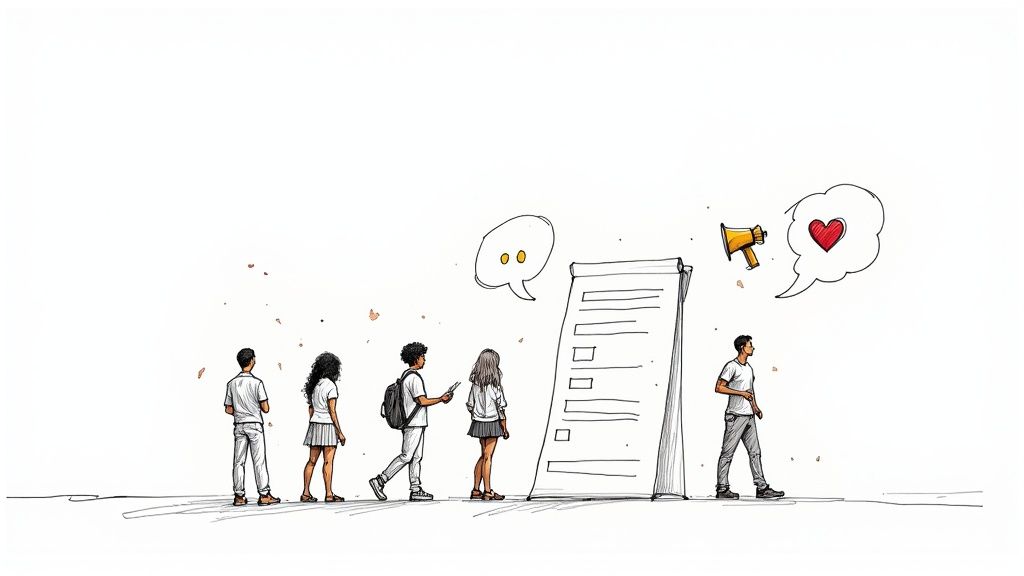
As you can see, the path from standard marketing to genuine conversations is what builds a school brand that really resonates with prospective families.
Once you know what you want to achieve, you can figure out what you need to get it done. This means building a realistic budget for things like ambassador t-shirts, training materials, and maybe a pizza party to celebrate their hard work. You'll also need a champion on your leadership team—someone who gets the value of the program and can help you navigate any internal roadblocks.
Think of this planning stage as creating your program's charter. It’s a foundational document that aligns everyone—from the head of school to the student volunteers—on a shared mission from day one.
Connecting your high-level goals to specific metrics and ambassador tasks is crucial. This table gives you a simple framework to make sure every activity has a clear purpose.
Program Goal and KPI Planning Framework
| Program Goal | Primary KPI | Secondary Metric | Example Ambassador Task |
|---|---|---|---|
| Increase Applications | # of New Applications | Lead-to-Application Conversion Rate | Host a monthly "Ask Me Anything" virtual session for prospective students. |
| Boost Social Engagement | Instagram Story Views | # of DMs from Prospects | Plan and execute two student-led Instagram takeovers per month. |
| Improve New Family Onboarding | New Student Retention Rate (Fall-to-Spring) | New Family Satisfaction Survey Scores | Call five assigned new families over the summer to welcome them and answer questions. |
By mapping it out like this, you ensure the day-to-day work of your ambassadors is always contributing to the bigger picture.
Structuring for Consistency and Clarity
With your goals and support locked in, it’s time to get into the weeds. This is where you outline the specific roles, responsibilities, and expectations for your ambassadors. Trust me, ambiguity is the enemy of engagement. Students need to know exactly what's expected of them, how often they need to do it, and what a "good job" looks like.
This is the perfect time to create some simple, documented processes for the tasks your ambassadors will do most often. For a deep dive, our friends at The MarCom Society have an excellent guide on how to create standard operating procedures that's super helpful. A clear framework ensures that whether an ambassador is giving a tour, posting on social media, or speaking at an open house, they’re doing it in a way that’s consistent with your school’s brand and goals.
A little structure goes a long way. It empowers students, prevents confusion, and ultimately makes your entire program more effective and sustainable for years to come.
How to Recruit Your Ideal Student Ambassadors
Finding the right students is, without a doubt, the most important piece of the puzzle. This isn't just about picking the kids with the 4.0 GPAs or the most bubbly personalities. The real goal is to build a team that truly mirrors the diversity of your entire student body. You want every prospective family to look at your ambassadors and see a bit of their own child.
The magic happens when you bring together students from all walks of school life—different interests, backgrounds, and personal stories. If your team is only made up of star athletes and academic decathletes, you're only telling one part of your school's story. What about the quiet artist who found their voice in the studio, the robotics club captain, or the student who discovered their confidence on the theater stage?
Crafting a Compelling Application
It's time to ditch the basic application that just asks for a name and grade level. You need to create a process that actually uncovers a student's passion, their reliability, and their genuine love for your school. Think of the application as your first real filter—make it work for you.
Your application should be built to pinpoint a few key qualities:
- Passion for the School: Ask questions that get to the heart of their experience, like, "What's one thing you wish every new family knew about our school?" or "Describe a moment you felt truly proud to be a student here."
- Communication Skills: A simple short-answer question can reveal a lot. You're looking for students who can share their experiences and thoughts clearly and compellingly.
- Reliability and Commitment: Be direct. Ask about their other commitments to get a realistic sense of whether they have the time to truly dedicate to the program.
Remember, you're not just filling slots on a roster. You're building a team of storytellers. The most effective student ambassador programs are always built on authentic, passionate voices.
The best ambassadors aren't always the loudest students in the room. Often, they're the ones who listen carefully, connect with people on a deeper level, and have a quiet confidence in their love for the school.
Looking Beyond the Obvious Candidates
If you want a team that genuinely represents your school, you have to actively look for students in every corner of your community. This means going beyond the usual suspects and seeking out that untapped potential. For some great outside-the-box ideas, check out resources on how to find brand ambassadors; many of the principles apply directly to a school setting.
This proactive recruiting is crucial for connecting with different types of prospective families. When you understand who you're trying to reach, you can recruit ambassadors who speak directly to their specific questions and concerns. A great starting point is learning more about audience segmentation. You can find out more by reading this guide: https://blog.marcomsociety.org/what-is-audience-segmentation/
Think about it: a student who transferred into your high school as a sophomore is the perfect person to connect with another family considering a mid-year move. Their experience is invaluable.
Asking the Right Interview Questions
The interview is where a candidate’s application really comes to life. This is your opportunity to go deeper and see how they connect with others in a real conversation.
Here are a few questions that get past the rehearsed answers:
- If a prospective parent told you they were worried about their quiet child fitting in, what would you share with them?
- Tell me about a time you had to solve a problem as part of a group project or team.
- What part of your experience here has been the most challenging, and what did you learn from it?
These kinds of questions reveal so much more than a simple "Why do you want to be an ambassador?" They test for empathy, resilience, and authenticity—the real qualities of a fantastic student ambassador.
Equipping Your Ambassadors with the Right Skills

Raw enthusiasm is a fantastic starting point, but it needs a little polish to really shine. Once you've assembled your dream team, the real work begins: turning these eager students into confident, capable representatives of your school. A well-designed training program is what separates a good program from a great one.
This isn’t about handing them a script and sending them on their way. Think of it as giving them a versatile toolkit of communication skills—skills that will benefit them long after they’ve graduated. It’s a genuine investment in their growth, which in turn elevates the entire program.
Building Your Training Modules
The most effective student ambassador programs are built on a foundation of solid preparation. To get your team ready, you'll want a structured training plan. If you're starting from scratch, learning how to develop training curriculum is a great first step. I recommend breaking everything down into focused, easy-to-digest modules.
Each module should cover both the "what" and the "how" of being a great ambassador.
- School Knowledge & Key Messages: This is their foundation. Make sure they are fluent in the school’s history, mission, standout programs, and what makes you unique. Give them interesting facts and figures they can naturally weave into conversations.
- The Art of Storytelling: Facts inform, but stories connect. Train them to share their own authentic experiences in a way that resonates emotionally with prospective families.
- Public Speaking & Presentation Skills: Confidence is everything, whether they’re leading a tour for two people or addressing a room of two hundred. For some deeper strategies on this, you can learn more about how to improve presentation skills.
- Social Media Best Practices: If your ambassadors will be managing social media takeovers, they need clear guidelines. Cover everything from tone and content to privacy and representing the school brand responsibly online.
The goal of training isn't to create clones who all sound the same. It's to give each student a strong framework of knowledge and skills so their unique personality and genuine stories can shine through confidently and effectively.
An Investment in Your School and Your Students
This kind of in-depth training truly pays off in two ways. First, it ensures your school’s message is delivered accurately and professionally. But just as importantly, it provides incredible personal development for the students themselves. This is a model used by many successful initiatives beyond K-12 education.
Look at The American Physical Society's ambassador program, for example. It strategically develops student leaders for the scientific community. By selecting 118 students across 25 countries for its 2025-26 cohort, it shows how training can build powerful connections between institutions and future leaders on a global scale. The students gain invaluable leadership skills and networking opportunities, which is a massive win-win.
This proves that when you invest time and resources into training, you're doing more than just creating better tour guides. You are actively mentoring the next generation of leaders and communicators—and that’s a powerful story to tell about your school’s commitment to student growth.
Keeping the Momentum Going: How to Manage Your Program for Lasting Impact
https://www.youtube.com/embed/HBwM74YN4aE
You've recruited an enthusiastic team and given them the training they need to shine. Now comes the real work: managing the day-to-day rhythm of the program. Strong, consistent management is the engine that keeps everything moving forward, turning great ideas into real, measurable results for your school.
The trick is to build a system that empowers your students, not micromanages them. It needs to be clear and consistent so their participation feels valuable and exciting, not like just another chore on their to-do list.
Get Your Communication Hub in Order
First things first, you need a central hub for all program communication and scheduling. This is non-negotiable. Whether you opt for a dedicated channel on Slack, a simple group chat, or a shared Google Calendar, your ambassadors need one go-to spot to find everything.
This digital headquarters is where they'll find their assignments, ask quick questions, and connect with each other. It completely eliminates the "I didn't see that email" problem and makes it a breeze to manage everything from daily campus tour coverage to a last-minute request for a student to speak at an event.
Build a System for Engagement and Accountability
A structured approach is your best friend here. At the start of each semester, map out a master schedule of all the events you know are coming up—open houses, admissions fairs, parent info nights, you name it.
From there, assign clear roles. Who's the point person for social media takeovers? Who coordinates directly with the admissions office to make sure tour guides are always ready? Defining these responsibilities ahead of time prevents confusion and ensures every single task has an owner.
This structure naturally builds accountability. I've seen schools have great success modeling their requirements after larger-scale initiatives. For instance, the 2025 NÖVA Global Student Ambassadors program requires its members to complete at least three verified activities and submit reflections on their experiences. This is a brilliant way to ensure students are actively contributing and thinking critically about their impact. It’s a model that can easily be adapted for a K-12 program. You can read more about the NÖVA program to see how they structure things on a global platform.
Keep Your Ambassadors Motivated and Inspired
Logistics are crucial, but the true secret to a long-running, successful program is keeping your students motivated. Remember, these are volunteers, and their positive energy is your program's most valuable asset. The key is making them feel that their work is both meaningful and recognized.
Regular check-ins are an absolute must. Even a brief monthly meeting can be an incredibly powerful tool for a few key things:
- Celebrate Wins: Publicly shout out an ambassador who got incredible feedback from a touring family or who created a fantastic video for the school's Instagram.
- Solve Problems: Give them a safe space to share challenges. Is the tour script feeling a little stale? Are they unsure how to answer a tough question from a prospective parent?
- Share the Impact: Connect their work to real results. Show them the data! Let them know their efforts led to a 15% increase in tour sign-ups or that their social media content reached hundreds of new families.
Don’t ever underestimate the power of making your ambassadors feel like valued insiders. Exclusive perks, like an invitation to have lunch with the Head of School or getting a sneak peek at a new campus initiative, reinforce their special status and deepen their commitment to the school.
Finally, think beyond rewards like gift cards or school swag. While those are nice, the most powerful motivators are often opportunities for personal and professional growth.
Offer them exclusive leadership training workshops. Invite them to sit on a student panel for the Board of Trustees. Better yet, give a star ambassador the chance to lead a training session for the next group of recruits.
When you invest in their development, you're sending a clear message: this is more than just a volunteer gig—it's a genuine leadership pathway. This not only keeps your current team fired up but also turns your student ambassador program into one of the most sought-after positions in the school for years to come.
Common Questions We Hear About Student Ambassador Programs
Even with the best-laid plans, you're going to have questions pop up when you're launching something new and exciting like a student ambassador program. Let's walk through a few of the most common ones we hear from school leaders, so you can sidestep any potential roadblocks.
One of the first things people ask is about the time commitment. With academics, sports, and everything else, how much can you realistically ask of a student?
The secret here is flexibility. Don't think of it as a rigid, one-size-fits-all job. Instead, create a menu of opportunities. A student who's swamped with AP classes might not be able to lead weekly campus tours, but they could absolutely run a one-hour Instagram takeover from their phone once a month. Another student might be eager to dedicate a whole Saturday to your big open house event. When you offer a variety of ways to contribute, you open the door for all kinds of students to get involved.
Is This Just a High School Thing?
Not at all! People often wonder if you can run a program like this with middle or even elementary schoolers. The answer is a resounding yes. You just have to adjust the responsibilities to be age-appropriate. The goal is always the same: let their authentic voices shine.
- For Middle Schoolers: Think about having them lead tours for incoming sixth graders who are nervous about a new, bigger school. They could also create "day in the life" videos for social media or serve on a welcome committee for new students.
- For Elementary Kids: Older elementary students make fantastic "reading buddies" for kindergarteners. They can also be great helpers, guiding parents during curriculum nights or sharing what they love about their class in a short, pre-recorded video.
It's all about making their tasks appropriate for their age, focusing on building their confidence and making them proud of their school.
How Should We Handle Compensation?
This is a big one. Should you pay student ambassadors? While some universities offer stipends, most K-12 programs operate on a volunteer basis. The real value isn't in a paycheck; it's in the experience.
Frame the program as a leadership opportunity, not a job. The "payment" comes in the form of invaluable skills: public speaking, resume-building for college applications, and exclusive access to school leaders and special events.
This positioning makes it a prestigious role that students actively seek out. You can sweeten the deal with some meaningful non-monetary perks that make them feel truly valued.
- Official program swag they'll actually want to wear (like a custom hoodie or polo).
- A powerful letter of recommendation from the Head of School.
- A special end-of-year recognition ceremony to celebrate their hard work.
Rewards like these reinforce just how much you appreciate their contribution. Before you know it, your student ambassador program becomes a badge of honor that top students compete for.
At The MarCom Society, we believe in empowering K-12 professionals with the tools and community support needed to build impactful programs just like this. Join our network to access expert-led workshops, practical resources, and a vibrant community dedicated to elevating school marketing and communications. Learn more and become a member today.