In the dynamic world of K-12 education, marketing and communications teams are constantly juggling multiple priorities, from boosting enrollment to engaging the community. Success often hinges on the quality and reliability of external partners, whether it's your website developer, digital ad agency, or print provider. Simply hiring vendors is not enough; you need a strategic approach to cultivate productive, long-term relationships that deliver maximum value.
This guide outlines eight crucial vendor management best practices tailored specifically for the unique needs of school marketers. Implementing these strategies will help you build stronger partnerships, mitigate critical risks, maximize your budget, and ultimately amplify your school's message. For instance, forming the right initial partnership is a foundational step, and a useful resource is a guide on finding the right creative agency for education to ensure alignment from the start.
By adopting a structured framework for managing your external partners, you can move beyond simple transactions. The following sections provide actionable steps to transform your vendor relationships into powerful strategic assets. Let's explore the practices that will help you select the best partners, monitor their performance effectively, and integrate their services seamlessly to drive tangible results for your institution.
1. Comprehensive Vendor Due Diligence and Risk Assessment
Effective vendor management begins long before a contract is signed. Comprehensive due diligence is a systematic process of vetting potential vendors across multiple dimensions to ensure they are a stable, secure, and reliable partner for your school district. This foundational practice involves a deep investigation into a vendor's financial health, operational capabilities, security posture, and overall reputation, moving beyond a simple price comparison to a holistic risk evaluation.
For a K-12 marketing team, this could mean scrutinizing a digital advertising agency's data privacy policies to ensure they comply with student data protection laws like COPPA and FERPA. It's about verifying that a new website developer has a proven track record of meeting deadlines and the financial stability to support your project long-term. This initial investment of time is crucial for mitigating risks that could lead to financial loss, data breaches, or reputational damage.

Why This Practice is Essential
This approach is fundamental to building a resilient vendor ecosystem. By thoroughly assessing vendors upfront and continuously monitoring them, you protect your institution from unforeseen liabilities. It ensures that partners entrusted with your school's brand, budget, and sensitive data can deliver on their promises without introducing unacceptable risk. Frameworks like the COSO Enterprise Risk Management guidelines and the NIST Cybersecurity Framework heavily emphasize this process, highlighting its importance in modern organizational governance.
Actionable Implementation Steps
- Implement Risk-Based Tiering: Not all vendors pose the same level of risk. Categorize them (e.g., Tier 1 for critical, high-spend, or data-sensitive partners; Tier 3 for low-risk, transactional suppliers) to focus your due diligence efforts where they matter most.
- Use Standardized Scorecards: Create a consistent evaluation questionnaire and scorecard covering key areas like financial stability, security protocols (ask for SOC 2 reports), compliance certifications, and client references. This ensures an objective, data-driven selection process.
- Establish Clear Approval Workflows: Define who needs to approve a new vendor based on its risk tier. A high-risk vendor might require approval from IT, finance, and legal, while a low-risk vendor may only need department head sign-off.
- Document Everything: Maintain a clear and accessible audit trail of all assessment findings, communications, and approvals for each vendor. This documentation is invaluable for future reviews and compliance audits.
2. Clear Contract Terms and Service Level Agreements (SLAs)
Once a vendor has been vetted, the next critical step is to formalize the partnership with a robust, unambiguous contract. This goes beyond a simple purchase order; it involves creating a legally sound agreement that clearly outlines all expectations, deliverables, performance metrics, and consequences. For vendor management best practices, a well-defined contract with strong Service Level Agreements (SLAs) is the primary tool for ensuring accountability and performance.
For a K-12 marketing team, this means an agreement with a social media management vendor should specify not just the number of posts per week, but also target engagement rates and required response times to parent inquiries. When hiring a video production company for a promotional campaign, the contract must detail project milestones, revision limits, and exact delivery dates for final cuts. This clarity eliminates ambiguity, prevents scope creep, and provides a legal framework for managing the relationship.
Why This Practice is Essential
A strong contract serves as the single source of truth for the vendor relationship. It protects your school district from poor performance, unexpected costs, and legal disputes by creating a mutually agreed-upon set of rules. Frameworks like the IT Infrastructure Library (ITIL) emphasize SLAs as a cornerstone of service delivery, as they translate business needs into measurable technical targets. Without them, performance evaluation becomes subjective and holding vendors accountable is nearly impossible.
Actionable Implementation Steps
- Define SMART Metrics: Ensure all performance metrics within your SLAs are Specific, Measurable, Achievable, Relevant, and Time-bound. For a website hosting vendor, this could be "99.9% uptime measured monthly."
- Include Escalation and Remedy Clauses: Clearly outline the process for addressing an SLA breach, including who to contact and the required response timeline. Also, define remedies, such as service credits or termination rights for repeated failures.
- Specify Reporting Requirements: Mandate how and when the vendor will report on their performance against the agreed-upon SLAs. This could be a monthly performance dashboard or a quarterly business review.
- Plan for Change: Incorporate a clear change control process into the contract. This defines how requests for changes in scope will be submitted, evaluated, approved, and priced, preventing uncontrolled "scope creep."
3. Regular Performance Monitoring and Scorecards
Once a vendor is onboarded, the work shifts from selection to active management. Regular performance monitoring is a systematic approach to continuously track, measure, and evaluate vendor contributions against the predefined metrics and Service Level Agreements (SLAs) established in the contract. This practice moves beyond gut feelings and subjective assessments, creating an objective framework for data-driven decision-making and fostering a culture of accountability.
For a K-12 marketing team, this means tracking an SEO agency's performance against key metrics like organic traffic growth, keyword rankings for school programs, and conversion rates for new student inquiries. For a print vendor, it involves monitoring on-time delivery rates, print quality accuracy, and cost adherence for admissions brochures. This continuous feedback loop is vital for identifying performance issues early and ensuring that vendors consistently deliver value.

Why This Practice is Essential
This practice is fundamental to maximizing the return on your vendor investments. It ensures that vendors meet their contractual obligations, drives continuous improvement, and strengthens partnerships through transparent communication. By formalizing this process, you create a clear, unbiased record of performance that can be used to justify contract renewals, negotiate better terms, or make a defensible case for termination. Methodologies like the Balanced Scorecard and quality management principles like Six Sigma underscore the importance of measurement as the foundation of management.
Actionable Implementation Steps
- Develop Balanced Scorecards: Create scorecards that measure performance across multiple dimensions, not just cost. Include metrics for quality (e.g., error rates), delivery (e.g., on-time performance), service (e.g., responsiveness), and strategic alignment.
- Implement a Traffic Light System: Use a simple Red/Amber/Green (RAG) status for key performance indicators (KPIs) on your scorecards. This provides an at-a-glance visualization of vendor health, allowing you to quickly identify areas needing attention.
- Schedule Regular Business Reviews (RBRs): Hold quarterly or bi-annual meetings with your key vendors to discuss scorecard results, address challenges, and align on future goals. This transforms the relationship from transactional to a strategic partnership.
- Focus on Outcomes, Not Just Activities: When defining metrics, prioritize results that impact your marketing goals. Instead of tracking the number of social media posts (an activity), measure the resulting engagement rate and website clicks (the outcomes).
4. Effective Communication and Relationship Building
Beyond contracts and performance metrics, the most successful vendor management best practices are built on a foundation of strong, collaborative relationships. Effective communication and relationship building transform transactional interactions into strategic partnerships. This practice involves cultivating open dialogue, mutual trust, and shared goals, ensuring that both your school district and your vendors are aligned and working towards common objectives for long-term success.
For a school marketing team, this means treating your print supplier not just as an order taker but as a partner who can offer innovative ideas for recruitment materials. It’s about having a relationship with your social media management vendor where you can openly discuss campaign performance, brainstorm new strategies, and adapt to changing community needs together. This collaborative approach fosters an environment where vendors feel valued and are more motivated to go the extra mile, ultimately driving better outcomes for your district.
Why This Practice is Essential
A purely transactional approach limits a vendor’s potential to a predefined set of tasks, while a relationship-based model unlocks innovation, proactive problem-solving, and enhanced value. When vendors feel like true partners, they are more likely to offer preferential treatment, provide creative solutions, and invest in your success. Methodologies like the Vested Outsourcing model, pioneered by Kate Vitasek, emphasize that building these win-win relationships is crucial for achieving breakthrough results and sustainable cost savings.
Actionable Implementation Steps
- Establish a Regular Communication Cadence: Schedule regular meetings that go beyond day-to-day operational check-ins. Use quarterly business reviews (QBRs) to discuss strategic alignment, performance trends, and future opportunities.
- Create a Two-Way Feedback Loop: Implement a formal process for both giving and receiving feedback. Use surveys or dedicated sessions to understand your vendor's perspective on the partnership and identify areas for mutual improvement.
- Develop a Joint Governance Structure: For critical vendors, establish a clear governance model with defined points of contact at multiple levels (operational, managerial, and executive). This ensures issues are escalated and resolved efficiently.
- Invest in Shared Goals: Work with key vendors to set joint objectives and key performance indicators (KPIs). When both parties are measured by the same success criteria, it creates powerful alignment and a shared commitment to achieving results. Learn more about how effective communication for school leaders can strengthen these partnerships.
5. Vendor Lifecycle Management and Strategic Portfolio Approach
Truly effective vendor management best practices extend beyond individual transactions to encompass the entire relationship lifecycle. This strategic portfolio approach involves managing vendors from initial identification and onboarding, through ongoing performance evaluation, to eventual contract renewal or systematic off-boarding. It means treating your collection of vendors not as a list of suppliers but as a strategic portfolio to be actively managed and optimized, aligning each partnership with your district's overarching goals.
For a K-12 marketing team, this means having a clear, repeatable process for bringing on a new videography partner, a structured method for quarterly performance reviews with your SEO agency, and a secure protocol for off-boarding a printing service, ensuring all district assets are returned. This holistic view, popularized by frameworks from Gartner and McKinsey, transforms vendor management from a reactive, administrative task into a proactive, strategic function that maximizes value and minimizes risk at every stage.
The process flow below outlines the three core stages of the vendor lifecycle, providing a clear roadmap for managing partnerships from start to finish.
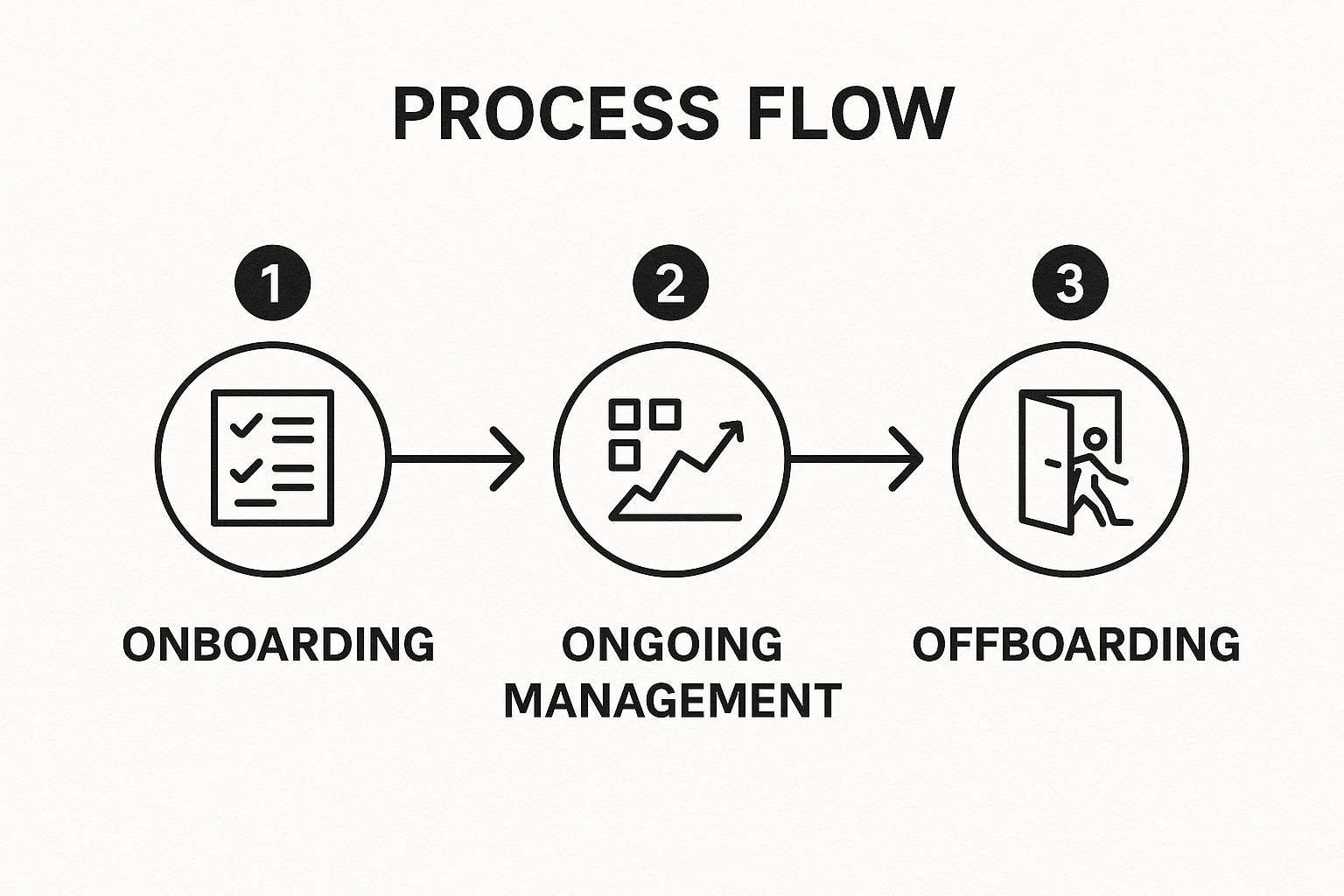
This visualization underscores the importance of a structured, sequential approach, ensuring no critical steps are missed during onboarding, management, or off-boarding.
Why This Practice is Essential
This lifecycle approach provides structure and consistency, preventing value leakage and ensuring that vendor relationships continuously support strategic objectives. By segmenting vendors and applying different management strategies based on their importance, you focus your resources where they will have the most impact. This prevents the all-too-common scenario where a critical, high-spend partnership receives the same level of attention as a low-risk, transactional supplier, ensuring strategic alignment and efficient resource allocation.
Actionable Implementation Steps
- Develop a Vendor Categorization Matrix: Classify vendors into tiers (e.g., Strategic, Tactical, Transactional) based on their strategic importance and total spend. This will dictate the level of oversight and engagement each vendor receives.
- Create Standardized Lifecycle Checklists: Build clear, documented templates and checklists for each lifecycle stage: onboarding (e.g., system access, contract storage), performance reviews (e.g., KPI scorecards), and off-boarding (e.g., data handover, asset return).
- Conduct Regular Portfolio Reviews: Schedule quarterly or semi-annual reviews of your entire vendor portfolio to identify consolidation opportunities, address underperformance, and ensure alignment with evolving marketing goals, similar to how you might review your enrollment management strategies.
- Maintain a Centralized Vendor Knowledge Base: Use a shared platform to store all vendor contracts, performance data, contact information, and institutional knowledge. This prevents information silos and ensures continuity during staff transitions.
6. Financial Management and Cost Optimization
Effective financial management is the practice of systematically overseeing the entire financial lifecycle of your vendor relationships. It moves beyond simply paying invoices and scrutinizes the total cost of ownership (TCO) to ensure your school district is receiving maximum value for every dollar spent. This approach involves proactive budget management, strategic cost analysis, and continuous efforts to identify savings without compromising the quality of services or products delivered.
For a K-12 marketing team, this means looking past the initial price tag of a new student recruitment platform. It involves calculating the long-term costs of training, maintenance, and potential integrations. When negotiating with a printing vendor for new brochures, it’s about securing favorable payment terms that align with the district’s cash flow cycles, not just getting the lowest unit price. This strategic financial oversight is a key component of sustainable vendor management best practices.
Why This Practice is Essential
This discipline ensures your marketing budget is used efficiently, freeing up resources for other critical initiatives. By focusing on TCO and value, you avoid the hidden costs that can erode your budget over time, such as poor performance, excessive maintenance fees, or scope creep. It institutionalizes fiscal responsibility within your vendor relationships, making every partnership a contributor to the district's financial health. Frameworks from organizations like the Institute for Supply Management (ISM) emphasize these cost management practices as essential for procurement excellence.
Actionable Implementation Steps
- Analyze Total Cost of Ownership (TCO): Develop a simple TCO model for significant purchases. Include not just the purchase price but also implementation, training, support, and potential end-of-life costs to make more informed financial decisions.
- Implement Spend Analytics: Use tools, even a well-structured spreadsheet, to categorize and track all vendor spending. This visibility helps identify trends, pinpoint areas for consolidation, and discover opportunities for negotiation.
- Conduct Regular Market Benchmarking: Periodically compare your current vendors' pricing and service levels against the market average. This data provides leverage for renegotiating contracts and ensures you are always paying a competitive rate.
- Negotiate Favorable Payment Terms: Work with vendors to establish payment schedules (e.g., Net 45 or Net 60) that align with your district’s budget cycles. Consider performance-based payment milestones for large projects to link payments directly to delivered value.
7. Technology Integration and Digital Transformation
In the digital age, effective vendor management hinges on leveraging technology to automate, streamline, and gain deeper insights into your processes. This practice involves strategically implementing digital platforms to manage the entire vendor lifecycle, from onboarding and contract management to performance tracking and payment processing. It’s about moving away from manual spreadsheets and siloed communication channels toward an integrated, data-driven ecosystem.
For a K-12 marketing team, this could mean using a procurement platform to issue RFPs for a new branding agency, track their performance against KPIs in real-time, and process invoices automatically. Embracing this digital transformation in your vendor operations allows for greater efficiency, transparency, and collaboration, freeing up your team to focus on strategic initiatives rather than administrative tasks.

Why This Practice is Essential
Integrating technology is fundamental to scaling your vendor management capabilities and making informed decisions. Platforms like those pioneered by SAP Ariba and Oracle provide a single source of truth, eliminating data discrepancies and improving visibility into spend and risk. This centralized approach ensures compliance, enhances security, and provides the analytics needed to optimize vendor relationships and drive cost savings. As marketing becomes more tech-reliant, a digitally transformed procurement process is no longer a luxury but a necessity for operational excellence. To understand more about this shift, you can explore the principles of digital transformation in marketing.
Actionable Implementation Steps
- Start with a Pilot Program: Instead of a district-wide overhaul, select a small group of vendors or a specific project to test a new technology platform. This allows you to identify challenges and demonstrate value before a full-scale rollout.
- Prioritize Integration Capabilities: When choosing a vendor management system, ensure it can seamlessly integrate with your existing financial, project management, and communication tools to create a unified workflow.
- Focus on Change Management: Technology is only effective if people use it. Develop a comprehensive training program and communication plan to ensure your team and key vendors understand the benefits and know how to use the new system.
- Implement Mobile-Friendly Solutions: Choose platforms that offer mobile access. This empowers both your team and your vendors to manage tasks, review documents, and communicate on the go, increasing adoption and responsiveness.
8. Compliance Management and Regulatory Adherence
Ensuring vendors operate within legal and ethical boundaries is not just a best practice; it is a fundamental requirement. Compliance management is the systematic process of making sure your vendors adhere to all relevant laws, regulations, industry standards, and your district’s internal policies. This framework involves continuous monitoring and documentation to enforce compliance in critical areas, particularly data protection, accessibility, and consumer protection laws.
For a K-12 marketing team, this means ensuring your email marketing platform is CAN-SPAM compliant and that your website vendor builds sites that are ADA (Americans with Disabilities Act) accessible. It also involves verifying that any vendor handling student information strictly adheres to FERPA (Family Educational Rights and Privacy Act) and COPPA (Children's Online Privacy Protection Act). Neglecting this aspect of vendor management exposes your school district to significant legal penalties, financial liabilities, and severe reputational harm.
Why This Practice is Essential
This practice is critical for safeguarding your institution against legal and reputational risks. In an era of increasing data privacy regulations like GDPR and state-level laws, demonstrating proactive compliance is non-negotiable. It ensures that your partners' operations do not inadvertently create legal exposure for your district. A strong compliance program, popularized by regulations like the Sarbanes-Oxley Act, builds trust with your community and shows a commitment to ethical operations, which is vital for any public-facing educational institution.
Actionable Implementation Steps
- Develop Compliance Checklists: Create specific checklists for different vendor types based on the services they provide. For a digital marketing agency, this would include FERPA, COPPA, and ADA compliance. For a print vendor, it might involve environmental and labor standards.
- Embed Compliance in Contracts: Work with legal counsel to include specific clauses in your contracts that require vendors to comply with all applicable laws and regulations. These clauses should also outline audit rights and the consequences of non-compliance.
- Conduct Regular Audits: For high-risk vendors, especially those handling student data, schedule periodic compliance audits. This could involve reviewing their data handling protocols, security certifications (like a SOC 2 report), and training records.
- Provide Vendor Training: Offer resources or training sessions on key regulations relevant to your district, such as FERPA. An informed vendor is a more compliant partner and a lower risk to your operations.
Vendor Management Best Practices Comparison
| Item | Implementation Complexity | Resource Requirements | Expected Outcomes | Ideal Use Cases | Key Advantages |
|---|---|---|---|---|---|
| Comprehensive Vendor Due Diligence and Risk Assessment | High | Specialized expertise, time, tools | Reduced vendor risk, data-driven decisions | Large enterprises, high-risk vendor portfolios | Proactive risk mitigation, compliance alignment |
| Clear Contract Terms and Service Level Agreements (SLAs) | Moderate to High | Legal and procurement expertise | Clear expectations, legal protection, performance measurement | Formal vendor engagements, regulated industries | Reduces disputes, ensures accountability |
| Regular Performance Monitoring and Scorecards | Moderate | Data systems, ongoing management | Early issue detection, improved vendor accountability | Ongoing vendor management, performance tracking | Proactive problem solving, transparency |
| Effective Communication and Relationship Building | Moderate | Time investment, stakeholder engagement | Strong partnerships, innovation, reduced conflicts | Strategic suppliers, long-term collaborations | Enhances responsiveness, fosters vendor loyalty |
| Vendor Lifecycle Management and Strategic Portfolio Approach | High | Sophisticated systems, change management | Consistent vendor management, portfolio optimization | Large, diverse vendor bases, strategic sourcing | Scalable framework, risk and resource balancing |
| Financial Management and Cost Optimization | Moderate to High | Financial analysis tools, expertise | Cost savings, budget control, improved margins | Cost-sensitive procurement, budget management | Visibility into spend, improved cash flow |
| Technology Integration and Digital Transformation | High | Significant tech investment, training | Efficiency, real-time analytics, scalability | Organizations adopting digital procurement | Enhanced process automation, data-driven decisions |
| Compliance Management and Regulatory Adherence | High | Compliance expertise, ongoing audits | Reduced legal risks, regulatory compliance | Regulated industries, high compliance demands | Protects reputation, ensures market access |
Elevating Your School's Marketing Through Smarter Partnerships
Navigating the complex world of vendor partnerships is no longer a secondary administrative task; it is a core strategic function for any successful K-12 marketing team. The journey from simply hiring a vendor to building a high-performing ecosystem of strategic partners is paved with intention, structure, and a commitment to excellence. Implementing these vendor management best practices is the roadmap to transforming your school's marketing and communications efforts from good to truly exceptional.
From Checklist to Strategic Imperative
Moving beyond a reactive, ad-hoc approach to vendor engagement unlocks significant value. Instead of viewing vendors as mere service providers, the principles outlined in this guide encourage you to see them as extensions of your team. This strategic shift requires a new mindset, one where every partnership is an opportunity to enhance your school’s mission and brand.
The key takeaways from our exploration of vendor management best practices include:
- Proactive Risk Management: Comprehensive due diligence and clear, enforceable contract terms are your first line of defense. They protect your school's reputation, budget, and data by identifying potential issues before they escalate into crises.
- Performance-Driven Relationships: You cannot improve what you do not measure. Regular performance monitoring through scorecards and data-driven reviews moves conversations from subjective feelings to objective facts, ensuring you receive the value you paid for.
- The Power of Collaboration: Strong relationships built on open communication and mutual respect are invaluable. A vendor who understands your mission and feels like a valued partner will consistently go the extra mile, offering innovative ideas and proactive support.
- A Holistic Lifecycle View: Managing vendors from selection to offboarding with a strategic portfolio approach ensures your partner ecosystem remains aligned with your school's evolving goals. This prevents vendor bloat and ensures resources are allocated to the most impactful partnerships.
Your Actionable Next Steps
Mastering these concepts is a continuous process of refinement. To begin implementing these vendor management best practices today, start with a focused, manageable approach.
- Conduct a Vendor Audit: Choose one critical marketing vendor and apply the performance scorecard model. Evaluate their recent performance against their SLA and identify one specific area for improvement to discuss in your next meeting.
- Review Your Core Contracts: Select the contract for your most expensive or mission-critical vendor. Scrutinize the termination clauses, data ownership terms, and performance metrics. Are they clear and protective of your school's interests?
- Schedule a Strategic Check-In: Go beyond the standard operational update. Schedule a 30-minute call with a key partner to discuss long-term goals and ask for their strategic input on an upcoming challenge. This simple act can transform the dynamic of your relationship.
Ultimately, adopting a structured vendor management framework is about stewardship. It's about ensuring every dollar is spent effectively, every partnership is optimized for maximum impact, and every marketing initiative is supported by a network of excellence. By embracing these practices, you build a more resilient, efficient, and powerful marketing engine that drives enrollment, enhances community engagement, and elevates your school's brand for years to come.
Ready to deepen your expertise and connect with K-12 marketing professionals who are navigating these same challenges? The MarCom Society provides a dedicated community with expert-led sessions, peer-to-peer workshops, and exclusive resources to help you master vendor management and more. Join us at The MarCom Society to build your skills and your network.