
A virtual open house isn't just a simple livestream. Think of it as a carefully crafted admissions event that lets prospective families get a real feel for your school’s culture, meet your incredible faculty, and see the campus—all from their own home. It’s a game-changer for breaking down geographical barriers, opening your doors to relocating families or those with packed schedules who just can't make it in person.
Why Virtual Open Houses Still Matter for School Admissions
Let’s be honest. For a while there, virtual open houses felt like a temporary solution born out of necessity. But to dismiss them now would be a huge missed opportunity. They’ve grown into a powerful, permanent tool in the admissions playbook—your secret weapon for reaching families who might never have found you otherwise.
Think about the modern family’s school search. It’s a logistical puzzle, juggling work schedules and long travel times. A virtual event wipes those hurdles away, offering a welcoming and inclusive front door to your community. This isn't just about convenience; it's about making sure every single interested family has a fair shot at connecting with you.
Expanding Your Reach Beyond Local Boundaries
The perfect student for your school might not live just down the street. They could be across the state or even halfway across the country, planning a move. A virtual open house is hands-down the best way to connect with these families early on, letting them experience your campus long before they can set foot on it.
- Attract Relocating Families: You can give parents a genuine sense of your school's environment, helping them feel confident in their decision, even from a distance.
- Engage Busy Professionals: It’s a perfect solution for parents who can't step away from work for a traditional tour. You’re meeting them where they are.
- Showcase Your Modern Approach: A smooth, engaging online event immediately signals that your school is forward-thinking and ready for the future of learning.
A well-run virtual open house does more than just show off your campus. It tells prospective families that your school is adaptable, innovative, and genuinely committed to being accessible. It’s one of the first, most powerful ways to show your school's values in action.
Ultimately, these events are a fantastic qualifier. The families who show up are already engaged and invested, making them much stronger leads for your admissions team. By creating a compelling digital experience, you’re not just widening your applicant pool—you’re attracting families who are a better fit for your community, paving the way for a stronger, more vibrant student body.
Planning Your Virtual Open House for Maximum Impact
A truly great virtual open house doesn't just happen the moment you click "go live." The ones that really move the needle for enrollment are born from a solid game plan—one built on crystal-clear goals, a thoughtfully crafted agenda, and the right tech to pull it all off. Let's walk through the critical pre-event strategy that will make sure your hard work actually connects with prospective families.
Your very first move is to define what success will look like for your school. Is the main goal to boost the number of submitted applications? Maybe it's to grow your admissions email list for future nurturing. Or perhaps you just want to create a ton of buzz around a new program, like that state-of-the-art STEM lab you've just opened. If you don't have a clear target, you'll have no way of knowing if you got a return on your investment of time and resources.
By setting a primary goal—such as capturing 25% more qualified leads than last year's in-person event—your team can make focused decisions about the agenda, promotional tactics, and follow-up sequences.
Defining Your Core Objectives
Before you even start looking at webinar platforms or lining up speakers, pull your team together and decide on your key performance indicators (KPIs). Think of these metrics as your north star for the entire planning process.
Here are a few common goals we see schools focus on for their virtual open house:
- Lead Generation: The primary aim here is simply to collect contact info from interested families. This gives you a warm list to nurture through the rest of the admissions funnel.
- Application Conversion: This is a more direct, bottom-line goal. Success means getting attendees to start or even complete their online application right after the event.
- Brand Awareness: If you're a newer school or want to put a spotlight on a unique program, your goal is all about reach. You'll measure success through things like social media engagement and a spike in post-event website traffic.
Once you’ve locked in that primary objective, every single decision that follows—from the topics you cover to the final call-to-action—should directly serve that purpose.
This simple flow shows how a well-planned event can expand your school's reach and forge those all-important connections with new families.
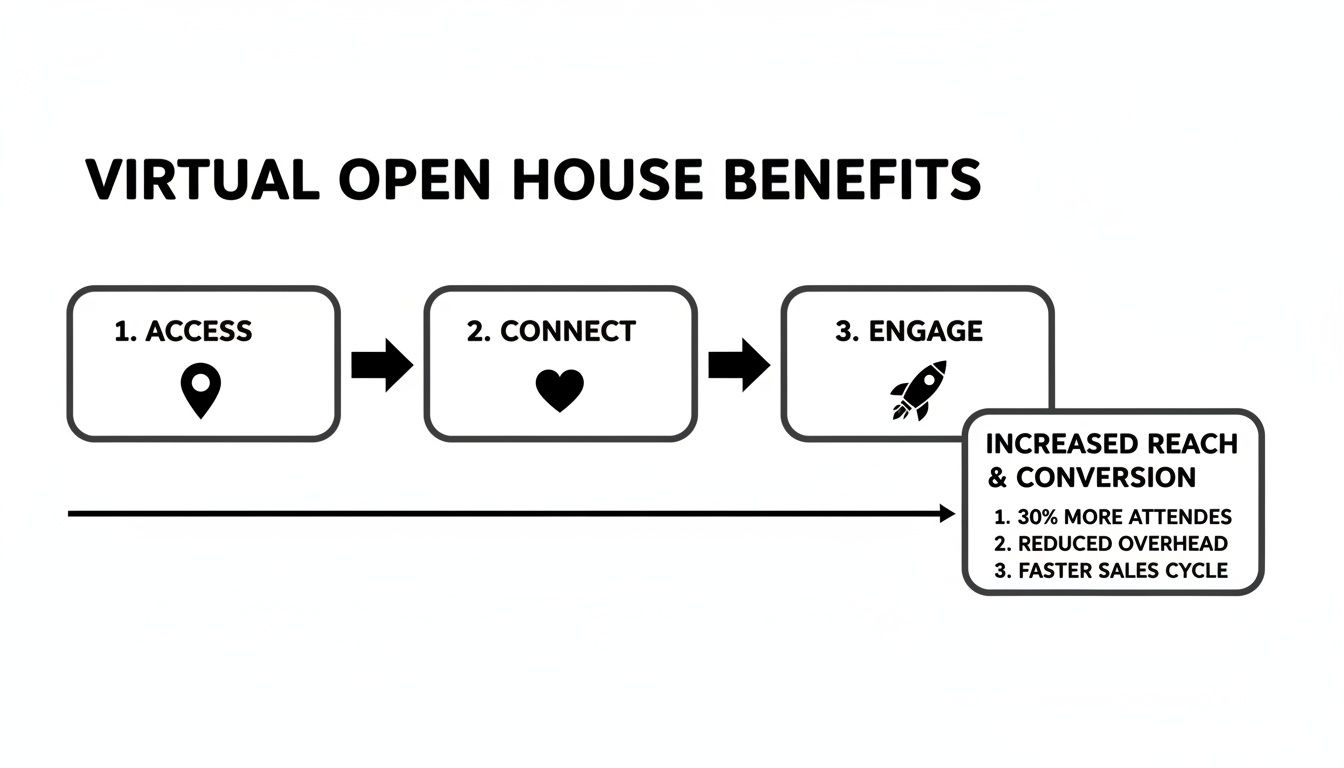
As you can see, making your school more accessible online creates new chances to connect on an emotional level, which is what ultimately drives engagement and turns curious parents into enrolled families.
Choosing the Right Technology Platform
The platform you pick can honestly make or break the entire experience for your attendees. It’s not about finding the tool with the most bells and whistles; it’s about finding the one that’s the right fit for your specific goals, audience, and budget. For a broader look at event strategy, our guide on how to plan virtual events offers some great additional context.
Picking the right platform is a big decision, so let's break down the most common options to help you figure out what makes sense for your school.
Choosing Your Virtual Open House Platform
| Platform Type | Best For | Key Features | Potential Drawbacks |
|---|---|---|---|
| Social Media Live (Facebook, Instagram) | Quick, informal events targeting a broad, existing audience of followers. | Free to use, taps into your built-in audience, incredibly easy to promote. | Limited registration tracking, fewer interactive tools like polls or Q&A modules. |
| Meeting Software (Zoom, Google Meet) | Smaller, highly interactive sessions where that face-to-face connection is key. | Breakout rooms for small groups, easy screen sharing, feels more personal. | Can feel less polished or professional; potential for "Zoom fatigue." |
| Webinar Platforms (Demio, WebinarJam) | Polished, large-scale presentations with robust marketing automation features. | Custom registration pages, automated email reminders, polls, advanced analytics. | Can be costly, and there's often a steeper learning curve to master the software. |
See how the tool shapes the event? If your goal is to foster personal connections, a meeting tool like Zoom with breakout rooms for athletics, arts, and lower school is a fantastic choice. But if you’re aiming for a polished, broadcast-style presentation for hundreds of families, a dedicated webinar platform is absolutely the way to go.
Crafting an Agenda That Tells a Story
Your virtual open house agenda shouldn't just be a list of speakers and times. It needs to be a narrative—a journey that walks a family through the experience of discovering what makes your school special. A compelling story keeps viewers hooked from the opening hello to the final thank you.
Try structuring your event flow like this:
The Welcome (5-10 mins): Kick things off with a warm, energetic welcome from your Head of School. This is your chance to set the tone and immediately communicate your school's core mission and values.
The Campus Experience (15-20 mins): Time for the virtual tour. A pre-recorded video is fine, but from what I've seen, a live-guided tour led by an enthusiastic student ambassador almost always feels more authentic and engaging. This mirrors trends in other industries; for example, 77% of real estate buyers prefer a virtual tour before seeing a property in person, which shows just how much people value immersive digital walkthroughs.
The Academic Heartbeat (20-25 mins): This is the core of your event. Host a live Q&A panel with key faculty and department heads. It’s the perfect forum for parents to get their most pressing academic questions answered and to see the genuine passion your teachers have for their subjects.
The Student Voice (10-15 mins): Don't forget this part! Feature a panel of current students. Their unscripted, honest perspectives on everything from making friends to their favorite classes are often the most persuasive and memorable part of the entire open house.
The Next Steps (5 mins): End with a clear, direct, and compelling call-to-action that circles right back to your main goal. Give them a direct link to apply, schedule a one-on-one call, or download an information packet. Don't leave them guessing what to do next.
Promoting Your Event to Attract the Right Families
You can plan the most engaging, polished virtual open house on the planet, but it won't matter if the right families don't show up. Getting the word out is more than just posting on social media; it’s about strategically reaching and attracting families who will genuinely thrive in your school's community. The key is a multi-channel approach that builds real excitement and makes signing up a breeze.
Everything starts with a dedicated landing page. This isn't just another entry on your website's calendar—it needs to be the central hub for your event. Pack it with compelling photos and videos, a clear, benefit-driven description of what families will experience, the agenda, and short bios of the key people they'll meet. And most importantly, have a simple, can't-miss registration form right at the top.
Building Your Promotional Timeline
A last-minute promotional blitz rarely works. What you're aiming for is a steady drumbeat of communication that gets louder and more frequent as the event gets closer. This builds momentum and keeps your school top-of-mind for busy parents.
Here’s a simple timeline I’ve seen work wonders:
- 4 Weeks Out: This is your "save the date" moment. Announce the event to your email list and post it across all your social media channels.
- 2 Weeks Out: Time to start digging into the details. Send a more focused email campaign highlighting a specific session or a popular speaker. On social media, share student testimonials or behind-the-scenes clips.
- 1 Week Out: Ramp up the frequency. Send a reminder email and get creative on social with countdown timers in your stories to create a little friendly urgency.
- Day Before & Day Of: The final push. Send reminder emails to everyone who registered. A quick "we're going live in an hour!" message is incredibly effective at boosting that day-of attendance number.
The goal isn’t to spam families. It's to give them a new reason to be excited with each touchpoint. One day you might spotlight your incredible arts program; the next, you could introduce a beloved teacher who will be answering questions live.
Leveraging Digital Channels for Maximum Reach
To get in front of families who don't already know you, you'll need to put some budget behind digital advertising and start nurturing community partnerships. This is where you can get really specific, making sure your marketing dollars are reaching families in the right neighborhoods or with kids in the right age range.
Targeted Social Media Ads
Platforms like Facebook and Instagram are your best friends here. You can run ads targeted to parents within certain zip codes, those with children of a specific age, or even people who have shown interest in private education online. Use vibrant, student-centric visuals—short video clips of kids engaged in the classroom work so much better than static photos of your building.
Think about it this way: in real estate, listings with virtual tours get 87% more views. That shows you just how much a compelling digital preview matters to an audience making a big, personal decision.
Email Marketing Campaigns
Your existing email list is gold. Don't just send one generic blast to everyone, though. Segment your audience. The message you send to prospective families who have inquired in the past should feel different from the one you send to current parents, whom you can ask to share the event with their friends and neighbors. For more great ideas, check out our guide on event marketing strategies.
Community Partnerships and Outreach
Never underestimate the power of old-fashioned, local connections. Building real relationships with other organizations in your area can introduce your school to a whole new stream of families looking for the right fit.
Think about partnering with:
- Local Realtors: They’re often the first people that relocating families talk to. Give them a digital flyer or a simple one-pager they can easily share with clients.
- Major Employers: Many large companies in your town have internal newsletters or resources for employees moving to the area. A simple ask could get your virtual open house featured.
- Feeder Preschools or Daycares: Get to know the directors and share information about what makes your lower school programs special.
To really dig into what works, it’s worth exploring proven tactics for how to increase event attendance. By combining a smart digital strategy with genuine community outreach, you'll fill your virtual room with families who are truly excited to discover what makes your school the perfect place for their child.
Executing a Seamless and Engaging Live Event
The promotional work is done, families are registered, and the big day has finally arrived. All your focus now shifts to execution. A fantastic live event feels completely effortless to the audience, but we know that behind the scenes, it’s a carefully choreographed performance. It's that blend of solid technical prep and genuine human connection that really lets your school's personality shine.
The absolute key to a smooth "game day" is a thorough rehearsal. I'm not talking about just reading through a script; I mean a full technical and content dry run. This practice session is your golden opportunity to iron out awkward transitions, test every single link you plan to share, and make sure each presenter’s audio is perfectly clear.
More importantly, it’s about assigning clear roles. Your live event is not a one-person show. You need a dedicated team managing the moving parts so your main presenters can forget the tech and focus entirely on connecting with your future families.
The Pre-Event Rehearsal Checklist
About an hour before you go live, get the entire event team together for a final huddle. Running through this list will calm everyone's nerves and catch any last-minute gremlins before a single family joins.
- Tech Check: Is the internet connection solid? Have every presenter confirm their camera is at eye level with good lighting. Test microphones one last time to kill any echo or annoying background noise.
- Role Confirmation: Make sure everyone knows their job. Who's the main host? Who’s clicking through the slides or playing videos? And most critically, who is the dedicated Q&A moderator? This person is your engagement MVP.
- Content Review: Are the final versions of all slides, videos, and poll questions loaded into the platform? Double-check that any links you’ll be sharing in the chat are correct and actually work.
- Emergency Plan: What’s the plan if the main host’s internet suddenly drops? Designate a co-host who can immediately jump in and keep the event moving without missing a beat.
This final run-through is what transforms a potentially chaotic broadcast into a professional, polished experience. It's the single best thing you can do to ensure your team is ready for anything.
Keeping Your Audience Engaged from Start to Finish
Let's be honest, the biggest challenge of any virtual open house is holding your audience's attention. Unlike an in-person event, online attendees are just one click away from their inbox. To keep them locked in, you have to make the event interactive, not just a passive lecture.
Kick things off with a simple, low-stakes engagement tool. A live poll is perfect for this. Ask a fun question like, "What are you most excited to learn about today?" or "What grade is your child entering?" It immediately gets attendees participating and gives you real-time insight into what they care about most.
Throughout the presentation, the chat function is your best friend. Your Q&A moderator should be actively encouraging questions and even pulling interesting comments to share with the presenters. This simple act makes the audience feel heard and turns a one-way broadcast into a lively two-way conversation.
The goal isn't just to present information; it's to create a shared experience. When a parent asks a great question in the chat and the Head of School answers it live, it builds a powerful sense of community and shows you’re truly listening.
On-Camera Confidence and Talking Points
For many educators and school leaders, being a "presenter" doesn't come naturally. The secret to feeling confident on camera is to be prepared but not over-rehearsed. Forget the word-for-word script and instead equip your speakers with a clear set of talking points for each segment.
This approach allows their genuine personality and passion to come through. Encourage them to share personal anecdotes! A quick story about a student's "aha!" moment in class is far more memorable and impactful than just reciting curriculum details from a slide.
Here are a few quick tips for your speakers:
- Look at the Camera: It feels a little strange at first, but looking directly at the camera lens is the virtual equivalent of making eye contact. It creates a much stronger connection with every single viewer.
- Use Natural Gestures: Don't be afraid to use your hands and smile. Body language absolutely translates on screen and makes you appear more approachable and energetic.
- Vary Your Vocal Tone: A monotone presentation is an instant snooze-fest. Encourage speakers to vary their pitch and pace to keep the energy up and emphasize key points.
Troubleshooting Tech Glitches with Grace
Even with the best preparation, tech issues happen. Someone's audio might cut out, a video might refuse to load, or the whole platform could lag. How your team handles these moments says a lot about your school's poise and professionalism.
The number one rule is to stay calm and acknowledge the issue directly. A simple, "It looks like we've lost Mr. Smith's audio for a moment; while we get him back, let's jump to the next question in the Q&A" shows everyone you're in control.
This is another reason why having a dedicated technical person is so critical. While your host keeps the audience engaged, your tech lead can be working behind the scenes to solve the problem. This division of labor ensures a minor glitch doesn't derail the entire event.
Turning Attendees into Applicants After the Event
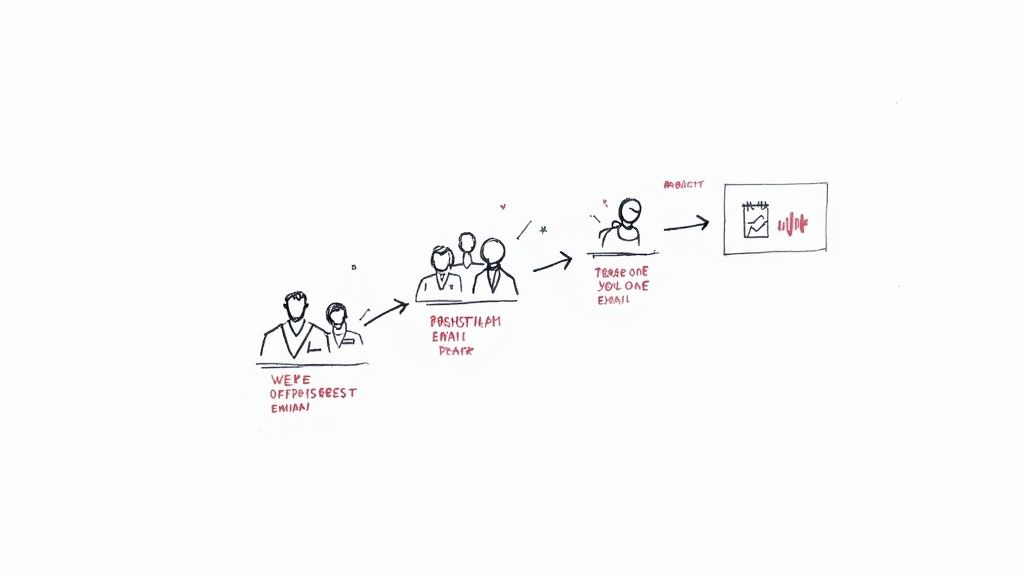
Once the live broadcast ends, the real work for your admissions team is just getting started. The true value of your virtual open house isn't in the event itself but in what you do in the hours and days that follow. A prompt, personal, and purposeful follow-up strategy is what converts curious families into committed applicants.
That first 24-hour window is golden. The excitement from the event is still fresh, and you need to capitalize on that momentum. Your first email should be a thoughtful thank-you, but it has to do more than just show gratitude.
This email absolutely must include a link to the event recording. Families will want to re-watch a specific part or share it with a partner who couldn't be there. Even more critical is a crystal-clear call-to-action (CTA). Don't make them guess what's next. Point them directly toward scheduling a one-on-one virtual chat, exploring your financial aid page, or starting the online application.
Segmenting Your Follow-Up for a Personal Touch
Sending a generic, one-size-fits-all email is a recipe for low engagement. The secret to a successful post-event nurture sequence is segmentation. Not every family had the same experience, so your communication shouldn't pretend they did.
Start by splitting your attendee list into a few key groups based on how they acted during the event. This lets you tailor your message for maximum impact.
- The Highly Engaged: These are the parents who asked great questions in the Q&A, voted in polls, and stayed until the very end. They're your warmest leads and deserve a high-touch, personal follow-up.
- The Quiet Observers: This group was present but didn't actively participate. They're definitely interested but might need a little more encouragement to move forward.
- The No-Shows: These families registered but couldn't make it. Their initial interest is still a valuable signal, so nurture them with a "sorry we missed you" email that includes the recording.
For your most engaged families, imagine the impact of a personal email from an admissions counselor that mentions a specific question they asked. That small detail shows you were actually listening and that you value their individual interest.
By segmenting your audience, you shift from broadcasting a generic message to having a personal conversation. A family who asked about the athletics program should receive a follow-up that directly links to your team pages, not just a general application link.
The follow-up process is where you truly convert interest into action. It's worth exploring lead nurturing best practices to build a solid pipeline. And if you want to automate this process, take a look at these email drip campaign examples to see how you can save time while still delivering personalized content.
Analyzing Key Metrics to Measure Success
With your follow-up emails out the door, it's time to measure your return on investment (ROI). Analyzing the data from your virtual open house doesn't just justify the effort; it provides the critical insights you need to make the next one even better.
Focus on these key performance indicators (KPIs) to get a clear picture of what worked:
- Attendance Rate: What percentage of people who registered actually showed up? A high rate means your pre-event promotion hit the mark.
- Average Viewing Duration: How long did attendees stick around? If you see a major drop-off at a certain point, go back and review that part of the recording to figure out why.
- Engagement Score: Most webinar platforms will tell you who participated in polls, asked questions, or clicked on shared links. This is how you identify your most qualified leads.
- CTA Click-Through Rate: This is the big one. How many people clicked the application or meeting scheduler link in your follow-up emails? This directly measures how well you converted interest into action.
By tracking these numbers, you can draw a straight line from your virtual event to actual applications. This data-driven approach helps you refine your strategy, prove the value of your marketing efforts, and ultimately, build a more predictable admissions funnel for your school.
Got Questions About Your Virtual Open House? We've Got Answers.
Even the most buttoned-up plan can leave you with a few lingering questions. When you're putting your school out there, you want to get it right. From timing to tech, we've heard it all from school marketing teams just like yours.
Think of this as your go-to FAQ. We’ll tackle the most common head-scratchers so you can move forward and host your event with confidence.
What’s the Sweet Spot for Event Length?
We've found that 60 to 90 minutes is the magic window. It’s long enough to give families the full picture—a warm welcome from your head of school, a compelling look at your campus, and that all-important Q&A with teachers and students—without seeing your attendance numbers drop off a cliff.
That said, one size doesn't fit all. If you're targeting a very specific group, like prospective kindergarten families or those interested in your IB program, a shorter, more focused session of 30-45 minutes can be incredibly effective. Just make sure you share a clear agenda beforehand. When families know what to expect, they can plan their time and show up ready to engage.
An engaging 60-minute event that leaves families wanting more is always better than a passive two-hour presentation that has them quietly dropping off. Respect their time, and they’ll be more likely to take the next step.
If You Can Only Nail One Thing, What Should It Be?
Great video quality and a stable internet connection are table stakes. But the single most important element for a virtual open house that truly works? Authentic engagement.
Families can find facts and figures on your website. They're showing up to your event to get a feel for the real people—the community—that make your school special.
This is where live, unscripted Q&A panels with current students, passionate teachers, and your school leadership become your most powerful tool. The personal stories, the genuine back-and-forth, and the candid moments are what stick. Your goal isn't just to present information; it's to translate your school's unique, welcoming culture to a digital format. That only happens through real human connection.
How Can We Make a Virtual Tour Actually Feel… Real?
Let's be honest: a slideshow of building photos isn't a "tour." To make families feel like they’re actually walking the halls with you, you need to think more dynamically.
- Go 360: A 360-degree camera lets you build an interactive, self-guided walkthrough. Parents can explore the library, peek into the science labs, and check out the gym on their own time.
- Try a "Live-Guided" Tour: Give an enthusiastic student ambassador a smartphone on a gimbal and have them lead a live walk-through. It feels incredibly personal and lets them answer questions from the chat in real-time as they move through campus.
- Embed Rich Media: Take your tour to the next level by embedding short video clips. Imagine a prospective parent clicking on the art room and a 30-second time-lapse of students at the pottery wheel pops up. These little touches are what bring your spaces to life.
What Kind of Follow-Up Actually Gets a Response?
Your work isn't over when the live stream ends. The best follow-up is prompt, personal, and tells people exactly what to do next.
Within 24 hours, send a thank-you email with a link to the recording. But don't stop there. Segment your list. For the highly engaged families—the ones who asked great questions or stayed for the whole event—have an admissions counselor send a personal note inviting them to a one-on-one video chat. For everyone else, offer a clear and simple call-to-action, like a direct link to your online application or information on scheduling a personal tour. Guide them to the next step while the good feeling is still fresh.
At The MarCom Society, we provide the resources, expert guidance, and supportive community K-12 marketing professionals need to master challenges like planning the perfect virtual open house. Join us to connect with peers and access the tools that will elevate your school's strategy. Learn more at https://marcomsociety.org.









