Let's be honest, trying to manage a school's marketing without a plan is like trying to herd cats during a fire drill. It's chaotic. That's where a content calendar comes in—it’s the tool that brings order to the chaos.
At its simplest, a content calendar is your master plan for everything you publish. It's a detailed schedule showing what content you're creating, where it’s going, and when it’s going live. But it's much more than a to-do list; it’s your team’s single source of truth.
Understanding Your Content Calendar
Think of it as your marketing GPS. Instead of just winging it and posting whenever you remember, a content calendar gives you a clear roadmap. It guides every blog post, social media update, and newsletter, turning that frantic, last-minute scramble into a proactive, well-oiled machine.
This structured approach is a game-changer for any busy school MarCom team. It gives you a bird's-eye view of your entire content strategy, ensuring that crucial admissions deadlines or big school events don't get lost in the shuffle.
If you want to get into the nitty-gritty, you can delve deeper into what a content calendar is and how it works. Ultimately, a good calendar helps your team work smarter, not just harder.
At its core, a content calendar answers four key questions for every piece of content you create: What will be published, Where it will be published, When it will go live, and Who is responsible for it.
Core Components of an Effective Content Calendar
A truly effective calendar goes beyond just dates and topics. The table below breaks down the essential information that transforms a basic schedule into a powerful strategic asset for your team.
| Component | Purpose and Benefit |
|---|---|
| Content Topic/Title | Clearly defines the subject, eliminating any confusion about what's being created. |
| Content Format | Specifies the type (e.g., Blog Post, Video, Instagram Story) to align with channel strategy. |
| Target Audience | Ensures the content is relevant by identifying who it's for (e.g., Prospective Parents, Current Students, Alumni). |
| Key Message/Goal | Outlines the main takeaway or desired action (e.g., Drive Open House RSVPs), keeping content purposeful. |
| Owner/Author | Assigns clear responsibility, preventing tasks from falling through the cracks. |
| Status | Tracks progress (e.g., In Progress, Awaiting Review, Scheduled) for complete workflow visibility. |
| Publication Date | Sets the deadline and ensures a consistent, timely flow of content. |
| Distribution Channels | Lists all platforms where the content will be shared (e.g., Facebook, Newsletter, Website), maximizing its reach. |
By including these details, your calendar becomes a command center, not just a list of dates.
This level of planning empowers your team to maintain a consistent voice and build a much stronger, more reliable presence for your school. When workflows are organized, you can stop putting out fires and start creating high-quality content that actually connects with your community and delivers real results. It's about being intentional, not just being busy.
Why a Content Calendar Is Your Strategic Advantage
Let's be honest, in the fast-paced world of school marketing, it’s easy to feel like you're constantly playing catch-up. A content calendar is what gets you out of that reactive chaos and puts you firmly in control. Think of it less as a simple schedule and more as your team's strategic playbook.
Without a plan, the daily scramble of "What are we posting today?" leads to burnout and inconsistent messaging. A content calendar eliminates that last-minute panic. It gives your team the breathing room to be creative and intentional, knowing exactly what's on deck for the next week, month, or even quarter.
Your content calendar becomes the single source of truth for everyone—writers, designers, social media managers, you name it. It’s the shared vision that gets everyone rowing in the same direction, making true collaboration not just possible, but easy.
When everyone is aligned, the quality of your content naturally skyrockets.
From Haphazard to High-Impact
Posting on a whim means you're almost certainly missing golden opportunities to connect with your community. A content calendar forces you to think ahead about the entire school year—admissions deadlines, spirit week, graduation, and everything in between. This ensures your messaging is always timely and hits the mark.
This proactive approach has become essential. With over 5.42 billion people on social media worldwide, the competition for attention is incredibly stiff. It’s no surprise that the most successful teams are the most organized. In fact, a whopping 70% of marketers report that having a content plan helps them hit deadlines and stay consistent. You can dig deeper into why that is with these social media statistics.
The Real-World Benefits
So, what does this actually look like for your team? Putting a content calendar into practice unlocks some serious advantages:
- Become More Consistent: A regular posting rhythm builds anticipation and trust with your audience. They’ll start looking forward to your updates.
- Work Better Together: With a clear roadmap, there’s less back-and-forth and fewer misunderstandings. Everyone knows their role.
- Align with School Milestones: You can effortlessly plan content that supports big events, from fundraising campaigns to the first day of school.
- Create Higher-Quality Content: When you aren't rushing, you have time for better brainstorming, writing, and design. The end result is content you’re actually proud of.
- See What’s Working: A planned approach makes it much easier to track your results. You can finally get real data on what resonates with your audience and do more of it.
Building Your High-Impact Content Calendar
So, what separates a game-changing content calendar from just another spreadsheet? Think of it less like a list of dates and more like your school's marketing command center. Its real job is to transform big-picture goals into clear, concrete tasks that everyone on your team can rally behind.
A great calendar is your best defense against chaos. It’s what prevents those last-minute scrambles for an admissions event and instead delivers a smooth, multi-channel campaign that looks effortless from the outside. Every single entry should tell you everything you need to know in a single glance.
The Essential Building Blocks
To get that at-a-glance clarity, you need a few core components. These aren't just nice-to-haves; they are the non-negotiable fields that turn a simple schedule into a powerful project management tool.
Let's say your MarCom team is gearing up for the annual Open House. An entry for a single promotional video might look something like this:
- Publication Date: October 15th, 9:00 AM
- Target Platform: Instagram Reels, Facebook Page, School Website
- Content Format: 60-second vertical video
- Topic/Goal: Showcase student testimonials to drive Open House registrations.
- Owner: Sarah (Videographer) & James (Social Media)
- Creative Assets: Link to the final video file in Google Drive
- Copy: Link to the approved caption text in a shared document
- Status Tracker: A dropdown showing its current stage (e.g., Filming, Editing, Awaiting Approval, Scheduled)
By mapping out these details for every single piece of content, you're creating a foolproof roadmap. No more digging through emails to find out who's in charge, where the final video is saved, or when it's supposed to go live.
This is the level of detail that turns your calendar into a true strategic asset. It ensures every tweet, blog post, and video has a distinct purpose and a clear path to publication.
When your team has this kind of structure, they can stop chasing down missing information and start focusing their energy on what really matters: creating fantastic content that connects with your families. This is the secret to keeping your school's voice consistent and your quality high across every channel.
How to Create Your Content Calendar From Scratch
Building a content calendar from scratch can feel like a massive undertaking, but it’s really about creating a system that fits your school's unique rhythm and goals. The first step? Choosing the right tool. This could be something as simple as a Google Sheet, a visual Kanban board like Trello, or a more powerful project management hub like Asana.
Don't get bogged down by options. The best tool is the one your team will actually open and use every day. If you're new to this, it's worth learning the fundamentals of how to create an editorial calendar to get your bearings.
Define Your Core Elements
With your tool selected, it's time to build the foundation. A good calendar isn't just about plugging in dates; it’s a strategic map that guides an idea all the way to a published piece of content.
Start by defining the essential information for every single entry. At a minimum, you'll want to track the publish date, the type of content (blog, video, social post), and its current status.

This simple structure creates clarity. You can see at a glance what’s due, what format it needs to be in, and how far along it is. It's the framework you need to start brainstorming a backlog of ideas without losing track of anything.
Choosing the Right Content Calendar Tool
Picking a platform can be tricky. This table breaks down common options to help you find the best fit for your team's size, budget, and workflow.
| Tool Type | Best For | Pros | Cons |
|---|---|---|---|
| Spreadsheets (Google Sheets, Excel) | Small teams or solo managers on a tight budget. | Highly customizable, free or low-cost, easy to share. | Lacks automation, can become cluttered, no built-in notifications. |
| Kanban Boards (Trello, Asana) | Visual thinkers and teams managing a multi-step workflow. | Great for tracking progress, intuitive drag-and-drop interface, good collaboration features. | Can get overwhelming with too many projects, less ideal for long-term planning. |
| All-in-One Platforms (CoSchedule, Sprout Social) | Larger MarCom teams needing scheduling, analytics, and collaboration in one place. | Automates posting, provides performance data, centralizes all content activities. | Can be expensive, may have a steeper learning curve. |
Ultimately, start with what feels manageable and don't be afraid to switch later as your team's needs evolve.
Establish a Realistic Workflow
This is the most critical step for making your calendar stick. A beautiful calendar that no one can keep up with is useless. You need to establish a realistic production workflow and posting cadence.
Be honest about how often your team can create high-quality content for each channel.
- Brainstorm Content Ideas: Schedule regular meetings to generate a pipeline of ideas. Tie them directly to school events, key admission dates, and your big-picture marketing goals.
- Assign and Schedule: Plot those ideas on the calendar. Give every piece of content an owner and set clear deadlines for each stage—drafting, design, review, and final approval.
- Set a Cadence: Figure out a posting frequency you can actually sustain. Consistency is far more important than volume.
For MarCom teams whose work is heavily focused on social platforms, we have a more specialized guide on how to create a social media content calendar. Following these steps will turn your content calendar from a chore into your most reliable, stress-reducing tool.
Using Your Calendar to Drive Real Engagement
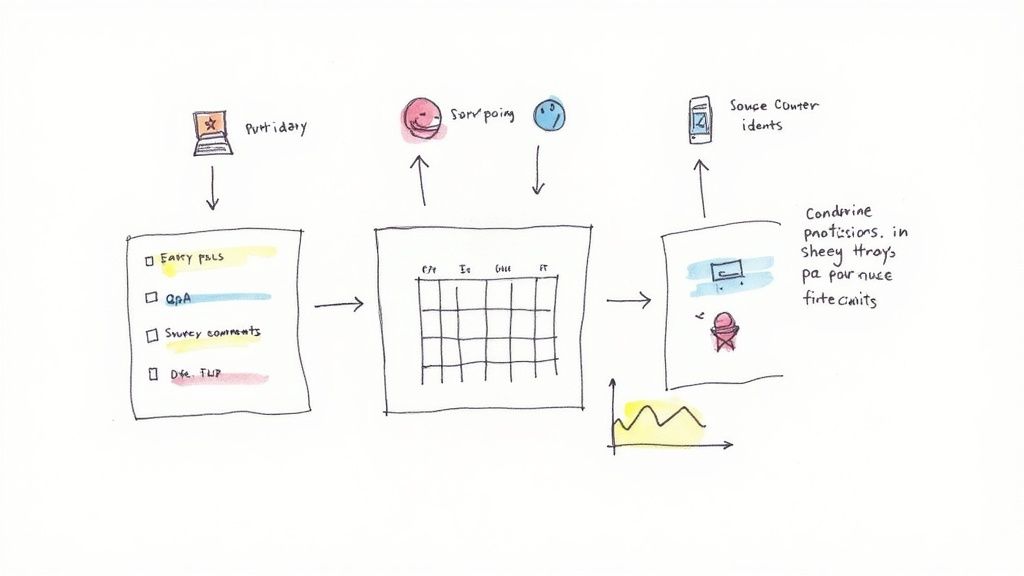
A great content calendar is so much more than a glorified to-do list. It's the secret weapon for actually boosting how your community interacts with your school's brand. When you stop thinking about it as just a scheduling tool, you can transform it into a dynamic engine for your entire content strategy.
This really comes down to planning with your audience's habits in mind. When are prospective parents mindlessly scrolling through Facebook during their lunch break? What time of day are current students most likely to be checking Instagram? Your calendar is what allows you to drop your content at the exact moment your audience is there to see it.
Mix Your Content for Maximum Impact
Think about it—if every single post is just another plug for an upcoming open house, your audience will start to tune you out. Fast. A well-planned calendar helps you intentionally create a healthy mix of content that keeps your community genuinely interested and coming back for more.
You need to aim for a balanced diet of content that includes a little bit of everything:
- Educational Content: Give them real value. Think blog posts like "5 Tips for a Smooth Middle School Transition" or a video spotlight on a beloved faculty member.
- Entertaining Content: Show off your school's personality! Share behind-the-scenes clips from Spirit Week or a fun "day in the life" takeover on Instagram Stories.
- Interactive Content: Don't just talk at them; get them involved. Use the calendar to schedule polls, "Ask Me Anything" sessions with the Head of School, or even a live campus tour.
This isn't just theory; it’s a proven approach. In fact, teams that plan their content this way often see a 30-40% increase in engagement compared to those who just post on a whim. Planning ahead ensures your messaging stays relevant and is perfectly timed for impact. You can dig into more stats on how structured planning boosts social media marketing to see for yourself.
Your calendar isn't just for what's coming up—it's a goldmine of data about what already worked. Use it to track which topics got the most likes, shares, and comments, and let that information guide your next move.
This is how your calendar becomes a living, breathing document. It starts to evolve based on what truly connects with your audience, helping you get smarter and more effective over time. And when you find a winner, don't just let it fade away! Check out these content repurposing strategies to give your best-performing posts a second life.
The Future of Content Planning with AI
Artificial intelligence isn't some far-off idea anymore. For school MarCom teams, it's becoming the secret weapon for smarter, more effective content planning. Think of AI as your newest team member—one that handles all the tedious, time-consuming work.
It's like having a data analyst built right into your content calendar. Instead of just guessing when to post on Instagram, AI can analyze your past engagement and tell you the exact times your audience is most active. It can also sift through trends to suggest blog topics that will actually get clicks from prospective parents or alumni.
By taking over the repetitive work, AI frees up your team's most valuable asset: their creativity. The focus shifts from administrative grunt work to crafting the compelling stories that build your school's community.
It’s no surprise that over 80% of marketers are now using AI to sharpen their strategies. The right tools can slash planning time by up to 60% and have been shown to boost engagement by 25% simply by making sure your content hits at the right time. You can find more details in these AI-driven content marketing statistics.
This isn't just about efficiency; it's about making your content calendar a proactive, intelligent tool. For a closer look, check out our guide on how to use AI in marketing.
Have Questions? We Have Answers.
So, you're sold on the idea of a content calendar, but the practical side of things feels a little fuzzy. That's completely normal. Let's walk through some of the most common questions that pop up when school MarCom teams start putting their plans into motion.
How Far Out Should We Plan?
This is the big one, isn't it? A great rule of thumb is to have your content fully planned one month in advance. This gives you enough breathing room for creating, reviewing, and getting approvals without feeling like you're locked into a rigid, year-long plan.
Of course, for those larger, can't-miss school events—think admissions season, fundraising galas, or homecoming—you’ll want to sketch out the major beats three to six months ahead. This isn't about writing every social post, but about mapping out the key themes and deadlines so nothing catches you by surprise.
What’s the Difference Between a Content Calendar and an Editorial Calendar?
You'll hear people use these terms as if they're the same thing, but there's a small but important distinction.
An editorial calendar is usually more focused, mapping out bigger, long-form content pieces like blog posts, magazine articles, and newsletters. A content calendar, on the other hand, is the whole shebang. It’s a comprehensive map of all your marketing activities, from social media updates and videos to event promotions on every single channel.
How Often Should We Update This Thing?
Think of your content calendar as a living, breathing guide, not something you carve in stone. You should be glancing at it weekly. This is your chance to track what's been posted, see what's coming up, and make minor tweaks based on what's happening at your school or what your analytics are telling you.
Then, set aside time for a more strategic review monthly. This is when you'll look back at what worked, what didn't, and start planning out the details for the next month.
Ready to stop the content chaos and build a smarter strategy for your school? Join The MarCom Society, the exclusive professional community for K-12 marketing leaders. Get access to expert workshops, practical resources, and a supportive network to help you master your content planning. Learn more and become a member today!