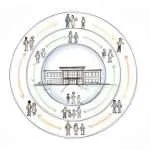
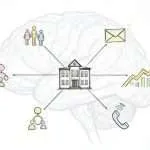
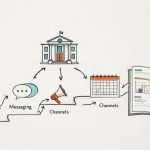
Think of your school community like a big family reunion. You wouldn't give the exact same speech to your retired grandparents, your teenage cousins, and the toddlers running around, right? You'd talk to each group differently because they care about different things. That's the essence of audience segmentation.
Instead of blasting the same message to everyone—from prospective parents to alumni—you split your community into smaller, more focused groups. This allows you to craft messages that actually matter to them, making your communication far more effective.
What Is Audience Segmentation in a School Setting?
Let's stick with that teaching analogy. Imagine a teacher trying to use the same lesson plan for a room full of kindergarteners, 8th graders, and high school seniors. It would be a total flop. Each group is at a completely different stage, with unique needs and interests.
Audience segmentation is simply applying that same logic to your school's marketing and communications. It's the move from a one-size-fits-all broadcast to a series of meaningful, targeted conversations.
An email about kindergarten registration is mission-critical for parents of four-year-olds, but it's just clutter for a family with a child graduating high school. By segmenting, you make sure the right people get the right information, exactly when they need it most.
The Shift From Broadcasting to Connecting
At its core, audience segmentation is about one simple truth: your "audience" isn't one giant blob. It’s a mosaic of different people, each with their own unique connection to your school.
You can group them based on all sorts of things:
- Demographics: Think simple facts like their child's grade level, their home zip code, or even their preferred language.
- Behaviors: Who's actually engaging? You can track which families came to the last open house, who clicked on the annual fund link, or who downloaded the admissions viewbook.
- Interests: Some parents might be all-in on your STEM programs, while others are laser-focused on fine arts or athletics.
Sorting your community this way completely changes the game. And the numbers back it up. Research consistently shows that segmented campaigns are responsible for about 77% of a marketing program's total ROI. Personalization pays off.
To help visualize this, here’s a quick breakdown of how these components work together in a school environment.
Audience Segmentation At a Glance
| Component | What It Means for a School | Why It Matters |
|---|---|---|
| Demographics | Grouping families by grade level, location (zip code), or language. | Ensures basic relevance. A middle school parent doesn't need info about the elementary school book fair. |
| Behaviors | Identifying who attended an event, opened an email, or visited a specific webpage. | It shows you who is actively engaged and what they care about, letting you follow up with relevant information. |
| Interests/Psychographics | Segmenting based on expressed interests like arts, athletics, or STEM programs. | This allows for deep personalization, making families feel like you truly understand what they're looking for. |
This table just scratches the surface, but it highlights the shift from generic messaging to strategic, relationship-focused communication.
Building Stronger School Relationships
This isn't just about making your marketing more efficient; it's about building real, lasting relationships.
When a prospective family gets an email that speaks directly to their child's grade level and passions, they feel seen. They feel understood. When current parents only get updates that apply to their child's specific campus or activities, they're far less likely to tune out from "newsletter fatigue."
Ultimately, segmentation is a cornerstone of great school communication. It’s how you build trust, drive key goals like enrollment and retention, and create a community that feels truly connected. By speaking to what each group cares about, your school’s message becomes a welcome resource, not just another email in an overflowing inbox. This approach is a vital piece of a much larger puzzle, which you can explore in our guide on what is organizational communication.
The Four Core Methods of Audience Segmentation
You don't need a Ph.D. in data science to truly understand your school community. It’s really about sorting your audience into practical groups so you can connect with them on a more human level. Think of it like a librarian organizing shelves—you wouldn't just throw all the books into one big pile. In the same way, we can organize our school community using four main approaches.
Each of these methods gives you a different lens for seeing your audience, helping you shift from generic, one-size-fits-all announcements to conversations that actually mean something.
Let's dive into these four core strategies.
Demographic and Geographic Segmentation
The most common place to start is with demographic data. This is the straightforward, factual information you probably already collect about your families—the "who" of your audience.
Right alongside that is geographic segmentation, which is all about location. For schools, this is incredibly useful. You can group your audience based on where they physically live, which helps focus your local outreach.
Here are a few ways you might use this:
- Grade Level: Creating separate communications for your elementary, middle, and high school communities.
- Zip Code or Neighborhood: Sending targeted information to prospective families in key feeder districts or a new housing development nearby.
- Program Enrollment: Building specific lists for students in specialized tracks like STEM, IB, or the arts.
Getting this foundational layer right ensures your basic messages hit the mark. A family zoned for a different high school doesn't need your enrollment reminders, and a high school parent probably isn't interested in the details of the kindergarten play.
This infographic shows how these benefits come together to help you hit your marketing targets.
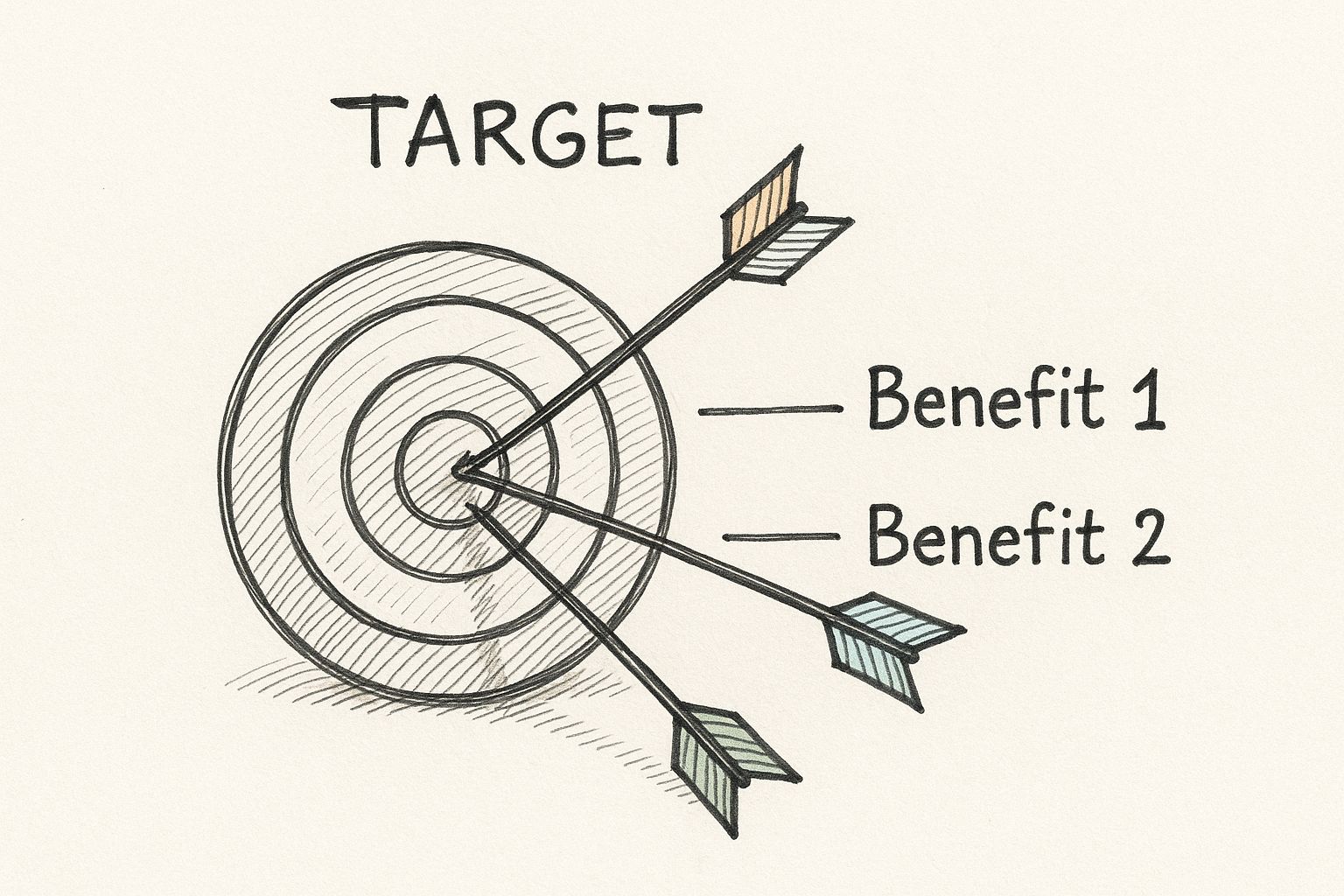
When you apply these simple filters, your school’s communication instantly becomes more precise and relevant, which is a huge step toward reaching your goals.
Psychographic and Behavioral Segmentation
While demographics tell you who people are, psychographic segmentation gets to the heart of why they do what they do. This approach groups people by their shared values, lifestyles, and interests. Do you have a core group of parents who are deeply invested in competitive athletics? What about families who chose your school for its arts program? Understanding these underlying motivations helps you craft messages that truly resonate.
Finally, we have behavioral segmentation, which is all about action. This method looks at how people have already interacted with your school. In my experience, this is often the most powerful way to predict future engagement because it’s based on what people do, not just what they say.
Behavioral segmentation is powerful because it's based on demonstrated interest, not assumptions. It allows you to respond directly to the actions your community members take, creating a highly relevant and timely dialogue.
You could create segments based on actions like:
- Attending a campus tour or open house
- Clicking a link in an admissions email
- Donating to last year's annual fund
- Regularly visiting the athletics page on your website
These four methods—demographic, geographic, psychographic, and behavioral—are the building blocks of any solid segmentation plan. For a deeper dive into dividing your audience, you might find some useful ideas in these 10 Key Customer Segmentation Strategies.
By combining these approaches, you can move beyond blasting the same message to everyone. You start showing families that you see them, you understand them, and you know what truly matters to them.
How Segmentation Changes Everything for Your School's Communications
Making the switch from a generic, one-size-fits-all communication strategy to a segmented one is where the real magic happens for K-12 schools. This is the point where the theory of what is audience segmentation translates into real-world results. Instead of just blasting out mass emails and hoping for the best, you start to see genuine movement on your most important goals.
When you get this right, you’ll see how a strategic shift in your communications directly impacts the school’s success—from filling those empty seats to building a more connected and vibrant community. The benefits are impossible to ignore.

Boosting Enrollment by Being More Relevant
Put yourself in the shoes of a parent searching for the perfect kindergarten. You get an email from a local school that talks specifically about kindergarten readiness, highlights its early-learning curriculum, and even includes a video tour of the pre-K classrooms. That message feels like it was written just for you, right?
That’s the power of segmentation at work. By zeroing in on prospective families with young children, you can craft recruitment messages that answer their specific questions and calm their biggest worries. It’s an approach that feels personal and is far more persuasive than a generic "enroll now" banner, leading directly to better inquiries and more applications.
Deepening Engagement with Parents and the Community
We've all heard of "newsletter fatigue." It's a huge challenge for school communicators. When parents are constantly flooded with information that doesn't apply to them—think middle school sports schedules sent to an elementary family—they eventually start ignoring everything you send.
Segmentation is the cure. It ensures every message that lands in an inbox is genuinely useful. The parent of a high school junior gets timely reminders about college prep workshops. A fifth-grade family gets a heads-up about the upcoming middle school transition night. Simple, but incredibly effective.
By sending relevant content, you show families that you respect their time. That builds trust and trains your community to actually open your emails, because they know the information inside will matter to them.
The payoff? Higher open rates, better event attendance, and a parent community that feels connected and in the loop. This fosters a much stronger school culture where everyone feels seen and heard.
Strengthening Fundraising Campaigns
Fundraising is another area where a segmented strategy delivers drastically better results. A generic, one-size-fits-all appeal for donations rarely gets people to act. But when you tailor your ask based on the recipient's connection to the school, the response can be night and day.
Think about how you could approach these distinct groups:
- Current Families: Your message could focus on how their donation will directly improve their own child's experience—maybe by funding new classroom technology or a specific program.
- Alumni: Here, you can lean into nostalgia and legacy. Ask them to "pay it forward" to give the next generation of students the same great opportunities they had.
- Local Business Partners: This conversation is about community impact and sponsorship perks. Frame the donation as a partnership that benefits everyone involved.
This kind of targeted communication shows you understand what motivates each group. It not just makes a donation more likely, but it also strengthens the long-term bond each of these groups has with your school, paving the way for a more sustainable culture of giving.
Audience Segmentation Examples for Schools
Knowing the theory is one thing, but seeing segmentation work in the real world is where it all clicks. So, let's move from the "what" to the "how" with three practical scenarios showing how K-12 schools can put these ideas into action. Think of these as a starting point you can adapt for your own enrollment, retention, and fundraising goals.

Example 1: Enrollment Campaign for a New Neighborhood
Picture this: a brand-new housing development pops up right inside your school's enrollment zone. Blasting a generic "Enroll Now" message into the digital ether is a shot in the dark. It’s far more powerful to speak directly to these new families.
- The Segment: Families who just bought a home in the new development. This is a classic geographic segment, and you can often identify this group through public records or hyper-targeted digital advertising platforms.
- The Tailored Message: Instead of a boilerplate welcome, your message leads by acknowledging their recent move. You can then highlight the things that matter most to relocating parents: the convenience of bus routes from their specific neighborhood, before-and-after-school care for working families, and a sneak peek at your school's standout programs.
- The Channels: A mix of targeted social media ads aimed at the new zip code, welcoming direct mail postcards, and even partnerships with local real estate agents can create a powerful first impression.
This approach immediately shows prospective families you understand their situation and have solutions ready to go. It makes your school feel like the obvious, helpful choice from day one.
Example 2: Retention Strategy for Transitional Grades
We've all seen it. Student retention can take a hit during those big transition years—like the jump from 5th to 6th grade or 8th to 9th grade. This is prime time for families to start looking around at other middle or high school options. A proactive, segmented communication plan can calm those nerves and reinforce their decision to stay.
- The Segment: Current families with students in those pivotal grades, like 5th and 8th graders. This combines demographic (grade level) and behavioral (approaching a transition point) data.
- The Tailored Message: The entire focus is on easing the transition. Your communications could feature a "Day in the Life of a 6th Grader" video, introduce middle school teachers, and get students excited about new opportunities like advanced classes, sports, or clubs they couldn't join in elementary school. The goal is to replace anxiety with anticipation.
- The Channels: A targeted email sequence sent only to this parent group, an exclusive "Middle School Preview Night" just for them, and video testimonials from current 6th or 9th graders sharing how great their experience has been.
By getting ahead of their questions and concerns, you make families feel seen and supported. That personal touch dramatically increases the chances they'll re-enroll.
By anticipating the questions and concerns of families at critical decision points, schools can transform potential attrition into a moment of renewed commitment. Segmentation allows for this kind of proactive, relationship-building communication.
Example 3: Fundraising Drive for a New STEM Lab
Let's look at a capital campaign for a much-needed STEM lab. Sending a one-size-fits-all donation request to your entire database is a recipe for a low response rate. Segmenting your appeal based on each group's unique connection to the school will bring in far better results.
- The Segments: You could break your audience into three main groups: recent alumni (graduated in the last 10 years), current parents, and local business partners.
- The Tailored Messages:
- Alumni: The message here is all about legacy and "paying it forward." You might ask them to help give today's students the cutting-edge resources they might not have had.
- Current Parents: This message is laser-focused on the direct benefit to their own children. You show them exactly how the new lab will enrich their child's learning and open doors for their future.
- Business Partners: The pitch shifts to workforce development and community partnership. You frame it as an investment in building a stronger future talent pool right in their backyard.
- The Channels: This calls for email campaigns with customized copy for each segment, personalized letters, and direct outreach to key business leaders in the community.
This strategy makes the donation request feel personal and relevant, which is key to inspiring people to give.
To really see the difference, let’s compare a generic approach with a segmented one for a common event like an open house.
Campaign Approach: Generic vs. Segmented
A generic message speaks to everyone and, therefore, no one in particular. A segmented message, on the other hand, connects with specific needs and motivations.
| Campaign Element | Generic Approach | Segmented Approach |
|---|---|---|
| Headline | "Join Us for Our Annual Open House!" | For Prospective Parents: "Is Our School the Right Fit for Your Child? Find Out at Our Open House!" For Community Members: "See the Great Things Happening in Your Community School!" |
| Email Body | A single email to all contacts with a list of dates, times, and general school information. | Separate emails: – Prospective Parents: Highlights specific grade-level programs, teacher introductions, and admissions info. – Community Members: Focuses on school achievements, community impact, and student performances. |
| Call to Action | "RSVP Here" | For Prospective Parents: "Book Your Personalized Tour Slot Now" For Community Members: "See the Event Schedule & RSVP" |
| Follow-Up | A thank-you email sent to all attendees. | A thank-you email with links to the application process for parents, and a different thank-you with a link to the school newsletter for community members. |
As the table shows, the segmented approach doesn't just change the words; it changes the entire conversation, making it far more likely to achieve specific goals with each group.
Getting Started with Segmentation Tools You Already Use
Diving into audience segmentation doesn’t mean you need to go out and buy a bunch of expensive new software. The good news? Your school is probably already sitting on a treasure trove of data and has all the tools you need to build smarter, more targeted communications. It's all about learning to see the potential in the tech you use every day.
Your first stop should be the most fundamental platform you have: your Student Information System (SIS). This is a goldmine for demographic and geographic information. In just a few minutes, you can pull distinct lists of families based on things like grade level, zip code, or whether their child is in a specific program like the school band or the varsity soccer team. Honestly, this is the simplest and most powerful first step you can take.
Tapping into Your Communications Platforms
Once you've got those basic lists from your SIS, you can take them to the next level by importing them into your communication tools. This is where you can start layering in behavioral data—the "what they do," not just "who they are." These platforms are designed to show you who is actually paying attention to what you send.
Think about your email marketing platform, whether it’s a tool like Mailchimp or Constant Contact. These systems are literally built for segmentation. You can create groups based on:
- Engagement level: Who are the parents that open every single newsletter versus those who haven't clicked on anything in six months?
- Topic interest: Who clicked on the link to learn more about the upcoming STEM fair or the admissions open house?
- Specific actions: Who actually finished that re-enrollment survey you sent out last week?
These actions are clear signals about what individual families care about most. Even your school's daily communication app, like ParentSquare or Remind, lets you create specific groups for different classrooms, clubs, and sports teams, which helps make sure every alert is genuinely relevant.
Understanding what is audience segmentation is less about buying new software and more about creatively using your existing resources. The goal is to move from a single, generic audience list to multiple, dynamic groups that reflect the real diversity of your school community.
Making Your Data Actionable
The push for data-driven marketing has made these everyday tools more powerful than ever. The audience analytics market was valued at around USD 5 billion in 2024 and is on track to nearly double by 2030, all because of the demand for more personal communication. Your school's tools are part of this bigger trend, giving you accessible ways to put these strategies to work. You can find more details on the growth of audience analytics tools here to see just how fast this space is moving.
By bringing together the demographic data from your SIS with the engagement metrics from your email and messaging platforms, you start to get a much richer, clearer picture of your community. Often, this integrated view can be managed right inside your school's Customer Relationship Management (CRM) system. If you want to dig deeper into that, you can learn more about the role of a CRM in education.
What you end up with is a practical, powerful segmentation strategy that doesn't add to your budget—it just makes better use of what you already have.
The Future of School Marketing with AI Segmentation
Looking down the road, it's clear that artificial intelligence is set to completely reshape how schools connect with their communities. The entire practice of audience segmentation is evolving from a manual, time-intensive chore into something far more predictive and automated. This isn't just a small tweak; it’s the next logical step in building genuine, lasting relationships with families.
AI-powered tools can churn through massive amounts of data—everything from website visits and email clicks to survey responses and social media interactions—spotting patterns a human would likely miss. Instead of just bucketing families by grade level, these systems can create highly specific segments based on predicted behaviors and unspoken needs.
From Reactive to Predictive Communication
Think about an AI that could analyze inquiry data and accurately predict which prospective families are most likely to enroll. This would let your admissions team focus their energy where it counts the most. Or, imagine a system that flags current families showing early signs of disengagement, giving you the chance to step in with support before they even think about leaving.
This isn't a sci-fi fantasy. It's the real-world application of AI in school marketing, a field that's growing incredibly fast. The AI marketing industry is on track to hit $356 billion by 2030, which tells you just how essential these tools are becoming. By looking at all this data together, AI makes it possible to send targeted messages that feel surprisingly personal. You can read more about AI's impact on customer segmentation and its real-world applications.
Building Deeper Connections with AI
The real magic of AI in segmentation isn't just about saving time; it's about delivering empathy on a grand scale. When you can understand the subtle signals in family behavior, your school can become far more proactive and responsive to their needs.
AI allows schools to move beyond broad assumptions and begin understanding the unique journey of each family. This shift from one-to-many to one-to-one communication is the key to creating a truly connected and supportive school community.
Leaning into these tools will help your school forge deeper, more meaningful connections with every single family. To get a better handle on how AI can reshape your outreach, this guide on how to use AI for marketing offers a solid foundation.
As this technology becomes easier to access, it will become a cornerstone of how modern schools build and nurture their communities. This data-driven approach allows for a level of personalization we could only dream of before, making sure every family feels seen, heard, and valued. By getting ahead of this trend, your school can foster stronger relationships and hit its communication goals with more precision than ever.
Answering Your Questions About Audience Segmentation
Diving into audience segmentation always brings up a few common questions. If you're just getting started, you're not alone in wondering about these things. Let's walk through some straightforward answers to get you on the right track.
How Many Segments Should We Actually Create?
The honest answer? Start small. Don't fall into the trap of thinking you need a dozen different segments right out of the gate. The best way to begin is by identifying three to five broad, high-value groups that you can manage easily and that tie directly to your biggest goals.
For most schools, these are great places to start:
- Prospective Families: Anyone who has shown interest but hasn't applied yet.
- Current Elementary Families: Parents with kids in grades K-5.
- Current Secondary Families: Parents with students in grades 6-12.
Once you get comfortable managing these, you can get more specific. Think "8th Grade Families Nearing High School Transition." The goal here is progress, not perfection.
Is This Too Time-Consuming for a Small Team?
It's true that there's a little bit of setup work involved. But think of it as an investment that pays you back in time, over and over again. Once your segments are in place, you’ll be sending far more relevant messages, which means fewer confused phone calls and less time spent answering the same questions.
Segmentation is really about preventing communication overload. When families learn that your messages are consistently relevant, they start paying closer attention. That makes every email and update more effective, cutting down on the need for constant follow-ups.
Plus, you can make the process incredibly efficient by using email templates and the tools you already have, like your Student Information System (SIS).
What’s the Biggest Mistake We Should Avoid?
The most common pitfall is overcomplicating things right from the start. I've seen many well-intentioned teams try to get super granular too quickly. They create tiny segments based on complex data that ends up being a headache to manage and doesn't even connect to their main objectives.
Instead, focus on creating simple, actionable segments that support what you're trying to achieve—whether that's boosting inquiries for kindergarten or getting more families to the annual open house. Simplicity is the key to a segmentation strategy that you can actually stick with. Keep it straightforward, build a solid foundation, and you can always add more complexity later on.
Ready to stop broadcasting and start connecting? At The MarCom Society, we provide K-12 marketing professionals with the strategies, resources, and community support needed to master techniques like audience segmentation. Join us to access expert-led workshops, practical tools, and a network of peers who understand your unique challenges. Elevate your school's communication strategy by joining The MarCom Society today!