So, what do we actually mean when we talk about community relations in a K-12 school?
Think of it less as a formal department and more as the art and science of building genuine, lasting connections between a school and everyone it touches. It's about moving past one-way announcements and cultivating a real dialogue. The goal? To create a strong, supportive ecosystem where students, teachers, and the entire community can flourish together.
What Is Community Relations in a K–12 Context?
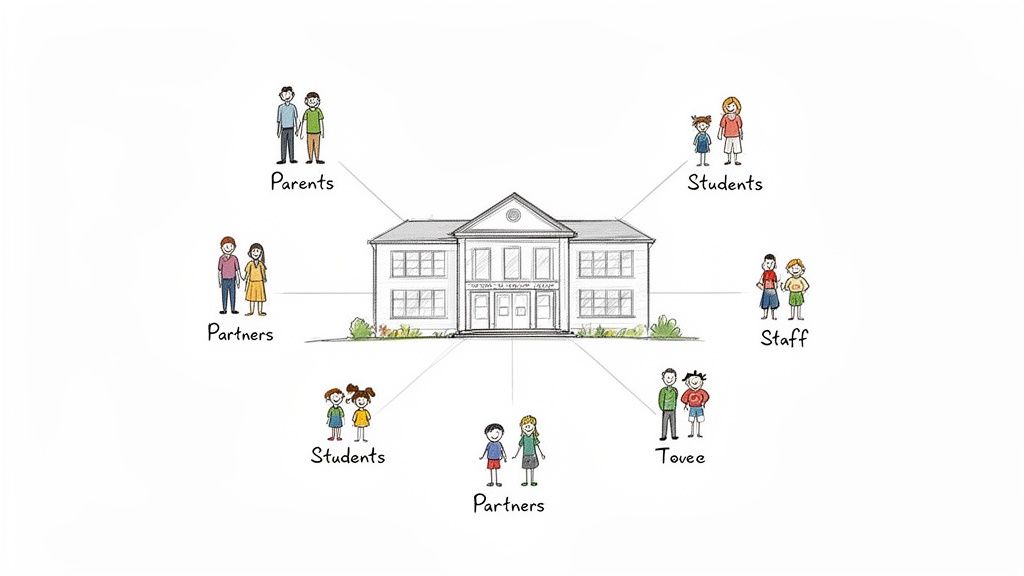
Let's use an analogy. Imagine your school isn't just a building, but the heart of a small town. In that town, community relations is the work of being a really good mayor. You're not just shouting news from the town hall steps; you're walking the streets, listening to people, and making sure everyone feels heard and valued.
This whole practice is built on the simple but powerful idea of a two-way conversation. It’s about creating real channels for parents, local business owners, non-profits, and other residents to share their ideas, voice their concerns, and offer their support.
The Real Goal of School Community Relations
Ultimately, the aim is to get the school's goals and the community's needs pulling in the same direction. When you get this right, you create a powerful sense of shared ownership. People stop being passive bystanders and become active partners—your school’s biggest cheerleaders.
At its core, community relations is the shift from just informing the public to actively involving the public. It turns a simple, transactional exchange into a true collaboration where the school and community are on the same team.
This foundation of trust and goodwill is absolutely essential. It means you have a network of supporters ready to stand with you at budget meetings, celebrate your students' wins, and pitch in with valuable resources when you need them most.
Community Relations vs. Marketing vs. Public Relations
It’s easy to lump community relations in with marketing and PR, but they each have a unique job to do. Think of it this way: marketing works to attract new families, PR manages the school's public image and reputation, but community relations is all about building and nurturing those deep, long-term relationships within your existing community.
Here’s a quick breakdown to see how these functions differ in a school setting:
| Function | Primary Goal | Key Activities | Success Metric |
|---|---|---|---|
| Community Relations | Build authentic, lasting partnerships with all stakeholders. | Hosting town halls, creating advisory councils, forming business partnerships, volunteer programs. | High levels of parent/community engagement, positive sentiment, strong volunteer turnout. |
| Marketing | Attract and enroll new students and families. | Running ad campaigns, managing the school website, creating promotional materials, open houses. | Increased application numbers, enrollment growth, positive brand recognition. |
| Public Relations (PR) | Manage and protect the school's public image and reputation. | Writing press releases, handling media inquiries, managing social media presence, crisis communication. | Positive media coverage, high public approval ratings, effective message control. |
While each has its own focus, they are all connected. Strong community relationships make marketing more effective because happy families become your best advertisers. Good PR helps build the trust needed for authentic community engagement to happen in the first place.
This deep level of stakeholder engagement is truly what sets community relations apart. It’s about valuing every single group—from students and staff to local shop owners—and unlocking the incredible potential that comes from working together.
Why Strong Community Relations is a Game-Changer for Schools
It’s one thing to know what community relations is, but it’s another thing entirely to see what it can do. Far from being a "nice-to-have" or an afterthought, a solid strategy for building relationships is the engine that drives a school toward its most important goals. When a school gets intentional about connecting with its community, it kicks off a powerful cycle of support, growth, and resilience.
This is so much more than just sending out newsletters. It’s about drawing a straight line from an engaged parent group to better student test scores. It’s about seeing how a partnership with a local business can open up funding and learning opportunities that your students would never have had otherwise.
Boosting Enrollment Through Real-World Buzz
Today's parents are savvy. When they're looking for a school, they dig deeper than just test scores and a campus tour. They’re searching for a place with a genuine, supportive community—a place where their child won’t just be a student, but will truly feel like they belong. Strong community relations creates that exact atmosphere, and it does it naturally.
When parents are happy and feel connected, they become your most powerful and believable marketing team. Their authentic excitement sparks word-of-mouth recommendations that no glossy brochure or paid ad can ever hope to match. When a parent feels seen, heard, and valued, they don't just re-enroll their kid; they become an advocate for your school at neighborhood barbecues, on social media, and in their professional circles.
A study of the Oakland Unified School District proved this connection, finding that deep community engagement led directly to better school outcomes. One high school, after putting strong partnership programs in place, watched its graduation rate jump to 72% and saw college-prep course completion climb to 6 times higher than the district average.
This wave of grassroots support is what creates long-term, sustainable enrollment. Instead of constantly chasing new families, the school starts to see a natural, steady flow of interest, all generated by the happy families it already serves.
Improving Staff Morale and Keeping Your Best Teachers
A positive, connected community culture doesn't just help students—it creates an environment where your teachers and staff can truly flourish. When educators feel they have the genuine support of parents and the local community, it completely changes their day-to-day experience. This network of support acts as a crucial buffer against the burnout and stress that are all too common in the field.
A school that’s truly woven into the fabric of its community often sees a few key benefits:
- Higher Staff Morale: Teachers feel like they are part of a team with a shared purpose, which dramatically reduces feelings of working in a silo.
- Better Retention: A positive, supportive work culture is one of the biggest reasons teachers stay. This saves the district a fortune in recruitment and training costs.
- Deeper Collaboration: When families and staff have a strong, trusting relationship, they become true partners in helping students succeed both academically and behaviorally.
That feeling of being "in it together" is priceless. It makes the school a place where talented educators don't just want to work for a year or two—they want to stay and build a career.
Building a Bank of Community Goodwill
Every school hits a rough patch eventually. It could be budget cuts, a controversial new policy, or an unexpected crisis. During those tough times, a deep reserve of community goodwill—built piece by piece through years of consistent, positive engagement—becomes your most valuable asset. Think of it like a "community bank account" where you’ve been making regular deposits of trust, transparency, and collaboration.
When a difficult situation pops up, a school with strong community ties can make a withdrawal from that account. The community is far more likely to offer help, give the school the benefit of the doubt, and work together on a solution instead of jumping straight to criticism. That trust isn't built overnight; it's earned through ongoing, authentic conversations, not a flurry of emails sent only when something goes wrong.
Picture two schools. The first operates in isolation, only reaching out to the community when it needs votes or volunteers. The second hosts regular town halls, partners with local shops on student projects, and makes a point to celebrate community heroes. Now, imagine a district-wide budget shortfall hits both of them. The isolated school faces instant backlash and anger. But the connected school? It finds its community rallying to its side, fighting for solutions and offering whatever support they can. That right there is the real-world power of investing in what community relations truly is.
Mapping Your School's Community Ecosystem
Before you can build strong community relations, you have to know who your community actually is. Every school is at the center of a complex web of people and groups, and each one has different needs, interests, and ways they can contribute. To manage this well, you need more than just a contact list; you need a strategic map of your entire ecosystem.
The first step is to think beyond the obvious groups, like current students and their parents. A truly effective community relations strategy taps into a much wider network, finding allies and supporters who can help your school thrive. The trick is to see these groups not as audiences to be talked at, but as partners to engage with.
This diagram shows how a strong community foundation is the engine for a school's most critical success drivers.
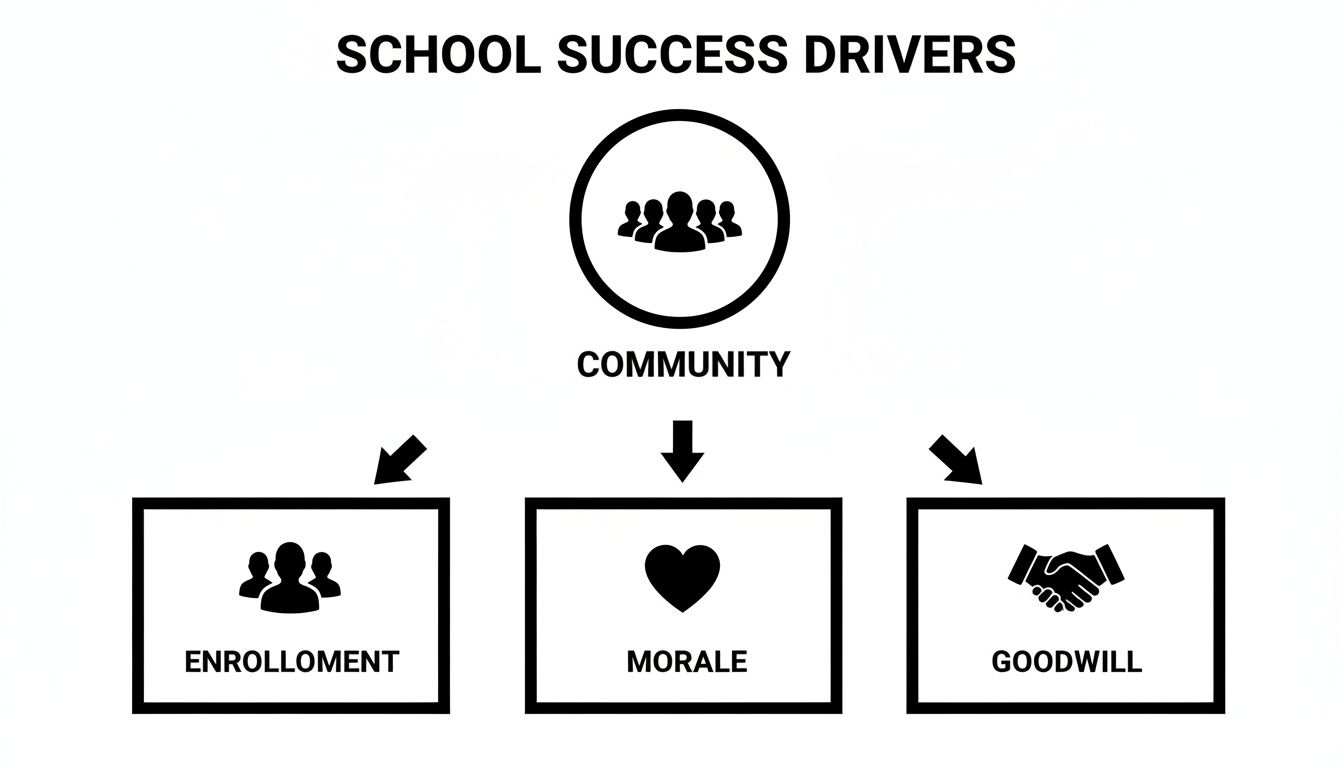
As you can see, a vibrant community acts like the root system for a healthy tree, nourishing everything from enrollment numbers and staff morale to that priceless well of public goodwill.
The Three Rings of Your School Community
A really practical way to visualize your stakeholder map is to think of it in three concentric rings. Imagine your school at the very center, with circles of influence radiating outward. This approach helps you prioritize your efforts and tailor your communication for each group based on how close they are to your daily operations.
Ring 1: The Internal Community
This is the absolute heart of your school. These are the people who live and breathe its mission every single day. Their buy-in isn't just nice to have; it's non-negotiable for any initiative to succeed.
- Teachers and Staff: They are on the front lines, and they need to be informed, empowered, and recognized as your school's best ambassadors.
- Administrators: This is the leadership team setting the vision. Clear, consistent internal communication is the glue that holds everything together.
- Students: They are the entire reason the school exists. Giving them a real voice through student councils and feedback channels builds a powerful sense of ownership.
Ring 2: The Core External Community
This group has a direct, vested interest in your school’s success. They are often your loudest cheerleaders and the most important audience for your enrollment and retention efforts.
This ring represents your most immediate external relationships. They are the families choosing you, the alumni carrying your legacy, and the future families considering joining your community. Nurturing these connections is fundamental to sustainable growth.
Engaging this core group means keeping the lines of communication wide open, creating meaningful volunteer opportunities, and making them feel like genuine partners in education.
Extending Your Reach to the Wider Community
The third and final ring includes groups that might not interact with your school daily, but they hold immense potential for support, partnership, and influence. Ignoring this layer is like leaving money on the table—valuable resources and goodwill go untapped.
Ring 3: The Broader Community Network
This is where your school stops being an isolated building and becomes a true pillar of the community. Building these bridges creates a powerful support network that pays dividends for everyone involved.
- Local Businesses: Think beyond a banner at the football field. These businesses can be partners for everything from sponsoring a robotics team to providing internships for older students.
- Non-Profit Organizations and Civic Groups: Groups like the local Rotary Club or arts councils can be fantastic sources for grants, volunteers, and collaborative programs.
- Government Officials and Local Leaders: Keeping the mayor, city council members, and other leaders in the loop can build powerful advocacy when it’s budget time.
- Feeder Schools and Universities: Strong relationships with the schools that send you students—and the colleges they attend later—create a much smoother path for everyone.
- Alumni and Past Families: This group is a goldmine. They can provide mentorship, drive fundraising, and help preserve the school’s unique culture and history.
By mapping these three rings, you can shift from simply reacting to issues to proactively building relationships. You can learn more about turning these connections into powerful collaborations by exploring the value of partnerships in schools. This map becomes your playbook, helping you turn a simple list of contacts into a dynamic, supportive, and invaluable community asset.
Building a Modern School Community Relations Program
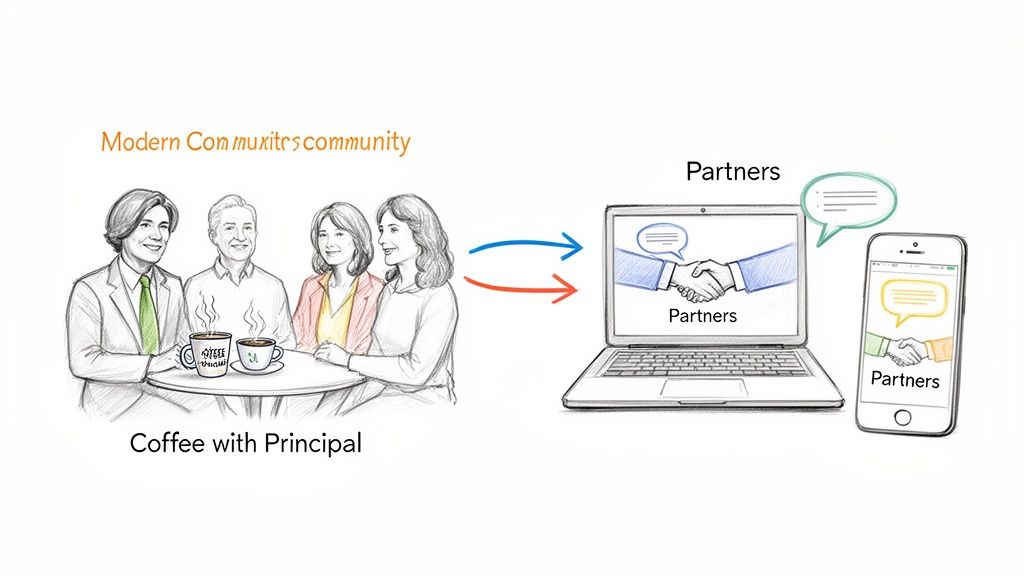
Knowing who makes up your community is one thing; putting that knowledge into action is another. A modern community relations program goes way beyond the occasional newsletter or the annual open house. It's a living, breathing effort that blends personal, high-touch engagement with smart digital strategies to build a genuine, two-way dialogue.
This is where theory hits the pavement. The goal isn't just to talk at people, but to create multiple, accessible ways for every stakeholder to feel seen, heard, and truly involved in the school's mission.
Fostering Two-Way Communication Channels
The bedrock of any strong community relationship is authentic two-way communication. This means shifting from broadcasting information to actively creating spaces for feedback, discussion, and real collaboration. It’s about listening just as much as you talk.
Some of the most effective channels for this dialogue include:
- Parent Advisory Councils (PACs): These groups give parents a formal seat at the table, allowing them to offer direct input on school policies, curriculum, and events. Their perspective becomes part of the decision-making process.
- "Coffee with the Principal" Events: There’s real power in informality. Small-group settings like these break down barriers and open the door for candid conversations, building personal trust between school leadership and families.
- Digital Feedback Tools: Simple surveys, online forums, or even just a dedicated email address for suggestions make it easy for busy community members to share their thoughts on their own time.
The secret sauce? Don’t just collect feedback—act on it. When the community sees their input leads to visible change, trust deepens, and they become far more willing to engage. For K–12 leaders, this work is no longer optional outreach; it’s a strategic function with budgets and clear expectations, where outcomes like student retention and community trust are tracked year after year.
Forging Strategic Community Partnerships
A truly connected school doesn't operate in a silo. It becomes a vibrant, valuable partner within its local environment. Forging strategic partnerships extends your school's resources, enriches student learning, and shows a real commitment to the community's overall success.
A partnership isn't just about fundraising. It's a symbiotic relationship where the school and a community organization collaborate to achieve a shared goal, creating value for students and the community alike.
Think beyond simply asking for donations. The most powerful partnerships are built on mutual benefit and shared goals. When getting started, applying established community engagement best practices can make a world of difference.
Consider these examples of collaboration in action:
- Educational Alliances: Team up with the local library for a summer reading challenge. Co-host a STEM fair with a nearby tech company. Invite professionals from local businesses to share their career journeys with students.
- Service-Learning Projects: Work with non-profits on projects where students can solve real-world problems, whether it's organizing a food drive, helping with a park cleanup, or supporting a local senior center.
- Workforce Development: Connect with local businesses to create internships, apprenticeships, or job-shadowing opportunities. These give high school students priceless career exposure and hands-on skills.
These partnerships turn the abstract idea of "community" into tangible, enriching experiences for your students.
Mixing High-Touch and High-Tech Engagement
To succeed today, you have to meet people where they are. That means striking a careful balance between the irreplaceable value of face-to-face interaction and the incredible reach and efficiency of digital tools.
| Engagement Type | Examples | Key Benefit |
|---|---|---|
| High-Touch (Personal) | One-on-one meetings, parent-teacher conferences, volunteer appreciation events, small group discussions. | Builds deep, personal trust and strong individual relationships. |
| High-Tech (Digital) | Interactive social media, email newsletters, virtual town halls, school blogs, mobile apps. | Offers scalable, consistent, and convenient communication to a broad audience. |
Neither approach works well on its own. A heartfelt conversation at a school event builds the goodwill that makes a family actually open your next email newsletter. And a well-managed social media page might be the very thing that encourages someone to attend their first in-person volunteer meeting.
By weaving both together, you create a program that feels both personal and efficient, ensuring every member of your community has a way to feel connected. For more ideas on finding the right mix, our guide on effective community engagement strategies has you covered.
https://blog.marcomsociety.org/community-engagement-best-practices/
So, How Do You Actually Measure All This?
Proving the value of community relations can sometimes feel like trying to nail Jell-O to a wall. How do you put a number on trust, goodwill, or that feeling of belonging families have when they walk through your doors? While some of the best outcomes are about feelings and relationships, a modern approach requires a clear way to measure success and show school leadership the real return on their investment.
The trick is to stop chasing "vanity metrics," like how many people opened a newsletter. Instead, focus on data that ties your work directly back to what the school is trying to achieve. It’s about drawing a straight, undeniable line from that well-attended parent town hall to a noticeable jump in parent satisfaction scores.
It's Not Just About Numbers—It's About Stories, Too
A solid measurement strategy doesn't force you to choose between hard data and human experience. It uses both. Quantitative KPIs (Key Performance Indicators) give you the black-and-white numbers, but qualitative insights provide the color and context behind them. You absolutely need both to tell the whole story.
Think of it like a student's report card. The grades are the quantitative data—they tell you what the student achieved. The teacher’s comments are the qualitative part—they explain why and add that crucial human element.
Here's how you can blend the two:
Quantitative Metrics (The "What"): These are the things you can count, track, and chart.
- Parent Satisfaction Scores: Tracked through annual or biannual surveys.
- Volunteer Hours: The total number of hours parents and community members give to the school.
- Event Attendance: Simple but effective—how many people are showing up to workshops, meetings, and school events?
- Positive Online Mentions: The number of great reviews you get on platforms like Google or Niche.
- Partnership Growth: How many new, active community partnerships have you established this semester?
Qualitative Metrics (The "Why"): These are the insights that capture how people feel.
- Town Hall Feedback: What are the common themes, worries, and great ideas coming out of your open forums?
- Social Media Sentiment: What’s the general tone of the online conversation about your school—is it positive, negative, or just neutral?
- Testimonial Collection: Actively gathering powerful quotes and success stories from happy parents, students, and partners.
- Focus Group Discussions: Hosting small, guided chats to dig deeper into specific issues or ideas.
To make this more concrete, here's a framework that connects your school's goals directly to the data you should be tracking.
Community Relations Measurement Framework
| School Objective | Quantitative KPI | Qualitative KPI | Measurement Tool |
|---|---|---|---|
| Increase Parent Engagement | ∙ +15% increase in volunteer hours ∙ +20% attendance at PTA/PTO meetings | ∙ Direct feedback from parent surveys ∙ Testimonials from parent volunteers | ∙ Volunteer sign-up sheets ∙ Parent satisfaction surveys |
| Improve School Reputation | ∙ +10% rise in positive online reviews ∙ -15% decrease in negative social media mentions | ∙ Analysis of review content ∙ Sentiment tracking on social media | ∙ Google/Niche review monitoring ∙ Social listening tools |
| Strengthen Community Partnerships | ∙ 5 new active business partnerships ∙ $10,000 in new local sponsorships | ∙ Feedback from community partners ∙ Stories of successful collaborations | ∙ Partnership tracking spreadsheet ∙ Partner feedback forms |
| Enhance Family Communication | ∙ 90% of parents report feeling "well-informed" in surveys ∙ 25% increase in parent portal logins | ∙ Open-ended survey responses ∙ Analysis of questions asked at town halls | ∙ School communication platform analytics ∙ Annual parent survey |
This kind of framework turns vague goals into a clear, actionable dashboard for your team.
Let Technology Do the Heavy Lifting
Trying to track all of this with spreadsheets and sticky notes is a recipe for burnout. Luckily, the tools available today can give you a data-backed picture of your community’s health without all the manual labor.
This is a real game-changer. AI and analytics are now being built directly into community platforms, helping with everything from moderation to personalizing messages. As analysts are noting, schools and organizations are quickly adopting AI tools to automate responses and flag important conversations. You can dig deeper into these trends by exploring these community engagement insights for 2025.
By analyzing conversations at scale, these platforms can help you identify your biggest advocates, spot potential problems before they blow up, and truly understand what your community cares about—all backed by solid data.
At the end of the day, measuring community relations is all about proving its direct contribution to the school’s mission. When you can walk into a board meeting and show that your new partnership program led to a 15% increase in volunteer support and a 10-point jump in parent satisfaction, you’re no longer talking about fuzzy feelings. You're demonstrating undeniable value.
Your First 90 Days in Community Relations
Revamping your school's relationship with the community can feel overwhelming. The good news? You don't have to tackle everything at once.
Breaking the work into a manageable 30-60-90 day plan turns a mountain of a task into a series of achievable steps. This roadmap is all about building momentum, showing some early wins, and setting a solid foundation for everything you’ll do down the road.
Days 1-30: Listen and Learn
Forget about launching splashy new programs right out of the gate. Your first month is dedicated to one thing: listening. Before you can change the landscape, you have to understand it. Think of yourself as an internal journalist, tasked with getting the real story.
This phase is about absorbing information so that every move you make later is based on genuine insight, not just guesswork.
Here’s where you’ll focus your energy:
- Conduct a Stakeholder Audit: Your first task is to map out everyone your school touches. Go beyond the obvious parents and staff to include local business owners, non-profit leaders, city officials, and even real estate agents.
- Identify Key Influencers: Look closer at each group and pinpoint the natural leaders. Who are the super-involved parents, the well-respected business owners, and the connected alumni who could become your school’s biggest cheerleaders?
- Schedule a Listening Tour: Get out there and talk to people. Set up informal "Coffee with the Principal" chats or small focus groups. Your only agenda is to ask open-ended questions about the school’s strengths and where people see room for improvement.
By the end of your first 30 days, you should have a much richer, more nuanced picture of who your community is and what matters most to them.
Days 31-60: Plan and Pilot
You’ve done your homework. Now it’s time to put what you’ve learned into action. This second month is all about creating a focused plan and launching a small-scale pilot project. It's the perfect way to test an idea, iron out any kinks, and score a quick, visible win.
This is the critical shift from learning to doing. A successful pilot builds instant credibility and shows your community that you’re not just taking notes—you’re turning their feedback into real action.
Your strategy for this period moves from discovery to execution:
- Set Clear Goals: Using what you heard in month one, define one or two simple, measurable goals. Think something like, "Increase parent volunteer sign-ups by 10%," or "Establish two new partnerships with local businesses."
- Develop a Pilot Program: Pick one initiative that directly solves a problem you uncovered. Maybe that’s a new "Parent Ambassador" program to welcome new families, or a mentorship program that pairs students with local professionals. Keep it manageable.
- Launch and Promote: Get your pilot off the ground! Make sure you communicate clearly with the specific stakeholders it’s designed for. They need to understand the "why" behind it to get on board.
Days 61-90: Engage and Evaluate
With your pilot program up and running, your final 30 days are about closing the loop. You’ll gather feedback, share your initial progress, and start planning what comes next. This is where you prove that you not only listen and act but also deliver results.
Your key activities for this final stretch include:
- Gather Feedback on the Pilot: Circle back with the people who participated. Use simple surveys or informal follow-up chats to ask them what worked well and what could be better.
- Measure Initial Outcomes: Time to look at the data. Did you hit your goals? Did volunteer numbers tick up? Did you lock in those new business partnerships?
- Report Your Wins: Pull together a brief, easy-to-read summary of your first 90 days. Share it with school leadership and the wider community to celebrate the early success and build excitement for the future.
Your Top Questions Answered
When you're trying to build stronger ties between your school and the community, a lot of questions pop up. Let's tackle some of the most common ones that school leaders and communicators face.
How Is Community Relations Different From Parent Engagement?
It's easy to mix these two up, but there's a key difference. Think of it this way: parent engagement is one crucial piece of the much larger community relations puzzle.
Parent engagement is all about the activities focused squarely on the parents of your current students—things like parent-teacher conferences, volunteer sign-ups, and PTA meetings. It’s absolutely vital.
Community relations, on the other hand, casts a much wider net. It includes all of that parent engagement work but also reaches out to everyone else who has a stake in your school's success. We're talking about prospective families, local business owners, alumni, neighborhood groups, and even city officials. In short, parent engagement is a critical tactic, while community relations is the overarching strategy for the entire community.
What Are the First Steps for a School with a Limited Budget?
You don't need a huge budget to make a real impact. Some of the most effective community relations efforts are built on sweat equity and genuine connection, not expensive ad campaigns.
If you're just starting out or working with a tight budget, focus here:
- Start a "Good News" Email. It can be simple. A weekly update that shares positive stories about students and staff builds incredible goodwill over time. Consistency is way more important than a flashy design.
- Host "Coffee with the Principal." Schedule a casual, monthly get-together where parents and community members can just ask questions. It's a low-cost way to build trust and show you're accessible.
- Get Active on Social Media. Don't just post—engage. Dedicate time each day to actually respond to comments and messages. This two-way conversation costs nothing but shows your community you're really listening.
How Can We Handle Negative Feedback from the Community Effectively?
Sooner or later, negative feedback will happen. It's how you respond that defines your school's character and can actually build—not break—community trust. The goal is to have a plan in place so you're not caught off guard.
Your response to criticism is a defining moment for your school's reputation. Viewing negative feedback not as an attack, but as an opportunity to demonstrate your commitment to listening and improving, can turn a critic into an advocate.
When you're faced with tough feedback, online or in person, stick to this simple, three-step process:
- Acknowledge and Validate. Before you do anything else, thank them for sharing their concern. A simple, “I appreciate you bringing this to our attention, and I can understand your frustration,” immediately sets a more constructive tone.
- Take the Conversation Offline. If the comment is on a public forum like social media, your next move should be to invite them to a private channel. Say something like, “We want to look into this for you. Could you please email us at… or call this number?” This takes the heat out of the public eye and allows for a real resolution.
- Follow Up and Close the Loop. This is the step most people forget. Once the issue is handled, circle back with the person and let them know what happened. It shows you took their feedback seriously and are accountable for the outcome.
Ready to stop guessing and start leading with a clear strategy? The MarCom Society is the professional community where K-12 marketing and communications leaders connect, learn, and grow together. Join us for expert-led workshops, collaborative sessions, and access to a library of resources designed to help you build a thriving school community. Elevate your practice by joining our network at https://marcomsociety.org.