So, what exactly is crisis management? At its heart, it’s a school's game plan for handling major disruptions that threaten its community and reputation. Think of it less as a dusty binder on a shelf and more as a well-rehearsed emergency drill for every potential threat—from a sudden health scare to a serious data breach.
Defining Crisis Management in Schools

In the world of K-12 education, crisis management isn't just about reacting when something goes wrong. It's the whole process of identifying potential threats ahead of time and building a structured, coordinated response. The real goal isn't just to get through the storm—it's to come out the other side with the trust of your families and staff still firmly in place.
A solid plan means that when the unexpected strikes, your leadership team isn't scrambling to make critical decisions on the fly. They’re following a clear set of procedures they've already practiced, which helps minimize panic and stops a manageable problem from snowballing into a reputational nightmare.
This kind of strategic thinking is more important than ever. The global crisis management market is expected to grow significantly, a clear sign that organizations everywhere, including schools, recognize how crucial this preparation is. You can get a sense of this trend by reading more about the growth of the crisis management market on futuremarketinsights.com.
The Foundation of an Effective Plan
A truly effective crisis management plan is built on a few essential pillars. Without these, even the best intentions can lead to a fragmented response, causing confusion and eroding confidence when you can least afford it.
To help you visualize this, here’s a quick breakdown of what every school crisis plan needs.
Core Components of a School Crisis Management Plan
This table summarizes the essential elements every school's crisis management framework should include, providing a quick reference for administrators and communicators.
| Component | Key Objective | Example Action for a School |
|---|---|---|
| Designated Crisis Team | Establish a clear chain of command with empowered decision-makers. | Pre-assigning roles to the principal, communications director, and head of security to lead the response. |
| Clear Communication Protocols | Control the narrative and prevent misinformation from spreading. | Creating pre-approved message templates for parent alerts and designating the communications director as the sole media contact. |
| Risk Assessment | Proactively identify and mitigate potential threats before they escalate. | Conducting an annual review of campus safety vulnerabilities, cybersecurity gaps, and potential health risks. |
| Stakeholder Mapping | Ensure timely and relevant communication reaches every important group. | Creating distinct contact lists for parents, staff, board members, and local media for targeted updates. |
Ultimately, these components work together to create a response that is cohesive, controlled, and compassionate.
A crisis doesn't create a school's character; it reveals it. A well-prepared plan ensures that what's revealed is strength, compassion, and control—not chaos and uncertainty.
From Theory to Action
Here’s the thing: a crisis plan is completely useless if it just sits in a folder. Its real value comes to life when your team builds "muscle memory" through practice. This means running regular drills, walking through different scenarios, and constantly refining your approach so everyone knows exactly what to do when the pressure is on.
Picture this: a rumor about student safety starts spreading like wildfire on a local parent Facebook group. A school without a plan might freeze up or issue conflicting statements, which only fuels the panic.
But a school with a plan? They activate their team. The communications lead immediately pushes out a pre-approved holding statement to calm nerves. Meanwhile, the administration works to verify the facts. Within minutes, a clear, unified message is sent to all parents through official channels. That's the difference between managing a crisis and being managed by one.
The Three Stages of a School Crisis
When a crisis hits your school, it can feel like a single, chaotic explosion. But experienced communicators know that's not the whole picture. It's much more productive to see a crisis not as one event, but as a process with a clear beginning, middle, and end.
Think of it like a storm system. There’s the time before the storm hits, the chaotic period while it’s overhead, and the recovery phase after it passes. We call these the Pre-Crisis, Crisis Response, and Post-Crisis stages. By understanding the unique demands of each phase, you can move from reactive panic to a controlled, proactive strategy.
The Pre-Crisis Stage: Preparing for the Storm
This is where you win or lose before the battle even begins. The Pre-Crisis stage is all about the work you do when the skies are clear, long before an incident ever surfaces. It’s the foundational work that makes a successful response possible. Think of it as stockpiling supplies and boarding up the windows before the hurricane watch is issued.
This stage is entirely about foresight and planning. It really boils down to two key activities:
- Risk Assessment: This means getting brutally honest about what could go wrong at your school. We're talking about everything from a data breach or a damaging rumor on social media to a natural disaster or a public health scare. The goal is to map out your specific vulnerabilities.
- Plan Development: Once you know what you might face, you build the playbook. This is where you assemble your crisis team, assign clear roles, draft message templates for different scenarios, and lock down your communication protocols.
When you invest heavily in the pre-crisis stage, you aren't scrambling to figure things out when an emergency hits. You're simply activating a plan you already know inside and out.
The Crisis Response Stage: Weathering the Storm
This is it—the moment the crisis is live and unfolding. The storm has made landfall, and your team is in the hot seat. In this phase, everything is about speed, accuracy, and empathy. Your primary goals are to get the situation under control, keep your community safe, and manage the narrative to stop misinformation in its tracks.
A truly effective response isn't chaos; it's a rapid, structured activation.
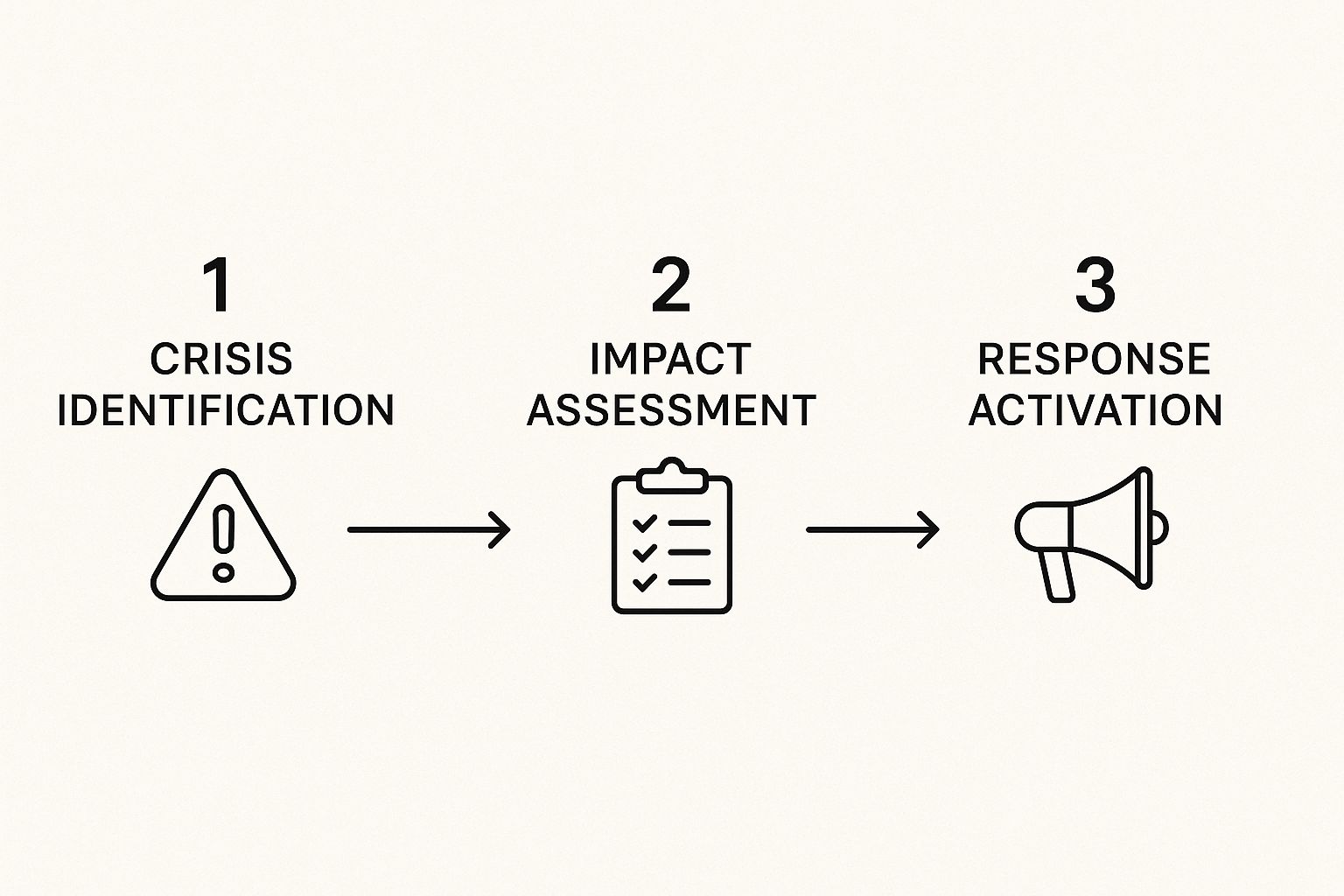
As you can see, a methodical response kicks in the second a threat is confirmed. You quickly assess its potential impact, and then you launch the coordinated plan you built during the pre-crisis stage.
Key actions during this all-important phase include:
- Activating the Crisis Team: Get the designated leaders on a call or in a room, immediately.
- Executing the Plan: It's time to put your playbook into action, following the communication and operational steps you’ve already laid out.
- Communicating with Stakeholders: Release clear, consistent, and compassionate updates to parents, staff, students, and the media. No information vacuums allowed.
- Monitoring the Situation: Keep a close eye on social media, news reports, and internal channels, ready to adapt your response as the situation evolves.
The first hour of a crisis often determines the next several weeks. A swift, decisive, and well-communicated response sets the tone and establishes your school as the credible source of truth.
The Post-Crisis Stage: Assessing the Aftermath
Once the immediate threat has passed and things have calmed down, the Post-Crisis stage begins. This isn't the end; it's the time for recovery and reflection. The storm is over, but now you have to survey the damage, help your community process what happened, and figure out how to rebuild.
This final stage is absolutely critical if you want to be better prepared for next time. It’s all about learning from the experience. You'll review every decision made during the response to see what worked, what didn’t, and why.
This involves debriefing with the crisis team, surveying parents and staff for their feedback, and—most importantly—updating your crisis plan with the lessons you've learned. It’s how you turn a painful event into a powerful opportunity for growth.
Building Your Crisis Communication Playbook
When a crisis hits, every second stretches into an hour. The pressure to just say something—anything—can be overwhelming. That’s exactly why having a Crisis Communication Playbook isn't a "nice-to-have"; it's an absolute necessity. Think of it as your school's emergency toolkit, packed with the templates, contact lists, and clear protocols you'll need to communicate with confidence when you're under the gun.
With a playbook in hand, your team isn't scrambling to find the right words or debating who to call while the situation spirals. Instead, you're executing a plan you've already thought through. That simple act of preparation is what allows you to maintain control and protect your school's reputation.
The need for this kind of readiness is only getting more intense. Across every industry, organizations are feeling the heat to prepare for the unexpected. The crisis management services market, already valued at $92.02 billion, is on the rise, pushed by growing security threats and compliance rules that directly affect how schools have to respond. You can get a closer look at the growth of the crisis management services market on thebusinessresearchcompany.com.

H3: First Things First: Identify Your Key Stakeholders
Before you can say a word, you have to know who you’re talking to. The very first step in building your playbook is mapping out every single group with a stake in your school. The message a parent needs to hear is entirely different from what the local news team is going to ask, so your approach has to be just as specific.
Start by making a comprehensive list. Seriously, don't leave anyone out.
- Internal Stakeholders: This is your team—teachers, support staff, administrators, and the school board. They must hear it from you first to feel safe and be ready to help.
- Students: Depending on their age, students need clear, reassuring, and age-appropriate information to cut through the noise and prevent panic.
- Parents and Guardians: This is often your most critical audience. They need timely, factual, and empathetic updates that always put student safety front and center.
- External Stakeholders: This wider circle includes the local media, emergency services (police, fire department), community leaders, and even regulatory bodies.
Once your list is solid, gather the most current contact information for each group and organize it so you can grab it in a hurry. This simple step will save you precious time when it matters most.
A crisis communication plan that doesn't start with a detailed stakeholder map is like a ship setting sail without a compass. You might be sending messages, but they won't reach the right people at the right time.
H3: Designate a Single, Trusted Spokesperson
In a crisis, mixed messages create chaos. To prevent this, your playbook needs to name a single, official spokesperson. This person becomes the sole voice of the school for all external communication, especially when dealing with the media.
The role requires someone who is calm under pressure, credible, and well-trained in front of a camera or microphone. This is often the Head of School or the Director of Communications. By funneling everything through one person, you ensure every statement is consistent, accurate, and controlled. It’s the best way to stop rumors before they start.
H3: Prepare Your Messaging Before You Need It
You can’t predict the future, but you can anticipate the types of crises you might face and the communication you’ll need. Building a library of pre-drafted message templates is one of the smartest things you can do. These aren't meant to be copied and pasted, but they give you a powerful head start when every word counts.
Your playbook should include ready-to-go templates for:
- Holding Statements: A brief, initial message you can release within the first hour. It simply acknowledges the situation, shows you care, and states that you're gathering the facts.
- Parent Notifications: Drafts for emails, text alerts, and even phone scripts that prioritize student safety and give clear instructions.
- Social Media Updates: Short, factual posts for platforms like Facebook and X (formerly Twitter) to point your community toward official information.
- Internal Staff Memos: Communications to inform your own team before the public, keeping everyone aligned and prepared for questions.
Building these assets now will make all the difference. For more hands-on guidance, you can also explore our crisis communication plan template designed specifically for school communicators. It provides a solid framework you can easily adapt for your own school.
Before you can communicate effectively, you need a clear map of who needs to know what, and how you'll reach them. A Stakeholder Communication Matrix is a simple but powerful tool for organizing this. It ensures no group is overlooked and that your messaging is tailored to their specific concerns.
Stakeholder Communication Matrix
| Stakeholder Group | Primary Channel | Key Message Focus |
|---|---|---|
| Parents & Guardians | Email, SMS Alert System | Student safety, pickup/reunification procedures, official updates. |
| Teachers & Staff | Internal Email, Staff Meeting | Their own safety, role during the crisis, consistent messaging. |
| Students (Age Appropriate) | In-person announcement, homeroom teacher | Reassurance, clear instructions, dispelling rumors. |
| School Board/Trustees | Direct Phone Call, Private Email | Factual briefing, potential impact, planned response actions. |
| Media Outlets | Designated Spokesperson, Press Release | Confirmed facts only, empathy, commitment to transparency. |
| Emergency Services | Direct Liaison/Phone | Coordination, operational needs, situational awareness. |
| General Community | School Website, Official Social Media | Acknowledgment of the situation, directing to official sources. |
Having this matrix ready means you're not trying to figure out communication channels in the middle of an emergency. Instead, you're just following the plan, ensuring a calm, coordinated, and effective response.
Walking Through Real-World School Crisis Scenarios
Theory is great, but it only gets you to the starting line. The true test of any crisis plan is when it smacks into a real-world event. To build the kind of "muscle memory" your team needs to act decisively under pressure, you have to walk through realistic scenarios and game out the response.
Let's get out of the abstract and into the trenches. Here are four common, high-stakes situations a school communications team might face. By breaking down the immediate priorities and communication steps for each, we can turn crisis management theory into something tangible and actionable.
Scenario One: A Sudden Health Outbreak
Picture this: reports start trickling in about a nasty, contagious virus making its way through the student body. Attendance drops off a cliff, and parents are blowing up your phone lines and social media, all asking the same thing: "Is my child safe?"
Your first priority here is containment and clear communication.
- Immediate Action: Get your crisis team in a room (or on a call) and open a direct line to local health officials. You need verified information, and you need it fast.
- Communication Steps:
- Push out an immediate holding statement to all parents and staff. Let them know you're aware of the health concern and are working with the authorities.
- Create a single source of truth—a dedicated page on your website is perfect for this—where you'll post all official updates.
- Send out regular, factual updates about symptoms, the school's cleaning protocols, and any official advice from health experts. Whatever you do, don't speculate.
In a health scare, your communication needs to be calm, authoritative, and deeply empathetic. You're not just managing information; you're managing fear.
Scenario Two: A Student Data Breach
Your IT director walks in with that look on their face. It's the worst news: a server with sensitive student data—we're talking addresses, grades, the works—has been compromised. You have to assume the data is now in the wrong hands.
The priority immediately pivots to transparency and legal compliance. Botching this can lead to massive legal headaches and completely shatter the trust you've built with parents.
When personal data is compromised, the crisis isn't just about technology—it's about a fundamental violation of trust. Your response must be geared toward rebuilding that trust through radical transparency and clear, supportive action.
- Immediate Action: Your first calls should be to your legal counsel and a cybersecurity firm. You need to understand the full scope of the breach and what the law requires you to do next.
- Communication Steps:
- Work with your lawyers to write a clear, jargon-free notification letter for every affected family. This is absolutely not the time for vague corporate-speak.
- Explain exactly what happened, what data was exposed, and what the school is doing to lock things down moving forward.
- Set up a dedicated helpline or email address for parents' questions and be prepared to offer identity theft protection services. It’s a tangible way to show you’re there to support them.
Scenario Three: A Damaging Social Media Rumor
A disgruntled former employee decides to light a match on a community Facebook group, posting a completely fabricated story accusing a beloved teacher of misconduct. The post goes viral. Before you've even had your morning coffee, the comments are filled with angry parents demanding action.
In this situation, your job is to control the narrative and protect your people.
- Immediate Action: The second you learn about the rumor, start an internal fact-finding mission. At the same time, you need someone monitoring the social media wildfire. A critical rule: Do not engage with the angry commenters directly on the platform.
- Communication Steps:
- First, send an internal message to your staff. Let them know you're aware of the rumor and are handling it so they aren't blindsided by questions.
- Issue a calm, official statement to parents that acknowledges the online conversation. State that you take all allegations seriously and are looking into the matter, but clarify that you cannot comment on personnel issues.
- This approach pulls the conversation back to your official channels and shows you're in control without dignifying the rumor. You're shutting down speculation by showing a process is in motion.
Scenario Four: A Physical Safety Threat
A credible threat is made against the school, triggering a lockdown. While law enforcement is dealing with the immediate danger, your team is on the front lines of managing the intense fear and chaos swirling among parents.
Here, your one and only priority is student safety and a constant, steady flow of information.
- Immediate Action: Your crisis plan’s lockdown protocol needs to kick in instantly. Your communications lead must have a direct, open line to both the on-site administrator and the law enforcement liaison.
- Communication Steps:
- Use your mass notification system to send a simple, direct alert: "The school is in lockdown. All students are safe. We will provide more information as it becomes available."
- Provide updates at short, regular intervals—think every 15-20 minutes. Even if the update is simply, "No new information at this time," you have to say it. Silence creates an information vacuum, and that's where panic breeds.
- Once the situation is resolved, communicate crystal-clear reunification instructions. In the days that follow, make sure you share information about counseling and support services available for students and staff to process the event.
Common Mistakes to Avoid in a School Crisis

When a crisis hits, knowing what not to do can be just as critical as your action plan. One small misstep can pour fuel on the fire, turning a manageable situation into a long-term reputational nightmare that shatters the trust you've worked so hard to build.
The good news is that most of these pitfalls are avoidable. They almost always stem from a lack of preparation, forcing teams to react out of panic instead of following a clear, strategic plan. By sidestepping these common errors, you can maintain control and provide the strong leadership your community is counting on.
The Danger of a Slow Response
The single biggest mistake a school can make is waiting too long to say something. In the age of instant information, silence creates a vacuum, and that void gets filled—fast—with rumors, speculation, and worst-case scenarios. Every minute you wait to communicate is another minute misinformation can spread like wildfire through parent group chats and social media feeds.
You don't need to have all the answers right away. The goal is simply to acknowledge the situation. A prompt holding statement that confirms you're aware of the issue and tells people where to go for official updates is a powerful tool. It immediately stops the rumor mill and establishes your school as the one credible source of truth.
The Problem of Inconsistent Messaging
Nothing creates chaos faster than when different leaders say different things. Imagine a principal downplaying an incident to the media while a superintendent sends a more alarming email to staff. These conflicting messages don't just confuse people; they signal a lack of control and a fractured strategy, causing trust to evaporate.
This is why your crisis plan must name a single, authorized spokesperson. All information must flow through that person or their office. This simple step ensures every statement is consistent, accurate, and aligned with your school's overall response. We cover more on this in our guide to crisis communication best practices.
The goal in a crisis is to speak with one voice. When your community hears conflicting stories, they lose faith not just in your message, but in your ability to lead them through the challenge.
Forgetting Your Internal Audience
In the rush to get information out to parents and the public, it’s surprisingly easy to neglect your most important ambassadors: your own teachers and staff. If they find out about a crisis from a news alert or a frantic parent, it instantly undermines their confidence and leaves them completely unprepared to help manage the situation.
Your internal team should always be the first to know. A quick, factual memo sent to staff before any public announcement equips them with the information they need. It shows them they are valued and respected, and it empowers them to be a unified, calming force for students and parents alike.
Ignoring the Social Media Wildfire
Assuming you can control the narrative by sticking to official channels like email is a recipe for disaster. Today, the real story often takes shape on platforms like Facebook, X (formerly Twitter), and local community forums. Ignoring these conversations doesn't make them stop—it just allows misinformation to run rampant without any correction.
A modern crisis plan absolutely must include active social media monitoring. You don't need to get into arguments in the comments section, but you do need a real-time understanding of what people are saying, what rumors are spreading, and what questions are top-of-mind. This intelligence is essential for shaping your next official update and truly addressing your community's concerns.
This need for preparation is universal. On a global scale, crises are escalating, with a record 305 million people needing urgent aid. This highlights the need for robust plans, as unexpected events can quickly overwhelm unprepared communities, including schools. You can discover more insights about global crisis trends at rescue.org.
Your Tech Toolkit for Crisis Management
In a school crisis, technology isn't just a nice-to-have; it's the central nervous system of your entire response. The right tools can turn a chaotic, scattered reaction into a measured, effective operation. They allow your team to communicate instantly, see what's happening in real-time, and coordinate your next steps, even if you’re all in different locations.
Think of it as the difference between a simple walkie-talkie and a fully equipped digital command center. Technology gives you the power to make sure the right messages get to the right people at the right time.
Getting the Word Out Fast with Mass Notification Systems
When a situation is developing, every second counts. A mass notification system is arguably the most critical tool in your arsenal for reaching your entire community instantly. These systems are designed to push out a single, unified message across multiple channels at once.
In a single click, you can send an urgent update to parents and staff via:
- SMS Text Messages: The fastest way to get eyes on an alert.
- Email: Perfect for follow-ups that require more detail and context.
- Automated Phone Calls: A crucial backup to reach those who might miss a text or email.
- Mobile App Push Notifications: A direct line to parents who actively use your school's app.
This multi-pronged strategy is your best bet for making sure no one misses a critical piece of information. It’s like a PA system that extends into every home in your district.
Setting Up a Digital War Room
Your leadership team won't always be gathered in one room when a crisis hits. This is where internal collaboration platforms like Slack, Microsoft Teams, or even a secure group chat become your digital "war room."
This dedicated, private space allows your crisis team to:
- Share confirmed facts as they come in.
- Draft and approve public statements together.
- Delegate tasks and see who is doing what.
- Keep a clean, time-stamped log of every decision.
Using a tool like this keeps vital conversations out of messy email chains and ensures everyone on your response team is working from the same playbook.
Technology is the nervous system of modern crisis management. It allows the crisis team—the brain of the operation—to send clear, coordinated signals to every part of the school community, ensuring a swift and unified response.
Finally, don't forget about social media monitoring tools. These platforms act as your digital eyes and ears, tracking mentions of your school online. They can often tip you off to a small problem before it spirals into a full-blown crisis, buying you invaluable time to get ahead of the story. You can dive deeper into this topic by exploring the connection between social media and crisis management in our detailed guide.
Frequently Asked Questions
When you're staring down a potential crisis, a lot of questions race through your mind. Let's tackle some of the most common ones we hear from school leaders.
How Often Should We Update Our School Crisis Plan?
Think of your crisis plan as a living, breathing document. It’s not a "set it and forget it" binder that collects dust on a shelf. At an absolute minimum, you need to pull it out for a full review once a year.
But honestly, the real work happens after you use it. Any time you run a drill or, heaven forbid, manage a real incident, you must update the plan immediately with what you learned. The same goes for any major changes at the school—a new principal, updated emergency contacts, or even a new building wing—all of which require an instant refresh to keep the plan relevant.
Who Needs to Be on the Crisis Management Team?
You can't do this alone. A solid crisis team is always a cross-functional group that brings different perspectives and skills to the table.
Your core team absolutely must include:
- The Head of School or Principal
- The head of communications or marketing
- The head of security or operations
From there, you’ll want to pull in a senior administrator, someone from your student support or counseling department, and your facilities manager. Depending on the situation, you might also need your IT director for a data breach, your lawyer for legal issues, or your school nurse for a health scare. The goal is to have all your bases covered.
The single most important action in the first hour is to control the flow of information. This prevents rumors and panic from taking over and establishes your team as the credible authority.
What Is the Most Critical First Step When a Crisis Occurs?
The first hour is everything, and your most critical move is to control the narrative. If you don't, I promise you that rumors, social media, and the parent text-chain will fill the void.
That means getting a brief, factual holding statement out the door almost immediately. All it needs to do is acknowledge that you're aware of the situation and tell everyone—parents, staff, and the media—where to go for official updates. This is usually a dedicated page on your school's website. It establishes you as the single source of truth right from the start.
Ready to build a crisis-proof communication strategy? The The MarCom Society offers exclusive resources, expert-led workshops, and a supportive peer network to help you lead with confidence. Join our community of K-12 marketing leaders today.