At its core, digital communications is simply the art of sharing information using electronic tools. Forget the complex jargon for a moment. Think of it as the modern equivalent of a conversation—one that happens through emails, social media posts, text messages, and video calls instead of face-to-face.
What Digital Communications Really Means
It's easy to get lost in the buzzwords, but digital communication is about much more than just having the latest apps. It's about strategically using technology to send a clear, powerful message.
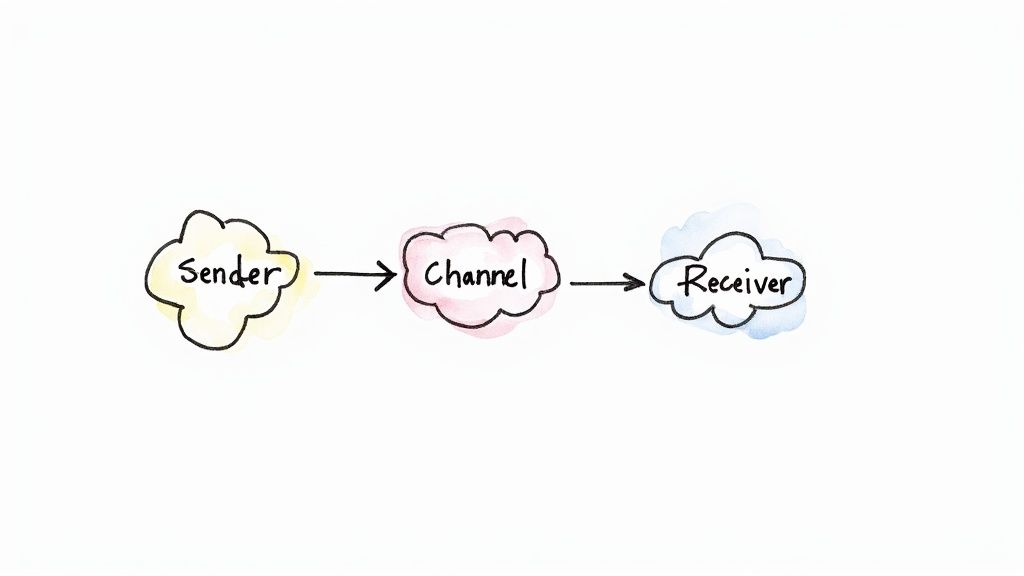
For any of this to work, three key players must be in sync:
- The sender (that’s you, crafting the message)
- The channel (the technology sending it, like email or a social media platform)
- The receiver (your audience, the person you want to connect with)
When these three elements work together seamlessly, a simple thought can become a notification on someone's screen in an instant. This is a world away from old-school analog methods like print newsletters or mailed flyers.
The image below breaks down the technical difference between analog and digital signals.

As you can see, digital signals are cleaner and less prone to interference. This is why our messages now arrive faster and with far greater clarity than ever before, making digital the new standard for effective outreach.
To put these differences into a practical context, let's compare the old and new ways of communicating.
Traditional vs Digital Communications At a Glance
| Attribute | Traditional Communications (e.g., Print, Mail) | Digital Communications (e.g., Email, Social Media) |
|---|---|---|
| Reach | Limited by physical distribution and budget. | Potentially global, instant reach. |
| Speed | Slow, measured in days or weeks. | Instantaneous or scheduled for optimal timing. |
| Interactivity | One-way broadcast; feedback is delayed and difficult. | Two-way and immediate; encourages conversation. |
| Measurement | Difficult to track; relies on estimates or surveys. | Highly measurable; provides detailed data on engagement. |
| Cost | High per-unit cost (printing, postage). | Low cost to send; budget focused on creation and strategy. |
| Flexibility | Static; cannot be changed after distribution. | Dynamic; can be updated or corrected in real-time. |
This table makes it clear why the shift has been so dramatic. The advantages in speed, cost, and measurability have fundamentally changed how we connect with our communities.
From Concept to Connection
Every digital message, whether it's a quick tweet or an in-depth school newsletter, follows that same path: sender, channel, receiver. Grasping this simple framework helps cut through the noise and focus on what really matters—the quality of your message and its impact on your audience.
If you're building your strategy from the ground up, exploring the digital marketing basics can provide a solid foundation for applying these channels effectively.
At the end of the day, the goal of digital communications isn’t just to send information—it’s to create a genuine connection. Every tool is just a way to build relationships, foster community, and inspire action.
This move toward digital represents a massive change in how schools and districts operate. To dig deeper into this evolution, you can learn more about the broader digital transformation in marketing and what it means for professional communicators. True mastery comes from knowing which tools to use to build and strengthen those vital connections with your community.
The Engine Room of Digital Communications

To really understand what makes digital communication tick, you have to look under the hood. Think about it like building a house. You can't have a livable space without a solid foundation, a sturdy frame, and the wiring and plumbing to make everything work.
Digital communication is built on the exact same principle, relying on three core components that have to work together perfectly.
Each piece of this puzzle plays a critical part in getting a message from your head to your audience's screen.
Hardware (The Foundation): This is all the physical stuff you can actually touch. We're talking about the servers, smartphones, laptops, and routers that do the heavy lifting. They provide the raw power and storage that every single digital interaction depends on.
Software (The Framing): These are the programs and apps that run on the hardware. Think about your email platform, social media apps, or the video conferencing tool you use. This is the interface where you actually create, send, and see the content.
Networks (The Utilities): These are the invisible highways—like Wi-Fi, 5G, and fiber-optic cables—that connect all the hardware and software. They’re the digital plumbing and electricity, zipping data packets from one device to another in an instant.
The Power Behind the Connection
When you put these three components together, you get an incredibly powerful ecosystem—one that's become a massive global industry. The digital communication system market was valued at USD 157.61 billion in 2024 and is expected to nearly double by 2033, a testament to how essential these systems are. You can dig into the specifics in this market growth report.
Every text, email, and video call is a complex dance between these three elements. The hardware processes the command, the software formats the message, and the network delivers it across the world in fractions of a second.
This seamless coordination is what turns a simple thought into a global conversation. When you understand these building blocks, you’re in a much better position to manage and deploy effective marketing automation strategies that truly connect with your community.
Choosing Your Best Digital Communication Channels
With so many digital options out there, the real challenge isn’t finding a way to communicate—it’s picking the right one for the job.
Think of your communication channels like tools in a toolbox. You wouldn't use a hammer to turn a screw. In the same way, the platform you use to celebrate student achievements should probably be different from the one you rely on for urgent safety alerts.
A smart strategy is all about matching the tool to the task. For schools, this means knowing where your different audiences—parents, students, staff, and the community—actually spend their time and how they prefer to get information. A visual platform like Instagram is perfect for sharing photos from the science fair, but a secure parent portal is the only appropriate place for confidential student information.
This careful selection process is what makes sure your message doesn't just get sent, but that it’s actually seen and understood by the right people.
Categorizing Your Core Channels
To make things simpler, it helps to group your main digital channels by their purpose. Each one has a specific role to play in building a connected school community.
Here are a few essential categories every K-12 school should have in its communication plan:
Official Announcements: This is your home for critical, need-to-know information. Channels like email newsletters, a dedicated parent portal, or an SMS alert system are perfect because they're direct, reliable, and create a formal record of your communication.
Community Engagement: This is where you build culture and connection. Social media platforms are the stars here. Your school’s Facebook page can be a great place for parent discussions, while a well-managed Instagram account can showcase daily student life through vibrant photos and short videos.
Instructional Support: These channels are all about supporting the learning process. Tools like Google Classroom or your school’s Learning Management System (LMS) let teachers share assignments and feedback directly with students and parents, making the whole educational experience more transparent.
The most effective digital communication strategies use a mix of channels that all work together. A single school event might be announced via email, promoted with fun visuals on social media, and have follow-up resources shared through the parent portal.
By understanding what each platform does best, you can build a communication plan that feels cohesive and natural. For a closer look at platform specifics, our guide on using social media in schools offers some great tips for building engagement.
Ultimately, a multi-channel approach ensures that every message reaches its intended audience in the most effective format possible.
Here's the rewritten section, designed to sound completely human-written and natural, as if from an experienced professional.
How Digital Tools Actually Change a School Community
In the world of K-12 education, strong communication isn't just a "nice-to-have"—it's the glue that holds a school community together. When we talk about digital communication, we're not just talking about fancy new tech. We're talking about practical tools that solve real, everyday problems for teachers, administrators, and families, impacting everything from student safety to district growth.
Think about the classic snow day chaos. Remember phone trees? Now, picture sending a single, instant alert to every parent's phone. That one message immediately builds trust and shows you're on top of things. That's digital communication in action.
It’s the simple things, too. A quick, clear email to staff about a last-minute schedule change avoids a mountain of confusion. A beautifully shot virtual tour on your website might be the very thing that convinces a new family to choose your school over another.
Going Beyond Announcements to Build Engagement
But these tools are capable of so much more than just sending out information. They are vital for cultivating the kind of vibrant school culture that keeps families enrolled and attracts new ones.
Here’s where the magic really happens:
- Making Parents True Partners: When parents get real-time updates through an app or see photos from a field trip on social media, they feel connected. A simple reminder about an upcoming parent-teacher conference can make all the difference in their involvement.
- Giving Teachers Their Time Back: Instead of another after-school meeting, teachers can use shared drives or internal messaging to coordinate lesson plans and share resources. It’s about working smarter, not harder.
- Telling Your School's Story: A strong digital presence is your most powerful recruitment tool. It’s how you show prospective families what makes your school special. This is incredibly important in a competitive environment. In fact, North America is expected to hold a 34.05% share of the global communication market by 2025, a number that points to a huge demand for better digital tools right here at home. You can dig into more of the market data on cognitivemarketresearch.com.
The goal isn't to chase every new piece of technology. It's about strategically choosing the right tools to build trust, keep students safe, and create an environment that makes families want to be part of your community.
Every single digital interaction—from a social media post celebrating a student's achievement to a critical safety notification—is a piece of the puzzle. Together, they shape your school's reputation and forge the bonds that make your community strong.
What's Next in Digital Communication Technology
If you feel like digital communication is always shifting, you’re right. New tools and technologies are constantly popping up, and they're poised to completely reshape how schools connect with their communities. The next wave is all about creating smarter, more immediate, and genuinely engaging experiences for parents and students.
For instance, we're seeing a huge push toward AI-powered personalization. Think about tools that can automatically tweak messages for different parent groups, from prospective families to current ones. Imagine an AI chatbot that can answer enrollment questions 24/7, freeing up your staff to handle the tougher, more human-centric work. This isn't science fiction anymore; it's becoming more accessible every day.
Then there’s the whole world of immersive technologies. Augmented and virtual reality (AR/VR) are moving well beyond gaming. They're opening up incredible possibilities for schools, like offering virtual campus tours that let families from across the globe walk your halls or creating interactive learning previews that truly show what makes your school special.
The Growing Demand for Instant Connection
More than anything, the future is about real-time interaction. The days of sending an email and waiting hours—or days—for a response are fading fast. Parents, students, and staff all expect instant answers and easy access to live video.
This is where technologies like WebRTC (Web Real-Time Communication) come in. It’s the engine that powers direct, browser-to-browser video calls and data sharing without needing special software or plugins. The global WebRTC market was valued at a massive USD 8.71 billion in 2024 for a reason: it makes instant connection simple and reliable.
The key isn't just to chase every new shiny object. It’s about strategically picking the tools that solve real problems for your community and help you build stronger relationships.
Staying on top of these trends can feel overwhelming, but exploring a solid community app guide is a great way to see what's out there. A little strategic thinking now will put you in a great position to serve your community even better tomorrow.
Putting It All Together: Your Digital Communication Questions Answered
Alright, we've covered the theory. Now, let's get practical. As you start putting these ideas into practice at your school, you're going to have questions. Everyone does.
Think of this section as your quick-start FAQ. We'll tackle the most common hurdles K-12 communicators face, helping you move from knowing what digital communication is to actually doing it well.
What's the Real Difference Between Digital Marketing and Digital Communications?
This one trips a lot of people up because the two definitely overlap, but their core purpose is different.
Digital marketing is all about persuasion. You're trying to get someone to take a specific action—like sign up for an open house, fill out an inquiry form, or attend the school play. It’s promotional and directly tied to a measurable goal, like boosting enrollment.
Digital communications, on the other hand, is the bigger picture. It’s the entire web of how you share information to keep your community informed, connected, and engaged. Marketing is just one piece of this puzzle. It also includes the principal's weekly update, snow day text alerts, a press release about a student achievement, and even internal staff memos.
Here’s a simple way to think about it: All marketing is communication, but not all communication is marketing. Marketing sells your school; communication builds your community.
How Can Our School Actually Do This on a Shoestring Budget?
Great news: you don't need a massive budget to see real results. The secret is to be strategic. Focus on the high-impact, low-cost channels first. Nail those before you even think about expanding.
Start with these three foundational pieces:
- Get Your Website Right: Your school's website is your digital front door. Make sure it's clean, modern, and works beautifully on a phone. This is non-negotiable and your single most important asset.
- Pick Your Social Media Battles: Don't burn yourself out trying to be on every platform. Find out where your parents actually are (hint: it's probably Facebook or Instagram) and commit to posting great content there consistently.
- Lean on Email: A simple, professional-looking newsletter for parents and staff goes a long way. Tools like Mailchimp or Constant Contact have free or very affordable plans. Consistency is king here; it builds trust and keeps everyone in the loop.
What Numbers Should We Actually Be Tracking to Know if This is Working?
The metrics you track must connect directly to the goal you set in the first place. It's so easy to get distracted by "vanity metrics"—like page views—that look nice but don't tell you anything important.
Before you launch anything, ask yourself: "What does success look like for this specific project?"
Is your goal to boost engagement? Then you should be tracking likes, comments, and shares on social media or the click-through rates in your emails. Trying to drive recruitment? Then the only number that really matters is how many people submitted a tour request form from your landing page.
Ready to connect with peers and master these strategies? The MarCom Society is a professional community for K-12 communicators just like you, offering expert workshops, resources, and a supportive network to help you succeed. Join us at https://marcomsociety.org.