Why Branding in Education Matters Now More Than Ever
The educational landscape has changed significantly. Institutions can no longer depend solely on their established reputations to attract students and faculty. The increasingly competitive environment requires a new strategy where branding plays a vital role in distinguishing one institution from another. This means actively shaping public perception and cultivating a unique identity is essential for success. But why is branding now so crucial in education?
The Rise of Competition and the Need for Differentiation
One primary factor is the growing competition within the education market. More institutions are vying for the attention of prospective students than ever before. The expansion of online programs has broadened access to global education, intensifying competition for both domestic and international students. Standing out is paramount. Strong branding enables institutions to articulate their distinct value proposition, attracting students whose needs and interests align with their specialized programs.
The global education market is also experiencing rapid expansion. This growth further underscores the importance of effective branding. Projections suggest the market will reach nearly $10 trillion by 2030, with substantial growth in areas like Early Childhood and Workforce Education. Explore this topic further. This necessitates that educational institutions cultivate strong brands that set them apart and appeal to a diverse student body. Investing in comprehensive branding strategies is crucial for capturing a share of this expanding market.
Attracting and Retaining Top Talent
Branding in education isn’t solely about attracting students; it’s also about attracting and retaining quality faculty. A strong brand enhances an institution’s reputation and prestige, making it a desirable place to work. This is critical for maintaining academic excellence and creating a vibrant learning environment. In a competitive job market, a compelling brand narrative can be the deciding factor for educators choosing where to contribute their expertise.
Building Trust and Loyalty in a Changing World
Branding cultivates trust and loyalty. In an information-saturated world, a recognizable and trusted brand offers stability and reliability. This is especially important for educational institutions where students are investing heavily in their future. A strong brand communicates a commitment to quality and reinforces the value of the education provided, building confidence in prospective students and their families.
Navigating Financial Challenges With Strategic Branding
Finally, the importance of branding has become even more pronounced due to financial realities. Many universities face declining enrollments and budget constraints. Strategic branding becomes vital for survival in this context. A well-defined brand helps institutions attract more students, secure funding and strengthen relationships with alumni and donors. It becomes a tool not just for growth, but for long-term sustainability. These combined factors clearly demonstrate the growing importance of branding in the educational sector.
Crafting an Educational Brand That Actually Resonates

A strong educational brand is more than just attractive visuals and a catchy tagline. It represents a combination of key elements that create an authentic identity. This identity must resonate with the target audience, build trust, and inspire them to choose your institution. What are the foundations of this vital connection?
Defining Your Brand’s Core: Mission, Vision, and Values
A compelling educational brand begins with a clear and authentic mission statement. This statement defines the institution's core purpose and its commitment to education. It should be concise, inspirational, and reflect the unique values driving the institution.
For example, a university might prioritize innovation in its mission, while a community college might emphasize community service. This clear purpose guides all subsequent branding activities.
A vision statement outlines the institution's future aspirations. This vision provides direction and motivates stakeholders towards common goals. Well-defined core values offer the ethical framework for decisions and shape the institution's culture. These elements form the bedrock of a strong educational brand.
Creating a Cohesive Visual Identity
A consistent visual identity is essential for brand recognition. This includes the logo, color palette, typography, and overall design aesthetic across all platforms. Consistency ensures instant recognition, whether on a website, brochure, or signage. This strengthens brand awareness and builds familiarity and trust. For institutions looking to enhance their brand, exploring effective strategies and possibly engaging with specialized small business branding services can be valuable.
Crafting Compelling Brand Messaging
Effective brand messaging goes beyond simple marketing slogans. It communicates the institution's unique value proposition to its target audience. This requires understanding the audience's needs, aspirations, and motivations.
The messaging should also be consistent across all communication channels, from website content to social media. This ensures clarity, conciseness, and memorability. Each interaction should contribute to a coherent narrative about the institution.
Maintaining Brand Integrity Across All Touchpoints
Consistency is paramount in branding. Every interaction, from website visits to campus tours, should reinforce the brand promise. This means consistent application of brand messaging and visual identity across all touchpoints.
This creates a unified and authentic brand experience, building trust and reinforcing institutional values. Maintaining this integrity requires ongoing effort. Inconsistencies can erode trust and create confusion, damaging even the best branding initiatives.
Common Branding Pitfalls to Avoid
Several common mistakes can hinder branding efforts. A key pitfall is a lack of authenticity. If the brand messaging doesn't reflect the institution's true values and culture, it won't resonate with the audience.
Inconsistent branding elements can also create confusion and weaken the brand's impact. Finally, failing to tailor brand messaging to different audiences can be detrimental. How an institution communicates with prospective students will differ from how it interacts with alumni or donors. Recognizing and avoiding these pitfalls is essential for building a strong and lasting educational brand.
Digital Revolution: Transforming Educational Branding
The way educational institutions present themselves has changed dramatically. A strong print presence isn't enough anymore. Institutions need compelling digital experiences that connect with today's tech-savvy students. This means knowing how to use digital platforms to reach prospective students and share the institution's unique story.
Leveraging Digital Platforms for Enhanced Brand Storytelling
Leading educational institutions recognize the importance of a strong digital presence. They use a variety of strategies, including immersive virtual tours. These tours give prospective students a realistic look at campus life without having to travel. This is especially helpful for international students or those who can't visit in person.
Targeted content strategies are also essential. This involves creating content designed for specific student groups. For example, content for prospective engineering students might highlight state-of-the-art research facilities. Content for prospective arts students could showcase the institution's thriving arts scene.
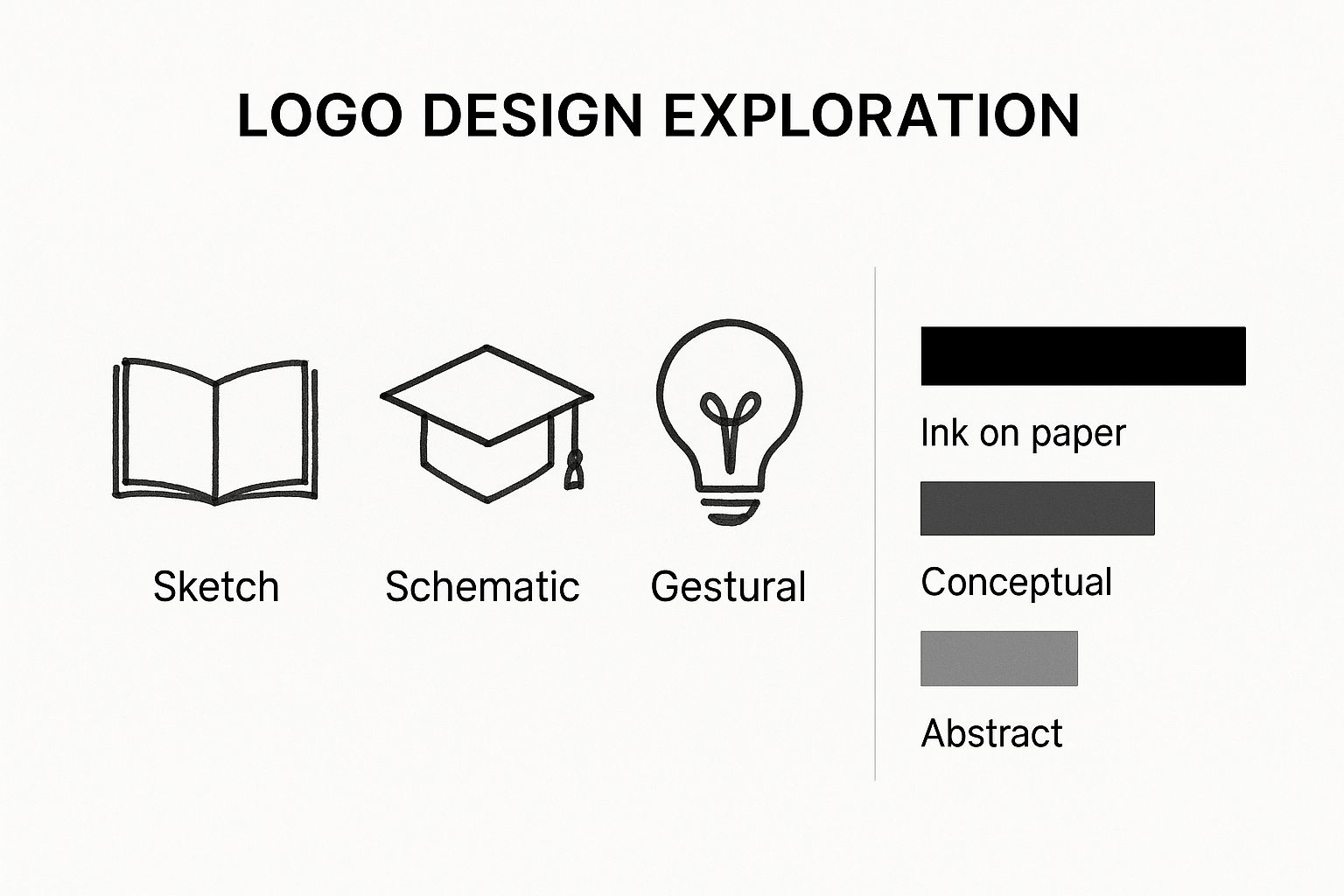
The infographic above shows initial logo concepts for an educational brand. It explores how to visually represent learning, achievement, and innovation. These early sketches help build a unique and recognizable visual identity. Exploring different visual elements helps ensure the final logo reflects the brand's values and connects with the target audience.
Balancing Innovation With Authenticity
While adopting digital innovation is critical, maintaining brand authenticity is equally important. The chosen digital platforms should reflect the institution's values and mission. For example, a university focused on environmental sustainability might favor platforms with a low environmental impact.
The growth of e-learning has significantly changed branding strategies. With the e-learning market predicted to be worth over $1 trillion by 2032, and $325 billion by 2025, institutions are focusing on online branding to reach students who prefer digital learning. Find more detailed statistics here. This shows a major shift toward online education, requiring institutions to adapt their branding. The fact that 41% of college students find e-learning more effective than traditional classrooms underscores the need to align branding with these changing preferences.
To better understand how educational institutions are adapting their branding strategies, let's compare traditional and digital approaches. The following table highlights the evolution of branding in the digital age and its impact on student engagement.
Digital Branding Elements That Drive Student Engagement
| Branding Element | Traditional Approach | Digital Approach | Impact on Student Engagement |
|---|---|---|---|
| Reach | Primarily local/regional | Global | Expands potential student pool |
| Communication | One-way (brochures, viewbooks) | Two-way (social media, forums) | Fosters interaction and community |
| Content | Static | Dynamic, personalized | Caters to individual student interests |
| Experience | In-person campus visits | Virtual tours, online events | Offers accessibility and convenience |
| Measurement | Difficult to track | Data-driven analytics | Enables continuous improvement |
This table clearly demonstrates how digital approaches offer enhanced opportunities for engagement, personalization, and measurable results. By embracing these methods, institutions can better connect with prospective students and build stronger brand loyalty.
Measuring Digital Engagement and ROI
Measuring the effectiveness of digital branding is crucial. Institutions need to look beyond vanity metrics like website traffic or social media followers. Instead, they should focus on key performance indicators (KPIs) directly linked to institutional growth and student recruitment. These KPIs might include:
Conversion rates: How many website visitors complete a desired action, such as applying for admission or requesting information.
Enrollment numbers: The actual increase in student enrollment attributable to digital branding efforts.
Brand awareness: How recognizable and well-regarded the institution's brand is among its target audience.
Brand sentiment: The overall perception and emotional connection people have with the institution's brand.
By tracking these metrics, institutions can clearly understand their digital branding ROI. This data helps justify continued investment in digital platforms and optimize strategies for maximum impact. Reporting on these metrics also communicates the value of branding efforts to stakeholders, demonstrating tangible outcomes.
Platform Selection and ROI for Different Institutions
Different educational institutions will find success on different digital platforms. A large university might see a strong ROI from a sophisticated virtual reality campus tour. A smaller community college might achieve better results with targeted social media campaigns. Choosing the right platforms requires analyzing the target audience and their online behavior. It also means evaluating the resources needed to manage and optimize different platforms. A data-driven approach ensures that digital branding investments generate measurable results.
Tailoring Your Brand Across Educational Sectors
A successful branding strategy in education requires a nuanced approach. What resonates with a university student differs from what appeals to a K-12 parent or a vocational school candidate. Each sector has unique challenges and opportunities, demanding tailored messaging and approaches.
Understanding Sector-Specific Needs and Expectations
Understanding your target audience is paramount. Universities often focus on academic rigor and research opportunities to attract undergraduates. K-12 schools, however, address parental concerns about safety, individualized learning, and college preparation. Vocational schools emphasize practical skills and career placement, appealing to a distinct set of priorities.
Identifying and Highlighting Your Unique Selling Points
Once you understand your audience, highlight your institution's unique strengths. A small liberal arts college might emphasize personalized attention and community. A large research university could showcase state-of-the-art facilities and renowned faculty. Vocational schools can spotlight successful alumni and industry partnerships to demonstrate career outcomes. A strong digital marketing strategy is essential for reaching your target audience.
Differentiating From Competitors Within Your Sector
Competition is fierce in education. Effective branding helps you stand out. This could involve focusing on specific programs, highlighting a particular teaching philosophy, or showcasing student diversity.
- K-12: Highlight specialized programs, such as STEM, arts, or athletics, and emphasize parent involvement.
- Higher Education: Showcase research opportunities, study abroad programs, or innovative teaching methods. Emphasize career services and alumni networks.
- Vocational Schools: Focus on practical skills, industry certifications, and job placement rates. Highlight flexible learning and career counseling.
Maintaining Credibility and Authenticity
Differentiation is important, but credibility and authenticity are crucial. Brand messaging should reflect your institution's true values and culture. Overpromising or misrepresenting your offerings can damage your reputation.
Leveraging Cross-Sector Partnerships
Strategic partnerships enhance brand positioning and expand reach. A K-12 school could partner with a local university to offer dual enrollment, attracting college-bound students. A university might collaborate with a vocational school to provide internships, bolstering career services. These collaborations create mutually beneficial relationships and strengthen brand visibility.
Measuring What Matters: Quantifying Brand Impact

Demonstrating the effectiveness of branding in education requires moving beyond vanity metrics. It's about identifying key performance indicators (KPIs) that truly reflect brand performance and correlate with institutional growth and student acquisition. Showing tangible results to stakeholders is essential for securing buy-in and continued support for branding initiatives.
Key Metrics For Measuring Brand Impact
Several key metrics offer valuable insights into how well your branding efforts are working.
Brand Awareness: This metric measures how familiar your target audience is with your institution and its values. High brand awareness indicates your institution is top-of-mind for prospective students. Measurements can be gathered through surveys, social media mentions, and website traffic analysis.
Brand Sentiment: This gauges the emotional connection and overall perception of your brand. Positive brand sentiment suggests a strong reputation and favorable public opinion. Tools like sentiment analysis platforms, social media monitoring, and online reviews can provide valuable data.
Conversion Rates: This tracks how effectively your branding translates into desired actions. In education, conversions could include application submissions, campus visit registrations, or information requests. Analyzing website data and CRM (Customer Relationship Management) systems is crucial for measuring conversion rates.
Return on Investment (ROI): Branding needs to demonstrate a financial return. ROI measures the financial impact of your branding investment, often linked to increased enrollment or fundraising success. Tracking branding activity costs and correlating them with revenue generation is key.
Practical Frameworks For Tracking Brand Performance
A clear framework is essential for tracking these metrics effectively.
Setting Measurable Goals: Define specific, measurable, achievable, relevant, and time-bound (SMART) goals for your branding initiatives. For example, aim to increase brand awareness by 15% within six months.
Choosing The Right Tools: Select appropriate analytics platforms, social listening tools, and survey platforms to collect data on brand performance. Tools like Google Analytics can be invaluable.
Regularly Monitoring and Reporting: Consistently track progress toward your goals and create reports to share insights with stakeholders. Regular reporting ensures transparency and accountability.
Higher education marketing is a dynamic field. Institutions must adapt to stay competitive. Benchmarking against industry standards allows for strategic adjustments to branding efforts. Learn more about higher education marketing trends.
Communicating Brand Impact to Stakeholders
Communicating impact is crucial for securing buy-in.
Focus on the Narrative: Craft a compelling narrative around your brand performance data, highlighting successes and areas for improvement.
Visualize Data: Use charts and graphs to present data in a visually engaging format. Data visualization makes complex information easier to understand.
Tailor Communication: Adjust your messaging to resonate with different stakeholder groups. Trustees may prioritize ROI, while faculty may focus on brand reputation.
Connecting Branding Initiatives to Enrollment Outcomes
Leading schools directly link branding to enrollment outcomes.
Tracking Source Attribution: Identify which marketing and branding activities are driving prospective students to apply and enroll. This helps optimize resource allocation.
Analyzing Application and Enrollment Data: Examine trends in application and enrollment data to understand branding’s impact on student recruitment.
Conducting Student Surveys: Gather feedback from students to assess brand perceptions and how they influenced enrollment decisions.
Brand Performance Metrics That Actually Drive Growth
The following table outlines essential metrics for evaluating branding initiatives' success in educational institutions:
| Branding Objective | Key Metrics | Measurement Methods | Benchmark Ranges |
|---|---|---|---|
| Increase Brand Awareness | Website traffic, social media mentions, search volume | Google Analytics, social listening tools | Increase of 10-20% within a defined period (e.g., 6 months) |
| Improve Brand Sentiment | Social media sentiment analysis, online reviews, customer satisfaction surveys | Sentiment analysis tools, survey platforms | Positive sentiment score of 70% or higher |
| Drive Conversions | Application submissions, campus visit registrations, information requests | Website analytics, CRM data | Conversion rate improvement of 5-10% |
| Demonstrate ROI | Increased enrollment, fundraising success, cost savings | Financial reports, enrollment data | Positive ROI (e.g., $2 return for every $1 invested) |
By focusing on these metrics and implementing practical tracking frameworks, institutions can quantify their branding efforts’ impact and make data-driven decisions to optimize strategies for continued growth. This builds a strong brand that resonates with the target audience and drives meaningful results.
Storytelling That Sells: Building Authentic Educational Brands
Today’s educational brands are increasingly recognizing the power of storytelling. It's a crucial tool that moves beyond simple marketing and forges a deeper, emotional connection with prospective students. But how can educational institutions craft narratives that resonate while staying true to their core mission?
The Power of Authentic Narratives
The most successful educational brands don't just talk at their audience; they engage with them through compelling stories. These stories provide a window into the institution's culture and values, showcasing the unique experiences students can anticipate. Authenticity is paramount; these narratives must be genuine and reflect the institution's true character.
For example, rather than simply stating a commitment to diversity, a school could share stories of students from various backgrounds thriving within their inclusive learning environment. This approach resonates far more effectively than a generic statement.
Showcasing the Student Journey
Stories focused on the student journey are especially impactful. These narratives might follow a student's path from application to graduation, highlighting their challenges, triumphs, and personal growth. Think of it as a "day in the life" perspective, offering prospective students a realistic and engaging preview of what awaits them.
These personal journeys create a sense of connection and belonging, encouraging prospective students to picture themselves within the vibrant community.
Highlighting Faculty Excellence and Institutional Impact
Storytelling can also shine a light on faculty expertise and the institution's broader impact. Sharing stories about groundbreaking research, innovative teaching methods, and community engagement provides concrete examples of the institution's values in action.
This not only attracts prospective students but also strengthens the institution's reputation and builds pride among current students, faculty, and alumni.
Practical Approaches for Effective Storytelling
Developing a strong storytelling framework requires a strategic approach. Start by identifying the most compelling stories within your institution. These could include student success stories, faculty achievements, or the inspiring journeys of alumni who are making a difference in their chosen fields.
Amplify Authentic Voices: Encourage students, faculty, and staff to share their personal stories, capturing genuine experiences and perspectives. This authenticity fosters resonance and credibility.
Consistent Narrative Across Channels: Maintain consistent narrative threads across all marketing and communication platforms. Whether it's your website, social media, or print materials, consistent storytelling reinforces your brand identity.
Storytelling on a Budget: Even with limited resources, schools can develop impactful stories. User-generated content, like student-created videos or social media posts, can be a cost-effective way to showcase authentic voices and experiences. A short video interview with a student discussing their research project, for instance, can often have a greater impact than an expensive brochure.
By focusing on these practical strategies, educational institutions can craft compelling narratives that set them apart in a competitive market, attracting students who truly connect with their mission and values.
The Future of Branding in Education: Trends That Matter
The world of education is constantly changing, and effective branding needs to keep up. This means understanding the key trends shaping how educational institutions connect with prospective students and stakeholders. Let's explore these shifts and how institutions can strategically position themselves for success.
Personalization: Tailoring the Educational Experience
Today's students expect personalized experiences. This means creating branding that speaks directly to their individual needs and aspirations. Imagine a university website built on a platform like WordPress that dynamically adjusts content based on a prospective student's declared major. This could offer tailored information on relevant programs, faculty, and research opportunities. This personalized approach resonates much more effectively than generic messaging.
Sustainability: Values That Resonate With the Next Generation
Sustainability isn't just a trend; it's a core value for many students. Institutions that demonstrate a genuine commitment to environmental and social responsibility will attract students who share these values. This might involve highlighting sustainable campus initiatives, promoting community engagement programs, or showcasing research on environmental solutions. Authenticity is paramount; any perceived "greenwashing" will be quickly noticed and dismissed.
Immersive Technologies: Bridging the Gap Between Physical and Digital
Virtual Reality (VR) and Augmented Reality (AR) offer exciting possibilities for educational branding. Imagine a virtual campus tour that lets prospective students explore classrooms, labs, and student spaces from anywhere in the world. AR applications could provide information about campus buildings or historical landmarks as students walk around campus, enriching their physical experience with digital enhancements. These immersive technologies create engaging ways to showcase institutional resources and memorable brand interactions.
The Rise of Micro-credentials and Alternative Education Pathways
The traditional degree model is changing. Micro-credentials and alternative educational pathways are growing in popularity, requiring fresh branding strategies. Institutions need to clearly communicate the value of these shorter, more focused programs. This includes demonstrating how they equip students with in-demand skills and prepare them for specific career paths. Messaging should be clear, concise, and focused on practical outcomes and demonstrable ROI.
Evolving Student Demographics: Understanding the Next Generation of Learners
Student demographics are evolving. Institutions must understand the values and priorities of this next generation of learners. This includes recognizing their diverse backgrounds, cultural influences, and learning styles. Branding efforts need to reflect this diversity and connect with a broader range of experiences.
Maintaining Brand Consistency Amidst Innovation
As institutions adopt new technologies and branding approaches, maintaining brand consistency is vital. This ensures that all messaging, visuals, and experiences align with the institution’s core values and mission. It's about evolving while remaining true to your identity.
Positioning for Success: A Strategic Approach to Branding
Success in the future of education requires a proactive and strategic approach to branding. Institutions must embrace innovation while maintaining a clear sense of identity.
Continuous Assessment: Regularly evaluate brand performance, track key metrics, and adapt strategies based on data and feedback.
Agile Adaptation: Be prepared to adjust branding in response to changing trends and student expectations.
Strategic Partnerships: Collaborate with industry partners, community organizations, and other educational institutions to expand brand reach and create mutually beneficial relationships.
By understanding these trends and adapting their branding strategies, educational institutions can connect with prospective students, build strong reputations, and thrive in the dynamic world of education. Ready to take your K-12 school’s branding to the next level? Join The MarCom Society, a professional community for K-12 marketing and communications professionals. Learn more and join today!