The Evolution of Digital Marketing in Education
The private school marketing landscape has changed dramatically. Remember relying on glossy brochures and word-of-mouth? While these traditional methods still have a place, the digital revolution has fundamentally altered how private schools connect with prospective families. This requires schools to adapt and embrace new strategies to stay competitive.
From Print to Pixels: Embracing the Digital Shift
This shift hasn't been sudden. Over the past 20 years, a gradual transition from traditional marketing to more sophisticated digital strategies has occurred. Print advertising, once a cornerstone, has steadily declined in favor of online channels. This reflects the changing habits of prospective families, who now primarily use the internet for information. Learn more about this evolution: Find more detailed statistics here.
The Rise of Digital Channels
This digital transformation presents numerous opportunities. Websites have become crucial digital hubs, showcasing a school's mission, values, and programs. Social media platforms facilitate real-time engagement with prospective families, building community and highlighting student life. Search engine optimization (SEO) ensures schools are easily discoverable by families searching online. Google is the most popular search engine today. Email marketing offers personalized communication, keeping families informed about events and deadlines.
Data-Driven Approaches for Personalized Engagement
Digital marketing allows private schools to leverage data-driven approaches. Schools can use analytics to better understand their target audience, personalize communications, and optimize campaigns for maximum impact. Tracking website traffic, analyzing social media engagement, and measuring email marketing effectiveness provide valuable insights into what resonates with prospective families.
The Power of Virtual Connections
Virtual open houses, webinars, and video content have become increasingly important. These virtual experiences offer flexibility and convenience, allowing busy families to engage with the school remotely. This expands a school's reach and offers a dynamic glimpse into the school community. These developments underscore the importance of digital marketing for private schools in connecting with today's tech-savvy families.
Building Your School's Digital Marketing Strategy
A successful digital marketing strategy is essential for private schools today. Simply having a website and social media presence isn't enough. Private schools need a comprehensive digital marketing strategy aligned with their unique value proposition and enrollment goals. This requires a shift from scattered digital tactics to a focused, strategic approach.
Defining Your School's Unique Value Proposition
Building a winning strategy starts with identifying your school's authentic differentiators. What sets your school apart? Is it a specialized curriculum, exceptional faculty, or a strong sense of community? Clearly defining your school's strengths is crucial for crafting targeted messaging that resonates with prospective families.
For instance, if your school excels in STEM education, your marketing materials should highlight your state-of-the-art facilities, award-winning robotics team, and successful alumni in STEM fields. This focused approach attracts families seeking a strong STEM education for their children. Understanding your competition is also crucial. Analyzing their strengths and weaknesses provides valuable insights for positioning your school effectively.
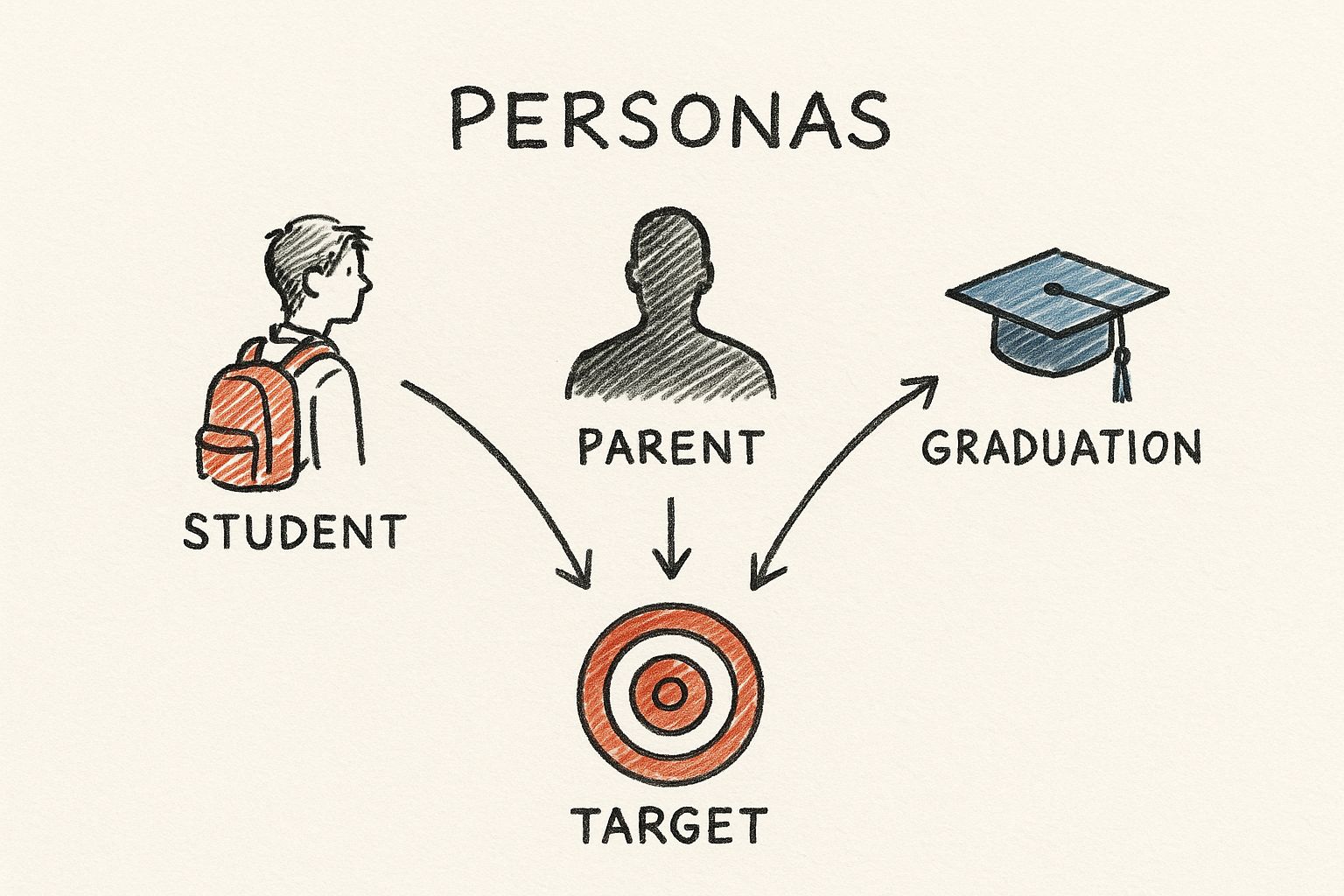
The infographic above illustrates how students, parents, and the institution's academic goals all contribute to a targeted marketing strategy. It emphasizes the interconnectedness of these personas and their influence on successful enrollment outcomes. This underscores that effective digital marketing for private schools must resonate with all key stakeholders.
Understanding Your Target Audience
Knowing your target audience is as important as understanding your school's strengths. This goes beyond demographics and delves into the motivations, concerns, and decision-making processes of prospective families. Audience personas, fictional representations of your ideal families, can be a valuable tool.
Private schools are increasingly using Live Chat for Education on their websites. This allows real-time interaction with prospective families, answering questions and providing personalized support. It also serves as a valuable data collection point, offering insights into prospective parents' top-of-mind questions and concerns. This personalized approach fosters relationships and addresses concerns directly.
Effective Budget Allocation and Platform Selection
A well-defined digital marketing strategy involves allocating your marketing budget wisely. The private school market is projected to be worth approximately $98.9 billion in 2025, underscoring the industry's competitive landscape. Learn more about private school marketing trends. Effective marketing is crucial for survival and growth.
This necessitates careful consideration of which digital platforms will best reach your target audience and achieve your goals. For example, if your target audience is active on Instagram, investing in visually appealing content and targeted advertising on that platform may be a good strategy. If you're aiming to improve local search visibility, focusing on local SEO and geo-targeted advertising can be effective.
A data-driven approach, using analytics to track and measure campaign effectiveness, is crucial for optimizing your budget and maximizing your return on investment. Measuring key metrics, such as website traffic, conversion rates, and cost-per-enrollment, provides valuable insights for refining your strategy and achieving enrollment goals.
To help illustrate the various digital marketing avenues available, the table below summarizes key channels, their strengths, weaknesses, and ideal applications for private school marketing.
Essential Digital Marketing Channels for Private Schools
| Marketing Channel | Best For | Average ROI | Implementation Difficulty | Time Investment |
|---|---|---|---|---|
| Search Engine Optimization (SEO) | Organic reach, long-term growth | High | Moderate | High |
| Pay-Per-Click (PPC) Advertising | Immediate visibility, targeted campaigns | Moderate | Moderate | Moderate |
| Social Media Marketing | Community building, brand awareness | Variable | Low | Moderate |
| Email Marketing | Nurturing leads, personalized communication | High | Low | Moderate |
| Content Marketing | Establishing thought leadership, attracting prospective families | High | Moderate | High |
This table highlights the diverse options available to private schools, each with its own set of advantages and disadvantages. Choosing the right mix of channels depends on your specific goals and target audience. While SEO offers long-term organic growth, PPC delivers immediate visibility. Social media helps build community, and email marketing nurtures leads. Content marketing establishes thought leadership and attracts prospective families. A balanced approach leveraging multiple channels is often the most effective.
Content That Captures Your School's Authentic Story
Beyond perfectly manicured lawns and glossy brochures, prospective families are looking for something more: authenticity. They want to grasp the true essence of your school, the unique community that makes it stand out. This means going beyond standard promotional materials and creating content that truly resonates with families searching for the right educational fit.
Showcasing Your School's Distinctive Community
Creating content that captures your school's authentic story begins with understanding what makes your community special. Is it the close bonds between students, your dedicated faculty, or your innovative approach to learning? This requires looking beyond superficial aspects and highlighting the real people and experiences that define your school. For example, creating compelling student profiles showcases the diverse talents and passions within your student body. Sharing stories of student achievements, both within the classroom and beyond, offers a glimpse into the rich opportunities available at your school.
Faculty Spotlights and Curriculum Highlights
Similarly, faculty spotlights allow prospective families to connect with the educators who will guide their children's learning. Highlighting teachers' expertise, passions, and individual teaching styles adds a human touch to the educational experience. Furthermore, showcasing distinctive curriculum highlights offers families insights into your school's educational philosophy and approach. Focus on demonstrating tangible outcomes and illustrating how your curriculum prepares students for future success. Rather than simply listing courses, provide concrete examples of student projects, research initiatives, or real-world applications of learning. This approach effectively demonstrates the value of your educational approach and highlights the tangible benefits of choosing your school.
Strategically Aligning Content With Family Decision-Making
A strategic content calendar is essential for connecting with families at the optimal times. This calendar should align with key decision-making periods, admission milestones, and important events throughout the school year. For example, create content related to open house events, application deadlines, or financial aid opportunities. This ensures families receive pertinent information precisely when they need it. Moreover, aligning content with seasonal themes or holidays adds a sense of timeliness and relevance.
Balancing Promotional Material With Authentic Storytelling
Finally, striking the right balance between promotional content and authentic storytelling is crucial. While showcasing your school's strengths is important, relying solely on promotional material can feel impersonal and disingenuous. The use of digital marketing in private schools has become vital for both recruitment and retention. Schools are increasingly focusing on building long-term relationships with families through internal marketing efforts, genuine storytelling, and showcasing authentic student experiences. Weaving in real stories, student voices, and faculty perspectives cultivates trust and forges an emotional connection with prospective families. This balanced approach strengthens families' connection to your school's community and helps them understand what makes it a truly special place for students to learn and grow. By prioritizing authentic storytelling, private schools can effectively engage families and build enduring relationships.
Social Media Strategies That Drive Family Engagement
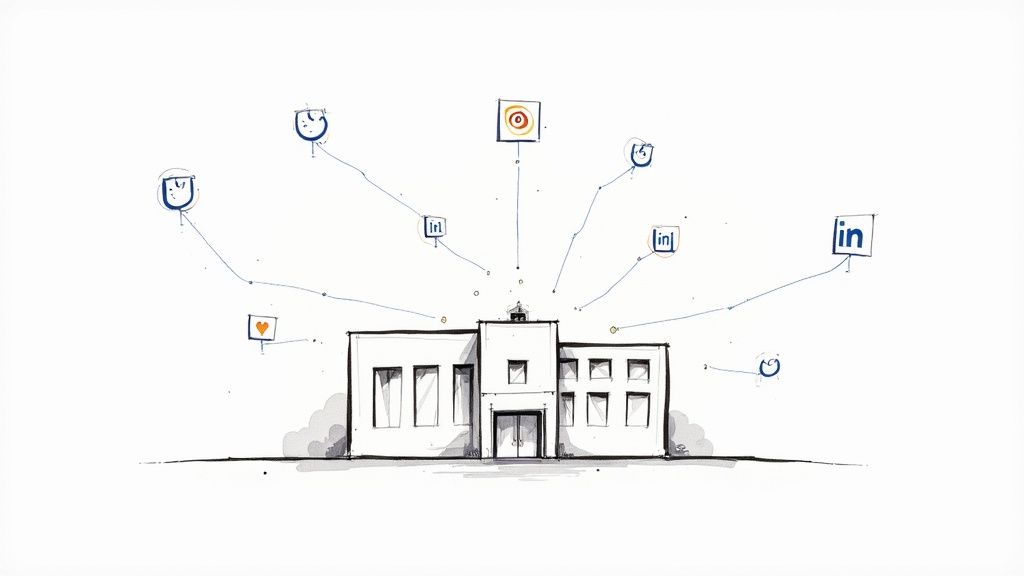
Social media has become a powerful tool for private schools. It's no longer just about announcements. It's about fostering a sense of community and engaging families on a deeper level. This means schools need a strategic approach to leverage each platform effectively. Digital marketing for private schools requires a deep understanding of how each platform contributes to the overall communication strategy.
Platform-Specific Strategies for Maximum Impact
Different social media platforms have different strengths. Instagram, being visually driven, is perfect for showcasing student life. Photos and short videos of events, extracurriculars, and daily activities bring the school experience to life. Facebook, with its broader reach, is excellent for sharing news, announcements, and longer-form content like blog posts. LinkedIn offers opportunities to connect with alumni and build professional networks. Using each platform strategically maximizes engagement and reach.
To help illustrate effective strategies, let's take a look at the following table:
Social Media Platform Effectiveness for Private Schools
Data showing the effectiveness of different social media platforms for various private school marketing objectives
| Platform | Best Audience Reach | Content Type Effectiveness | Average Engagement Rate | Recommended Posting Frequency |
|---|---|---|---|---|
| Parents, alumni, prospective families | Text posts, articles, event announcements | 0.5% – 1% | 1-2 times per day | |
| Current students, prospective students, younger parents | High-quality photos and videos, stories, reels | 1% – 3% | 1-3 times per day | |
| Alumni, professionals, potential donors | Articles, job postings, school news | 0.25% – 0.75% | 2-3 times per week | |
| Current events, quick updates, engaging with the wider community | Short-form text, links to articles, quick announcements | 0.05% – 0.25% | 3-5 times per day |
This table provides a general overview of how each platform can be utilized. Tailoring your strategy to your specific school and audience is essential for success.
Encouraging Authentic User-Generated Content
User-generated content is a powerful tool. Encourage students, parents, and faculty to share their experiences. Student projects, classroom snapshots, and behind-the-scenes glimpses into school life offer authentic perspectives. This organic content builds trust and connection with prospective families by showcasing the genuine school community.
Balancing Promotion and Community Building
While promotion is important, community building should be the primary focus. Share stories, celebrate achievements, and highlight individuals within the school. This fosters a sense of belonging. A balanced approach keeps families engaged and strengthens their connection to the school. This balance is vital for long-term success in digital marketing for private schools. For direct communication, consider Bulk SMS for School to streamline communication and boost family engagement.
Navigating Privacy and Safety in Educational Settings
Privacy and safety on social media are crucial. Clear guidelines for students, parents, and faculty are essential. These guidelines should address appropriate content, online behavior, and student privacy. A dedicated team monitoring social media channels and responding to inquiries promptly builds trust and demonstrates a commitment to engagement.
Search Visibility and Paid Strategies That Deliver Results
When families search online for "private schools" in their area, does yours appear in the results? This visibility is crucial for attracting prospective students. This section explores key elements of digital visibility that directly influence enrollment inquiries, focusing on how to make your school easily discoverable.
Optimizing Your Website for Local Search
Local SEO (Search Engine Optimization) is essential for private schools. It involves optimizing your online presence so your school appears prominently in search results when families search for educational options in your geographic area.
Claiming and optimizing your Google My Business profile: This free tool allows you to manage how your school appears on Google Search and Maps. Ensure your school's name, address, and phone number (NAP) are accurate and consistent online.
Optimizing your website for local keywords: Incorporate location-based keywords naturally within your website content. For example, if your school is in San Francisco, use phrases like "private high schools in San Francisco."
Building local citations: List your school in relevant online directories and local business listings. This builds credibility and improves search visibility.
These steps help families easily find your school when searching online, maximizing your chances of attracting them.
Effective Keyword Strategies for Private School Marketing
Keywords are the foundation of SEO. These are the terms families use when searching for schools online. Effective keyword strategies are vital for maximizing your school's visibility in search results.
Identify relevant keywords: Research what prospective families are searching for. Think beyond "private school" and consider specifics like "Montessori preschool" or "private schools with arts programs."
Use long-tail keywords: These are longer, more specific phrases that target niche searches. For example, instead of "private school," use "private elementary school with small class sizes in [your city]." Long-tail keywords often have higher conversion rates.
Integrate keywords naturally: Avoid keyword stuffing. Use keywords strategically within your website content, page titles, meta descriptions, and image alt text. This improves your search engine ranking.
By using keywords strategically, you can improve your school’s visibility in relevant search results.
Paid Advertising for Measurable Results
While SEO focuses on organic reach, paid advertising allows you to target specific audiences and achieve immediate visibility through platforms like Google Ads and social media.
Google Ads: Run targeted campaigns to reach families actively searching for private schools in your area. Use relevant keywords and compelling ad copy to drive traffic to your website.
Social media advertising: Platforms like Facebook and Instagram allow you to target parents based on demographics and interests. Use engaging visuals and compelling stories.
Retargeting: Reconnect with families who have previously interacted with your online content. This keeps your school top-of-mind. Consider using Bulk SMS for streamlined communication.
Paid advertising delivers measurable results. Track your campaigns to optimize ad spend and maximize ROI. By carefully managing your paid campaigns and integrating them with your organic SEO efforts, you can effectively reach prospective families throughout their decision-making process. Understanding these strategies helps private schools improve their search visibility and online engagement.
Turning Data Into Enrollment Through Strategic Analytics

Effective digital marketing for private schools relies heavily on data analysis. It's crucial to move beyond surface-level metrics like website visits and social media likes. Instead, schools should strategically analyze data to understand the factors that truly influence enrollment outcomes. This requires implementing analytics systems that track the metrics that truly matter.
Connecting Digital Touchpoints to Enrollment Results
Successful private schools recognize the importance of connecting digital touchpoints to actual enrollments. This involves tracking the entire journey of a prospective family, from their initial website visit to submitting an application.
For example, imagine a family clicks on a Facebook ad about your school's summer program and then enrolls their child. This data point is invaluable. By understanding which digital channels are most effective in driving conversions, you can allocate your marketing budget more strategically.
Calculating True Cost-Per-Enrollment
Calculating the true cost-per-enrollment is essential for understanding the return on investment (ROI) of your digital marketing efforts. This requires tracking the costs associated with each marketing channel and comparing it to the number of enrollments generated.
Analyzing the long-term value of a student provides a more comprehensive view of ROI. This comprehensive view of marketing spend allows for data-driven decisions about future investments and showcases the value of digital marketing to school leadership.
Accessible Approaches to Data Analysis
Several powerful tools don't require advanced technical expertise: A/B testing, conversion rate optimization (CRO), and user experience (UX) research. A/B testing allows you to experiment with different versions of your website or marketing materials to see which performs better. You could test two different headlines on a landing page to see which generates more inquiries.
Conversion rate optimization (CRO) focuses on improving the percentage of website visitors who take a desired action, such as submitting an inquiry form. User experience (UX) research, like surveys or website heatmap analysis, offers valuable insights into how families interact with your digital platforms. These insights can then be used to improve website design and content, leading to a more engaging experience.
Presenting Marketing Data to School Leadership
Presenting data effectively to school leadership is key for securing continued investment in digital marketing. This involves moving beyond vanity metrics and focusing on data that directly impacts enrollment.
For instance, instead of just reporting on social media followers, showcase how social media engagement has translated into increased inquiries or applications. Using clear visuals, such as charts and graphs, and highlighting key takeaways makes the data more accessible and impactful.
Are you ready to elevate your school's marketing and communications strategies? Join The MarCom Society today for access to expert guidance, resources, and a community of professionals dedicated to advancing K-12 education.