Building Your School's Marketing Foundation Without The Overwhelm

Many schools find it challenging to develop a marketing strategy that genuinely connects with their prospective families. Often, resources are spread too thin across various initiatives, leading to a fragmented and ultimately ineffective approach. This is precisely why a solid marketing foundation is so vital. Creating this foundation begins with understanding your school's unique value proposition. What makes your institution truly stand out?
Identifying Your Authentic Value Proposition
This process goes beyond generic statements like "excellent academics" or "dedicated faculty." Instead, it requires a deeper exploration of the genuine experiences and opportunities your school provides. Does your school employ a distinct teaching methodology, such as project-based learning, or offer a renowned arts program? Perhaps specialized support services are a key differentiator, or maybe a particularly vibrant and inclusive school culture sets you apart. Pinpointing these core strengths is the first step in designing a school marketing strategy that truly resonates.
Conducting Meaningful Market Research
Once you've identified your school's strengths, it's essential to understand your target audience. You might find valuable insights in resources like this article on how to master school marketing. Meaningful market research is paramount for any successful school marketing strategy. This involves understanding the needs, preferences, and concerns of prospective families. It's not simply about demographics; it's about understanding their values and what they prioritize in education. Are they seeking a school with a strong STEM focus, or are they more drawn to a holistic approach that fosters creativity and social-emotional growth?
Crafting Resonant Messaging
Armed with a clear understanding of both your school and your target audience, you can then develop messaging that resonates. This involves communicating your value proposition in a way that directly addresses the needs and aspirations of prospective families. Maintaining consistent messaging across all platforms—from your website and social media presence to printed materials and in-person interactions—is also crucial. This consistency builds brand recognition and reinforces your school's identity. This naturally leads to the next critical step: setting clear objectives.
Establishing Clear Objectives
A successful school marketing strategy requires measurable goals. Establishing clear objectives provides direction and allows for progress tracking. These objectives should be SMART: Specific, Measurable, Achievable, Relevant, and Time-bound. For instance, rather than aiming to "increase enrollment," a SMART objective might be to "increase inquiries from prospective families by 15% within the next six months." By establishing specific, measurable goals, you can ensure your marketing efforts are focused and yield tangible results. A well-defined school marketing strategy is a continuous process of refinement and adaptation, building upon this foundation to achieve sustainable growth and attract the right families.
Making Data Work For You (Not Against You)

Establishing clear objectives is paramount for any successful school marketing strategy. But how do you measure effectiveness? The answer lies in data analysis. This doesn't require complex dashboards, but rather a focus on actionable data to inform decisions and drive enrollment growth. This means shifting from simply reacting to situations to implementing a proactive, data-driven approach.
Tracking Key Metrics for Meaningful Insights
Begin by pinpointing the key performance indicators (KPIs) that directly impact your objectives. These might include website traffic, inquiries, applications submitted, and of course, new enrollments. Tracking these numbers is a good start, but it's equally important to understand their source.
Are these leads coming from social media platforms like Facebook and Instagram, search engines like Google, or referrals? Knowing this helps focus your resources. For instance, high traffic from social media suggests investing more in optimizing your social media presence.
Personalizing Outreach Without Being Creepy
Data also allows you to personalize your outreach to prospective families. By following their interactions with your website and social media channels, you gain valuable insights into their interests and preferences. This knowledge empowers you to tailor communications that address their specific needs and concerns, making them feel understood.
However, balance is essential. Personalization should be helpful and informative, not intrusive or overly targeted. The goal is to connect authentically, not to bombard families with irrelevant information.
Using Data to Predict Enrollment Success
Data-driven marketing is becoming increasingly vital for schools. Data analytics empower institutions to personalize marketing, ensuring effective engagement with prospective students. Learn more about data-driven marketing in education. This strategic data use enables schools to optimize campaigns and resonate better with their target audiences.
This emphasis on data-informed decision-making allows for more efficient budget allocation and campaign optimization. Ultimately, this proactive approach helps schools continually refine their marketing strategies to meet the evolving needs of prospective families.
Key Marketing Metrics for Schools to Track
Tracking the right metrics is essential for evaluating the effectiveness of your school's marketing strategy. The following table outlines some essential data points and KPIs to monitor:
Key Marketing Metrics for Schools to Track: Essential data points and KPIs that schools should monitor to measure marketing effectiveness
| Metric | Purpose | Measurement Method | Target Range (Example) |
|---|---|---|---|
| Website Traffic | Measures the number of visitors to your website. | Google Analytics | Increase by 10% per quarter |
| Inquiry Rate | Tracks the percentage of website visitors who submit an inquiry form. | CRM or Website Analytics | 5% of website visitors |
| Application Rate | Measures the percentage of inquiries that convert into applications. | Admissions Software | 30% of inquiries |
| Enrollment Rate | Tracks the percentage of accepted applicants who enroll. | Admissions Software | 80% of accepted applicants |
| Social Media Engagement | Measures the level of interaction on your social media platforms. | Social Media Analytics Tools | Increase by 15% per month |
| Cost Per Acquisition (CPA) | Calculates the cost of acquiring a new student through marketing efforts. | Marketing Analytics and Admissions Data | Decrease by 5% per year |
By consistently monitoring these metrics, you can identify what's working, what needs improvement, and make informed adjustments to your school's marketing strategy. Data is a powerful tool that can help you achieve your enrollment goals and build a thriving school community.
Harnessing Social Media Without Losing Your Mind

While data analysis offers valuable insights, a truly effective school marketing strategy needs a strong social media presence. This isn't about simply following the latest trends. It's about cultivating a genuine online community and connecting with prospective families by showcasing the authentic character of your school. This approach helps attract families whose values align with your school's mission.
Collaborating With Your Community for Authentic Content
Working with current students and alumni is a powerful strategy. Their firsthand experiences provide authentic and relatable content. Student-created videos showcasing daily life, or alumni testimonials about the lasting impact of their education, can be incredibly compelling. This type of content resonates much more deeply than generic promotional materials.
Platform-Specific Strategies That Actually Work
Every social media platform has its own strengths and best practices. Instagram is excellent for visual storytelling, allowing you to capture the vibrant energy of your school through photos and short videos. TikTok, despite potential regulatory changes, can be a powerful tool for reaching younger audiences with engaging short-form content. Finding the right mix of platforms is key to a successful school marketing strategy. You might be interested in: How to create a social media calendar.
Leveraging Social Proof and Peer Recommendations
The increasing importance of peer recommendations underscores the shift toward social proof in education. In 2025, international students are relying more on social media and peer recommendations when selecting schools. This is apparent in the growing partnerships between universities and alumni to share authentic experiences on platforms like Instagram, TikTok, and YouTube. Explore this topic further. Acknowledging the potential limitations on platforms like TikTok, schools are wisely diversifying their outreach strategies.
Adapting to the Evolving Social Media Landscape
The social media world is constantly changing. Platforms gain and lose popularity, and algorithms are updated. Adaptability is essential for any school marketing strategy. This may involve exploring new platforms or reallocating resources to the most effective channels. The overarching goal is to maintain strong digital connections, regardless of the specific platforms used. By staying flexible and responsive, schools can navigate these changes and engage meaningfully with their communities.
Standing Out In A Crowded Education Market
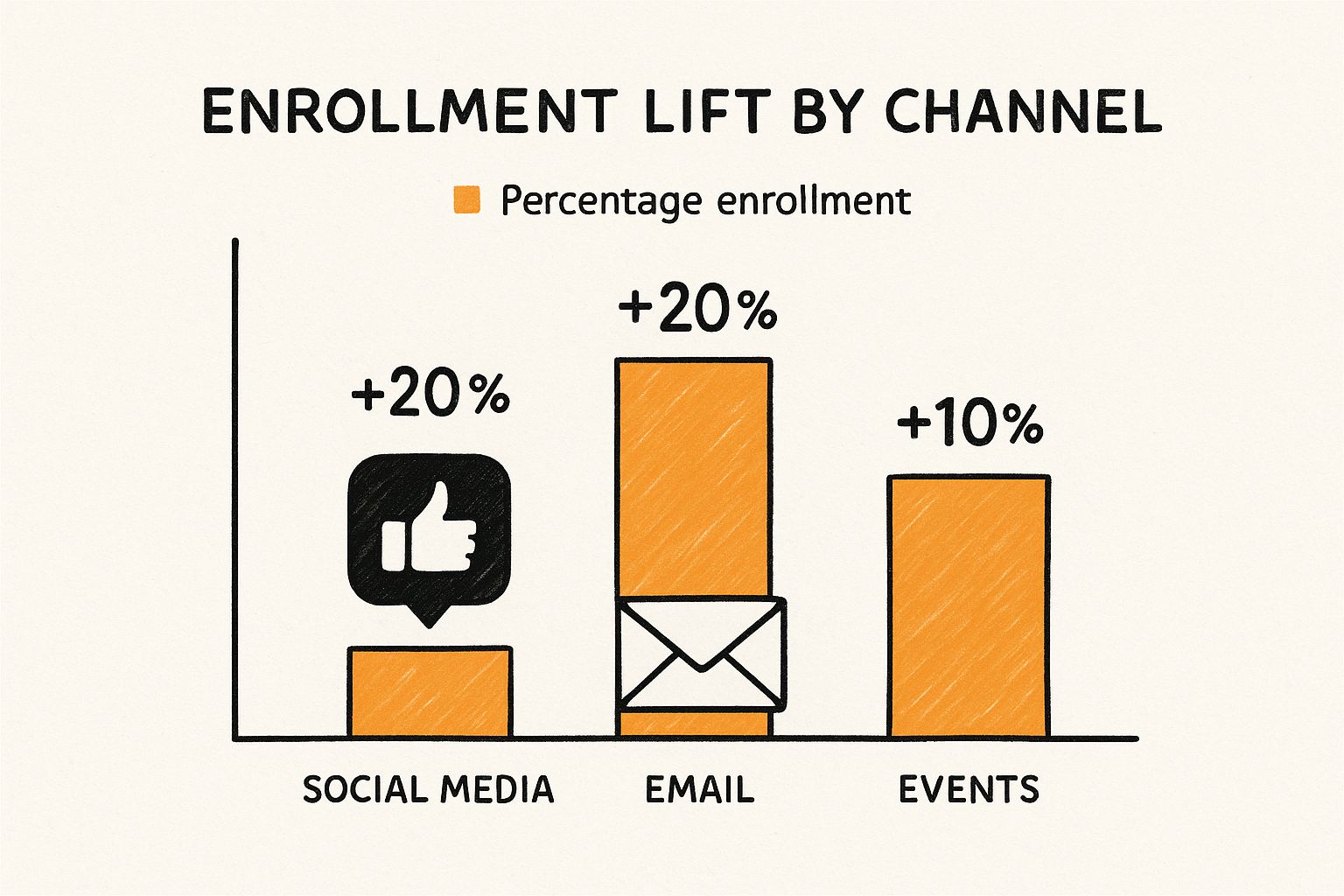
The infographic above showcases the impact of various marketing channels on student enrollment. Social media takes the lead, boosting enrollment by 20%. Email follows at 15%, and events contribute a 10% increase. This data underscores the power of a multi-channel marketing strategy for schools.
By utilizing a mix of channels, schools can connect with prospective families through their preferred methods. This personalized approach is key to reaching a wider audience and building stronger relationships. But reaching families is only one piece of the puzzle. Understanding the competitive landscape is equally vital.
Conducting a Competitive Analysis
A competitive analysis is a critical step in developing a successful marketing strategy. It's not about mimicking other schools but about understanding their strategies to identify opportunities. By analyzing your competitors, you can discover what they aren't doing and find areas where your school can truly shine.
This analysis allows you to pinpoint market gaps and focus on your school's unique strengths. Highlighting these strengths allows you to resonate with families seeking specific educational values.
Identifying and Leveraging Market Gaps
Understanding market gaps means identifying unmet needs within your target audience. Perhaps there's a demand for a particular program or teaching style not offered by other schools in your area.
For example, if your school emphasizes arts education while competitors prioritize academics, this presents a valuable market gap. Promote your strong arts program to attract families seeking that specific focus. Similarly, highlight specialized learning programs or unique educational philosophies that differentiate your school.
Let's explore how different marketing channels can be leveraged to reach these families. The following table provides a comparison of various channels and their effectiveness in school recruitment.
Multi-Channel Marketing Strategy Comparison
| Channel | Reach | Cost | Engagement Level | Best Use Case |
|---|---|---|---|---|
| Social Media | High | Low | High | Building brand awareness, engaging with prospective families, sharing school updates |
| Email Marketing | Medium | Low | Medium | Sharing personalized information, promoting events, nurturing leads |
| Events (Open Houses, School Fairs) | Local | Medium | High | Providing in-person experiences, showcasing school facilities and programs |
| Website | Global | Medium | Medium | Providing detailed information about the school, serving as a central hub for resources |
| Print Advertising (Local Newspapers, Magazines) | Local | High | Low | Reaching families who prefer traditional media |
This table highlights the strengths and weaknesses of each channel. While social media offers high reach and engagement at a low cost, events provide a valuable in-person experience, despite their localized reach. A well-rounded strategy leverages a combination of channels to maximize impact.
Higher education marketing is constantly changing. Multi-channel strategies, targeted campaigns, and lead nurturing are crucial for staying competitive. Learn more about the evolving landscape of education marketing.
Positioning your school within this evolving market requires a clear understanding of your target audience and a compelling message.
Positioning Your School Effectively
Positioning is about crafting a clear message that resonates with your ideal families. It's not just about what your school offers, but why you do it and what makes your approach unique.
Showcase your educational philosophy, the benefits of your programs, and the positive impact you have on students. By articulating your school's value, you attract families who align with your vision and seek the distinctive educational experience you provide. This focused approach is key to building strong connections and establishing your school as a preferred choice for families.
Creating Content That Families Actually Want To Read
Instead of relying on generic, impersonal brochures, focus on content that genuinely connects with families. Showcase your school's community authentically by shifting from standard pronouncements to compelling stories and experiences.
Storytelling Frameworks That Highlight Genuine Student Success
Successful schools leverage the power of storytelling to resonate with prospective families. Sharing real student experiences, highlighting their growth, and showcasing their achievements offers a powerful way to connect. Consider the story of a student who overcame a specific learning challenge, or discovered a hidden passion through a unique school program.
These narratives provide a tangible glimpse into the impact of your school's environment. Authenticity is paramount; avoid overpromising or presenting unrealistic portrayals. The goal is to present an honest and relatable image of your school, building trust and helping families envision themselves as part of your community. This sets the stage for a strategically planned content calendar.
Content Calendars Aligned With Family Decision-Making
Understanding the family decision-making process is crucial for content development. Families often begin their school search months in advance. Aligning your content calendar with these timelines ensures families receive relevant information at each stage of their search.
Create content that addresses common questions and concerns during the initial research phase. As families move forward in their decision-making journey, offer more in-depth information about your school's programs, curriculum, and unique culture. This guided approach fosters engagement and builds lasting connections. Equally important is addressing the unspoken anxieties parents may have.
Addressing the Concerns Parents Whisper About
Parents sometimes hesitate to voice their genuine concerns. These unspoken anxieties, the "whispers" shared amongst themselves, can be effectively addressed in your content. Tackling sensitive topics with honesty and transparency builds confidence.
Addressing issues such as bullying prevention programs, learning support services, or diversity and inclusion initiatives demonstrates a proactive approach to fostering a supportive community. Maintaining consistency across all content further strengthens your school's image.
Maintaining Consistency Across All Content
Consistent messaging builds a unified brand identity and fosters trust. Ensure all content, from website copy and social media posts to blog articles and printed materials, aligns with your school's values and mission. Consider reviewing resources like the guide on How to master content marketing for schools.
This cohesive approach reinforces your school's unique character, helping families understand what you represent and fostering deeper connections. Creating welcoming and representative content builds an online community that reflects the heart of your school. This inclusive approach cultivates a sense of belonging, boosting enrollment and laying the foundation for long-term growth.
Measuring What Actually Matters For Your School's Success
Building a strong social media presence and creating engaging content are crucial for any successful school marketing strategy. However, measuring the impact of these efforts is just as important. Instead of focusing on vanity metrics like follower counts and likes, we need to identify and track the key performance indicators (KPIs) that truly correlate with enrollment success and long-term growth.
Key Performance Indicators That Drive Results
A large number of social media followers might look impressive, but it doesn't always translate to increased enrollment. We need to focus on metrics that show genuine interest and engagement. Consider these important KPIs:
Website Traffic from Social Media: This metric demonstrates how effectively your social media content is driving prospective families to your website to learn more about your school.
Inquiry Form Submissions: Track how many families are taking the next step to request information after visiting your website. This shows a deeper level of interest.
Open House Attendance & Follow-Up: Don't just measure attendance at these events. Also track the conversion rate of attendees into enrolled students to see the real impact of these events.
Application Completion Rate: Monitoring the percentage of families who complete the application process indicates serious consideration and provides valuable insight into your admissions pipeline.
These KPIs provide a more accurate picture of your marketing strategy's influence on family decisions. For instance, high website traffic with low inquiry form submissions might suggest a problem with your website's user experience or call-to-action.
Tracking and Analyzing Your Marketing Efforts
Conversion tracking is essential for understanding which marketing activities lead to enrollments. Use tools like Google Analytics to monitor how families interact with your website after clicking a link from a specific source, such as a social media post or email campaign.
Regular campaign reviews are also crucial. Analyze the performance of individual campaigns, identify areas for improvement, and adapt your strategy accordingly. This data-driven approach helps you allocate resources effectively and maximize your return on investment. You'll be making informed decisions based on real data, not guesswork.
A/B testing is another valuable tool for refining your marketing approach. By testing different versions of your content, ads, or website elements, you can identify what resonates best with your target audience and optimize your messaging for maximum impact.
Reporting and Demonstrating Value
Clear reporting systems are essential for demonstrating the value of your marketing efforts to school leadership and stakeholders. These reports should highlight the impact of your strategies on key metrics like enrollment growth and community engagement.
For example, a report showing increased website traffic and inquiries from a specific social media campaign provides concrete evidence of your marketing success. By consistently demonstrating the value of your marketing strategy, you can build trust and secure continued support and resources for your initiatives. This allows you to focus on what works and continuously improve your school's reach and impact.
Your School Marketing Action Plan That Actually Gets Results
Creating a successful marketing strategy for schools requires a cohesive action plan, not just a collection of individual tactics. This section offers a practical roadmap for implementation, providing actionable steps for schools at every stage. Whether your school is just starting out or looking to refine existing programs, this plan provides guidance, timelines, and indicators to track progress.
Prioritizing Initiatives Based on Your School’s Unique Situation
Different strategies work best for different schools. Prioritize initiatives based on your school's specific needs and available resources. A new school might concentrate on building brand awareness through social media and community events, while an established school might focus on enhancing its website and email marketing workflows. This targeted approach maximizes resource allocation and creates a foundation for sustainable growth.
For instance, if your school has a limited budget, focus on high-impact, low-cost strategies like social media marketing. If your school has more resources available, consider multi-channel approaches combining digital strategies with personalized outreach.
Creating Accountability Systems That Ensure Consistent Follow-Through
Consistent follow-through is essential for any action plan to be effective. Establish accountability systems to ensure tasks are completed and progress is monitored. Assign clear responsibilities, set deadlines, and use project management tools to maintain organization. Regularly scheduled meetings will enable your team to address obstacles, review performance metrics, and adapt strategies as needed.
Building Sustainable Marketing Practices
Long-term success relies on sustainability. Develop marketing practices that can be maintained over time without straining your team. This involves creating streamlined workflows, documenting processes, and developing templates for frequently used materials.
Also consider implementing marketing automation tools to handle repetitive tasks, freeing up your team to concentrate on strategic initiatives. This prevents burnout and ensures consistent, impactful marketing.
Action Plan Examples for Different School Stages
The table below outlines specific marketing initiatives tailored to different stages of a school's development. Each recommendation includes implementation guidance, realistic timelines, and key success indicators:
| School Stage | Marketing Initiative | Implementation Guidance | Timeline | Success Indicators |
|---|---|---|---|---|
| New School/Start-up | Build a Basic Website | Focus on clear information, mobile responsiveness, and basic SEO. | 3-6 months | Website traffic, inquiries, social media followers |
| Establish Social Media Presence | Create engaging content showcasing school culture and values. | Ongoing | Social media engagement, reach, website referrals | |
| Participate in Local Community Events | Host open houses, attend school fairs, and collaborate with local businesses. | Ongoing | Event attendance, leads generated, brand awareness | |
| Established School | Refine Website UX and SEO | Analyze user behavior, optimize content for search engines, and improve website navigation. | 6-12 months | Increased website traffic, improved conversion rates, higher search rankings |
| Implement Email Marketing Automation | Develop targeted email campaigns for prospective and current families. | 3-6 months | Email open rates, click-through rates, conversion rates | |
| Conduct Competitive Analysis | Research competitor strategies to identify opportunities and gaps in the market. | Ongoing | Improved market positioning, increased enrollment | |
| Growing School | Develop Targeted Advertising Campaigns | Use data to create targeted ads on social media and search engines. | Ongoing | Ad click-through rates, conversion rates, cost per acquisition |
| Implement a CRM System | Manage leads, track interactions, and personalize communication. | 6-12 months | Improved lead nurturing, increased enrollment, stronger customer relationships | |
| Develop a Content Marketing Strategy | Create valuable content addressing the needs and interests of families. | Ongoing | Website traffic from content, lead generation, brand authority |
By implementing these strategies and consistently analyzing your results, you can create a sustainable marketing program that promotes long-term enrollment growth and builds a stronger school community.
Ready to enhance your school's marketing and communications? Join The MarCom Society for resources, guidance, and a community of K-12 professionals. Connect with peers, discover new strategies, and transform your school's marketing.