The world of education is constantly evolving, driven by new technologies, shifting student needs, and innovative pedagogical research. As an educator, your commitment to continuous learning is the cornerstone of student success and your own professional fulfillment. Moving beyond a simple checklist of required training, setting intentional professional development goals for educators allows you to strategically enhance your skills, tackle classroom challenges with confidence, and reignite your passion for teaching. This proactive approach ensures your growth is purposeful, directly impacting student outcomes and your career trajectory.
This article provides a comprehensive roundup of impactful goals designed to empower your professional journey. We will move beyond generic advice to offer a curated list of actionable objectives, from advancing technology integration and mastering data-driven instruction to fostering inclusive classrooms and developing leadership skills. Each goal is broken down with specific implementation steps, practical examples, and clear benefits, helping you create a personalized roadmap for growth that elevates your practice and transforms your classroom. This guide is your resource for making your professional development targeted, meaningful, and genuinely transformative.
1. Technology Integration and Digital Literacy
Setting a goal to enhance technology integration and digital literacy is no longer a niche pursuit; it's a foundational professional development goal for educators in the modern classroom. This objective moves beyond simply using digital tools and focuses on weaving technology into the fabric of instruction to create more dynamic, personalized, and engaging learning environments. It involves mastering specific platforms and understanding the pedagogical shifts required to leverage them effectively.

When educators commit to this goal, they empower themselves to meet diverse student needs, prepare learners for a digital future, and streamline their own administrative tasks. For instance, a teacher might use a flipped classroom model with Edpuzzle to ensure students grasp foundational concepts at their own pace, freeing up class time for collaborative, higher-order thinking activities.
How to Implement This Goal
- Start Small and Scale Up: Choose one specific tool, such as Google Classroom for assignments or Kahoot! for formative assessments. Master its features and pedagogical applications before introducing another.
- Join a Community: Connect with peers in Professional Learning Networks (PLNs) on platforms like X (formerly Twitter) using hashtags like #EdTech, or join dedicated Facebook groups. These communities offer support, resources, and inspiration.
- Seek Formal Training: Actively participate in webinars, online courses, and district-led workshops. Many platforms, like Google and Microsoft, offer free certification programs for educators.
- Practice and Solicit Feedback: Before a full classroom rollout, test the technology yourself to anticipate potential issues. After implementation, survey your students to gauge its effectiveness and impact on their learning experience.
Key Insight: Effective technology integration is not about the quantity of tools used, but the quality of their implementation. The goal is to enhance learning outcomes, not to use technology for its own sake.
To further explore effective methods for incorporating digital tools, delve into proven strategies for technology integration in education. This approach is particularly powerful for creating inclusive classrooms, where technology can provide scaffolds and alternative pathways for students with varying learning styles and abilities.
2. Differentiated Instruction and Inclusive Teaching
Adopting differentiated instruction and inclusive teaching as a professional development goal is crucial for creating equitable learning environments. This goal moves beyond a one-size-fits-all approach, focusing instead on tailoring instructional methods, materials, and assessments to meet the diverse needs of every student. It involves understanding individual learning profiles and actively creating a classroom where all learners, regardless of their background or ability, feel valued and are equipped to succeed.
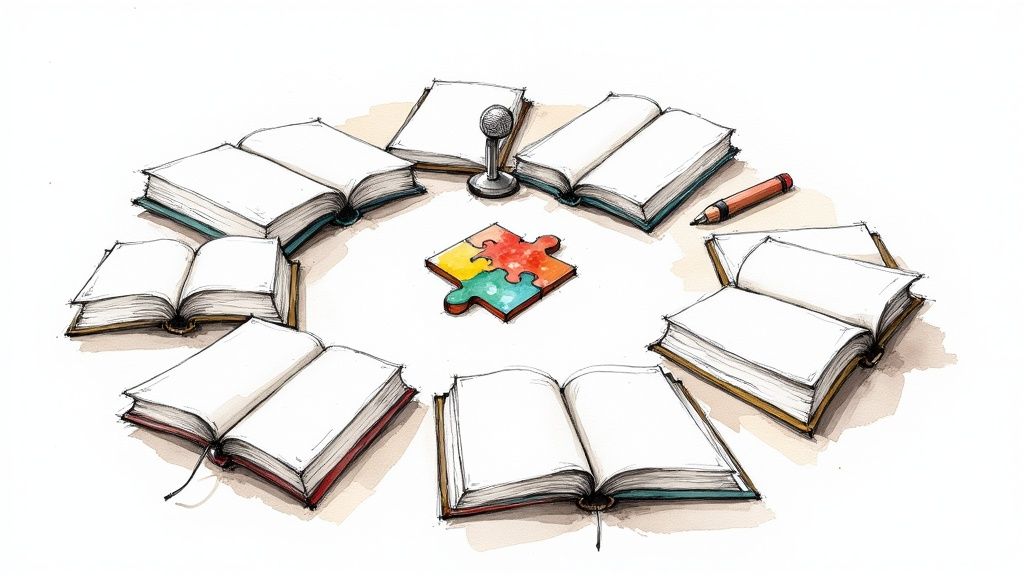
When educators commit to this goal, they build classrooms that are responsive to student readiness, interests, and learning preferences. For example, a teacher might use tiered assignments for a math concept, providing different levels of complexity to challenge every student appropriately. This ensures that advanced learners are engaged while those needing more support receive it, all while working toward the same core learning objective.
How to Implement This Goal
- Start with One Strategy: Rather than overhauling your entire curriculum, begin by applying one differentiation strategy per lesson. For instance, offer students a choice between writing an essay or creating a presentation to demonstrate their understanding of a topic.
- Know Your Learners: Use interest inventories, surveys, and pre-assessments at the beginning of a unit. This data provides invaluable insight into students' readiness levels and preferences, allowing you to design more effective and engaging instruction.
- Collaborate with Specialists: Partner with special education teachers, ELL specialists, and instructional coaches in your school. These colleagues are excellent resources for strategies, co-teaching models, and tools that support diverse learners.
- Use Flexible Grouping: Vary student groups frequently. Use whole-group instruction for introducing new concepts, small-group work for targeted practice, and individual work for independent application. This keeps the learning environment dynamic and responsive.
Key Insight: True differentiation is not about creating a separate lesson plan for every student. It is a proactive mindset that involves providing flexible pathways and varied scaffolds to help all students reach common learning goals.
To deepen your understanding of creating universally accessible lessons, explore the principles of Universal Design for Learning (UDL), a framework developed by the CAST organization. This approach is highly effective for designing instruction that proactively removes barriers, making learning achievable for everyone from the outset.
3. Data-Driven Decision Making and Assessment Literacy
Developing strong data-driven decision making and assessment literacy skills is a transformative professional development goal for educators. This competency goes beyond simply grading tests; it involves systematically collecting, analyzing, and interpreting student data to make informed instructional choices. By becoming fluent in the language of data, teachers can pinpoint specific learning gaps, differentiate instruction effectively, and create a more responsive and equitable classroom environment.
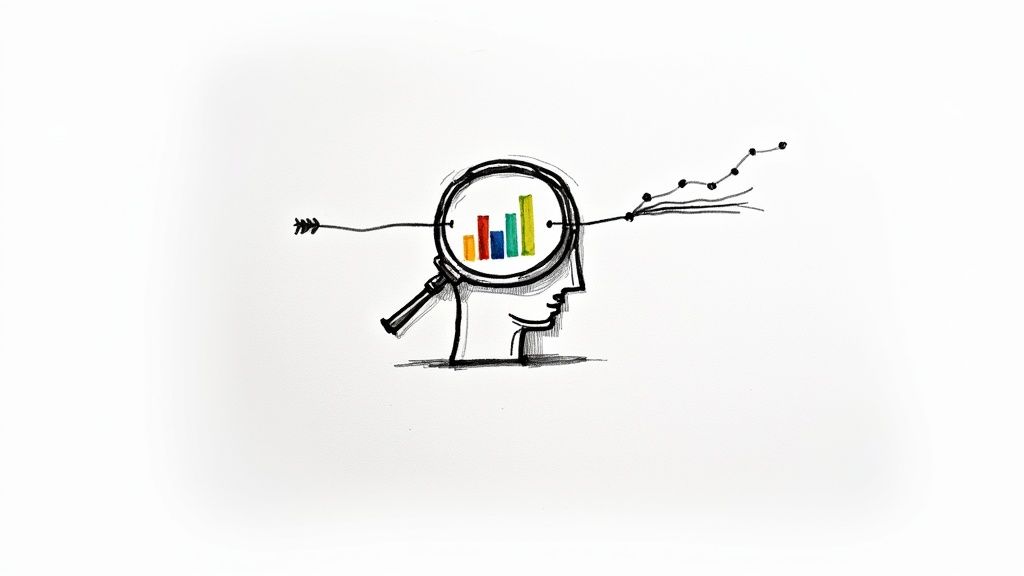
When an educator masters this skill, they shift from teaching what should be learned to addressing what needs to be learned. For example, analyzing exit ticket responses can reveal a common misconception about a math concept, allowing the teacher to re-teach it the next day. Similarly, tracking progress on a data wall can visually motivate students and help them take ownership of their learning journey.
How to Implement This Goal
- Focus on Actionable Data: Prioritize collecting data that directly informs your next instructional steps. Use quick, formative assessments like think-pair-share, exit tickets, or brief quizzes rather than relying solely on summative exams.
- Diversify Assessment Methods: Use a mix of traditional tests, project-based rubrics, performance tasks, and student self-assessments. This provides a more holistic view of student understanding than a single data point ever could.
- Collaborate with Colleagues: Schedule regular time with your Professional Learning Community (PLC) or grade-level team to analyze data together. Discussing trends and sharing strategies with peers can reveal insights you might miss on your own.
- Make Data Visible and Accessible: Share data with students in an age-appropriate way. Use simple charts or rubrics to help them understand their strengths and set personal learning goals, fostering a growth mindset.
Key Insight: The true power of data in education is not in the collection but in the conversation. It should be a tool that sparks curiosity and drives meaningful adjustments to teaching and learning, not a mechanism for judgment.
To deepen your understanding of this practice, you can explore detailed frameworks for data-driven decision making. Embracing this goal empowers educators to move from intuition-based teaching to evidence-based practice, ultimately leading to more significant and measurable student growth.
4. Classroom Management and "Positive Behavior Support"
One of the most impactful professional development goals for educators is mastering classroom management and positive behavior support. This goal moves beyond reactive discipline and focuses on proactively building a safe, respectful, and productive learning environment. It involves creating clear systems and routines that prevent disruptions while fostering a classroom culture where students feel seen, valued, and motivated to engage.

When educators commit to this goal, they reduce time spent on redirection and increase time available for instruction. A teacher might implement a framework like PBIS (Positive Behavioral Interventions and Supports) to teach and reward expected behaviors, or use daily morning meetings to build community and address concerns collaboratively. This approach transforms the classroom from a place of compliance to a community of learners.
How to Implement This Goal
- Establish Clear Routines and Expectations: From day one, explicitly teach, model, and practice procedures for everything from turning in homework to transitioning between activities. Consistency is key to creating a predictable environment where students can thrive.
- Focus on Relationship Building: Greet students at the door, learn about their interests, and show genuine care. Strong relationships are the foundation of trust and are often the most effective tool for preventing misbehavior.
- Use Positive Framing: Instead of saying "Don't run," try "Please use walking feet." Phrasing instructions positively tells students exactly what to do, rather than focusing on the negative behavior.
- Adopt a Tiered Support System: Implement a school-wide or classroom-based PBIS approach. This involves providing universal support for all students, targeted interventions for some, and intensive, individualized support for a few.
Key Insight: Proactive classroom management is about teaching behavior, not just correcting it. When you treat behavior as a skill to be learned, you empower students with the social-emotional tools they need to succeed both in and out of the classroom.
To build a truly supportive atmosphere, consider exploring methodologies from the Responsive Classroom approach, which integrates academic and social-emotional learning. This strategy helps create a climate of respect and purpose, essential for deep and meaningful instruction.
5. Professional Learning Communities and Collaboration
Engaging with Professional Learning Communities (PLCs) is a powerful professional development goal for educators focused on collective improvement. This goal shifts the focus from isolated, individual practice to a collaborative culture where teachers work interdependently to achieve better results for the students they serve. It’s about creating structured time for colleagues to share expertise, analyze student data, and refine instructional strategies together, turning a school into a hub of continuous learning for both students and staff.
When educators commit to this goal, they break down the isolation that often characterizes the teaching profession. For example, a third-grade team might meet weekly to analyze common formative assessment data, identify students who are struggling with a specific math concept, and co-plan targeted interventions. This collective approach ensures that no student falls through the cracks and that all teachers benefit from the group's shared wisdom.
How to Implement This Goal
- Establish Clear Norms and Focus: Begin by co-creating team norms that ensure meetings are respectful, efficient, and focused. Center all discussions around the four critical questions of a PLC: What do we want students to learn? How will we know if they have learned it? How will we respond when they don't? How will we respond when they already know it?
- Use Data as the Foundation: Ground your collaborative work in evidence of student learning. Regularly bring student work samples, assessment results, and performance data to the table to drive objective, problem-solving conversations rather than subjective opinions.
- Implement Peer Observation Cycles: Arrange for non-evaluative peer observations where colleagues can watch each other teach and provide constructive feedback. This practice builds trust and disseminates effective strategies across classrooms.
- Share Both Successes and Challenges: Create a safe environment where teachers feel comfortable sharing what is working and what is not. Analyzing challenges collectively often leads to more robust and innovative solutions than one person could devise alone.
Key Insight: True collaboration in a PLC is not about congeniality; it is about a relentless, shared focus on student learning. The goal is to move from a collection of individual teachers to a cohesive team with collective responsibility for all students.
Building these internal groups is a crucial first step, and their impact can be amplified by connecting with broader networks. To understand how these internal teams can connect to wider circles of influence, explore the dynamics of professional learning networks. This combined approach of tight-knit internal PLCs and expansive external networks creates a comprehensive support system for any educator.
6. Curriculum Development and Standards Alignment
Mastering curriculum development and standards alignment is a cornerstone professional development goal for educators dedicated to fostering deep, meaningful learning. This goal moves beyond simply following a textbook and involves skillfully designing, implementing, and evaluating curriculum that not only meets state or national standards but also resonates with diverse student needs. It requires a nuanced understanding of frameworks like Understanding by Design (UbD) to create coherent learning progressions and authentic assessments.
When an educator commits to this goal, they transform from a content deliverer into an instructional architect. For example, a high school history teacher might develop an interdisciplinary project where students research a historical event (History standard), write a persuasive essay on its impact (ELA standard), and create a data visualization of its economic effects (Math standard). This approach ensures standards are met while promoting critical thinking and real-world connections.
How to Implement This Goal
- Start with the End in Mind: Use the "backward design" principle popularized by Grant Wiggins and Jay McTighe. First, identify the desired results and what students should know and be able to do. Then, determine acceptable evidence of learning before planning instruction.
- Deconstruct the Standards: Break down broad standards into smaller, student-friendly learning targets or "I can" statements. This makes the learning goals transparent for both you and your students.
- Collaborate for Cohesion: Work with colleagues in your grade level and across vertical teams to map the curriculum. This ensures a logical progression of skills and prevents learning gaps or redundancies from one year to the next.
- Review and Revise with Data: Regularly analyze student performance data from formative and summative assessments. Use these insights to revise and refine your curriculum units, ensuring they effectively meet student needs.
Key Insight: Expert curriculum design isn't about "covering" standards; it's about "uncovering" them through engaging, authentic tasks that challenge students to think critically and apply their knowledge.
By focusing on this area, educators can build a truly robust instructional program. To dive deeper into this structured approach, exploring the principles of the Understanding by Design framework provides a powerful roadmap for creating purposeful and effective learning experiences.
7. Leadership Development and Mentoring
Pursuing leadership development and mentoring is a powerful professional development goal for educators aiming to extend their impact beyond their own classroom walls. This objective involves building the capacity to influence positive change, support colleagues, and contribute to broader school improvement efforts. It's about moving from being an excellent practitioner to a leader who helps others excel, whether in formal roles or as an informal guide.
When an educator embraces this goal, they become a catalyst for a stronger school culture and improved instructional practices. For example, a veteran teacher might serve as a mentor for a new hire, helping them navigate everything from classroom management to curriculum pacing. This not only supports the new teacher's success and retention but also refines the mentor's own leadership and communication skills.
How to Implement This Goal
- Start with Informal Leadership: Volunteer to lead a small committee, share a successful strategy at a staff meeting, or organize a grade-level resource-sharing initiative. These actions build credibility and experience without the pressure of a formal title.
- Become a Mentor: Formally or informally offer your support to a new or struggling teacher. Focus on building a trusting relationship, listening actively, and offering constructive, non-judgmental guidance.
- Seek Formal Leadership Roles: Express interest in positions like department chair, instructional coach, or professional learning community (PLC) facilitator. These roles provide structured opportunities to lead and influence school-wide initiatives.
- Engage in Targeted Training: Participate in workshops or certification programs focused on instructional leadership, coaching, or adult learning principles. Understanding how to lead peers is a distinct skill set from teaching students.
Key Insight: Effective teacher leadership is not about authority; it's about influence and collaboration. The most respected teacher leaders empower their colleagues by building relationships and fostering a shared commitment to student success.
Developing these competencies is crucial for anyone aspiring to administrative or coaching positions. To deepen your understanding, you can find valuable strategies for professional development for school leaders. This focus ensures you are prepared to guide your peers and contribute meaningfully to your school's vision.
8. Research-Based Practice and Continuous Learning
Committing to research-based practice is a powerful professional development goal for educators dedicated to maximizing student achievement. This objective involves grounding instructional decisions in proven educational research and continuously updating one's pedagogical toolkit. It moves beyond traditional methods, encouraging teachers to become critical consumers and implementers of evidence-backed strategies popularized by researchers like John Hattie and Robert Marzano.
Adopting this goal ensures that classroom time is spent on strategies with the highest probability of success. For example, an educator might shift from broad, project-based learning to incorporating more direct instruction and explicit success criteria, based on Hattie's "Visible Learning" findings. This evidence-informed approach fosters a culture of efficacy and continuous improvement that directly benefits student outcomes.
How to Implement This Goal
- Schedule Dedicated Learning Time: Set aside a consistent block of time each week or month for professional reading. Focus on peer-reviewed journals, educational research summaries, or books from trusted authorities like ASCD or Corwin Press.
- Conduct Action Research: Identify a specific classroom challenge, research potential evidence-based solutions, implement a new strategy, and collect data to measure its impact. This turns your classroom into a personal learning laboratory.
- Join a Professional Organization: Memberships in organizations like the National Education Association (NEA), ISTE, or your specific subject-area association provide access to conferences, publications, and networks focused on current research.
- Formalize Your Learning: Pursuing advanced credentials such as National Board Certification or a master's degree provides a structured path for deep engagement with educational theory and research. A dedicated Continuing Professional Development (CPD) course can also help formalize and track your ongoing learning efforts.
Key Insight: The goal is not just to know the research, but to skillfully translate it into daily classroom practice. Effective implementation requires adapting evidence-based strategies to your unique students and school context.
8 Key Professional Development Goals Comparison
| Item | Implementation Complexity | Resource Requirements | Expected Outcomes | Ideal Use Cases | Key Advantages |
|---|---|---|---|---|---|
| Technology Integration and Digital Literacy | Moderate to High – mastering multiple tools | High – technology, training, maintenance | Enhanced engagement, personalized learning | Remote/hybrid learning, tech-rich classrooms | Access to vast resources, prepares digital workforce |
| Differentiated Instruction and Inclusive Teaching | High – extensive planning and customization | Moderate to High – materials, support | Equitable learning, improved outcomes | Diverse classrooms, varied student needs | Meets individual needs, boosts motivation |
| Data-Driven Decision Making and Assessment Literacy | Moderate – data collection & analysis skills | Moderate – assessment tools, training | Targeted interventions, evidence-based teaching | Schools focusing on accountability & progress | Objective progress tracking, personalized paths |
| Classroom Management and Positive Behavior Support | Moderate – consistent strategies required | Low to Moderate – systems and training | Fewer disruptions, safe environment | All classrooms needing behavior support | Maximizes instruction time, reduces stress |
| Professional Learning Communities and Collaboration | Moderate – coordination and culture building | Low to Moderate – meeting time, facilitation | Shared growth, improved teaching consistency | Schools aiming for teamwork & professional growth | Builds support networks, enhances job satisfaction |
| Curriculum Development and Standards Alignment | High – complex design and alignment processes | Moderate – research, collaboration time | Standards-based coherent curriculum | Schools implementing or revising curricula | Clear targets, systematic skill development |
| Leadership Development and Mentoring | Moderate to High – added responsibilities | Low to Moderate – time, training | Increased influence, career growth | Educators seeking leadership roles | Expands impact, supports colleague development |
| Research-Based Practice and Continuous Learning | High – ongoing commitment and learning | Moderate to High – time, education costs | Up-to-date teaching, improved effectiveness | Teachers focused on professional growth | Keeps practices current, enhances expertise |
Putting Your Plan into Action and Finding Support
We've explored a comprehensive landscape of impactful professional development goals for educators, from mastering technology integration to fostering collaborative learning communities and stepping into leadership roles. The journey of professional growth is not about checking boxes on a list; it's a dynamic, ongoing process of refinement, adaptation, and dedicated practice. The true value lies in how these efforts translate into tangible benefits for your students and your entire school community.
Whether you've chosen to focus on enhancing your assessment literacy, building a more inclusive classroom through differentiated instruction, or aligning curriculum with new standards, the core principle remains the same: purposeful action creates meaningful change. These goals are more than just items on an annual review. They are powerful levers for increasing student engagement, closing achievement gaps, and building a more resilient, supportive, and effective learning environment.
From Aspiration to Action: Your Next Steps
Identifying the right goal is a critical first step, but the journey truly begins with implementation. Turning your chosen objective from an idea into a reality requires a deliberate and structured approach. Don't fall into the trap of setting a vague intention; instead, build a concrete roadmap for success.
- Create a SMART Goal: Transform your chosen area, such as "improving data-driven decision making," into a specific, measurable, achievable, relevant, and time-bound (SMART) goal. For example: "By the end of the next semester, I will use weekly formative assessment data to create at least two distinct small-group learning activities per week to address identified skill gaps in my 5th-grade math class."
- Identify Key Resources: What do you need to succeed? This could involve specific books, online courses, district-provided workshops, or peer-reviewed research articles. For a goal centered on positive behavior support, you might identify a key text to read and a specific online module to complete.
- Seek Out a Support System: Professional growth thrives in community, not isolation. Share your goals with a trusted colleague, a mentor, or an administrator. This accountability partner can provide encouragement, offer fresh perspectives, and help you navigate challenges. This is especially vital for roles that bridge academics and administration, such as school marketing and communications.
The Power of Continuous Learning and Collaboration
Remember, the most effective professional development goals for educators are not one-time pursuits but cycles of continuous improvement. The strategies you implement should be monitored, evaluated, and adjusted based on their impact. This iterative process, grounded in reflection and collaboration, is the hallmark of a master educator and a thriving school culture.
When educators, administrators, and communications professionals are all committed to growth, the entire school ecosystem benefits. This shared commitment creates a powerful synergy, where classroom innovations are effectively communicated to parents and the community, strengthening the school's reputation and fostering greater stakeholder investment. By actively pursuing these goals, you are not just enhancing your own skills; you are contributing to a legacy of excellence and making a profound, lasting impact on the lives you touch every day.
For school marketing and communications professionals seeking a dedicated community to achieve their professional development goals, The MarCom Society offers unparalleled support. Connect with a network of your peers, access expert-led workshops, and find the resources you need to elevate your strategy and impact. Explore membership today at The MarCom Society.