In today's dynamic educational environment, the traditional slideshow presentation often struggles to capture student imagination and demonstrate deep learning. Moving beyond static slides is no longer just an option; it's essential for fostering critical thinking, creativity, and public speaking confidence. This guide delivers a broad collection of innovative school presentation ideas designed to transform how students share knowledge across all K-12 grade levels.
We provide a comprehensive roundup of creative formats and themes that move past the expected. From interactive digital storytelling that captivates an audience to debate-style showdowns that sharpen persuasive skills, each concept is crafted to engage and challenge students. To move beyond traditional slideshows, students can leverage a dedicated online editor to design dynamic and visually rich presentation components like infographics or custom graphics.
This article will explore practical, grade-appropriate methods that empower students to create memorable, impactful presentations. You will find actionable tips, specific digital tools, and real-world examples for successful implementation. Prepare to inspire your students and elevate their learning experiences with fresh approaches, including gallery walks, historical role-plays, and multimedia documentaries that go far beyond the standard bullet-point list.
1. Interactive Digital Storytelling
Interactive Digital Storytelling moves beyond the static, one-way lecture format by transforming a presentation into a dynamic, immersive experience. This powerful method combines classic narrative techniques with interactive digital elements, such as live polls, quizzes, clickable maps, and embedded multimedia. Students don't just passively receive information; they actively participate in the story, making choices that can influence the narrative's direction and outcome.
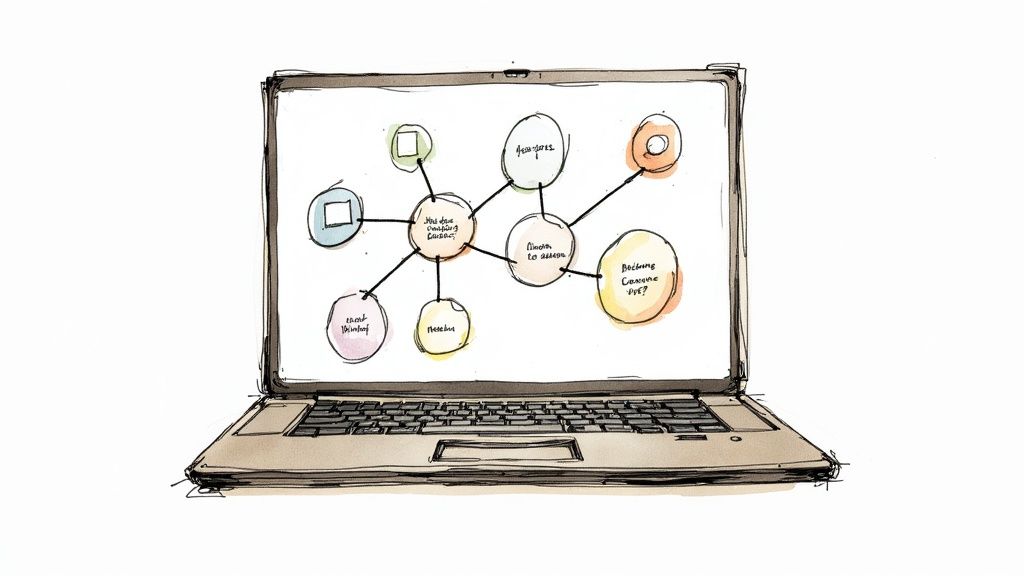
This approach is highly effective for subjects like history, literature, and science, where complex events or concepts can be broken down into engaging, decision-based scenarios. It fosters critical thinking and deepens comprehension by making students co-creators of their learning journey.
Implementation and Best Practices
To successfully implement this idea, start with a clear narrative arc. First, outline a simple story with a beginning, middle, and end before layering in the interactive components. Choosing the right tool is also crucial. Many presentation tools function as a complete content creation platform, integrating various media types and interactive features seamlessly.
- Technology: Use platforms like Mentimeter, Genially, or even advanced PowerPoint features to build your narrative.
- Engagement: Embed "choose your own adventure" style branching points. For a history lesson, students could vote on which strategic decision a historical figure should make next.
- Contingency: Always test your technology thoroughly. Have a backup plan, like a non-interactive version of the presentation, in case of technical glitches.
This is one of the most compelling school presentation ideas because it captures student attention and makes learning memorable. By involving the audience directly, you ensure they are not just watching a presentation but are part of a shared educational experience. Learn more about how to make your next presentation truly captivating with these interactive strategies.
2. Debate-Style Presentations
Debate-Style Presentations transform the classroom into a dynamic forum for intellectual inquiry, moving beyond simple information delivery to active argumentation. This format requires students or groups to research and defend opposing viewpoints on a complex or controversial topic. It's a powerful method for developing research skills, critical thinking, and persuasive communication, all while engaging the entire class in a structured, evidence-based discussion.
This approach is exceptionally well-suited for subjects that involve multifaceted issues, such as social studies, science, and ethics. Students learn to construct logical arguments, anticipate counterpoints, and engage in respectful discourse. The focus shifts from merely presenting facts to skillfully using them to build a compelling case, making it one of the most intellectually stimulating school presentation ideas.
Implementation and Best Practices
To ensure a successful debate, the foundation must be built on clear rules and well-defined structure. Start by establishing ground rules for respectful dialogue, emphasizing that the goal is to critique ideas, not individuals. Assigning positions, often randomly, helps students explore perspectives they may not personally hold, which deepens their understanding of the topic's complexity.
- Structure: Model the presentation after established formats like the Oxford Union or parliamentary debate systems, with specific time limits for opening statements, rebuttals, and closing arguments.
- Research: Provide students with research guidelines and a list of credible sources to ensure their arguments are well-supported. You can find excellent resources and guides through organizations like the National Speech & Debate Association.
- Assessment: Grade students on the quality of their research, the logical consistency of their arguments, and their ability to listen and respond to opposing views, rather than simply on "winning" the debate.
This format excels because it teaches students not just what to think, but how to think. By requiring them to defend a position with evidence and logic, you foster a deeper, more resilient understanding of the subject matter and equip them with invaluable lifelong skills.
3. Science Fair Project Presentations
Science Fair Project Presentations are a classic, hands-on format that challenges students to conduct original research or experiments and communicate their findings. This method moves beyond simple book reports by requiring students to engage deeply with the scientific method, from forming a hypothesis to analyzing data and drawing conclusions. The final presentation involves a visual display board, a physical demonstration or model, and an oral explanation to judges and peers.
This comprehensive approach is invaluable for STEM education, as it builds skills in critical thinking, problem-solving, data visualization, and public speaking. Students learn to translate complex scientific concepts into accessible language, preparing them for higher education and future careers. It’s one of the most effective school presentation ideas for fostering a deep, practical understanding of scientific principles.
Implementation and Best Practices
Successful execution hinges on a well-defined process and clear guidelines. Start by emphasizing the importance of a testable question or hypothesis, which forms the foundation of the entire project. Guiding students through each step of the scientific method is crucial for a meaningful learning experience.
- Structure: Require students to follow the scientific method strictly: question, research, hypothesis, experiment, analysis, and conclusion. This provides a clear narrative for their display board and oral report.
- Visuals: Encourage the use of clear charts, graphs, and high-quality photographs to display data. An organized and visually appealing board, like those seen at the Regeneron International Science and Engineering Fair, can make complex information much easier to understand.
- Communication: Have students practice explaining their project to different audiences, from experts to younger students. This helps them refine their ability to simplify complex topics without losing accuracy.
This method is ideal for teaching inquiry-based learning and showing students how science works in the real world. By documenting their journey from question to conclusion, students create a powerful story of discovery that is both educational and personally rewarding.
4. TED Talk-Style Presentations
TED Talk-style presentations shift the focus from a simple report to a powerful, idea-driven performance. Inspired by the famous "ideas worth spreading" format, this method challenges students to deliver a concise, engaging, and memorable talk, typically lasting between 5 and 18 minutes. It's about more than just presenting facts; it's about connecting with the audience on an emotional level through authentic storytelling and a clear, passionate message.
This approach is perfect for developing public speaking skills, building confidence, and encouraging students to explore topics they are genuinely passionate about. Instead of a dry academic summary, students learn to craft a narrative, build an argument, and inspire their peers. It's an excellent format for school assemblies, capstone projects, or classroom events dedicated to sharing student voices.
Implementation and Best Practices
The key to a successful TED-style talk is preparation and authenticity. Students should select a topic that truly resonates with them, as their passion will be the driving force behind the presentation's impact. The structure should be meticulously planned, moving from a compelling hook to a well-supported core message and ending with a powerful conclusion.
- Focus: Center the entire talk around a single, powerful idea. Follow Simon Sinek's advice and "Start With Why" to establish a strong purpose.
- Storytelling: Weave personal anecdotes and relatable stories into the presentation. This makes the message more human and memorable, a core tenet of effective storytelling in education.
- Practice: Rehearse extensively to achieve a natural, conversational delivery. The goal is not to memorize a script but to internalize the key points and speak from the heart.
This is one of the most transformative school presentation ideas because it teaches students how to communicate with conviction and clarity. By mastering this format, they gain a valuable life skill that extends far beyond the classroom.
5. Historical Roleplay Presentations
Historical Roleplay Presentations transform standard reports into immersive, first-person narratives. Instead of simply listing facts about a historical event or figure, students embody the character, delivering the information from their unique perspective. This powerful method combines deep research, creative interpretation, and performance, making history feel personal and immediate. Students don't just learn about the past; they step into it.

This approach is highly effective for history, literature, and even science, where students can present as a famous inventor or scientist. By requiring students to understand their character's motivations, societal context, and personal voice, it fosters empathy and a much deeper level of comprehension than a traditional book report. It’s a popular format in programs like the National History Day competition, which values this kind of engaging, primary-source-driven interpretation.
Implementation and Best Practices
Successful roleplay requires more than just a costume; it demands thorough research and preparation. Students must go beyond basic biographical facts to understand their character's worldview and the societal norms of their time. The presentation becomes a performance grounded in historical accuracy.
- Research: Encourage students to explore primary sources like letters, diaries, and speeches to capture the authentic voice and perspective of their chosen figure.
- Performance: Advise students to practice their character's voice, mannerisms, and even period-appropriate language. The goal is to be believable and engaging while remaining historically accurate.
- Interaction: Prepare students to answer audience questions while staying in character. This Q&A session tests their comprehensive understanding and ability to think on their feet from that historical viewpoint.
This is one of the most memorable school presentation ideas because it makes learning an active, creative process. It turns a research project into a compelling performance, ensuring both the presenter and the audience connect with the material on a much more profound level.
6. Infographic and Data Visualization Presentations
Infographic and Data Visualization Presentations shift the focus from text-heavy slides to compelling visual narratives. This method teaches students to distill complex data, statistics, and information into clear, easy-to-understand graphics like charts, icons, and diagrams. Instead of just listing facts, students learn to design a visual story that highlights key insights and makes complex topics more accessible and memorable for the audience.
This approach is invaluable for subjects rich in data, such as science, social studies, mathematics, and even economics. A presentation on climate change could use a line graph to show rising global temperatures, while one on social media usage could use a pie chart to illustrate platform popularity among teens. This method empowers students to become effective communicators who can make data meaningful.
Implementation and Best Practices
To create an effective data-driven presentation, the first step is to identify the core message within the data. Students should ask themselves what story the numbers are telling before choosing a visual format. The goal is to simplify, not just decorate, so clarity and accuracy are paramount.
- Design Tools: Utilize user-friendly platforms like Canva, Piktochart, or even Google Slides with integrated chart tools. These platforms offer templates that simplify the design process.
- Data Integrity: Ensure all data is from credible sources and properly cited on the slides. This teaches academic honesty and critical evaluation of information.
- Visual Clarity: Adhere to design principles. Use a consistent color scheme and legible fonts, keep text minimal, and use visual hierarchy to guide the audience's attention to the most important points.
This is one of the most practical school presentation ideas because it develops crucial data literacy and design skills. By turning raw data into a powerful visual argument, students learn to communicate with impact and precision. Discover more about how design enhances learning with these insights on graphic design for education.
7. Problem-Solution Case Study Presentations
Problem-Solution Case Study Presentations shift the focus from simply reporting information to actively solving real-world challenges. This structured format requires students to identify an existing problem, research its root causes, and propose a well-reasoned, evidence-based solution. Students become investigators and innovators, developing critical thinking and practical problem-solving skills that are highly valued beyond the classroom.
The process flow below outlines the core methodology for structuring these impactful presentations.
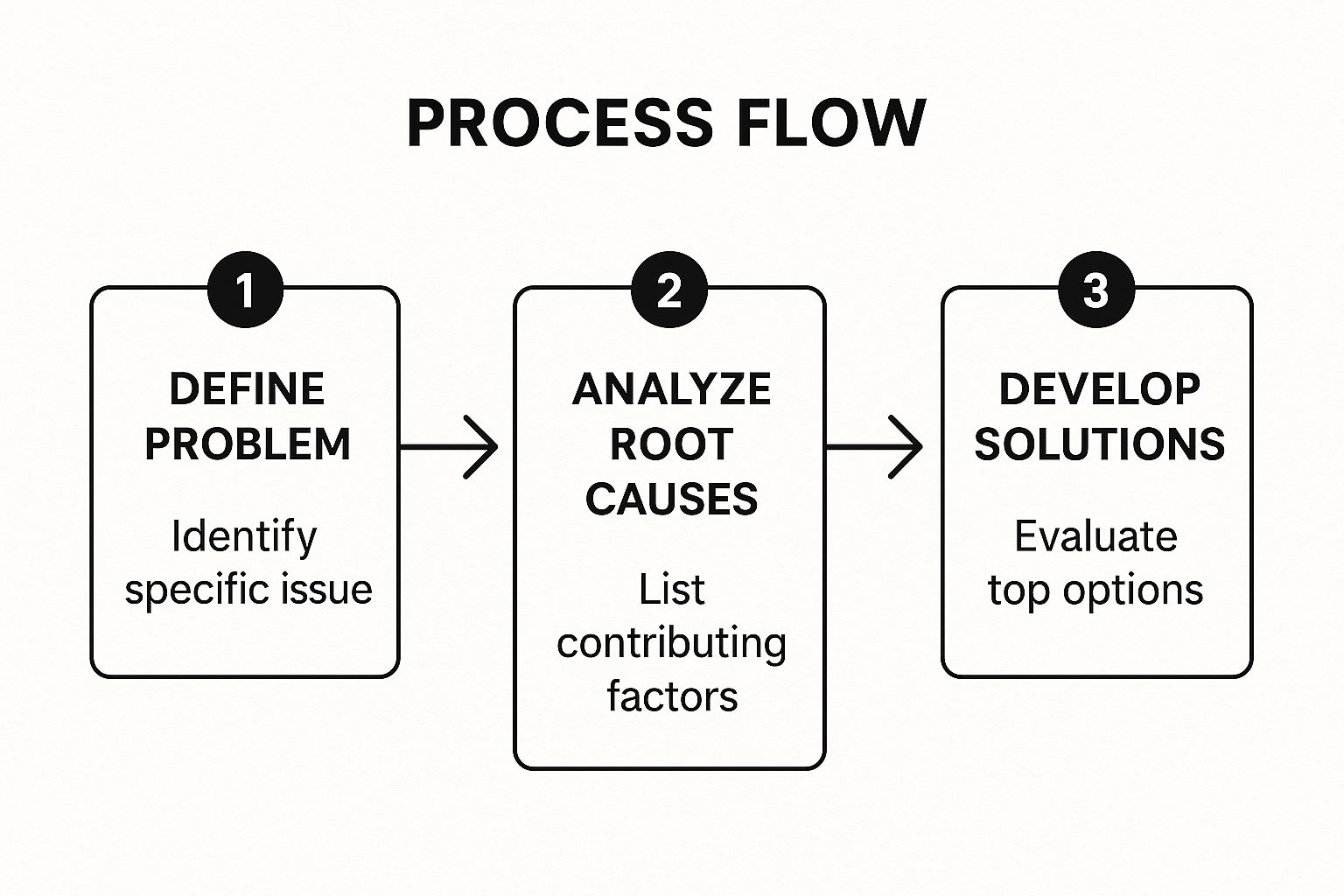
Following this logical sequence ensures a thorough analysis and leads to more credible and effective proposed solutions. This approach is excellent for science fairs, civics classes, or capstone projects, where students can tackle issues like improving the school's recycling program or designing a local traffic safety plan. It empowers them to see themselves as agents of change in their communities.
Implementation and Best Practices
To guide students effectively, start by helping them select a problem that is both meaningful to them and manageable in scope. A broad topic like "world hunger" is less effective than a focused one like "reducing food waste in our school cafeteria." This refined focus makes in-depth research and actionable solutions possible.
- Research: Encourage students to gather primary data through surveys or interviews and secondary data from credible sources. They should research what others have tried, noting both successes and failures.
- Analysis: Guide them to look beyond surface-level symptoms to identify the root causes of the problem. Considering stakeholder perspectives, such as those of students, teachers, and staff, is crucial for a comprehensive analysis.
- Planning: A strong presentation includes a realistic timeline, a budget with resource estimates, and a consideration of potential unintended consequences of the proposed solution.
This is one of the most practical school presentation ideas because it directly connects classroom learning to real-world impact. By structuring their thoughts and presenting a viable plan, students not only demonstrate subject mastery but also build confidence in their ability to solve complex problems.
8. Multimedia Documentary Presentations
Multimedia Documentary Presentations empower students to become investigative journalists, filmmakers, and storytellers. This format moves beyond a standard slide deck by combining video footage, audio narration, expert interviews, and archival materials to explore a topic in depth. Students research, script, shoot, and edit a short documentary, presenting their findings in a compelling narrative form.
This approach is excellent for project-based learning in subjects like social studies, science, and civics. Students develop a wide range of skills, from research and interviewing to video production and public speaking. It transforms them from passive learners into active creators of knowledge, fostering a deep and personal connection to their subject matter.
Implementation and Best Practices
Successful documentaries are built on a strong narrative and careful planning. Begin by teaching students about story structure, such as the classic three-act arc or the investigative styles popularized by filmmakers like Ken Burns. They should create a storyboard or outline before any filming begins to ensure a coherent final product.
- Planning: Draft interview questions in advance. For a local history project, students could prepare questions for community elders or local historians. For an environmental investigation, they might interview scientists or activists.
- Production: Emphasize the importance of good audio quality, which is often more critical than perfect video. Use external microphones if possible. Keep video segments concise and focused to maintain audience engagement.
- Technology: User-friendly video editing software like iMovie, WeVideo, or Adobe Premiere Rush can be used on school devices, including tablets and laptops. Ensure students have access and basic training.
This is one of the most rewarding school presentation ideas because it allows for authentic, real-world learning. By producing a documentary, students create a lasting artifact of their work that can be shared with the wider school community, turning a simple assignment into a meaningful capstone project.
9. Gallery Walk Presentations
A Gallery Walk transforms the traditional, one-at-a-time presentation format into a dynamic, simultaneous exhibition of learning. In this model, multiple students or groups set up their work at different stations around the classroom. The rest of the class acts as a roaming audience, rotating through the "gallery" to view, discuss, and interact with each presenter in a smaller, more intimate setting.
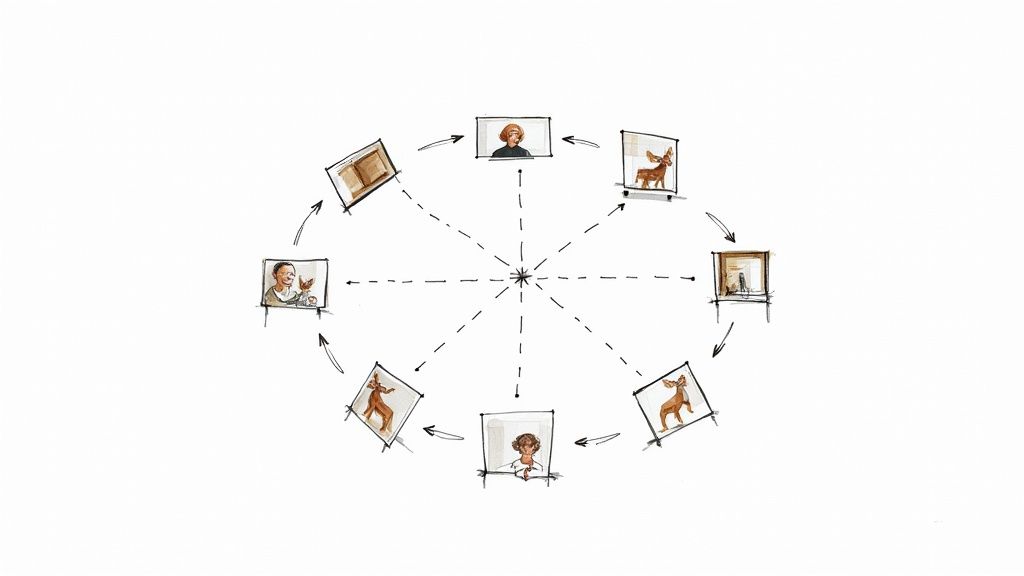
This method, inspired by museum education and conference poster sessions, is excellent for showcasing diverse projects efficiently. It encourages peer-to-peer learning and allows for deeper, one-on-one questioning that is often lost in whole-class presentations. It's an ideal format for displaying science fair results, art history analyses, or literature character studies.
Implementation and Best Practices
Successful gallery walks depend on clear organization and structure to manage movement and engagement. The key is to empower presenters as experts at their stations while guiding the audience to interact meaningfully with each display. This makes it one of the most effective and collaborative school presentation ideas for any subject.
- Structure: Create and clearly communicate a rotation schedule and time limit for each station. This ensures every student gets to see every presentation and manages classroom flow.
- Feedback: Provide structured feedback forms or guiding questions for the audience. This focuses their attention and provides presenters with valuable peer evaluation.
- Synthesis: After the walk concludes, facilitate a whole-group discussion or a short reflective writing activity. This helps students synthesize the information they gathered from all the different presentations.
The gallery walk is a powerful tool because it promotes active engagement and accommodates various learning styles. By turning the classroom into an interactive learning space, you foster a sense of shared discovery and make every student both a teacher and a learner.
School Presentation Ideas Comparison Matrix
| Presentation Type | Implementation Complexity | Resource Requirements | Expected Outcomes | Ideal Use Cases | Key Advantages |
|---|---|---|---|---|---|
| Interactive Digital Storytelling | High (tech setup, learning curve) | Moderate to High (internet, tools) | Engaged audience, instant feedback | Dynamic lessons, interactive narratives | High engagement, multimedia integration |
| Debate-Style Presentations | Moderate (structured format) | Low to Moderate (research) | Critical thinking, persuasive skills | Controversial topics, exploring multiple views | Develops argumentation, respectful discourse |
| Science Fair Project Presentations | High (time, preparation) | High (materials, setup) | Scientific methodology, clear communication | STEM projects, original research presentations | Builds scientific thinking, creativity |
| TED Talk-Style Presentations | Moderate (practice intensive) | Low (minimal tech, slides optional) | Concise communication, confidence | Passion topics, professional presentation prep | Develops storytelling, stage presence |
| Historical Roleplay Presentations | Moderate to High (research & prep) | Moderate (costumes, props) | Empathy, deep understanding of historical context | History/literature classes, reenactments | Engaging, develops empathy and performance |
| Infographic & Data Visualization | Moderate (design skills needed) | Moderate (design software/tools) | Data literacy, visual communication | Data-heavy topics, statistics presentations | Makes complex data accessible |
| Problem-Solution Case Studies | High (research and analysis) | Low to Moderate (research tools) | Real-world problem solving, civic engagement | Community issues, social challenges | Practical solutions, critical thinking |
| Multimedia Documentary Presentations | High (equipment & editing skills) | High (recording/editing tools) | Investigative research, storytelling skills | In-depth topic exploration, journalism projects | Creative skills, multimedia integration |
| Gallery Walk Presentations | Moderate (coordination required) | Moderate (space and materials) | Peer learning, low-pressure presentations | Classroom with many presenters, diverse projects | Intimate setting, peer feedback |
Empowering the Next Generation of Communicators
The journey through these diverse school presentation ideas reveals a powerful truth: the traditional, static slideshow is just one of many tools in a vast communication toolkit. Moving beyond this single format is not merely about novelty; it's about fundamentally redefining the purpose of student presentations. The ultimate goal is to move from simple knowledge recitation to dynamic, confident, and impactful communication. By embracing formats like interactive debates, immersive historical roleplays, or collaborative gallery walks, we cater to a spectrum of student talents, from the analytical thinker to the creative storyteller.
The transition from a passive audience to an engaged participant is a cornerstone of modern education. Presentations that require interaction, such as a gallery walk where students act as docents or a debate that demands quick, evidence-based rebuttals, build critical thinking skills in real-time. These experiences teach students to think on their feet, consider multiple perspectives, and articulate their thoughts with clarity and conviction. This shift empowers students to take ownership of their learning, transforming them from content consumers into content creators and communicators.
From Theory to Practice: Your Actionable Next Steps
To bring these innovative presentation concepts to life in your school or classroom, consider these immediate next steps:
- Start Small: You don't need to overhaul your entire curriculum overnight. Introduce one new format, like a TED Talk-style presentation for a single unit, to gauge student response and refine your approach.
- Emphasize Process, Not Just Polish: Shift the focus of your assessment. Grade students not only on the final product but also on their research process, collaboration skills, and ability to thoughtfully answer questions. This encourages deeper engagement and reduces performance anxiety.
- Cultivate Information Integrity: In an age of misinformation, teaching students to be credible communicators is paramount. As they gather evidence for their arguments or data for their infographics, encourage them to verify their sources rigorously. To build this essential skill, students can utilize advanced resources like AI-powered fact-checking tools to ensure the accuracy and reliability of their content before presenting it.
Ultimately, the power of a great presentation lies in its ability to connect, persuade, and inspire. The diverse range of school presentation ideas explored here, from data-driven case studies to emotive multimedia documentaries, provides a rich framework for developing these essential life skills. By providing students with varied platforms to share their knowledge, we are not just preparing them for their next test; we are equipping them to become the articulate, creative, and confident leaders of tomorrow, ready to share their voices with the world.
Are you a K-12 marketing or communications professional passionate about elevating student and school success? Join The MarCom Society to connect with a vibrant community of peers, access exclusive resources, and stay ahead of the latest trends in educational communication. Discover proven strategies to showcase your school's innovative programs and empower your student communicators by visiting The MarCom Society today.