Using Twitter for education is a smart move for any K-12 school. It's about much more than just posting announcements. It’s a dynamic space where you can build a real community, share news as it happens, and truly showcase what makes your school special. Think of it less like a digital bulletin board and more like a living, breathing part of your school's culture.
Why Your School Needs a Twitter Strategy

In a world filled with digital noise, Twitter’s power is its speed and conversational style. For a school, this isn't just another social media account to keep up with; it's a vital communication channel. I like to think of it as our school’s live, interactive newsletter.
When a school bus is running late, a quick tweet reaches hundreds of parents in an instant. When the debate team brings home a trophy, a photo shared on the spot celebrates that win with the entire community. This is when using Twitter for education becomes an indispensable part of your communications plan.
Connecting With a Wider Educational Community
Beyond just reaching parents and students, Twitter connects your staff to a huge professional learning network (PLN). Your teachers can follow and chat with experts in their field, jump into educational discussions like the weekly #EduChat, and find new classroom ideas they would have never stumbled upon otherwise.
This ripple effect lifts the whole school. It shows that you're an active participant in the bigger conversation about education, which helps build a culture of innovation and growth. It's also a great way to attract talented educators who want to work in a forward-thinking environment.
Of course, a strong digital strategy goes beyond just social media. It should embrace all parts of student support, including vital tools like assistive technology for dyslexia). Taking this kind of all-encompassing approach shows you’re truly committed to the success of every single student.
Building Your School's Digital Brand
Every single tweet you post helps tell your school's story. It's a chance to give people an authentic look at what makes your school tick—the dedicated teachers, the amazing student projects, the vibrant community spirit. This digital presence is a huge part of your brand and shapes how prospective families and the community see you.
Twitter serves as a living portfolio of your school's daily life, offering a more genuine and timely glimpse into your culture than a static website ever could. It’s where your school's personality shines.
To pull this off, you absolutely need clear ground rules. A solid policy ensures everyone on your team uses the platform consistently and safely. For a great starting point, check out our guide on creating a https://blog.marcomsociety.org/social-media-policy-for-schools/.
Don't underestimate Twitter's pull with students, either. By early 2025, the platform had 611 million monthly active users globally. While it's not the biggest network, it boasts 1.5 times more monthly active users who identify as students than its competitors. This makes it an incredibly important space for any school to be.
Crafting Your School's Twitter Profile

Think of your school's Twitter profile as its digital front door. For many prospective parents or new families moving into the district, this will be their very first impression. It's your chance to look professional, organized, and welcoming right from the start.
A polished profile builds immediate trust. It shows you're on top of your communications and proud of your school's identity. Let's walk through how to put all the essential pieces together.
Nailing the Profile Essentials
First things first, let's talk about your Twitter handle. This is your unique username, like @YourSchoolName. The key here is to keep it simple and intuitive. You want parents and students to find you without having to guess.
If your ideal handle, like @LincolnHigh, is already taken, don't worry. Just get a little creative. Try adding your mascot (@LincolnHighLions) or your city/district abbreviation (@LincolnHS_USA). The goal is findability.
Next up is your profile picture. This should be your official school logo or crest, no question. It's the small icon that appears next to every single tweet and reply, so it needs to be instantly recognizable and clear, even when small.
Your header image, that big banner at the top of your profile, is where you get to show off your school's personality. This is prime real estate! Use a high-quality, vibrant photo of your campus, a great shot of students at a recent event, or even a custom graphic that highlights your school's motto. I always recommend swapping this out seasonally or for big events like graduation or homecoming to keep your profile looking current.
Your Twitter bio isn't just a simple description—it's your 160-character elevator pitch. You have to quickly tell people who you are, what you stand for, and give them a reason to click that "Follow" button. Every word matters.
A strong bio should hit these key points:
- Who You Are: A concise, powerful version of your school's mission.
- Where You Are: Clearly list your city and state for local discovery.
- What to Do Next: Always include a link to your school's website. You can use a link shortener like Bitly to save precious character space.
Making Your Bio Work for You
When you're writing the bio, put yourself in a parent's shoes. What terms would they search for? Weaving in keywords like "K-12 education," "college prep," or your town's name will help your profile surface in Twitter's search. And don't be afraid to add an emoji that reflects your school spirit—it can add a nice, human touch.
You don't have to look far for great examples. Even massive organizations offer lessons we can apply.
Take a look at NASA's profile. It’s a masterclass in being clear and compelling, a fantastic model for anyone using Twitter for education. They state their purpose, use a branded hashtag, and guide followers to other key resources, all while staying within that tight character limit. It’s a perfect example of a profile that's built to inform and engage.
Developing Your School's Content Playbook

A great-looking Twitter profile is a fantastic start, but it's only half the job. The real work—and where you’ll see genuine results—is in figuring out what to post day in and day out. If you want to move beyond just posting announcements, you need a plan to turn your feed from a simple bulletin board into a living story that shows off your school’s vibrant culture.
The secret isn’t just to post more often. It's to post with more purpose. That's where a content playbook becomes your most valuable tool.
Establishing Your Content Pillars
Instead of waking up and wondering, "What should I tweet today?", you can organize your content around a few core themes, or "pillars." This simple framework is a lifesaver. It makes sure you're covering all the different, wonderful facets of your school, so you don't accidentally become the "all sports, all the time" account.
For most schools, these four pillars are a solid foundation:
- Academics: This is your chance to shine a light on what happens in the classroom. Think innovative projects, cool student research, and major academic wins. Show learning in action!
- Arts & Athletics: Celebrate the incredible creativity and teamwork that happens beyond the core subjects. A photo from the spring art show, a quick video of the band practicing, or the final score from the big game all fit perfectly here.
- Community: What makes your school a true community? This is where you showcase teacher spotlights, parent volunteer efforts, and any partnerships you have with local organizations.
- School Spirit: This is the fun stuff. Post about spirit week themes, share pictures of everyone rocking school colors, and celebrate the unique traditions that make your school, your school.
By rotating through these pillars, you naturally create a rich and varied story that gives followers a 360-degree view of your school's culture. This is a foundational strategy for using Twitter for education effectively.
Mastering Engaging Visuals and Hashtags
Tweets with images get more eyeballs. It’s that simple. And you don’t need to be a pro photographer—your phone is more than powerful enough. Just focus on capturing authentic moments with good lighting. Honestly, a candid shot of students deep in a science experiment is way more compelling than a perfectly staged photo.
Don’t forget about short videos (under 60 seconds). They are incredibly effective. A quick walk-through of a decorated classroom or a brief "hello" from the principal can forge a surprisingly strong connection with your followers.
A common mistake I see is schools treating Twitter like a one-way announcement system. The real goal is to start conversations and build relationships. Your content should be designed to invite interaction, not just inform.
Hashtags are your secret weapon for reaching people beyond your current followers. The key is to use a healthy mix.
- Broad: Jump into larger conversations with popular educational hashtags like
#K12or#STEMeducation. - Community: Always include your city or town hashtag (e.g.,
#SpringfieldIL) to connect with local families and businesses. - Branded: This is crucial. Create and consistently use a unique hashtag for your school, like
#[YourSchoolMascot]Pride(e.g.,#WildcatPride). This creates a digital hub where you and your community can easily find and share related content.
Strategically tagging partners in your posts can also give your message a huge boost. When the local library visits for a reading event, tagging their account in your "thank you" post exposes your school to their entire audience.
This whole approach isn't just about broadcasting; it’s about connecting. The role of platforms like Twitter as a learning aid is growing, too. Nearly 45% of students say social media helps them study and learn, and 80% of secondary students use these platforms to collaborate on schoolwork. For educators, 87% believe it encourages a positive exchange of ideas. This data really shows its value both inside and outside the classroom. You can explore more data on how social media is being used for learning.
Building an Engaged School Community
Putting out great content is one thing, but that's only half the battle. The real magic happens when you move from simply broadcasting news to actively building relationships. This is how your school's Twitter account stops being just a feed and starts becoming a lively hub for your community.
The cornerstone of all this is simply being responsive. When a parent replies with a question or slides into your DMs, a quick, personal response shows you’re paying attention. Liking comments and dropping a thoughtful reply when it makes sense goes a long way. It’s a small effort that makes your community feel heard and valued.
Sparking Conversations and Getting Feedback
Sometimes the best way to get people talking is to just ask. Twitter's poll feature is a fantastic, low-stakes tool for this. Instead of playing guessing games, you can get instant feedback on things that matter to your families.
Think about questions like:
- Spirit Day Themes: "Next spirit day: Crazy Hat Day or School Colors Day? Vote now!"
- Event Planning: "For parent-teacher night, would you prefer a virtual option, an in-person event, or a mix of both?"
- Content Ideas: "What do you want to see more of on our feed? Student art, sports updates, or behind-the-scenes classroom projects?"
Polls like these are a win-win. You get genuinely useful information, and your audience gets an incredibly easy way to engage, which helps your account show up more often in their feeds.
True community happens when the conversation flows both ways. It's about letting your audience help tell your school's story, not just watch from the sidelines.
Spotlighting content from your own community is another powerful move. When a teacher tags your school in a post about an amazing science experiment, ask if you can retweet it! Same goes for that parent who shared a fantastic photo from the soccer game. This not only gives them a shout-out but also builds a real sense of shared pride in the school. For even more inspiration, we've gathered some creative social media ideas for schools in another guide.
Staying Consistent Without the Burnout
Keeping your account active is crucial, but let's be realistic—you're busy. This is where scheduling comes in. You don't have to be glued to your phone 24/7. Use Twitter’s own scheduling tool to set up your posts ahead of time. Block out an hour or two at the start of the week, load up your content, and you’re set.
This consistent effort really does make a difference. Data shows that in the education space, Twitter still pulls a strong average engagement rate of 2.4%. While that might not beat Instagram, it's well ahead of Facebook, proving that Twitter is a great place for academic-related conversations.
Finally, growing your audience is key to making a bigger impact. Explore some proven strategies for growing your school's Twitter following to expand your reach. A larger, more engaged community means more chances to celebrate wins, get valuable input, and strengthen the connections that make your school a special place to be.
Measuring What Matters on Twitter
So, you're putting all this effort into your school's Twitter account. But how do you actually know if it's working? Beyond just feeling like it's going well, you need to show your leadership team the real value you're creating. This is where the data comes in, and thankfully, you don't need a data science degree to make sense of it.
The secret is to focus on the numbers that tie directly back to your school's communication goals. Twitter's own analytics tool is surprisingly robust and, best of all, completely free. It lets you move past vanity metrics, like your total follower count, and get to the heart of what's resonating with your community.
It’s no secret that your audience is there. In fact, research shows that 65% of educators are on the platform every single week.
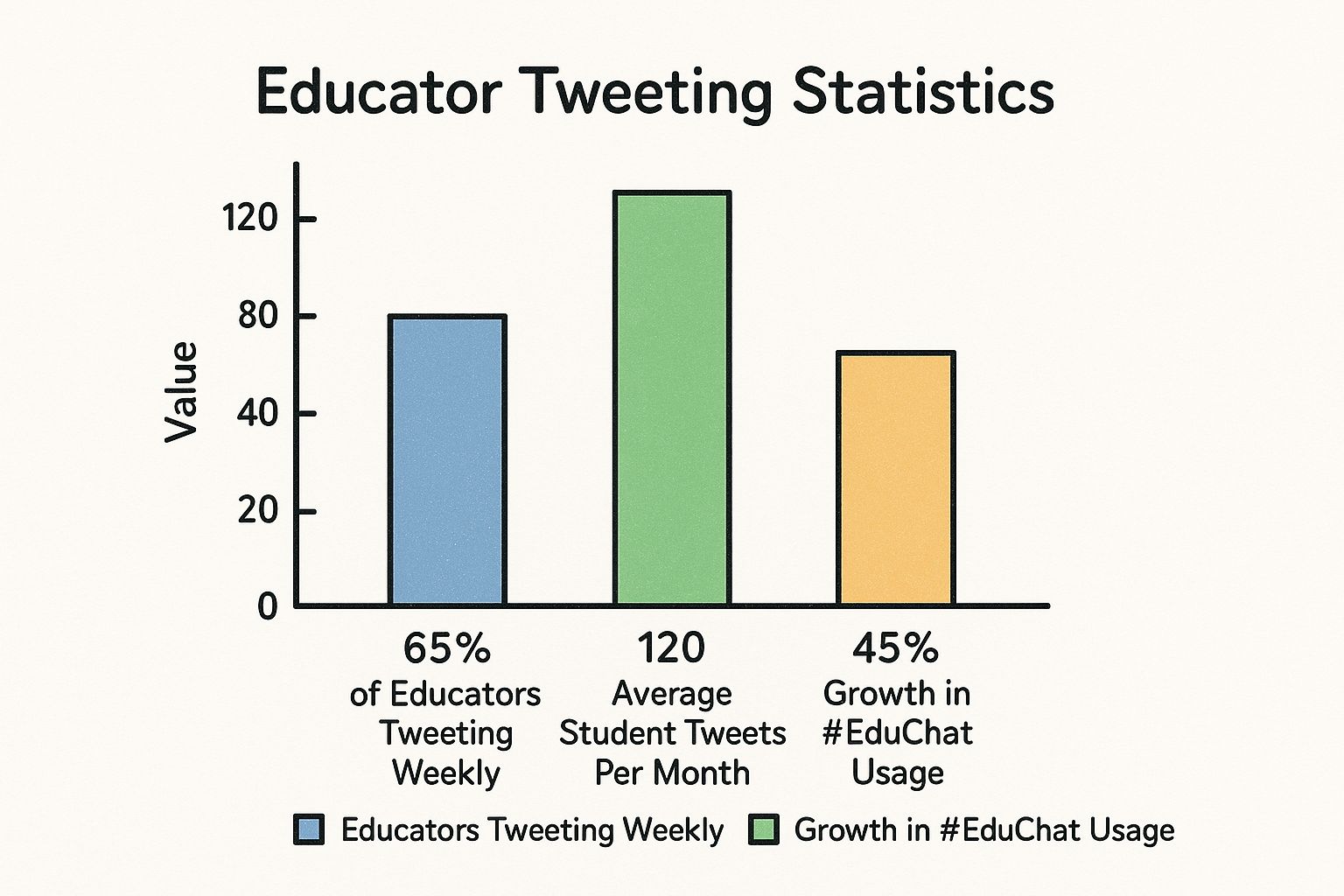
With students and educators consistently active, measuring your school's performance isn't just a good idea—it's essential for understanding your impact.
From Numbers to Narratives
The real magic happens when you connect analytics to your school’s goals. Instead of just listing numbers, you can tell a compelling story about how your work is making a difference.
Let's look at the metrics that truly matter and what they mean in a school setting.
Metrics That Matter for School Twitter Accounts
Tracking the right numbers helps you understand what's working and prove the value of your social media efforts. Here’s a quick breakdown of the key performance indicators (KPIs) you'll find in Twitter Analytics and how to connect them to your school's objectives.
| Metric | What It Tells You | Goal Example |
|---|---|---|
| Impressions | The total number of times your tweet was displayed to users. | High impressions on an open house announcement show your message is reaching a wide audience of prospective families. |
| Engagement Rate | The percentage of people who saw your tweet and interacted (liked, replied, retweeted). | A strong engagement rate on a "teacher spotlight" post signals high community morale and appreciation. |
| Link Clicks | The number of times people clicked a link in your tweet. | This is a powerful one. Tracking clicks to a parent-teacher conference sign-up form directly measures parent involvement. |
| Profile Visits | The number of people who clicked through to view your school's Twitter profile. | A spike in profile visits after a big announcement indicates community curiosity and a desire to learn more about your school. |
By focusing on these specific metrics, you can shift the conversation from "we sent a tweet" to "our tweet drove 75 parents to the volunteer sign-up page." That's a story that demonstrates real-world impact.
Crafting a Report Your Leadership Will Actually Read
Forget dense spreadsheets and data dumps. When you report your results to school leadership, think concise, visual, and story-driven. A simple one-page summary is far more powerful. This report should tie back directly to your wider goals, which are ideally outlined in a formal school communication plan.
Here’s what a great monthly report could look like:
- Highlight the Hits: Showcase 2-3 of your top-performing tweets. Don't just show them—add a quick note explaining why you think they did so well. Was it the photo? The student quote?
- Show Growth at a Glance: Use a simple chart to track month-over-month changes in your key metrics, like engagement rate or link clicks. Visuals make progress easy to understand.
- Share the Human Element: Did a parent leave a wonderful public comment? Did a local news outlet retweet your story? Include these qualitative wins to show the community-building power of your work.
Pro-Tip: Frame your results as a story of community engagement. Instead of saying, "Our engagement rate was 2.5%," try this: "Our posts about the Science Fair reached over 10,000 people in our community, and the link to view student projects was clicked 300 times, showing incredible family interest in our academic programs."
This approach proves that your efforts on Twitter are about much more than just posting updates. It’s about building a stronger, more connected school community—and now you have the numbers to prove it.
Common Questions About Twitter for Schools
Even with a great plan in hand, jumping into Twitter for your school can feel a little daunting. I’ve seen many school communicators worry about saying the wrong thing, dealing with angry comments, or just finding the time to keep up. It’s completely normal to have those concerns.
Let's walk through some of the most common questions and roadblocks I see school leaders run into when they first get started. Getting a handle on these from the beginning will give you the confidence you need to really own your school's Twitter presence.
How Often Should Our School Post on Twitter?
This is the big one, isn't it? The question I get asked more than any other. The answer, thankfully, is simpler than you might think: consistency always beats frequency. It's so much more effective to share three genuinely interesting, high-quality posts a week than it is to pump out seven generic ones just for the sake of being "active."
Find a rhythm that works for you. A great starting point is 3-5 times per week. That’s enough to keep your school top-of-mind in your community’s feed without becoming background noise.
Of course, this can flex. During a huge event like homecoming week, graduation, or the school play, you might post several times a day. During a quiet exam week, a little less is perfectly fine. The real goal is to avoid long, awkward silences that make your account look abandoned.
What Is the Best Way to Handle Negative Comments?
It’s not a matter of if, but when a negative comment shows up. The absolute first rule: don’t panic. And whatever you do, don't just delete it (unless it’s spam or contains hate speech). Deleting legitimate criticism almost always pours fuel on the fire.
Instead, here’s a simple framework that works every time:
- Acknowledge Publicly: Jump into the replies with a calm, professional response. Something as simple as, "Thank you for sharing your concern. We take feedback from our community seriously," shows everyone you’re listening and not hiding.
- Move Privately: Your very next move should be to take the conversation offline. Add a line like, "To best help, could you please send us a direct message or email our office at [school email]? We'd like to address this with you directly."
- Address Appropriately: Now, for comments that are spam, threatening, or use abusive language, the rule is different: do not engage. Use Twitter's built-in block and report functions immediately. Your job is to protect your online community.
Do We Need Permission to Post Photos of Students?
Yes. Absolutely. Without exception. This one is completely non-negotiable for schools. Before you even think about posting a photo or video where a student is clearly identifiable, you must have a signed media consent form on file from their parent or legal guardian.
Make sure you know your school district’s official media release policy inside and out. Some policies are tiered, allowing photos for the school website but not for social media, for example. You have to follow it to the letter.
When in doubt, leave it out. Protecting student privacy is your single highest priority. It's always better to be overly cautious than to make a mistake you can't undo.
One Main Account or Multiple Department Accounts?
For the vast majority of K-12 schools, my advice is always to start with one central, official school account. This is the best approach, hands down. It consolidates your audience, makes your messaging crystal clear, and keeps your management efforts from becoming a nightmare. Parents, students, and staff know exactly where to go for official information, which prevents a ton of confusion.
As your account grows, you can still shine a spotlight on all the amazing things happening in different departments. Try featuring "guest takeovers" where the athletics department or the fine arts program runs the account for a day. This is a fantastic way to showcase their unique stories and build excitement without fracturing your audience across multiple, hard-to-manage profiles.
At The MarCom Society, we help K-12 professionals like you master these challenges and more. Our community provides the expert guidance, peer support, and practical resources you need to build a communications strategy that gets results. Join us to connect, learn, and grow: https://marcomsociety.org