Why Traditional School Marketing No Longer Works
The educational landscape is changing. Many independent schools are finding that their traditional marketing methods aren't connecting with today's tech-savvy families. The way parents search for schools has evolved. Relying solely on printed viewbooks and open houses, for example, limits a school's reach. 83% of families now begin their school search online. Independent schools must adapt to this digital shift to stay competitive.
The Decline of Traditional Methods
Traditional marketing tactics, once effective, now struggle to capture the attention of modern parents. These older methods often lack the personalization and targeted messaging that digital platforms offer. Furthermore, traditional marketing can be costly and difficult to track, making it challenging to measure Return on Investment (ROI). Schools are often left unsure about which marketing efforts are truly driving enrollment.
The Rise of Digital Channels
Digital marketing provides independent schools with a powerful set of tools for connecting with prospective families. These tools include strategies like Search Engine Optimization (SEO), social media marketing, targeted advertising, and email campaigns. Digital channels allow schools to reach a broader audience, tailor their message to specific groups, and precisely track results. This shift to digital isn't just a fleeting trend; it represents a fundamental change in how families gather information and make decisions.
The growing importance of digital marketing for independent schools is highlighted in a recent survey by the National Association of Independent Schools (NAIS). Conducted between August 14 and August 30, 2024, the survey, with a 36% completion rate and 344 respondents, revealed the increasing role of digital channels in school communication and recruitment. This underscores the need for schools to effectively integrate digital strategies to succeed in the competitive educational landscape. Explore this topic further here.
Meeting Parents Where They Are
Today's parents live in a digitally connected world. They conduct research online, engage on social media platforms, and rely on online reviews when forming their opinions. This reinforces the importance of digital marketing for independent schools. By embracing digital strategies, schools can connect with prospective families where they are already spending their time. This allows schools to foster meaningful engagement, build stronger relationships, and implement a more effective and targeted enrollment marketing approach.
Crafting Your School's Digital Identity That Resonates
Beyond simply having a website and social media presence, digital marketing for independent schools involves crafting a cohesive online identity that truly reflects the school's unique character and values. This means strategically communicating your value proposition across every digital touchpoint, transforming your school's culture into compelling online experiences that resonate with prospective families.
Translating Campus Culture Into a Digital Experience
How do you translate the feeling of walking onto your vibrant campus into a digital experience? Successful independent schools achieve this by showcasing the authentic day-to-day life of their students and faculty.
Sharing candid photos of classroom activities, student projects, and extracurricular events can give prospective families a genuine glimpse into the school's environment. Additionally, incorporating student and faculty testimonials can lend credibility and build trust with potential applicants.
Showcasing Your Unique Strengths Online
Every independent school possesses distinct qualities that set it apart. Effectively highlighting these strengths through digital marketing is essential for attracting the right families.
This might involve showcasing specialized academic programs, highlighting exceptional arts or athletic offerings, or emphasizing the school’s commitment to community service. By clearly articulating these differentiators online, schools can connect with families who prioritize those particular values.
The following infographic visualizes the impact a strong digital marketing strategy can have on independent schools. It compares the increase in student inquiries through digital ads, the cost-effectiveness compared to print, and the engagement rates achieved on social media.
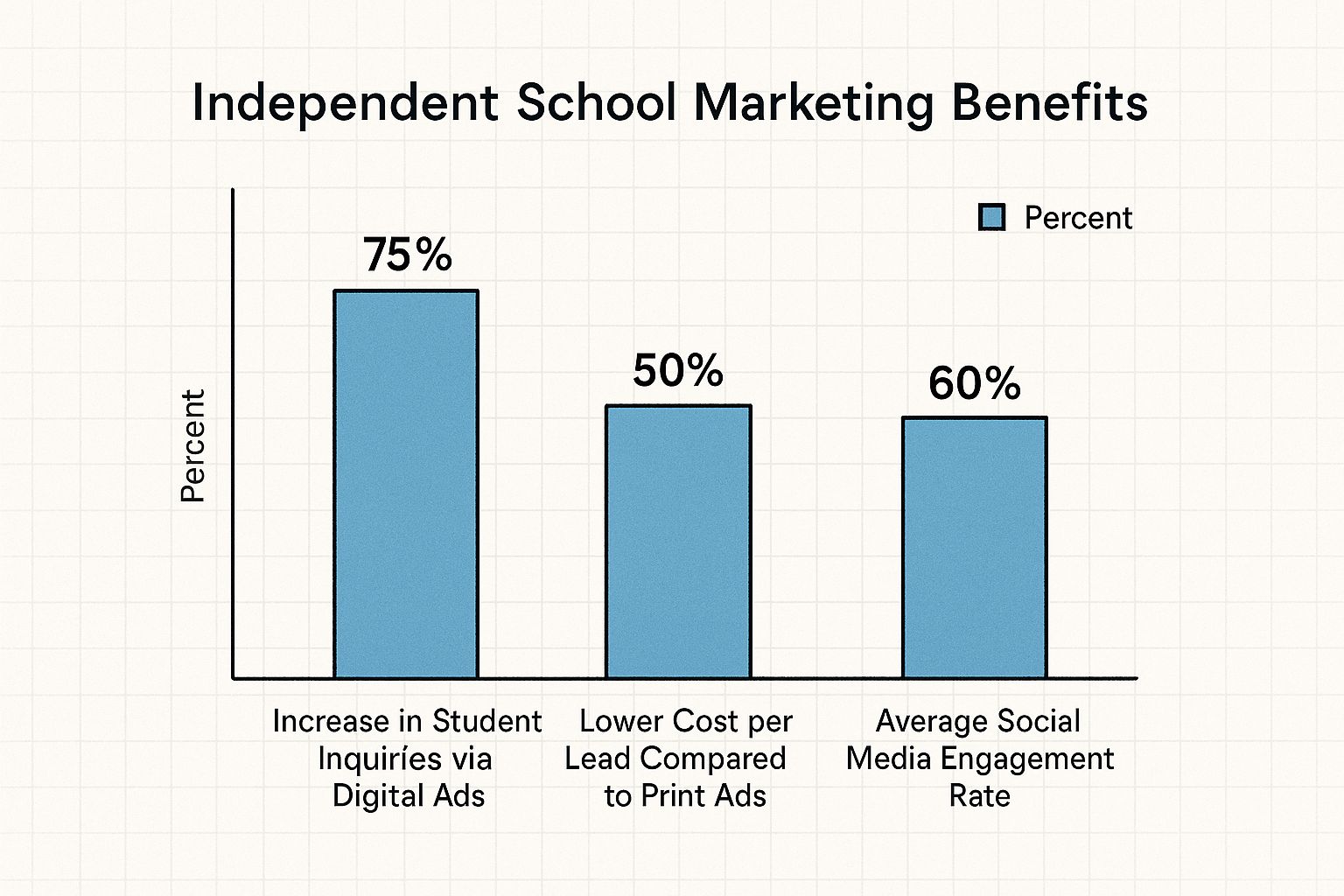
As the data illustrates, digital ads have generated a 75% increase in student inquiries, demonstrating the power of reaching prospective families online. Furthermore, the 50% lower cost per lead compared to traditional print advertising underscores the efficiency and cost-effectiveness of digital marketing.
The 60% average social media engagement rate highlights the effectiveness of building online communities and fostering relationships with prospective families. This shows how digital marketing can be a significant driver of inquiries, offering a better ROI than traditional methods and building engagement with your target audience.
Maintaining Brand Consistency Across Platforms
While adapting content to different digital platforms and audience segments is important, maintaining brand consistency is crucial. This ensures a unified and recognizable presence across all channels.
Consistent messaging, visual elements, and tone of voice contribute to a strong brand identity, reinforcing the school's values and mission in the minds of prospective families. This fosters a sense of familiarity and trust, ultimately strengthening the school's reputation and appeal.
To further illustrate the key components of a successful digital strategy, the table below outlines essential elements and their importance for independent school marketing.
To help illustrate these points, let's take a look at the following table:
Essential Digital Presence Elements for Independent Schools: A comprehensive breakdown of digital assets and their strategic importance for school marketing
| Digital Asset | Primary Purpose | Key Metrics to Track | Optimization Priority |
|---|---|---|---|
| Website | Provide information about the school, programs, and admissions | Website traffic, bounce rate, conversion rate | High |
| Social Media (Facebook, Instagram, etc.) | Engage with prospective families and build community | Engagement rate, reach, follower growth | High |
| Blog | Share valuable content and establish thought leadership | Website traffic from blog, social shares, comments | Medium |
| Email Marketing | Nurture leads and communicate with families | Open rate, click-through rate, conversion rate | Medium |
| Online Advertising (Google Ads, Social Media Ads) | Reach a wider audience and generate leads | Click-through rate, conversion rate, cost per lead | High |
This table summarizes the essential digital assets that independent schools should focus on, along with their primary purpose, key metrics to track, and optimization priority. With a strong digital identity in place, independent schools can effectively attract and engage the families they seek to serve.
Enrollment Marketing That's Driven by Real Numbers
Crafting a compelling digital identity is just the first step. The next crucial stage in digital marketing for independent schools is measuring the effectiveness of your strategies. This requires moving beyond superficial metrics and focusing on data that directly contributes to enrollment growth. Think of your marketing strategy as a scientific experiment: carefully track results to see what's working and what needs adjusting.
Key Performance Indicators (KPIs) for Independent Schools
Just as scientists track specific variables, independent schools need to identify the Key Performance Indicators (KPIs) that align with their enrollment objectives. These KPIs should be measurable and directly tied to each stage of the enrollment funnel.
- Inquiry Generation: How many prospective families contact your school after interacting with your digital marketing?
- Application Completion: What percentage of inquiries turn into completed applications?
- Yield Optimization: Of the accepted students, how many actually enroll?
Tracking these KPIs offers a clear view of your progress and highlights areas for improvement.
Tracking the Family Decision Journey
Understanding the family decision journey is essential for effective digital marketing. This journey begins long before a family submits an application, starting with initial online research and moving through campus visits and interviews, finally culminating in the enrollment decision.
By tracking every touchpoint, from the first website visit to the enrollment deposit, schools gain valuable insights into how families interact with them. This data allows you to refine marketing strategies and personalize communication, addressing families' needs at each stage of their journey.
Data-Driven Decision Making
Data-driven decision making uses insights from your KPIs and family journey tracking to enhance your marketing strategy. For example, a low conversion rate from inquiries to applications might indicate a problem with the application process itself. Perhaps it's too complex or time-consuming. Data helps pinpoint these issues and facilitates necessary changes.
Furthermore, data-driven decision making is essential for justifying marketing investments to your board. By demonstrating a clear connection between marketing efforts and increased enrollment, you build confidence and secure ongoing support for your digital strategy. Metric Marketing’s benchmark study provides valuable data on measuring marketing success for independent schools. This study, encompassing data from over 50 schools, considers variables such as school structure and tuition costs. You can explore these statistics further here.
Implementing Tracking Systems
Implementing tracking systems doesn't have to be a daunting task. Begin by identifying the data points most relevant to your school. Then, explore user-friendly analytics platforms and CRM systems to collect and analyze data without overburdening your team.
By embracing data-driven approaches, independent schools transition from guesswork to informed decision-making. This leads to more efficient resource allocation and, ultimately, greater enrollment success.

Content That Showcases Your Educational Excellence
Digital marketing for independent schools presents a unique opportunity to highlight the exceptional learning experiences they offer. However, translating educational philosophy into compelling digital content can be a challenge. This section explores how to create narratives that resonate with prospective families, using examples of successful content strategies.
Crafting Compelling Narratives
Effective content marketing for schools involves more than just listing facts and figures. It's about telling stories that connect with parents emotionally. Consider what truly distinguishes your school. Is it the innovative teaching methods, the strong sense of community, or the emphasis on individual student growth? These are the narratives you should share.
Student Journey Spotlights: Showcase the transformative journeys of your students. Share their academic accomplishments, stories of personal growth, and how your school empowered them to reach their full potential.
Faculty Expertise Features: Highlight the expertise and dedication of your teachers. Share their perspectives on education, innovative teaching approaches, and commitment to student success. This builds trust with prospective parents by showcasing the quality of your educators.
Alumni Success Profiles: Share the inspiring stories of your alumni. How did their time at your school prepare them for college and their careers? These narratives demonstrate the long-term value of your educational approach.
These stories should be authentic and engaging, offering a genuine glimpse into your school community. To track your enrollment marketing effectively, a data-driven marketing strategy is essential.
Repurposing Content Across Channels
Developing high-quality content requires time and effort. To maximize its impact, repurpose your core narratives across various channels. For instance, a student success story can be featured as a blog post, shared on social media, and included in your school newsletter. This ensures consistent messaging and broader reach.
Maintaining narrative consistency across all platforms is crucial. Adapt the format and length as needed, but ensure the core message remains the same. This reinforces your brand identity and creates a cohesive experience for prospective families.
Content Formats That Drive Engagement
The format you choose significantly impacts your content's effectiveness. Experiment with different formats to identify what resonates most with your audience.
Blog Posts: Share in-depth insights on educational trends and thought leadership from your faculty.
Videos: Offer engaging "day-in-the-life" glimpses of campus, student interviews, and virtual tours.
Infographics: Present data on student outcomes, program highlights, and school achievements in a visually compelling way.

Content Calendar Planning
A content calendar helps you strategically plan and structure your content marketing activities. Align your content themes with the academic year and the enrollment cycle. For instance, during the application period, prioritize content that addresses common parent questions and provides information about the admissions process.
The following table offers an example of a content calendar for independent schools, demonstrating the effectiveness of a structured approach.
Content Marketing Calendar for Independent Schools: Strategic content planning throughout the academic year aligned with enrollment cycle
| Time Period | Marketing Goals | Content Themes | Priority Channels | Call-to-Action |
|---|---|---|---|---|
| Fall | Generate inquiries, build brand awareness | Academics, student life, extracurriculars | Social media, blog, email | Attend an open house |
| Winter | Drive applications, showcase faculty expertise | Admissions process, program spotlights | Website, targeted ads, email | Submit an application |
| Spring | Nurture accepted students, highlight alumni success | Community impact, student outcomes | Social media, email, direct mail | Enroll now |
| Summer | Promote summer programs, engage current families | Summer camp highlights, alumni features | Social media, email, website | Learn more |
This calendar provides a framework for aligning content with specific marketing goals throughout the year.
By implementing a comprehensive content strategy, independent schools can effectively communicate their educational excellence and attract families who share their values and mission.
Social Media & Ad Strategies That Actually Fill Classrooms
Beyond posting attractive campus photos, successful digital marketing for independent schools requires a strategic approach to social media and advertising. This means understanding your target audience's online habits and designing campaigns that resonate with them on the platforms they use most. This isn't about superficial engagement; it's about driving tangible enrollment results.
Platform-Specific Approaches for Independent Schools
Different social media platforms attract different demographics. While Facebook might be best for reaching parents of older students, Instagram could be better for connecting with younger alumni and prospective families. Understanding these nuances allows you to refine your content and advertising strategy for each platform, maximizing your reach and impact.
Facebook: Use targeted ads to reach parents based on location, interests, and demographics. Share informative content, such as articles on educational trends and school news.
Instagram: Showcase the vibrant campus culture through high-quality photos and videos. Use stories for behind-the-scenes looks at student life.
LinkedIn: Connect with alumni and professionals in the education sector. Share articles on thought leadership and school achievements.
To streamline your social media management, consider tools that allow you to schedule social media posts. This frees up your time to focus on strategy and interacting with your audience.
Targeted Advertising Frameworks
Effective digital marketing for independent schools involves smart budget allocation. Targeted advertising frameworks help optimize limited resources by focusing on qualified prospects. This means identifying the right audience, writing compelling ad copy, and choosing the right platforms.
Consider these key elements when developing your advertising strategy:
Audience Segmentation: Define your ideal student profile and target ads based on demographics, interests, and online behavior.
Compelling Ad Copy: Highlight your school's unique strengths and tailor your message to connect with your target audience.
Platform Selection: Choose the platforms where your target audience is most active to maximize your reach and engagement.
Creating Engaging Social Media Content
Social media content shouldn't just be consumed passively; it should spark conversation. This involves creating content that is relevant, informative, and engaging.
Here are some effective techniques:
Ask questions: Encourage interaction by posing questions to your followers.
Run polls and quizzes: Gather feedback and generate interest with interactive content.
Share user-generated content: Showcase student and alumni accomplishments, building a sense of community.
Go live: Host live Q&A sessions with faculty and staff, giving prospective families a personal connection.
Measuring Social Media and Advertising Success
While metrics like likes and followers can be satisfying, they don't always translate to enrollment growth. Focus on metrics that demonstrate tangible results, such as:
Website clicks: How many people are clicking through to your website from your social media activity and ads?
Inquiry submissions: How many prospective families are submitting inquiries after interacting with your digital marketing?
Application completions: How many inquiries are converting into completed applications?
By tracking these key metrics, you can assess the effectiveness of your strategies, making data-driven decisions to continually improve your results and demonstrate the value of your marketing investments.

Future-Proofing Your School's Digital Marketing Strategy
The digital world offers exciting opportunities for independent schools to connect with prospective families. However, it's a constantly evolving landscape. Staying ahead requires adapting to new trends and understanding the shifts in technology, user behavior, and competition.
AI-Powered Personalization
AI-powered personalization is transforming digital marketing. This technology enables schools to create tailored communications for each family, leading to more engaging experiences. Imagine crafting custom emails based on a family’s interests, or showcasing website content highlighting programs relevant to their needs. This personalized approach strengthens connections and boosts conversion rates.
Virtual and Interactive Experiences
How families interact with schools is changing. Virtual campus tours, interactive content, and digital community-building platforms are gaining importance. These tools provide immersive experiences, allowing families to explore your school from home.
Virtual Tours: Immersive 360° virtual tours let families explore campus at their own pace.
Interactive Content: Quizzes, polls, and interactive games engage prospective families and reveal their interests.
Digital Communities: Online communities connect prospective families with current students, parents, and faculty.
These digital tools not only enhance engagement but also accommodate busy schedules, offering a convenient way to experience your school's unique environment.
Adapting to the Evolving Digital Landscape
Long-term success requires adapting your digital marketing strategies. Key areas to focus on include:
Staying Up-to-Date with Algorithm Changes: Search engine algorithms like those used by Google are constantly updated. Your SEO strategies must be flexible and adaptable.
Prioritizing Data Privacy: Data privacy is increasingly important. Ensure your practices align with regulations like GDPR.
Understanding Shifting Consumption Patterns: How people consume digital content is evolving. Schools need to adapt content formats and distribution channels to reach their audience.
For instance, education marketing, including independent schools, is predicted to increasingly use data-driven, personalized, and multi-channel strategies by 2025. This shift highlights the importance of student engagement in today’s competitive market. More detailed statistics can be found here. Staying informed and adaptable is crucial in the dynamic world of digital marketing.
Looking Ahead
By embracing these trends, independent schools can develop digital marketing strategies that are effective now and well-positioned for the future. This proactive approach helps your school stay visible, engaging, and competitive.
Ready to elevate your school's marketing and communications? Join The MarCom Society, a professional community for K-12 school marketing and communications professionals. Learn more about the MarCom Society and connect with fellow educators.