The New Rules of Marketing for Schools

The world of education is constantly changing, and schools need to adapt their marketing strategies to keep up. Traditional methods like open houses and printed brochures are becoming less effective. Schools must embrace the digital age to connect with prospective families.
Understanding the Modern Parent
Today's parents are different from previous generations in how they research schools. They are digitally savvy, comfortable using online resources and social media platforms like Facebook. They often turn to online reviews and school comparison websites before even visiting a school in person. This shift requires a marketing approach focused on digital engagement.
Embracing Data-Driven Strategies
Effective school marketing now depends on data-driven strategies. This means understanding how families interact with your school's online presence, identifying what they're searching for, and creating content that answers their questions and addresses their concerns. Personalized communication is also becoming increasingly important. Just as businesses tailor messages to individual customers, schools can personalize outreach to resonate with each family's needs.
This change isn't just a temporary trend; it's a fundamental shift in how families choose schools. School marketing has become more complex, requiring schools to adopt innovative strategies to attract and retain students. By 2025, education marketing is projected to be heavily data-driven, with an emphasis on personalized, transparent, and multi-channel strategies. For more information on these trends, check out this resource: Find more detailed statistics here. This highlights the need for schools to invest in the right tools and expertise to thrive in this digital environment.
From Awareness to Enrollment: Building a Digital Journey
Think of a parent's decision-making process as a journey. It starts with initial awareness and culminates in enrollment. Each stage requires different content and engagement. At the awareness stage, parents might search for general information about local schools. As they progress, their needs become more specific. They may want to know about curriculum details, extracurricular activities, or connect with current families.
Key Takeaways for School Marketers
- Embrace the digital shift: Focus on online engagement and data-driven strategies.
- Understand the modern parent: Recognize their use of digital resources and their preference for personalized communication.
- Build a digital journey: Create content that addresses the parent's needs at each stage of their decision-making process.
By understanding these new marketing rules, schools can effectively connect with families, build strong relationships, and achieve their enrollment goals.
Crafting a School Brand That Parents Can't Resist
In the competitive world of education, a strong school brand is essential. It's much more than a logo or a catchy tagline; it’s the core of your school's identity. A successful brand communicates your school's unique values and promises to prospective families. Building a brand that truly connects requires a strategic approach that goes beyond simply listing curriculum features.
Defining Your School's Unique Value Proposition
Begin by identifying what makes your school stand out. What unique experiences and opportunities do you offer your students? Perhaps it's a specialized academic program like the International Baccalaureate (IB), a nurturing and inclusive school culture, or exceptional extracurricular activities. Clearly articulating this value proposition is the foundation of a compelling brand. It answers the fundamental question: "Why should a parent choose our school?"
For instance, if your school emphasizes hands-on, experiential learning, your brand messaging should reflect this. Showcase project-based learning activities and student-led initiatives. This allows parents to envision their child thriving in that dynamic learning environment.
Building a Consistent Brand Identity
Once you've defined your value proposition, translate it into a consistent brand identity. This includes your school's:
- Visual Identity: A memorable logo, a well-chosen color palette, and distinctive font choices create instant recognition and reinforce your brand image.
- Messaging: Use clear, consistent language across all communication channels. Ensure your website, social media presence, brochures, and other materials reinforce your key messages.
- Storytelling: Share genuine stories of student success, dedicated faculty, and positive community impact to connect with parents on an emotional level.
Think of your school brand as a person. Does it have a distinct personality? Does it project trustworthiness and approachability? Consistency in these elements builds familiarity and trust, ultimately making your school more attractive to families.
Engaging Your Community as Brand Ambassadors
Your faculty, students, and current parents are your strongest brand advocates. Encourage them to share their positive experiences both online and within their personal networks. This authentic, word-of-mouth marketing is incredibly valuable.
Consider creating opportunities for your community members to contribute to your school's content. Student testimonials, teacher spotlights, and parent stories add authenticity and credibility to your brand. This fosters a sense of community and reinforces the positive aspects of your school's environment.
Conducting a Brand Audit
Regularly evaluate your brand's effectiveness. Do your current marketing materials align with your school's mission and values? Are they resonating with your target audience? A brand audit can identify areas for improvement and ensure that your brand remains relevant and compelling in the ever-changing landscape of school marketing. This involves assessing your existing branding elements, analyzing competitor strategies, and gathering feedback from your school community. This process will highlight strengths, weaknesses, and opportunities to strengthen your brand's impact and connect with more families.
Digital Marketing That Drives Enrollment Growth
Forget generic digital tactics. Today's parents are online, and schools need to connect with them where they are. This doesn't mean haphazard posts and an outdated website. It means targeted digital marketing strategies that resonate with families and drive real enrollment growth.
Optimizing Your School Website for Conversions
Your website is your digital front door and often the first place prospective families learn about your school. Simply having a website isn't enough. It needs to be optimized for conversions, turning visitors into inquiries and applicants.
- Clear Calls to Action: Make it easy for families to take the next step with prominent buttons and links for requesting information, scheduling a tour, or applying.
- Mobile-Friendly Design: Parents often browse on their phones. Your website must be easily navigable on any device.
- Engaging Content: Showcase your school's strengths with compelling stories, student testimonials, and high-quality photos and videos.
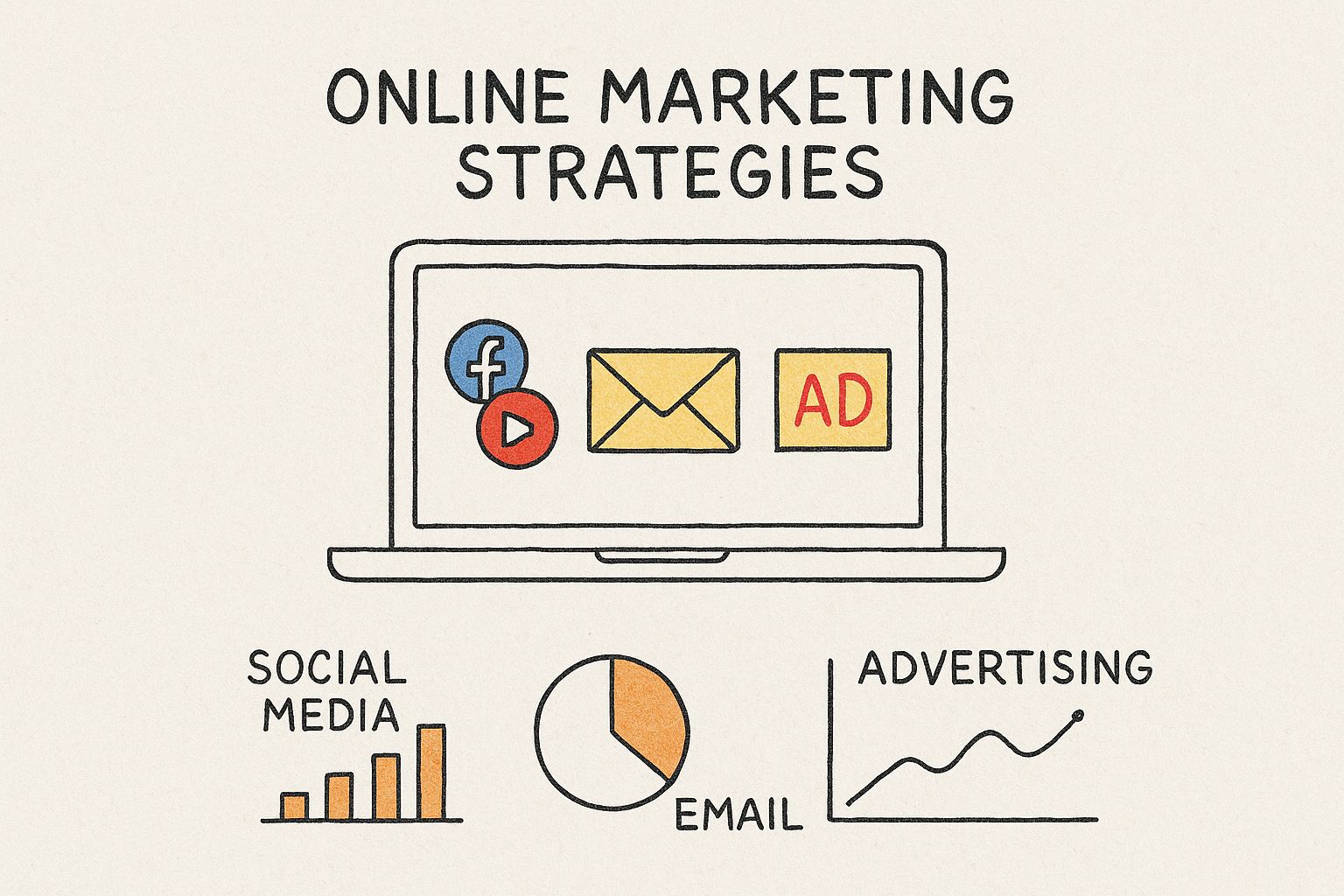
This infographic illustrates the core components of a successful online marketing strategy, encompassing social media, email marketing, and online advertising. It emphasizes a cohesive approach, aligning messaging across all platforms to create a consistent brand experience.
Harnessing the Power of SEO for Schools
Search Engine Optimization (SEO) is critical for families finding your school online. This means optimizing your website and content to rank high in search engine results for relevant keywords.
- Keyword Research: Identify terms parents use when searching for schools.
- On-Page Optimization: Integrate these keywords into your website copy, titles, and meta descriptions.
- Local SEO: Claim your Google My Business profile and ensure your school's information is accurate and up-to-date.
For instance, if you offer a robotics program, optimize your content around "robotics school" to attract interested families. This targeted approach ensures your marketing reaches the right audience.
Maximizing Your Paid Advertising Budget
Paid advertising can expand your reach and promote specific programs or events. It's essential to manage your budget strategically.
- Targeted Campaigns: Platforms like Google Ads and social media advertising let you target specific demographics and interests.
- Compelling Ad Copy: Write concise, persuasive copy highlighting your school's benefits.
- Conversion Tracking: Monitor your campaigns to ensure a return on your investment.
Strategic resource allocation maximizes your ROI and helps achieve enrollment goals. The global education market is projected to reach $10 trillion by 2030, demonstrating significant growth potential. Learn more about education marketing. This also means increased competition, emphasizing the need for effective digital strategies.
Nurturing Leads Through Email Marketing
Once families show interest, email marketing nurtures those leads toward application.
- Personalized Emails: Tailor messages to each family's interests and needs.
- Automated Email Sequences: Create automated emails that provide valuable information and keep your school top-of-mind.
- Engaging Content: Share stories, event invitations, and blog posts.
Email marketing builds relationships over time and encourages the next step in admissions. By effectively leveraging digital marketing, schools can connect with families in a more personalized and engaging way, ultimately driving enrollment growth.
To help further illustrate effective digital marketing strategies, the following table compares popular channels based on several key factors:
Digital Marketing Channels for Schools: Effectiveness Comparison
This table compares various digital marketing channels based on their effectiveness for different school marketing objectives.
| Marketing Channel | Lead Generation Effectiveness | Brand Awareness Impact | Cost Efficiency | Implementation Complexity |
|---|---|---|---|---|
| Search Engine Optimization (SEO) | Medium | High | High | Medium |
| Paid Advertising (PPC) | High | Medium | Medium | Low |
| Social Media Marketing | Medium | High | High | Low |
| Email Marketing | High | Medium | High | Low |
| Content Marketing | Medium | High | High | Medium |
Key observations from this table include the high cost-efficiency of SEO, social media marketing, email marketing and content marketing, balanced against the relatively lower cost-efficiency of paid advertising. While paid advertising excels in lead generation, other channels like SEO and content marketing contribute more significantly to long-term brand building. Email marketing proves highly effective for nurturing leads and driving conversions, albeit with slightly more complex implementation requirements. Understanding these nuances helps schools allocate resources strategically and maximize impact across various marketing objectives.
Content That Turns Curious Parents Into Applicants
Attracting prospective students is more than just open houses and brochures. School marketing now demands engaging content that resonates with tech-savvy parents. Forward-thinking schools are going beyond generic statements and creating authentic narratives that capture their unique qualities. This involves showcasing not just what they teach but how they teach, and its impact on students.
Building a Content Calendar That Aligns With the Parent Journey
A successful content strategy needs a well-structured content calendar. This isn't a random assortment of blog posts; it's a strategic plan aligned with the parent's decision-making process. Consider the academic year and the key milestones in a family's school search.
Early Stage (Awareness): Focus on general topics like "choosing the right school for your child" or "the benefits of a [Your School's Educational Philosophy] education."
Mid-Stage (Consideration): Provide specifics. Showcase curriculum highlights, extracurricular activities, and student success stories. Offer virtual tours or highlight upcoming events.
Late Stage (Decision): Address practical matters like tuition, financial aid, and the application process. Share testimonials from current families and students.
This structured approach delivers the right information at the right time, guiding parents toward enrollment.
Creating Content That Converts
Different content formats connect differently at each stage. While blog posts are informative, diversify with:
Videos: Showcase campus life, student projects, or faculty interviews.
Infographics: Present complex information in a digestible format. Tools like Canva can help create visually appealing infographics.
Interactive Quizzes: Engage parents and help them discover if your school aligns with their values.
Downloadable Resources: Offer ebooks, checklists, or guides on educational topics.
Enhance your understanding of digital marketing with this beginner's resource. It provides further insights into creating resonant content.
Empowering Your Community to Become Content Creators
Authenticity is key in school marketing. Parents trust other families and students more than polished marketing materials. Empower your community to share their stories:
Student Testimonials: Capture authentic student voices and experiences.
Parent Perspectives: Invite parents to write blog posts or participate in Q&A sessions.
Teacher Spotlights: Highlight the dedication and expertise of your faculty.
These genuine voices build trust and connect with prospective families.
Measuring Content Effectiveness Beyond Pageviews
Clicks and pageviews are just part of the story. True effectiveness lies in the impact on enrollment. Track key metrics:
Inquiry Generation: How many families contacted the school after engaging with your content?
Application Completion: How many inquiries became completed applications?
Enrollment Rates: How many applicants enrolled?
Analyzing these metrics helps refine your content strategy, focusing on what resonates with families and drives enrollment growth. This data-driven approach focuses on results, allowing you to understand what truly influences parents and optimize content for maximum impact. The goal is to inspire action.
Social Media That Showcases Your School's Soul

Forget generic social media posts. Building genuine connections with families is now key. Showcasing the heart and soul of your institution—the unique culture that makes your school special—is what truly matters. This means moving beyond staged photos and pre-written content to embrace authentic moments and genuine interaction.
Choosing The Right Platforms For Your School
Not all social media platforms are the same. Understanding your target audience is essential. Ask yourself: where do the parents of prospective students spend their time online?
Facebook: Facebook remains powerful for reaching parents, especially for community building and sharing school updates.
Instagram: Instagram is ideal for visually driven content, showcasing campus life, student activities, and special events.
TikTok: TikTok is popular with younger audiences, offering opportunities for creative short-form videos that capture attention.
YouTube: YouTube is perfect for longer videos, like student performances, faculty interviews, or virtual tours.
Focusing your energy on the right platform is more effective than spreading your efforts too thin across multiple channels.
Creating Platform-Specific Content That Resonates
Each platform has its own style and audience expectations. What works on Instagram might not resonate on Facebook. Tailor your content accordingly.
Instagram: Use high-quality images and short, engaging captions.
Facebook: Share longer posts, articles, and updates that encourage discussion.
TikTok: Embrace trends and create short, entertaining videos.
YouTube: Produce high-quality videos with clear audio and engaging visuals.
Authenticity is key. Polished perfection can feel impersonal. Embrace imperfections and showcase real moments. This resonates more deeply than overly staged content.
Encouraging Genuine Engagement
Social media is a two-way conversation. Encourage interaction with your community:
Asking Questions: Pose questions to your followers to spark conversations and encourage interaction.
Responding To Comments: Engage with comments and messages promptly and thoughtfully.
Running Contests and Giveaways: Generate excitement and boost visibility for your school's social media presence.
Sharing User-Generated Content: Repost photos and videos from students and parents to foster a sense of community.
These efforts build community and strengthen connections with your audience.
Managing Your Online Community
Transparency and responsiveness are crucial. Address questions and concerns openly. Be prepared to handle challenging situations with professionalism. Establish clear social media guidelines for your community. This creates a positive online environment. Social media marketing demands a strategic approach. In 2025, education marketers are increasingly prioritizing geo-focused campaigns and lead nurturing. Find more detailed statistics here: https://www.finnpartners.com/news-insights/2025-education-industry-marketing-landscape-survey-report/.
Building A Realistic Social Media Workflow
Don't let social media management overwhelm your team. Develop a manageable workflow.
Content Calendar: Plan posts in advance to maintain a consistent posting schedule.
Scheduling Tools: Utilize social media management tools to schedule posts and track performance metrics.
Team Collaboration: Assign clear roles and responsibilities for content creation, posting, and community management.
A well-defined workflow ensures a consistent and engaging social media presence without overburdening your team. Showcasing your school’s unique spirit through social media builds trust and creates lasting connections with families.
Measuring What Matters in School Marketing
Many schools focus on vanity metrics like social media likes and website visits. While these numbers can be encouraging, they don't always tell the full story. Do these metrics translate into actual enrollments? This section explores how to build a measurement system that directly connects your marketing efforts to tangible admissions outcomes. It's about focusing on metrics that reflect real impact, not just surface-level engagement.
Connecting Marketing Efforts to Admission Outcomes
Effective measurement begins with understanding the parent journey. Track how families interact with your school from their first point of contact to application and enrollment. Identify which channels and content influence their decisions at each stage of the process. This approach helps pinpoint where your marketing excels and where it needs improvement. You'll move beyond simply counting clicks and start understanding true family engagement.
For instance, if numerous families visit your tuition page after reading a particular blog post, it suggests that the content effectively addresses a key concern. This targeted approach empowers you to allocate resources strategically. Focus on strategies that demonstrably contribute to enrollment growth. Data-driven insights provide a clear picture of the return on investment (ROI) of your marketing spend.
Calculating Your True Cost-Per-Enrollment
Understanding your cost-per-enrollment is crucial for budgeting. This calculation goes beyond dividing your total marketing budget by the number of new students. Factor in the cost of each marketing channel and its specific contribution to enrollments. This allows for a comparison of the effectiveness of different channels and informs resource allocation decisions.
Furthermore, differentiate the cost of acquiring a lead from the cost of converting that lead to an enrolled student. This clarifies the entire admissions funnel and facilitates optimization at each stage. You might discover, for example, that social media is cost-effective for generating initial interest, while email marketing is more impactful in converting inquiries into applications. Engaging content is vital for showcasing your school's unique character on social media. For practical tips, explore this resource on increasing social media engagement.
Utilizing Accessible Measurement Tools for Schools
Enterprise-level marketing software isn't always feasible for every school. Thankfully, numerous affordable and even free tools can help track essential metrics. Google Analytics offers valuable website traffic and user behavior data. Social media platforms provide built-in analytics dashboards for measuring engagement. Leverage these readily available tools to gain a comprehensive understanding of your marketing performance.
Consider developing a simple spreadsheet to track marketing activities and their associated costs. This practical method allows you to monitor spending and correlate it with enrollment results. Over time, this data will allow you to refine your strategies and maximize your return on investment, even with limited resources.
Demonstrating Marketing ROI to Stakeholders
Presenting clear data on marketing ROI is essential for securing continued funding. Create dashboards that visualize key metrics like cost-per-enrollment, lead conversion rates, and channel contributions. This allows board members and administrators to readily see the impact of your efforts. This data-driven approach justifies budget requests and ensures continued support for your initiatives.
Transparency not only demonstrates the value of your work but also builds trust and credibility within the school community. This, in turn, empowers you to advocate for the necessary resources to achieve enrollment goals. By measuring what truly matters, you transform marketing from a cost center into a strategic investment that drives growth and strengthens your school's future.
To understand how to effectively track your marketing efforts, consider the following table of Key Performance Indicators:
Key Performance Indicators for School Marketing
Essential metrics for measuring the effectiveness of school marketing campaigns across different channels and objectives
| Marketing Objective | Key Metrics | Target Benchmarks | Measurement Frequency | Tools for Tracking |
|---|---|---|---|---|
| Increase Brand Awareness | Website traffic, Social media reach, Brand mentions | 10% increase in website traffic per quarter, 20% increase in social media reach per quarter, 50 brand mentions per month | Monthly | Google Analytics, Social media analytics dashboards |
| Generate Leads | Inquiries, Contact form submissions, Event registrations | 50 inquiries per month, 100 contact form submissions per quarter, 200 event registrations per year | Weekly | CRM software, Email marketing platforms |
| Drive Applications | Application submissions, Application completion rate | 100 application submissions per year, 80% application completion rate | Monthly | School admissions software |
| Improve Enrollment Rates | Enrollment rate, Yield rate | 20% enrollment rate, 50% yield rate | Annually | School admissions software |
| Enhance Parent Engagement | Social media engagement, Email open rates, Event attendance | 20% engagement rate on social media, 30% email open rate, 100 attendees per event | Monthly | Social media analytics dashboards, Email marketing platforms, Event management software |
This table provides a starting point for tracking key metrics aligned with your school's specific marketing objectives. Remember to regularly review and adjust these KPIs based on your school's unique context and evolving goals. By consistently monitoring and analyzing these indicators, you can gain valuable insights into the effectiveness of your marketing campaigns and make data-driven decisions to optimize your strategies for continued success.
Creating Your School's Enrollment-Driving Marketing Plan
Moving beyond individual marketing tactics to a cohesive strategy maximizes your limited resources. This involves developing a comprehensive plan tailored to your school's unique goals and culture. This section provides a practical roadmap to building that plan.
Conducting an Honest Situational Analysis
Begin with a realistic assessment of your current situation. This requires an honest appraisal of your school's strengths, weaknesses, opportunities, and threats—a SWOT analysis. What programs are successful? Where is there room for improvement? What external factors influence enrollment? Honestly answering these questions provides a foundation for your marketing strategy.
For instance, if your school has a renowned arts program but its facilities are outdated, your marketing plan should showcase the arts while transparently addressing the facility concerns. This honest approach builds trust with prospective families.
Setting Realistic Enrollment Targets
Next, establish clear, achievable enrollment goals. These targets should align with your overall strategic plan and account for factors like current enrollment trends and market competition. Unrealistic goals can lead to disappointment and inefficient use of resources.
Instead, concentrate on incremental growth. If your current enrollment is 200 students, aiming for a 5% increase (210 students) may be more realistic than a 20% jump.
Developing a Messaging Framework
Identify the core messages that resonate with your target family profiles. What are their main priorities and concerns? Create messages that directly address these, emphasizing your school's unique benefits and what sets it apart. This focused approach maximizes the impact of your marketing communications.
Consider developing separate messages for different grade levels or programs. A message highlighting a comprehensive college counseling program might appeal to high school families, while a message about a nurturing early childhood environment would attract families with younger children.
Calendaring Your Marketing Efforts
Develop a marketing calendar synchronized with the academic year and the typical family decision-making timeline. Certain marketing activities are more effective at specific times. Promoting summer programs in the spring, or holding open houses in the fall, aligns with the natural rhythm of the school year.
This structured approach maintains a consistent flow of communication and increases your chances of reaching families at the optimal time. Just as teachers plan their lessons, marketers should plan their outreach for maximum effectiveness.
Fostering Collaboration Across Teams
Effective school marketing requires collaboration among admissions, advancement, and communications teams. Sharing information and aligning messaging creates synergy and amplifies your efforts. Think of it as a well-coordinated team, each member contributing to a shared success.
Regular meetings, shared calendars, and a common communication platform cultivate this collaborative environment. This unified approach ensures everyone is working toward the same objectives and maximizes the impact of combined efforts.
Allocating Your Marketing Budget Strategically
Create a budget aligned with your goals, prioritizing high-impact activities. Difficult choices are inevitable. Perhaps investing in a redesigned website offers a better return than increasing print advertising.
A budget allocation framework guides these decisions. Consider factors like the cost of each channel, its potential reach, and its effectiveness in driving enrollment. This data-driven approach maximizes the return on every dollar spent.
By developing a comprehensive, strategically aligned marketing plan, your school can effectively attract and enroll students, ensuring a vibrant future. Are you ready to enhance your school's marketing and connect with more families? The MarCom Society offers a supportive community and valuable resources for K-12 school marketing professionals. Learn more about The MarCom Society and become a member today!