Level Up Your School Communications: Newsletter Inspiration Awaits!
Looking for effective ways to connect with your school community? This listicle provides seven diverse examples of newsletters for schools to boost your communication strategy. Discover fresh ideas for content and formats, from monthly class spotlights and digital weekly updates to student-created magazines and video newsletters. Find the perfect inspiration to engage parents, students, and staff with impactful newsletters in 2025 and beyond. We'll cover examples like PTA newsletters, infographic snapshots, and multilingual options. Explore these examples of newsletters for schools and transform your communication efforts.
1. Monthly Class Spotlight Newsletter
The Monthly Class Spotlight Newsletter is a powerful tool for connecting teachers and parents at the classroom level. This type of newsletter, as its name suggests, focuses on the happenings within a specific classroom or grade level. It provides parents with a personalized window into their child's learning environment, offering details that a general school-wide newsletter might miss. This targeted approach builds a stronger sense of classroom community and fosters more direct communication between teachers and families, making it a valuable example of newsletters for schools.

Typically sent monthly, this newsletter shares a variety of information relevant to that specific classroom. This can include student work samples and photos, providing parents with tangible evidence of their child's progress. It also offers updates on the current curriculum and learning objectives, giving parents context for classroom activities and homework assignments. Furthermore, the newsletter can highlight classroom achievements and celebrations, fostering a sense of pride and belonging within the class community. Important upcoming events and dates, as well as teacher notes and messages, complete the package, ensuring parents are fully informed and engaged.
Examples of successful implementation of this type of newsletter include "Ms. Johnson's Third Grade Monthly News" at Lincoln Elementary, "The Kindergarten Chronicle" at Westside School, and the "Fifth Grade Flyer" at Washington Elementary. These titles demonstrate how schools can create engaging and informative newsletters specific to individual classrooms.
Why use a Monthly Class Spotlight Newsletter?
This type of newsletter excels at creating direct communication between teachers and parents, facilitating a deeper understanding of what’s happening in the classroom. It allows parents to engage with specific classroom activities and celebrate their child’s learning journey in a more personalized way than school-wide communications. This builds a stronger classroom community and provides a platform to showcase student work in context.
Pros:
- Creates direct communication between teachers and parents
- Helps parents engage with specific classroom activities
- More personalized than school-wide newsletters
- Builds classroom community
- Can showcase student work in context
Cons:
- Requires time from already busy teachers to produce
- May contain redundant information if school also sends a general newsletter
- Can be inconsistent if teacher commitment varies
Tips for creating an effective Monthly Class Spotlight Newsletter:
- Use a consistent template each month to save time. This helps streamline the creation process and maintains a professional look.
- Involve students in creating content as a learning activity. This can range from writing short articles to selecting artwork for inclusion.
- Collect photos throughout the month to have content ready. This avoids last-minute scrambling for visuals.
- Include QR codes linking to digital student work or classroom websites. This adds an interactive element and expands the scope of the newsletter.
- Keep it concise – 1-2 pages maximum. Respect parents' time by delivering information efficiently.
For K-12 School Marketing Leaders, School Communications Professionals, Educational Administrators, Professional Development Seekers in Education, and MarCom Team Members looking for examples of newsletters for schools, the Monthly Class Spotlight Newsletter presents a valuable option for fostering parent engagement and building stronger classroom communities. Its focused approach provides a personalized touch that can significantly enhance communication between teachers and families.
2. Digital School-Wide Weekly Update
The Digital School-Wide Weekly Update is a comprehensive digital newsletter distributed electronically to the entire school community every week. It serves as a central hub for all school-related news, events, and important announcements, spanning across different grade levels and departments. This approach consolidates information into a single, easily accessible format, keeping parents, students, faculty, and staff informed and engaged. It’s a powerful tool for schools looking to streamline communications and foster a stronger sense of community. This type of newsletter deserves its place on this list due to its broad reach, ability to incorporate multimedia content, and its environmentally friendly nature.
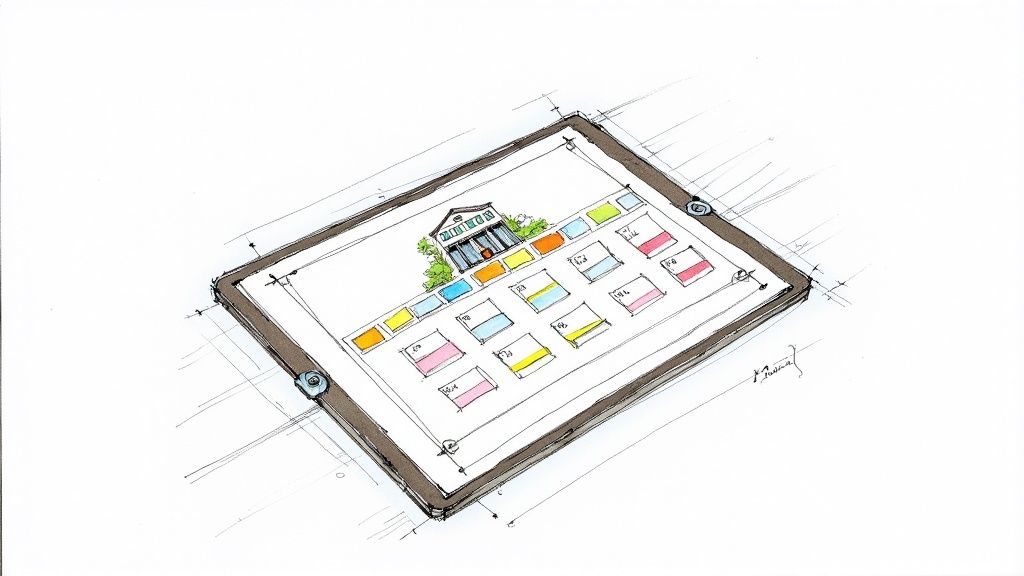
Typical features include a message from the principal, an upcoming events calendar, important administrative announcements, cross-curricular highlights, and links to school resources and websites. Many schools also leverage interactive elements such as polls and surveys to gauge community opinion and increase engagement. Examples of successful implementations of this type of newsletter include Riverdale High's 'Weekly Roundup', St. Mary's School 'Friday Flyer', and Oakwood Elementary's 'Monday Morning Bulletin'. These examples showcase how schools can tailor the name and content to resonate with their specific community.
Pros:
- Consistent Communication: The regular weekly cadence keeps parents consistently informed and reduces the likelihood of missed announcements.
- Multimedia Integration: The digital format allows for the embedding of links, videos, and interactive elements, making the newsletter more engaging and dynamic.
- Eco-Friendly: Distributing the newsletter electronically significantly reduces paper usage compared to traditional print newsletters.
- Searchable Archive: Digital newsletters can be easily archived and searched, creating a valuable historical record of school communications.
- Accessibility: Parents can access the newsletter on multiple devices (computers, tablets, smartphones), ensuring information is readily available.
Cons:
- Information Overload: If the newsletter becomes too lengthy, it can be overwhelming for recipients, leading to key information being overlooked.
- Content Generation: Requires consistent weekly content generation, which can be a burden on school staff.
- Digital Access: Some families may have limited or no access to digital devices or reliable internet connections.
- Email Inbox Clutter: Newsletters can get lost or overlooked in busy email inboxes.
Tips for Effective Implementation:
- Consistent Structure: Maintain consistent sections each week for easy navigation. A table of contents can further enhance readability.
- Mobile Optimization: Use a mobile-responsive template to ensure the newsletter displays correctly on all devices.
- Engaging Subject Lines: Craft engaging and varied subject lines to improve open rates and avoid the newsletter being flagged as spam.
- Performance Tracking: Track analytics to see which content receives the most engagement and adjust your strategy accordingly.
- Consistent Sending Time: Establish a consistent day and time for sending the newsletter so parents know when to expect it.
When and Why to Use This Approach:
The Digital School-Wide Weekly Update is ideal for schools looking to establish a consistent communication channel with their entire community. It is particularly effective for sharing timely information, promoting upcoming events, celebrating student achievements, and fostering a sense of connection. This method is best suited for schools with a high level of digital literacy among their parent population. Platforms like Constant Contact education templates, Smore educational newsletter platform, and MailChimp school communication templates offer user-friendly interfaces and pre-designed templates to streamline the creation and distribution of these newsletters.
3. Student-Created Quarterly Magazine
A student-created quarterly magazine offers a unique approach to school newsletters, providing an enriching experience for students while simultaneously showcasing their talents and accomplishments to the wider school community. This more extensive publication, produced seasonally or quarterly, serves as a platform for student expression and offers examples of newsletters for schools that go beyond simple announcements. It works by empowering students to take the reins of content creation, from writing articles and capturing photographs to designing the layout and overall aesthetic. This hands-on involvement fosters valuable skills in journalism, writing, photography, and design, all while documenting the school year in a creative and engaging way.

Successful examples of this type of student-led publication include The Falcon Quarterly at Jefferson High School, Creative Voices at Millbrook Academy, and The Student Lens at Central Middle School. These publications demonstrate how a student-created magazine can effectively capture the spirit and achievements of a school community while providing invaluable learning opportunities for students. These magazines often feature student articles and journalism covering school events, creative writing and poetry sections, student artwork and photography, in-depth features on specific school activities, and even student interviews with staff or community members, often organized around seasonal themes and special features.
This approach is particularly valuable for schools looking to foster student leadership and provide real-world experience in communication and creative fields. It's a perfect fit for schools with active journalism clubs, dedicated classes, or extracurricular activities focused on writing, photography, or design. By offering authentic publishing experience, students develop professional portfolio pieces that can be beneficial for college applications and future career pursuits. This type of newsletter also serves as a historical record of the school year, preserving memories and milestones for years to come.
Pros:
- Provides authentic publishing experience for students
- Develops journalism, writing, and design skills
- Creates professional portfolio pieces for students
- Showcases student talents to the community
- Can serve as a historical record of the school year
Cons:
- Requires significant oversight and coordination
- Production can be time-consuming and costly
- May need a faculty advisor with journalism/publishing expertise
- Less frequent publication schedule means less timely information
Tips for Implementation:
- Establish an editorial calendar and a clear submission process.
- Create style guides and templates to ensure consistency across the publication.
- Consider digital publishing alongside print versions for cost savings and wider accessibility.
- Integrate the magazine creation process with language arts curriculum when possible.
- Solicit advertising from local businesses to offset printing costs.
- Hold training workshops for student contributors on various aspects of journalism, photography, and design.
This format for school newsletters has been championed and popularized by organizations like Scholastic Journalism Programs, the Columbia Scholastic Press Association (CSPA), and the National Scholastic Press Association (NSPA), highlighting the educational value and professional development this approach offers. This rich and engaging format elevates the traditional school newsletter into a powerful tool for student growth and community engagement, making it a worthy addition to any list of examples of newsletters for schools.
4. PTA/PTO Monthly Newsletter
A PTA/PTO monthly newsletter is a vital communication tool specifically designed to engage parents and families within the school community. Unlike general school newsletters that focus on academic updates and school-wide announcements, the PTA/PTO newsletter zeroes in on parent organization activities, fundraising initiatives, volunteer opportunities, and ways for families to actively support the school. It provides a platform for the PTA/PTO to communicate directly with its members and the broader parent community, fostering a sense of belonging and shared responsibility for the school's success. This type of newsletter is a key example of newsletters for schools seeking to enhance parent involvement.
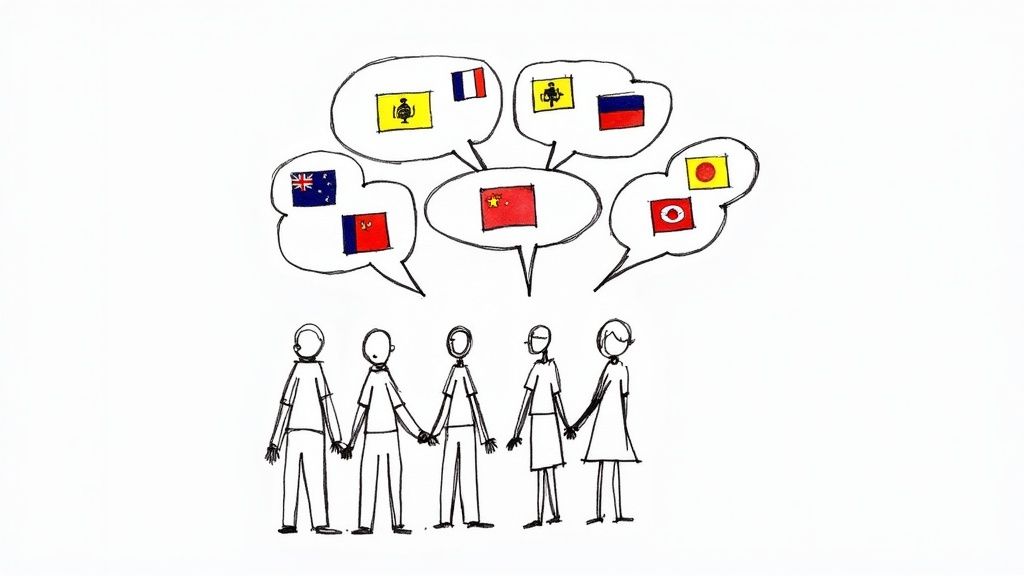
This dedicated communication channel features updates on ongoing fundraising campaigns, including progress towards goals and how the funds will be used. It also serves as a central hub for advertising volunteer opportunities, allowing parents to easily sign up for roles that align with their interests and availability. Committee reports and updates keep parents informed about the work being done behind the scenes, promoting transparency and accountability. Furthermore, the newsletter provides an opportunity to recognize and celebrate the contributions of parent volunteers, fostering appreciation and encouraging continued involvement. Budget information and funding allocations can also be shared, further reinforcing transparency and building trust within the parent community. Finally, the PTA/PTO newsletter can include valuable parent education resources and workshops, addressing relevant topics and empowering families with knowledge and support. Examples of successful PTA/PTO newsletters include the "Westside Elementary PTA Bulletin," "The Parent Connection at Riverdale School," and "Partners in Education Newsletter at Springfield Academy."
This approach is particularly useful for schools looking to boost parent involvement and build a strong home-school connection. By providing a dedicated communication channel for PTA/PTO activities, schools can effectively reach parents who are interested in actively contributing to the school community. Learn more about PTA/PTO Monthly Newsletter and explore strategies to maximize parent engagement in school activities.
Pros:
- Increases parent involvement in school activities.
- Creates transparency around fundraising and budget.
- Builds community among parents.
- Allows for targeted volunteer recruitment.
- Can be produced independently from school administration.
Cons:
- May reach only already-engaged parents.
- Can create the impression of an exclusive parent group.
- Might duplicate information in school newsletters.
- Dependent on volunteer effort to produce consistently.
Tips for Creating an Effective PTA/PTO Newsletter:
- Include clear calls to action for volunteer needs.
- Showcase the impact of parent involvement with specific examples.
- Translate into multiple languages to reach all families.
- Include photos from recent PTA/PTO events.
- Highlight specific families or volunteers each month.
- Keep a focus on how parent efforts benefit students.
This type of newsletter, popularized by organizations like the National PTA, PTO Today, and School Family Media, deserves a place on this list because it directly addresses the crucial need for parent involvement in schools. By leveraging this communication tool effectively, schools can cultivate a thriving parent community and create a supportive environment where students, families, and educators work together towards shared goals.
5. Visual/Infographic Monthly Snapshot
In today's fast-paced world, capturing attention quickly is crucial, especially for busy parents. A Visual/Infographic Monthly Snapshot offers a dynamic solution for school newsletters, presenting key information, data, and updates in a visually engaging format. This method leverages the power of infographics to deliver maximum information with minimal text, making it perfect for time-constrained audiences. This approach is a standout among examples of newsletters for schools because of its accessibility and impact.
This style prioritizes visual communication, using data visualizations, timelines, icons, color-coding, and photo collages to convey information efficiently. Imagine a graph showcasing student progress in math or a visual timeline highlighting upcoming school events. This method makes data easily digestible and memorable. Schools like Maplewood Elementary with their 'Monthly Metrics', Achievement Academy's 'Visual Digest', and The Learning Visual at Parkside School demonstrate successful implementations of this approach.
Features and Benefits:
- Data visualizations of school metrics: Transform raw data into understandable charts and graphs.
- Visual timelines of upcoming events: Present a clear chronological overview of important dates.
- Icon-based sections for quick identification: Facilitate easy navigation and understanding.
- Color-coding for different departments or topics: Organize information logically and visually.
- Photo collages of recent events: Showcase school activities and achievements in an engaging manner.
- Minimal text with maximum information: Cater to busy audiences with concise and impactful messaging.
Pros:
- Extremely quick to consume for busy parents: Information is presented in a digestible, scannable format.
- Visually engaging and stands out from text-heavy communications: Captures attention and increases readership.
- Works well across language barriers: Visuals transcend language, making it inclusive for diverse communities.
- Easily shareable on social media: The visually appealing format encourages sharing and expands reach.
- Effective for communicating statistics and achievements: Data visualization makes complex information easily understandable.
Cons:
- Limited space for detailed information: Requires careful selection of key highlights.
- Requires graphic design skills or software: May necessitate investment in training or tools.
- May not be accessible for visually impaired community members without proper alternatives: Requires careful consideration of accessibility guidelines. Alt text for images and screen reader compatible design are essential.
- Can be challenging to print clearly if parents need hard copies: Design choices should consider print limitations.
Tips for Implementation:
- Use consistent icons and color schemes for brand recognition and easy navigation.
- Include a small QR code linking to more detailed information online, addressing the limited space for text.
- Create templates that can be easily updated each month, streamlining the creation process.
- Focus on 3-5 key metrics or highlights to avoid overwhelming the reader.
- Ensure text is minimal but impactful, conveying key messages effectively.
- Use tools like Canva, Piktochart, or Venngage for easy creation and professional-looking designs. These tools are popularized by Canva education templates, Piktochart for education, and used by school infographic pioneers like Everett Public Schools.
Learn more about Visual/Infographic Monthly Snapshot
This Visual/Infographic Monthly Snapshot approach is ideal for K-12 School Marketing Leaders, School Communications Professionals, Educational Administrators, and MarCom Team Members looking for innovative ways to engage their audiences. By embracing visual communication, schools can create newsletters that are not only informative but also visually appealing and easily digestible, maximizing their impact on busy parents and the wider school community. This method deserves its place on the list of examples of newsletters for schools because it offers a modern, accessible, and engaging approach to school communication.
6. Principal's Video Newsletter
In today's digital age, schools are constantly seeking innovative ways to connect with their communities. One increasingly popular method, deserving of its place among the best examples of newsletters for schools, is the Principal's Video Newsletter. This modern format leverages the power of video to deliver updates, announcements, and messages directly from school administrators, often incorporating engaging footage from around the school. Instead of relying solely on text, the Principal's Video Newsletter offers a dynamic and personal way to keep families, students, and staff informed.
This approach works by having the principal, or other school leaders, record short video segments addressing key topics. These segments are often interspersed with B-roll footage of classroom activities, student and teacher interviews, visual tours of school facilities, and even digital calendars of upcoming events. Closed captioning ensures accessibility for all viewers.
Features and Benefits:
- Principal's video address: A direct message from the leader builds trust and connection.
- B-roll footage: Showcases the vibrant life of the school and offers a glimpse inside classrooms.
- Student and teacher interviews: Highlights student achievements and teacher perspectives.
- Visual tours: Perfect for showcasing new facilities or giving new families a virtual tour.
- Digital calendar integration: Keeps the community informed about important dates.
- Closed captioning: Ensures accessibility for all viewers.
Pros:
- Creates a personal connection: Face-to-face communication fosters a stronger sense of community.
- Showcases the school environment visually: More engaging than text for many audiences, especially in our visually-driven world.
- Easily shareable: Can be distributed across multiple platforms, including school websites, social media, and email.
- Transparency and insight: Allows the community to see inside classrooms and understand the school's daily operations.
- Onboarding for new families: Helps new families familiarize themselves with the school staff and environment.
Cons:
- Production can be time-consuming: Planning, filming, and editing require dedicated time and resources.
- Requires basic video editing skills or resources: While not overly complex, some technical skills are necessary.
- Bandwidth limitations: Families with limited internet access may have difficulty viewing videos.
- Not easily skimmable: Unlike text newsletters, viewers need to watch the entire video to get the full message.
- Privacy concerns: Requires careful attention to student privacy and appropriate media releases.
Examples of Successful Implementation:
- Principal Peterson's Weekly Update at Lakeview School
- Mountainview Elementary's 'Friday Principal Chat'
- The Eagle's Eye Video Newsletter at American Preparatory Academy
Actionable Tips for Creating Effective Video Newsletters:
- Keep videos concise: Aim for under 5 minutes to maintain viewer attention.
- Brand consistency: Create a simple intro and outro for a professional look and feel.
- Script or talking points: Use a script or talking points to stay on message and avoid rambling.
- Timestamps: Include timestamps in the video description for easy navigation to different segments.
- Variety: Alternate between principal-only updates and engaging school footage.
- Student involvement: Consider a co-host format with students to boost engagement.
- Media releases: Always secure appropriate media releases for all students shown.
When and Why to Use a Principal's Video Newsletter:
This approach is particularly effective for schools looking to enhance communication and build stronger relationships with their communities. It's ideal for sharing important updates, celebrating student achievements, showcasing school events, and offering a more personal message from school leadership. This type of newsletter also serves as an excellent tool for new family orientation and fostering a sense of belonging.
Learn more about Principal's Video Newsletter
Innovative principals like Gerry Brooks, along with resources like Edutopia's video communication best practices and YouTube Edu channel strategies, have popularized this format. This example exemplifies how video can be a powerful tool for school communication. See an example below:
7. Multilingual Community Newsletter
A Multilingual Community Newsletter is a vital tool for schools with diverse student populations. It's a powerful way to foster inclusivity and ensure all families, regardless of their primary language, feel connected and informed. This type of newsletter goes beyond simple translations; it embraces cultural diversity, celebrates different perspectives, and provides crucial information in a way that's accessible to everyone. This approach is essential among the best examples of newsletters for schools because it directly addresses equity in communication.
How it Works:
A Multilingual Community Newsletter delivers content in the languages represented within the school community. This could involve full translations of the main newsletter content or dedicated sections highlighting information specifically relevant to certain language groups. It also incorporates cultural elements, such as celebrating holidays from different traditions, sharing stories from diverse backgrounds, and providing resources tailored to the needs of immigrant families.
Examples of Successful Implementation:
- Global Voices at International Community School (fictional example): This newsletter features sections in English, Spanish, Mandarin, and Arabic, reflecting the school's diverse student body. Each section includes school news, upcoming events, and resources specific to each language group, alongside culturally relevant celebrations.
- United Families Newsletter at Parkway Elementary (fictional example): This newsletter provides translated versions in Spanish and Vietnamese, along with sections highlighting bilingual student achievements, language learning tips for parents, and information about community resources for immigrant families.
- Harmony Heights' 'Community Connections' multilingual newsletter (fictional example): This newsletter uses a visually-driven format with icons and images to aid comprehension across languages, alongside translated text in Korean, Tagalog, and Portuguese.
Actionable Tips:
- Collaborate with the Community: Work with parent volunteers fluent in target languages to ensure an authentic voice and cultural sensitivity.
- Universal Design: Use clear and concise language, visual cues, and icons to make the newsletter accessible to all readers, regardless of language background.
- Culturally Relevant Translations: Remember that translation goes beyond words; consider the cultural context to ensure the message resonates with each community.
- Celebrate Diversity: Feature cultural holidays, traditions, and student contributions from different backgrounds.
- Consistent Layout: Create a visually appealing and consistent layout that works across different languages and alphabets.
- Gather Feedback: Regularly solicit feedback from non-English speaking families to assess the newsletter's effectiveness and make improvements.
Pros:
- Creates true inclusivity in school communications
- Ensures critical information reaches all families
- Celebrates and validates diverse cultural backgrounds
- Builds bridges between different community groups
- Demonstrates school's commitment to equity
Cons:
- Requires translation services or bilingual staff
- Can be more costly and time-consuming to produce
- May require different formatting for languages with different alphabets
- Potential for translation errors if not professionally done
When and Why to Use This Approach:
A Multilingual Community Newsletter is especially beneficial for schools with significant populations of non-English speaking families. This approach demonstrates a commitment to equity and ensures that all families are included in the school community. It's particularly valuable for dual-language immersion schools, schools receiving support from the Office of English Language Acquisition (OELA), and international schools with diverse student bodies.
This type of newsletter elevates school communication beyond simply disseminating information; it becomes a powerful tool for building community, celebrating diversity, and ensuring that every family feels seen, heard, and valued. It rightfully deserves its place among the top examples of newsletters for schools because it directly addresses the needs of a diverse student population and fosters a truly inclusive school environment.
7 School Newsletter Examples Comparison
| Newsletter Type | Implementation Complexity 🔄 | Resource Requirements ⚡ | Expected Outcomes 📊 | Ideal Use Cases 💡 | Key Advantages ⭐ |
|---|---|---|---|---|---|
| Monthly Class Spotlight Newsletter | Moderate: Requires teacher time monthly | Medium: Teacher effort, photo collection | Improved parent engagement, classroom community | Classroom-level communication | Personalized, showcases student work |
| Digital School-Wide Weekly Update | High: Weekly consistent content creation | High: Digital tools, content contributors | Broad parent engagement, timely info delivery | School-wide updates | Digital, interactive, eco-friendly |
| Student-Created Quarterly Magazine | High: Significant coordination and design | High: Faculty oversight, student involvement | Student skill development, talent showcasing | Student journalism and extracurricular | Authentic student voice, professional results |
| PTA/PTO Monthly Newsletter | Moderate: Volunteer-dependent production | Medium: Volunteer time, content collection | Increased parent involvement, fundraising support | Parent organization communication | Builds parent community, transparency |
| Visual/Infographic Monthly Snapshot | Moderate: Requires graphic design skills | Medium-High: Design tools and skills | Quick, engaging info consumption | Data-focused communication, busy parents | Visually engaging, quick scan, shareable |
| Principal's Video Newsletter | High: Video production and editing effort | High: Video equipment, editing software | Personal connection, increased engagement | Leadership communication, community updates | Engaging, personal, visual storytelling |
| Multilingual Community Newsletter | High: Requires translation and cultural adaptation | High: Translation services or bilingual staff | Inclusive communication, increased participation | Diverse linguistic communities | Inclusive, culturally sensitive, builds trust |
Ready to Transform Your School's Newsletter?
From spotlighting student achievements to sharing crucial updates and fostering community engagement, effective school newsletters are a cornerstone of transparent and vibrant communication. We've explored a variety of examples of newsletters for schools, encompassing everything from the classic PTA newsletter to innovative digital formats like video newsletters and visually engaging infographic snapshots. Remember, the most impactful newsletters are tailored to your specific audience and leverage the unique strengths of your school community. Whether you choose a monthly magazine format, a weekly digital update, or a multilingual approach, consistency and engaging content are key.
Creating and distributing your school newsletter can be simplified with the right tools. For those looking for cost-effective options, consider exploring free form builders to streamline the collection of information and feedback for your newsletter content. Source: 7 Typeform Alternative Free: Top Form Builders in 2025 from BuildForm.
Mastering these different approaches to school newsletters empowers you to connect with families, students, and staff in meaningful ways. By sharing successes, addressing concerns, and building a strong sense of belonging, your newsletter becomes a vital tool for strengthening your school community and driving positive change. Start small, experiment with different formats, and watch your school's communication flourish.
Ready to take your school's communication to the next level? Join The MarCom Society, a community dedicated to supporting K-12 school marketing and communication professionals. Connect with peers, access exclusive resources, and discover best practices to create truly exceptional newsletters and elevate your school's communication strategy.