The Evolving Landscape of Private School Marketing

The private education sector is undergoing a significant transformation. Parent expectations are changing, and traditional marketing strategies are becoming less effective. This requires private schools to adapt their approaches to stay competitive and attract students. Despite increased marketing budgets, a surprising 87% of schools struggle to stand out.
Understanding the Shift in Parent Expectations
Parent expectations are a key factor in this evolution. Today's parents are more discerning and well-informed. They seek more than just strong academics. They also prioritize a nurturing environment, personalized attention, and a sense of community. Private schools must refine their marketing messages to emphasize these values and connect with modern families.
The Impact of Digital Transformation
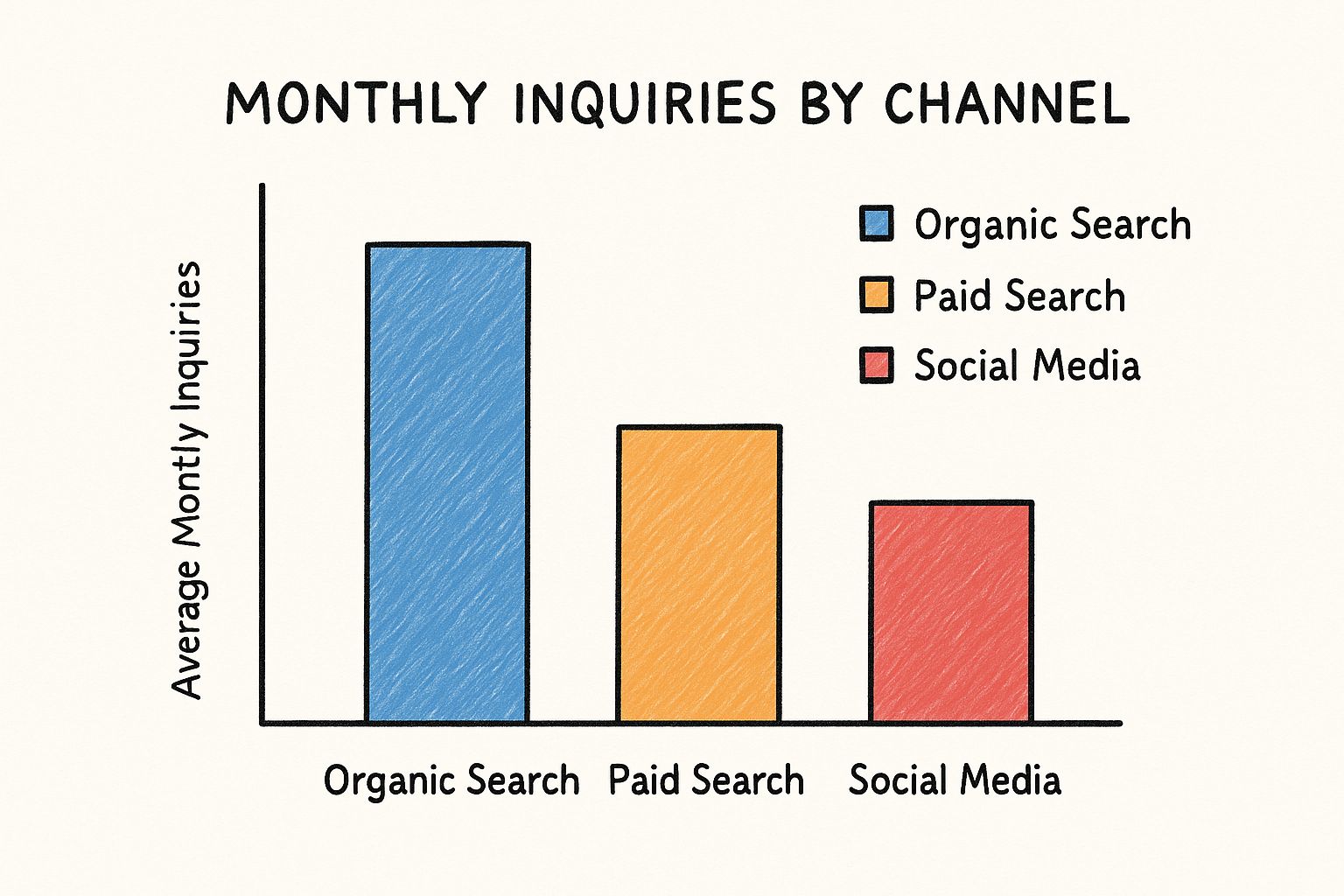
Digital transformation is another major influence on private school marketing. The internet and social media have revolutionized how parents research and evaluate schools. A robust online presence is now essential. A 2021 study revealed that 99% of U.S. independent schools utilized social media for marketing, with 53% finding it the most effective digital tool for lead generation. While paid advertising (87% adoption) and email marketing (77% adoption) are common, their perceived effectiveness is lower. Organic search, with 71% usage and 37% effectiveness, is the second most effective channel, highlighting the need for a comprehensive digital strategy. Learn more about this research. This emphasizes the importance of a multi-faceted digital approach encompassing social media, targeted ads, and search engine optimization (SEO).
Adapting to Demographic Changes
Demographic shifts also influence private school marketing. Changing population trends and family structures affect the demand for private education. Some areas experience growth, while others face decline. Schools must tailor their marketing to target specific demographics within their reach, perhaps adapting messages to resonate with various cultural backgrounds or family values. This targeted approach ensures marketing relevance and effectiveness.
Ultimately, understanding these combined forces – evolving parent expectations, digital transformation, and demographic shifts – is crucial for successful private school marketing in today's dynamic environment.
Crafting a School Brand That Parents Can't Resist
Building a strong brand for a private school is much more than just a logo and a color scheme. It's about creating an identity that truly resonates with prospective families, encouraging them to choose your institution. This involves understanding what drives parents' decisions and strategically addressing both their logical needs and their emotional hopes for their children.
Identifying Your School's Authentic Differentiators
The first step is to pinpoint what makes your school truly unique. Often, it's not what you think it is. Instead of relying on general statements about "academic excellence," dig deeper. What specific programs or teaching methods distinguish your school's educational experience?
Perhaps it's an emphasis on personalized learning, a strong commitment to character development, or a distinctive arts program. These are the genuine differentiators that capture attention. For example, a school could highlight its innovative STEM curriculum or its supportive learning environment for students with learning differences. These concrete details give families a clearer understanding of what your school offers and provide them with compelling reasons to consider enrollment.
Translating Differentiators into Resonant Messaging
Once you've identified your key differentiators, it's time to weave them into engaging narratives. Effective marketing for private schools connects with the emotional aspects of parents' decision-making. Parents want what's best for their children—not just academically, but also socially and emotionally.
Your messaging should reflect this by showing how your school supports children's growth in all these areas. Using storytelling and parent testimonials can be particularly powerful.
Building a Cohesive Brand Experience
Creating a strong brand requires aligning all aspects of your school's presentation. This means ensuring a consistent message across all communication channels, including:
Visual Identity: Logos, colors, fonts, and imagery should work in harmony to create a cohesive and recognizable brand.
Storytelling: Share compelling stories about student achievements, dedicated faculty, and the unique elements of your school culture.
Community Voice: Encourage genuine contributions from students, teachers, and parents to showcase your school's dynamic environment.
This consistent approach builds trust and reinforces the values your school represents.
To help understand the components of a well-defined brand, the following table offers a breakdown of key elements:
The table below, "Brand Identity Elements for Private Schools," outlines key components that make up a comprehensive school brand identity.
| Brand Element | Purpose | Implementation Examples |
|---|---|---|
| Mission Statement | Defines the school's core purpose and values | "To empower students to become lifelong learners and responsible global citizens." |
| Visual Identity | Creates a recognizable and memorable image | A distinctive logo, consistent color palette, professional photography |
| Messaging | Communicates the school's unique value proposition | Highlighting specialized programs, extracurricular activities, or a nurturing environment |
| Website | Serves as the digital hub for information and engagement | User-friendly design, compelling content, clear calls to action |
| Social Media | Connects with the community and shares authentic stories | Regular updates, student spotlights, behind-the-scenes glimpses of school life |
As the table illustrates, each brand element plays a crucial role in shaping the overall perception of the school. By carefully developing and implementing these elements, schools can project a consistent and compelling image that resonates with prospective families.
By strategically developing and implementing these elements, your school can create a brand that resonates deeply with parents, making your institution a compelling choice.
Digital Channels That Actually Fill Your Enrollment Pipeline

Let's shift our focus from general marketing strategies to the specific digital approaches proving effective for private schools today. Many schools discover that a substantial portion of their digital marketing budget—sometimes as much as 60%—delivers minimal results. This section emphasizes optimizing your resources for quantifiable enrollment growth by pinpointing and employing high-impact channels.
Where Are Parents Spending Their Time Online?
Understanding where prospective parents spend their time online is essential for targeted marketing for private schools. While traditional methods still hold value, digital avenues offer significant opportunities to connect with families actively exploring educational choices. This involves examining not only platform usage but also the kind of content families engage with on each platform.
Social Media Engagement: Platforms like Instagram and Facebook are valuable tools for showcasing school culture and connecting with families in a relaxed environment. Visual content, such as photos and videos of student life and events, tends to be highly effective on these channels.
Search Engine Optimization (SEO): A robust SEO strategy helps ensure your school's website appears prominently in search engine results when families search for private schools in your area. This involves optimizing your website content with relevant keywords and acquiring high-quality backlinks.
Emerging Channels: Beyond established platforms, consider exploring emerging channels with growing parental presence. This might include online forums, parenting websites, or even niche interest groups related to education.
Platform-Specific Strategies for Maximum Impact
Every digital platform necessitates a unique approach. Simply duplicating the same content across all channels is unproductive. A tailored approach allows you to concentrate resources on the most effective tactics, avoiding the dispersal of limited funds.
Instagram: Concentrate on visually engaging stories and behind-the-scenes glimpses into school life. Use pertinent hashtags to broaden reach and stimulate interaction through polls and Q&A sessions.
Facebook: Cultivate a thriving online community by sharing updates, event announcements, and parent testimonials. Use Facebook Groups to engage with families interested in specific programs or age groups.
Search Marketing: Implement a comprehensive SEO strategy to elevate organic rankings. Also, consider paid search advertising to reach specific keywords and demographics.
Content That Captures Attention and Nurtures Interest
Creating captivating content is crucial for attracting and maintaining prospective families’ attention. Effective content marketing for private schools should narrate a compelling story, spotlighting your school's distinct strengths and addressing parental needs. The 2024 U.S. Private School MarCom Survey by InspirED provides valuable insights into current marketing practices, highlighting trends such as the growing focus on brand messaging and inbound strategies. Schools are prioritizing SEO and data-driven decisions to tackle revenue challenges and explore international growth opportunities. Find more detailed statistics here.
Authentic Storytelling: Share narratives that embody your school's values and educational philosophy. Showcase student accomplishments, faculty expertise, and distinct program offerings.
Targeted Messaging: Customize your content to resonate with particular audience segments. For instance, develop content that directly addresses the concerns of parents seeking a school with a robust STEM program or a dedicated arts curriculum.
Call to Action: Motivate families to take the next step by incorporating clear calls to action in your content. This could involve visiting your website, booking a tour, or attending a virtual open house.
By concentrating on these core digital channels and developing compelling content, private schools can successfully connect with prospective families, cultivate their interest, and ultimately boost enrollment growth.
Content That Showcases Your Educational Excellence
In today's competitive private school market, generic marketing just doesn't resonate with prospective families. They're looking for authenticity. They want to see the true values and educational approach of a school. This means going beyond traditional methods like brochures and open houses. It requires creating content that truly showcases your educational excellence.
Transforming Everyday Moments Into Powerful Stories
The most successful private schools understand the importance of storytelling. They take everyday moments from school life and weave them into compelling narratives. These stories resonate with prospective families because they offer a genuine glimpse into the school's culture, not just its academic achievements.
Student Spotlights: Showcase students involved in research projects, artistic performances, or athletic competitions.
Faculty Expertise: Highlight your teachers' innovative teaching methods and their commitment to student success.
Classroom Dynamics: Offer a look inside engaging classroom activities and collaborative learning experiences.
These real-life examples paint a much more vivid and convincing picture than generic marketing statements ever could. They offer prospective families a chance to connect with your school on a deeper level.
Aligning Your Content Calendar With Admission Cycles
A systematic approach to content creation is key. A content calendar aligned with your admission cycle ensures the right message reaches the right audience at the right time.
Early Stage: Focus on building awareness of your school's mission and values.
Mid-Stage: Showcase specific programs and highlight accomplishments of students and faculty.
Late Stage: Offer virtual tours, testimonials, and practical application information.
This strategic approach nurtures prospective families' interest and guides them through their decision-making process. For example, early-stage content might be blog posts about the benefits of private education. As families move closer to applying, content could shift to specific academic programs or extracurriculars.
Involving Faculty and Students in Authentic Storytelling
The best stories come from within your school community. When faculty and students participate in content creation, it adds a layer of authenticity that resonates powerfully with prospective families.
Student Blogs: Let students share their personal experiences and perspectives on school life.
Teacher Interviews: Feature teachers discussing their passion for education and their innovative teaching methods.
Student-Led Videos: Showcase student projects or create video tours led by students.
This participatory approach not only generates valuable content but also strengthens your school community.
Maximizing Content Reach Across Multiple Platforms
Creating compelling content is only half the battle. You also need to ensure it reaches the widest possible audience. This requires a multi-platform strategy, using various channels to amplify your message. The content marketing sector grew to $76 billion in 2022 and was projected to reach $88 billion by 2023. Schools are exploring diverse content formats like blogs, videos, podcasts, and infographics. Learn more about these trends here.
The data chart below visualizes a comparison of different content formats and their effectiveness for private school marketing.
The chart reveals that while video content offers high engagement, it also requires a higher resource investment than blog posts or social media updates. This highlights the need for a balanced content strategy.
To further expand your reach:
Social Media: Share engaging snippets of longer content and link back to your website.
Email Marketing: Use newsletters to highlight recent content and keep families engaged.
Website: Feature your best content prominently on your website for easy access.
Optimizing your content for different platforms maximizes its impact and expands your audience. This multi-platform approach, combined with authentic storytelling and strategic planning, effectively showcases your educational excellence and attracts prospective families.
Content Formats Effectiveness Comparison
| Content Format | Best For | Engagement Level | Resource Investment | Conversion Potential |
|---|---|---|---|---|
| Blog Posts | Building awareness, sharing in-depth information | Medium | Low | Medium |
| Videos | Showcasing school culture, student life | High | High | High |
| Podcasts | Sharing expert interviews, discussions | Medium | Medium | Medium |
| Infographics | Presenting data, complex information visually | Medium | Medium | Medium |
| Social Media Updates | Quick updates, announcements | Medium | Low | Low |
Virtual Experiences That Convert Curious Parents to Applicants

Digital campus experiences have rapidly become vital tools for private school marketing. What started as a pandemic necessity has blossomed into a powerful way to connect with prospective families. By studying effective examples, we can learn how to create virtual tours and digital open houses that genuinely showcase your school and inspire applications.
Showcasing Your Campus and Classroom Dynamics Virtually
Virtual tours offer a special chance to highlight your school's environment and educational philosophy. However, a basic slideshow or pre-recorded video won't suffice. The real power lies in crafting interactive experiences that reflect the energy and unique character of your institution.
Consider integrating 360° virtual tours that allow families to explore classrooms, labs, and athletic facilities on their own terms. Short videos showcasing classroom interactions, student projects, and teacher interviews can provide an authentic look into daily life at your school.
Conveying Community Spirit Through Digital Experiences
A private school is more than just bricks and mortar; it's a vibrant community. Communicating this sense of community through digital channels is crucial to connecting with families. Live virtual events, such as Q&A sessions with current students and parents, can foster this connection.
Virtual open houses with interactive breakout rooms can also create a feeling of belonging. These events offer a platform to address parents' individual questions and concerns. Hosting a virtual information session on financial aid or scheduling one-on-one virtual meetings with admissions staff demonstrates personalized attention and helps build strong relationships.
Combining Technology With Personalized Touchpoints
While technology is essential, the human element remains paramount. Successful private schools seamlessly blend sophisticated digital experiences with individualized follow-up. After a virtual tour or digital open house, proactive connection is key.
Reaching out through email, phone calls, or even personalized video messages demonstrates genuine interest. This high-tech, high-touch approach strengthens relationships with prospective families and makes them feel valued, particularly in a competitive market.
Production, Promotion, and Measurement: Maximizing ROI
To get the most from your virtual experiences, a strategic approach to production, promotion, and measurement is vital. A well-defined production framework ensures professional quality and a consistent brand message.
Promote your virtual events through targeted ads, email marketing, and social media to maximize reach and engagement. Track key performance indicators (KPIs), such as attendance rates and follow-up inquiries. Most importantly, monitor applications to measure the return on investment (ROI). By consistently analyzing and refining your strategies, you can ensure your virtual experiences are not only engaging but also effective drivers of enrollment growth.
Measuring What Actually Drives Enrollment Decisions
Let's shift our focus from vanity metrics and delve into the data points that truly matter: the ones that accurately predict enrollment outcomes. This information comes directly from schools that have successfully transformed their marketing approaches.
Tracking the Parent Journey: From Awareness to Enrollment
Understanding the parent journey is crucial. It involves tracking how parents progress from initially becoming aware of your school to making the final enrollment decision. Visualize this progression as a map, where each interaction, such as a website visit, social media engagement, or attendance at a virtual event, represents a step along the way.
This requires diligently tracking these interactions. For example, if a parent downloads a brochure after clicking a link from a Facebook ad, this data provides valuable insights into the effectiveness of your social media strategy. Similarly, if that parent later attends a virtual open house and subsequently submits an application, it highlights the role of virtual events in driving conversions.
Establishing Key Performance Indicators (KPIs)
Meaningful Key Performance Indicators (KPIs) are essential and should be directly linked to your admission goals. If your objective is to increase applications by 15%, focus on tracking metrics such as submitted inquiry forms, downloaded brochures, and virtual event registrations.
Simply tracking these numbers isn't enough, however. You need to analyze the data to understand what strategies are proving successful and what areas need improvement. This data-driven approach allows you to refine your marketing efforts for optimal results. If you observe a strong correlation between virtual tour views and applications, it suggests that further investment in virtual experiences may be beneficial.
Creating Dashboards That Drive Strategic Decisions
Data visualization is key. Creating dashboards that visually represent these key metrics allows you to quickly identify trends and patterns. A well-designed dashboard might display conversion rates from various marketing channels, the demographics of prospective families, or the effectiveness of specific campaigns.
This clear visual representation allows you to quickly pinpoint the factors influencing enrollment decisions. It also simplifies the process of justifying resource allocation to leadership by providing them with clear, compelling evidence of your marketing activities' impact.
Attributing Conversions and Calculating ROI
Attributing conversions across multiple touchpoints can be complex. A parent might initially discover your school through a social media post, then visit your website, and finally attend an open house before applying.
This highlights the importance of robust tracking systems. These systems allow you to evaluate the contribution of each touchpoint to the final conversion, enabling you to calculate your true marketing Return on Investment (ROI) and allocate resources effectively.
Privacy-Conscious Data Tracking
While tracking family interactions is critical, it's imperative to do so responsibly. Implement privacy-conscious frameworks that prioritize data security and adhere to all relevant regulations.
This not only protects families but also cultivates trust, a vital component in private school marketing. Transparency regarding data collection practices can further enhance this trust.
Are you ready to enhance your private school's marketing and connect with a supportive community of professionals? Join The MarCom Society today for expert guidance, valuable resources, and collaborative opportunities to transform your school's communication strategies.