The New Landscape of Marketing for Schools

The world of education marketing has changed dramatically. While traditional methods like printed viewbooks and campus tours still hold value, they're no longer enough in today's competitive environment. Schools need to evolve and embrace new marketing strategies to stay ahead and attract prospective families.
Understanding the Shift
One of the biggest changes is how families research schools. The internet is now the primary source of information, with parents and students conducting extensive online research before even thinking about a visit. The rise of social media adds another layer of complexity, influencing perceptions and shaping opinions about schools. This demands a strong and engaging online presence.
Prospective families often check online reviews and social media platforms to get a feel for a school’s culture and reputation. They want authentic experiences and perspectives, which can heavily influence their decision-making. This requires schools to actively manage their online reputation and engage with their community.
Embracing Digital Strategies
Progressive schools are recognizing this shift and adapting their marketing accordingly. They're using digital channels such as search engine optimization (SEO), social media marketing, and targeted advertising to connect with prospective families where they spend their time online. This involves crafting compelling content that highlights the school's unique strengths and resonates with the target audience.
Data analytics also plays a vital role in understanding what appeals to prospective families and optimizing marketing campaigns. By monitoring website traffic, social media engagement, and other key metrics, schools gain valuable insights into campaign effectiveness. This data-driven approach enables continuous improvement and ensures efficient resource allocation. In 2025, higher education marketing emphasizes multi-channel strategies, with SEO remaining crucial since 60-70% of prospective students start their search organically. Institutions increasingly utilize AI-powered tools for personalization. Benchmarks indicate that schools using predictive analytics experience a 20-30% increase in enrollment efficiency. However, less than 40% of institutions systematically track ROI for digital campaigns, indicating a gap in data-driven decision-making. Global competition is intensifying, particularly in the U.S., U.K., and Australia, as these markets face demographic shifts. This pushes schools to target international students with localized content, especially in emerging regions like Southeast Asia and Africa. For more detailed statistics, explore this resource: Learn more about higher education marketing statistics. These insights underscore the importance of data-driven strategies in navigating the evolving landscape of education marketing.
Crafting a Data-Driven School Marketing Strategy
Data is no longer a secondary consideration in marketing; it's the engine driving successful strategies. This is especially true for schools, where understanding your audience and their motivations is paramount. Intuition is out, and data-driven approaches are in, empowering schools to make informed decisions about their marketing efforts.
Understanding Your Ideal Families
One of the most valuable uses of data lies in creating detailed student personas. These personas go beyond basic demographics, exploring the motivations, aspirations, and concerns of prospective families. One persona might represent a two-parent household prioritizing STEM education and concerned about college placement rates. Another could be a single-parent family seeking a nurturing environment focused on the arts and character development. These profiles inform every aspect of the marketing strategy, ensuring messages resonate with the target audience. You might be interested in: How to master school marketing.
Mapping the Enrollment Journey
Data also helps map the entire enrollment journey. This involves tracking how families interact with your school, from initial online search to application and enrollment. Understanding this journey helps identify crucial touchpoints and optimize each stage. For instance, analyzing website traffic can reveal what content resonates most, allowing you to prioritize high-performing content and refine underperforming areas.
Identifying Your Competitive Advantages
Data is key to identifying your school's true competitive advantages. Analyze data on student outcomes, programs, and competitor analysis to pinpoint what sets your school apart. This approach focuses marketing messages on aspects that resonate with families. It's not just about showcasing what you offer but highlighting why it's the best choice. Data transparency is increasingly important. However, gaps persist, with 2025 reports showing only 25-30% of institutions sharing detailed graduation and employment outcomes. Students demand proof of ROI, with 60-70% prioritizing program outcomes in their enrollment decisions. Find more detailed statistics here. Forward-thinking schools use tools like Lumen to boost engagement by 15-20%, shifting focus toward metrics like CRO (Conversion Rate Optimization) and LTV (Lifetime Value).
Aligning Objectives and Measuring Results
By using data, schools can align marketing objectives with institutional goals. This ensures marketing efforts contribute directly to the school's overall mission. Data-driven marketing also allows for measuring campaign effectiveness and generating tangible results. Instead of vanity metrics like brochure downloads, schools can track key performance indicators (KPIs) that directly influence enrollment.
To illustrate the essential KPIs for schools, consider the following table:
Key Performance Indicators for School Marketing
This table outlines essential metrics schools should track to measure marketing effectiveness across different channels and objectives.
| Marketing Objective | Key Metrics | Benchmark Targets | Measurement Frequency |
|---|---|---|---|
| Increase Website Traffic | Website visits, Unique visitors, Bounce rate, Average session duration | 10% increase in website visits month-over-month | Monthly |
| Generate Leads | Inquiries, Contact form submissions, Event registrations | 50 qualified leads per month | Monthly |
| Improve Application Completion Rate | Application starts, Application completions, Application completion rate | 80% application completion rate | Weekly |
| Boost Enrollment | Number of enrolled students, Enrollment growth year-over-year | 5% enrollment growth year-over-year | Annually |
| Enhance Brand Awareness | Social media engagement, Website mentions, Media coverage | 20% increase in social media engagement | Quarterly |
This table showcases how focusing on specific metrics tied to objectives provides a clear path to measuring success. This shift toward data-driven decision-making is crucial for maximizing the impact of school marketing and achieving sustainable growth.
Digital Channels That Drive School Enrollment

A strong digital presence is essential for school marketing. This section explores digital strategies that effectively convert prospective families into enrolled students. It's not just about having a website; it's about using digital tools strategically.
Search Engine Optimization (SEO): The Foundation of Visibility
When families search for schools, they often start with a search engine. This makes Search Engine Optimization (SEO) crucial. SEO involves optimizing your website and content to rank higher in search results for relevant keywords.
For example, if a family searches for "best private schools in [your city]", effective SEO ensures your school is visible in the results. This organic visibility is key for attracting families early in their decision-making process. Strong SEO also builds credibility.
Email Marketing: Nurturing Relationships
Once a family expresses interest, email marketing is a powerful tool for nurturing that relationship. Targeted email campaigns deliver personalized content based on family needs and interests.
For instance, you might showcase your STEM program to families interested in science and technology. Consistent, valuable emails keep your school top-of-mind. This guides families through the enrollment process.
Targeted Advertising: Reaching the Right Audience
Targeted advertising adds precision to your outreach. Platforms like Google Ads and social media advertising allow you to target specific demographics and interests.
You can promote your arts program to families involved in the local arts scene. This targeted approach maximizes your marketing budget, reaching the most interested families.
Creating a Powerful Channel Mix
Effective school marketing uses a strategic blend of digital channels – a channel mix. This mix varies depending on the institution. Independent schools might prioritize targeted advertising and personalized emails.
Public school districts could focus on SEO and community engagement. Higher education institutions often use content marketing and virtual events. The key is choosing channels that reach your target audience and align with your goals.
Content Marketing: Showcasing Value and Building Trust
Content marketing is vital for enrollment. This involves creating valuable, engaging content that resonates with families. Consider blog posts about student success, video tours, and downloadable guides.
By offering informative content, schools become trusted resources and build stronger connections with prospective families. High-quality content attracts new families and nurtures existing leads. Ultimately, successful school marketing builds relationships and provides value. By combining a robust online presence with personalized communication, schools can achieve sustainable enrollment growth.
Social Media Strategies That Connect With Families
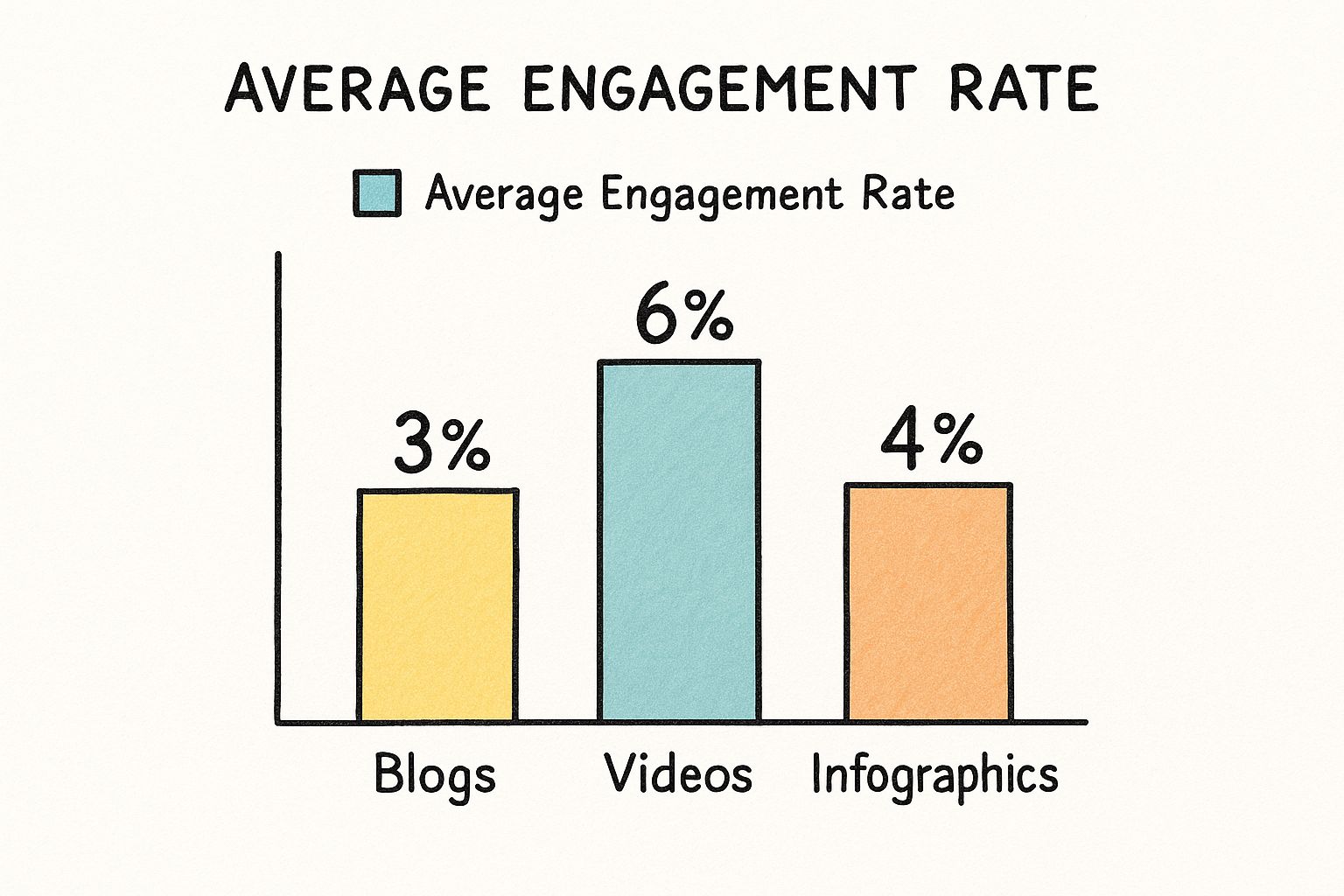
Forget the old days of simply posting cafeteria snapshots. Today's successful schools understand that social media is a powerful tool for building relationships. This means actively engaging with your community and going beyond simple announcements. It's about fostering connections and showcasing what makes your school special.
Platform-Specific Approaches
Different social media platforms have different strengths. Understanding these nuances is key to effective school marketing. Instagram is perfect for visual storytelling, showcasing student life and campus events through photos and short videos. This approach is especially appealing to prospective students. Facebook and Twitter, on the other hand, are better suited for sharing news, announcements, and engaging with parents and alumni.
Content That Resonates
Engaging content is crucial for capturing your audience's attention. Authenticity is paramount. Showcase genuine student experiences and highlight what makes your school's culture unique. Sharing student achievements, faculty spotlights, and behind-the-scenes glimpses into school life can build stronger connections with families.
Engaging Different Stakeholders
Understanding your audience is essential. Prospective students are drawn to visuals and peer testimonials. Parents look for information about academics and programs. Alumni appreciate updates on school events and ways to reconnect. Maintaining a consistent brand voice while addressing these diverse needs is crucial for successful school marketing. For further reading on this topic, check out this resource: How to master school marketing through better content.
Navigating Challenges and Measuring ROI
Effective social media management requires addressing challenges like negative feedback and measuring the return on investment (ROI). Responding thoughtfully to concerns can build trust. Tracking key metrics like engagement rates, website traffic referrals, and lead generation provides valuable insights. This data-driven approach allows for continuous improvement. Peer-led marketing is increasingly influential, with 45-55% of international students relying on reviews and testimonials. However, regulatory changes, like potential TikTok bans, require platform diversification. Discover more insights about marketing trends in education. Schools are adapting by focusing on platforms like YouTube and Instagram. Sustainability is also a key factor for Gen Z, with 35-40% prioritizing eco-friendly campuses.
Visualizing Social Media Engagement
The following data chart breaks down engagement rates across different social media platforms for a hypothetical school.
| Platform | Engagement Rate |
|---|---|
| 6% | |
| 3% | |
| 2% | |
| YouTube | 4% |
This chart shows that Instagram has the highest engagement rate, indicating that visual content resonates strongly with this school's audience. This suggests that prioritizing visually-driven content on Instagram may be more effective than other platforms for this specific school. The lower engagement on Twitter may suggest a need to revisit the content strategy on that platform; perhaps more interactive content or targeted campaigns would be beneficial. By analyzing this data, schools can strategically allocate resources and tailor content for maximum engagement on each platform. This analytical approach transforms social media from a passive tool into a powerful engine for relationship building.
To further clarify the effectiveness of various social media platforms for educational marketing, consider the following table:
Social Media Platform Comparison for Schools
A comparison of major social media platforms highlighting their effectiveness for different educational marketing objectives and target audiences.
| Platform | Best For | Target Audience | Content Types | Engagement Rate (Hypothetical Example) |
|---|---|---|---|---|
| Visual Storytelling, Brand Building | Prospective Students, Current Students | Photos, Short Videos, Stories | 6% | |
| Community Building, Announcements | Parents, Alumni, Local Community | Text Posts, Links, Videos | 3% | |
| News Updates, Quick Announcements | Media, Alumni, Educators | Short Text Posts, News Articles | 2% | |
| YouTube | In-depth Content, Tutorials | Current Students, Prospective Students | Longer Videos, Educational Content | 4% |
This table provides a quick overview of which platforms are most effective for reaching different audiences and achieving specific marketing objectives. By tailoring content and strategies to each platform's strengths, schools can maximize their social media impact.
Content That Converts Prospects Into Enrolled Students

In the competitive landscape of school marketing, creating effective content is paramount. While some content generates awareness, truly successful content motivates families to enroll. This section explores strategies for crafting high-converting content that resonates with today's prospective students and their parents.
Addressing Concerns and Aspirations
The most impactful school marketing content speaks directly to the needs of both parents and students. Parents prioritize a safe and nurturing learning environment where their children can thrive academically and socially. Students, on the other hand, seek programs that spark their interests and equip them for future success. Effective content must address both perspectives.
For example, content highlighting robust anti-bullying initiatives and small class sizes can reassure parents about their child's well-being. Simultaneously, showcasing engaging extracurricular activities and successful alumni stories can pique student interest and inspire them to envision their own future achievements.
Creating Compelling Content
Successful school marketing leverages a variety of engaging content formats. Virtual tours, for instance, allow prospective families to conveniently explore the campus from their homes. Authentic student testimonials, in video or written format, provide valuable firsthand perspectives on the school experience. Showcasing unique programs, such as specialized STEM offerings or arts initiatives, differentiates your school from the competition.
This diverse approach ensures a broader reach and caters to different learning styles. By acknowledging varying learning preferences and creating a memorable experience, schools can forge stronger connections with prospective families.
Balancing Promotion and Authenticity
While promotional materials have their place, authenticity is key to building trust. Families value genuine insights and experiences over generic advertising. Therefore, maintaining a balance between promotional content and authentic storytelling is essential.
Sharing blog posts about student projects or featuring teacher interviews, for instance, can foster a sense of community and showcase your school’s distinctive culture. This transparent approach appeals to families who prioritize genuine connections and a clear understanding of the school's values.
Highlighting Outcomes That Resonate
Today’s families are increasingly focused on the return on investment in education. Showcasing student outcomes is therefore crucial. Highlight data on graduation rates, college acceptance rates, and career success stories.
However, presenting this information in a relatable and engaging manner is equally important. Rather than simply listing statistics, consider using visuals or narratives to demonstrate the impact of your school’s programs. This approach resonates with today's data-driven families by presenting tangible results.
Measuring What Matters in School Marketing
Stop focusing on vanity metrics. Instead, start measuring data that truly reflects enrollment success. This means shifting away from superficial numbers like website hits or social media likes and prioritizing metrics directly correlated with student recruitment. It's about finding data that tells a story about your marketing effectiveness.
Defining Key Performance Indicators (KPIs)
The first step is establishing meaningful Key Performance Indicators (KPIs). These KPIs should be directly tied to your enrollment goals and reflect the entire student journey, from initial awareness to the final enrollment decision.
For example, instead of simply tracking website traffic, consider measuring the conversion rate of website visitors to inquiries. This offers a more insightful understanding of how effectively your website contributes to the enrollment process.
Also, track the conversion rate from inquiries to applications and ultimately to enrolled students. This will illuminate potential bottlenecks in your enrollment funnel, allowing you to optimize your marketing strategies accordingly. Breaking down the student journey into measurable steps offers invaluable insights.
Implementing Effective Tracking Systems
Schools need robust tracking systems that span the entire student journey in order to accurately capture these KPIs. This might involve integrating your school's website with your Customer Relationship Management (CRM) system, such as HubSpot, to track leads and their interactions. This enables you to see which marketing channels generate the most qualified leads. Learn more in our article about how to master school marketing.
This data allows you to refine your marketing strategies and allocate resources more effectively. Also, consider implementing UTM parameters in your marketing campaigns to precisely track the source of your website traffic. This provides granular data about which campaigns are most successful in driving traffic to your website.
Mastering Attribution Modeling
Attribution modeling is essential for measuring marketing success. It helps pinpoint which marketing touchpoints contribute most significantly to conversions. In the nuanced world of education marketing, families often interact with a school across multiple channels before making an enrollment decision.
For instance, a family might initially discover your school through a social media post, then explore your website, attend a virtual open house, and finally submit an application. Understanding the influence of each touchpoint on the family's decision is vital. This requires sophisticated attribution models that account for the complex interplay of various marketing channels.
Building Informative Dashboards
Effective communication of your results is paramount. Develop dashboards that clearly present marketing ROI to leadership and boards. These dashboards should visually represent key metrics, allowing stakeholders to quickly grasp the impact of marketing investments.
This data-driven approach not only justifies marketing spend, but also informs future strategic decisions. Presenting clear, concise data ensures that marketing efforts align with the institution's overarching goals. This clarity is particularly helpful in addressing practical challenges such as limited technology resources and typically long sales cycles in education. Finally, remember to prioritize privacy concerns in your data collection and usage, ensuring compliance with all relevant regulations.
Join The MarCom Society to connect with fellow marketing professionals and unlock valuable resources to elevate your school's marketing strategy. Visit The MarCom Society to learn more.