Why Every School Needs A Strong PR Foundation Today

Today's schools operate within a complex communication environment. While traditional methods like newsletters and parent-teacher meetings remain important, they often aren't enough to meet the diverse communication needs of the modern educational landscape. This means schools need a more comprehensive and strategic approach to public relations. A well-designed PR strategy can help address misinformation, build trust with the community, and foster greater engagement. This highlights why a solid PR foundation is now essential for every school.
Navigating the Modern Communication Landscape
Social media has significantly amplified the voices of parents, students, and community members. This presents both opportunities and challenges. While it allows for direct engagement and feedback, it also means negative experiences or misinformation can quickly spread and impact a school's reputation. The increasing diversity within school communities also requires sensitive and inclusive communication. Effective public relations helps navigate these complexities, ensuring all stakeholders feel heard and respected.
Turning Challenges Into Opportunities
Many schools are already using public relations strategies to transform communication challenges into opportunities for growth. Some are using social media platforms like Facebook and Instagram to highlight student achievements, share positive news, and cultivate community pride. Others are proactively working with local media to showcase innovative programs and build relationships with key stakeholders. This proactive approach not only enhances a school's image but also strengthens community support.
The projected growth of the global PR market to over $133 billion by 2027 further emphasizes the growing importance of effective communication and reputation management. You can find more detailed statistics here: Learn more about PR statistics. This growth underscores the need for schools to invest in robust public relations.
Building a Foundation for Success
Investing in public relations for schools is more than just managing crises or promoting good news; it's about building a solid foundation for future success. A well-defined PR strategy can help schools:
- Enhance Reputation: Building trust and credibility within the community.
- Strengthen Relationships: Fostering positive connections with parents, students, staff, and local stakeholders.
- Increase Engagement: Encouraging active participation and support from the community.
- Manage Crises Effectively: Responding proactively to challenges and minimizing negative impact.
- Advance the School's Mission: Communicating the school's values and goals clearly and effectively.
A strong PR foundation empowers schools to navigate the complexities of modern communication and create thriving learning environments for all.
Building Your School's Communication Game Plan
A proactive communication game plan is essential for every school, going beyond simply reacting to events as they arise. This involves establishing clear communication channels and ensuring consistent messaging. Much like a well-prepared sports team, a successful school PR strategy relies on careful planning and a strategic approach. This section outlines how to build a framework to bolster your school’s communication efforts.
Defining Your Key Audiences and Objectives
Building a strong communication strategy starts with understanding your audience. Who are you trying to connect with? Your audience likely includes parents, students, staff, local media, and the broader community. Each group has unique needs and interests. Therefore, your messages should resonate with each specific group.
Clearly defining measurable objectives will focus your efforts and provide a benchmark for success. For example, you could aim to increase parent involvement by 15% or improve student satisfaction with school communications by 20%. These quantifiable goals help track progress and demonstrate the impact of your communication strategy.
Consistent Messaging Across Platforms
Once you understand your audience and objectives, consistent messaging is key. This ensures your school's voice remains clear and recognizable across all communication platforms. Consider developing key message points that highlight your school's values and accomplishments.
Consistency builds trust and strengthens your brand identity within the community. For instance, if your school prioritizes innovation, this message should be reflected on your website, social media posts, and in parent newsletters. A unified message reinforces your school's identity and creates a stronger connection with your audience.
Establishing Two-Way Communication Channels
Effective school PR is more than just disseminating information; it’s about fostering a two-way dialogue. Building strong relationships requires actively seeking feedback from your community. Learn more about effective school communication plans.
Establishing reliable two-way communication channels is vital for this exchange. This means not just sending updates but also providing opportunities for your community to respond. Tools like online surveys, social media polls, and parent forums can facilitate these conversations. Regular two-way communication cultivates stronger relationships and a sense of shared ownership.
Crisis Communication Protocols
While proactive communication is essential, preparing for potential crises is equally important. Developing a crisis communication plan before an incident occurs ensures a swift and coordinated response when challenges arise.
This plan should identify key spokespeople, establish clear communication protocols, and prepare pre-approved messaging for various scenarios. A well-defined crisis plan helps minimize potential damage to your school's reputation and maintains community trust during difficult times.
To further illustrate the differences between traditional school communication and modern PR strategies, the following table provides a helpful comparison:
Core PR Components: Traditional vs. Modern Approaches
Comparison of traditional school communication methods with modern PR strategies
| Communication Area | Traditional Approach | Modern PR Strategy | Expected Outcome |
|---|---|---|---|
| Newsletters | Printed, sent home | Digital, emailed, accessible online | Increased readership, cost savings, eco-friendly |
| Events | Flyers, local announcements | Social media promotion, online registration | Wider reach, increased attendance, streamlined organization |
| Parent-Teacher Communication | Scheduled meetings, phone calls | Email, online platforms, instant messaging apps | More frequent, convenient communication |
| Community Engagement | Local newspaper articles, school open houses | Social media engagement, online community forums | Broader community involvement, two-way dialogue |
| Crisis Communication | Delayed responses, limited information | Timely updates, transparent communication via multiple channels | Minimized reputational damage, increased trust |
This table highlights the key differences between traditional methods and modern strategies, showing how a modern approach can improve communication effectiveness, reach a wider audience, and strengthen community relationships. Modern PR strategies emphasize proactive engagement, consistent messaging, and utilizing digital tools to connect with various stakeholders effectively.
Mastering Digital Communication Without Losing Your Soul
Digital communication offers incredible opportunities for schools to connect with their communities. However, it also presents unique challenges. Schools must learn to use these tools effectively without sacrificing authenticity or personal connection. This section explores how to use digital platforms to build stronger relationships and share compelling stories.
Embracing Digital Storytelling
One powerful way schools can use digital platforms is through digital storytelling. Sharing authentic stories about students, staff, and school events can foster a sense of community and create emotional connections with your audience.
Short videos showcasing student projects or highlighting teacher achievements can humanize your school and build rapport with parents and the wider community. This approach adds a personal touch, making your communications more engaging and memorable.
Navigating the Social Media Maze
Social media presents both opportunities and risks for schools. When managed strategically, platforms like Facebook, Instagram, and Twitter can become valuable tools for public relations for schools, facilitating direct interaction with your community and sharing timely updates.
However, it's essential to establish clear social media guidelines and protocols to maintain a positive online presence. This ensures consistent messaging and helps manage any potential negative feedback effectively.
Optimizing Your Website as a Communication Hub
Your school's website serves as the central hub for all your digital communications. A well-designed and user-friendly website can be a powerful tool for sharing information, showcasing your school's achievements, and building trust with your community.
This requires ensuring your website is accessible on all devices, easy to navigate, and regularly updated with fresh and relevant content. Consider incorporating interactive elements like blogs and forums to encourage two-way communication.
In recent years, the public relations market has expanded rapidly, driven by factors such as the increasing dominance of digital and social media, influencer marketing, and the demand for data-driven decision-making. Schools are increasingly using digital platforms to communicate, showcasing events and initiatives. Explore this topic further.
Connecting Across Generations
Reaching different generations within your school community requires a nuanced approach. While younger parents might prefer communication via social media or email, older generations might appreciate more traditional methods.
Finding the right balance is crucial. This means understanding the communication preferences of each segment of your audience and tailoring your messaging accordingly. While using digital platforms is essential, a blend of communication methods ensures everyone feels included.
Transparency and Privacy: Finding the Right Balance
While transparency is essential for building trust, protecting student privacy is paramount. Schools must carefully consider what information they share online and establish clear privacy policies.
This includes being mindful of student photos and videos, ensuring parental consent, and being transparent about data collection practices. Striking the right balance between openness and privacy is crucial for maintaining a positive school image and fostering a safe learning environment.
Creating Partnerships That Actually Benefit Everyone

Effective public relations for schools goes beyond simply raising funds. It involves cultivating genuine partnerships within the community that offer advantages for everyone involved. This section explores how to find compatible local businesses and organizations, building collaborations that enrich both the school and the surrounding community. These partnerships provide a path for schools to become vital community resources, not just institutions seeking financial aid.
Identifying Partners With Shared Values
The key to a strong partnership lies in shared values. Seek out local businesses and organizations whose missions align with your school's educational aims. For instance, a school emphasizing STEM education might partner with a local tech company (Google) to provide mentorship programs or workshops. This shared vision ensures that the partnership is authentic and mutually beneficial.
Collaboration Opportunities Beyond Fundraising
While financial contributions are always welcome, partnerships can offer significantly more than just monetary support. Think outside the box about how your school and a potential partner can work together to create mutual value. This could involve offering internship opportunities for students, jointly hosting community events, or sharing resources and expertise.
Engaging Local Media and Community Leaders
Local media and community leaders are invaluable allies in promoting your school's message and fostering deeper community connections. Connecting with local newspapers, radio stations, and community blogs can increase awareness of your school's accomplishments and initiatives. Cultivating relationships with community leaders can also generate increased support for your school's endeavors.
Building Relationships That Last
Successful partnerships require ongoing nurturing and open communication. Starting conversations is just the initial step. Maintaining regular contact, providing updates on your school's progress, and actively seeking input from your partners will create a stronger, more sustainable relationship. Learn more about community engagement strategies for schools. This dedicated approach demonstrates a commitment to the partnership and builds trust, ensuring its continued success. Consider these best practices:
- Regular Communication: Plan consistent meetings or calls to discuss current projects and future possibilities.
- Shared Goals and Objectives: Clearly define the partnership's goals and track progress together.
- Mutual Recognition and Appreciation: Publicly acknowledge and celebrate the contributions of your partners.
- Flexibility and Adaptability: Be open to adapting and modifying the partnership as needed to ensure mutual benefit.
By prioritizing genuine relationships and shared value, schools can establish partnerships that enhance their educational mission and solidify their role as a valuable community asset.
Handling The Tough Stuff: Crisis Communication Done Right
Navigating the public relations landscape for schools inevitably means dealing with difficult situations. From a minor social media complaint to a major incident impacting your school's reputation, a well-defined crisis communication plan is essential. This goes beyond damage control; it's about building trust and demonstrating your school's values during challenging times. Effectively communicating during a crisis can actually strengthen your relationship with the community.
Preparation Is Key: Proactive vs. Reactive
Just like a fire drill prepares everyone for a potential fire, a crisis communication plan prepares your school for a communication emergency. This plan should outline specific steps, designate key spokespeople, and establish the communication channels to be used during a crisis. Being proactive, not reactive, helps manage the situation and minimize potential harm. For instance, having pre-approved messaging for common scenarios can save valuable time. You might be interested in: How to master your school's crisis communication plan.
The following infographic visualizes the three key stages of a school’s crisis communication plan: preparation, response, and recovery.
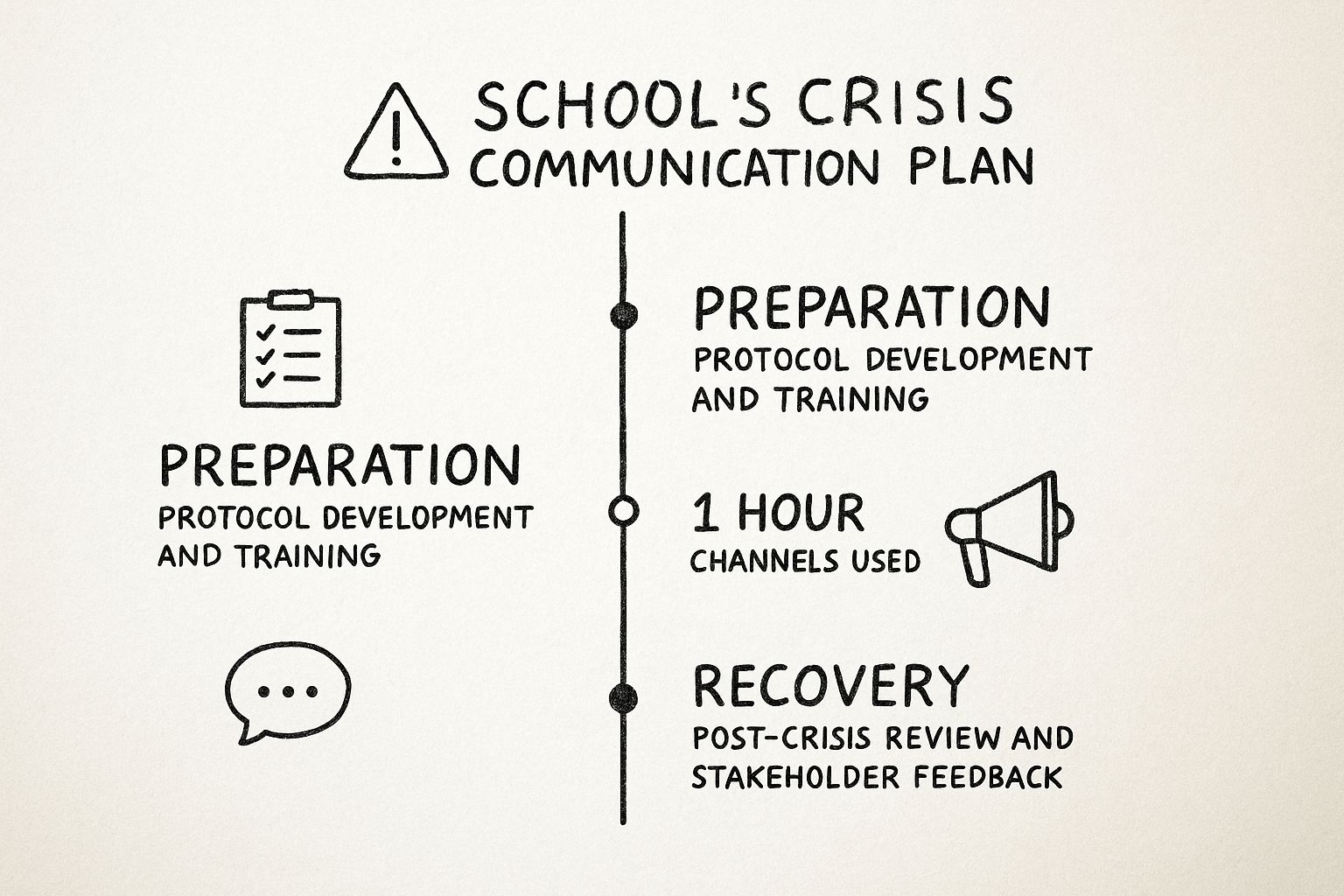
This infographic emphasizes the importance of preparation and training before a crisis occurs. It highlights the critical response time and channels used during a crisis. It also demonstrates the value of post-crisis review and stakeholder feedback. This cycle of continuous improvement is essential for refining your crisis communication strategy.
Timing and Transparency: Building Trust During a Crisis
When a crisis hits, timing and transparency are paramount. A delayed response can breed suspicion and fuel rumors. Communicating openly and honestly, even without all the answers immediately, builds trust and prevents misinformation from spreading.
This involves acknowledging the situation, providing regular updates, and demonstrating empathy for those affected. A designated spokesperson should be the primary voice of the school during a crisis, ensuring consistent and accurate messaging.
To further illustrate the importance of a timely and organized response, consider the following crisis communication timeline:
This table outlines a step-by-step timeline for effective crisis communication response in schools.
| Time Frame | Action Required | Key Personnel | Communication Channels |
|---|---|---|---|
| First Hour | Activate crisis communication team. Assess the situation and gather initial facts. Prepare a brief initial statement. | Crisis Communication Team Leader, Designated Spokesperson | School Website, Social Media, Local News Outlets |
| First 24 Hours | Hold press conference or issue detailed statement. Provide regular updates to stakeholders. Monitor social media and address rumors. | Designated Spokesperson, Public Relations Officer | School Website, Social Media, Email, Phone Calls |
| Following Days/Weeks | Continue providing updates. Cooperate with authorities. Address community concerns. Begin recovery and review process. | School Administration, Legal Counsel | School Website, Community Forums, Parent Meetings |
This timeline emphasizes the need for quick action, clear communication channels, and designated personnel to handle crisis communication effectively. The initial response sets the tone for how the crisis unfolds and impacts public perception. Ongoing communication and follow-up are crucial for maintaining trust and managing the long-term effects of the crisis.
Turning Challenges Into Opportunities
While crises are challenging, they also present opportunities to showcase your school's values and commitment. By responding with empathy, transparency, and a genuine desire to learn and improve, schools can demonstrate dedication to student well-being and build stronger community relationships.
This proactive approach to public relations for schools transforms potentially negative situations into moments that reinforce trust. For example, a school experiencing a bullying incident could use the opportunity to review its anti-bullying policies and engage the community in a constructive dialogue about creating a safer and more inclusive environment.
Making Sure Every Voice In Your Community Is Heard
Strong public relations for schools involves creating an inclusive environment where every family feels valued and represented. This goes beyond simply sharing information; it's about actively listening to and understanding the diverse perspectives within your school community. This includes considering cultural backgrounds, socioeconomic differences, and individual communication preferences. Building this foundation of inclusivity is crucial for effective communication.
Celebrating Diversity and Building Trust
Schools with excellent public relations programs understand the power of celebrating the diversity within their communities. This involves showcasing the achievements of all student groups, highlighting different cultural traditions, and ensuring representation across communication channels. For instance, featuring multilingual content on your school's website or social media platforms demonstrates a commitment to inclusivity and creates a stronger sense of belonging.
Addressing sensitive topics with cultural sensitivity and respect builds trust. Open dialogue and transparent communication are crucial for navigating challenging conversations and fostering understanding between different groups. This strengthens the school’s connection with its diverse community.
Equitable Representation in Your Messaging
Ensuring equitable representation in your messaging goes beyond simply including diverse faces in your materials. It requires carefully considering how different groups are portrayed and making sure all voices are heard. This involves analyzing current communication practices and looking for potential biases.
For example, if school newsletters primarily focus on athletic achievements, consider expanding coverage to include accomplishments in the arts, academics, and community service. This broader perspective ensures that all student talents and contributions are recognized and valued.
Inclusive Communications That Connect
Making communications more inclusive shouldn’t feel forced or inauthentic. Authenticity is key. One effective strategy is to create opportunities for families from diverse backgrounds to share their stories and perspectives. This could involve parent panels, student-led initiatives, or community forums.
Offering communication materials in multiple languages and formats accommodates varying learning styles and preferences. This shows a genuine commitment to inclusion and strengthens relationships with all families. For inspiration on engaging newsletters, check out this resource: How to master creating engaging school newsletters.
The World Public Relations & Communication Awards 2025 recognize excellence in various categories, including diversity, equity, and inclusion – themes often central to school PR efforts. Learn more here: Discover more insights about the World PR & Communication Awards. By prioritizing inclusivity, schools foster welcoming environments where everyone feels seen, heard, and valued. This, in turn, strengthens the entire community and ultimately contributes to student success.
Knowing What's Working And What Isn't
Evaluating the effectiveness of your school's public relations efforts is crucial for continuous improvement. A structured approach to measurement provides valuable insights, moving beyond guesswork. This section explores practical frameworks for tracking your communication success, from engagement metrics to stakeholder feedback, empowering schools to make data-driven decisions and refine their PR strategies.
Measuring Meaningful Engagement
Tracking engagement metrics helps determine what resonates with your audience. Website analytics tools like Google Analytics can reveal which pages are most visited and how long visitors stay. Social media engagement, such as likes, shares, and comments, indicates the level of interest in your content. For example, a significant increase in website traffic after a specific social media post suggests that the content and platform were effective. These quantifiable metrics offer a clear picture of audience interaction.
Gathering Stakeholder Feedback
While quantitative data like website traffic is important, qualitative feedback provides deeper insights. Surveys, focus groups, and parent forums offer valuable perspectives on stakeholder satisfaction. For instance, a parent survey can reveal opinions about school communication frequency and clarity. This direct feedback helps identify areas for improvement and understand the needs of your community.
Analyzing Return on Investment (ROI)
Measuring the return on investment (ROI) of your public relations efforts demonstrates the value of your work. This can involve tracking media mentions using tools like Meltwater, analyzing website traffic generated from PR activities, and assessing the impact on student enrollment. If positive media coverage leads to a noticeable increase in enrollment inquiries, this demonstrates a tangible return on your PR investment.
Continuous Improvement: A Culture of Feedback
Successful public relations for schools involves continuous improvement. Establish a system for regularly gathering and analyzing data. This data-driven approach ensures that your communication strategies are aligned with your school's goals and community needs. Regularly reviewing metrics and stakeholder feedback creates a culture of learning and adaptation, fostering growth and ensuring your school's PR efforts are consistently effective.
Ready to elevate your school's communication strategies and foster a thriving community? Discover the power of collaboration and professional development with The MarCom Society. Join a network of dedicated K-12 marketing and communication professionals, gain access to expert resources, and transform your school's PR approach.