If you're looking to sharpen your communication skills at work, the secret isn't just about what you say, but how you say it. It all boils down to three core ideas: clarity, conciseness, and consistency. Get these right, and you're already ahead of the game. Start by truly listening to understand, not just to reply, and always think about who you’re talking to before you craft your message.
Why Great Communication Is Your Most Valuable Asset
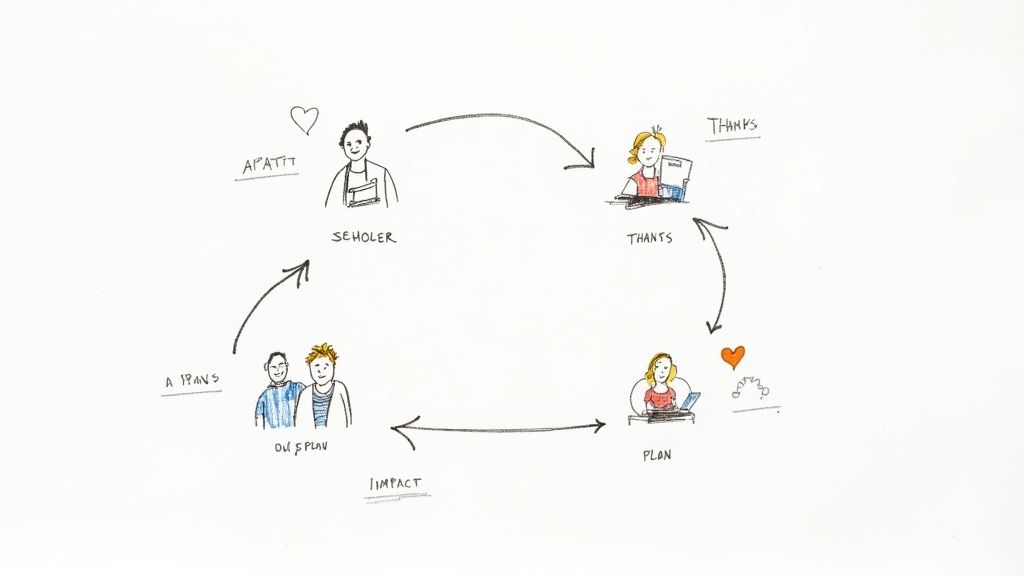
Before we jump into the "how-to," let's get on the same page about why this matters so much, especially in the world of K-12 schools. Think of strong communication as the engine that powers everything your team does. It's not just about talking and writing; it's the very foundation of trust, collaboration, and getting things done efficiently.
In a school environment, the stakes are incredibly high. A simple miscommunication can quickly spiral into a major headache. A poorly worded email can stir up unnecessary anxiety among parents. Unclear instructions for a school event can lead to total logistical chaos. On the flip side, a well-crafted message can turn a potential crisis into a moment that strengthens your community.
Ever had to announce a sudden snow day or an unexpected school closure? A clear, empathetic, and timely message provides immediate reassurance. A vague or delayed one? That just creates confusion and chips away at the trust you've built. That’s the real-world impact of your communication skills right there.
The Foundation of Workplace Success
Let’s be clear: effective communication isn’t just a "soft skill." It's a hard-hitting driver of performance and the bedrock of a healthy school culture. The research backs this up time and time again, showing a direct line between how well teams communicate and what they can achieve.
In fact, teams with strong communication channels can see their productivity jump by up to 25%. That's a huge return for simply focusing on how we interact. It's no surprise that 64% of business leaders point to communication as the single most critical factor for boosting team performance. Employers are constantly on the lookout for candidates with sharp verbal skills (55%), solid presentation abilities (47%), and the often-overlooked art of active listening (36%).
For those of us in K-12, this translates directly to stronger relationships with parents, more engaged staff, and a more positive reputation for our school. Every single interaction—from a weekly newsletter to a quick chat in the hallway—is a piece of your school’s story.
Grasping this fundamental importance is your first real step. To build on these principles, it’s worth exploring various business communication best practices that can give you a strategic edge.
Pinpointing Your Strengths and Weaknesses
To get better at anything, you need an honest starting point. Take a moment to think about your own communication patterns. Are you naturally clear and to the point, or do you sometimes find yourself searching for the right words? Maybe you’re great in one-on-one conversations but get nervous presenting to a large group.
A quick self-check can be incredibly revealing. Ask yourself:
- Clarity: Is my message easy for anyone to understand, free of educational jargon?
- Conciseness: Do I get to the point, or do I bury it in unnecessary details?
- Consistency: Does my messaging sound the same across emails, social media, and parent-teacher meetings?
This guide is designed to help you build on these core areas, transforming how you connect with everyone from the superintendent to a family touring for the first time. By focusing here, you're laying the groundwork for a much more impactful communication strategy. You might also be interested in our guide on what organizational communication is and how it shapes your entire school.
Become a Better Listener Today

Real communication doesn't start with talking—it starts with listening. It’s so easy to get caught up in planning what you’ll say next that you miss the heart of what’s being said. If you want to genuinely improve your communication skills at work, mastering active listening is the first, most critical step.
For those of us in school communications, this isn't just a "nice-to-have" skill; it's everything. Think about it. When you can fully absorb a parent's frustration about a new carpool lane policy, you can respond with empathy. When you truly grasp a principal’s vision for a capital campaign, your messaging will hit the mark.
This is how you build trust. It’s how you solve the real problem, not just the one floating on the surface.
Go Beyond Just Hearing Words
Active listening is more than just letting sound enter your ears. It’s a deliberate choice to understand the complete message—the words, the tone, and the unspoken feelings behind them. You're not just processing data; you're connecting with a person.
Picture a tense meeting with a parent. They might say, "I just want to know how my child is doing," but their crossed arms and anxious tone are screaming that they’re worried their child is falling behind. A skilled communicator hears both messages loud and clear.
To help you get there, here’s a quick-reference table outlining what separates passive hearing from truly active listening in our world.
Active Listening Techniques for School Professionals
| Technique | What It Looks Like | Example Scenario in a School |
|---|---|---|
| Paraphrasing & Confirming | Restating the speaker's points in your own words to ensure you've understood them correctly. | "So, if I'm hearing you right, your main concern isn't the new homework policy itself, but the lack of advance notice before it was implemented?" |
| Asking Open-Ended Questions | Using questions that can't be answered with a simple "yes" or "no," prompting a more detailed response. | Instead of "Are you upset?", try "Can you walk me through what happened from your perspective?" |
| Observing Non-Verbal Cues | Paying close attention to body language, facial expressions, and tone of voice. | You notice a teacher slumping their shoulders when discussing a new initiative and realize they're feeling overwhelmed, not resistant. |
| Withholding Judgment | Allowing the person to share their full thoughts without interruption or immediate counter-arguments. | A parent is venting about a bus route change. You listen to their entire story without jumping in to defend the decision, giving them space to feel heard. |
By practicing these techniques, you move from simply receiving information to building genuine understanding and rapport.
The Real Cost of Not Listening
When leaders and teams fail to listen, the fallout is significant. Poor communication is a major reason why good people leave. An international study by Staffbase found that for 63% of employees looking for a new job, bad communication was a key factor.
The numbers on retention are even more telling: 76% of employees who rated their workplace communication as 'Excellent' were very likely to stay. That figure plummets to just 20% for those who rated it as 'Poor.'
The takeaway is clear: listening isn't a passive activity. It is an active investment in your relationships, your team's morale, and your school's overall success. Every conversation is an opportunity to build a stronger connection.
By becoming a more intentional listener, you’ll not only sidestep misunderstandings but also foster an environment where your colleagues and families feel truly valued. This one skill is the foundation of great leadership and an absolute must for any K-12 communications pro. To take this a step further, see how this fits into a broader strategy with formal communication skills training.
Craft Messages That Actually Get Results
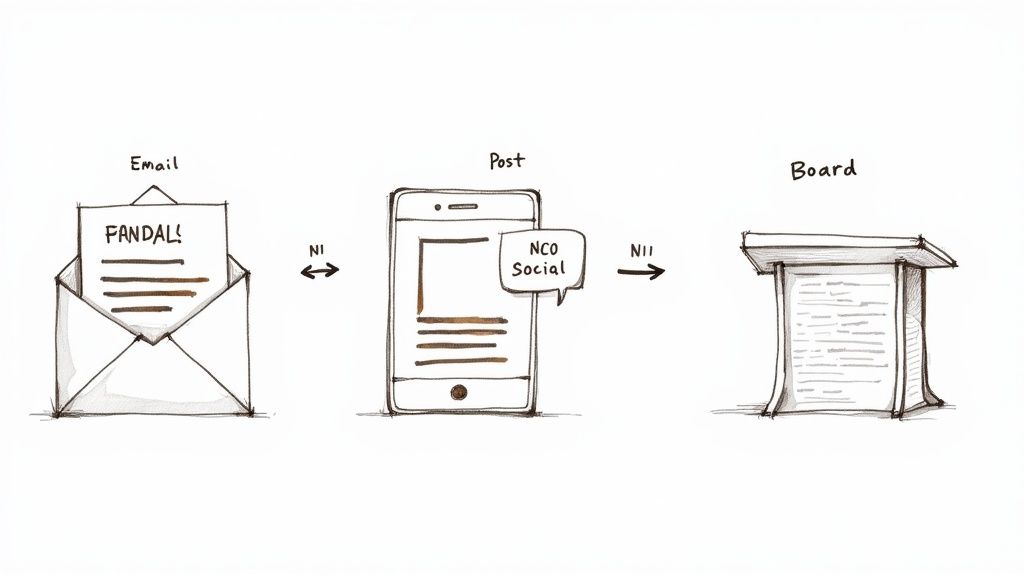
Once you've gotten the hang of active listening, the other side of the coin is making sure your own messages land perfectly. We need our messages to be clear, compelling, and—most importantly—right for the audience.
In the world of school communications, your audience is a constantly shifting target. One minute you're drafting a formal email to parents, the next you're posting a fun video for students on social media, and an hour later you're finalizing a data-heavy report for the school board.
A one-size-fits-all message just won't cut it. The tone, language, and channel you pick have to be deliberate choices. A message that energizes your faculty could completely miss the mark with parents, creating confusion instead of connection.
First, Know Your Audience and What They Need
The bedrock of any good message is knowing who you're talking to. Before you even start writing, pause and think through a few key questions about your audience:
- Who are they? (Parent, student, staff, community member?)
- What do they already know about this?
- What’s the #1 thing they absolutely must take away from this?
- How do they prefer to get their information?
Running through this quick checklist stops you from talking at people and helps you meet them where they are. An email to parents about a snow day needs to be direct and reassuring. A TikTok about the upcoming pep rally? It better be high-energy and visual.
"Communication happens in the mind of the listener. It’s important to communicate from your audience’s perspective with the focus, detail, and attention that real communication demands."
This isn't just about sending out information. It's about designing a message that gets a specific result from a specific group of people. This simple shift in mindset is how you build trust and make sure your messages actually get read.
Frameworks That Make Your Messages Clear and Compelling
You don't have to reinvent the wheel every time you communicate. Leaning on proven structures helps organize your thoughts and deliver your message with more punch, making your comms more consistent and effective.
Here are a couple of powerful models that are perfect for school communicators:
Problem-Solution-Benefit (PSB): This is your go-to for anything persuasive. Start by defining the problem you're tackling, present your solution, and then spell out the tangible benefits for the audience. Imagine you're proposing a new parent communication app. You’d start with the problem (scattered info), introduce the app as the solution, and highlight the benefit (everything in one easy-to-find place).
What, So What, Now What: I love this one for updates and informational messages because it’s so simple. First, state what happened. Then, explain so what—why it matters. Finally, tell them now what—the next steps or call to action. It’s a foolproof way to bring clarity to any update.
Using these frameworks helps you move beyond just dumping information. You're guiding your audience through a logical flow, making it easy for them to understand and act. For a deeper dive on this, understanding what a value proposition is is a great next step to mastering how you communicate core benefits.
Navigate Feedback with Confidence
Let's be honest: feedback can be tough. Whether you're giving it or getting it, these conversations are often loaded with anxiety. But they're also the absolute lifeblood of growth.
As a school communicator, your world is full of these moments. It could be giving a teacher some friendly notes on their classroom newsletter or getting a press release back from your principal covered in red ink. The goal is to turn these potential conflict points into collaborative, productive dialogues. It's a skill you can build, and it starts with moving past gut reactions and into a more structured, objective mindset.
Give Feedback That Helps, Not Hurts
Delivering feedback is a delicate art. You need to be clear and direct without making the other person feel defensive. I've found that one of the best ways to do this is to lean on a model that takes the personal judgment out of the equation and sticks to the facts.
A fantastic framework for this is the Situation-Behavior-Impact (SBI) model. It's simple, memorable, and incredibly effective at keeping the conversation focused.
- Situation: Pinpoint the specific "when and where." For example, "During this morning's marketing team meeting…"
- Behavior: Describe exactly what you observed—no interpretations, just the facts. "…when we were brainstorming the open house campaign, you presented three new concepts."
- Impact: Explain how that behavior affected you or the team. "…it was a huge help because it gave us concrete, actionable options to debate."
This structure is a game-changer for constructive feedback, too. Instead of a vague comment like, "Your report was confusing," you can get specific. Try something like this: "In the quarterly analytics report you sent yesterday (Situation), the social media growth numbers were presented without the year-over-year data (Behavior). That made it difficult for me to see our progress clearly (Impact)."
See the difference? It’s not an attack. It’s a specific observation that opens the door for a real conversation about how to improve it next time.
Cultivate a Mindset for Receiving Feedback
Getting critiqued gracefully is probably the harder side of the coin, but it’s where you’ll see the most personal growth. The trick is to reframe it in your mind.
Feedback isn't a personal attack; it's a data point. It’s just a piece of information that can help you get better. So when someone offers a critique, the first step is always to just pause. Take a breath before you say a single word.
Remember, feedback isn't about you as a person. It’s about a specific action or a piece of work. Learning to separate your identity from your output is a massive step toward professional resilience.
When this skill is missing across an organization, the consequences are staggering. Ineffective communication leads to massive productivity losses, costing businesses an estimated $1.2 trillion globally each year. Think about that. When feedback loops break down, employees can spend up to 37% of their day just trying to get clear on what they're supposed to be doing. You can dig into more of this data on the real cost of communication failures.
Ultimately, getting good at feedback is all about strengthening your professional relationships and making the work better for everyone. By approaching these conversations with a clear structure and an open mind, you turn what could be a difficult moment into a real opportunity to move forward.
Practice Your Skills in Real-World Scenarios
Knowing the theory behind great communication is a solid start, but true confidence comes from practice. It’s time to move from simply reading about these skills to actually doing them. This is where you build the muscle memory to handle any conversation with poise.
Think about the high-stakes conversations you have every week—they aren't abstract concepts. These are the moments that define your school's reputation and its relationships with families and staff. By practicing in a safe, low-risk setting, you prepare yourself for the real thing.
Let's dive into a few role-playing exercises designed specifically for the K–12 environment.
Scenario One: The Upset Parent Phone Call
This is a classic. Grab a colleague—one of you is the school communicator, and the other is a parent who believes their child was unfairly disciplined. The "parent" should be emotional, feel ignored, and even threaten to take their complaint to the school board.
Your goals are to:
- De-escalate the situation using active listening.
- Show empathy for the parent's frustration without getting defensive.
- Steer the conversation toward a clear, productive next step.
After you finish, talk about what worked. Did the communicator paraphrase the parent's concerns effectively? Did they manage to stay calm? This exercise is invaluable for learning how to manage emotionally charged conversations.
Scenario Two: Pitching A New Initiative To Leadership
Here, you're meeting with your principal or head of school. Your mission is to pitch a new marketing idea, like a school podcast or a video series to attract prospective families. You need to be persuasive and have your facts straight.
Your key objectives are to:
- Clearly explain the problem your initiative solves.
- Present your solution with a quick overview of the plan and resources needed.
- Focus on the tangible benefits, like increased enrollment inquiries or stronger community engagement.
This isn't just about practicing a presentation. It's about learning to frame your ideas in a way that connects directly to your leadership's strategic goals. A great pitch ties your passion project to the school's success.
Scenario Three: Workshopping A Sensitive Email
For this one, work with a partner to draft an email response to a sensitive community issue—maybe a controversy over a new curriculum change. The goal is to write a message that’s transparent, empathetic, and reassuring, all without making promises you can’t keep.
A great framework for structuring feedback or addressing tricky points, even in writing, is the Situation-Behavior-Impact (SBI) model. It helps you stay objective and clear.
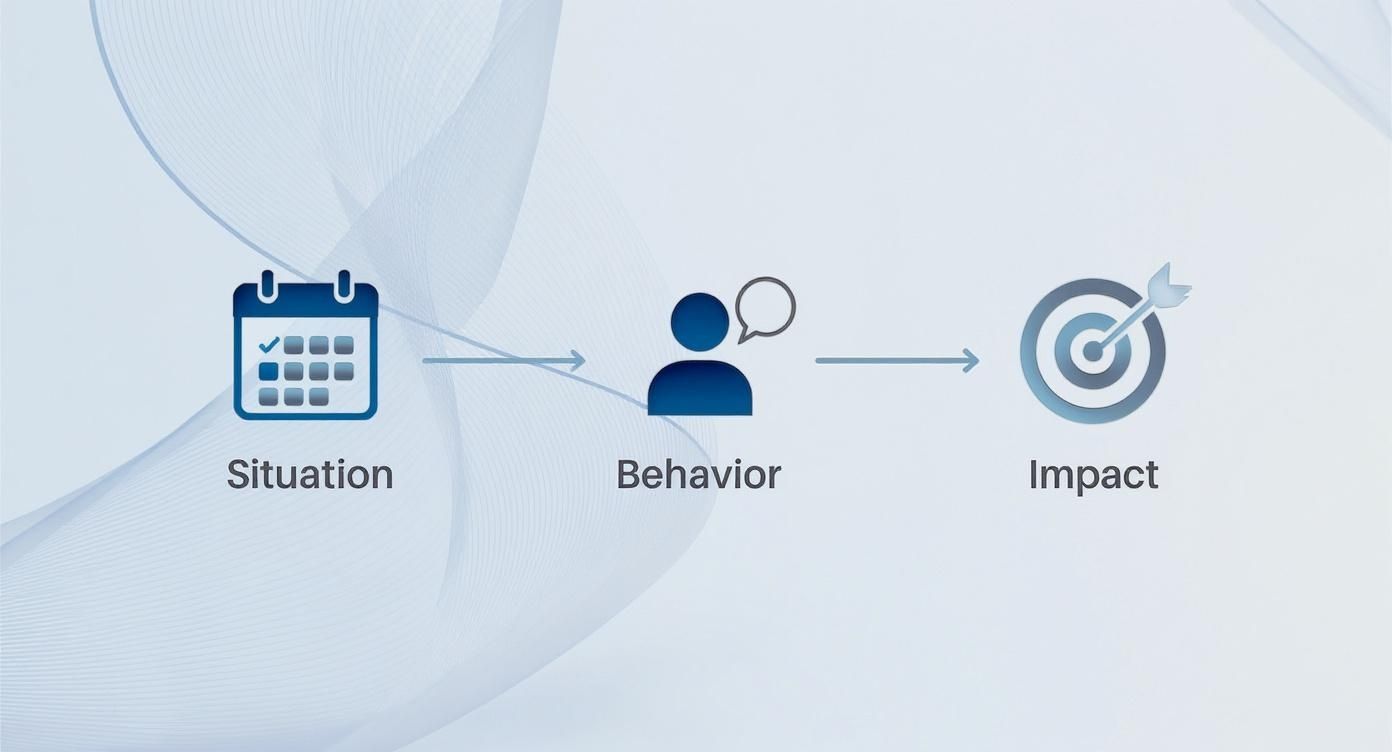
Breaking down your points this way keeps the conversation constructive. To build on these exercises, check out these practical tips and tricks for workplace communication. Putting in the practice is how you turn theory into confident action.
Your Questions, Answered
Even with the best game plan, improving communication skills at work brings up real-world questions. Let's tackle some of the most common hurdles K-12 pros face, with practical answers you can put to use right away.
How Can I Encourage My Team to Communicate Better?
It all starts with you. Leading by example is the single most effective thing you can do. When you practice active listening in meetings, give feedback using a clear model like SBI, and are open in your own updates, you’re setting the standard. A leader’s communication style really does set the tone for the whole team.
Beyond that, you have to make great communication an explicit part of your team culture.
- Make it a talking point: Carve out five minutes in your team meetings to talk about a recent communication win or a tricky situation someone navigated well.
- Share what you're learning: Pass along helpful resources, like this guide or a podcast you found useful.
- Acknowledge the wins: When a colleague absolutely nails a tough parent email or a delicate conversation, praise them for it. A little recognition goes a long way.
What’s the Best Way to Handle a Difficult Conversation?
Never, ever walk in cold. The key to navigating a tough talk is all in the prep work. Take some time beforehand to think through exactly what you need to say and, just as importantly, what a successful outcome looks like to you. Using a simple framework like Situation-Behavior-Impact can keep the conversation grounded in facts, not emotions.
When you’re in the room, your most important job is to listen—really listen. Let the other person share their side without jumping in. That simple show of respect can immediately lower the tension and open the door to a real solution.
The goal isn't to "win." It's to understand. When you shift your mindset from confrontation to collaboration, you're already halfway to a resolution.
It’s also worth remembering that stress can completely hijack communication. When we’re overwhelmed, it’s easy to misread cues or send unintentional nonverbal signals. Working on your own stress management is an often-overlooked—but critical—piece of the puzzle.
How Do I Know if My Communication Skills Are Actually Improving?
It can feel hard to measure a "soft skill," but there are definitely concrete signs you can look for.
Start by observing the results. Are your meetings suddenly more efficient, ending on time with clear next steps? Are you getting fewer confused replies to your emails? That’s a great sign your initial message is hitting the mark.
You can also watch for more subtle, qualitative shifts in how people interact with you.
- You might notice colleagues are more open to bouncing ideas off of you.
- Parents seem less defensive and more collaborative on phone calls.
- You feel more prepared and less nervous heading into a big presentation.
These changes are undeniable proof that your hard work is paying off. Better communication isn't just about ticking a box; it's about building a more positive, effective, and collaborative environment for everyone.
Ready to join a community dedicated to mastering these skills? The MarCom Society offers exclusive workshops, expert sessions, and peer support to help K-12 marketing and communications professionals like you excel. Elevate your school's communication strategy by becoming a member today. Learn more at https://marcomsociety.org.